REVIEW · SAO MIGUEL ISLAND
Azores: Swim with Dolphins Atlantic Experience
Book on GetYourGuide →Operated by Azores Whale Watching TERRA AZUL · Bookable on GetYourGuide
Wild dolphins have a way of stealing focus.
This responsible swim in the Azores is built around real marine life watching: you get a briefing, you head out on a small Zodiac RIB with a guide and skipper, and you try to catch the moment when dolphins choose to come closer. What I like most is the emphasis on doing this in a way that protects the animals, and how the activity is guided by biologists and naturalists who explain what you’re seeing (and why the rules are strict).
Here’s the trade-off to know up front: dolphin time is limited. You alternate in the water in short windows, and animal behavior is never guaranteed—so you’re booking for a nature encounter, not a fixed schedule.
In This Review
- Key things that make this dolphin swim worth your time
- Where Vila Franca do Campo makes sense for dolphin swims
- The 3-hour flow: briefing, boat ride, and your turn in the water
- Season and dolphin species: when you can realistically get that close
- Safety and conservation rules: the stuff you feel immediately
- The snorkeling stop: seabed marine life after the dolphins
- Price and value: why $136 can feel fair here
- Languages, guides, and what to expect on communication
- Who should book this dolphin swim (and who should skip it)
- Should you book? A practical decision guide
- FAQ
- Where do I meet for the tour in Vila Franca do Campo?
- Does the tour include hotel pickup?
- What’s included besides the boat ride?
- Can non-swimmers join?
- Is snorkeling included, and how long does it last?
- What should I bring and what should I wear?
- What languages are available for the guide?
- Who is this tour not suitable for?
Key things that make this dolphin swim worth your time
- Wild dolphin encounters, not staged contact: you watch and swim only when conditions are favorable and guides decide it’s appropriate.
- Short, structured time in the water: two swimmers alternate at safe distance during limited periods so the group doesn’t crowd the dolphins.
- Naturalist/biologist-guided learning: you’re not just in the water—you’re getting context on local species and marine life.
- Snorkeling adds a second nature moment: after dolphin time, you move to a coastal spot to explore the seabed fauna and flora.
- Cold-water prep is handled for you: neoprene gear plus a poncho and windguard mean you’re not arriving unprepared for Azores chill (16–22°C average in-season).
- Small group size: limited to 10 participants, which makes the rules and safety briefings feel more doable.
Where Vila Franca do Campo makes sense for dolphin swims
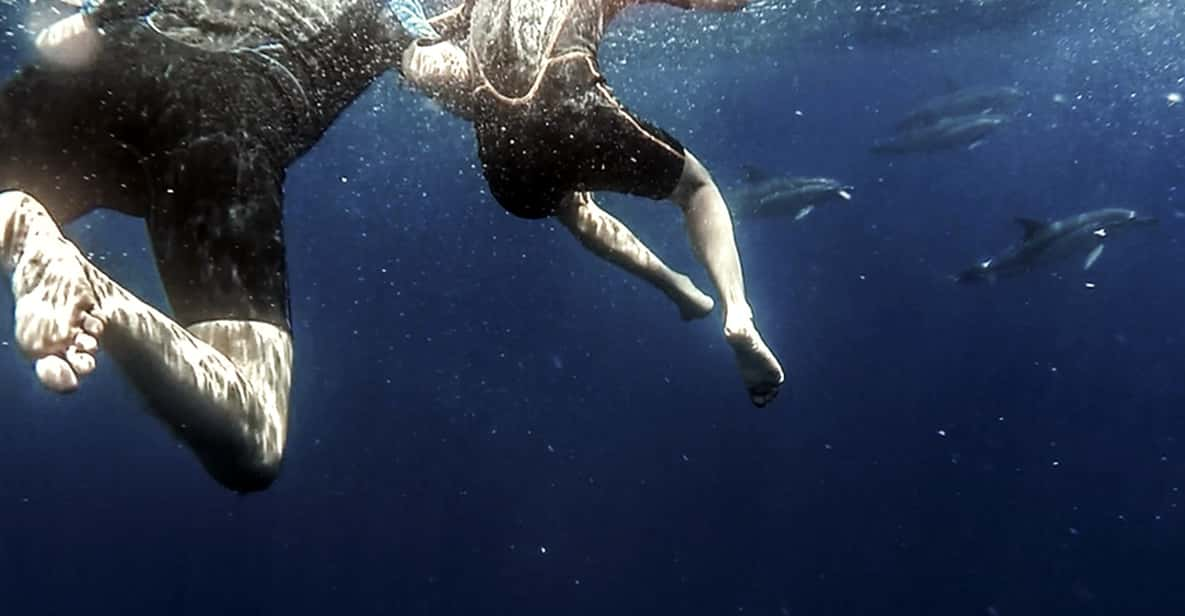
Most “dolphin tours” boil down to the same idea: find dolphins, then hope they cooperate. In the Azores, the key is where you launch from—Vila Franca do Campo on São Miguel. You meet at the marina there (the base with the partner’s yellow boats), and from that coastal point you’re set up for the kind of careful approach that matters with wild animals.
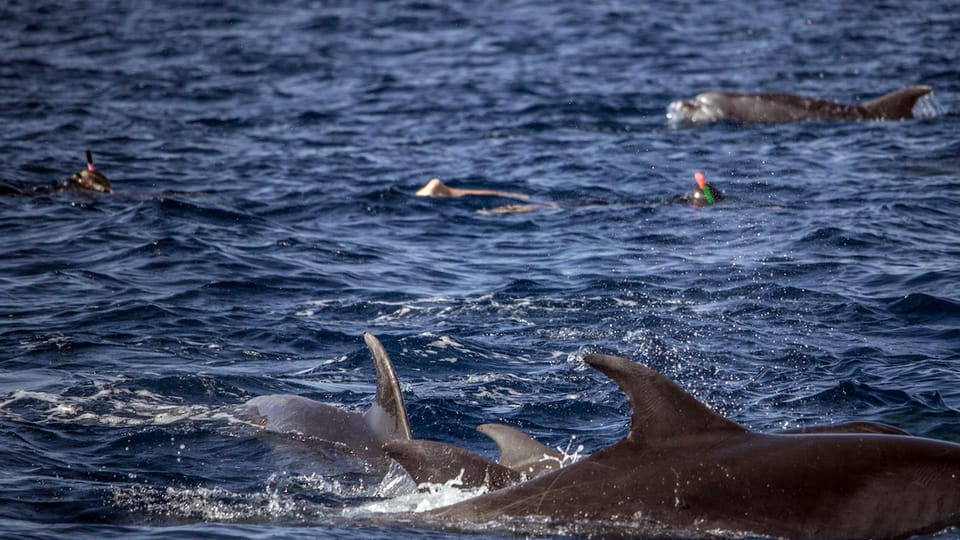
This tour also has a seasonal rhythm. It runs exclusively from late autumn to early spring, when the water averages 16°C to 22°C. That timing isn’t random. It’s tied to dolphin behavior and birthing seasons, and it also helps explain why dolphin encounters here can involve different species: Common Dolphins, Bottlenose Dolphins, Striped Dolphins, and Risso’s Dolphins (depending on what’s present and how the conditions line up).
If you’re coming in the summer months, you’ll likely find this isn’t the right match. If you’re traveling in the colder season and want an encounter that feels more like nature study than a carnival, this area and timing are a strong fit.
You can also read our reviews of more tours and experiences in Sao Miguel Island.

The 3-hour flow: briefing, boat ride, and your turn in the water
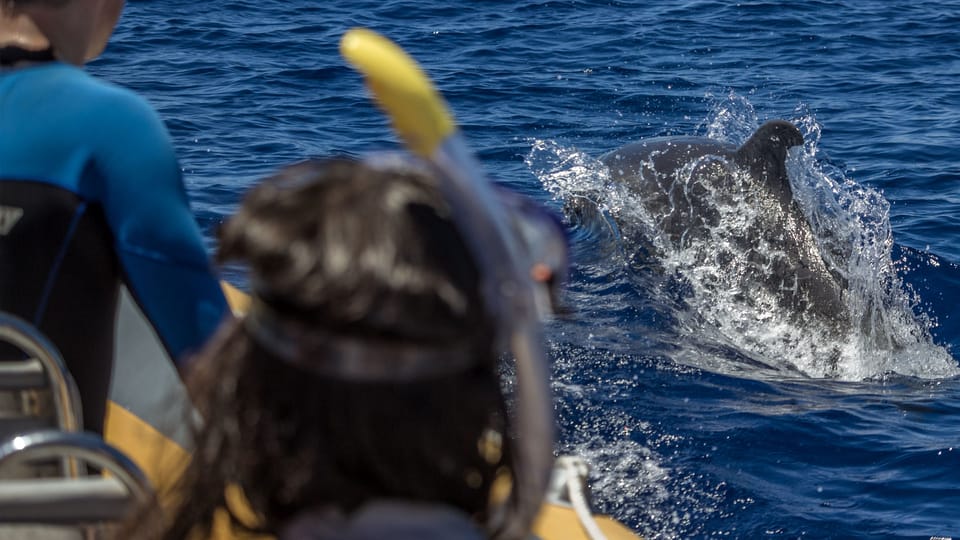
Plan on a tight, action-focused timeline. Even with the full tour length listed as 3 hours, the experience is organized into clear phases so everyone knows what’s happening and what’s expected.
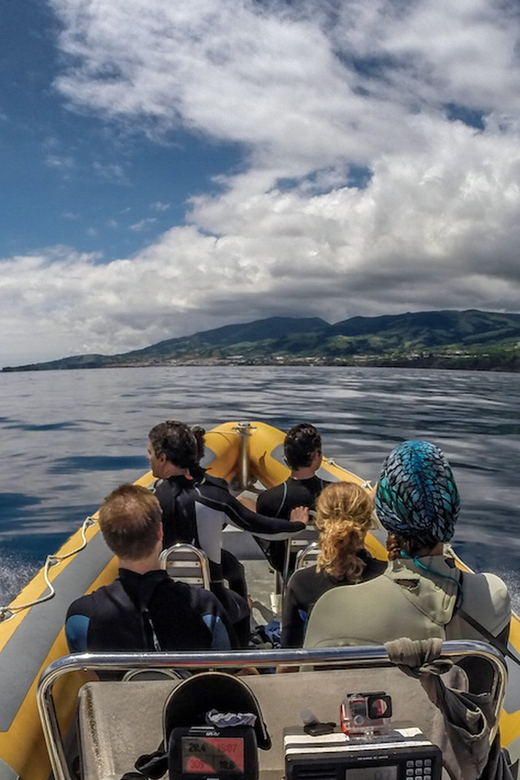
First, there’s a briefing before you head out. You’ll cover local species you might observe, plus the responsible-practice rules and onboard safety. Then the equipment part: you’ll get set up with the provided neoprene gear, and the team will explain how to use what you have so you’re comfortable once you’re in the water.
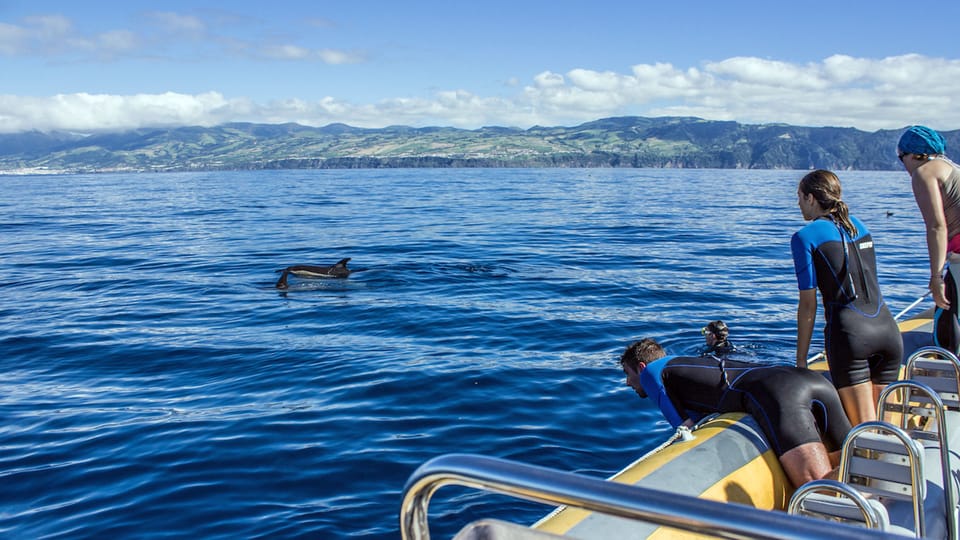
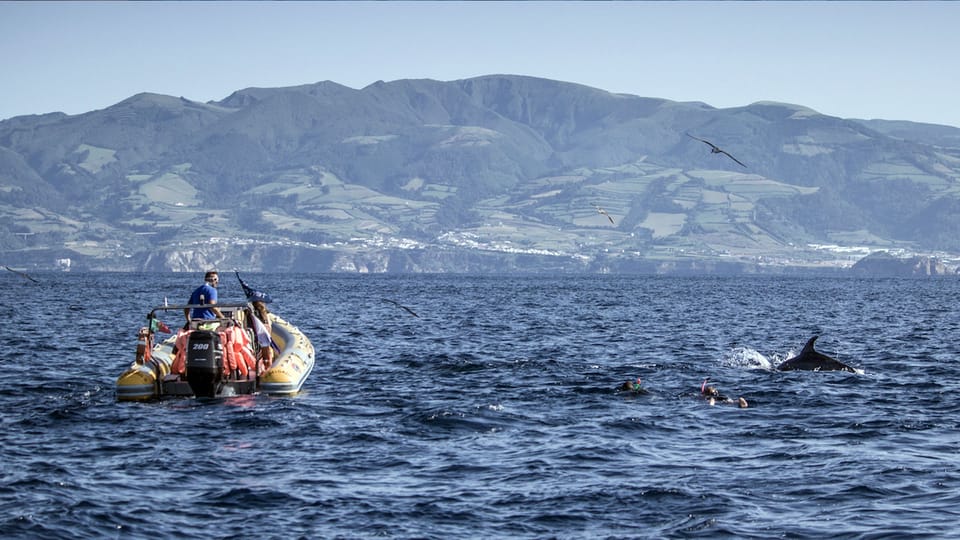
Then comes the boat phase. You’ll travel out on a specialized Zodiac RIB. It starts with a high-speed run, guided in part by inland lookouts. The team uses VHF radio directions to locate where the dolphins are. It’s not just “drive around until luck strikes.” The process is about speed-to-location, then patience during approach.
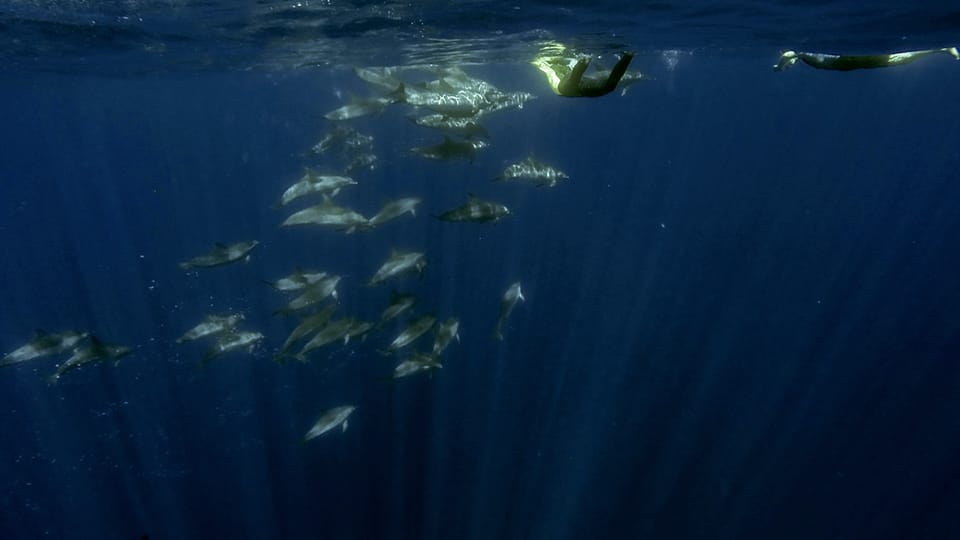
Approaching dolphins is the main moment—and it’s handled with careful judgment. Your guide evaluates conditions before anyone goes in. And when the dolphins are close enough, you don’t all pile in at once. Two swimmers alternate, staying at safe distance from the animals. The guide can call you in only for those limited windows, so the best approach is mental readiness: be set to go when it’s your turn.
This also explains why some people want more time with dolphins afterward. If you’re hoping for long stretches of floating face-to-fin, adjust your expectations. Think: short, meaningful windows where dolphins choose curiosity.
Season and dolphin species: when you can realistically get that close
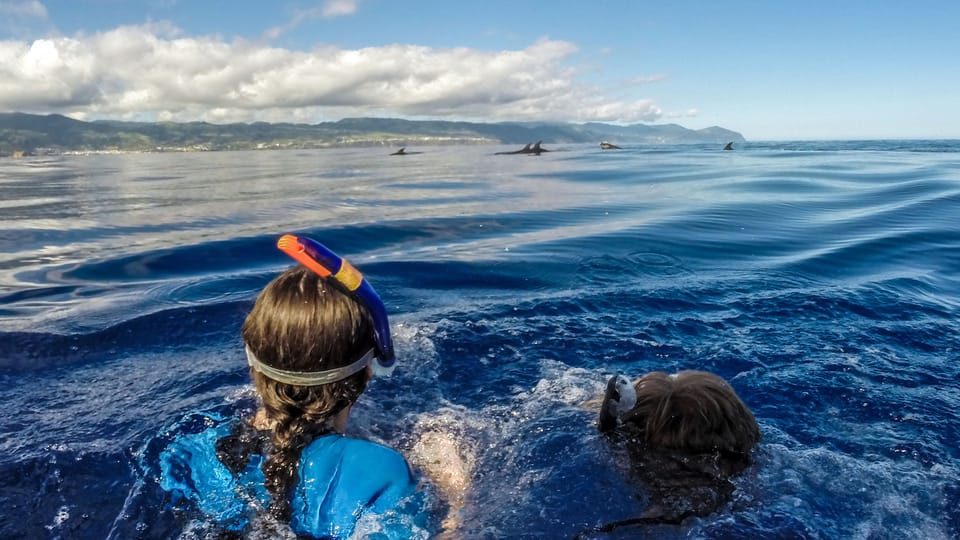
This tour is designed for a specific time of year. It runs late autumn through early spring, with water temperatures averaging 16°C to 22°C. The guide’s ability to work with the dolphins depends on seasonal behavior and even factors like birthing seasons.
Why this matters for your decision: you’re not paying for a “maybe someday” encounter. You’re paying for a guided, regulated attempt during the window when dolphins are most likely to show up in ways that allow a swim—plus when the team can use their conservation standards effectively.
The species list is also a helpful clue. The dolphin types you might encounter are:
- Common Dolphins
- Bottlenose Dolphins
- Striped Dolphins
- Risso’s Dolphins
You’re not guaranteed a specific species, and you’re not guaranteed proximity. That’s part of wild behavior. But if your travel dates align with the season, your odds feel more grounded than with tours that run year-round with the same rules and the same promises.
Safety and conservation rules: the stuff you feel immediately
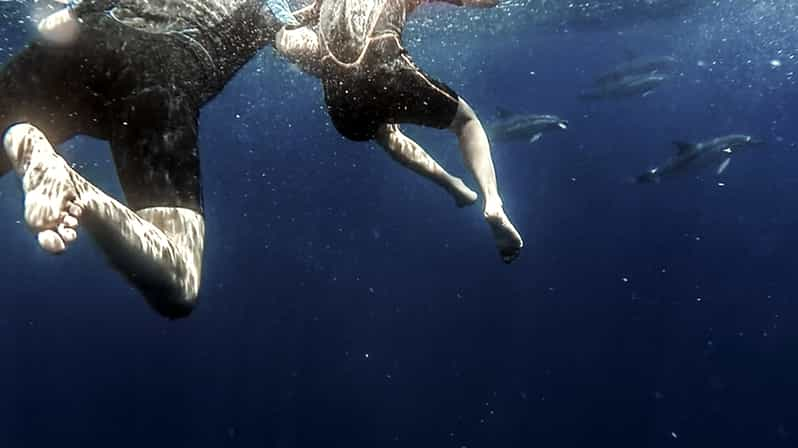
Once you’re out on the water, you’ll understand why the rules are strict. The tour is described as high conservational risk, and the team is built around qualified guidance to follow environmental standards.
Here’s what you should expect to be told and then follow:
- You can’t use fins.
- You can’t touch the dolphins.
- You can’t feed the dolphins.
- You’re asked not to be too noisy.
- No abrupt movements, and no swimming too fast near the animals.
None of this is there to be annoying. It’s there to reduce stress on the dolphins and avoid turning a wild encounter into a disruption. It also protects you: in water where you’re sharing space with wild animals, calm behavior and controlled movement are everything.
On the boat, lookouts help locate the dolphins, then the guide evaluates conditions carefully before proceeding. In other words: the approach is structured, not chaotic. That’s one reason people rate this tour highly when they mention safety and how well the team explained the whole process.
One more practical point: the tour is not for everyone. It’s not suitable for people who are pregnant, have weak back issues, are in a wheelchair, or have delicate health conditions. It’s also not for children under 4, and unaccompanied minors aren’t allowed. If you’re in doubt, check with the operator before you book.
The snorkeling stop: seabed marine life after the dolphins
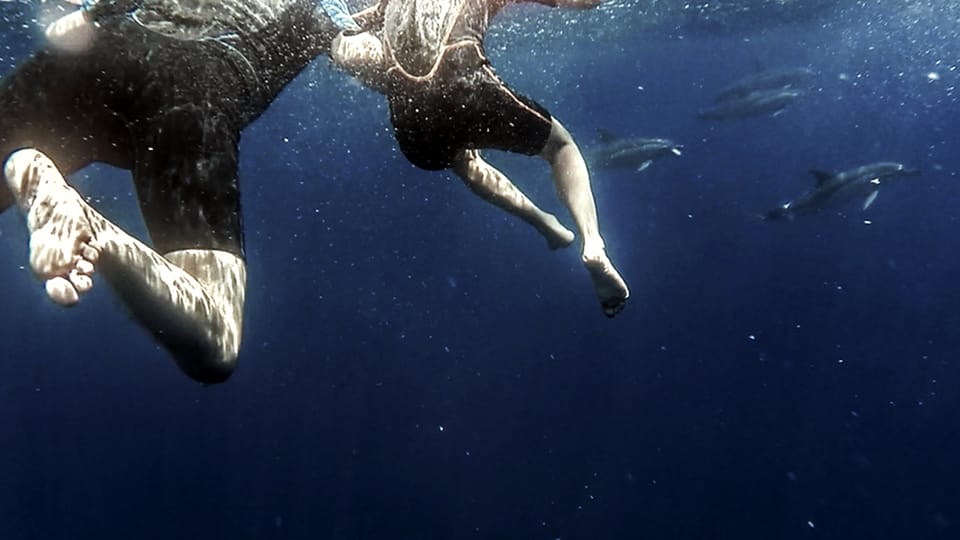
After dolphin time, the tour shifts to another kind of water experience. The boat travels to a coastal location for snorkeling, focused on marine fauna and flora you can see in the seabed.
This matters because it keeps the tour from feeling like “all your eggs in one dolphin basket.” Even on days when dolphins don’t stay around long, you still get a structured second activity. And when snorkeling is brief (which it often is in calm, controlled group settings), it’s still a chance to see the underwater side of the Azores rather than just the surface drama.
Bring what the tour asks for, because you’ll want to stay comfortable:
- swimwear
- change of clothes
- towel
- camera
- water
- biodegradable sunscreen
Also remember: water isn’t included, so plan to bring your own.



Price and value: why $136 can feel fair here
At $136 per person for about 3 hours, this tour isn’t cheap, but it’s also not overpriced for what you’re getting if your priority is wild dolphin swimming done responsibly.
What you’re paying for adds up:
- neoprene gear
- a poncho and windguard
- a guide plus skipper
- a specialized Zodiac RIB boat
- insurance
- and a structured effort guided by marine-focused professionals
The “small group” part matters for value too. With a max of 10 participants, the team can actually run the process safely while trying to create conditions where dolphins might approach.
You’re also paying for the reality that this is season-limited and weather-dependent. The activity is subject to weather and safety conditions and can be modified or cancelled without prior notice. That doesn’t mean you should fear the booking—it means you should travel with that seasonal reality in mind.
If you’re a non-swimmer, there’s a helpful option: non-swimmers can join the tour onboard for 50% off, but you’ll need to provide that at booking time so the team can adjust the plan.
Languages, guides, and what to expect on communication
The team is multinational, and the official language is English. They’ll do their best to accommodate other languages, including German, French, Spanish, Portuguese, Dutch, Italian.
In practice, that matters when you’re learning about species and the “why” behind the rules. The more you understand the briefing, the easier it is to follow during your short time in the water—especially when the team is managing alternating swimmers and a careful approach.
A useful planning move: if you don’t speak English, still assume you’ll get help. But don’t count on guaranteed translation into your exact language.
Who should book this dolphin swim (and who should skip it)
This is a good match if you:
- want wild nature instead of an animal-in-a-park experience
- like structured field guidance from biologists/naturalists
- can handle cold-water conditions with the provided neoprene gear
- are okay with the reality that dolphins control the encounter length
This may not be your match if you:
- want long, repeated swims in the water (the tour uses limited windows with alternating swimmers)
- need a fully predictable itinerary (animal behavior + weather can change how the day unfolds)
- have mobility, back, pregnancy, or health constraints listed by the operator
If you fall in the “not suitable” categories, it’s better to skip this one than to stress over it. The tour’s rules are designed for both dolphin welfare and participant safety.
Should you book? A practical decision guide
Book it if your dates align with late autumn to early spring and your dream is a guided, responsible wild encounter—plus at least a second payoff from snorkeling. The value feels strongest when you care about learning and safety as much as you care about seeing dolphins.
Skip or reconsider if:
- you’re arriving outside the seasonal window
- you’re hoping for guaranteed dolphin-to-you interaction
- you need long time in the water beyond alternating short periods
- you’re not able to follow the “no fins, no touch, no abrupt movement” style rules
If you do book, show up ready. Swimwear on, towel and change packed, and your camera accessible. When it’s your turn, you’ll want to move fast and calmly—because that’s when the dolphins decide whether they stick around.
FAQ
Where do I meet for the tour in Vila Franca do Campo?
You meet at the marina in Vila Franca do Campo. From Ponta Delgada town center, go east along the coast and follow the signs to Vila Franca do Campo, then descend toward sea level and the marina. Free street parking is available.
Does the tour include hotel pickup?
Hotel pickup is optional. The information provided says you can meet at the carport in front of your Hotel and be early, but some options require you to meet at the marina.
What’s included besides the boat ride?
The tour includes neoprene gear, a poncho and windguard, a guide, a skipper, a specialized Zodiac RIB boat, and insurance.
Can non-swimmers join?
Yes. Non-swimmers can join onboard for a 50% discount, but you need to specify this at booking so the team can adjust the plan.
Is snorkeling included, and how long does it last?
Snorkeling is included as a second part of the tour at a coastal location for discovering marine fauna and flora. The exact duration isn’t specified in the details, but it’s part of the overall tour time.
What should I bring and what should I wear?
Bring swimwear, a change of clothes, a towel, a camera, water, and biodegradable sunscreen. You’ll also use the provided neoprene gear.
What languages are available for the guide?
The official language is English, and the team tries to accommodate other languages including German, French, Spanish, Portuguese, Dutch, Italian.
Who is this tour not suitable for?
It’s not suitable for pregnant women, people with weak back, wheelchair users or people with mobility impairments, anyone with delicate health conditions, and children under 4. Unaccompanied minors are not allowed.