REVIEW · SAO MIGUEL ISLAND
Azores Whale Watching & Islet Boat Tour
Book on GetYourGuide →Operated by Azores Whale Watching TERRA AZUL · Bookable on GetYourGuide
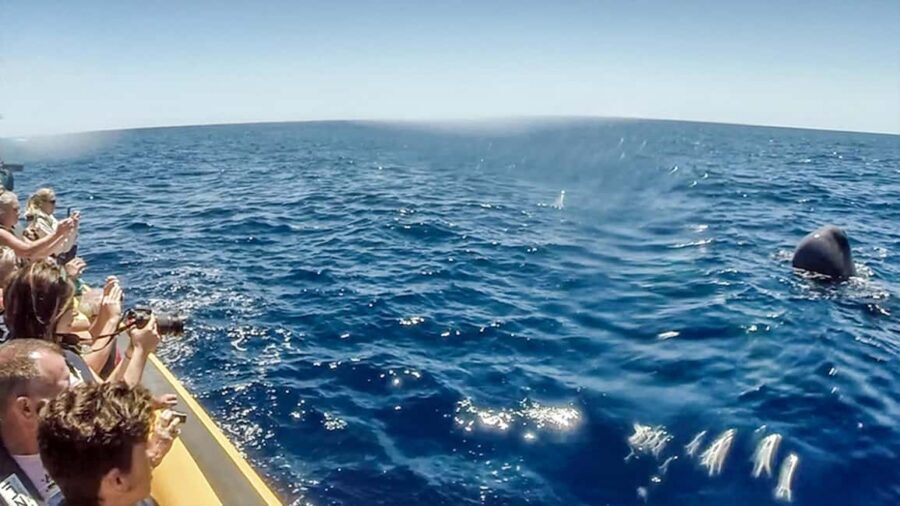
The sea sets the schedule. On Terra Azul’s Azores Whale Watching trip from Vila Franca do Campo, you’re out on the water with biologists and naturalists while they actively search for whales and dolphins and explain what you’re seeing as you go.
Two things I really like: the hands-on marine wildlife approach with onboard field imagery and research-style observations, and the way lookouts on land help guide the boat when the action starts.
One drawback to plan around is that this is weather- and safety-dependent. When conditions get choppy, expect rougher rides and more motion, and the operator notes the trip may be modified or canceled.
In This Review
- Key highlights worth planning for
- Where Vila Franca do Campo Is: A smart base for whale watching
- Check-in at Terra Azul: short, focused, and safety-first
- The Zodiac RIB ride: fast, fun, and very real ocean time
- How the crew finds cetaceans: lookouts, VHF, and careful approach
- Whale watching in practice: what your 2.75 hours looks like
- Islet of Vila Franca do Campo: the volcano scenery break
- Back at the marina: short free time to grab a snack or stretch
- What to bring (and what not to ignore) for a better ride
- Guides and skipper: the difference between seeing and understanding
- Price and value: $70 for a research-minded 3 hours
- Who this tour suits best on São Miguel
- Should you book Terra Azul’s whale watching and islet tour?
- FAQ
- How long is the Azores Whale Watching and Islet Boat Tour?
- Where do I meet for the tour?
- What kinds of animals might I see?
- Is the boat ride comfortable?
- What should I bring?
- What languages will the guide speak?
- Who is this tour not suitable for?
Key highlights worth planning for
- Biologist or Naturalist guidance focused on cetaceans, local species, and behavior
- VHF radio teamwork between inland lookouts and the boat to improve spotting chances
- High-speed search runs, followed by careful, respectful approach when animals are found
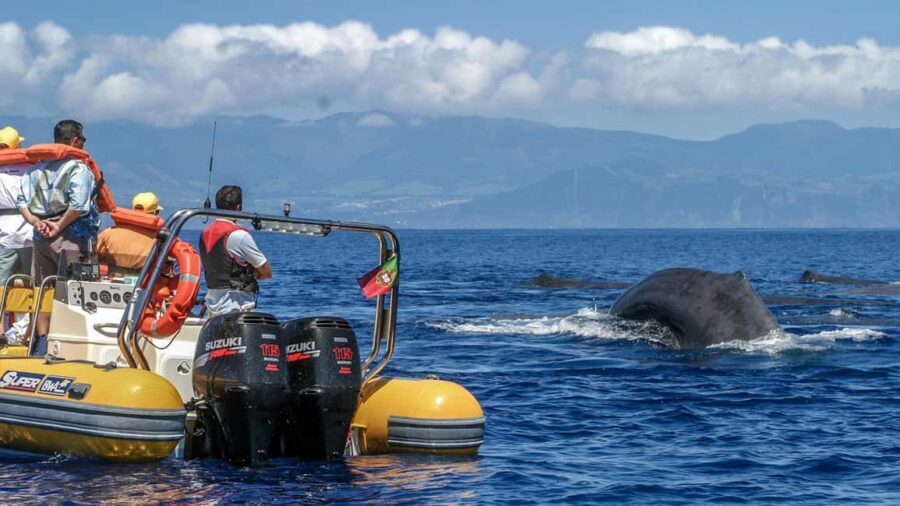
- Zodiac RIB boat (about 12–28 passengers) with impermeable suits and life vests provided
- Vila Franca do Campo Islet stop for volcanic scenery and quick photo time
- Ethical wildlife handling, with crews aiming to keep animals calm and not stressed
Where Vila Franca do Campo Is: A smart base for whale watching
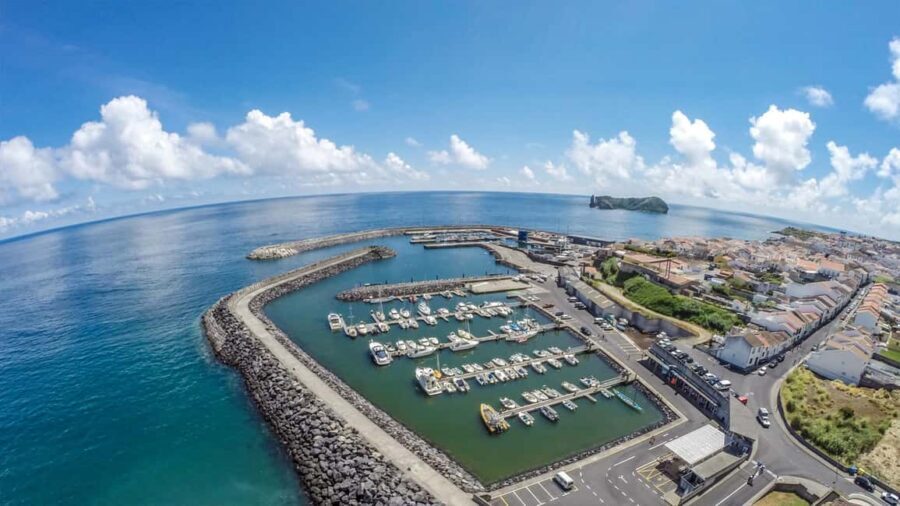
If you’re basing yourself on São Miguel, Vila Franca do Campo is one of the more convenient places to access this kind of marine wildlife trip. The meeting point is at Terra Azul’s base in the Marina de Vila Franca do Campo, and the whole experience is built around heading out quickly to maximize time on the water.
What makes this location practical is the pairing of two “worlds.” You get open-water searching for whales, dolphins, and other sea life, and then you come back for close-looking-at landforms—especially the Vila Franca do Campo Islet. It’s a nice balance: you’re not stuck staring at wildlife through a long, slow process, and you still get the Azores scenery that makes this island area feel distinctive.
You can also read our reviews of more tours and experiences in Sao Miguel Island.
Check-in at Terra Azul: short, focused, and safety-first
Your tour starts with check-in at the Terra Azul base inside the marina. You’ll do a guided briefing before boarding: local cetacean species, how they move, and their behavior patterns, plus onboard safety rules. This part matters more than most people expect. When you understand what the guide is scanning for—spouts, surfacing intervals, pod behavior—you spot faster and you also enjoy the search process more.
The crew typically pairs a guide with the skipper, and the guide stays involved once you’re on the water. In multiple real-world experiences, the tone is consistent: lots of facts, lots of answering questions, and a team that stays upbeat and engaged even when the ocean is not cooperating.
The Zodiac RIB ride: fast, fun, and very real ocean time
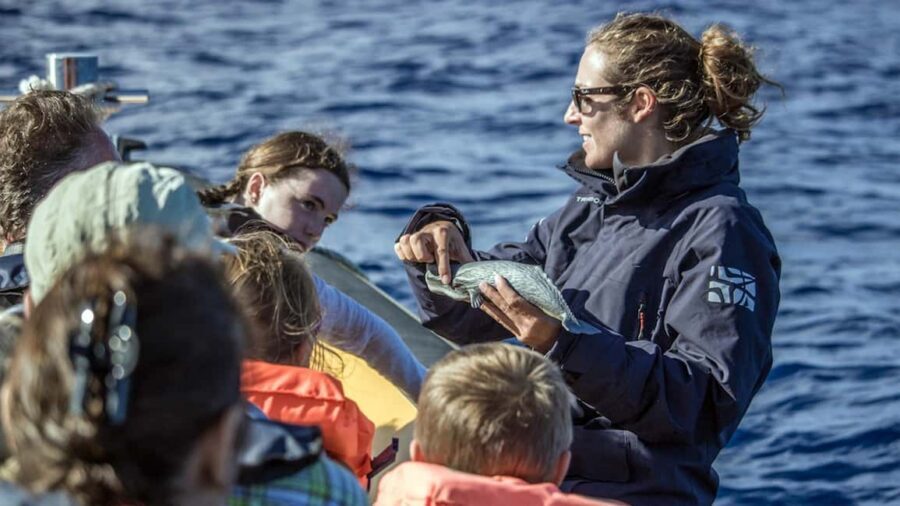
You’ll board a Zodiac RIB, designed for active cruising. Capacity is listed at 12 to 28 people, so you’re not in a huge crowd where visibility gets chaotic. One practical advantage: you can usually find a spot where you can watch the water without constantly leaning around strangers.
You also get key comfort and safety gear:
- Impermeable full suit
- Life vest
- Insurance coverage
The boat time includes both slower searching segments and faster transitions. If you’ve ever wondered what “sea motion” feels like when you’re in a RIB, this is it. Reviews and trip feedback repeatedly flag that if you’re prone to motion sickness, this is not the kind of tour to gamble on.
Also, bring your own essentials. The operator specifically notes personal water supply isn’t included, and you’ll want sunscreen, sunglasses, chapstick, and warm clothing. Even if it feels mild at the marina, conditions at sea can flip fast.
How the crew finds cetaceans: lookouts, VHF, and careful approach
This is the most important part of the experience, because wildlife spotting is never guaranteed. Terra Azul improves your odds with a coordinated method:
- inland lookouts scan from high vantage points
- they communicate directions to the boat using VHF radio
- once a target area is found, the boat travels initially at high speed
- then the guide helps the crew approach carefully so you can observe without stressing the animals
The tour also includes onboard research-style activity. You may see the guide collecting field imagery and data while you watch. That can feel nerdy in a good way. It turns the trip into more than a sightseeing gamble: you get a sense that your whale watching is supporting real knowledge about local marine life.
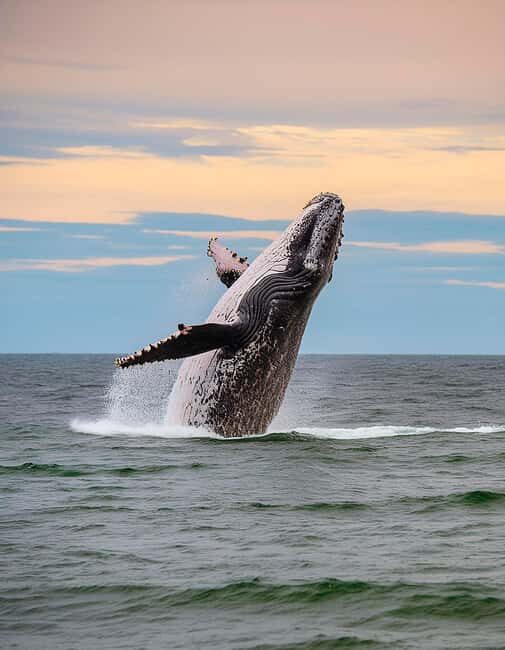
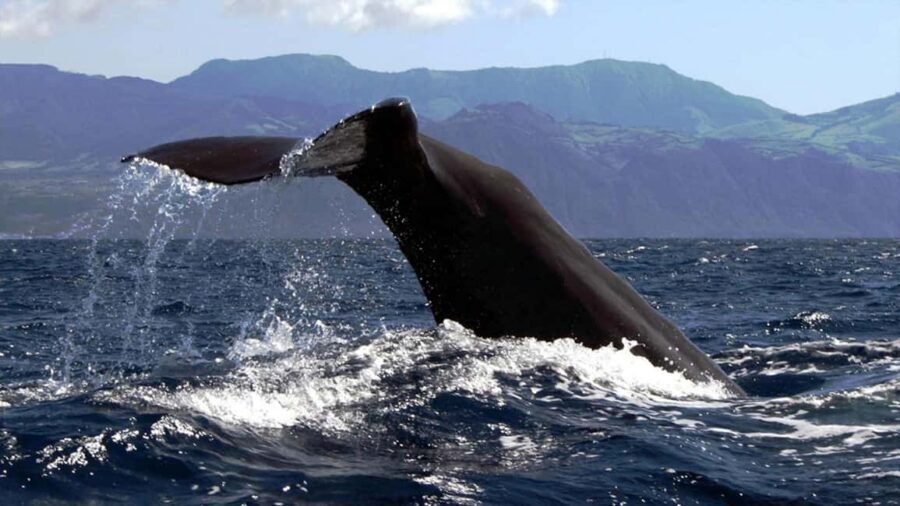
Species possibilities are broad. The tour information notes that more than 27 cetacean species are possible to observe, and that sperm whales are resident alongside three dolphin species. In other words: even though you might hear about one or two headline animals, the “sea life” theme is wider than that.
Whale watching in practice: what your 2.75 hours looks like
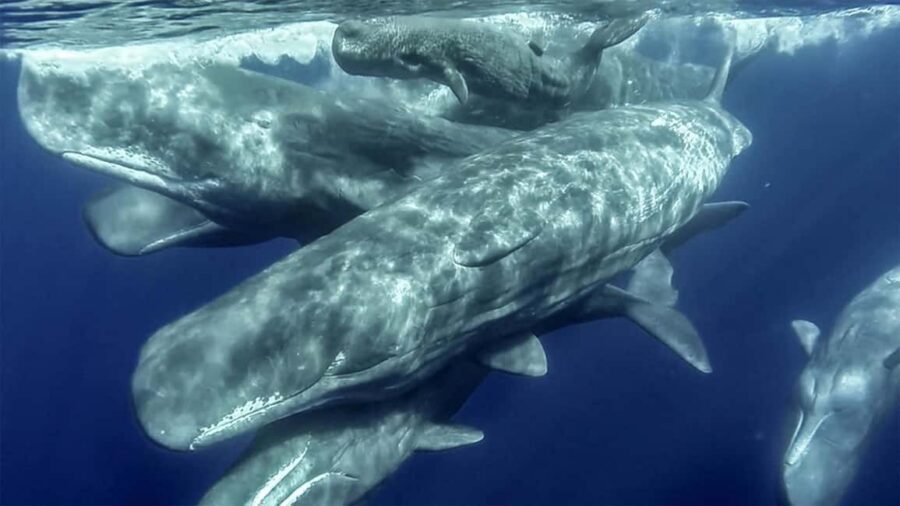
The main block of time is about 2.75 hours of whale watching during the cruise. In real-world terms, that typically means:
1) You set off from the marina after the briefing.
2) You run to likely areas based on lookout input.
3) When you find activity, the guide points out behavior patterns and helps you track surfacing and pod movement.
What you can love here is the guided focus. Guides in this program are described as energetic and engaged, and you’ll often hear them connect what you’re seeing to migration timing, local behavior, and identification cues.
You’ll also notice a difference between tours that rush past sightings and tours that slow down the moment there’s something to watch. Here, the approach is described as respectful, with staff keeping animals safe and not stressed—an important point in an area where marine life has no choice but to exist in the same waters we’re visiting.
In the best moments, the trip becomes a kind of shared concentration. People look up. The boat adjusts. The guide tells you what to watch next—then you see it.

Islet of Vila Franca do Campo: the volcano scenery break
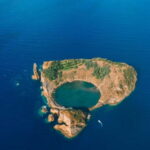
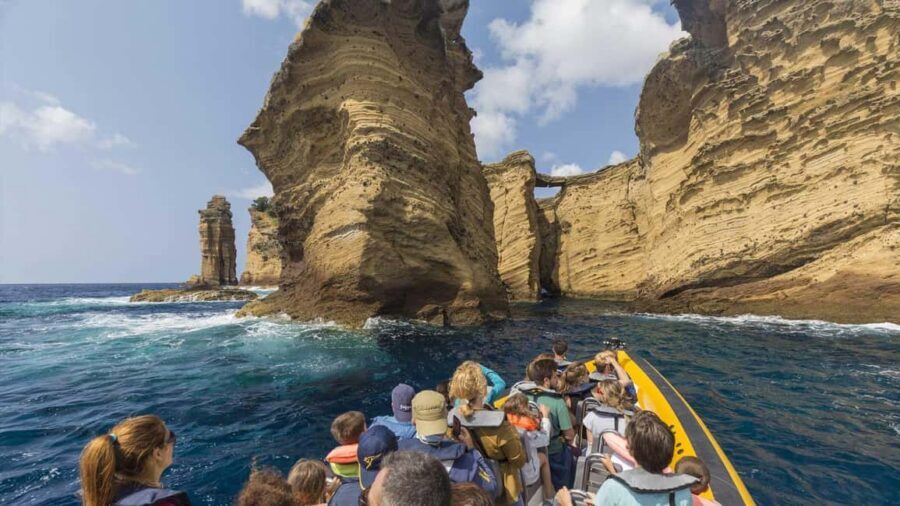
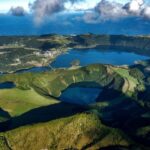
After the main sea time, the tour makes a short stop by the Islet of Vila Franca do Campo. This is a quick one—about 15 minutes—but it adds variety and helps you connect what you saw offshore to the volcanic setting that shapes these waters.
You’ll get:
- a photo stop
- boat cruise / pass-by views
- short marine life viewing
- scenic angles on the volcanic feature and nearby wildlife
One thing I like about this stop is that it gives you a chance to reset your eyes and energy. After a longer period of scanning the water for cetaceans, you can switch to broad views and framing shots of the island structure itself.
It’s also a nice reminder that the Azores are not just about animals. The geology is part of the story, and this islet helps make that connection feel immediate.
Back at the marina: short free time to grab a snack or stretch
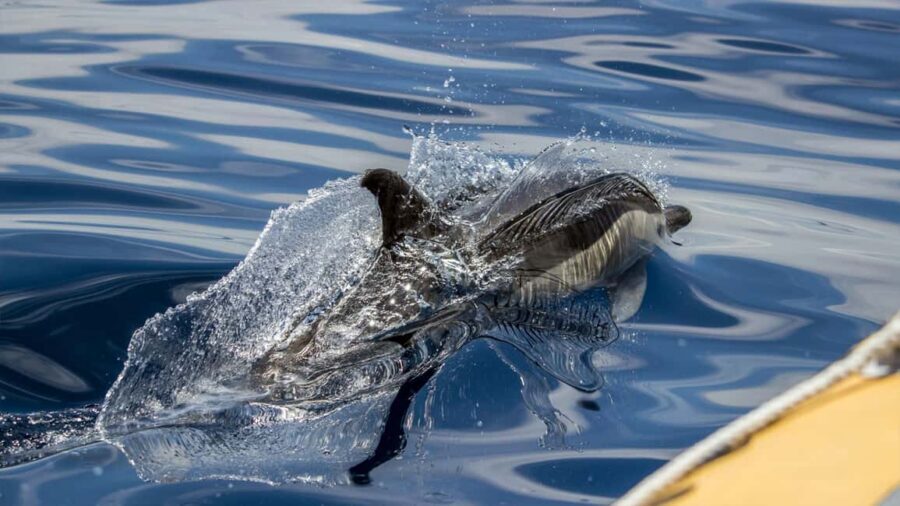
You return to Marina de Vila Franca do Campo and then there’s a short window of about 15 minutes free time, including a chance to browse and do a little shopping.
It’s not a long break, so come prepared to keep it simple. Also remember the practical note from the tour info: light food is permitted, but you still need to manage your own water. After time at sea, having a small snack and a drink can make a difference.
If you start to wonder whether you’ll have time for photos, this is where you can grab a quick shot on land—plus you’ll appreciate the smoother footing after the ride.
What to bring (and what not to ignore) for a better ride
This tour is built around being outside, on water, and in changing conditions. Bring the comfort items that keep you functioning:
- Personal water supply
- Sunscreen, sunglasses, chapstick
- Warm clothing (even on a sunny day)
- A camera (protect it from splashes)
- Light snacks if you want them (light food is permitted)
Now the “don’t ignore this” list:
- If you get motion sick, plan for it. The information says the tour is not for certain health situations, and real-world feedback consistently warns that the ride can trigger seasickness quickly.
- If you have back problems or delicate health conditions, the operator flags this tour as not suitable.
- It’s listed as not for pregnant women, and it’s not for children below 4. Also, unaccompanied minors are not allowed.
The waterproof suit and life vest help a lot, but they don’t stop the boat from moving. Pack accordingly.
Guides and skipper: the difference between seeing and understanding
The trip is guided by biologists and naturalists, and your experience depends heavily on what the guide chooses to emphasize. In multiple experiences with Terra Azul, guides are described as enthusiastic, energetic, and quick to answer questions while also pointing out what to look for as the boat searches.
You may see names like:
- Mateo as a guide, with Miguel as the skipper in one example
- Marilou and Flora on another successful departure
- Frida as a guide in multiple accounts
- Sanne and skipper Dino
- Alexandra appears in a paired crew experience
Those names matter because they point to what the operator is selling: not just a boat ride, but an explanation-rich outing where you learn while you wait for the ocean to deliver.
One more ethical note that shows up strongly: you’ll get the sense the crew is trying to keep the interaction within reasonable limits—animals should feel safe, and the boat should behave like a visitor, not a controller.
Price and value: $70 for a research-minded 3 hours
At $70 per person for a 3-hour experience (with starting times that vary by availability), the value comes from a few things working together:
- a small-ish group size (12–28 passengers)
- a trained wildlife specialist on board (biologist/naturalist)
- active scanning and communication using inland lookouts and VHF
- equipment provided (impermeable suit and life vest)
- a planned add-on stop at the islet
Could you spend less and just do a generic boat cruise? Sure. But whale watching here is not presented as a random roam. It’s a structured search with onboard interpretation and respectful observation, plus a direct connection to the Vila Franca do Campo Islet when you return.
The one value question you can’t fully control is wildlife outcome. Sometimes you’ll see sperm whales, sometimes it’s dolphins, sometimes it’s a mix. That said, the crew effort is part of what you’re paying for: if they locate activity, you’re in a position to understand it quickly.
Who this tour suits best on São Miguel
This is best for you if:
- you enjoy wildlife that’s wild, not staged
- you want science explanations while you’re out on the water
- you’re comfortable with a RIB boat that moves and accelerates
- you want a tight 3-hour plan that fits a day in the Azores
It’s not the right fit if:
- you’re pregnant or have restrictions related to health conditions (the operator lists specific non-suitability)
- you have a weak back or delicate health
- you’re traveling with a child under 4 (and unaccompanied minors aren’t allowed)
- you use a wheelchair (explicitly listed as not suitable)
Should you book Terra Azul’s whale watching and islet tour?
I’d book it if you’re excited by real marine wildlife and you like learning in the moment. The strongest reason to choose it is the combo of specialist guidance, organized searching, and the islet stop that gives you a complete Azores story in a short window.
If you’re very prone to seasickness or you need a calmer, more static experience, consider whether a RIB-style itinerary is worth the risk. And if your health situation fits the operator’s restrictions, don’t force it—there are plenty of other ways to experience São Miguel’s beauty.
If the weather is decent and you come prepared, this is the kind of tour that can turn into your most memorable wildlife moment on the island.
FAQ
How long is the Azores Whale Watching and Islet Boat Tour?
The tour duration is 3 hours. Exact starting times depend on availability.
Where do I meet for the tour?
You meet at Terra Azul base in the Marina de Vila Franca do Campo, address listed as 4, 9680 São Miguel, Azores Islands. The activity ends back at the same meeting point.
What kinds of animals might I see?
You’ll be looking for whales, dolphins, and other sea life. The tour information also notes that more than 27 cetacean species are possible, with sperm whales mentioned as resident and three dolphin species possible.
Is the boat ride comfortable?
It’s on a Zodiac RIB with impermeable full suits and life vests provided. That said, it can involve fast runs and can be affected by ocean conditions, so motion can be intense for some people.
What should I bring?
Bring a personal water supply, sunscreen, chapstick, sunglasses, warm clothing, and a camera. Light food is permitted, but you’ll want to protect any personal equipment from splashes.
What languages will the guide speak?
The tour guide can provide live interpretation in Spanish, Dutch, English, Portuguese, Italian, French, and German. English is listed as the official language, but accommodations are best effort.
Who is this tour not suitable for?
The tour information says it is not suitable for pregnant women, people with weak back or delicate health conditions, children below 4, wheelchair users, and it also states unaccompanied minors are not allowed.