REVIEW · SAO MIGUEL ISLAND
São Miguel Azores: Half-Day Whale Watching Trip
Book on GetYourGuide →Operated by Picos de Aventura · Bookable on GetYourGuide
The Atlantic puts on a show if you know where to look. This half-day São Miguel trip is run with marine biologists and dedicated coast lookouts, using radio to guide the boat to where whales and dolphins are active.
Two things I like a lot: the crew’s focus on a safe, respectful approach (slow, careful positioning) and the way the trip is structured around expert spotting instead of guesswork. For many people, even a short window of 3–3.5 hours still turns into multiple sightings, not just a quick pass.
One consideration: the water is weather-dependent, and if you’re on a speedboat (zodiac style), expect a bouncier ride. Also, whales aren’t guaranteed every day, even with a strong track record of sightings.
In This Review
- Key Things to Know Before You Go
- How This Half-Day Whale Watching Works in São Miguel
- From Briefing to Launch: What Happens Before You See Anything
- The Crew System: Lookouts, Radio, and Biologists Who Explain What You’re Seeing
- Choosing Your Ride: Catamaran vs Speedboat (And Who Should Care)
- What You’ll Actually Look For: Whales and Dolphins in Their Natural Rhythm
- A Trip That Feels Eventful Even When Conditions Change
- The Return Sail: Coastline Geology You Can Appreciate in Transit
- Boat Comfort Tips That Make a Real Difference
- Who This Tour Is Best For (And Who Should Skip It)
- Price and Value: Is $74 Worth It?
- Should You Book This São Miguel Whale Watching Trip?
- FAQ
- How long is the São Miguel whale watching trip?
- Where do the tours depart from?
- What should I bring, and what is not allowed?
- What’s included in the price?
- What happens if no whales or dolphins are spotted?
- Is the tour suitable for children or people with medical limitations?
- Final Call: Who This Trip Really Delivers For
Key Things to Know Before You Go
- Spotting is guided by radio lookouts using military-grade binoculars from strategic points along the coastline
- Marine biologist-led learning so you’re not just watching, you’re understanding
- Slow, ethical boat behavior keeps distance safe and lets animals choose whether to approach
- Boat comfort varies: catamaran tends to be smoother; zodiac/speedboat can feel rougher in chop
- If whales or dolphins aren’t seen, you get a full refund or a free rebooking (rules vary by tour option)
- You’ll cruise close to the coastline for geology views on the way back
How This Half-Day Whale Watching Works in São Miguel
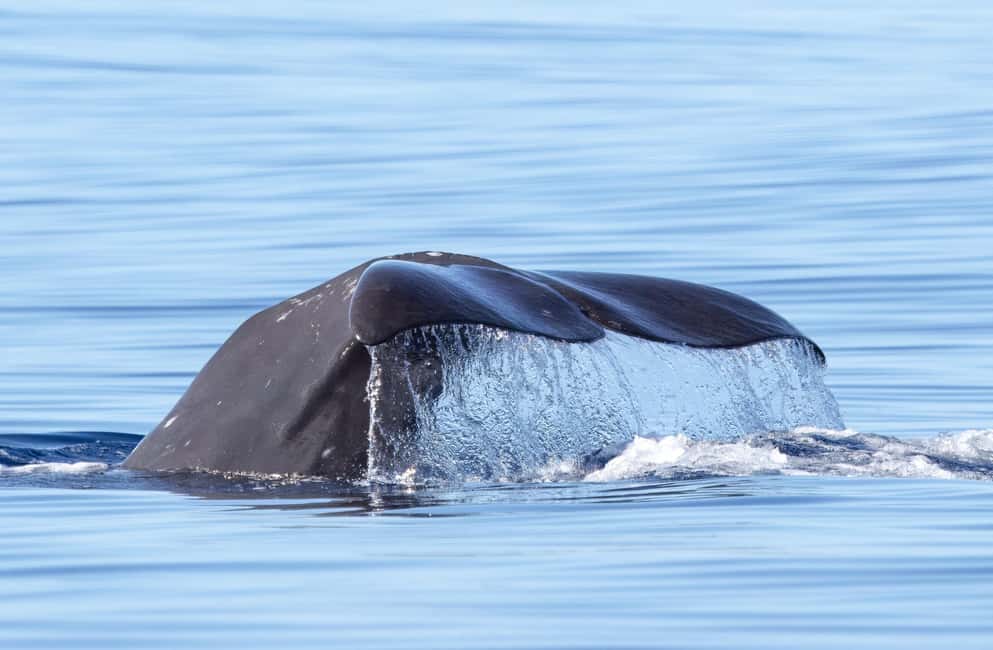
This is one of those São Miguel experiences where the time feels right. You’re out long enough to have a real chance at whales and dolphins, but short enough that you’re not stuck all day if the ocean mood changes.
The “top ten” whale-watching claim matters here, because the Azores sit in a prime position for migrating and feeding cetaceans. The trip’s big idea is practical: use experts to find animal activity fast, then keep the boat’s behavior gentle once you’re there.
You can also read our reviews of more tours and experiences in Sao Miguel Island.

From Briefing to Launch: What Happens Before You See Anything
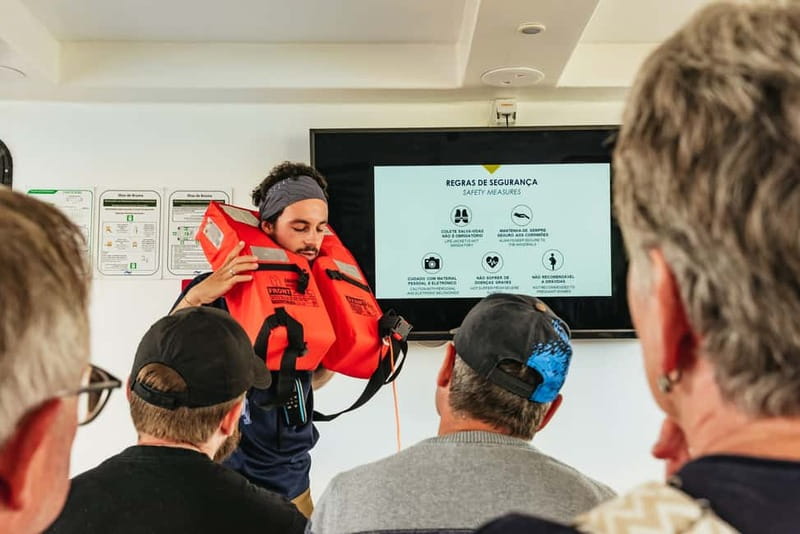
Your outing starts with a crew briefing on safety and a code of ethics. They’ll make sure you’re wearing your life jacket and bring you into the same mindset: this is for viewing wildlife, not chasing it.
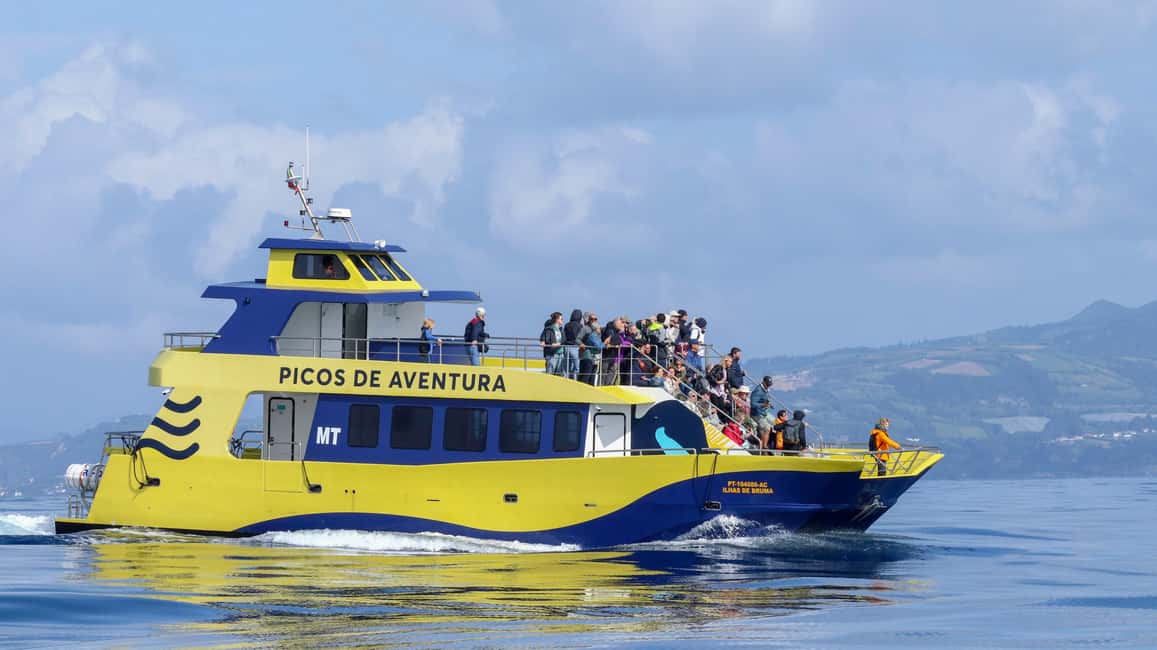
Then you head out into open water aboard a catamaran or speedboat, depending on how many people are booked. You’ll also get a raincoat, which is a smart move on São Miguel, where conditions can flip quickly even when the forecast looks friendly.
A nice detail: you’re not just told to look around. The crew actively listens to what the lookouts spot along the coast and relays that information by radio so the search isn’t random.
The Crew System: Lookouts, Radio, and Biologists Who Explain What You’re Seeing
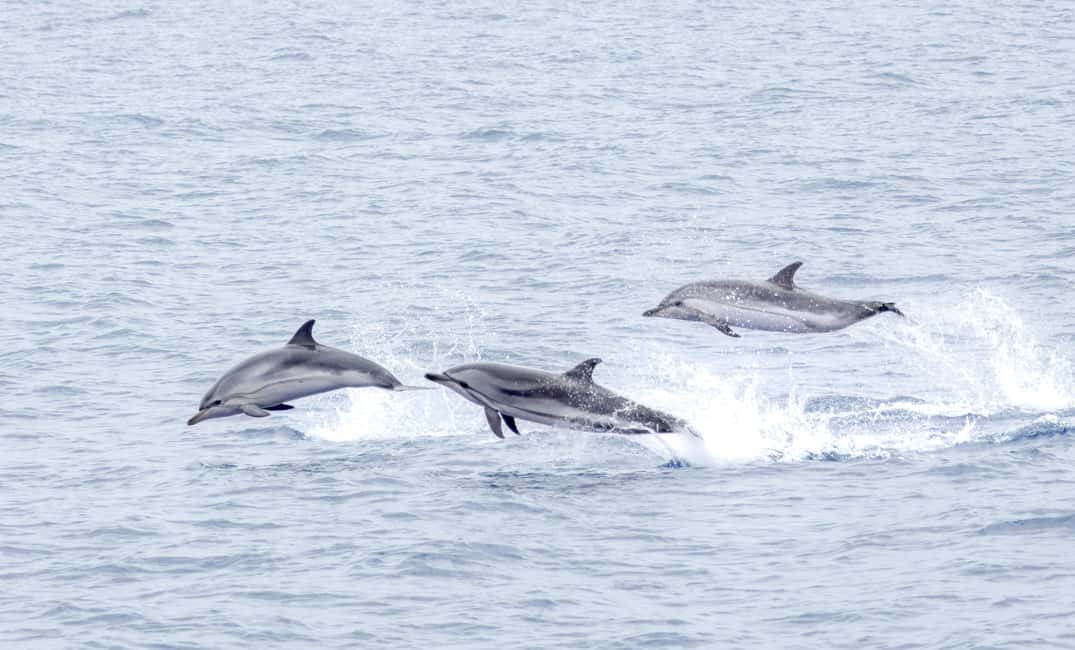
The crew runs the hunt like a team sport. Coast lookouts scan with binoculars and communicate sightings to the boat, and the onboard team responds with the right positioning and timing.
I love that this approach avoids the “disturb then repeat” vibe. One review specifically mentioned the trip doesn’t use sonar to spot animals, which fits the ethics they stress at the start. The goal is to let the cetaceans stay in control of their own movement.
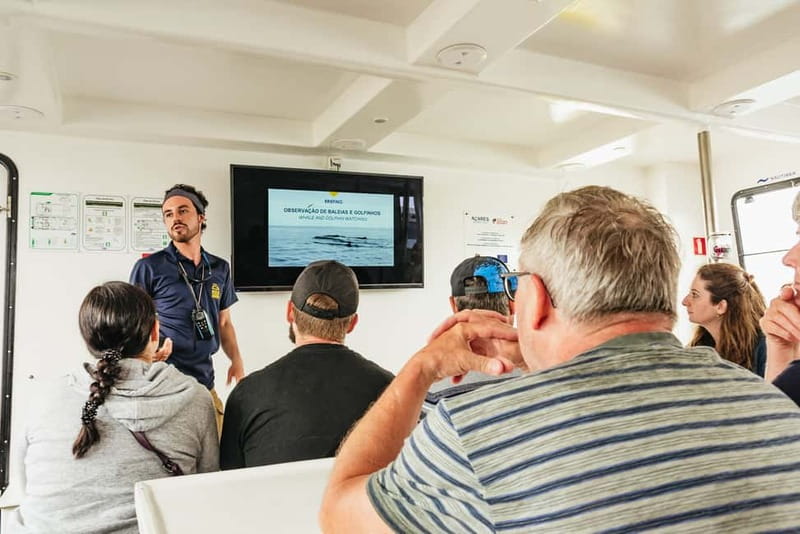
Once you’re out there, the marine biologist layer turns the trip from thrill ride into learning time. You might hear facts tailored to what’s around that day—whether it’s sperm whales socializing at the surface or dolphins moving in coordinated patterns.
And yes, you may hear real guide names too. In past departures, people called out biologists like Mark and guides such as Mateo and Alex, plus skippers like Miguel for smooth driving and careful handling of the boat around animals.
Choosing Your Ride: Catamaran vs Speedboat (And Who Should Care)
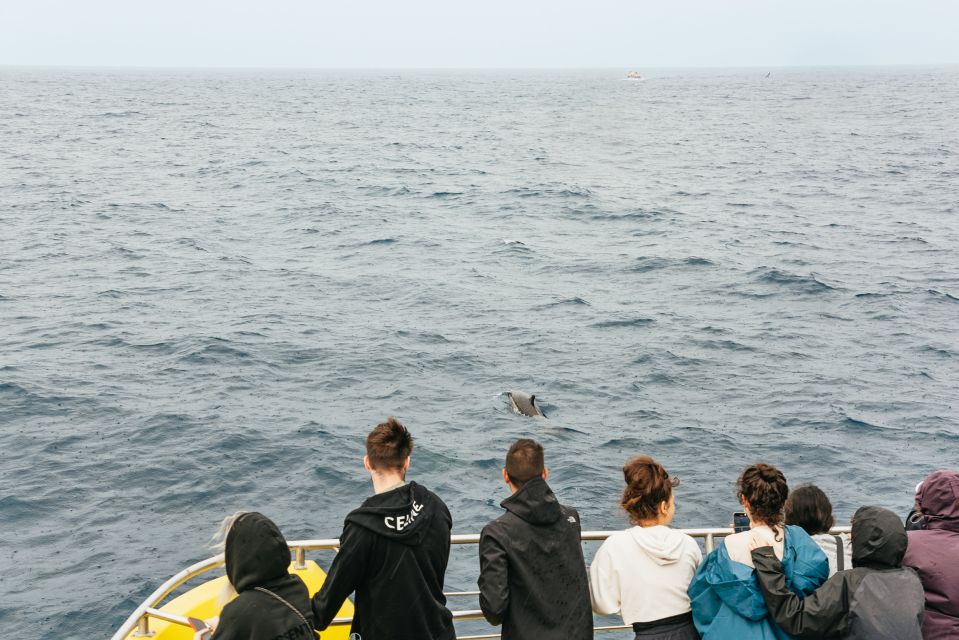
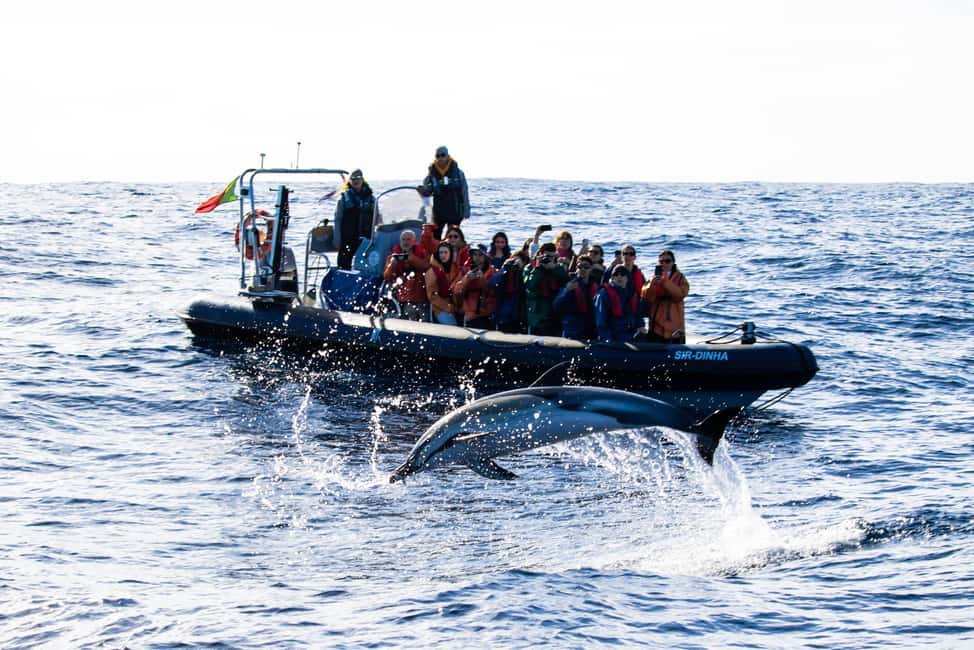
Your biggest comfort variable is the type of boat you’re assigned. The operator uses a catamaran or a speedboat depending on the number of passengers that day, so don’t assume you’ll get the same platform your friend got.
In general, a catamaran feels steadier and gives you a more comfortable viewing setup. One person highlighted a catamaran’s seating/steps for ocean watching plus shelter when rain rolled in, which is exactly what you want when the Azores decide to change the weather mid-trip.
A zodiac/speedboat can be more fun, but it can also be bumpy. Several reviews warned that it may feel rougher on choppier days, and one even noted the front of the boat can be more demanding. If you’re sensitive to motion, I’d ask staff where you’ll sit if there’s flexibility—and lean toward seating toward the back when possible.
What You’ll Actually Look For: Whales and Dolphins in Their Natural Rhythm
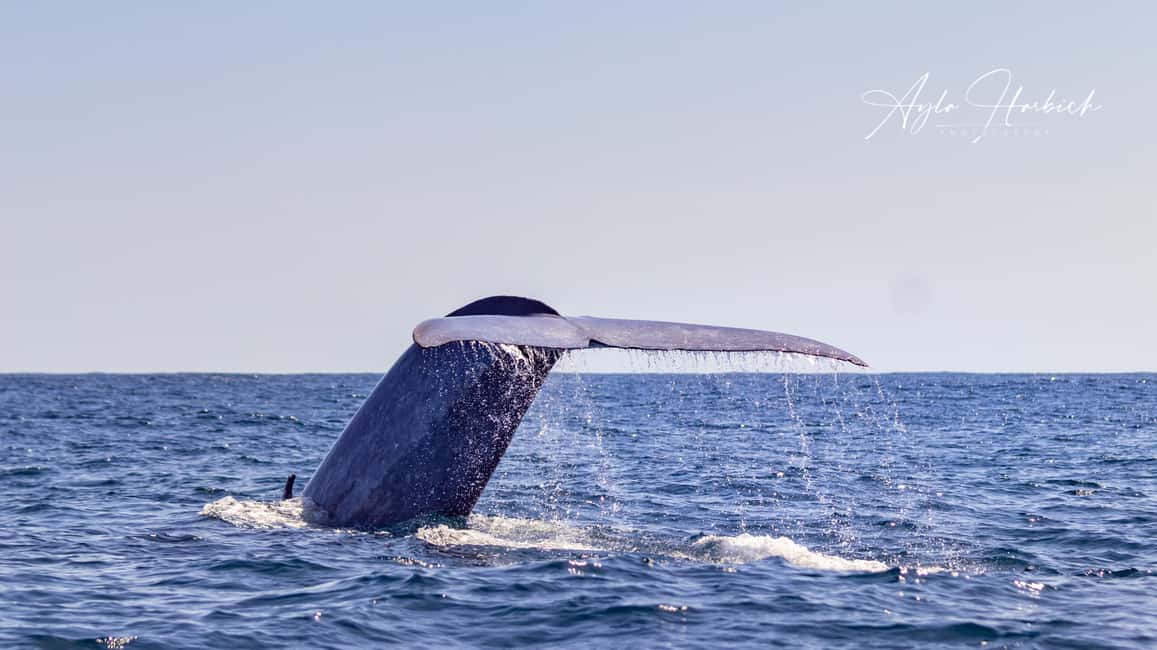
Once the crew finds where the animals are active, you’re watching a living routine. You might see one group, but it’s also common to observe more than one group during the trip depending on where activity lines up.
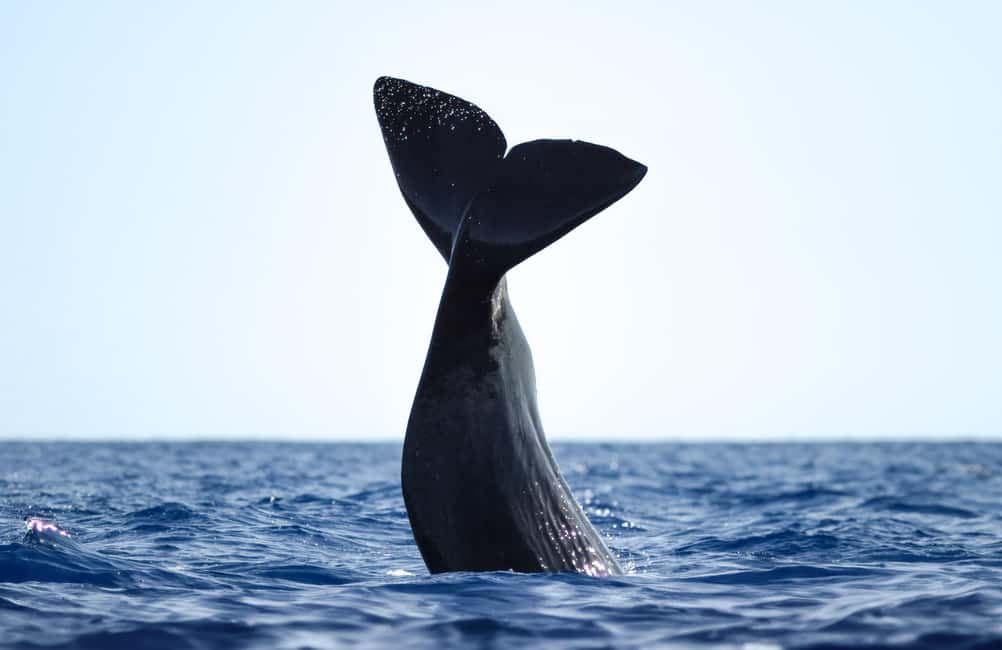
The most commonly reported whale in past trips is the sperm whale. Reviews also mention other whale sightings like blue whales and possibly mink whales, so there is variety—but it comes down to the animals present on your day.
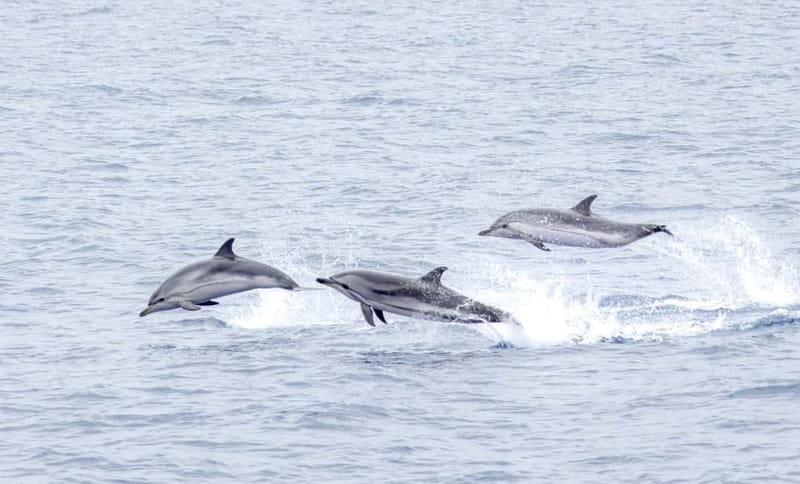
For dolphins, bottlenose dolphins show up often. People also reported common dolphins, plus sightings of dolphins with striped markings (one review described striped dolphin features). Even when the “main whale” doesn’t show, dolphin time can still be genuinely memorable because dolphins often interact with the boat’s vicinity—again, at a respectful distance.
And sometimes it’s not just cetaceans. One review mentioned a sea turtle, plus even more surprising ocean life like flying fish and a hammerhead shark in the broader wildlife mix.
One more thing I appreciate: the crew behavior is tuned to animal comfort. You may see them slow down when approaching pods, and they often let the animals come closer if they want. That reduces stress and tends to improve your chances of a natural, watchable scene.



A Trip That Feels Eventful Even When Conditions Change
Weather is the wildcard in São Miguel, and this tour is openly weather-dependent. If conditions are extreme, you’ll typically be offered rescheduling or cancellation handled by the provider.
But even on less-than-perfect days, the trip can still deliver. One example: a group didn’t see whales, but they spent a long time close to dolphins—enough time that people felt the experience was still worth it. The key is that the crew doesn’t pack up the moment the first sighting is less dramatic.
There’s also a “plan B” safety net built in for whales/dolphins. On the regular whale-watching option leaving from Ponta Delgada, if you don’t see whales or dolphins, you can get a full refund or book another trip for free. On the North Coast option (available Thursday, Friday, Saturday from Rabo do Peixe), the refund/free rebooking rule specifically covers if no whales are spotted—again, based on what you choose.
The Return Sail: Coastline Geology You Can Appreciate in Transit
On the way back, you don’t just turn around and go home. You’ll pass back near the island’s coastline and get a chance to admire the volcanic-style formations and rugged coastal scenery São Miguel is known for.
This part is a bonus because it makes the ride feel like a loop, not a single straight line to an animal sighting. It’s also your wind-down moment: you’ve watched whales out in the open, now you shift attention to the dramatic coastline shape as the boat returns to the marina.
Boat Comfort Tips That Make a Real Difference
Even if you’re excited, don’t ignore the practical stuff. Several reviews hinted at comfort considerations, especially for speedboats.
Here are the on-the-ground tips that match what people experienced:
- Wear closed-toe shoes (sandals and flip-flops aren’t allowed)
- Bring warm layers even if it looks mild in town
- Sunglasses help a lot because spotting something far away on a bright ocean is easier with polarized lenses
- If you’re sensitive to motion, take the provider’s warnings seriously and follow their guidance about when not to ride
You’ll also do better if you bring a reusable water bottle. Food and drinks aren’t included, so plan to hydrate and avoid arriving hungry unless you know you can snack before you go.
Who This Tour Is Best For (And Who Should Skip It)
This is a strong choice if you want a guided whale experience without turning it into a full-day project. It’s also great if you like your wildlife time with structure: safety briefing, ethical approach, expert explanations, and active spotting.
That said, it’s not for everyone. The tour isn’t suitable for:
- Children under 6
- Pregnant women
- People with back problems
- People with heart problems
If you fit any of those categories, don’t try to “tough it out.” The ocean can be unpredictable, and the operator has clear limits for a reason.
For older adults and anyone bringing mobility needs, reviews praised the crew’s care for elderly passengers. That doesn’t make the ride risk-free, but it suggests the staff tends to be attentive with the realities of different guests.
Price and Value: Is $74 Worth It?
At $74 per person for a 3 to 3.5 hour outing, you’re paying for three things at once: boat time, a trained spotting operation with lookouts, and marine bio education. It’s not cheap, but it’s not random either.
Here’s the value logic I’d use:
- If you love wildlife learning, the biologist-led facts are part of what you’re buying, not just the viewing.
- If the day is whale-light, the built-in refund/free rebooking on no-whales/no-dolphins scenarios protects you from feeling like you paid for nothing.
- The trip can include multiple groups (whales and dolphins) rather than a single brief glimpse, which is what you want in a short half-day window.
So yes, it’s priced like a premium wildlife experience. But if you’re in São Miguel with limited time, it’s one of the more efficient ways to target cetaceans without turning the day into a research project.
Should You Book This São Miguel Whale Watching Trip?
Book it if you want an organized, ethics-focused whale and dolphin outing in a short time block, and you’re okay with nature running the show. The combination of radio-guided spotting, a crew that behaves carefully around animals, and marine biologists explaining what’s happening makes this a smart use of your hours.
Skip it if you’re very sensitive to boat motion, you’re in one of the listed medical categories (back/heart), or you need a guaranteed whale sighting. Even with a 99% success rate of sightings, whale species sightings still vary by day.
If you do book, show up ready: warm clothes, proper footwear, sunglasses, and a bottle. Then relax into the process. When the Atlantic decides to cooperate, this trip gives you a front-row seat to wildlife that stays wild because the crew keeps its distance.
FAQ
How long is the São Miguel whale watching trip?
The duration is 3 to 3.5 hours (starting times depend on availability).
Where do the tours depart from?
The regular whale watching tour leaves from Ponta Delgada. A North Coast tour option leaves from Rabo do Peixe and is available Thursday, Friday, and Saturday. Meeting point can vary depending on the option booked.
What should I bring, and what is not allowed?
Bring warm clothing, sunglasses, closed-toe shoes, and a reusable water bottle. Sandals or flip flops aren’t allowed, and luggage or large bags aren’t allowed.
What’s included in the price?
Included are the whale-watching tour, transportation (catamaran or speedboat), the crew and tour guide, a life jacket, and a raincoat.
What happens if no whales or dolphins are spotted?
On the regular tour leaving from Ponta Delgada, if you do not see whales or dolphins, you receive a full refund or can book another trip for free. On the North Coast tour, if no whales are spotted, you receive a full refund or can book another trip for free.
Is the tour suitable for children or people with medical limitations?
It is not suitable for children under 6. It is also not suitable for pregnant women, people with back problems, or people with heart problems.
Final Call: Who This Trip Really Delivers For
This is best for people who want guided whale watching with ethical distance, real marine explanations, and a well-run search strategy using lookouts and radio. If you’re flexible about weather and you can handle a boat ride (especially a speedboat), it’s a strong São Miguel value play at $74 for a half-day out on the Atlantic.