REVIEW · SICILY
Group guided tour of the archaeological park of Neapolis
Book on Viator →Operated by Hermes Sicily Tourist guides group · Bookable on Viator
Neapolis ruins get human scale fast. This guided route ties the sites together with clear storytelling and a radio guide so you don’t miss a word while the group keeps moving.
What I like most is the pace (six stops, about 90 minutes, not a long slog), and the way the guide brings the park to life—at one point in the walk I even learned what to look for in the trees and plants, not just the stones.
One thing to watch: the main entrance ticket is not included unless you choose the tour + ticket option, and during the spring/summer show period the Greek theater is covered and only partly visible.
In This Review
- Key things to know before you go
- Why this Neapolis tour works so well in 90 minutes
- Start line at Largo Anfiteatro: what to do before you enter
- Stop 1: Parco Archeologico della Neapolis (the quick orientation that matters)
- Stop 2: Ear of Dionysius—legendary cave, guided from inside
- Stop 3: Teatro Greco—what you learn beats what you see
- Stop 4: Ara di Ierone—brief, focused, and worth the detour
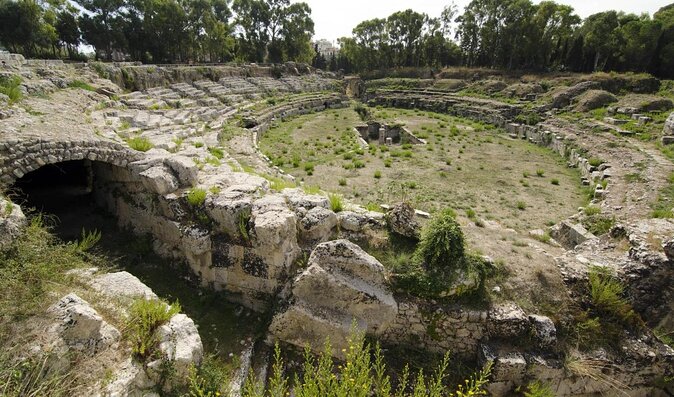
- Stop 5: Syracuse Roman Amphitheater—same idea, different era
- Stop 6: Latomia del Paradiso—panoramic walk through an ancient stone quarry
- Radio guide + small group: the real value for your time
- Price and value: what you’re really paying for
- Who this tour suits best
- Weather and timing: when to book for smoother views
- Guides and the difference they make
- Practical tips to make your tour day easier
- Should you book this Neapolis guided tour?
- FAQ
- Is the entrance ticket included in the tour price?
- How long is the guided tour?
- What language is the tour offered in?
- Do I need to buy a paper ticket at the entrance?
- Is there a radio guide included?
- How many people are in the group?
- Will I be able to fully see the Greek theater?
- What happens if the weather is bad?
- What is the cancellation policy?
Key things to know before you go
- Small group (max 15): easier questions, tighter timing.
- Radio guide included: you can hear explanations even from a few steps behind.
- English tour: delivered as a guided group activity with a mobile ticket.
- Six landmark stops: from Greek-era spots to Roman structures.
- Greek theater visibility changes: sometimes only partial views during shows.
- Entrance ticket is extra: plan for the park entry unless your option includes it.
Why this Neapolis tour works so well in 90 minutes
Syracuse’s Neapolis park can feel big the first time you arrive. Paths split, ruins sit at different heights, and it’s easy to wander for an hour without really understanding what you’re looking at. This tour fixes that. You get a guided route that hits the major stops without making you choose between “the big stuff” and “the best explanations.”
I also like that the group stays small—up to 15 people—because it changes the vibe. You’re not just shuffling along. You actually get time for the guide’s stories and for questions. And with the radio guide, you’re not doing the usual head-turning scramble every time the guide moves slightly ahead.
Finally, the meeting point is practical. You start at Largo Anfiteatro, 2, Siracusa, and the tour ends back there, so you don’t have to solve the logistics puzzle afterward.
You can also read our reviews of more tours and experiences in Sicily.



Start line at Largo Anfiteatro: what to do before you enter
Your tour begins at Largo Anfiteatro, 2, 96100 Siracusa SR. You’ll meet your guide at the entrance of the archaeological park and get a short historical introduction to the ancient city first.
Here’s the practical tip I’d follow: show up a little early so you have time to locate the meeting point and settle your ticket on your phone. The tour uses a mobile ticket, and the smoother you are at the start, the less you’ll stress when your guide calls the group forward.
Also, note the entry detail: the itinerary starts with time at Parco Archeologico della Neapolis, but the admission ticket is not included unless you bought the tour + ticket option. If you’re relying on the included price, double-check what you selected before you arrive.
Stop 1: Parco Archeologico della Neapolis (the quick orientation that matters)
This first stop is your mental map. You meet the guide at the park entrance and get a historical introduction to the ancient city. It’s only a short moment, but it changes how the rest of the ruins land in your brain.
Without that orientation, a site like this can turn into “big rocks and old seats.” With it, you start noticing relationships—Greek-era choices here, Roman adaptations there, and the way the park’s topography shapes where people gathered.
Watch-out: admission isn’t included for this component unless your booking option says otherwise. So if you want a smooth start, plan your park entry first, then join the guided group for the route.
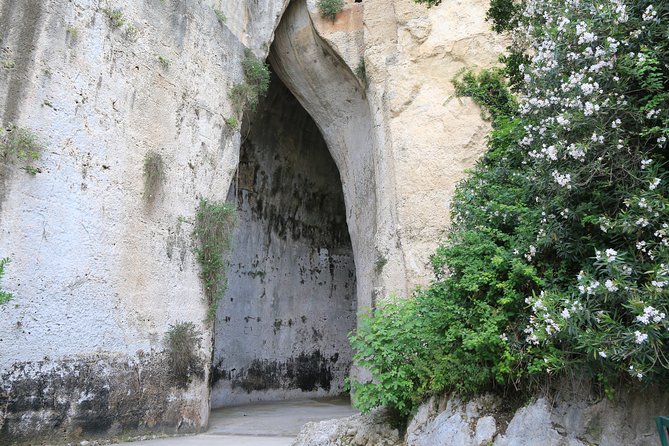
Stop 2: Ear of Dionysius—legendary cave, guided from inside
Next you head to the Ear of Dionysius, with an internal visit to the legendary cave. This is one of those stops that feels instantly different from the open-air structures. You’re moving from wide views and stone tiers into a confined space where the guide’s explanation helps you understand why this place is remembered.
The timing is tight here—about 15 minutes—so don’t treat it like a museum where you can wander slowly. Think of it as a guided scene: you go in, you get the story, you absorb the mood, and then you move on.
Good to know: the tour description says this stop is free of extra admission. The internal visit is guided as part of the experience, so you’re not scrambling for another ticket at the last second.
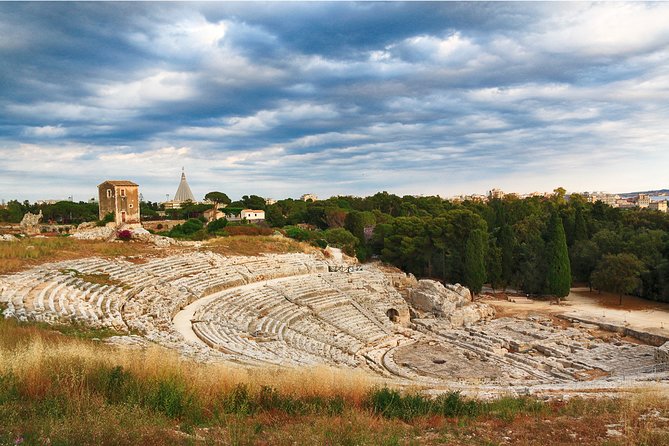
Stop 3: Teatro Greco—what you learn beats what you see
The Greek theater visit is about 30 minutes, and the guide explains the archaeological details plus the history and use of the theater. For me, this is where a good guide can make a place click. A theater isn’t just seating. It’s an engine for how communities gathered and experienced performances and public life.
Here’s the one drawback you should plan around: during the period of the shows—usually spring and summer—the Greek theater is covered and only partially visible. That means you might not get the full “look at the whole structure” moment you were hoping for.
Still, you can get plenty from the guided talk even when visibility is limited. The stop is designed as an explanation-heavy experience, not just photo time.




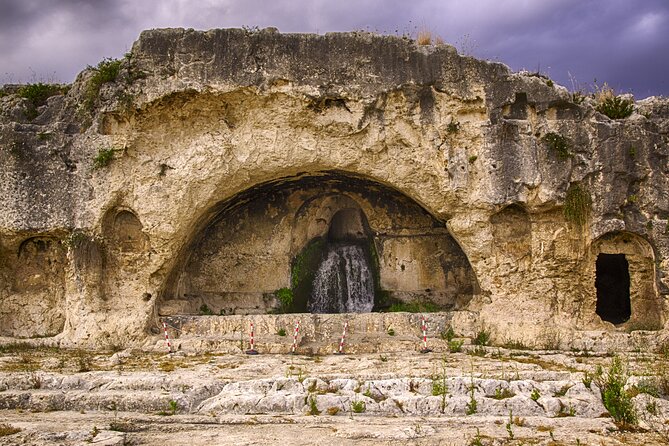
Stop 4: Ara di Ierone—brief, focused, and worth the detour
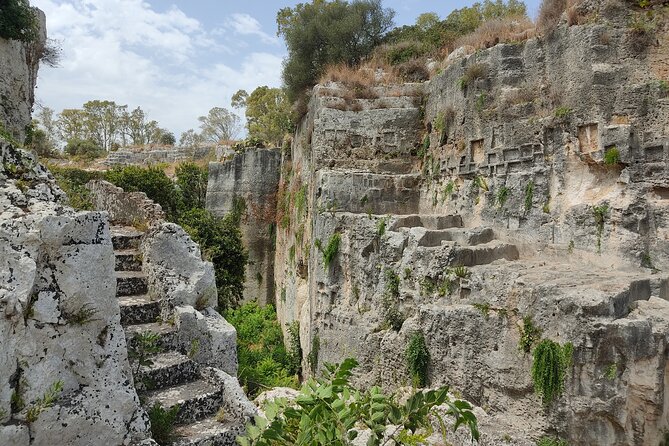
Next comes Ara di Ierone, with a guided tour centered on the history of this suggestive monument. This stop is shorter—around 10 minutes—which is exactly what I like in a short itinerary. You’re not stuck long in one place, but you still get the key context that helps you understand what you’re looking at.
Think of it like a plot beat. The tour keeps moving through Greek settings, then Roman settings, and this stop adds one more layer without turning the afternoon into a marathon.
Admission is listed as free for this stop, so again you’re not facing a ticket hurdle.
Stop 5: Syracuse Roman Amphitheater—same idea, different era
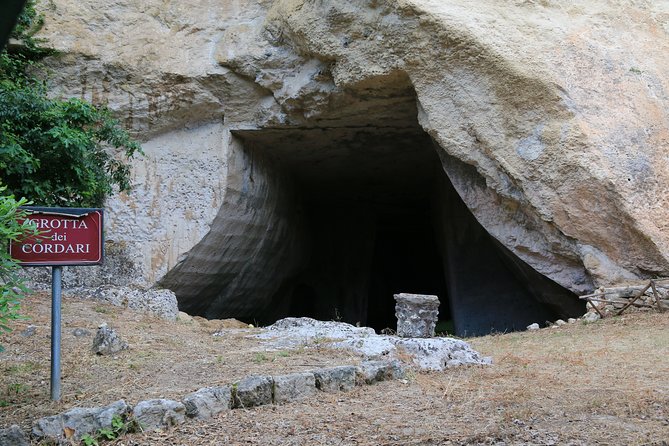
Then you shift again, to the Syracuse Roman Amphitheater. You get a guided visit lasting about 20 minutes, and the focus is on how the amphitheater fits into Syracuse’s broader story.
This is a good contrast point. Even if you’re not a “ruins person,” you’ll likely notice that Greek and Roman performance spaces don’t read exactly the same. The guide helps you connect the two eras instead of treating them like separate stops.
One practical benefit: because the amphitheater is part of an organized route, you’re not trying to figure out the best sequence on your own. The tour handles the transitions.
Stop 6: Latomia del Paradiso—panoramic walk through an ancient stone quarry
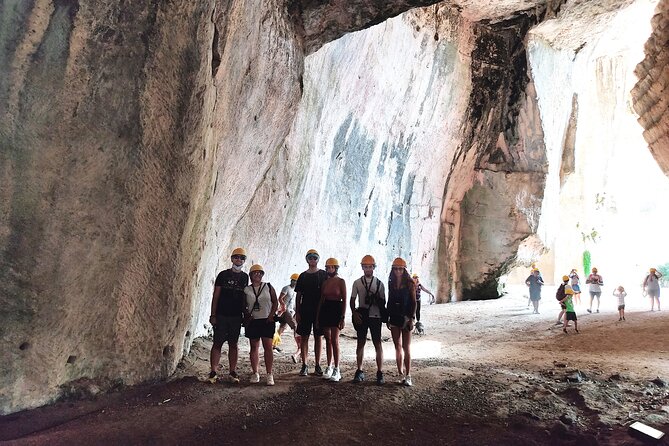
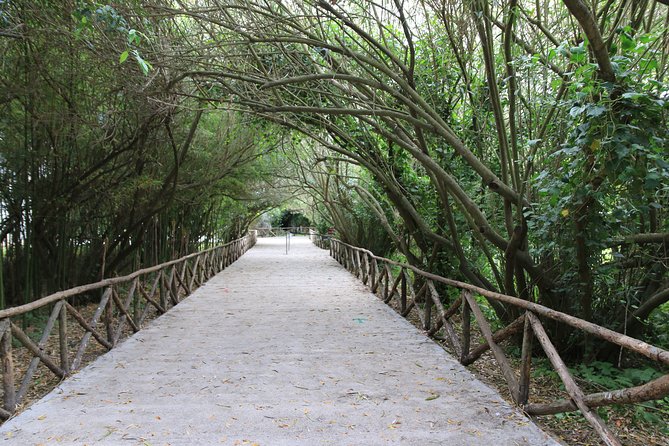
The last stop is Latomia del Paradiso, a panoramic and guided walk through the gardens of the ancient stone quarry. This is about 20 minutes, and it’s a change of pace from the structured, stone-heavy scenes you’ve seen so far.
If your brain is starting to feel overloaded, this part helps reset it. You get open sightlines, a walk with guidance, and the guide may point out plants and trees you can see along the way. That’s a detail I really value because it turns the park from “ruins only” into “ruins in a living environment.”
You also finish the tour back where you started, so you’re not stuck planning your next move right away.
Radio guide + small group: the real value for your time
A lot of group tours promise “we’ll go fast.” This one makes speed feel fair. The inclusion of a radio guide means you don’t have to rely on shouting at each other to hear the explanation. Even if you’re a few steps back, you still get the narration.
With a max group size of 15 travelers, it’s easier for the guide to keep everyone oriented. That helps especially when you’re switching between locations that look similar from a distance. You’ll spend less time figuring out where to stand and more time understanding what you’re seeing.
Price and value: what you’re really paying for
The price is $26.43 per person for about 1 hour 30 minutes. On the surface, it’s a pretty affordable chunk of a day. The real value comes from three things:
- Guiding time across multiple sites (not just one ruin with a long explanation).
- A radio guide, which saves energy and keeps the experience connected.
- A tight itinerary, especially useful if Neapolis is only on your schedule for a single morning or afternoon.
The one financial wrinkle is that entrance tickets are not included (unless you selected the tour + ticket option). So your total cost can vary. If you’re trying to keep the budget simple, confirm what you bought before you arrive.
Who this tour suits best
This is a strong fit if:
- You want multiple key ruins without spending half your day wandering.
- You’re traveling with people who need structure and pacing.
- You care about explanations and context, not just taking photos.
- You prefer a small group setting.
It’s also a good choice for families, based on the tone of the guides’ approach you’ll see in how the group is guided. The tour is described as understandable for travelers participating in general, and it runs in English.
Weather and timing: when to book for smoother views
The experience notes that it requires good weather. If conditions are poor, it may be canceled and you’ll be offered a different date or a full refund.
Then there’s the seasonal detail: during spring and summer show periods, the Greek theater is covered and only partially visible. If you really want a full exterior view of the theater, you might prefer traveling outside that window. If you’re happy to focus on the guided explanation instead, this tour still makes sense.
Guides and the difference they make
What impressed me most in the on-the-ground experience is that different guides all seem to do the same core job well: they keep things clear, and they don’t treat the park like a checklist.
In particular, names you might get include Federica, Eva, Sebastiano, and Gaetano. Guides like these are the reason a short tour can feel satisfying. You’re getting more than “this is old.” You’re getting stories, pacing that stays manageable, and explanations you can actually follow.
If you’re the kind of traveler who hates tours where someone talks at you for an hour, this style is closer to a conversation with structure.
Practical tips to make your tour day easier
- Bring a fully charged phone. You’ll use the mobile ticket.
- Plan for the park entrance ticket unless your booking includes tour + ticket.
- Wear comfortable shoes. You’ll be walking between several areas and doing a guided walk in the quarry gardens.
- If you care about the theater view, check the season. During show periods, it’s partly visible.
- Keep a little buffer in your day. The tour runs about 1 hour 30 minutes, but you’ll be happier if you’re not sprinting afterward.
Should you book this Neapolis guided tour?
Book it if you want the best shot at understanding Neapolis quickly, with less guesswork. The itinerary is compact, the radio guide helps a lot, and the route covers Greek-era and Roman-era highlights without leaving you exhausted.
Skip or rethink it if:
- You’re only interested in one stop and want total freedom to roam.
- You’d rather avoid any chance of partial visibility at the Greek theater during show season.
- You don’t want to deal with the fact that the entrance ticket is extra unless you chose the tour + ticket option.
For most people visiting Syracuse for a limited time, this is a smart way to turn a big archaeological park into something you can actually remember.
FAQ
Is the entrance ticket included in the tour price?
No. The admission ticket is not included unless you choose the tour + ticket option. Other stops in the itinerary are listed as free for admission.
How long is the guided tour?
The tour lasts about 1 hour 30 minutes (approximately).
What language is the tour offered in?
The tour is offered in English.
Do I need to buy a paper ticket at the entrance?
No. The experience uses a mobile ticket.
Is there a radio guide included?
Yes. A radio guide is included, so you can follow the guide’s explanations even when you’re not right next to them.
How many people are in the group?
The tour has a maximum of 15 travelers.
Will I be able to fully see the Greek theater?
It depends on the season. During the period of the shows (usually spring and summer), the Greek theater is covered and only partially visible.
What happens if the weather is bad?
The experience requires good weather. If it’s canceled due to poor weather, you’ll be offered a different date or a full refund.
What is the cancellation policy?
You can cancel for a full refund up to 24 hours in advance of the experience start time. If you cancel less than 24 hours before, the amount paid is not refunded.