REVIEW · SICILY
SALT TOUR-all inclusive: salt tour: Trapani, Paceco, Nubia
Book on Viator →Operated by Trapani Emotions · Bookable on Viator
Salt pans and birds, all with a purpose. This small-group walk through Trapani and Paceco explains how sea water turns into Sicilian salt, using real salt-working mills, tank systems, and a hands-on route the salt workers knew well. It also adds a tasting built around fleur de sel and salt crystals, so the science turns into something you can actually taste.
I especially like the way the guide connects the physical place to the old labor behind it. You move through multiple salt basins—Maria Stella, Salina Chiusicella/Calcara, and Culcasi—so you see saltmaking as a process, not just a postcard. And the group stays small (the operator describes an 8-person intimate experience, with a stated maximum of 16), which helps you ask questions and keep the pace friendly.
One thing to think about before you book: the price includes a lot more than a quick museum stop, and that can feel steep if you only want a brief look at the salt museum. If you’re the type who enjoys a guided walk, tastings, and context, you’ll likely see the value fast.
In This Review
- Key highlights worth your time
- Trapani and Paceco’s salt pans: why this feels real
- Meeting at the port: what the 2.5 hours looks like
- Maria Stella mill: watching saltmaking start at the end of the 1400s
- Salina Chiusicella / Salina Calcara: the birdwatching-and-tanks stop
- Culcasi: museum visit, salt-crystal tasting, and the saltman path
- The tasting: why salt flower and aromatized options are the point
- The guide factor: what makes the experience click
- Value check: your $60.46 buys more than you might expect
- Who should book SALT TOUR Trapani, Paceco, Nubia
- Should you book this salt pans tour or DIY it?
- FAQ
- Is this tour offered in English?
- How long is the SALT TOUR experience?
- Where do I meet and where does it end?
- What’s included in the tasting?
- Is the tour dependent on weather?
- How big is the group?
Key highlights worth your time
- Eight-person feel with a small-group cap that keeps the salt pans from turning into a crowded shuffle
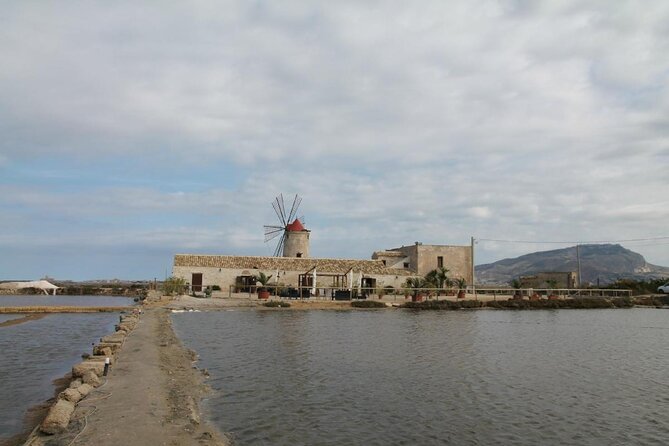
- Maria Stella mill with roots that stretch back to the late 1400s
- Salina Chiusicella’s tank system (the sea-water-to-salt transformation in stages)
- Culcasi salt museum plus a “saltman path” walk inside the basins
- Salt tasting including salt crystals and natural + flavored salt flower (citrus and herbs)
Trapani and Paceco’s salt pans: why this feels real
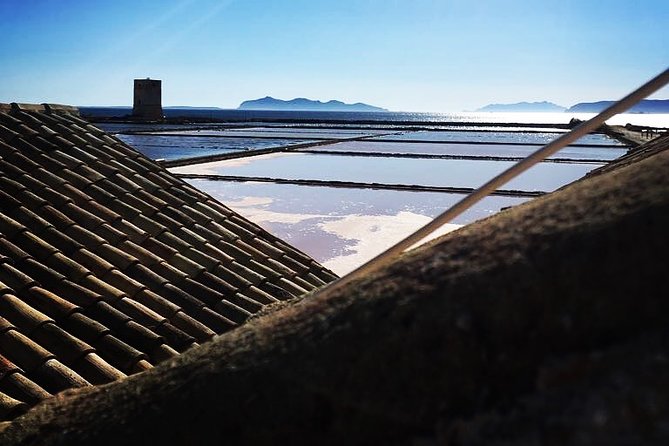
Trapani and Paceco are famous for salt, but this experience treats salt as a working craft. You’re not just looking at flat white ground—you’re walking through the logic of the operation: wind, sun, evaporation, and a whole setup of tanks used in sequence.
I like that the tour is built around the how and why, not only the what. That means you leave knowing why certain areas matter, how salt is harvested, and what made this industry important to local life.
You can also read our reviews of more tours and experiences in Sicily.

Meeting at the port: what the 2.5 hours looks like
You meet at the Vigili Del Fuoco Distaccamento Portuale Trapani, Via Ammiraglio Staiti 101, right at the port area. After a short ride, you head to the first salt pan and start walking from there. The total time is about 2 hours 30 minutes, and the pace is generally set up for viewing, stops, and tasting without dragging.
You also get an air-conditioned vehicle, which matters on hot or bright Sicilian days. Plus, everything is organized so you don’t have to puzzle out entrances or parking just to reach the salt basins.
One practical note: the tour requires good weather. If conditions are poor, you’ll be offered a different date or a refund, so keep that flexibility in mind.
Maria Stella mill: watching saltmaking start at the end of the 1400s

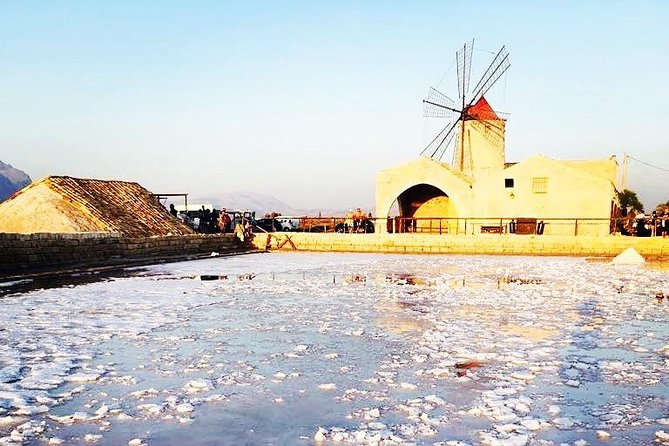
Your first real stop is the Maria Stella salt pan area, reached about ten minutes after departure. Here, you get to admire an early mill setup linked to the late 15th century—one of the older salt-working structures in the region.
This part works well because it gives you a baseline for everything that follows. You see how salt production wasn’t a casual activity; it was organized infrastructure, with mills and systems built to do the job day after day.
The drawback? If you’re short on time in Trapani and want the maximum number of photos per minute, the earliest stop can feel a bit more explanatory than scenic. Still, it’s the kind of context that makes the later tanks much easier to understand.
Salina Chiusicella / Salina Calcara: the birdwatching-and-tanks stop
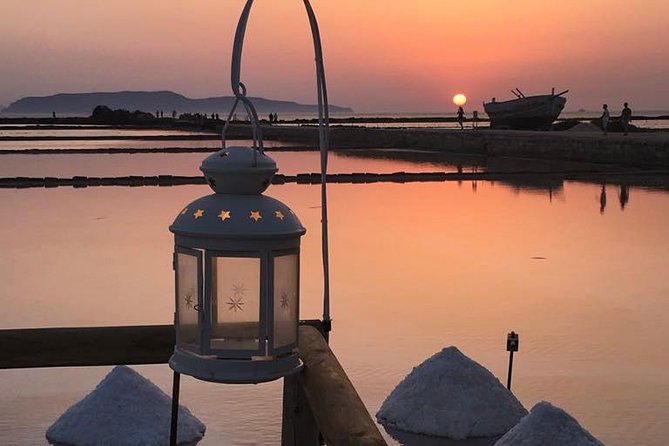
Next you move to Salina Calcara, also described as Salina Chiusicella. This is where the tour slows down to explain the four orders of salt tanks—basically the staged transformation from sea water into salt.
And yes, the scenery includes wildlife. The route is set up for spotting birds like flamingos, herons, and egrets. You may also see the “cavalieri d’Italia” (often referenced as part of the local bird cast), depending on season and conditions.
What I like about this stop is the balance: you’re learning the process while the space keeps pulling your eyes upward and outward. It’s a good reminder that salt pans aren’t only industrial sites—they’re also ecosystems.
Culcasi: museum visit, salt-crystal tasting, and the saltman path
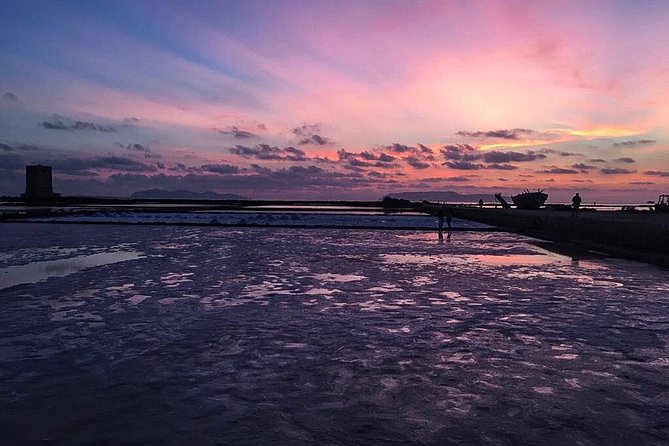
The highlight-heavy block comes at Saline Culcasi. This is the last salt pan on the route, and it connects to an ancient mill listed as over 600 years old, now turned into a museum.
Inside, you learn how salt was collected and how the system worked: the tools, the hierarchy of the work, and the way salt shaped daily life in this part of Sicily. This matters because saltmaking wasn’t just chemistry—it was jobs, routines, and local structure.
Then you switch from museum facts to tasting and movement. You’ll sample different salt crystal types, and the most prized item is salt flower—natural and also flavored with combinations like orange, lemon, rosemary, and oregano (flavoring depends on what’s available during your visit). After that, you do the “path of the salt worker,” a walk inside the salt tanks that ties everything together with real-world walking.
Time-wise, this stop is about 1 hour 15 minutes, so plan to come hungry in the sense that you’ll want to pay attention during explanations and tasting.



The tasting: why salt flower and aromatized options are the point

If you’ve only ever bought salt in a shaker, the tasting is where your understanding levels up. You get to compare crystal textures, and then you’re introduced to salt flower, which is treated as the delicate, precious part of the process.
Even if you’re not a food nerd, the tastings help you understand the difference between everyday salt and specialty salt. That also explains why the guide spends time on how premium salt gets handled and gathered.
Also, the flavored salt flower options (citrus and herb mixes) are practical. You can treat them like finishing salts for simple dishes—think salads, roasted vegetables, or even finishing a plate of pasta—without needing a huge culinary setup.
The guide factor: what makes the experience click

The experience is led by a guide, and the best part is how the explanations land. In particular, I like that the guide talks about the salt industry as a local system with its own logic and even its own math-like structure in how quantities were managed.
The guide also adjusts as needed. One person noted the guide stayed flexible with timing when traffic affected the schedule, which is a real quality-of-life detail when you’re trying to keep your day on track.
One more plus: the tour is offered in English, and the operator provides a mobile ticket. That combination reduces last-minute friction—always helpful when you’re in a port area and trying to keep things simple.
Value check: your $60.46 buys more than you might expect
At $60.46 per person, you’re paying for more than a salt museum ticket. Your price includes:
- Air-conditioned vehicle
- All fees and taxes
- Salt crystal + aromatized salt flower tasting
- Ticket to the Salt Museum
- Access to three different salt pans
- The “salt worker path” walk
- A guided experience
That’s the value side.
Now the balanced part: a small share of people felt the experience wasn’t worth the money compared with doing something more independent, like getting a taxi straight to the salt museum. If you’re the type who prefers to self-guide with photos and skip long explanations, you may feel you paid for time you didn’t need.
My advice: don’t judge this tour like it’s a museum ticket plus transport. Judge it like it’s a guided interpretation of an active landscape of craft. If you want that, you’ll likely feel the price makes sense.
Who should book SALT TOUR Trapani, Paceco, Nubia
This fits best if you want:
- a small-group, guided walk through salt basins
- tastings tied to what you’re seeing
- history and process explained in plain language
- photo time at salt pans, especially around nicer light
It’s also a good choice for families and mixed ages. The tour includes a structured museum stop and clear walking segments, so it doesn’t require marathon stamina.
If you hate walking on uneven ground or you want a mostly indoor, short-and-sweet visit, you might find the outdoor basin walking less your style. And if you already plan to spend hours on your own at the salt museum, you could decide you only need the museum—not the full route.
Should you book this salt pans tour or DIY it?
Book it if you want a guided route that turns saltmaking into something you understand, plus tastings that help you recognize the differences between salt types. The mix of Maria Stella, the tank-system explanation at Salina Chiusicella/Calcara, and the Culcasi museum + salt flower tasting is hard to replicate well on your own without doing extra planning.
Skip or DIY it if your main goal is only the museum and you’d rather handle transport independently. Some people felt the experience wasn’t worth it for that specific reason.
My practical rule: if you’ll actually use the guide to learn how the process works and you care about tasting specialty salt, book. If you only want a quick look and photos, price it against a self-guided plan first.
FAQ
Is this tour offered in English?
Yes. The experience is offered in English, and you’ll have a guide leading the route.
How long is the SALT TOUR experience?
It runs for about 2 hours 30 minutes (approx.).
Where do I meet and where does it end?
You meet at Vigili Del Fuoco Distaccamento Portuale Trapani, Via Ammiraglio Staiti 101, and the tour ends back at the same meeting point.
What’s included in the tasting?
You’ll taste salt crystal types and salt flower, including flavored salt flower options such as orange, lemon, rosemary, and oregano (based on what’s available during the visit).
Is the tour dependent on weather?
Yes. The experience requires good weather, and if it’s canceled due to poor weather, you’ll be offered a different date or a full refund.
How big is the group?
The experience states a maximum of 16 travelers, and it also highlights an intimate format with limited places (described as 8 people) for a more personal experience.