REVIEW · SICILY
Classical Ortigia Guided Group Tour
Book on Viator →Operated by Hermes Sicily Tourist guides group · Bookable on Viator
Ortigia makes history feel walkable and close. This 2-hour guided group route strings together Greek, medieval, and Baroque highlights with just enough time to look, snap photos, and ask questions. With an English guide and radio receivers (when needed), you get the story without shouting over the streets.
What I like most is how the tour starts with the Temple of Apollo and keeps tying each stop back to why Ortigia looks the way it does. I also love the pace and clarity delivered by guides such as Eva, who keeps things moving but still gives time to linger and get good angles.
One thing to consider: the Cathedral of Syracuse interior is optional and costs extra (2 Euros), so you’ll want to decide ahead of time if you’ll pay for that inside visit.
In This Review
- Key highlights you will notice fast
- A tight route through big eras of Ortigia
- Temple of Apollo: the Greek start point that explains everything later
- Palazzo Montalto and the Spirduta side streets
- Piazza Archimede and Fontana di Diana
- Piazza Duomo and Syracuse Cathedral: Baroque on ancient Greek ground
- Santa Lucia alla Badia: holiday importance and Caravaggio’s painting
- Fonte Aretusa: papyrus plants and the myth you can see
- Lungomare di Levante and Cala Rossa: sea views before the finish
- Giudecca quarter and the ending near La Via della Giudecca
- Price and value: what $30.12 buys you
- Who this tour suits best
- Should you book this Classical Ortigia guided group tour?
- FAQ
- How long is the Classical Ortigia guided group tour?
- Where does the tour start and where does it end?
- Is the tour offered in English?
- Are entrance tickets included?
- What is included in the tour price?
- What if the weather is bad?
Key highlights you will notice fast
- Temple of Apollo orientation: you begin with the Greek origins of the city, not a random square.
- Palazzo Montalto and Spirduta alleys: medieval lanes plus urban-legends style storytelling.
- Piazza Archimede framing: you’ll connect the Fontana di Diana to the surrounding architecture.
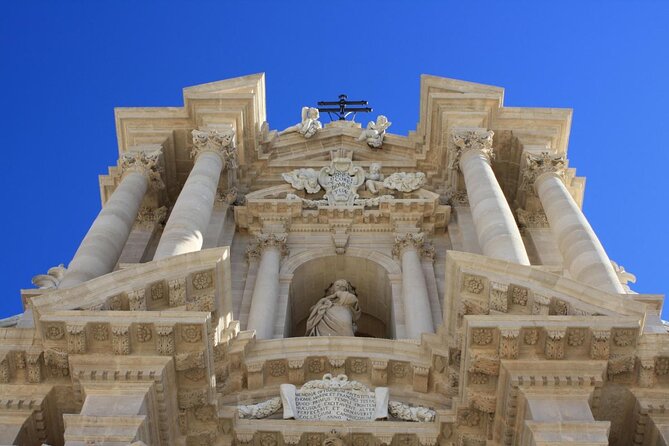
- Syracuse Cathedral on ancient foundations: Baroque look on top of Greek temple structure.
- Santa Lucia alla Badia and Caravaggio: a major religious holiday paired with a standout artwork.
- Aretusa Spring by the water: papyrus plants and the myth behind the setting.
A tight route through big eras of Ortigia
Ortigia is small, but its layers are huge. This tour is built for that reality: you get a guided path through Syracuse’s historic center in roughly two hours, without spending your whole day figuring out where to go next.
You’re paying about $30.12 per person, and a lot of the stops are free to enter. That shifts the value toward what you’re actually buying: a focused guide, a logical order of sights, and the help to understand what you’re seeing on the street. The group stays small (up to 20), which matters here because Ortigia’s lanes can feel tight when everyone stops at once.
When the group is larger, you get radio guide receivers. That’s a small detail that makes a big difference: you can keep walking and still hear the story clearly, which helps you stay present instead of constantly stopping to get close to the front.
You can also read our reviews of more tours and experiences in Sicily.
Temple of Apollo: the Greek start point that explains everything later
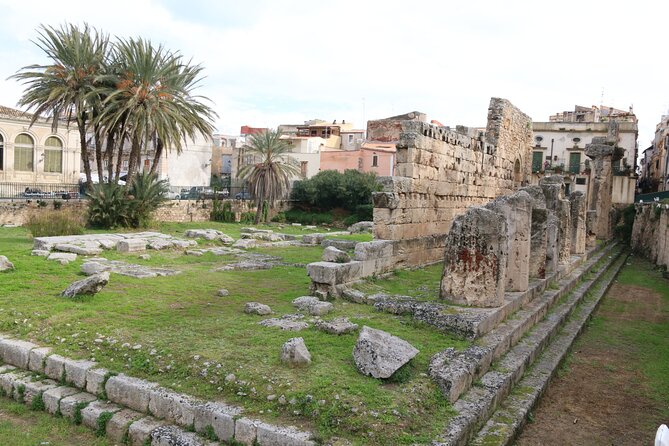
The walk begins at the Temple of Apollo (Apollonion). Even if you’ve seen Greek temples in other places, starting here gives you a framework for Ortigia. The guide connects the site to the origins of the Greek city and points out what makes the temple special when you’re thinking about light, power, and city identity.
This stop is quick and efficient, with about 10 minutes on the clock. It’s also marked as free for the visit, so you’re not stuck spending time on ticket lines before you even get your bearings.
What you should do at this first stop: treat it like your “decoder ring.” Once you understand what the Greeks were building and why, the later contrast—medieval corners, Baroque church facades, and the cathedral’s unusual foundation—makes far more sense.
Palazzo Montalto and the Spirduta side streets
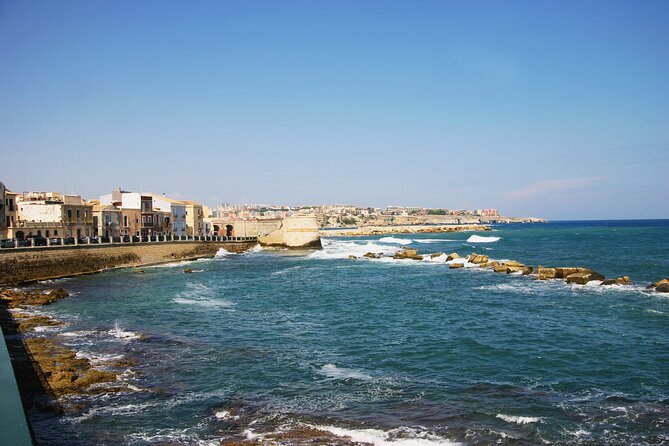
Next up is Palazzo Montalto. This is where the tour shifts from monumental archaeology to the lived texture of Ortigia. You’ll wander the alleys and move through the area tied to the ancient Spirduta district, with the guide sharing urban legends and medieval context as you go.
The time here is also around 10 minutes, which keeps the pace lively. You won’t be lingering like you might in a museum. Instead, you’re getting a guided sense of place—how a palace and its surroundings relate to the street patterns and local storytelling.
A practical tip: if you like architecture, keep your eyes up as you walk. These lanes are famous for sudden views and framed glimpses, and the guide’s story helps you understand what you’re looking at instead of just passing by walls.
Piazza Archimede and Fontana di Diana
Then you head to Fontana di Diana in and around Piazza Archimede. This is a neat moment in the route because it slows down the theme from ruins and legends to something more civic and theatrical: a neoclassical fountain surrounded by buildings that shape how the square feels.
You’ll have about 10 minutes here. It’s a short stop, but it’s a useful one. The guide sets the square up as a key part of the historic center, so the fountain isn’t just a photo—it’s a landmark in the walk’s mental map.
If you want the best photos, aim to shoot from slightly different angles while the group is still gathered. The square works well for quick composition shifts, and with a guided pace you usually get at least a couple of moments where you can position yourself without feeling rushed.
Piazza Duomo and Syracuse Cathedral: Baroque on ancient Greek ground
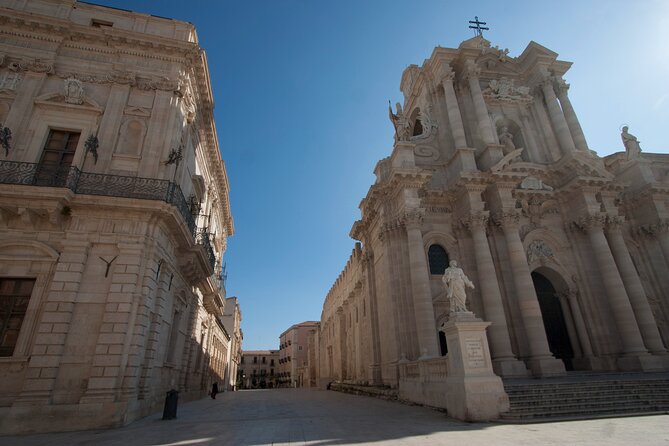
The tour’s heart is Piazza Duomo, where you get the “beating heart of Syracuse” feeling. Expect about 10 minutes around the square and its surrounding buildings, with the guide setting the tone for the cathedral stop.
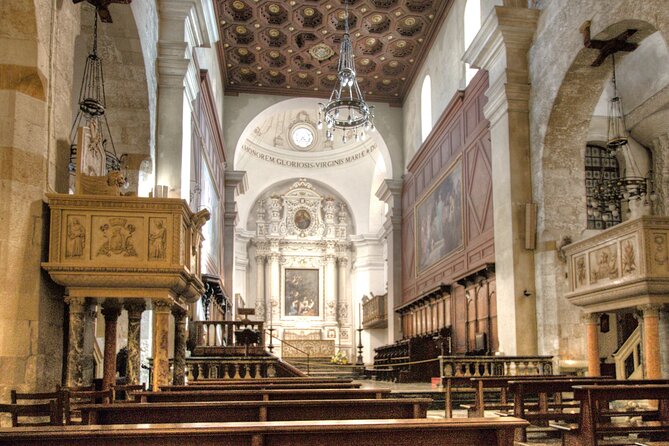
Then you move to Syracuse Cathedral. This is one of the tour’s most compelling reasons to book, because the church’s story is visually surprising: it’s described as a Baroque-style cathedral built on an ancient Greek temple. That single sentence matters. It tells you you’re not just looking at decoration—you’re looking at layers of sacred space.
The guide explains the cathedral’s peculiarities, and you get options. If there are no religious functions, the interior visit is optional. The entrance ticket isn’t included and is listed at 2 Euros per person. If you prefer not to go inside, you’ll get a short break for something simple like a coffee.
This is a great moment to decide what kind of tour you want. If you care about the inside details, bring the 2 Euros and plan to step in when it’s available. If you’d rather keep moving, the exterior and the guide’s explanation still give you a solid payoff.



Santa Lucia alla Badia: holiday importance and Caravaggio’s painting
After the Duomo area, you’ll visit Chiesa di Santa Lucia alla Badia. This stop lasts about 15 minutes, and it has a different emotional flavor than the cathedral. Instead of focusing on architectural layers, the guide talks about a religious holiday tied to Santa Lucia and introduces one of Syracuse’s big art draws.
The highlight here is the mention of Caravaggio and the church’s most important painting. Even without getting lost in art terms, the practical value is clear: a guide helps you know what to look for when you’re standing in front of something major.
If you’re the type who likes to understand why locals care, this is the moment. Religious festivals can feel like background noise if you don’t get context. With the explanation built into the stop, the church becomes more than a landmark.
Fonte Aretusa: papyrus plants and the myth you can see
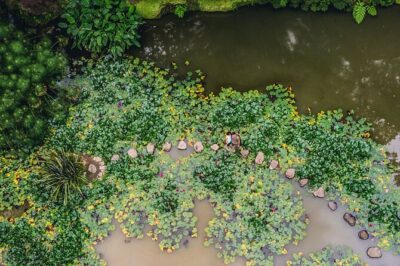
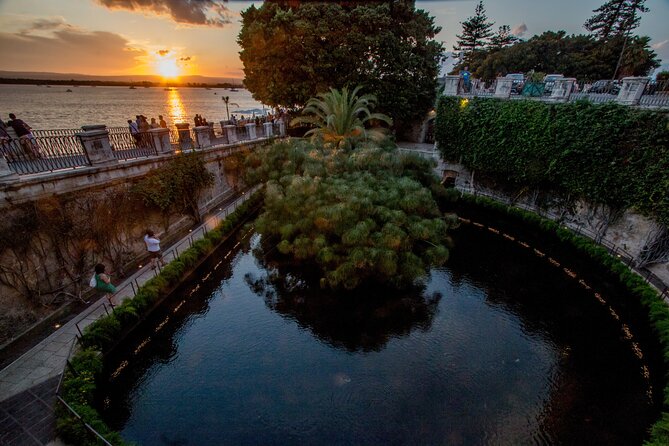
Next you walk toward the sea and Fonte Aretusa, with about 15 minutes here. This is the tour’s “nature and legend” stop, and it’s especially effective because it combines a visible element—papyrus plants—with a story tied to the place.
Aretusa is described as a legendary spring, and the guide shares the romantic myth linked to it. That pairing is the reason the stop works even if you’re not a mythology person. You can look at the setting, notice the plants, and then connect those sights to the story the guide tells.
Practical advice: if the wind is up or the light is harsh, give yourself a minute to adjust where you stand before taking lots of photos. Waterfront light can change quickly, and a calm moment here helps you capture the right mood.
Lungomare di Levante and Cala Rossa: sea views before the finish
From Aretusa you continue to the Lungomare di Levante Ortigia, crossing the island toward the eastern promenade. The tour gives you about 10 minutes here, plus access to the small beach of Cala Rossa.
This part of the route matters because it breaks up the dense concentration of historic structures. Even a short coastal stretch helps you reset. You’ll see the sea setting Ortigia’s mood, and it gives you an easy chance to take photos that aren’t just facades and doorways.
A good way to use this stop: think of it as your chance to orient geographically. After you’ve walked through squares and churches, the shoreline helps you understand why Ortigia’s city shape makes sense.
Giudecca quarter and the ending near La Via della Giudecca
The tour closes by moving through the Giudecca district, described as the ancient Jewish quarter of Syracuse. You’ll end after about 20 minutes, with the route specifically mentioning Fish bar La Via Della Giudecca as the end point area.
The key value here is context. Ortigia isn’t only Greek and Christian. The Giudecca area reminds you the city held multiple communities and stories, all pressed into the same streets over time.
Do keep in mind: the end location is a fish bar, but the tour data doesn’t say food is included. Still, it’s a useful place to pause afterward if you want a casual bite or drink after the walking portion.
Price and value: what $30.12 buys you
At $30.12 per person for an approximately two-hour walk, this tour is priced in a way that makes sense for people who want orientation fast. The biggest value isn’t that every stop is free—it’s that the guide keeps you moving through a coherent story.
Here’s what you’re getting for your money based on the tour info:
- A guided route through major Ortigia landmarks
- English-speaking instruction
- Up to 20 people in the group
- Radio receivers if the group is large
- Multiple stops listed as free admissions
- An optional Cathedral interior visit for 2 Euros
The possible “extra cost” is the cathedral ticket if you choose to go inside. But compared to booking separate guided museum visits, this is a fairly low-friction way to get a guided sweep through several of Ortigia’s defining sights.
Also, booking tends to happen about 29 days in advance on average. That usually signals limited availability for a popular walking route, so it’s smart to reserve when your dates are firm.
Who this tour suits best
This works well if you:
- Want a structured way to see Ortigia in a short time
- Like explanations that connect different eras—Greek origins, medieval streets, and Baroque church landmarks
- Prefer a group that stays small and doesn’t feel like a stampede
- Enjoy art and culture context, including the stop that points to Caravaggio
It might be less ideal if you’re someone who wants long, independent museum-style time at each location. The tour is designed for quick, guided stops with photo chances, not prolonged stays.
Because the experience requires good weather, plan to keep an eye on forecasts. If conditions are poor, you may be offered another date or a refund.
Should you book this Classical Ortigia guided group tour?
I’d book it if you want a reliable path through Ortigia that ties the landmarks together. The route hits strong anchors: Apollo, the Duomo area, Santa Lucia, Aretusa, and the seaside promenade—plus a finish in the Giudecca district where the city’s story feels broader.
You should strongly consider it if you care about understanding why the cathedral looks the way it does, especially with its Baroque church on ancient Greek temple foundations. And if the Caravaggio connection and the Santa Lucia holiday context are your kind of thing, this tour gives you that link in a way that a wandering visit might not.
Skip it only if you know you’ll want long solo time at each site or you dislike guided group pacing. Otherwise, it’s a solid value way to get the big-picture Ortigia story—and still have room to enjoy the streets on your own right after.
FAQ
How long is the Classical Ortigia guided group tour?
The tour lasts about 2 hours.
Where does the tour start and where does it end?
It starts at the Temple of Apollo (Apollonion) in Syracuse and ends at Piazza Archimede in Siracusa SR (the tour also references Fish bar La Via Della Giudecca as the finish area).
Is the tour offered in English?
Yes, it is offered in English.
Are entrance tickets included?
Most stops are listed as free. The optional interior visit to Syracuse Cathedral is not included and costs 2 Euros per person.
What is included in the tour price?
The tour includes the services of the guide and, for larger groups, radio guide receivers.
What if the weather is bad?
This experience requires good weather. If it’s canceled due to poor weather, you’ll be offered a different date or a full refund.