REVIEW · TAHITI
Private Tours of Tahiti by Lydia. Full or Half Day
Book on Viator →Operated by Tours of Tahiti · Bookable on Viator
A private day with Lydia turns Tahiti into a story. You’ll get private access with tailored explanations at every stop, from black-sand history at Point Venus to waterfall and spring-fed geology that locals respect. I especially like the way Lydia connects Polynesian customs, flora, fauna, and geology into one clear thread, and I like that the pace stays un-rushed even when the day is full. One thing to consider: with a packed route and good-weather requirement, you’ll want some flexibility in your schedule.
Lydia has lived on Tahiti since 1993 and married a Polynesian in 1995. Her personal connection shows in how she frames what you’re seeing—what people believed, how they lived, and why certain places still matter today. If you’re the type who wants more than quick photos, this tour is built for you.
Full-day tours run about 8 hours (often long enough to include Teahupoo), while half-day tours are closer to 5 hours. Most of the major sites you visit won’t charge admission, but the museum add-on is extra, so it helps to decide in advance if you want that final stop.
In This Review
- Key highlights
- Tahiti in One Day: Why This Private Format Works
- Price and Logistics: What $650 Buys (and How to Think About Value)
- Point Venus: Black Sand, Matavai Bay, and the First Look at Tahiti’s History
- Parc de Tahara’a: One Tree Hill Views Over Moorea and Papeete
- Arahoho Blowhole: Ocean Swells and the Old Road Story
- Cascade Vaimahuta: A Permanent Waterfall in the Faarumai Valley
- Vaipahi Water Gardens: Sacred Purification Pools and Fish in the Water
- The Lava Tube Cave: Fresh Water Relief You Can See, but Not Swim
- Arahoho to Marae to Teahupoo: Culture Shifts and Surf Reality
- Papara and the Taharuu River Mouth: A Surf-Friendly Detour
- Te Fare Iamanaha Museum: When the House of Treasures Adds the Final Piece
- Lydia’s Guiding Style: Tailored Itineraries and Calm, Organized Time
- Who Should Book This Tahiti Tour (and Who Might Skip It)
- Should You Book This Tour with Lydia?
- FAQ
- How long is the full-day and half-day tour?
- What does the tour cost?
- Is this a private tour?
- Do you include hotel pickup?
- Is bottled water provided?
- Are entrance fees included?
- Is the Te Fare Iamanaha museum included?
- Is lunch included in the price?
- What could cause the tour to be canceled or changed?
- Is it suitable for everyone?
Key highlights
- Lydia’s life-on-Tahiti context: she’s been on the island since 1993 and guides with a strong cultural lens
- Black sand to blowholes to waterfalls: you see ocean power and fresh water in the same day
- Vaipahi Water Gardens are still spiritually respected: purification pools, plus fish in the pools
- Spring-fed lava tube cave, no swimming: cool relief without risky detours
- Teahupoo on a full day: one of the most dangerous surf spots on the planet, plus 2024 Olympics context
- Optional House of Treasures museum: Te Fare Iamanaha-Musee de Tahiti et des Iles on request
Tahiti in One Day: Why This Private Format Works
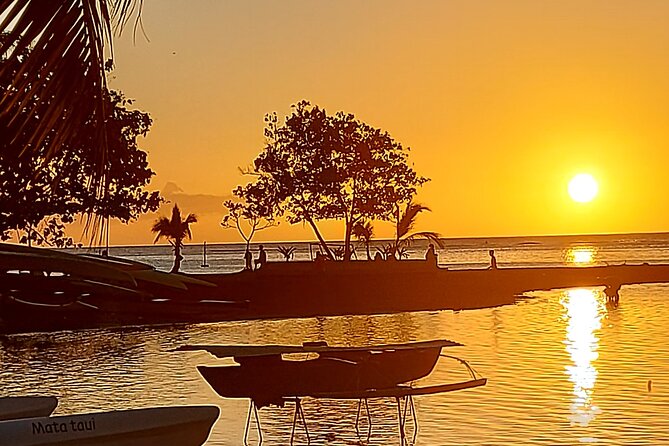
Tahiti can feel huge when you only have a short window. Driving yourself usually means guessing where the best views are, missing the cultural context, and spending more time in transit than you’d like. This private setup fixes that by putting one focused guide in charge of the flow—so you’re not scrambling between stops or trying to interpret things from a sign.
What you gain is momentum with meaning. Lydia doesn’t just point out scenery; she links it to how Polynesians understood the land and sea. You’ll hear about customs and daily life alongside geology, flora, and fauna. That’s the big difference between seeing Tahiti and understanding it.
The other practical win: it’s built for small groups, up to 8 people. That means you can ask questions without waiting for a busload of strangers to react. In the same breath, you still get a real vehicle setup and a day that feels organized—not random.
You can also read our reviews of more tours and experiences in Tahiti.

Price and Logistics: What $650 Buys (and How to Think About Value)
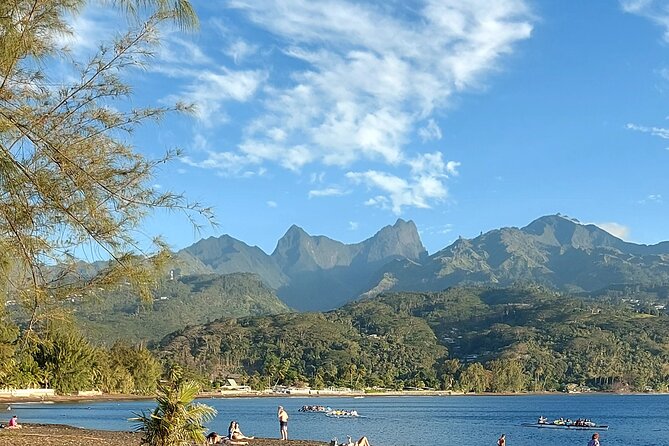
The price is $650 per group, up to 8 people. On a per-person basis, it can be a lot more reasonable once you fill the group—especially if you’re traveling as a family or a couple of couples.
Here’s what makes the price feel more like value than expense:
- A professional guide for the full ride and stop time
- Bottled water plus breadfruit chips or fruit if available
- Most visited sites are free (and several listed stops have free admission)
- Private pacing: you’re not rushed through a checklist
What’s not included is also clear: lunch is at your own cost, and the museum stop is extra if you add it. That’s normal for Tahiti, but it’s worth planning mentally so the day doesn’t surprise you at the end.
One more thing: the tour is dependent on good weather. If conditions are poor, the experience may be changed, offered on a different date, or refunded. If you’re traveling on a tight schedule, I’d aim to keep at least a little slack around your selected day.
Point Venus: Black Sand, Matavai Bay, and the First Look at Tahiti’s History
Your day starts with Point Venus, on Matavai Bay—famous for its black sand and its long historical reach. You’re not just walking around a beach; you’re stepping into a shoreline that mattered when European navigators arrived in 1767. That historical anchor gives the stop weight right away.
This is also one of those places where the cultural and everyday mix together naturally. You’ll get time at the shore and a chance to visit an arts and crafts outlet. That matters because it’s not only about collecting souvenirs. If you’re paying attention, you’ll pick up the shape of what’s made locally and how island art is tied to identity.
A potential drawback: this is a popular area with locals, so it can feel busy during peak times. It’s still a great starting point—it just helps to know you’re walking into an active community spot.
Parc de Tahara’a: One Tree Hill Views Over Moorea and Papeete
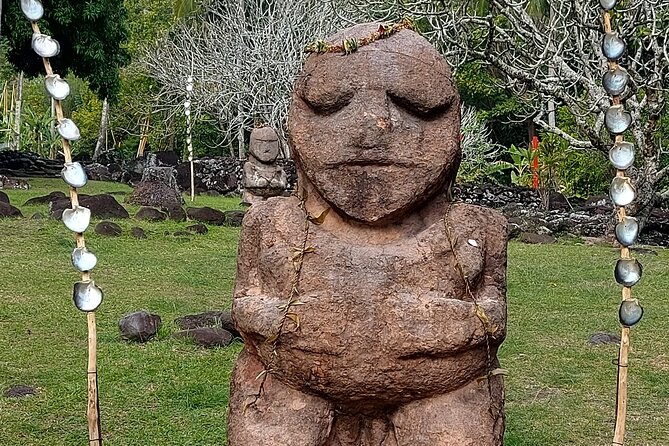
Next comes a viewpoint at Parc de Tahara’a, often compared to what Captain Cook called One Tree Hill. You’ll get a sweeping look across Matavai Bay, with Moorea and Papeete in view.
This kind of stop is more than a scenic break. From up here, it’s easier to understand how Tahiti sits in relation to the water and neighboring islands. You’ll also get a better sense of why certain coastal routes matter and why people historically built communities in places that made sense for access and protection.
The time you spend isn’t long, which is a plus if you’re on a half day. The tradeoff is that you won’t sit forever. Bring your best photo energy, then use the guide’s explanation to make the viewpoint feel informative, not just pretty.
Arahoho Blowhole: Ocean Swells and the Old Road Story
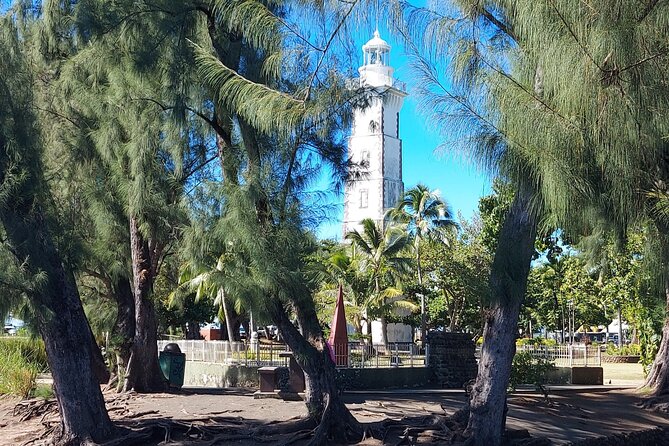
Arahoho Blowhole is one of those stops that makes you feel the ocean’s strength without needing a lecture. These blowholes are linked to swells, and there’s a neat historical note here: they used to blow onto the road before the tunnel was built in 2010. After the change, the old road is now a park area where you can stand close and feel the force of the water.
Even if you’ve seen blowholes elsewhere, the story context is what makes this one memorable. You’re watching nature do its thing, but you’re also hearing how humans reshaped the coastline and road network in response to that power.
A heads-up for your expectations: this is weather- and swell-dependent. When the ocean is active, it’s dramatic. When it’s calmer, you’ll still get the idea, but it won’t feel like a constant show.





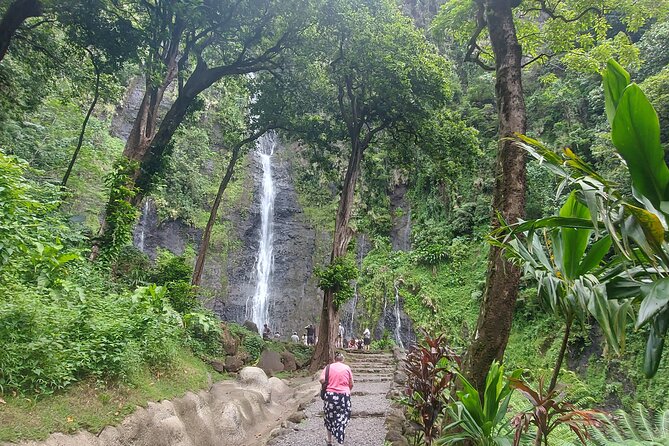
Cascade Vaimahuta: A Permanent Waterfall in the Faarumai Valley
Then you shift from ocean action to freshwater: Cascade Vaimahuta in the Faarumai valley. The tour frames it as one of three waterfalls in that valley, and it’s considered the most accessible—plus, it flows all year long and is never dry.
That’s a big deal on an island where you might worry about seasonality. If you’re visiting during a drier stretch, it’s comforting to know you’re choosing a waterfall that’s intended to deliver steady results.
This is also a nice rhythm reset. After salt air and coastlines, your senses calm down—cooler air, green surroundings, and time to watch water move without the rush of a major attraction crowd.
Vaipahi Water Gardens: Sacred Purification Pools and Fish in the Water
The Water Gardens of Vaipahi bring a different kind of lesson. This was once a sacred site for the Teva clan and used for spiritual purification. Even today, the waters are still respected by Polynesians.
Practically, this stop is also visually interesting: you’ll see a small waterfall and several pools, and the pools can include tilapia and koi carp. The guide’s framing makes it more than an aesthetic visit. You’re learning how a place’s purpose can last, even as the outside world changes.
A consideration: this is a meaningful area, so it helps to be respectful with your behavior and noise level. Also, because the pools are part of a living place rather than just a photo set, you’ll likely feel a more grounded mood here than at some viewpoints.
The Lava Tube Cave: Fresh Water Relief You Can See, but Not Swim
Next comes a geological curiosity: an old lava tube filled with fresh water thanks to numerous natural springs in the area. It’s the kind of stop that makes Tahiti feel real in your hands, because you see evidence of volcanic shaping and then how water occupies that structure.
You can cool off with the experience, but swimming is forbidden. That’s worth noting because it changes how you pack your expectations. You’ll get refreshing coolness and a memorable environment, not an adventurous water play moment.
I like this stop because it’s both science and comfort. It also breaks up the day, giving you something physical to experience after hours of sights and storytelling.
Arahoho to Marae to Teahupoo: Culture Shifts and Surf Reality
After the natural stops, you move into sacred cultural space: ’Ārahurahu Marae. On Tahiti, many marae sites were destroyed or neglected after the Polynesians converted to Christianity, and this one was reconstructed. Visiting a marae isn’t about passive sightseeing. It’s about understanding how worship and community life used to organize the island.
That cultural turn matters because it changes how you interpret the earlier nature stops. When you learn that land and water connect to belief systems, even a waterfall becomes more than a scenic feature.
Then, on a full-day route, you reach Teahupoo, one of the most dangerous waves on the planet. There’s also a modern hook: it was the site of the 2024 Olympic Games surfing competition. That blend of danger, skill, and world attention gives you a fresh way to understand the wave—beyond just locals talking about it.
A useful note for expectation-setting: surfing locations can look calm from shore while still being intense for the people out there. From this stop, you’ll likely see how real the ocean is, even when conditions vary.
Papara and the Taharuu River Mouth: A Surf-Friendly Detour
If your day continues to Papara, you’ll get a short stop focused on the surfing scene at the Taharuu river mouth. It’s a black sand beach area and a popular place to learn to surf.
This stop has two benefits. First, it gives you a more approachable surf atmosphere than the heavy reputation of Teahupoo. Second, it reminds you that Tahiti isn’t only about historic sites and dramatic waves—it’s also about everyday recreation and learning.
Time here is limited, so I’d treat it as a quick look and a chance to absorb the mood, not a long activity break.
Te Fare Iamanaha Museum: When the House of Treasures Adds the Final Piece
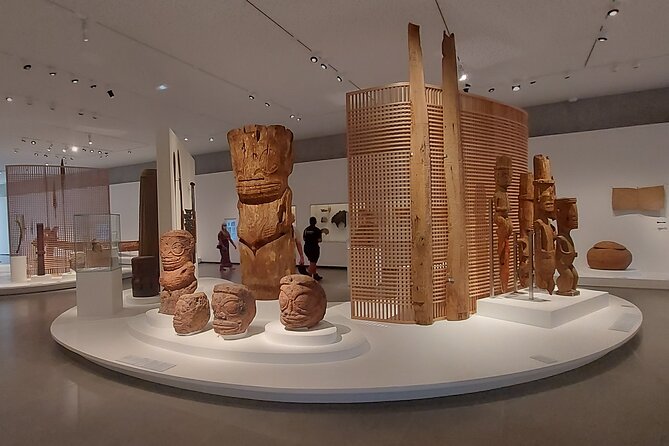
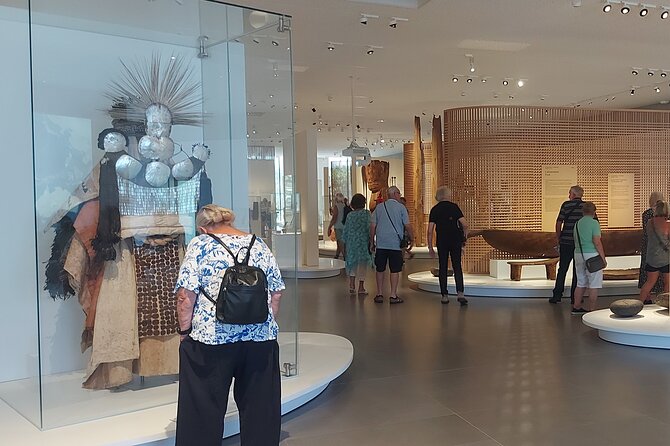
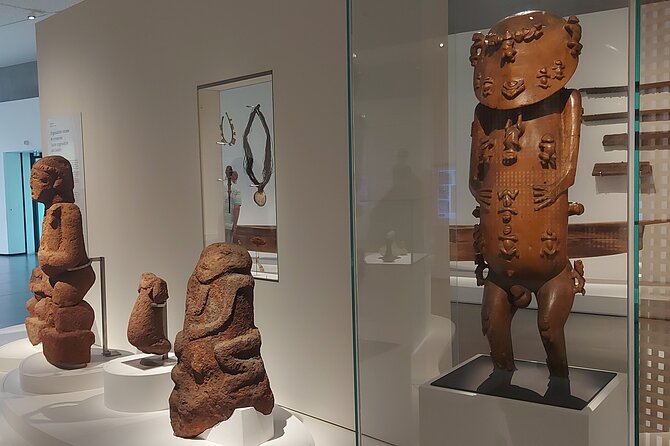
You can add the Te Fare Iamanaha-Musee de Tahiti et des Iles on request. It’s called the House of Treasures, and the museum has been on this site since 1974 and was recently renovated.
This museum is in beautiful gardens and includes sacred objects. It’s not included automatically, and admission costs extra (listed as 1000f). I recommend deciding based on your learning style. If you enjoy physical artifacts after hearing cultural stories all day, the museum can be a strong closer. If you prefer to keep the day outside, you can skip it and still feel like you got the main sweep.
Lydia’s Guiding Style: Tailored Itineraries and Calm, Organized Time
What makes this experience consistently land well is Lydia herself. She communicates clearly before the tour and meets people promptly. Once you’re together, she builds the day around what you want to learn and what sites fit your timing.
You’ll feel that in small ways: the itinerary can be adjusted to your interests, and if a planned spot is closed, you can be guided to alternatives. That flexibility helps when you’re on a schedule like a cruise stop or you don’t have unlimited time.
Pacing is another strong point. The day may be long, but it doesn’t feel like sprinting between landmarks. Instead, you get enough stop time to absorb what’s happening and ask questions, then you roll on. Even on half-day tours, the time tends to feel focused rather than dragged.
Finally, Lydia’s personal connection to Polynesian life gives the explanations a sense of origin. It’s not only facts; it’s lived meaning. She’s guided on Tahiti since early in her adult life and carries that into how she tells the story of each location.
Who Should Book This Tahiti Tour (and Who Might Skip It)
This tour is a great match if:
- You want a cultural and geology-focused overview, not only beach time
- You like asking questions and getting context with your photos
- You’re visiting for a short window and want the island explained efficiently
- You’re traveling in a small group that can actually use the private format value
You might consider a different style of day if:
- You’d rather do lots of independent swimming and lounging with minimal driving
- You hate weather dependency and prefer fully self-controlled plans
- Your group wants a purely casual day with little explanation
For cruise passengers or first-timers, it’s especially compelling because it compresses variety into one organized route: history, viewpoints, freshwater scenes, sacred sites, and a surf stop that gives you the island’s modern edge.
Should You Book This Tour with Lydia?
Yes—if you want your Tahiti day to feel understandable and intentional. The price makes sense when you treat it as private guiding plus a practical route through major sites where the details truly matter. Lydia’s explanations connect the dots between Polynesian beliefs, the island’s volcanic geology, and the way plants and water shape daily life.
I’d book this sooner rather than later, since it’s commonly reserved well in advance. If your dates are tight, pick a day with the best weather odds and keep lunch flexible since you’ll be making that decision locally.
If you’re ready for a day that’s part scenery and part education—told in a real, personal voice—this private tour with Lydia is one of the strongest ways to spend your time on Tahiti.
FAQ
How long is the full-day and half-day tour?
Full-day tours run about 8 hours, and the experience is described as roughly 8 to 9 hours. Half-day tours are about 5 hours.
What does the tour cost?
It’s $650 per group, up to 8 people.
Is this a private tour?
Yes. It’s private, and only your group participates.
Do you include hotel pickup?
Pickup is offered. The listed meeting point is the Tourist Office at 91 Bd de la Reine Pômaré, Papeete.
Is bottled water provided?
Yes. Bottled water is included, and breadfruit chips or fruit may be available.
Are entrance fees included?
Most stops listed are free to visit. The museum is not included by default.
Is the Te Fare Iamanaha museum included?
No, visits to Te Fare Iamanaha-Musee de Tahiti et des Iles are not included unless requested. The museum admission is listed as 1000f.
Is lunch included in the price?
Lunch is not included. The guide can advise on where to stop, and lunch is paid on your own cost.
What could cause the tour to be canceled or changed?
The experience requires good weather. It may also be canceled if a minimum number of travelers isn’t met. In those cases, you may be offered a different date or a full refund.
Is it suitable for everyone?
Most people can participate, but it’s not recommended for users who cannot enter the vehicle on their own.