REVIEW · TAHITI
4 Hours of Humpback Whale Watching in Tahiti
Book on Viator →Operated by Tahiti Ocean Explorer · Bookable on Viator
Whales sing in Tahiti’s open ocean. What I like most is the naturalist guides and their respectful, rules-based approach, plus the hydrophone so you can hear the song while you search. The one drawback: whale sightings and any time in the water are never guaranteed.
This is a half-day on a spacious boat in the Puna’auia area, with the chance for extra wildlife like dolphins and sea turtles. If you choose the snorkeling option, you must already know how to snorkel, and the guides decide whether it’s safe and worth it based on sea conditions and whale behavior.
In This Review
- Key highlights worth booking for
- How the 4-hour whale hunt in Puna’auia really works
- Naturalist guides, science, and animal-welfare rules you’ll actually feel
- Boat time: whale spotting, hydrophone whale song, and the “search rhythm”
- When snorkeling becomes possible (and when it doesn’t)
- Other wildlife on your route: dolphins, turtles, and extra sightings
- Comfort, timing, and the physical side of a day on the water
- Price and value: what $127.54 is buying you in Tahiti
- Who this tour is best for
- Should you book Tahiti Ocean Explorer’s 4-hour humpback whale watching?
- FAQ
- Where is the meeting point for the tour?
- How long is the humpback whale watching experience?
- What does the tour cost?
- Is whale viewing guaranteed or guaranteed to include snorkeling?
- If I choose snorkeling, what do I need to know?
- How many people are on the tour?
- What special equipment is on the boat?
- What about kids and the child rate?
Key highlights worth booking for
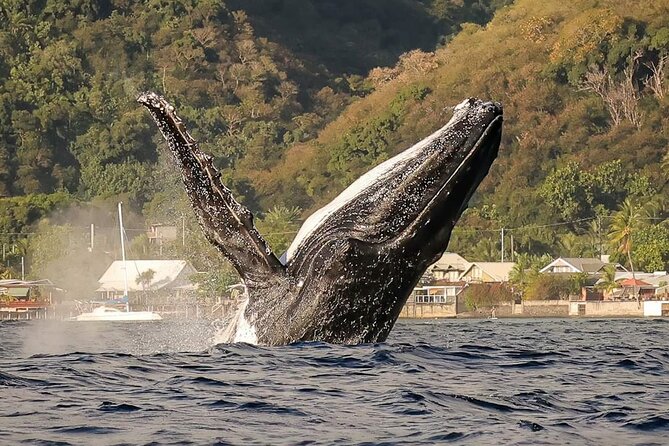
- Max 12 people, small-group feel for a more focused whale search
- Naturalist-led briefing so you understand what you’re seeing and why it matters
- Hydrophone on board to listen to whale song during the hunt
- Boat-first watching, optional in-water viewing only if conditions allow
- Conservation partnerships with local cetacean groups and marine biologists to support observations
- Extra wildlife odds including dolphins and sea turtles on the way
How the 4-hour whale hunt in Puna’auia really works
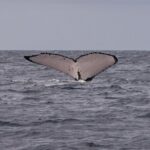
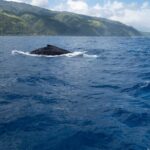
This tour is built around one simple goal: find Tahitian humpback whales and watch them in a way that doesn’t stress them out. You start at the meeting point in Puna’auia (listed as C97M+HW Puna’auia) and head out for about 4 hours total. The pacing is practical. First comes a briefing—then the actual ocean search begins.
The biggest thing to understand up front is that this is not a show with a guaranteed script. You’ll look from the boat initially, and the team decides in real time whether you get additional in-water observation. Sea state matters, whale behavior matters, and the crew’s ability to follow animal-watching approach rules matters most.
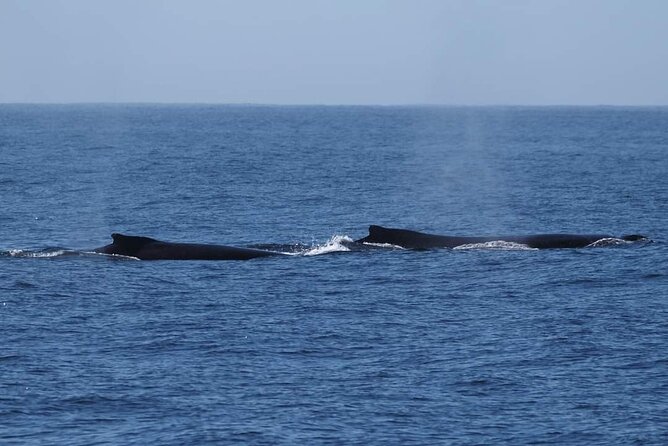
The whale hunt itself is part of the experience. When the team starts scanning the water, you’re not just staring—you’re learning what to look for and how to interpret what you see, from signs on the surface to how whales move through the area. That context makes even a distant sighting feel meaningful.
You can also read our reviews of more tours and experiences in Tahiti.



Naturalist guides, science, and animal-welfare rules you’ll actually feel
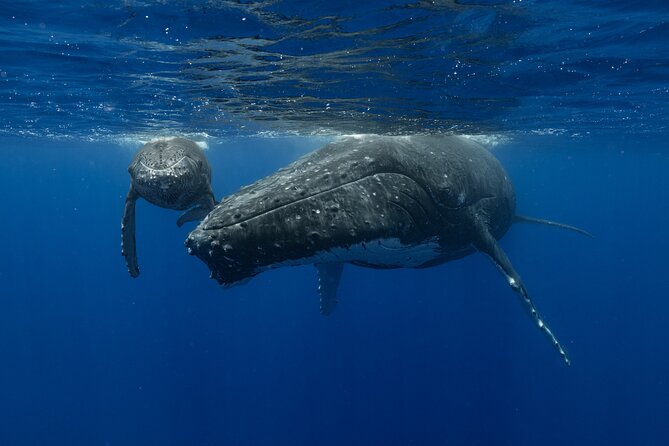
You’ll go out with specialized naturalist guides who focus on two things: helping you spot behavior and making sure the whales are treated with care. This tour explicitly prioritizes animal welfare and compliance with approach rules. That shows up in how the guides talk, but also in how they make decisions out on the water.
I also like that this operator works with local cetacean conservation associations and marine biologists, so their observations can contribute to scientific knowledge of the species. You’re not just chasing a photo. You’re learning how humpbacks behave and why the way you watch matters.
From the guide side, names that come up in prior trips include Luo and Julien, with Bastien also mentioned as part of the team. The consistent theme is that the crew communicates clearly and stays focused on getting you good, respectful viewing—without turning the outing into chaos.
A quick reality check: the guide is the only person empowered to decide what happens next. That’s not just authority talk. It’s a sign the plan adapts to what’s happening with the whales and the ocean.
Boat time: whale spotting, hydrophone whale song, and the “search rhythm”
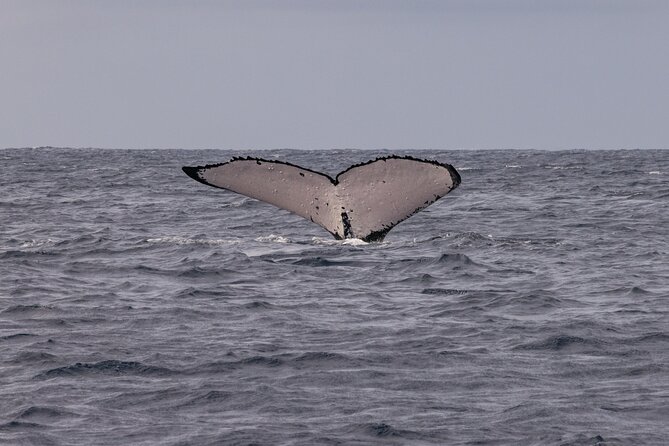
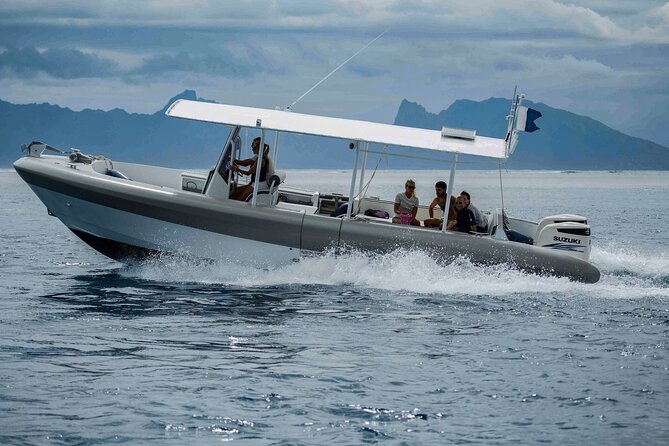
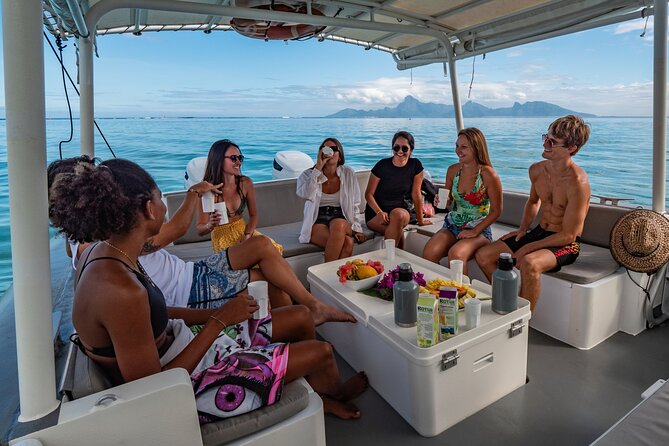
Your first viewing is always from the boat. The boat is described as spacious and designed for comfort on the trip out. That matters in Tahiti because even when skies look fine, ocean motion can turn “just sitting there” into an exercise in patience. A roomier boat helps you stay relaxed enough to watch.
Then there’s the hydrophone. The boat is equipped so you can listen to the melodious whale song while you’re out searching. In real terms, that can change your experience. Even if you’re waiting for the next surface moment, you’re still getting whale information in audio form. It also gives you something to focus on during the quieter stretches.
What you’ll likely experience during boat watching is a cycle:
- the guides scan and analyze behavior
- the group slows down and watches for cues
- the crew moves strategically based on what the whales are doing
One more detail that’s helpful: the tour also keeps an eye open for other marine life. During the ocean trip, you can encounter dolphins or other cetaceans, plus the chance of sea turtles.
When snorkeling becomes possible (and when it doesn’t)
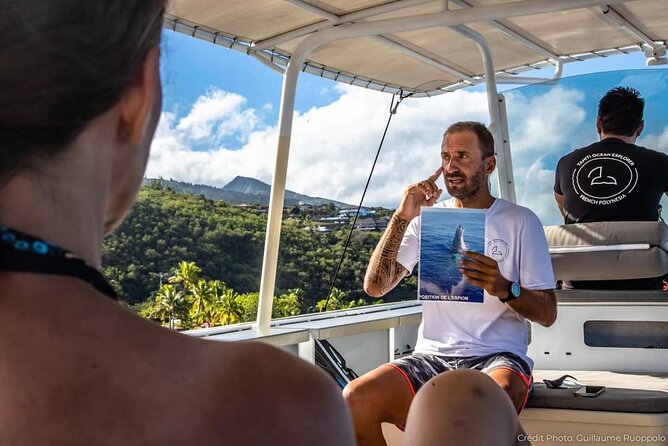
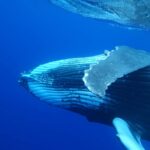
You have the option to observe whales in the water while snorkeling, but only if conditions allow. The rules are clear: observation in the water depends on whale behavior and sea conditions, and it’s not guaranteed or systematic.
Here’s the non-negotiable part: snorkeling experience is mandatory if you select the option. This isn’t the place to learn basic breathing or timing. You should already feel comfortable in open water with a snorkel.
And sometimes, even when whales are present, the decision can go the other way. One prior trip example described not entering the water because predatory sharks were circling, with safety taking priority. The important takeaway for you is that safety and animal welfare are driving decisions—not a checklist. If the guide keeps you on the boat, it’s usually because they’re protecting both you and the animals involved.
If you do get in-water viewing, think of it as a bonus layer to the experience. The foundation is still the whale spotting and behavior analysis from the boat, and the in-water time is there when it truly fits.
Other wildlife on your route: dolphins, turtles, and extra sightings
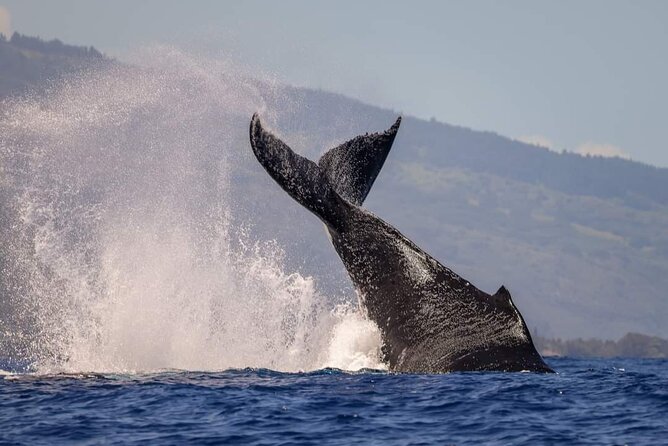
Even though humpbacks are the headline, the ocean doesn’t always stay that focused. On this trip, you can also see dolphins or other cetaceans and sea turtles depending on what the area is doing that day.
That matters because it protects your day from feeling like a yes-or-no gamble. If you get a whale moment that’s brief or distant, the chance of other wildlife can still make the trip feel full. It also keeps you watching beyond one species, which is exactly what humpback watching should pair with—because the whales are part of a living system, not just an isolated spectacle.
Also, a small-group setup can help here. When the guides are actively managing multiple sightings, you’re more likely to actually understand why something is worth looking at rather than watching blindly and hoping for a miracle.




Comfort, timing, and the physical side of a day on the water
This is a 4-hour outing, and the tour notes moderate physical fitness is recommended. That doesn’t mean you need to be an athlete. It means you should be able to handle a few hours on a moving boat and be ready for the practical demands of a marine wildlife experience.
If you’re choosing snorkeling, you should also be ready for the physical reality of it. You’ll be in gear, in open water, and your time may depend on conditions. The guide’s calls are final for safety.
The child rate applies for children under 10 years old, and observation will be by boat only. So if you’re traveling with kids, plan your expectations around that.
One small practical plus: the tour uses a mobile ticket, which makes check-in easier when you’re on island time.
Price and value: what $127.54 is buying you in Tahiti
At $127.54 per person for about 4 hours, you’re paying for a combination that’s hard to replicate on your own:
- trained naturalist guidance and behavior analysis
- a small group size (maximum 12 travelers)
- a boat equipped with a hydrophone
- a structured, welfare-focused approach rather than random searching
When a whale tour is cheaper but vague, you often end up paying with your attention—less guidance, fewer rules, more wandering. Here, you’re buying clarity: the briefing, the way the guides interpret whale behavior, and the tools to hear whale song.
Is it a bargain? It’s not a budget outing. But it’s also not just a ride on a boat. The price makes sense if you care about the learning component and you want the experience done responsibly, not recklessly.
Finally, the operator highlights that weather can affect the outing, and you should expect planning around ocean conditions. That’s common in Tahiti, and it’s also a sign they’re not forcing a bad situation.
Who this tour is best for
This is a great fit if you:
- want naturalist-led whale watching rather than a generic sightseeing cruise
- care about animal-welfare rules and a respectful approach
- like structured wildlife viewing with real interpretation
- are okay with the fact that the ocean doesn’t follow schedules
It’s especially good for couples and small groups who want a quieter, more teachable experience. The small group limit also helps you hear the guide and stay engaged.
Choose something else if you:
- need a guaranteed in-water whale interaction
- don’t have snorkeling experience but still want to be in the water
- get seasick easily and haven’t managed that before (even with a spacious boat, ocean motion is still ocean motion)
Should you book Tahiti Ocean Explorer’s 4-hour humpback whale watching?
If your priority is high-quality guidance and you’re open to the reality that whale watching depends on nature, I think you should book. The blend of boat-first viewing, a hydrophone, and naturalist interpretation gives you value even on days when the whales don’t come close or when in-water observation isn’t possible.
I’d book it if you’re comfortable with the conditions and you understand the key rule: launches into the water aren’t promised. The guides decide based on sea conditions and whale behavior, and safety comes first.
If you’re hoping for a guaranteed swim with whales, adjust your expectations. This experience is about respectful encounters and solid viewing odds, not a promise of a specific finale.
FAQ
Where is the meeting point for the tour?
The tour starts at C97M+HW Puna’auia, French Polynesia, and it ends back at the same meeting point.
How long is the humpback whale watching experience?
The experience lasts about 4 hours.
What does the tour cost?
The price is $127.54 per person.
Is whale viewing guaranteed or guaranteed to include snorkeling?
No. Observation and launches are not guaranteed or systematic. The guide decides based on sea conditions and whale behavior.
If I choose snorkeling, what do I need to know?
If you select the snorkeling option, snorkeling experience is mandatory. Snorkeling with whales in the water is only possible if the guides decide conditions allow it.
How many people are on the tour?
The tour has a maximum of 12 travelers.
What special equipment is on the boat?
The boat is equipped with a hydrophone so you can listen to whale song.
What about kids and the child rate?
The child rate applies for children under 10 years old, and observation will be by boat only.