REVIEW · PUNTARENAS
EXCLUSIVE Night Tour with Night Vision- small groups 8 people max
Book on Viator →Operated by George of the Cloud Forest · Bookable on Viator
That’s when the cloud forest wakes up.
This Monteverde night tour is built for exactly that moment, with a small group size and high-tech night vision gear that helps you see wildlife you’d miss in plain darkness. I love how personal it feels with an expert naturalist, and I love that the walk turns into a real wildlife search instead of a vague stroll. One thing to keep in mind: wildlife is never guaranteed, so you’ll get your best odds by bringing a flexible, patient mindset.
The tour is about 2 hours, and you’ll be walking through dense vegetation after dark. If you’re dealing with mobility issues or you’re not steady on your feet in uneven ground, you’ll want to consider your comfort level first.
In This Review
- Key things to know before you go
- Why a Monteverde night walk with night vision feels different
- Meeting at Wildlife Refuge Monteverde: your start point and your first clues
- The night-vision scopes: how you’ll actually spot wildlife
- What you might see after dark: sloths, insects, snakes, and bioluminescent fungi
- Dense vegetation trails and forest sounds: how the walk unfolds
- The small-group advantage: 8 people max (and why that matters)
- How the guide makes this work: naturalist explanations and photo help
- Price and value: $40 for a guided night hunt in Monteverde
- What’s included (and what you’ll need to cover)
- Who should book this night tour (and who should plan differently)
- The practical reality: darkness, unpredictability, and comfort
- Should you book this Monteverde night vision tour?
- FAQ
- Where does the night tour start?
- How long is the tour?
- What’s the price, and what does it include?
- What kind of wildlife might I see?
- Do I need tickets or transportation included in the price?
- What’s the group size?
- Will I get help spotting and viewing wildlife in low light?
- How fit do I need to be?
- What’s the cancellation rule?
Key things to know before you go
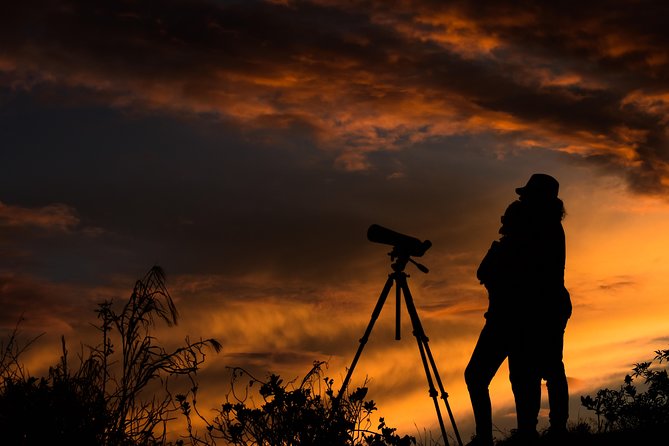
- Small-group focus (max 8, listed max 10): you get more time with the guide and the scope.
- Night vision visors + flashlights: built for low-light viewing, not just sightseeing.
- A real wildlife hunt: sloths, nocturnal birds, insects, and other critters are part of the goal.
- Bioluminescent fungi is a big target: the guide will know where and how to look.
- Guide names you may meet: George of the Cloud Forest, and Vinny (mentioned in guest experiences).
- Moderate fitness helps: trails in the dark mean you should walk confidently.
Why a Monteverde night walk with night vision feels different
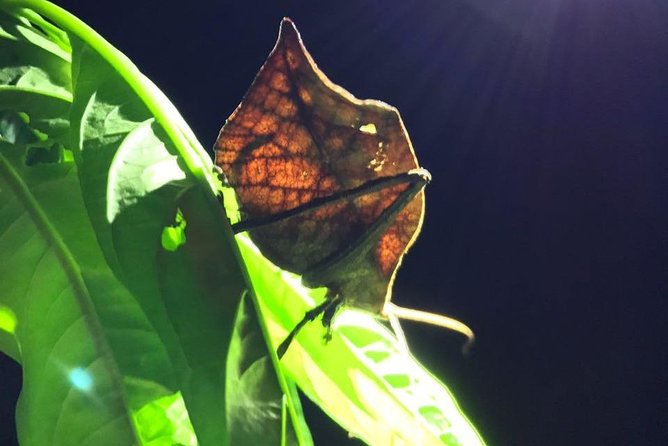
Monteverde at night is a different planet. In daylight, you notice leaves and views. After dark, the forest shifts into motion—calls, rustling, slow movement, and tiny flashes of life that look like magic until you realize it’s real biology.
What makes this tour stand out is the night vision component. The goal isn’t to make the forest look “cool on video.” It’s to help you spot and identify wildlife in low light, where the human eye normally loses the game. The guide also brings a telescope/spotting scope and the lights to help you actually follow what you find.
This tour also makes sense if you’re doing a daytime activity already. The cloud forest doesn’t repeat the same show—night brings different animals, different behaviors, and different sounds.
You can also read our reviews of more tours and experiences in Puntarenas.

Meeting at Wildlife Refuge Monteverde: your start point and your first clues
You meet at the entrance to Wildlife Refuge Monteverde on C. Los Camachos, Monteverde, Provincia de Puntarenas. The activity ends back at the meeting point, so you’re not stuck figuring out transit at night after you’re done.
I like meeting at the refuge because it signals one thing: you’re going somewhere that’s already managed for wildlife watching. It also means you can switch your brain from travel mode to nature mode faster—less time asking where to go, more time looking.
Expect a short orientation and then a quiet shift into nighttime habits. When it’s properly dark, the forest rewards you for slowing down.
The night-vision scopes: how you’ll actually spot wildlife
Night vision equipment can sound flashy until you see what it changes. In this case, the night vision visors and flashlights are there to extend what you can detect—movement, silhouettes, and activity that your eyes would normally miss.
Here’s the practical part: you’ll be guided step-by-step on where to point, when to pause, and how to keep your attention steady. That matters because lots of nocturnal wildlife doesn’t “announce itself.” It stays still, moves once, then disappears into the vegetation.
The spotting scope/telescope also helps you see detail when something pops into view at a distance. In guest experiences, the guide handling the scope has been a standout—helping people take better photos and confirming what they’re looking at. If you enjoy photography, this is one of those tours where the gear plus the guide’s technique can turn a blurry dark shot into something you’re actually proud of.
What you might see after dark: sloths, insects, snakes, and bioluminescent fungi
This is a cloud forest night tour, so the animal list is the point. The best part is that it’s not limited to “one or two likely sightings.” You’re hunting across layers—ground movement, understory motion, and the occasional surprise up higher.
From the highlights, you should look for:
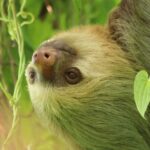
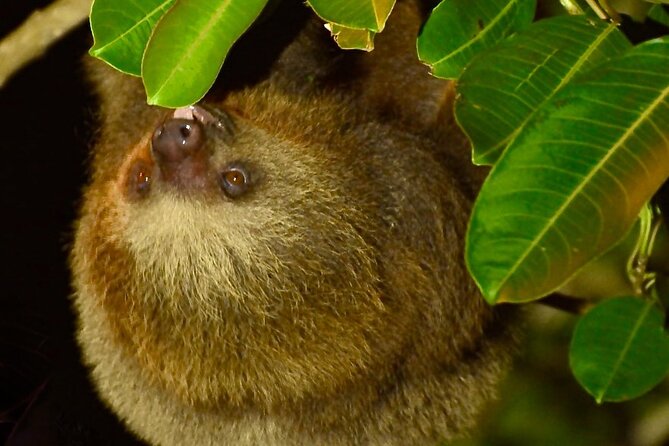
- Sloths
- Nocturnal birds
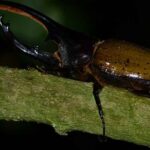
- Insects and unusual arthropods (the kind you’d never notice in daylight)
- Bats and snakes
- Armadillos, porcupines, and other mammals that move through the ecosystem at night
- Bioluminescent fungi (a major “wow” factor)
Bioluminescent fungi is especially worth your attention because it’s not just a random pretty thing. It’s part of the forest’s nighttime ecological story—living organisms doing what they do in damp, low-light conditions. If you’re the type who likes learning how nature works, the guide’s explanations are a big part of the value.
And yes, “you might see” is the right wording. Even with night vision, the forest decides when and what shows up. The good news: the guide’s job is to keep you productive—turning small signs like movement, calls, or the shape of a shadow into leads.
Dense vegetation trails and forest sounds: how the walk unfolds
This tour isn’t about rushing to a viewpoint. You’ll walk through dense vegetation on trails surrounded by darkness, illuminated by moonlight and fireflies. The forest itself becomes your guide: rustling leaves, distant calls, and hidden movement give you the cues.
What I like about this format is that it trains you to observe. Instead of waiting for a big animal to appear, you learn to notice patterns—where sound seems to come from, what insects are doing, and how often the ecosystem “checks in” with small signals.
Also, the cloud forest isn’t quiet. Even if you don’t see much at first, you’re often already “in the story.” That’s where night tours can feel surprisingly rewarding.



The small-group advantage: 8 people max (and why that matters)
The tour is designed for small-group attention, listed at up to 8 people, with a general maximum of 10 travelers. That size change is not a marketing detail—it affects what you can actually do in the field.
With fewer people, the guide can:
- regroup the group quickly when wildlife shows up
- adjust the viewing angle without fighting through bodies
- spend more time explaining what you’re seeing (instead of repeating the same basics for 20 people)
It also makes the night experience more comfortable. In darkness, you want space to move and pause. You don’t want to feel like you’re in a human train where everyone’s flashlight points in the same direction.
This is also why it works well as a companion to a daytime tour. You’ll have that “I’ve already seen Monteverde” feeling during the day, then night shows you what you missed.
How the guide makes this work: naturalist explanations and photo help
A night tour can be either educational or chaotic. The best ones do both: they help you see and help you understand what you’re seeing.
In this experience, you’re with an expert naturalist guide specializing in nocturnal wildlife. Guides named George of the Cloud Forest and Vinny have come up in guest accounts, and the theme is consistent: they know where to look, they notice tiny signs, and they explain behaviors and habitat in a way that sticks.
One detail I find extra useful: the guide taking time to help people with photos through the spotting scope. If you show up with a phone, you might still get great “wow” shots, but the real win is learning what angles and timing work in low light.
And if you’re traveling with kids, this matters even more. Young travelers tend to lose patience when the group waits silently for ages. A passionate guide keeps the energy moving by pointing out small discoveries along the way.
Price and value: $40 for a guided night hunt in Monteverde
At $40 per person for about 2 hours, this is priced as an activity you’ll feel in your budget. The question is whether it delivers value.
Here’s what you get for that price:
- High-tech night vision equipment (not just a flashlight)
- A specialized naturalist guide for nocturnal wildlife
- A telescope/spotting scope for detail viewing
- A small-group setting for better attention
- A small traditional Costa Rican snack made by the family’s grandma
- Travel or accident insurance included
When you compare it to typical “night walk” tours that rely mostly on luck, this one has a stronger built-in edge. Night vision and a scope are the big reason. They reduce the risk that you’ll spend the whole night staring at darkness hoping for a miracle.
So, if you’re in Monteverde for a short stay, I’d treat this as a high-impact add-on. Two hours is short enough to fit into an itinerary, but it’s long enough for the guide to work the forest rather than do a quick lap.
What’s included (and what you’ll need to cover)
Included in the price:
- telescope/spotting scope support
- expert naturalist guide
- night vision visors and flashlights
- small group experience (up to 8, with max 10 listed)
- small traditional Costa Rican snack (made by the family’s grandma)
- travel or accident insurance
Not included:
- tickets
- private transportation
That means you should plan your own way to the meeting point. The tour is listed as near public transportation, which helps if you’re bouncing around town.
Who should book this night tour (and who should plan differently)
This is best for you if:
- you want wildlife and know you’ll enjoy night activity
- you like learning real natural history, not just names of animals
- you have a day tour already and want the night “different show” version
- you appreciate small-group guiding
It’s also a good family choice. In guest experiences, the guide has handled younger kids well (ages like 8 and 10 have been mentioned). Still, the forest is dark and trails are through vegetation, so you should keep kids close and avoid letting anyone bolt off the path.
This may be less ideal if:
- you’re sensitive to darkness or struggle with steady footing
- you’re hoping for guaranteed sightings of a specific animal
- you want a quiet, no-instruction nature stroll
The practical reality: darkness, unpredictability, and comfort
Let’s keep it honest. Wildlife can be elusive. Even with night vision scopes, you’re not controlling animals. Your best attitude is curiosity plus patience.
Also, you’ll be walking at night. That means:
- wear comfortable shoes with decent grip
- bring clothing that matches cool, damp air if you’re sensitive to temperature changes
- plan to stand still sometimes when the guide finds a lead
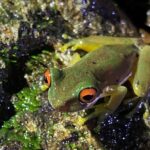
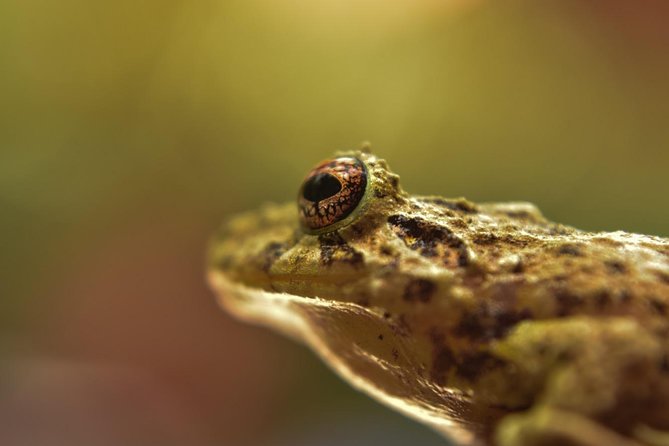
I also suggest keeping expectations flexible. If you come focused on one target, you might miss the fun. The tour is about the ecosystem—sometimes the best moments are the small ones: insects, unusual frogs, and those tiny flashes of life you’d never spot otherwise.
Should you book this Monteverde night vision tour?
If you’re doing Monteverde and you want one night activity that gives you a real chance to see the forest’s nocturnal side, I think it’s a strong choice. The mix of small-group guiding, specialized night vision gear, and an expert naturalist makes it more than a walk with flashlights.
Book it if:
- you like wildlife and want a guided search
- you want to see things you wouldn’t reliably see on your own
- you’re staying in the area long enough for one focused night
Skip it (or choose a different style) if:
- you can’t manage moderate walking on dark trails
- you hate uncertainty and need guaranteed sightings
FAQ
Where does the night tour start?
You meet at the entrance to Wildlife Refuge Monteverde, located on C. Los Camachos, Provincia de Puntarenas, Monteverde, Costa Rica.
How long is the tour?
The tour lasts about 2 hours.
What’s the price, and what does it include?
It costs $40.00 per person. Included are a telescope, an expert naturalist guide for nocturnal wildlife, night vision visors and flashlights, a small-group experience, a small traditional Costa Rican snack, and travel or accident insurance.
What kind of wildlife might I see?
The tour is designed to help you look for nocturnal birds, insects, sloths, porcupines, armadillos, bats, snakes, and bioluminescent fungi, among other nighttime life.
Do I need tickets or transportation included in the price?
No. Tickets and private transportation are not included. The meeting point is listed as near public transportation.
What’s the group size?
It’s a small group. The overview notes a maximum of 8 people, and the additional info lists a maximum of 10 travelers.
Will I get help spotting and viewing wildlife in low light?
Yes. You’ll use high-tech night vision scopes/visors and flashlights, plus a telescope/spotting scope to view wildlife in low-light conditions.
How fit do I need to be?
You should have a moderate physical fitness level, since you’ll walk trails through dense vegetation in the dark.
What’s the cancellation rule?
Free cancellation is available up to 24 hours in advance for a full refund. If you cancel less than 24 hours before the start time, the amount paid is not refunded.