REVIEW · MYKONOS
Half-Day Delos Tour from Mykonos
Book on Viator →Operated by Delos Travel · Bookable on Viator
Delos feels like a time machine. You get a round-trip ferry, a certified guide, and skip-the-line entry setup, so you can spend your limited time walking among ruins instead of queueing. I like how the tour hits big, recognizable stops without feeling like a checklist tour, though the schedule is tight and the Delos admission fee is extra.
What makes this work well is the way the guide strings together myth and archaeology while you move through the site. Guides named Celia, Sylvia, and Lea/Leah have led groups with clear, energetic explanations, and the wireless audio system helps you follow along as you go from one monument to the next. One consideration: if you fall behind the group or drift far away around corners, the audio can cut out, and you may still feel a bit rushed on museum time.
If you want a “greatest hits” Delos visit in one half day from Mykonos, this is a solid way to do it. But bring realistic expectations: Delos is huge, and even with guided highlights, you won’t see everything.
In This Review
- Key highlights you’ll actually feel on the day
- Why Delos is worth the trip from Mykonos
- Getting there: Old Port check-in and the skip-the-line effect
- The guided walk: Dionysos, Cleopatra, the Trident House, and mosaics
- Theatre, Stoa of Phillipe, Propylaia, and the monument parade
- The Sacred Lake, marble lions, and a strong ending point
- Museum time: good to include, but plan for tradeoffs
- Price and value: $72.41 plus the cash admission reality
- Crowds, group size, and how to stay in control of your day
- Practical packing list for Delos on a half day
- Should you book the Half-Day Delos Tour from Mykonos?
- FAQ
- Is hotel pickup included?
- Do I need to pay an entrance fee for Delos?
- Is the archaeological site ticket included?
- How long is the tour?
- Where do I meet the group?
- When should I arrive for check-in?
- Does the tour provide audio?
- What happens if the tour can’t run due to weather?
Key highlights you’ll actually feel on the day
- Round-trip ferry tickets to Delos are included, typically a short sea ride that gets you there fast.
- Skip-the-line access at Delos helps you start seeing monuments sooner.
- A certified specialist guide leads the walk and explains the site’s mythology and history.
- Wireless guide system keeps you on track, with a €150 penalty if equipment is lost or damaged.
- Major Delos monuments on one route: Dionysos, Cleopatra, Trident, Theatre, Stoa of Phillipe, Propylaia, Naxian Lions, and Apollo.
- Optional museum time exists, but it’s on your own schedule once the guided walk ends.
Why Delos is worth the trip from Mykonos
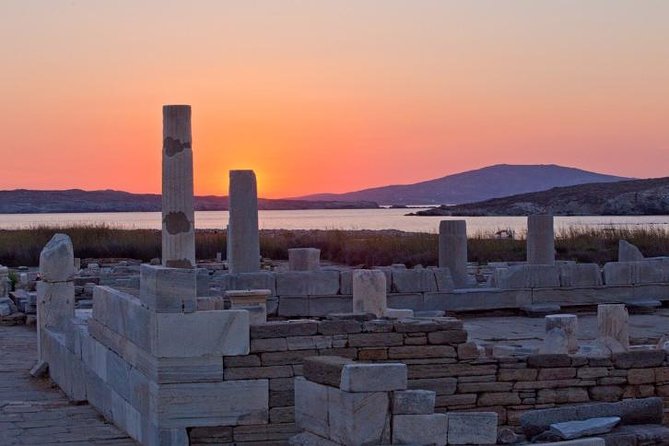
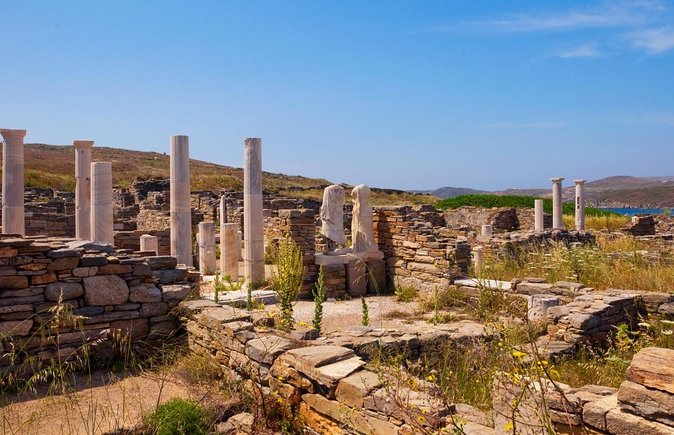
Delos is one of those places where the past feels physically close. You’re not driving to a theme park version of history. You’re walking through the real footprint of an ancient city—Hellenistic streets, sanctuaries, markets, theaters, and those unforgettable sacred zones that feel almost staged for awe.
A good part of the appeal here is that Delos is built for movement. Even on a half-day tour, you get a concentrated walk from standout houses and public buildings to the sanctuary area and the sacred water zone. When your guide connects stories (mythology) to stones (ruins), it changes how you see the site. A statue like Cleopatra’s becomes more than a photo; it becomes a clue in the bigger puzzle of how people lived and worshiped here.
Also, Delos makes a great companion to Mykonos. You’ll see a different side of the Greek islands: not just whitewashed streets and beaches, but the ancient world that sits underneath the tourism layer.
You can also read our reviews of more tours and experiences in Mykonos.


Getting there: Old Port check-in and the skip-the-line effect
Your day starts in Mykonos, either with pickup from your hotel if you request it, or by making your own way to the meeting area at the Old Port. The tour ends back at the same meeting point, so you’re not juggling drop-offs across town.
Plan your timing around the check-in rule: arrive 60–30 minutes before departure and head to the Delos Tours kiosk in the Old Port to confirm and receive what you need for boarding and the group setup. I recommend getting there early anyway. One recurring hiccup is simple confusion about where to check in and how group numbers work—nothing catastrophic, but it can add stress if you arrive late.
Once you’re on the ferry, you’ll have your round-trip boat tickets covered. The crossing is short, often described as about 30 minutes, which is exactly what you want for a half-day plan. On the sea trip, bring the same basics you’d bring for any Greek island ferry: a bottle of water and sunscreen if the sun breaks through.
At Delos, the guide issues tickets to the archaeological site for the group. The tour includes skip-the-line access at Delos, which matters when tour groups overlap. You feel it right away: you get moving through the ruins sooner, and that’s where your time goes.
The guided walk: Dionysos, Cleopatra, the Trident House, and mosaics
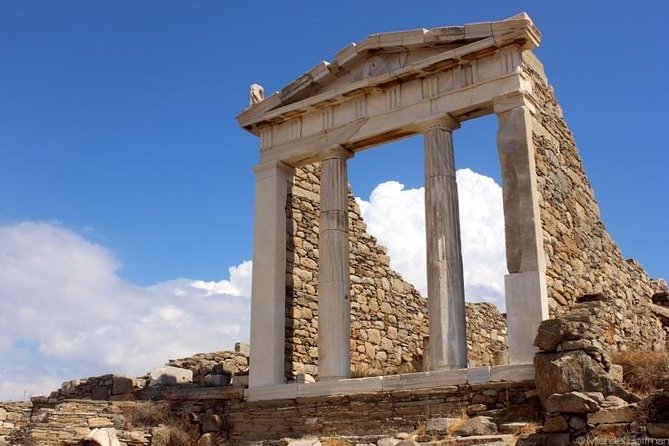
The guided portion is about 3 hours on the island, and it’s built around a sequence of high-impact stops. When I’m short on time, I care less about seeing everything and more about seeing the best anchors that help me understand the place.
Here’s the route logic you can expect:
You start by arriving at the archaeological area and getting an introduction to Delos—mythology, prehistory, and major historical chapters. Then you set out through narrow streets of the Hellenistic city, built in the 4th century BC. That city layout is part of the fun: you’re walking through an ancient neighborhood structure, not just standing in front of isolated monuments.
The highlights early on are classic for a reason:
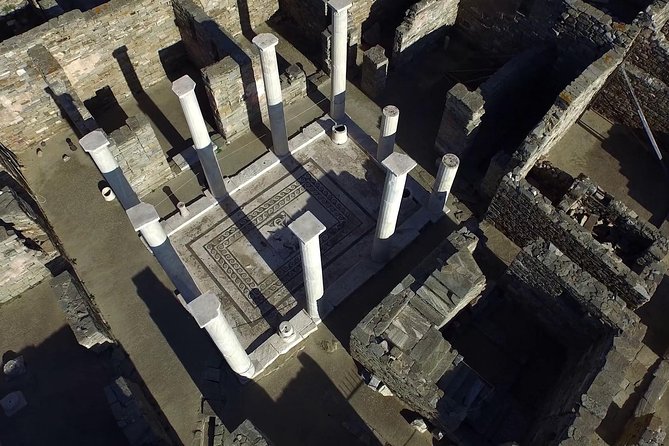
- House of Dionysos: one of those places where you can feel how art and daily life intersected.
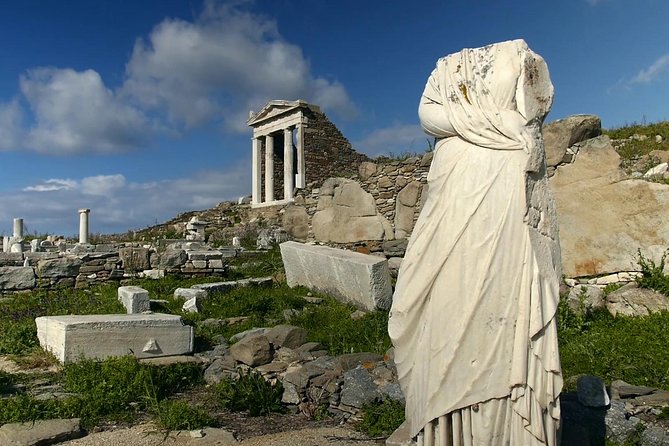
- The statue of Cleopatra: a standout reminder that Delos wasn’t frozen in time; it attracted attention from powerful players long after the city’s earlier eras.
- Mosaics: small but memorable details that help you picture what the city looked like inside.
Next, there’s a short stop at the House of the Trident, then you move toward the public center of gravity: the Theatre of Delos and the public cistern. This section works well because it changes the mood from private domestic spaces to public infrastructure and shared civic life. You get a clearer sense of how a bustling island city functioned—people gathering, theater performances, and the practical reality of water storage.
A practical note: Delos terrain can be uneven, and in wet weather it can get slippery. Reviews include experiences in wind and rain where the guide kept everyone safe on the wet stones. Comfortable walking shoes are not optional here. I’d also plan to carry water and use sunscreen, because you may be outside most of the time.
Theatre, Stoa of Phillipe, Propylaia, and the monument parade
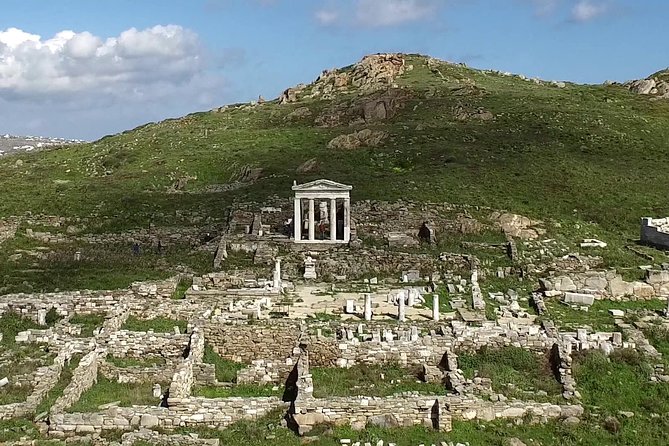
After the early anchors, the walk keeps building toward the sanctuary zone. This is where you’ll see more public and ceremonial architecture, which is a big part of why Delos is famous.
As you stroll back down the main street toward the market and sanctuary areas, you’ll hit a “monument parade” of recognizable structures:
- The Stoa of Phillipe
- The Propylaia
- The Colossus of the Naxians
- The Temples of Apollo
If you’ve watched videos of Delos, it can look more compact on screen. On the ground, it’s bigger. That’s why the route matters. A good guide helps you connect what you’re seeing to what it meant—where offerings happened, how entrances guided visitors, and why Apollo’s sanctuary mattered on this island.
One thing to calibrate: the tour balances mythology and history, but the day is organized around getting you to major ruins. If you’re hoping for a long, mythology-heavy storytelling session, the structure may feel more archaeology-first than myth-only. For most people, that’s a fair trade, because you’re walking through the evidence rather than hearing about it from afar.
The Sacred Lake, marble lions, and a strong ending point
The final stretch is designed to land you at a powerful visual climax: the area in front of the Sacred Lake, overlooked by a row of marble lions. Even if you’re tired by then, this is the part that tends to stick in memory. It’s a natural “wrap-up” visual cue, the kind that makes the history you heard earlier feel real and specific.
From here, you get what most people want after the structured walk: time you can spend more freely. You can visit the Archaeological Museum of Delos at your own expense before heading back to the ferry. The museum is described as a small but mighty stop in the way it handles artifacts, and it’s a good place to catch what you might have missed in the open-air sections.
Then it’s back to the ferry and sailing to Mykonos.




Museum time: good to include, but plan for tradeoffs
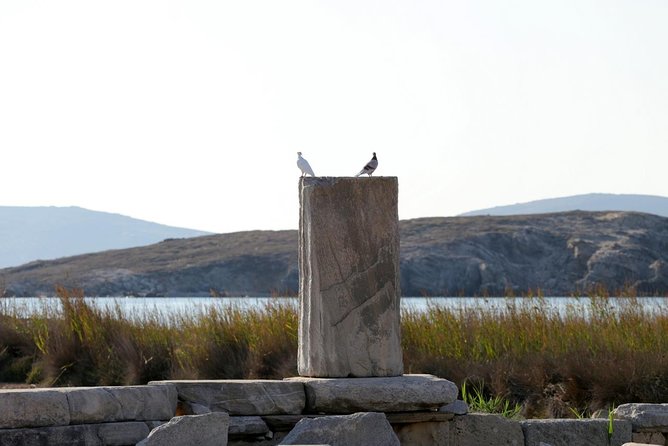
This is where half-day tours either feel perfect or feel tight, depending on your priorities.
You’ll likely have only a limited window for the museum, because the tour sequence is anchored to the guided walk through the site highlights. If you want museum time, come prepared to choose. I’d treat the museum like a focused supplement to the ruins, not an equal “second half” of your day.
A smart approach: once you know you’ll use the museum, prioritize the exhibits that match what you saw outside. That way, you get the payoff instead of trying to see everything.
Also, if the day feels crowded, the museum can be your quieter reset—but you still want to keep an eye on your ferry return timing.
Price and value: $72.41 plus the cash admission reality
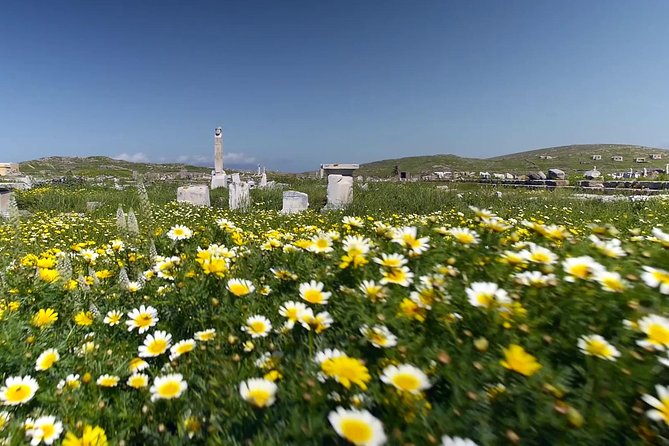
The base price is $72.41 per person, and the big “value” point is that the essentials are bundled: round-trip ferry tickets, a certified specialist guide, wireless audio, skip-the-line entry handling, and safety gear.
But there’s a key line-item you should budget: the entrance fees to the Archaeological Site & the Museum are not included and are €20 per person, paid in cash at the kiosk. That changes the math. Your real total is closer to base price plus that €20.
Is it still worth it? For most history-minded visitors, yes—because you’re getting:
- a guide to connect the dots,
- help with timing and tickets,
- skip-the-line access,
- and a route designed to cover major Delos monuments in limited hours.
If you already know you want a self-paced Delos day with lots of museum time, then this tour’s pacing may feel limiting. But if you want an expert-led highlights route with logistics taken care of, the cost stacks up well.
Crowds, group size, and how to stay in control of your day
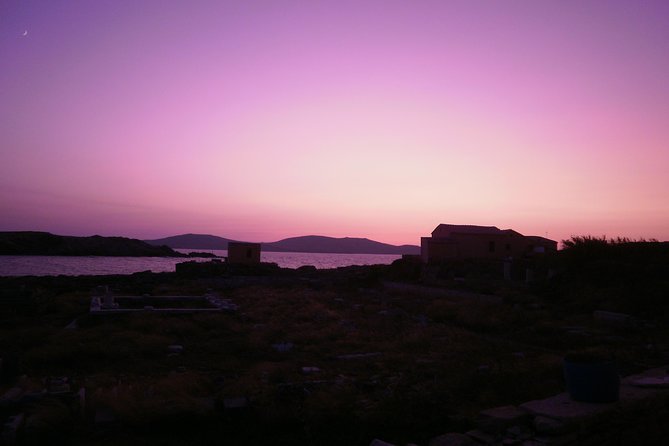
Delos is popular, and it can get busy. On days when multiple boats arrive, you can feel the crunch. That doesn’t mean the site isn’t spectacular; it means you need a strategy.
Two crowd-related factors matter here:
- Your walking experience depends on how quickly your group moves and how tightly you stay together.
- Audio and guide visibility depend on your position within the group.
Group size can also be a factor. This tour has a maximum of 40 travelers, and you may experience bigger-group energy on some departures. In that kind of group, you’ll still learn a lot, but you might have less flexibility if you like to linger at details.
My practical advice: don’t get shy about asking for clarification. If you drift, the wireless audio can cut out, and you lose the thread of the guide’s explanations. The goal is to keep your pace aligned so you get both the info and the best photo stops.
Finally, weather can change the feel. One reviewer described wind and rougher seas on the ferry. Another described cold, rainy conditions on slippery stones. In those moments, a careful guide and a stable group matter more than you expect.
Practical packing list for Delos on a half day
You don’t need to overpack, but you should come ready for heat, sun, and uneven ground.
Bring:
- Comfortable walking shoes (seriously)
- Water and sunscreen
- Camera and spending money for souvenirs
- A small backpack so you can keep things organized
- Some local currency for cash-only admission and small purchases
Also note: photo ID is required if you make purchases with a credit card, so don’t leave your ID behind if you plan to shop.
If rain threatens, bring bug spray and plan for damp surfaces. Delos doesn’t care about your calendar; it will be rocky either way.
Should you book the Half-Day Delos Tour from Mykonos?
Book it if you want the smartest way to see the major Delos monuments in a half-day window. The mix of ferry convenience, skip-the-line access, and a guide-led route makes this a good “first Delos” option, especially if you’re short on time while staying in Mykonos.
Skip it (or choose a different format) if you strongly prefer long, self-paced wandering and deep museum time. Delos is huge, and on a half-day tour you’ll be making choices. Also, if you hate crowds, remember that Delos can be busy on arrival-heavy days.
If you’re the kind of traveler who likes to understand what you’re seeing while you walk—rather than guessing from signs—this tour is an easy yes.
FAQ
Is hotel pickup included?
Pickup is available if you request it, but shared transfer to or from the hotel is not included. It’s offered on request for about €12 per person each way.
Do I need to pay an entrance fee for Delos?
Yes. Entrance fees for the Archaeological Site and the Museum are not included. You pay €20 per person in cash at check-in.
Is the archaeological site ticket included?
The tour includes how you get site access: your guide issues tickets to the group at Delos. The actual entrance fee amount is still paid separately in cash at check-in.
How long is the tour?
The tour is listed as about 4 hours. The guided time on Delos is around 3 hours, with additional time possible for museum visits.
Where do I meet the group?
You start at Delos Tours, Mykonos Old Port. The tour ends back at the same meeting point.
When should I arrive for check-in?
Check-in is 60–30 minutes before departure. You’ll need to arrive at the Delos Tours kiosk in the Old Port to check in and receive your boat ticket.
Does the tour provide audio?
Yes. You receive a wireless tour guide system to help you follow the guide. If it’s lost or damaged, there is a €150 penalty.
What happens if the tour can’t run due to weather?
This experience requires good weather. If it’s canceled due to poor weather, you’ll be offered a different date or a full refund.