REVIEW · MYKONOS
Mykonos Town: Archaeological Site of Delos Guided Day Trip
Book on GetYourGuide →Operated by Delos Travel · Bookable on GetYourGuide
Delos feels like a time machine. I like how this tour turns a ruined island into a walkable story, with ancient mosaics and wall paintings that you can actually see in person. I also love that you get a guided pass through the sacred and urban parts of Delos, so the site makes sense instead of just looking impressive.
One thing to plan around: Delos is hot and mostly sun-exposed, and you’ll be doing real walking on archaeological ground with limited shade breaks. If you’re the type who needs lots of restroom stops, note that facilities are scarce once you’re there, so go prepared.
In This Review
- Key things I’d circle before you book
- Delos in One Morning: Why This Guided Day Trip Works
- From Deliana Port to Delos: Ferry Time and Arrival Game Plan
- Your Walk Through Delos: Streets, Mosaics, and Sacred Corners
- House of Dionysus: The Art and Rooms That Make It Feel Real
- Temple of Apollo and the Sacred Route (Stoa of Philippe to Colossus)
- The Theater of Delos and What to Look For in an Open-Air Site
- Museum Time and Why You Should Plan Your Priorities
- Wireless Headsets: Hearing the Story Without Fighting the Crowd
- Price and Value: Is $93 a Good Deal Here?
- Logistics That Matter: How to Survive the Heat and Timing
- Who This Delos Tour Fits Best
- Should You Book This Delos Day Trip?
- FAQ
- How long is the Delos guided day trip from Mykonos Town?
- Where do I meet for the tour?
- Is hotel pickup included?
- How long is the ferry ride to Delos?
- What’s included in the price, and what’s not?
- Which languages are available for the guided tour?
- Do I need to bring anything?
- Is this tour wheelchair accessible?
- Is there skip-the-line access?
Key things I’d circle before you book
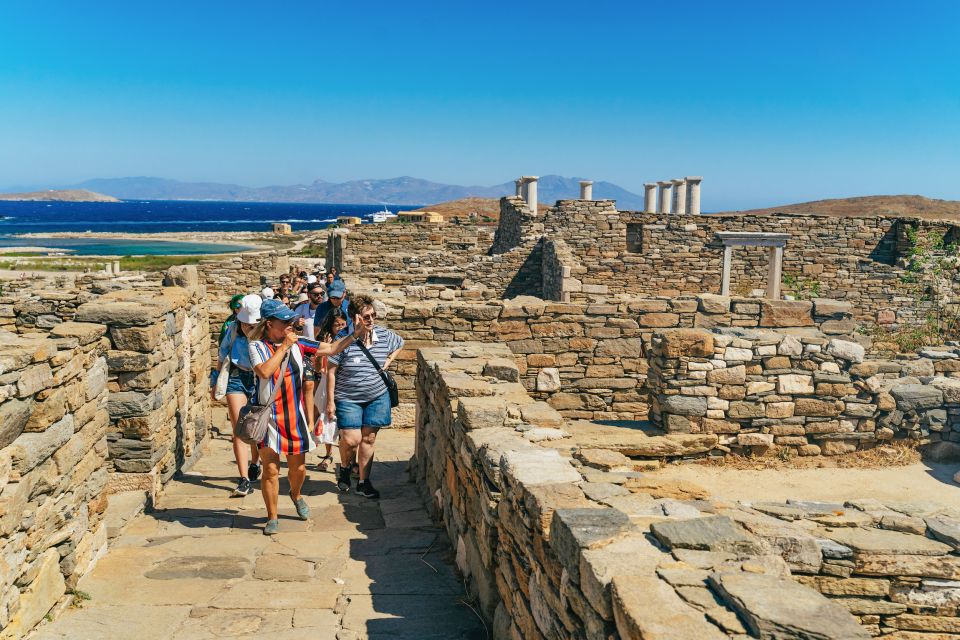
- A guide that makes ruins readable: Stops connect into daily life, religion, and trade—not random facts.
- Mosaics, marble columns, and wall paintings: You’re not just looking at rocks; you’re seeing art.
- Temple of Apollo + the sacred route: You walk the same kinds of pathways visitors follow today.
- House of Dionysus highlights: A standout for what’s preserved and what it suggests about life.
- Wireless tour headsets: Helps you hear clearly as you move through the site.
- A short, scenic ferry window: 30 minutes each way, with sea air and Mykonos views.
Delos in One Morning: Why This Guided Day Trip Works
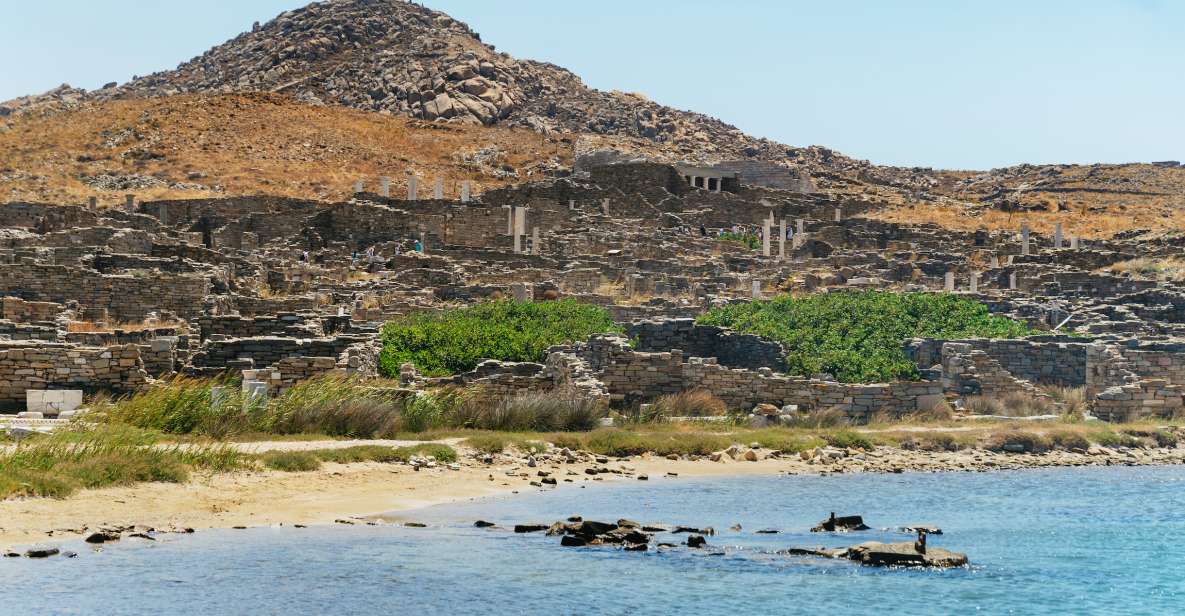
Delos is the kind of place that can overwhelm you fast. It’s big, it’s ancient, and it’s spread out. The smart move here is a guided format that keeps you from wandering aimlessly across major monuments.
With this tour, you start with a short ferry hop from Mykonos Town, then you’re on Delos with an intro to what you’re seeing. I like that the guide doesn’t just point out landmarks; they explain why they mattered—how a street, a room, or a temple fit into the island’s role in the ancient world. You’ll see famous areas such as the Temple of Apollo and walk through the route toward the market zone, including the Stoa of Philippe and the Propylaia (gateway structures).
The “why” matters. When you understand the sacred space versus the everyday city space, Delos stops being a list and becomes a place.
You can also read our reviews of more tours and experiences in Mykonos.


From Deliana Port to Delos: Ferry Time and Arrival Game Plan
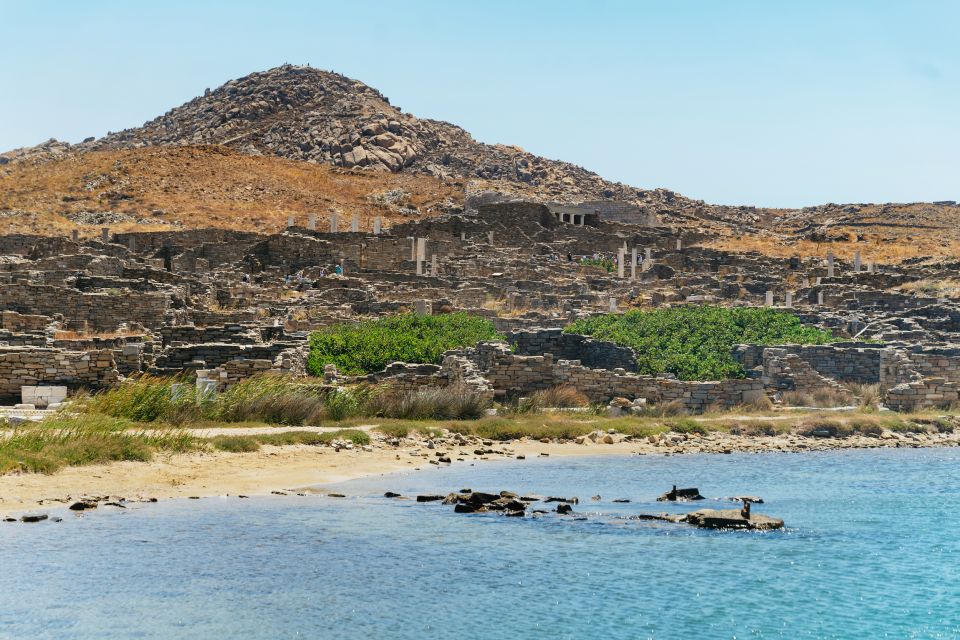
Your day starts at Deliana port in Mykonos Town, where you check in at the Delos Tours ticket office. If you choose hotel pickup, expect a callout by email with an approximate pickup window about 45 minutes to 1 hour before departure.
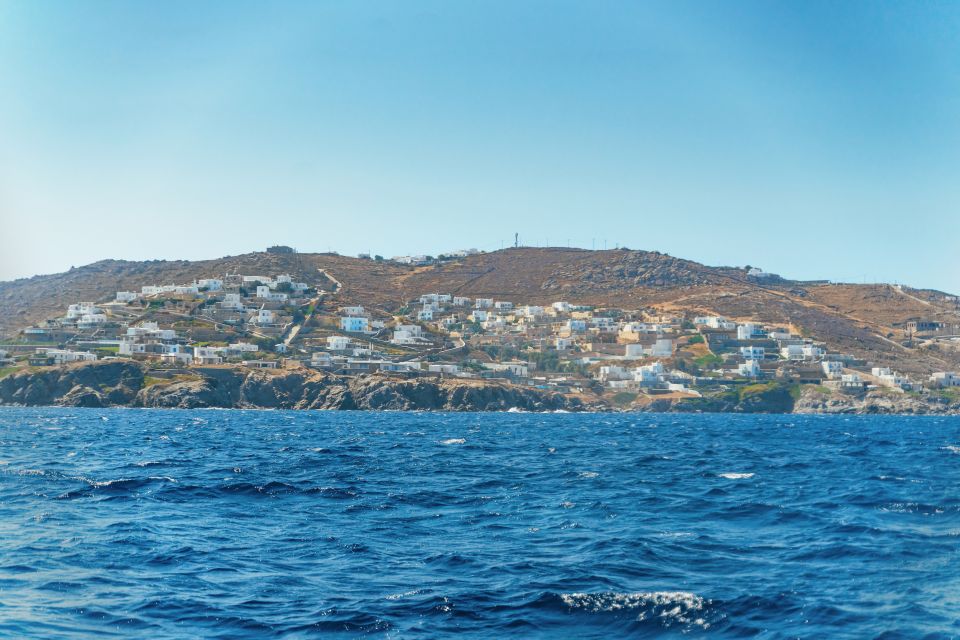
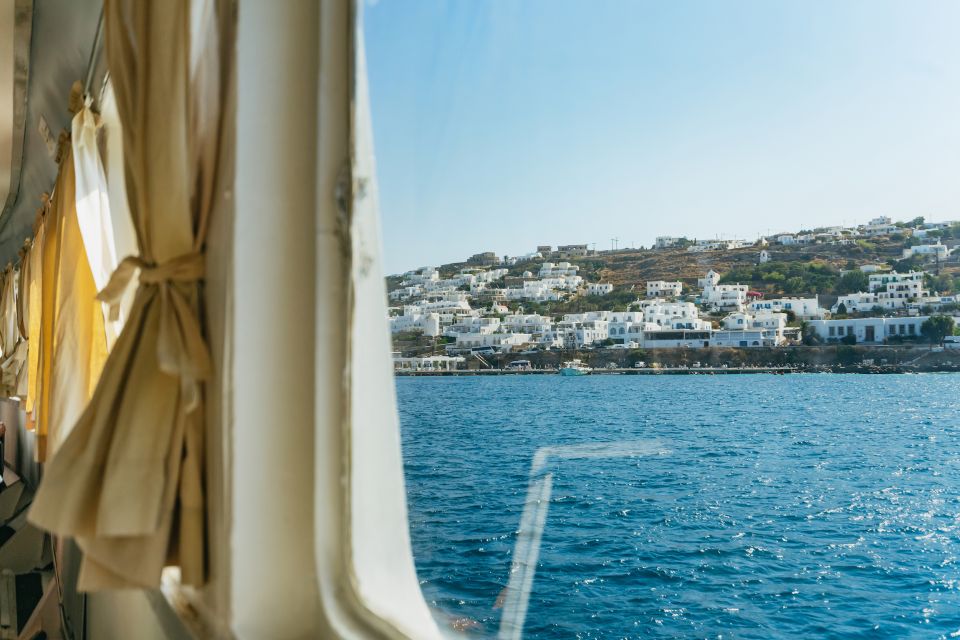
Then it’s a straightforward ferry ride—about 30 minutes—over to Delos. This isn’t a long sea day, but it’s long enough to feel the change of pace. You’ll likely see Mykonos from the water on the way out and again as you return, and that sea air is a nice reset before the heat of the ruins.
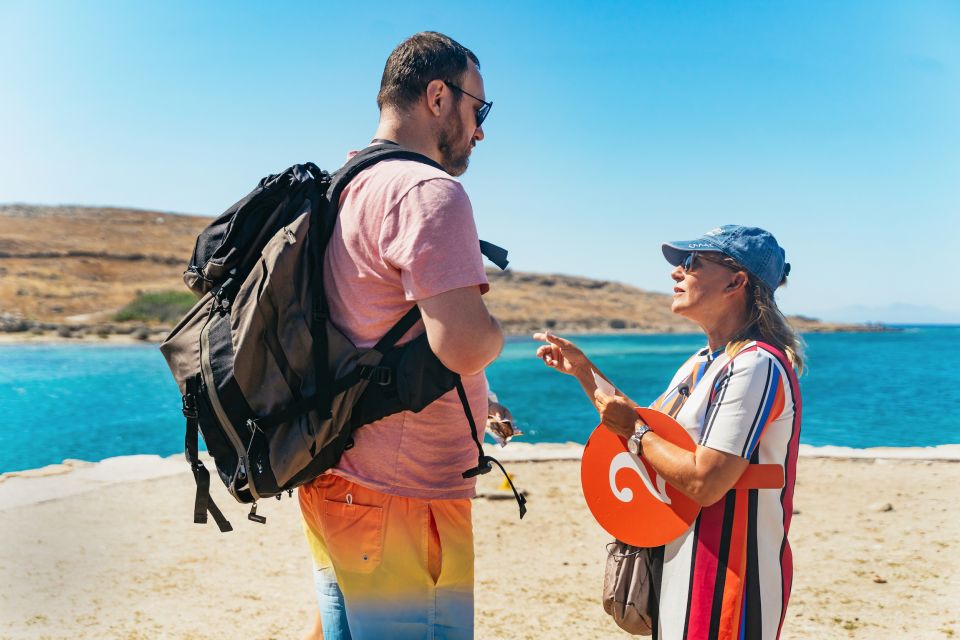
On arrival, you receive an introduction to the site. After that, you follow your guide through narrow city streets and major monument stops. The pacing is built around seeing the essentials without turning the trip into a marathon.
Your Walk Through Delos: Streets, Mosaics, and Sacred Corners
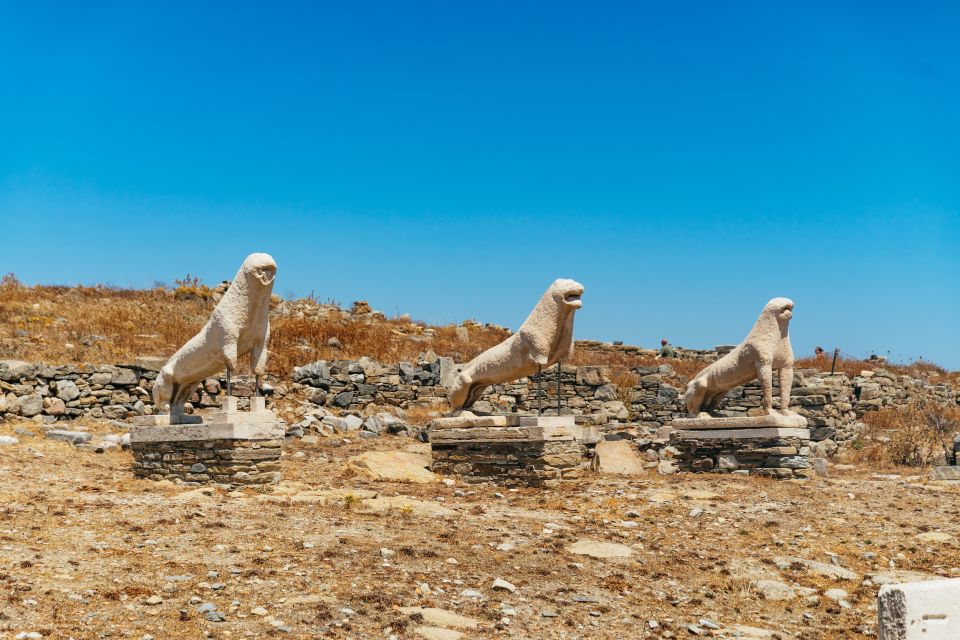
Once you’re on Delos, the tour is essentially a guided circuit through the parts most people want to understand quickly.
You’ll spend about 1.5 hours on the archaeological site with a live guide. The route typically weaves through the urban areas—streets, building remains, and public-looking features—then connects into the sanctuary zone. This matters because Delos wasn’t just “pretty ruins.” It functioned like a real place with zones that served different roles.
Here’s what I love about this structure: it gives you context fast. Instead of you standing alone in front of an isolated mosaic, you’re hearing what a building’s decoration might have meant, and where you are in the overall layout of the site.
You also get a wireless guide system for better listening. That’s a practical upgrade in a place where groups can spread out and where multiple tours may be talking nearby.
House of Dionysus: The Art and Rooms That Make It Feel Real
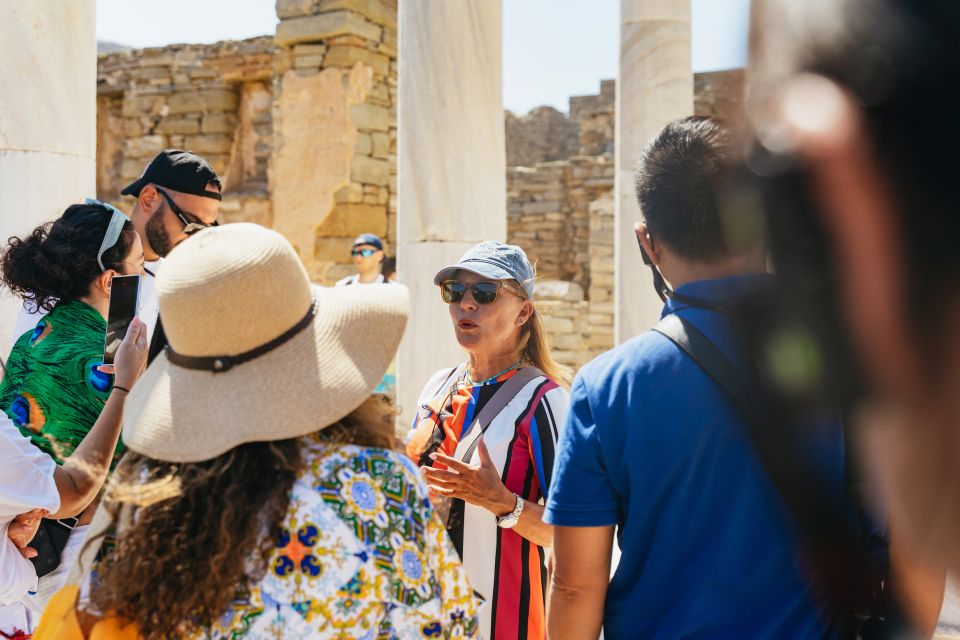
The House of Dionysus is one of the stops that consistently grabs attention. It’s not just a ruin with columns. It’s a preserved glimpse of interior life, with remarkable decoration and the kind of craftsmanship that makes ancient households feel surprisingly human.
On this tour, you’ll be pointed toward the areas that stand out most, including wall paintings and mosaic floors. Those details help you picture what it was like to move through rooms rather than just view fragments from the sidewalk edge.
A special bonus: several guides in this operation are described as having real archaeological backgrounds or training. Names you might hear include Celia, Amaryllis, Ilona/Ilana, and Joanna. That can translate into explanations that don’t feel like a script. You get stories that connect artifacts to daily habits and belief systems.
If you like history, mythology, or just the thrill of seeing something “still there” after thousands of years, this stop hits.
Temple of Apollo and the Sacred Route (Stoa of Philippe to Colossus)
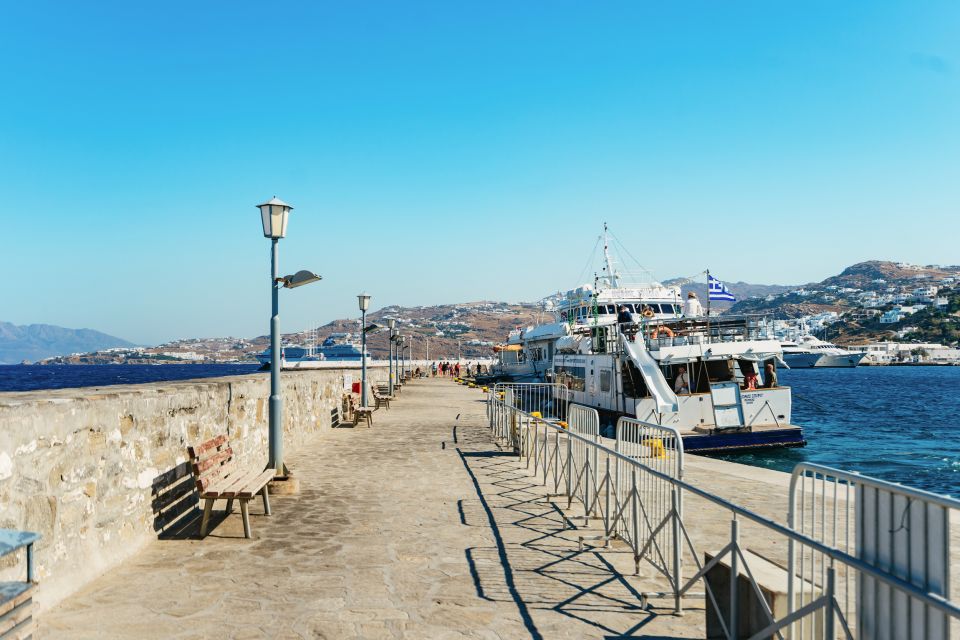
The sanctuary zone is where Delos turns spiritual. The big anchor is the Temple of Apollo, a site you’ll visit as part of the main route through the most important ceremonial areas.
Before you reach the temple-focused stops, you’ll walk along the main street toward the market and sanctuary zones. Along the way, you’ll encounter structures such as:
- the Stoa of Philippe
- the Propylaia (gateway areas)
- the Colossus of the Naxians
This sequence is more than sightseeing. It helps you understand how visitors likely moved through space—transitioning from urban areas with commerce and public activity into a setting tied to worship and sacred identity.
Also, the Colossus stop is a great “scale moment.” Even if you’re not measuring in your head, it helps you feel how monumental Delos was in its heyday.





The Theater of Delos and What to Look For in an Open-Air Site
You’ll also see other monument areas in the urban landscape, including the Theater of Delos. A theater ruins experience is always a little different because the setting is open air and sky is part of the “view.”
When you stand in or near theater remains, you start thinking about sound and gathering. With a guide’s commentary, that feeling becomes more useful: you’re not only seeing where people sat—you’re learning what kinds of events people would have attended and how public spaces fit into the island’s identity.
This stop also helps break up the day. After mosaics and sacred architecture, a theater can reset your brain. It’s a change of geometry and perspective—and a chance to refocus before more temple and market-related stops.
Museum Time and Why You Should Plan Your Priorities
The included ticket covers entrance fees to the archaeological site and the museum of Delos. That means you don’t have to scramble for another ticket on arrival, and you can decide how you want to spend your time after the main guided walking portion.
You don’t get a whole day on Delos, so be choosy. If you’re the type who loves small details (vase fragments, sculpture pieces, artifacts that explain the site), the museum is a strong use of time. If you prefer to keep moving through outdoor ruins, you’ll want to focus on the highest-impact areas your guide highlights during the walk.
In reviews, people often mention taking time to look around the museum afterward. The key is pacing yourself so you don’t run out of daylight and sun patience. Bring your water and your hat, and aim for an efficient museum visit if time is tight.
Wireless Headsets: Hearing the Story Without Fighting the Crowd

On Delos, you can get separated from your group without meaning to. Stone paths and groups moving at different speeds do that. That’s why the wireless tour system helps so much. You’ll have equipment designed to keep you listening clearly as you walk from stop to stop.
In practice, it’s a quality-of-life feature. It reduces the need to constantly crane your neck for the guide’s direction. You’ll also spend more time looking at what you’re hearing about, instead of trying to catch every word.
One small practical note: sometimes group conditions can make hearing tricky, especially in crowded situations. If your headset seems quiet or inconsistent at any point, let your guide staff know right away—because the whole point is to keep the narration synced to the sights.
Price and Value: Is $93 a Good Deal Here?
The price is $93 per person for a 4-hour excursion. On its face, that’s not “cheap,” but it’s also not overpriced for what you’re getting.
Here’s what you’re paying for, in real terms:
- roundtrip boat ticket (about 30 minutes each way)
- entrance fees to the archaeological site and the museum (included; listed at 20 Euros per person)
- a live guide
- taxes
- safety equipment
- wireless tour guide system
Food and drinks are not included, so you’ll want a plan for that before you go or after you return.
What makes this feel like value is the combination. Delos is one of those places where a guide saves you time and confusion. Without one, you might still enjoy the ruins—but you’d likely miss the connections between sacred sites, city streets, and daily life clues.
Think of the $93 as paying for a translator. A good guide turns scattered remains into a coherent story quickly. For many people, that’s the difference between a “wow” photo stop and an actually satisfying trip.
Logistics That Matter: How to Survive the Heat and Timing
This is a walking tour on archaeological ground. Wear comfortable shoes and expect sun exposure.
Delos doesn’t offer much in the way of shaded comfort. You’ll want to come ready for sun-heavy conditions:
- sunglasses
- sun hat
- sunscreen
- face mask or protective covering (listed as a bring item)
- a passport or ID card
Also, plan for limited restroom options once you’re on the island. People mention there are only a couple of toilets available on Delos overall, so don’t treat breaks as casual.
Boat timing is short but frequent enough to shape the day. The ferry slices the morning into two bookends: you’re either heading out to Delos or heading back to Mykonos. Because the on-island guided segment is tight, arriving on time for check-in is the easiest way to protect your full experience.
Who This Delos Tour Fits Best
This is a great fit if you:
- love archaeology, mythology, or ancient Mediterranean history
- want a guided highlights route rather than trying to map Delos yourself
- prefer clear audio and structured timing over wandering solo
- want to see major monuments like the House of Dionysus and Temple of Apollo without missing the connections
It may be less ideal if you:
- need wheelchair-friendly terrain (this tour is listed as not suitable for wheelchair users)
- hate heat and long sun stretches
- want lots of downtime and minimal walking
If you’re traveling with kids, the wireless system can help keep everyone aligned and listening, which makes the history feel less like background noise.
Should You Book This Delos Day Trip?
If your goal is to see Delos’s top sights and understand what you’re looking at, I’d book it. The biggest reason is simple: the guide makes the site readable. With the Temple of Apollo, House of Dionysus art highlights, and the walk toward the market and sanctuary zone, you get a structured route that saves you from getting lost in impressive but confusing ruins.
The main reason to pause is the heat and the practical limits once you’re on Delos. If you show up with the right gear—hat, sunscreen, good shoes—and keep your expectations realistic about shade and facilities, this trip can feel like one of your most memorable Mykonos add-ons.
FAQ
How long is the Delos guided day trip from Mykonos Town?
The total duration is 4 hours.
Where do I meet for the tour?
Check in at the Delos Tours ticket office at Deliana port in Mykonos Town.
Is hotel pickup included?
Hotel pickup is optional. If you select the transfer option, you get 1-way hotel pickup, with pickup time typically about 45 minutes to 1 hour before departure.
How long is the ferry ride to Delos?
The ferry ride is about 30 minutes from Mykonos to Delos, and about 30 minutes back.
What’s included in the price, and what’s not?
Included: roundtrip boat ticket, entrance fees to the archaeological site and museum of Delos (20 Euros per person), tour guide, taxes, safety equipment, and the wireless tour guide system (plus 1-way pickup if selected). Not included: food and drinks.
Which languages are available for the guided tour?
The live tour guide languages listed are French, Italian, English, and Spanish.
Do I need to bring anything?
Bring your passport or ID card, comfortable shoes, sunglasses, sun hat, sunscreen, and a face mask or protective covering.
Is this tour wheelchair accessible?
No. It is not suitable for wheelchair users.
Is there skip-the-line access?
Skip-the-line access is only for the entrance to the archaeological site.