REVIEW · QUEPOS
Beginner Surf Classes
Book on Viator →Operated by Costa Rica Explorer · Bookable on Viator
First waves are a little scary. Then the ocean clicks. This beginner surf class in Quepos/Dominical pairs hands-on coaching with the right beach for your level, so you’re not just standing around hoping for the best. I like the small group setup, and I also like how the instructors teach you how to read what the ocean is doing—not just how to pop up.
There’s also a useful amount of flexibility. The time of day and the length of your session can be adjusted to match the conditions, and you’ll get bottled water and snacks to keep your energy up. One thing to consider: depending on where you’re placed (especially Dominicalito for more advanced surfers), the water can have rocks, so you’ll want to listen carefully to entry and safety instructions.
In This Review
- Key highlights you’ll actually care about
- Why this beginner surf lesson fits the real world (Quepos to Dominical)
- Price and time: $70 for a 2-hour lesson that tries to teach, not just entertain
- Where you meet and how the day starts (Domi Plaza and the Costa Rica Explorer base)
- Playa Dominical vs Dominicalito: what changes when your level changes
- What a typical session feels like: sand practice, then real waves
- Safety is part of the lesson, not a footnote
- The instructors: the teaching style that gets beginners standing
- Small groups (up to 8) make coaching actually possible
- What to bring (and what to take seriously in the sun)
- Who this is best for (and who should think twice)
- How to judge the value: what you’re really paying for at $70
- Weather and surf conditions: why the day might shift a bit
- Should you book this beginner surf class?
- FAQ
- How much does the beginner surf class cost?
- How long is the lesson?
- Where is the meeting point?
- What beach will beginners surf?
- What beach do intermediate or advanced surfers use?
- Is the class time flexible?
- How many people are in each group?
- What’s included with the lesson?
- Do I get confirmation after booking?
- What happens if weather is poor?
- Should you book this beginner surf class in Quepos/Dominical?
Key highlights you’ll actually care about
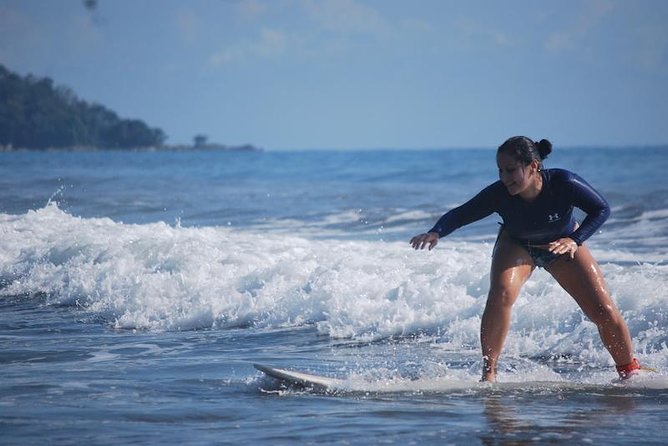
- Flexible scheduling so the lesson can match the day’s conditions and your comfort level
- Small groups (max 8) with close coaching instead of a crowded free-for-all
- Two beach options based on level, so beginners aren’t thrown into rougher water
- Safety-first teaching, including how to handle currents and risky situations
- Snacks and bottled water included, which helps more than you’d think on a 2-hour session
- Central meeting point near Domi Plaza Complex, easy to find once you’ve got your bearings
Why this beginner surf lesson fits the real world (Quepos to Dominical)
If you’re coming to Costa Rica to try something active, you want two things: a plan that makes sense for beginners, and an instructor who can explain the ocean in plain language. That’s what I like here. The class is built around getting you on the board while still covering the stuff that keeps you safe—currents, wave timing, and basic ocean awareness.
You’ll also appreciate the location. This area around Quepos and Dominical has a surf rhythm that’s dependable enough for learning, but variable enough that instructors can choose the right spot for your ability. In other words: you’re not trying to learn surfing on a random beach that happens to have waves.
You can also read our reviews of more tours and experiences in Quepos.



Price and time: $70 for a 2-hour lesson that tries to teach, not just entertain
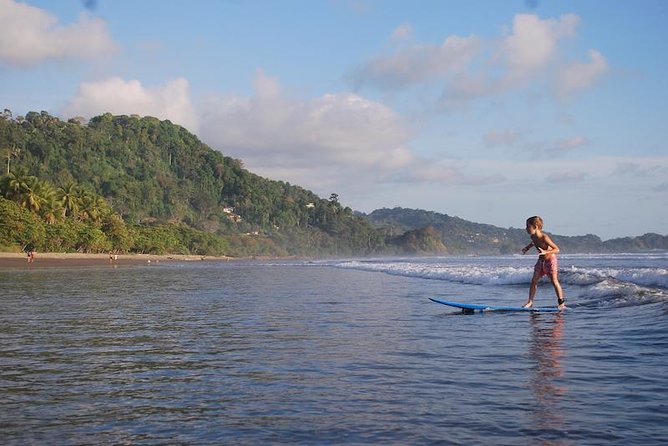
At $70 per person for about 2 hours, this isn’t a “do-nothing” activity. You’re paying for guided coaching and ocean-time. And because the session length and timing can be adjusted, you’re less likely to feel rushed or stuck waiting for the “perfect” moment that never comes.
Also, the lesson isn’t framed as one-size-fits-all. Beginner surfers go to Playa Dominical, while intermediate/advanced surfers go to Dominicalito. That matters for value because it reduces the chance you’re learning in water that’s either too hard or too easy for the level you’re actually at.
Where you meet and how the day starts (Domi Plaza and the Costa Rica Explorer base)
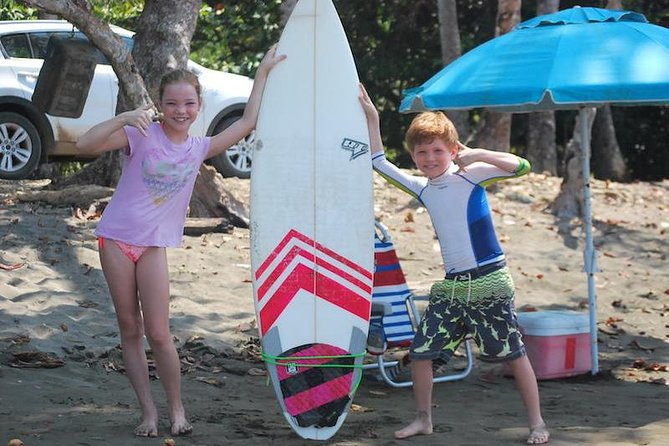
The meeting point is set up to be straightforward: a central location at Domi Plaza Complex. In practice, this is the kind of start that helps you avoid the common travel problem—show up late, then spend your “lesson time” searching for a pickup spot.
The tour runs with opening hours 7:00 AM to 5:00 PM, Monday through Sunday, so you can usually choose a time that fits your trip schedule. I’d still show up a bit early. Surf lessons run on ocean timing, and you’ll want a relaxed start before you’re asked to focus.
Playa Dominical vs Dominicalito: what changes when your level changes
This is the core of the experience. Your level determines the beach, and the beach determines what kind of waves you’ll be practicing on.
- Beginner level: you’ll go to Playa Dominical. This is the learning-friendly option, where the goal is consistency—catching waves, standing up, and building trust in your balance.
- Intermediate/advanced level: you’ll go to Dominicalito. Conditions there can be better for progression, but it can also mean more attention to water awareness.
One realistic consideration: Dominicalito can have rocks in the water, and that’s something that should affect how you listen during safety and entry instructions. The upside is that the waves can still be beginner-suitable depending on conditions, and instructors will guide you on where and how to practice.
What a typical session feels like: sand practice, then real waves
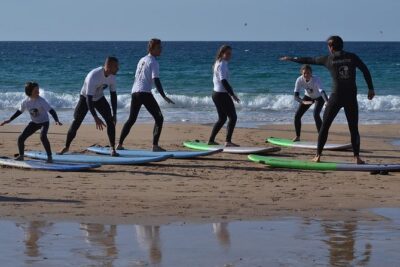
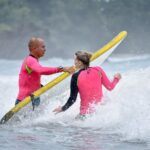
A good surf lesson doesn’t start on a board. It starts on land. That’s exactly how this one is set up. You’ll get beach-side explanations first—how to move, how to time the pop-up, and what to watch for in the water.
Expect the progression to go something like this:
- Beach coaching: currents, how to read the water, and the basics of standing up.
- Practice on sand: you rehearse the steps so your body knows what to do when you’re paddling.
- In-water coaching: instructors stay with you as you try catching waves, and they coach your timing so you’re not guessing.
What makes this valuable is the focus on cause-and-effect. For example, one instructor-style approach is teaching you how to read surf forecasts and translate them into what you should try as a beginner—what waves to choose, how to react in tricky conditions, and how to stay safe among other surfers.

Safety is part of the lesson, not a footnote
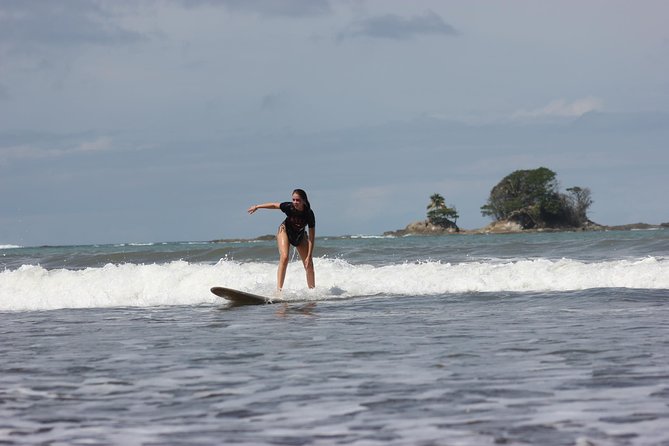
Surfing is fun. It’s also an ocean sport, which means conditions can change fast. Here, safety is woven into the lesson from the start, including topics like:
- how to handle or avoid risky ocean behavior
- what to watch for with currents and timing
- how to protect both yourself and others in the water
You’ll also notice the instructors don’t just point you toward waves. They explain the “why” behind the actions. That kind of teaching helps you react better when something feels off—because you’ll recognize what’s happening rather than panicking.
The instructors: the teaching style that gets beginners standing
What shows up repeatedly in the best experiences is instruction that’s both clear and encouraging. Names you might encounter include Jake, Alex, Josue, Jose, Angel, Sabina, Jody, Jeudy, and Kendal, and the common thread is coaching that helps you improve quickly without making it feel chaotic.
A few teaching details that matter for real learners:
- They explain how to read the water, not just how to stand.
- They coach timing, especially when it’s the difference between catching a wave or getting dragged.
- They break down movement in a way that works for different bodies and experience levels.
One very practical example from the teaching style: if you’re struggling to pop up, some coaches use simple visual cues (like where to look on the board) so your balance clicks sooner. That beats vague advice like just “try harder.”
Small groups (up to 8) make coaching actually possible
A max group size of 8 travelers isn’t just a number—it affects how much attention you get. In a smaller group, instructors can watch what you’re doing and correct you before you develop bad habits.
If you’re learning for the first time, this matters. The early wave catches are mostly about coordination and timing. Tight coaching can shorten the time between wiping out and getting it right.
And it’s a big plus for families and couples, too. You’re not stuck in a group where it’s “everyone for themselves,” and it’s easier to keep the session calm even if someone is nervous.
What to bring (and what to take seriously in the sun)
You’ll likely be hot, you’ll likely be in salt water, and you’ll definitely forget sunscreen once the surf stoke hits. So plan for sun and comfort.
Here’s what’s directly recommended in the experience:
- Use sunscreen, especially on your face
- Consider a rash guard
- Bring a reusable water bottle
Also, bottled water and snacks are provided, which helps you keep going through the lesson without feeling wiped out. Still, I like the reusable bottle idea because it’s one less thing to buy on the spot.
Who this is best for (and who should think twice)
This is a great fit if you:
- want a first surf lesson with structured instruction
- are traveling with a partner, family, or small group
- care about safety and clear teaching
- like the idea of flexible timing based on daily conditions
It also works across ages. One experience involved a first surf lesson for a child around preschool age, and another involved a first-time surfer in their 60s. That tells you the teaching approach aims to be adaptable, as long as you can follow instructions and get into the water safely.
Who might think twice? If you’re very sensitive to rocky entry areas and you expect you’ll be placed at Dominicalito, pay close attention to what the instructor says about where to step and where to practice. Rocks are manageable with the right guidance, but it’s a real factor.
How to judge the value: what you’re really paying for at $70
Surf lessons can range from “fun outing” to “skill-building coaching.” At $70 for about 2 hours, what you’re buying here is:
- instructor time focused on beginners (not just general guidance)
- a level-based beach choice (beginner goes to Playa Dominical)
- safety teaching that helps you understand what could go wrong
- enough coaching to improve your timing and wave selection
If you’re the type who learns best with hands-on correction and clear explanations, this price looks fair. If you’re just looking to be in the water for a bit without instruction, you might feel like it costs more than it should. But for actual learning, it’s priced like a serious activity—not a casual photo-op.
Weather and surf conditions: why the day might shift a bit
The lesson requires good weather. If conditions aren’t right, you should expect changes: either a different date or a full refund. Also, time is variable day to day. That’s normal for ocean sports. The better takeaway is this: don’t lock yourself into a hard schedule that leaves you zero buffer.
The flexible time of day and possible adjustments to session length are there for a reason. Surfing is about conditions, and the instructors aim to match the teaching moment to what the ocean is doing that day.
Should you book this beginner surf class?
Yes, if you want a beginner-friendly surf lesson with small-group coaching, real safety instruction, and beach selection based on your level. It’s also a smart pick if you’re traveling as a couple or family and want an activity that can move at a pace that actually works.
Book it with a simple mindset: listen on the beach, practice the steps you’re shown, and treat timing as the main challenge—not just standing up. If you do that, the chances are good you’ll leave feeling like surfing is something you can learn, not just something you watched from shore.
FAQ
How much does the beginner surf class cost?
The price is $70.00 per person.
How long is the lesson?
It runs for about 2 hours (approx.).
Where is the meeting point?
The meeting point is at Domi Plaza Complex. The activity also lists a start and end back at the Costa Rica Explorer Main St location in the Dominical area.
What beach will beginners surf?
Beginner surfers are taken to Playa Dominical.
What beach do intermediate or advanced surfers use?
Intermediate/advanced surfers are taken to Dominicalito beach.
Is the class time flexible?
Yes. The time of day and the length of the session can be adjusted so you can customize your lesson.
How many people are in each group?
This activity has a maximum group size of 8 travelers.
What’s included with the lesson?
Bottled water and snacks are provided.
Do I get confirmation after booking?
You’ll receive confirmation at the time of booking, unless you book within 12 hours of travel, in which case confirmation is received as soon as possible, subject to availability.
What happens if weather is poor?
The experience requires good weather. If it’s canceled due to poor weather, you’ll be offered a different date or a full refund.
Should you book this beginner surf class in Quepos/Dominical?
If your goal is to learn with clear instruction and a team that focuses on safety and wave timing, book it. The small group size, level-based beach choice, and included water and snacks make it good value for the effort you’ll put in—and the fun you’ll get back.