REVIEW · FUERTEVENTURA
Scuba Diving Baptism in Caleta de Fuste
Book on GetYourGuide →Operated by Turisbeds · Bookable on GetYourGuide
Your first breath underwater starts with calm steps. This scuba baptism in Caleta de Fuste is built like a confidence ladder: basics on land, practice in a pool, then an open-water session capped at 6 meters. I like that the instructors teach at your pace (one guide, Fed, was especially patient when I needed extra time), but a real consideration is that it’s not for non-swimmers and you should avoid scheduling it on the same day as flying.
You get the full set-up for the day—insurance, all necessary equipment, and photo memories from your sea session—done in a small group (up to 8). Plan to show up on time at the meeting point, because there’s no hotel pickup.
In This Review
- Key Things I’d Watch Before You Go
- Caleta de Fuste Basics: A Quick Trip That Starts at 09:30
- Training Ladder 101: Theory, Hand Signals, and Safety Rules
- Pool Practice First: Getting Comfortable at Your Pace
- The Sea Session to 6 Meters: What You’ll Actually Do
- Marine Life Off Caleta de Fuste: More Than a Photo Moment
- Photos, Insurance, and Small-Group Attention: The Value Behind the Price
- Price and Logistics: When $118 Feels Like a Win (and When It Doesn’t)
- Who Should Book This Scuba Baptism, and Who Should Skip
- Should You Book This Scuba Baptism in Caleta de Fuste?
- FAQ
- Where is the meeting point?
- What is the duration?
- How deep will you go?
- What’s included in the price?
- What do I need to bring?
- Is there hotel pickup?
- What languages do instructors speak?
- Is it suitable for non-swimmers or people with health issues?
- Are photos provided?
- Is it a good idea to do this on the same day as flying?
Key Things I’d Watch Before You Go
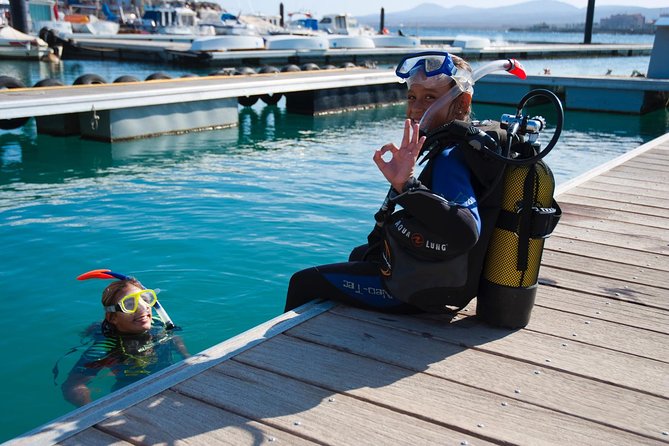
- Max depth is 6 meters, so this is a learning experience, not a stunt.
- Three stages in one go: theory, pool practice, then an open-water session.
- Small group size (8 max) means more attention when you’re learning hand signals.
- Photo download after your session helps you remember what you did, not just how you felt.
- Schedule it away from your flight day, because your body needs recovery time.
Caleta de Fuste Basics: A Quick Trip That Starts at 09:30
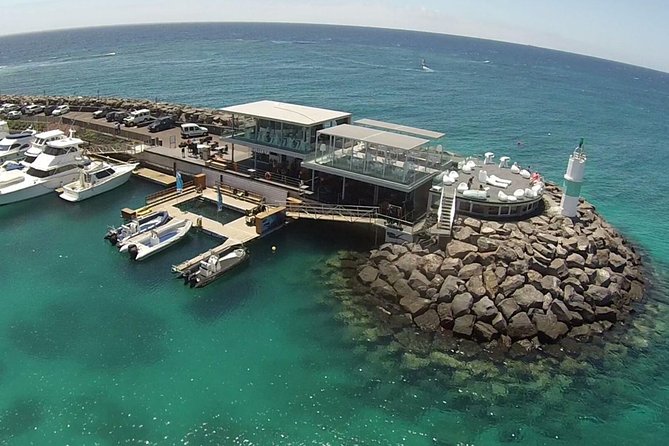
This experience runs out of Caleta de Fuste on the island of Fuerteventura, in the Canary Islands. It’s a practical base because it’s close to Puerto del Rosario and also near the airport, which makes it easier to fit into your itinerary than activities that require lots of extra travel time.
You meet at 09:30 at Deep Blue Center at Muelle Deportivo de, 35610 Castillo Caleta de Fuste, Fuerteventura. And important: no pickup. You’ll want to plan time to get yourself there, find the meeting point without stress, and get suited up.
The total time is listed as about 2 hours, and the overview also notes 2 to 2.5 hours depending on how the day flows. Either way, it’s short enough to still have your afternoon free for the beach, but long enough to actually learn the basics and do an open-water experience—not just sit through classroom talk.
You can also read our reviews of more tours and experiences in Fuerteventura.
Training Ladder 101: Theory, Hand Signals, and Safety Rules
The day starts with the basics you actually need, not scuba jargon for show. First you get a theoretical lesson on how the equipment works, plus the rules that keep you safe underwater. Expect to cover topics like hand signals and the safety procedures you’ll follow when you’re at water level and later below the surface.
Why this part matters: scuba safety is mostly communication. If you don’t understand the hand signs and the basic checks, you’ll spend the open-water part worrying instead of learning. The format here is built to fix that early—so by the time you’re in the water, you’re not starting from zero.
You’ll also learn the “what if” basics. For example, what to do if something feels off, how to handle the gear comfortably, and how the instructor will guide you. That’s part of why this works well as a first-timer course.
And language-wise, you’re not stuck with one option. Instructors can teach in Spanish, English, German, French, or Swedish. That matters more than you might think, because learning the safety rules is easier when you understand every step clearly.
Pool Practice First: Getting Comfortable at Your Pace
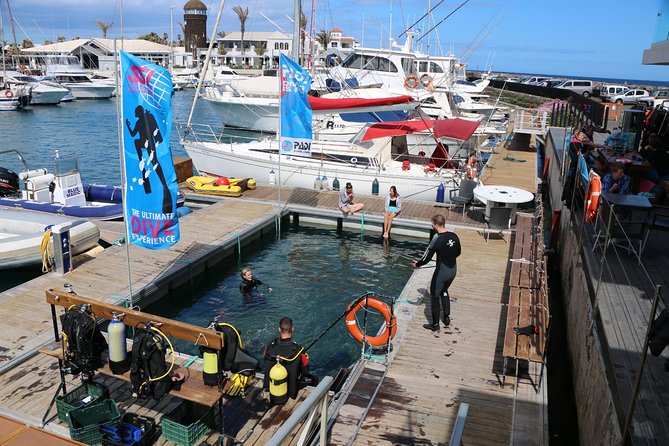
Before you go out where the water is moving and you can’t stand up anymore, you’ll do a first immersion in a swimming pool. This is where you get the feel of the gear, practice breathing with the equipment, and build comfort with buoyancy and basic control.
One of the best lessons from real experience here: if you feel unsure, the instructor should slow down. In one case, Sharon couldn’t get past about 1 meter in the pool. She wasn’t pushed to force it. Instead, she was offered the chance to rebook, and she realized she was overthinking. That’s exactly how pool training should work. You’re learning the mechanics and the calm, controlled version of underwater movement first.
Practical tip for you: treat the pool portion as your warm-up brain. You’re not just cooling off in water—you’re training your mind to trust the system. If you’re tense, tell your instructor early. The better you communicate, the faster you usually relax.
What to bring is simple: towel and beachwear. You’ll want clothes you can rinse off afterward, too, since you’ll likely come out salty and sandy.
The Sea Session to 6 Meters: What You’ll Actually Do
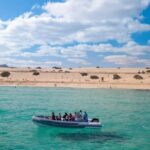
After the classroom + pool setup, the day moves to the beach for the open-water part. This is the moment most people are waiting for: going out where you can see marine life in its everyday routine.
The experience has a maximum depth of 6 meters. That depth limit is a big deal for value and comfort. It keeps the experience within a learning-friendly range while still giving you that real-underwater perspective. At this depth, you’ll experience the changes in pressure and buoyancy, but the course is designed so you’re not out of your comfort zone for hours.
You should also know this is a guided, structured learning activity, not a “free swim.” The instructor will manage the progression, confirm you’re following the safety rules, and use hand signals so you’re never guessing what to do next.
From what I’d take away from the experience’s track record: the instructors often help nervous first-timers build confidence quickly. One guide named Juan was praised for explaining things step by step, with a first open-water session lasting around 35 minutes and seeing amazing fish. Another highlight was how supportive the guides were when people felt anxious. So if you’re worried you’ll mess it up, you may actually find the process surprisingly manageable when someone walks you through it clearly.
Marine Life Off Caleta de Fuste: More Than a Photo Moment
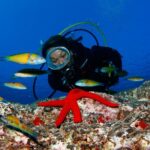
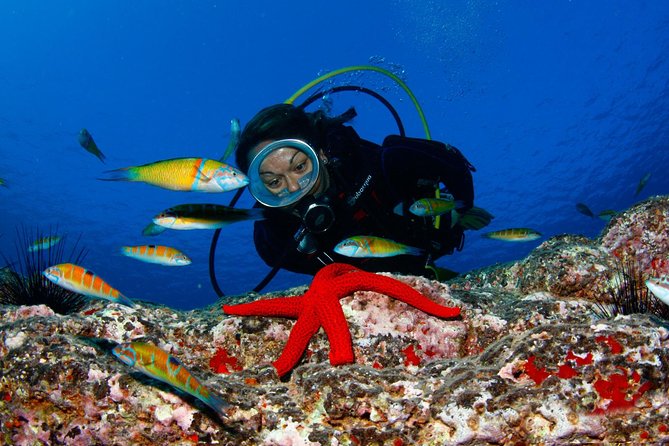
The whole point of doing the sea session is the marine life. Caleta de Fuste has a good chance of showing you fish and underwater wildlife close enough to notice without special equipment. You’ll want to keep your expectations realistic: this is a learning baptism, so your attention should be on breathing, buoyancy, and following cues.
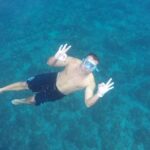
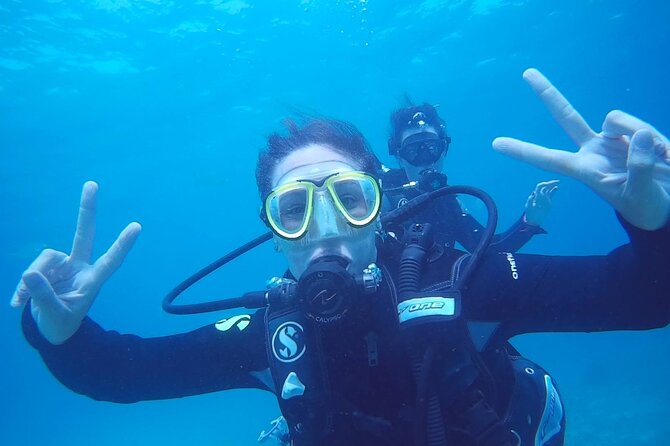
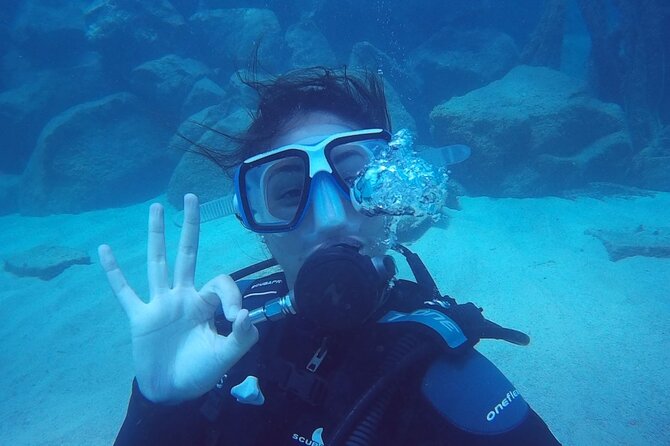
But marine life still does the job. You get to experience the local fauna where it lives, not in a tank. And that’s why the photos matter. You’ll get photos of your activity so you can remember what it looked like when you were actually underwater, not just what you felt.
If you wear glasses or need vision help, there’s at least one useful detail from real experiences: one participant specifically noted help with pool goggles with corrective vision. If you have a vision need, ask when you check in so you can figure out the right setup for the pool stage before you move to the sea.
Also, simple rule: no smoking during the experience. It’s stated as not allowed, and it’s smart for everyone’s comfort before the water part.




Photos, Insurance, and Small-Group Attention: The Value Behind the Price
Let’s talk money honestly. The price is $118 per person for a 2-hour experience. That might sound steep until you add up what’s included: insurance plus all necessary equipment. For a first-timer scuba education, that’s part of the value—because you’re not also paying to rent gear or wondering if you have the right set-up.
Then there’s the small-group piece: limited to 8 participants. In practice, that usually means your instructor isn’t running around with a huge crowd. It also makes it easier to ask questions before you get in the water, which matters a lot when you’re learning the signals.
And you get photos. That’s not just a nice-to-have if you’re the kind of traveler who wants something more than a vague memory. You can download them later at the website, so it becomes a keepsake instead of just a moment that disappears.
Also, the “included” list is clean. You’re not paying extra for the gear or insurance, which helps this feel like a straightforward activity rather than an add-on nightmare.
Price and Logistics: When $118 Feels Like a Win (and When It Doesn’t)
At $118, this is best if you want a guided introduction without juggling rentals or extra planning. You don’t have to bring the mask-and-tank system—equipment is provided—and insurance is included. For many people, that removes the friction that makes first-time experiences stressful.
Where it might not feel like a win is scheduling friction. This is one of those activities you don’t want to treat like a throwaway morning plan. The guidance says don’t do it on the same day you’re flying. So if your travel days are rigid, you may need to rearrange your flights or spend the day near the activity with cushion time.
It also has clear suitability limits. It’s not suitable if you have back problems, epilepsy, are prone to seasickness, or if you are a non-swimmer. If any of those apply, you’ll likely have a frustrating or unsafe experience. In that case, the “value” drops fast because it’s the wrong match for your body.
Who Should Book This Scuba Baptism, and Who Should Skip
This course is a good fit if:
- You want a first-timer introduction with clear steps.
- You’re comfortable learning the equipment and hand signals in a supportive environment.
- You value structure: theory, pool practice, then sea time.
It’s a poor fit if:
- You have back problems.
- You’re a non-swimmer.
- You have epilepsy.
- You tend to feel rough with movement at sea (seasickness is listed as a disqualifier).
- You’re looking for something you can squeeze in right on top of a flight day.
Wheelchair accessibility is listed as available. Still, suitability for the water process depends on the individual’s needs, comfort, and safety considerations. If you’re in a mobility situation, ask ahead so you can be confident you’ll get the support needed for the pool stage and the open-water portion.
Language variety is a plus if you’re not confident in English. The instructor team covers Spanish, English, German, French, and Swedish, which can help the safety instruction land correctly.
Should You Book This Scuba Baptism in Caleta de Fuste?
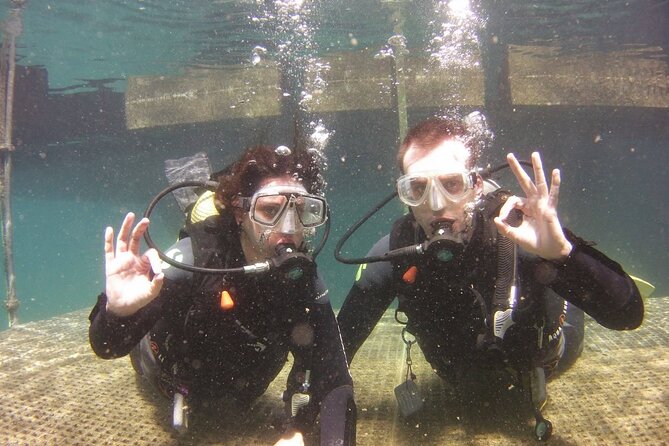
If you’re dreaming of your first underwater experience and you like learning in a structured, small-group way, I’d say this is a solid choice. The combination of pool practice, a clearly stated 6-meter max depth, included equipment and insurance, plus the photo set makes the $118 feel earned rather than inflated.
Don’t book if you can’t meet the basic suitability rules (non-swimmer, back issues, epilepsy, seasickness-prone) or if you can’t schedule it away from flying. Also, if you’re nervous, that’s normal. The guide approach matters, and real experiences here highlight patient teaching—people who needed extra time were treated with care, not pressure.
FAQ
Where is the meeting point?
You meet at 09:30 at Deep Blue Center, Muelle Deportivo de, 35610 Castillo Caleta de Fuste, Fuerteventura.
What is the duration?
The activity is listed as 2 hours, with an overview noting it may be around 2 to 2.5 hours.
How deep will you go?
The maximum depth is 6 meters.
What’s included in the price?
Insurance and all necessary equipment are included.
What do I need to bring?
Bring a towel and beachwear.
Is there hotel pickup?
No. There is no pickup, and you must go to the meeting point.
What languages do instructors speak?
Instructors can teach in Spanish, English, German, French, and Swedish.
Is it suitable for non-swimmers or people with health issues?
It is not suitable for non-swimmers and it also shouldn’t be done if you have health problems. It’s listed as not suitable for back problems, epilepsy, and people prone to seasickness.
Are photos provided?
Yes. You’ll get photos of your activity, and you can download them later from the website.
Is it a good idea to do this on the same day as flying?
No. You shouldn’t do the baptism on the same day you are flying.