REVIEW · LA FORTUNA
Costa Rica Descents Organic Farm
Book on Viator →Operated by Costa Rica Descents · Bookable on Viator
A farm tour in La Fortuna can be surprisingly hands-on. Costa Rica Descents Organic Farm pairs organic agriculture with a fast, friendly look at medicinal plants and how local food moves from field to community. It is built for a small group (max 15), so you get time to ask questions and actually understand what you are seeing.
I like that the focus is practical: crops, timing, and seasonality, plus how people traditionally used plants for healing long before modern medicine. I also like the food payoff, with a Costa Rican lunch and coffee or tea included. The only catch is the tour clocks in at about 1 hour, so it is not the right pick if you want a long, slow farm day.
In This Review
- Key things to know before you go
- Why the Costa Rica Descents small-group model matters in La Fortuna
- The 10:00 a.m. timing: what you can realistically fit
- Stop 1 at Costa Rica Descents: how organic farming connects to the calendar
- Medicinal plants in everyday terms: why they have so many compounds
- Lunch with coffee or tea: where the farm-to-table lesson stops being theory
- The guides’ style: safe, funny, and focused on understanding
- Where you might see animals (and how to approach it)
- Price and value: does $58.67 make sense for a one-hour tour?
- Who should book this organic farm tour in La Fortuna?
- Practical tips to make your one-hour farm stop go smoothly
- Should you book the Costa Rica Descents Organic Farm tour?
- FAQ
- How long is the Costa Rica Descents Organic Farm tour?
- What time does the tour start in La Fortuna?
- Where does the tour meet?
- What is included in the price?
- Is the medicinal plants stop an extra ticket cost?
- How big is the group?
- Is there a minimum age for this experience?
- Are service animals allowed?
- What is the cancellation window?
Key things to know before you go
- Small-group feel (max 15 travelers) means more direct attention and easier questions.
- Seasonal farming basics: learn what grows when and how it is distributed locally.
- Medicinal plants talk with real context, including why plants make so many chemical compounds.
- Lunch plus coffee or tea is included, so you leave fed, not just informed.
- A working-farm experience at Costa Rica Descents is designed to be accessible for most ages.
Why the Costa Rica Descents small-group model matters in La Fortuna
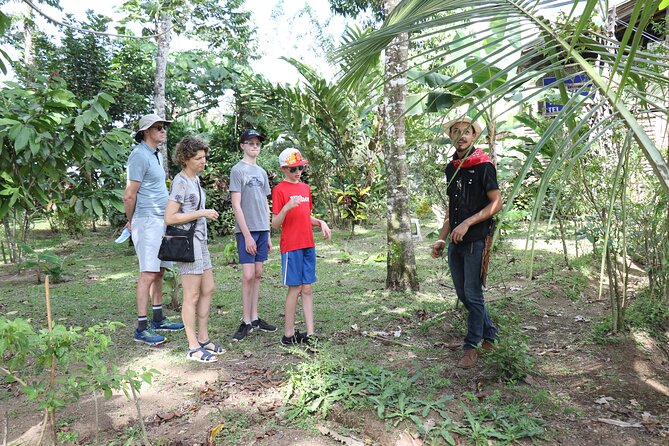
La Fortuna has plenty of tours. This one is different because it stays small. With a maximum of 15 travelers, the guide can pace the group, answer more than just the obvious questions, and adjust on the fly if you have kids, teens, or mixed interests.
This is also where the guide talent really shows. In the feedback, names come up again and again, including Chamo, Andres, Pablo, Cris, Werner, and Manuel. The theme is consistent: you feel safe, supported, and entertained while learning. That matters on a farm setting, where it is helpful to have someone explain what is safe to touch, what to avoid, and why certain plants and practices are used.
If you are the kind of traveler who likes real conversation over lecture, this format fits. It also works well for families. One review highlighted it as great for a family with teens, with animals and food that keep older kids engaged too.
You can also read our reviews of more tours and experiences in La Fortuna.

The 10:00 a.m. timing: what you can realistically fit
This experience starts at 10:00 am and runs about 1 hour. For planning, that is a sweet spot. You can slot it into a morning, then still have plenty of time for other La Fortuna activities later the same day.
Just keep expectations aligned with the time. A one-hour farm visit can show you the big picture and give you a few standout details, but it will not replace a half-day or full-day tour. If you want a deeper, slower walk through every corner of the farm, you might find this short.
If you want something efficient, though, this is a strong option. It is also booked about 36 days in advance on average, which is a useful signal: it tends to fit well into the schedules of people who are moving fast through town.
Stop 1 at Costa Rica Descents: how organic farming connects to the calendar
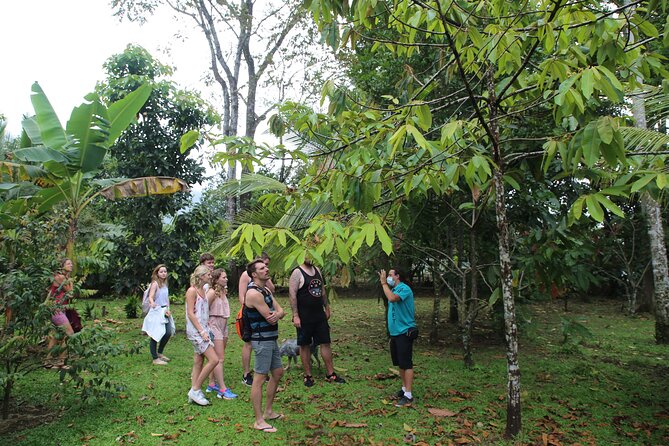
The whole experience centers at Costa Rica Descents. You will learn how local food production and distribution work, with an emphasis on seasonality—what crops grow when and how farms plan around that reality.
This is the part I think most visitors appreciate once they get past the wow-factor. Organic farming is not just a label. It is a system. When the guide explains what grows in particular months, you start to see why farmers cannot always produce everything all the time. The farm’s rhythm affects harvests, how food is distributed, and what dishes and ingredients are locally available.
You are also learning distribution, not just growing. Many tours show a field. This one tries to show the next step: how food gets moved and shared in a way that matches what is actually in season. That makes the learning feel grounded and tied to daily life, not just plant facts.
One more small detail that adds value: the medicinal plants portion is listed with admission ticket free, so you are not hit with extra add-on costs during the experience itself.
Medicinal plants in everyday terms: why they have so many compounds
One of the most distinctive pieces of this tour is the medicinal plants explanation. You get a look at traditional medicine practices that the farm connects to very old roots, described as dating back to prehistoric times.
The guide explains that plants synthesize hundreds of chemical compounds. Those compounds are not random. They have jobs, including defense against insects and fungi, and protection from disease and herbivorous mammals.
What I like about this framing is that it helps you connect two ideas:
- Plants are doing much more than growing leaves.
- Nature is running a chemical defense system all the time.
Even if you know nothing about botany, you can follow the logic. It turns a topic that could feel abstract into something that sounds practical: plants make compounds because they have to survive pressure. You start noticing how “medicinal” and “defensive” overlap in the way plants evolve.
Lunch with coffee or tea: where the farm-to-table lesson stops being theory
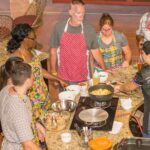
The tour includes lunch, plus coffee and/or tea. For a lot of farm tours, the food is an afterthought. Here it is part of the point. The lunch is tied to what the farm produces locally and seasonally, which makes it feel like the final page of the story.
In practical terms, that means you do not have to hunt for a meal right after a walk on a busy travel day. You also get a chance to taste what you just learned about—at least in the broad sense of local food production and what is available at the time.
Also, the reviews lean hard into the fact that the food and overall experience feel fun and satisfying. One person summed it up as delicious and educational. Another highlighted that the guide made the experience engaging with good energy, which matters when you are sharing a meal right after a lesson. A relaxed, well-timed lunch turns learning into a memory you will actually keep.



The guides’ style: safe, funny, and focused on understanding
A farm tour works or fails based on the guide. On this one, the consistent praise in the feedback is about instruction style—clear directions, a sense of safety, and humor that keeps the group from feeling like they are stuck in a classroom.
That is where guides like Chamo, Pablo, and Werner come in from the feedback. People describe them as making them feel safe and confident while teaching. Another review names Manuel as the cook and highlights how he stayed informative and entertaining.
Even without knowing the specific guide you will get, you can plan around the tone: you should expect a tour that tries to be understandable, not intimidating. If you are worried about feeling awkward asking questions, this setup usually helps. A small group format gives you a better shot at getting a direct answer.
Where you might see animals (and how to approach it)
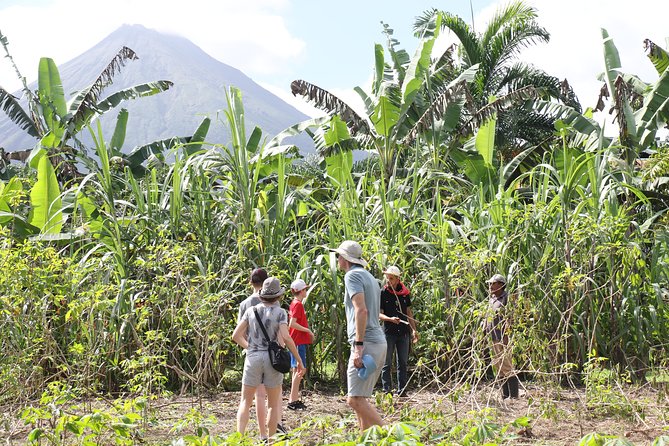
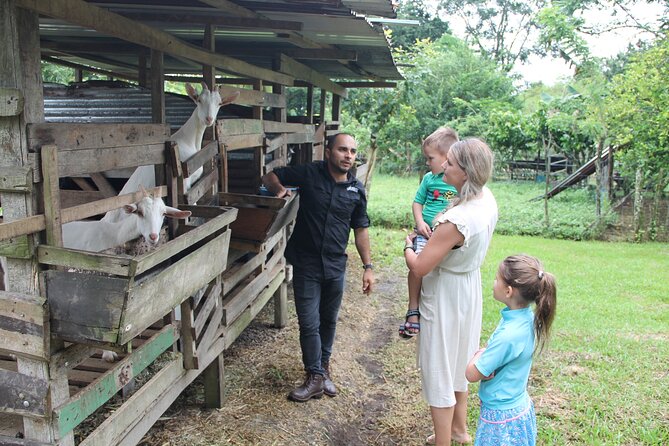
This farm visit is about plants, but the experience is still a living farm. One of the highlights shared in the feedback was being able to pet baby goats. That is a great moment for families and for people who want something tactile, not only visual.
Just use the usual good sense around animals: listen to what your guide says, keep your movements calm, and avoid reaching faster than the guide indicates. On a farm, small rules keep everyone safe and help animals stay comfortable.
If you are going with kids, this animal time can be the difference between a tour that feels like homework and one that feels like a real experience.
Price and value: does $58.67 make sense for a one-hour tour?
At $58.67 per person for about one hour, the main question is value. You get several things bundled together:
- A nature guide
- Lunch
- Coffee and/or tea
- Local taxes included
You are also not paying extra admission for the medicinal plants stop since it is listed as free. And the group size cap of 15 is a real value driver, because it supports better interaction.
A one-hour duration might sound short until you think about how tours usually go in La Fortuna. Many activities run long because of logistics or bigger groups. Here, the experience is tight and focused. You are paying for a concentrated, guided view of how organic farming works, plus the cultural layer of traditional medicinal plants, and you get fed in the middle.
So the price feels most fair if you want:
- A quick, high-quality introduction to organic farming and medicinal plants
- A small-group guide-led experience
- A lunch included without extra meal hunting
If you are the type who wants to spend half a day walking slowly and asking dozens of questions, you might compare this to longer options. But for a compact, meaningful stop in your La Fortuna schedule, the value calculation looks strong.
Who should book this organic farm tour in La Fortuna?
This works especially well if you fit any of these:
- You want a short activity that still feels educational and hands-on
- You like small groups and direct guide attention
- You are traveling with families or teens who need a tour that keeps moving
- You want a lunch included so your schedule stays smooth
It is also designed for broad participation: there is no minimum age, and most travelers can participate. Service animals are allowed, which is a helpful note for accessibility planning.
If you are already doing the big-ticket nature day (like rafting) and you want something calmer and more cultural-food based afterward, this can be a smart pairing. It gives your day variety without swallowing your whole schedule.
Practical tips to make your one-hour farm stop go smoothly
Because this is a working farm experience, show up ready to walk a bit and pay attention to guide instructions. Here are the practical things that help most:
- Wear comfortable shoes suited for farm pathways.
- Bring a light layer or hat if you are sensitive to sun, since farm tours often happen outdoors.
- Come with one or two questions: what grows in-season right now, how distribution works, and how medicinal plants are approached traditionally.
- If you are traveling as a group with different interests, tell your guide what matters to you; the small group format usually makes it easier to tailor the conversation.
Also, book early if you can. With an average booking lead time of 36 days, it looks like this one stays popular during peak travel windows.
Should you book the Costa Rica Descents Organic Farm tour?
I would book it if you want a focused, small-group organic farm experience in La Fortuna that mixes agriculture, food, and medicinal plants into one clean hour. The included lunch with coffee or tea is not a throwaway benefit—it helps seal the “farm-to-table” idea in a way that feels real, not just explained.
Skip it if you know you only enjoy slow tours and you want a longer time walking through every detail. This is built for momentum and clarity, not a full-day deep study.
If your goal is to get a solid foundation in how organic farming works locally—plus a memorable medicinal plants lesson—this one is a strong match.
FAQ
How long is the Costa Rica Descents Organic Farm tour?
The tour lasts about 1 hour.
What time does the tour start in La Fortuna?
The start time is 10:00 am.
Where does the tour meet?
You meet at Costa Rica Descents Adventure Company on Via 702, Provincia de Alajuela, La Fortuna, 21007, Costa Rica.
What is included in the price?
The price includes local taxes, a nature guide, lunch, and coffee and/or tea.
Is the medicinal plants stop an extra ticket cost?
The medicinal plants admission ticket is listed as free.
How big is the group?
The tour has a maximum of 15 travelers.
Is there a minimum age for this experience?
There is no minimum age; it is for all ages.
Are service animals allowed?
Service animals are allowed.
What is the cancellation window?
You can cancel for a full refund if you cancel at least 24 hours before the experience’s start time. If you cancel less than 24 hours before, you do not receive a refund.