REVIEW · GRAN CANARIA
2 Hour Stand Up Paddle Lesson in Gran Canaria
Book on Viator →Operated by Sup Fit Yoga · Bookable on Viator
Your first SUP lesson can feel like therapy. I love how this beginner-friendly class gets you standing fast, with boards that feel stable from minute one. I also like that you get a proper safety and technique setup before you head out.
I love the balance between effort and calm—core work, warm-ups, and then real water practice. One thing to consider: the experience requires good weather, so plan flexibility helps.
In This Review
- Key things to know before you go
- Where to meet in Arguineguín: World Sport Canarias Solrik
- The first steps on the beach: safety talk and warm-up work
- Stable boards and “okay, I can do this”: your standing and balance practice
- Out on the water: technique, open-water confidence, and fish spotting
- Why this 2-hour format feels relaxing (even with a workout)
- Photos, videos, and that “wait, this is beautiful” moment
- Price and value: is $64.71 worth it?
- Weather rules: what happens if conditions aren’t right
- Who should book this SUP lesson in Gran Canaria?
- Should you book this 2-hour SUP lesson?
- FAQ
- How long is the stand up paddle lesson?
- Where is the meeting point in Gran Canaria?
- How many people are in the group?
- Is the lesson in English?
- Do I need paddle boarding experience?
- What ticket method do I get?
- What happens if the weather is poor?
- What is the cancellation policy?
Key things to know before you go
- Small group (max 4): more time with the instructor, less waiting around.
- Beginner-focused coaching from Mireie: clear steps, patient guidance, and encouragement.
- Safety + gear briefing first: you learn what to use and how to stay safe before you paddle out.
- Stable SUP boards: easier balance, especially when you’re learning your first stance.
- Photos and video moments: your instructor takes pictures and you may get them shared after.
- English instruction: the lesson is offered in English, making the technique and safety talk easier to follow.
Where to meet in Arguineguín: World Sport Canarias Solrik
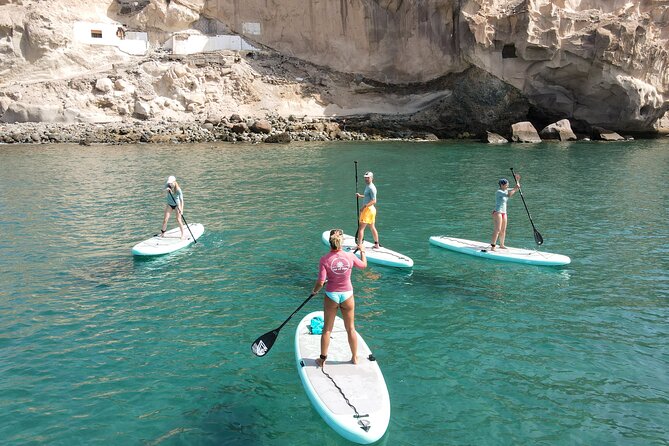
This lesson starts at World Sport Canarias Solrik WSCC, Miguel Marrero Rodríguez, 57, 35120 Arguineguín, Las Palmas, Spain. It ends right back at the same meeting point. So you’re not stuck figuring out return transport after you’ve worked up a sweat.
I like that the start location is near public transportation. That matters in Gran Canaria, where parking can be hit-or-miss depending on the day. One review even mentioned parking was pretty easy, which is a nice bonus if you’re driving.
Also, this is a small class—a maximum of 4 people. That small size changes everything. You’re not just a body on a board; you’re part of a simple rhythm where your instructor can correct posture and paddle angle on the spot.
If you’re trying to plan ahead, the lesson is commonly booked about 5 days in advance. That’s usually enough lead time if you’re traveling on a normal schedule.
You can also read our reviews of more tours and experiences in Gran Canaria.


The first steps on the beach: safety talk and warm-up work
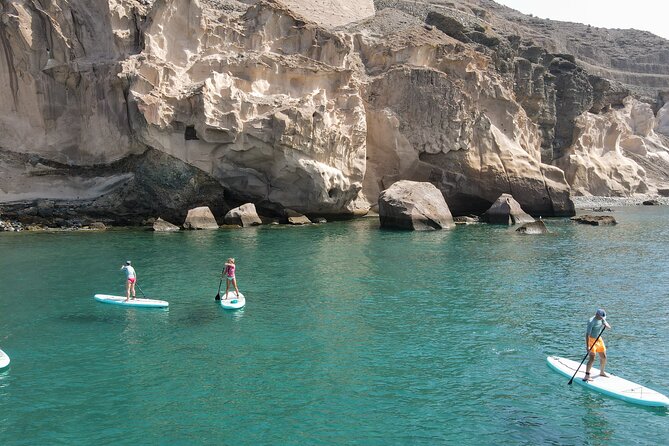
Before you get wet, you’ll get a quick but practical overview of SUP basics—what gear you’re using and the safety tips you need for the sea. This is the part that saves your energy later. When you understand how to handle the board and what to do if something feels off, you spend less time panicking and more time learning.
Then you move into a warm-up with joint and muscle exercises. The goal isn’t to turn the lesson into a gym session. It’s to prep your body for paddling while also helping you find your balance stance with less stiffness.
In plain terms, you’re training three things at once:
- Your body position on the board
- Your paddle control (how you hold and move it)
- Your sense of stability as the board responds to water movement
This setup is especially helpful if you’re brand new. Reviews emphasized that beginners felt totally at ease once the instructor explained the steps clearly and patiently—before anyone was expected to stand and paddle like a pro.
Stable boards and “okay, I can do this”: your standing and balance practice
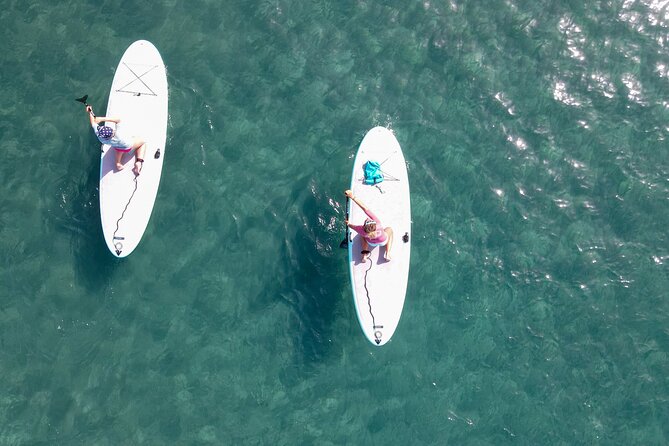
Once you’re on the water-ready path, the class focuses on balance. The boards provided are described as remarkably stable, and you’ll feel it quickly. That stability matters because early on, your goal isn’t speed—it’s control.
You’ll start with simple actions like:
- getting comfortable standing on the board
- doing balance exercises to steady your stance
- practicing basic technique so paddling feels coordinated instead of awkward
The instructor works to make the learning feel step-by-step, not random trial and error. In several accounts, people were surprised they could stand and paddle around by the end—because they weren’t thrown into open water immediately. They built confidence first.
And yes, you’ll use a lot of muscles. SUP recruits your arms, shoulders, back, chest, legs, and core. But because the coaching is structured, you’re not just relying on luck. You’re learning how your body should be set so the workout doesn’t turn into pure strain.
Out on the water: technique, open-water confidence, and fish spotting
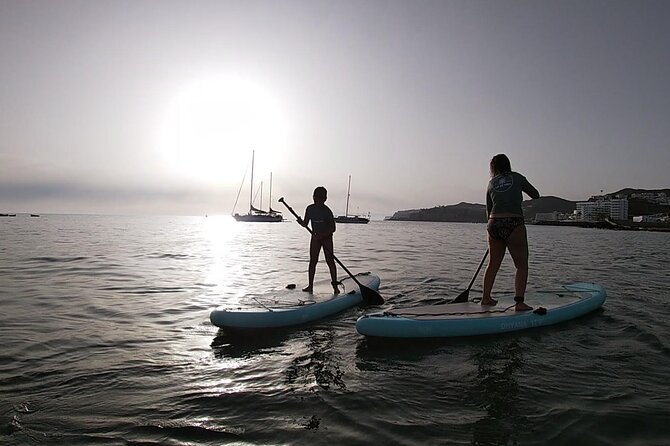
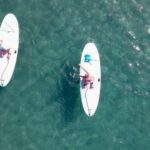
After the basics, the lesson moves into open water practice. This is where the experience becomes more than exercise. You get those wider ocean views and the slow, satisfying sense that you’re actually moving under your own control.
Technique practice continues while you’re out there. Think of it as fine-tuning how you:
- paddle with smoother strokes
- keep your balance while the water shifts
- steer and stay oriented
One of the most memorable details from the experience is that you may get to see fish in the water. Even if you’re not a wildlife expert, it’s a great “wait, this is real” moment—because you’re not staring at a phone or a screen. You’re out on the coast with the island around you.
You can also get a different perspective on Gran Canaria. SUP doesn’t just let you “go on water”—it changes how you see the shoreline, the small coves, and the shape of the coastline from the surface level. That’s the part that tends to stick with people long after the lesson.
Why this 2-hour format feels relaxing (even with a workout)
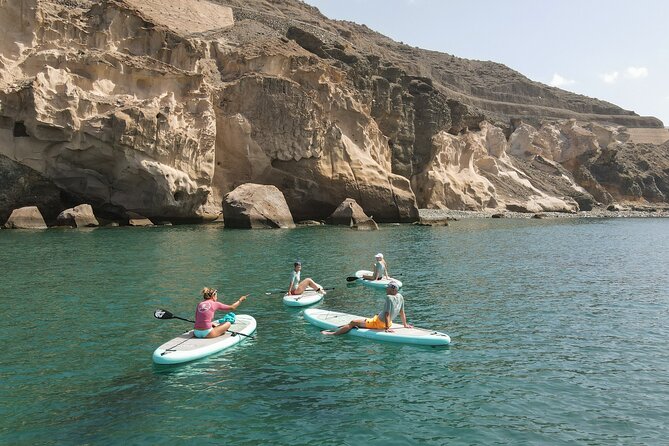
Two hours is a smart length for beginners. It’s long enough to build skill and actually enjoy open water, but short enough that you’re not completely wrecked by the end.
The class is designed to hit both sides:
- physical benefits: strength, endurance, and core stability
- mental payoff: a calmer, centered feeling from moving slowly in open water
The balancing act here is intentional. A good lesson doesn’t just give you a workout; it gives you a reason to keep going. When the instructor is motivating and supportive (as highlighted in multiple experiences), you’re more likely to relax your shoulders, keep a steady stance, and enjoy the ride instead of clenching through every second.
If you’re the type who gets nervous trying a new sport, this format helps. You’re not expected to become skilled instantly. You learn enough to feel safe and capable by the time you’re farther out.





Photos, videos, and that “wait, this is beautiful” moment
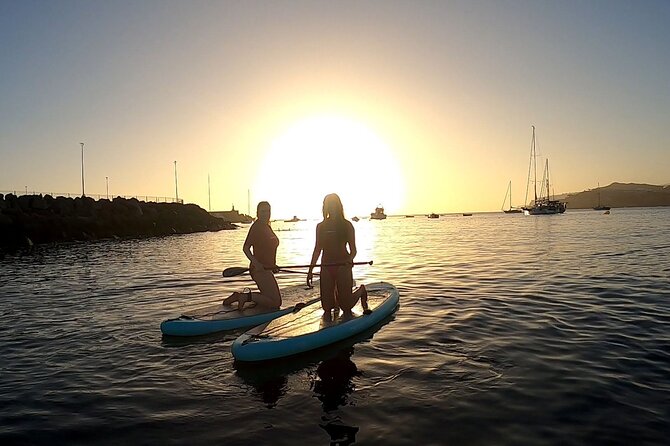
One of the nicer surprises is that your instructor may take pictures and videos while you’re on the board. Reviews mention instructors snapping shots and then sharing images so you can relive the lesson.
Timing matters here. Some people talk about enjoying the water with sunset light, and the photos help make that moment tangible later. Even if the sky doesn’t cooperate the way you want, having visual proof of your first standing-and-paddling experience is genuinely nice.
Practical tip: wear swim-friendly clothing you don’t mind getting wet, and bring something secure for your phone (or leave it stored). Ocean lessons turn into photo sessions fast—especially when you’re learning and moving more than you expected.
Price and value: is $64.71 worth it?
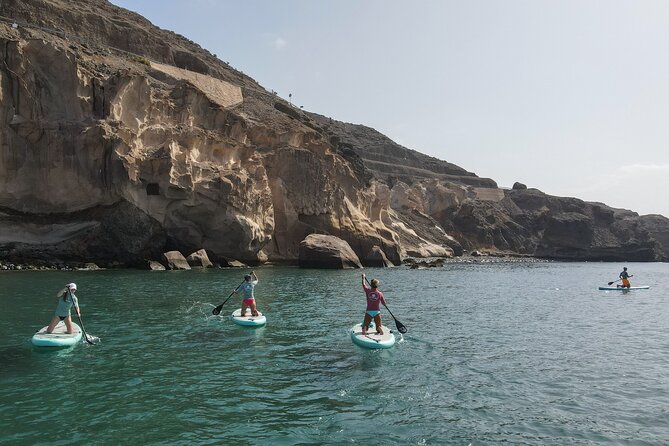
At $64.71 per person for about 2 hours, the value depends on what you want: a quick splash or real instruction.
Here’s why it tends to feel worth it:
- Small group size (max 4) means you’re not losing half the lesson watching others.
- The boards are stable, so you can focus on learning instead of struggling to stay upright.
- The lesson includes a safety briefing, warm-up, balance work, and then open-water practice.
- It’s in English, which matters when you need clear explanations for technique and safety.
- There are group discounts, which can help if you’re booking with a friend.
Is it a “cheap activity”? No. But it’s also not priced like a half-day adventure. For the time spent, the coaching quality you’re set up for, and the fact that it works for first-timers, the cost is pretty reasonable.
If you’re coming to Gran Canaria already planning beach time anyway, this turns your ocean day into something active and memorable.
Weather rules: what happens if conditions aren’t right
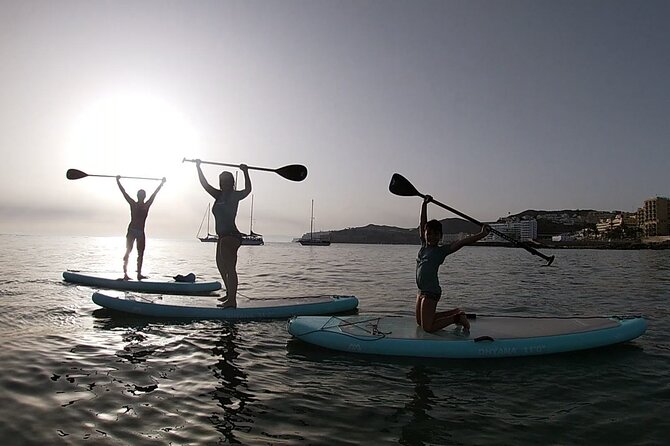
This experience has a clear requirement: it needs good weather. If it’s canceled due to poor weather, you’ll be offered a different date or a full refund.
That policy is important for two reasons:
1) SUP is sensitive to wind and sea conditions, so being strict protects your safety and learning.
2) You avoid paying for a lesson that can’t happen properly.
My advice: keep your schedule a bit flexible around your SUP window. If you can move things around, you’re more likely to land on a day with calm enough water for steady practice and confidence-building.
Who should book this SUP lesson in Gran Canaria?
This class is ideal if:
- you’re new to stand up paddle and want coaching that starts with balance and technique
- you want a guided ocean experience instead of renting a board and guessing
- you like the idea of a full-body workout that doesn’t feel like a boot camp
- you prefer learning with a small group, not a crowded crowd scene
It also fits if you’re returning to exercise and want something different from walking around town. Reviews repeatedly point to the lesson as relaxing while still being a serious core-and-balance workout.
If you’re someone who hates being in open water or can’t handle being on the sea with any uncertainty, you’ll want to think carefully. The class teaches safety, but it still takes place in the ocean.
Should you book this 2-hour SUP lesson?
If you want a straightforward way to learn SUP in Gran Canaria—without getting overwhelmed—this is a strong choice. The small group, the step-by-step coaching from Mireie, and the focus on balance make it one of those activities where you usually leave feeling proud of yourself.
Book it if:
- you want beginner coaching and structured practice
- you like nature time with real movement
- you want photos and a guided experience that turns “just a beach day” into a skill you earned
Skip or rethink if:
- your schedule is too tight to handle weather changes
- you dislike ocean conditions entirely
For most people, this is an efficient, friendly, and genuinely fun way to enjoy Gran Canaria from the water—while building stability, strength, and confidence in just two hours.
FAQ
How long is the stand up paddle lesson?
It lasts about 2 hours.
Where is the meeting point in Gran Canaria?
You meet at World Sport Canarias Solrik WSCC, Miguel Marrero Rodríguez, 57, 35120 Arguineguín, Las Palmas, Spain.
How many people are in the group?
The activity has a maximum of 4 travelers.
Is the lesson in English?
Yes, the lesson is offered in English.
Do I need paddle boarding experience?
It’s tailored for beginners and also for people who want to fine-tune their technique.
What ticket method do I get?
You receive a mobile ticket.
What happens if the weather is poor?
The experience requires good weather. If it’s canceled due to poor weather, you’ll be offered a different date or a full refund.
What is the cancellation policy?
You can cancel for free up to 24 hours in advance for a full refund. Changes made less than 24 hours before the start time are not accepted.