REVIEW · LANZAROTE
Volcano Trekking Tour (Timanfaya eruptions)
Book on Viator →Operated by Geotrekking Lanzarote · Bookable on Viator
Timanfaya has a way of making you rethink Earth. This 3-hour volcano hike in Timanfaya National Park turns the raw terrain of Lanzarote into a walk you can actually understand, with a guide pointing out how the ground formed. I especially like the small group size and the way the route includes viewpoints and crater-rim walking instead of just driving past the highlights. One thing to plan for: even though it’s “low” difficulty, you’ll still feel some uphill and uneven volcanic footing.
The best part for me is that you don’t have to hunt for the right paths. The tour follows national-park footpaths that can be tricky to find alone, and guides like Alejandro, Ula, and Sabrina are clearly proud of the geology they explain during the walk. You’ll also be handed useful extras (like walking poles and rain jackets), which makes the morning feel smoother.
This is a good deal for value-focused travelers because you get a guided 7km circular trek with pickup options and time outdoors that matches the short duration. If you’re expecting a long trek, lots of climbing, or big “theme park” stops, you might find it too short. But if you want a well-paced, high-reward introduction to Timanfaya, it fits nicely.
In This Review
- Key Things to Know Before You Go
- Timanfaya National Park in a 3-Hour Walk
- Pickup, Start Time, and the Tinajo Trailhead
- The Included Gear That Actually Helps on Volcanic Ground
- Walking Up La Rilla Volcano and Around the Crater Rim
- Lava Fields, Footpaths, and Why a Guide Changes Everything
- Effort Level: Low Difficulty, With One Clear Reality Check
- Price and Value: Why $50.81 Can Make Sense
- What Your Morning Feels Like (And What You’ll Notice)
- Practical Tips for a Smoother Timanfaya Hike
- Should You Book This Timanfaya Volcano Trek?
- FAQ
- How long is the Volcano Trekking Tour in Timanfaya?
- What distance do I walk on the loop?
- Is the hike difficult?
- Where does the tour start, and what time?
- Do you offer hotel pickup?
- What equipment is provided?
- What will I see during the hike?
- How big is the group?
- What if the weather is bad or I need to cancel?
Key Things to Know Before You Go
- Hotel pickup across the island: Offered from Costa Teguise, Arrecife, Puerto del Carmen, and Playa Blanca (center and south areas).
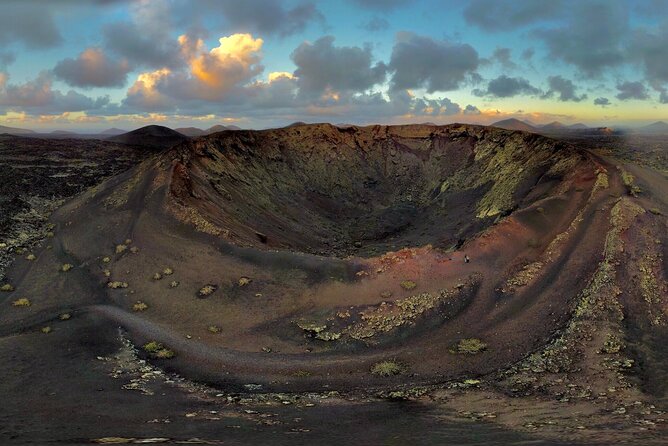
- La Rilla Volcano craters up close: You climb to the volcano and see its impressive craters and rims.
- 7km loop, low difficulty, real volcanic terrain: Low elevation gain (50m) but volcanic ground is uneven.
- Gear included: Walking poles and rain jackets help you stay steady and comfortable.
- Small group max 10: Easier pace control and more room for questions during geology stops.
- English guided tour: You’ll get explanations in English throughout the hike.
Timanfaya National Park in a 3-Hour Walk
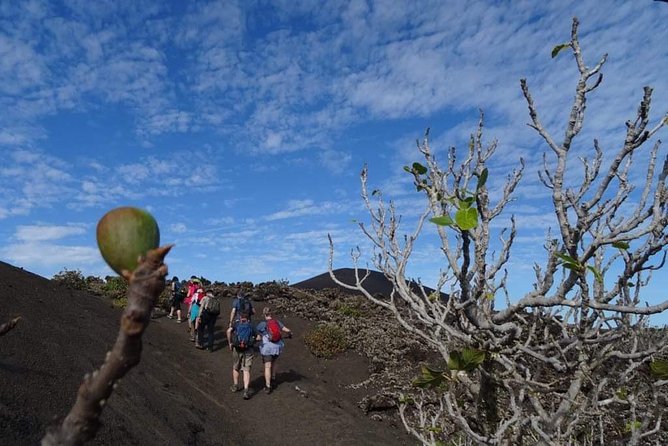
If you’ve only seen Timanfaya from a bus window, this tour is the antidote. You don’t just view the volcanic zone; you walk it in a low-difficulty circular route designed for a relaxed morning.
The core experience is a loop that leads you toward La Rilla Volcano, where you can walk around crater features and move across lava-field terrain. The “low effort” label is fair, but don’t ignore the practical side: volcanic paths often mean rough ground, short inclines, and footing that’s different from a paved trail. That’s exactly why a guided route matters. The tour connects footpaths that you might struggle to locate on your own.
What I love is the way the timing and pacing keep the experience lively. You get enough time to stop for photos, listen to explanations, and still finish while your energy is high.
You can also read our reviews of more tours and experiences in Lanzarote.
Pickup, Start Time, and the Tinajo Trailhead
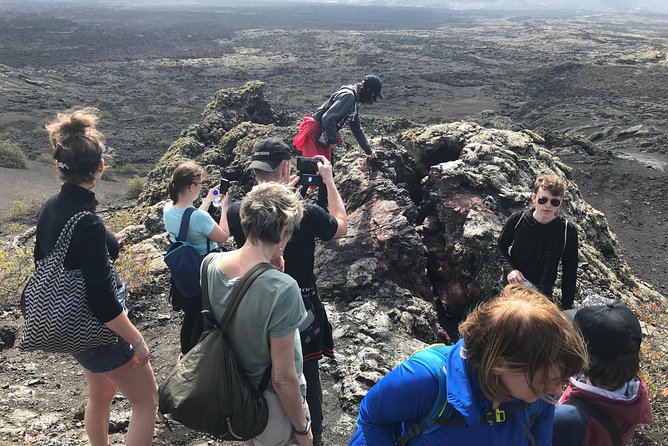
This tour starts at 9:30 am and meets at LZ-56, 48, 35560 Tinajo, Las Palmas, Spain. It also returns you back to the same meeting point, so you’re not left figuring out transport after the walk.
A big convenience win is the pickup option. If you’re staying in Costa Teguise, Arrecife, Puerto del Carmen, or Playa Blanca, the tour offers hotel pickup for center and south parts of the island. In practice, this removes the hardest part of visiting Timanfaya: getting to the right starting area without a car and without wasting half your morning on navigation.
If you’re not on the pickup route, you’ll still be fine—just make sure you arrive early enough to get settled before the start time. You’ll be in the park walking for about 3 hours total, so being on time keeps the group pacing smooth.
The Included Gear That Actually Helps on Volcanic Ground
One of the most practical details: you’re not hiking empty-handed. The tour provides walking poles and rain jackets. Even if the day looks bright, Lanzarote weather can shift quickly, and having a jacket ready is smart. On volcanic ground, poles also make a difference—especially on short climbs or when the surface feels slick or loose.
You’ll also be with a guide who slows down at key moments. A recurring theme in the experience is the way guides pause during the walk to explain what you’re seeing—colors, formations, and how the terrain links to the island’s volcanic story.
Because the group is capped at 10 travelers, the pace stays human. You’re less likely to feel rushed or stuck behind a slower walker. It also makes questions easier. Guides like Alejandro and Ula come across as friendly and approachable, which matters because geology is easier to remember when someone connects it to what you’re standing on.
Walking Up La Rilla Volcano and Around the Crater Rim
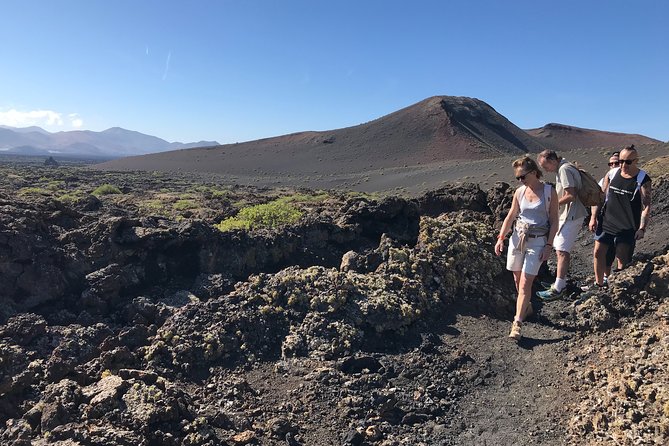
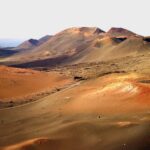
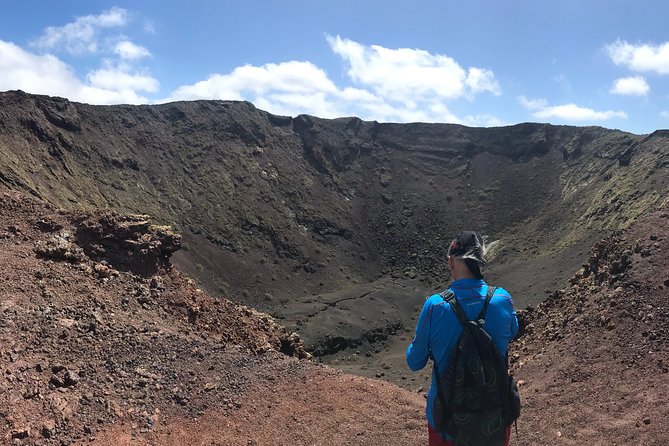
The main “you’re here for a reason” moment is the climb to La Rilla Volcano. This isn’t a technical climb, but you’ll earn the views. The tour includes walking through the volcanic terrain, taking you past craters and across lava fields.
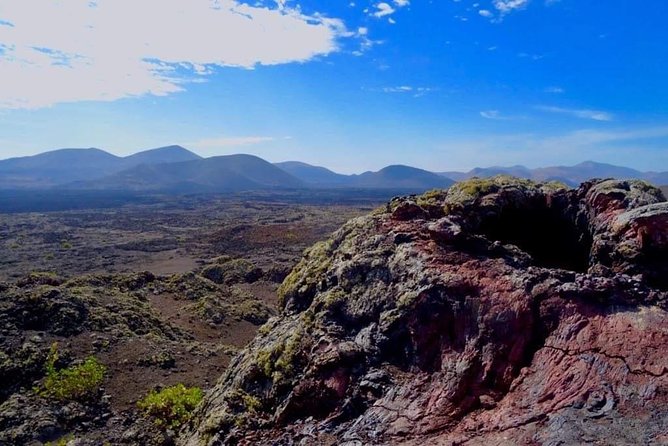
This is the part that makes the tour feel different from a quick sightseeing stop. When you’re standing close to crater features and walking across lava surfaces, the scale feels real. You notice textures—how the rock breaks, how the ground changes between darker and lighter areas, and how different sections look like separate chapters in the same volcanic story.
One of the most praised highlights is getting to the rim at the top of the volcano. The idea isn’t just to reach a viewpoint. You get the chance to walk around parts of the crater top area, which gives you multiple angles for photos and a better sense of the terrain’s shape.
Photos are a big deal here, and you’ll likely find yourself stopping more than once. Some parts of the walk are especially good for dramatic, gray-toned visuals, and the crater rim offers the kind of viewpoint that looks almost unreal in the best way.
Lava Fields, Footpaths, and Why a Guide Changes Everything
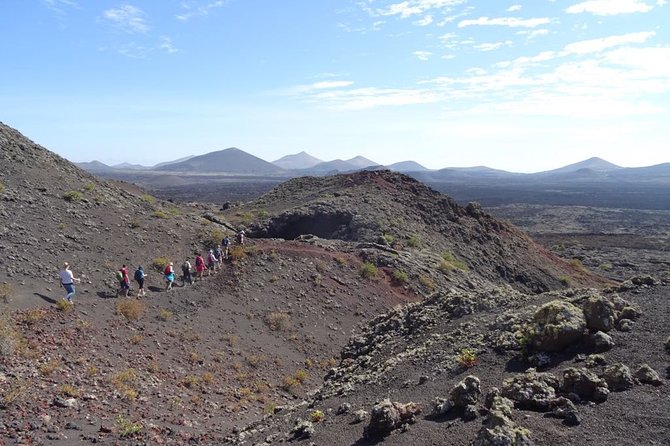
Timanfaya’s terrain can look like it belongs on another planet. But without context, it can also feel like a bunch of rock and slopes. The tour solves that with interpretation.
The route uses national park footpaths that can be hard to find alone. That’s not just a convenience. It changes what you experience: you’ll move through sections designed to show volcanic formations, rather than wandering in areas that are unsafe or less representative.
During the walk, the guide connects what you’re seeing to the broader volcanic history of Lanzarote. One detail that pops up again and again is the focus on how formations show different colors and shapes, and how those features relate to volcanic activity over time. In a well-run tour, those explanations click while you’re still standing at the formation, not later while you’re trying to remember it.
Guides including Sabrina and Ula are specifically highlighted for making the walk feel informative and paced for the group. That’s the sweet spot: you learn enough to make the scenery meaningful, without turning the hike into a lecture.


Effort Level: Low Difficulty, With One Clear Reality Check
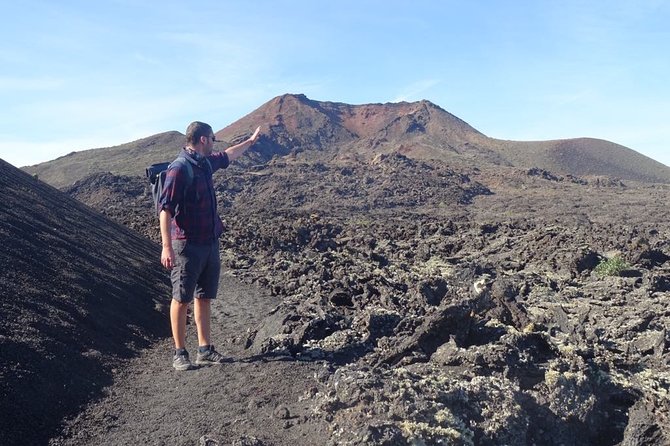
On paper, this is 7km with low difficulty, about 3 hours, and only 50m altitude difference. That sounds gentle, and it is—compared with serious mountain hikes.
But you should still come with realistic expectations. Reviews point out that there is some uphill and that volcanic surfaces aren’t uniform. A low-altitude walk can still feel like work if the ground is uneven or if you’re not used to walking on rough terrain.
So here’s the reality check I’d use to plan:
- If you can handle a couple of short inclines and uneven ground, you’re likely fine.
- If you prefer smooth, flat paths only, you might find some sections more challenging than you expect.
- The pacing is adjusted for the group, but you’ll still be walking most of the time.
The good news is that the tour’s structure supports mixed fitness levels. The group stays small, and guides naturally build in short stops so people can catch their breath, take photos, or ask questions.
Price and Value: Why $50.81 Can Make Sense
At $50.81 per person for about 3 hours, the value depends on what you would otherwise do. If you’re hiring a guide for geology, you often end up paying more for less walking time. Here, you get guided interpretation plus a structured route through the national park.
What supports the value:
- Hotel pickup is offered for many common resort areas, which reduces your own transport costs and stress.
- Equipment is included, so you’re not scrambling for poles or extra rain protection.
- The route is long enough to feel like an actual experience (7km), not a quick stroll.
- You’re in a small group max 10, which keeps quality high and makes the guidance feel personal.
Also, the “worth it” factor is the crater-and-lava combination. That mix is hard to replicate on your own because routes can be confusing and because you may not know which features matter. Paying for a guide here is often less about convenience and more about getting the most meaning from the terrain you paid to see.
What Your Morning Feels Like (And What You’ll Notice)
Think of the experience as a series of short “moments” rather than one single photo stop. The tour runs through volcanic features, punctuated by stops for explanations. Those pauses matter because they help you connect the shapes and colors to the volcanic story of the island.
By the end, you tend to notice patterns:
- How different sections look like separate eras of volcanic action.
- How lava formations can appear both harsh and strangely geometric.
- How the crater views change as you move around the rim and change your angle.
Even if you don’t love geology for its own sake, it becomes interesting when you can point to what the guide is describing. That’s why the walking route matters so much. You’re not just hearing about the park. You’re walking through it.
One more practical touch: some guides also provide water and snacks during the tour experience. That little boost makes a big difference on a walk where you’re outside for the full chunk of morning.
Practical Tips for a Smoother Timanfaya Hike
You don’t need to overpack for this walk, but a little preparation helps a lot.
- Wear comfortable walking shoes with solid grip. Volcanic surfaces are not the same as a city sidewalk.
- Bring a light layer. Rain jackets are included, but you’ll still feel temperature shifts.
- Come ready to walk for about 3 hours total, even though it’s low difficulty.
- If you want great photos, plan to stop at guide pauses and crater viewpoints without rushing. The best shots usually come when you take a moment to reposition.
If weather is rough, the operator notes that the experience requires good weather, and they’ll offer a different date or a full refund if canceled due to poor weather. So keep an eye on the forecast the day before, and be flexible.
Should You Book This Timanfaya Volcano Trek?
If you want a smart, short introduction to Timanfaya’s volcanic features, I’d book it. The combination of La Rilla Volcano crater walking, a 7km circular route, and a small-group guide makes it feel like you truly experience the park rather than just pass through it.
I’d especially recommend it if:
- you don’t have a rental car and you want pickup,
- you like learning while you walk (not after),
- you want a manageable hike with real viewpoints.
Skip it (or consider a different style of tour) if you’re looking for a long, strenuous challenge or if you strongly dislike uneven ground. Also, if you’re traveling during a period of unreliable weather, be ready for date changes.
Overall, this is one of those “3 hours well spent” tours: you come away with better context for what you saw, and you feel like you walked on the island’s science, not just its scenery.
FAQ
How long is the Volcano Trekking Tour in Timanfaya?
The tour runs for about 3 hours.
What distance do I walk on the loop?
The route is 7km and is circular.
Is the hike difficult?
It’s listed as low difficulty, with an altitude difference of about 50m, though there is some uphill.
Where does the tour start, and what time?
The meeting point is LZ-56, 48, 35560 Tinajo, Las Palmas, Spain, and the start time is 9:30 am.
Do you offer hotel pickup?
Yes. Pickup is available for Costa Teguise, Arrecife, Puerto del Carmen, and Playa Blanca, covering center and south of the island.
What equipment is provided?
Walking poles and rain jackets are provided.
What will I see during the hike?
You climb La Rilla Volcano, see its craters, and walk through lava fields, learning about Lanzarote’s volcanic history.
How big is the group?
The tour has a maximum of 10 travelers.
What if the weather is bad or I need to cancel?
The experience requires good weather. If it’s canceled due to poor weather, you’ll be offered a different date or a full refund. You can cancel up to 24 hours in advance for a full refund.