REVIEW · LANZAROTE
Lanzarote: César Manrique Full-Day Tour
Book on GetYourGuide →Operated by Low Cost Tours Europe · Bookable on GetYourGuide
Lanzarote gets personal when art meets lava. This full-day César Manrique route strings together the island’s most iconic “art-in-nature” places: Mirador del Río, the cave artistry of Jameos del Agua, plus his foundation and cactus garden. You’ll get a guided story of how Manrique shaped building rules and attitudes on the island—not just where to take photos. The trade-off is time: you’ll be on a bus a lot, and some stops are short, so it’s not the best choice if you want to linger.
I especially like the mix of “big wow” views and hands-on context: you start with the Monumento al Campesino tribute to rural life, then you move through Manrique’s signature idea—architecture that grows out of volcanic rock. I also love the practical flow, with guided explanations in multiple languages and priority entry that helps you beat the ticket line. One thing to consider: it’s a full day packed with walking, and Jameos del Agua involves cave spaces, so it’s not a great fit if you dislike enclosed areas or mobility is an issue.
Key points to know before you go
- Priority entry helps you spend more time inside the key sights
- Mirador del Río delivers one of Lanzarote’s most dramatic viewpoint set-ups
- Jameos del Agua includes cave design plus an actual sea-connected lake with white-blind crabs
- Cactus Garden packs 1,100+ species into 5,000 square meters for a quick, colorful finale
- The day includes a guided narrative on how Manrique fused art and the environment
- Pickup logistics mean you may spend a while collecting people before the first real stop
In This Review
- Why César Manrique still shapes Lanzarote today
- How the day is paced: buses, pick-ups, and realistic timing
- Casa Museo y Monumento al Campesino: a tribute before the wow
- Fundación César Manrique: art you can walk through
- Mirador del Río: the viewpoint that looks engineered by art
- Jameos del Agua: cave design, sea-connected calm, and white-blind crabs
- Jardín de Cactus: 1,100+ species and a quick finale
- Lunch in Lanzarote: a useful break, but not part of the ticket
- The bus ride reality: comfortable coaches and multilingual guides
- What to bring (and where you might feel it)
- Who should book this César Manrique full-day tour
- Should you book this tour
- FAQ
- What’s included in the tour price?
- Is lunch included?
- How long is the tour?
- Are ticket lines skipped?
- What languages are the guides?
- Where does pickup happen, and do I need to confirm it?
- Is this tour suitable for wheelchair users or people with claustrophobia?
- What should I bring?
Why César Manrique still shapes Lanzarote today
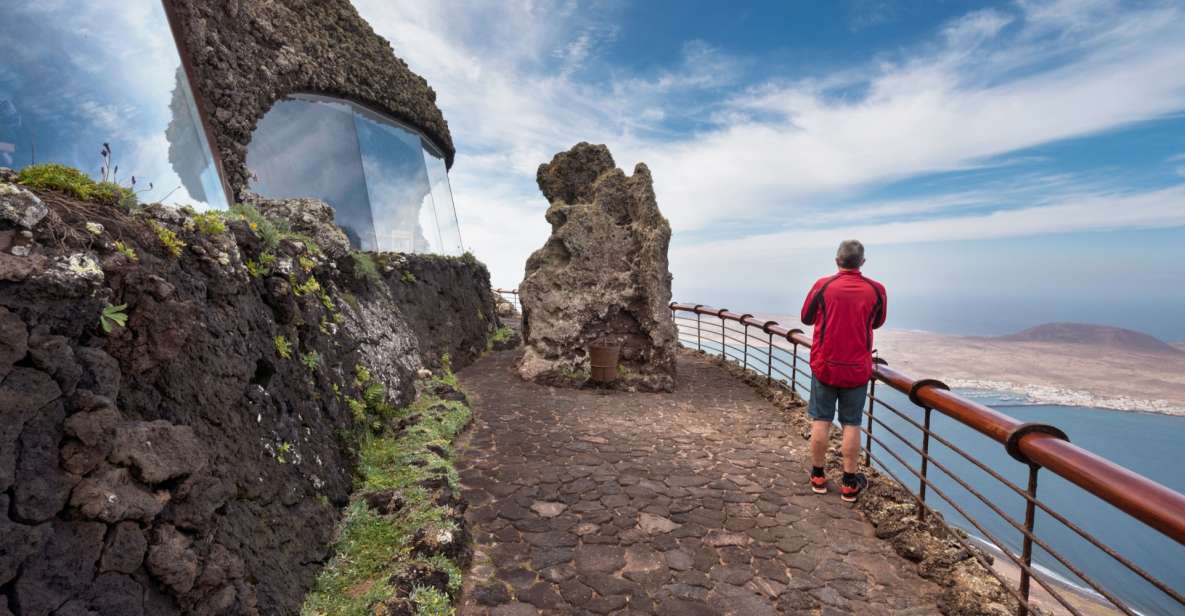
César Manrique wasn’t just an artist who happened to work on Lanzarote. He pushed a whole way of seeing the island—stop fighting the landscape and start working with it. That idea shows up in everything on this tour: buildings that feel grown from lava, viewpoints designed like sculptures, and caves turned into public places instead of things you ignore or seal off.
What makes this route feel especially smart is that it’s not only “look at art.” It’s “understand the choices behind the art.” You’ll hear how Manrique linked creativity to conservation and island identity, and you’ll see that philosophy in the concrete details: how places are positioned, how natural light is used, and how visitors are guided through space.
It’s also a very efficient way to get north and back without renting a car. You cover multiple Manrique sites in one day with air-conditioned bus transport and a guide who keeps the story coherent.
How the day is paced: buses, pick-ups, and realistic timing

This tour runs about 8–9 hours, including transfers. That sounds manageable until you factor in the pickup model. There are lots of pickup options, and the early part of the day can feel like a slow warm-up while the bus collects people from different hotels. If you hate waiting, you’ll want to choose the closest pickup point you can—and confirm your exact details as instructed, so you don’t end up at the standard location.
Once you’re moving, the pacing is fairly tight but not frantic. Most stops are timed in the “see it properly, then move on” range, with guided time added on top. In plain terms: you’ll get meaningful context, but you won’t have a full half-day to wander.
One more practical note: the route may shift based on crowds or weather. That matters most at Mirador del Río, because mist or clouds can flatten the impact of the view. If the forecast is iffy, go with the mindset that you’re seeing an architectural masterpiece first, with the scenic drama as a bonus.
You can also read our reviews of more tours and experiences in Lanzarote.



Casa Museo y Monumento al Campesino: a tribute before the wow
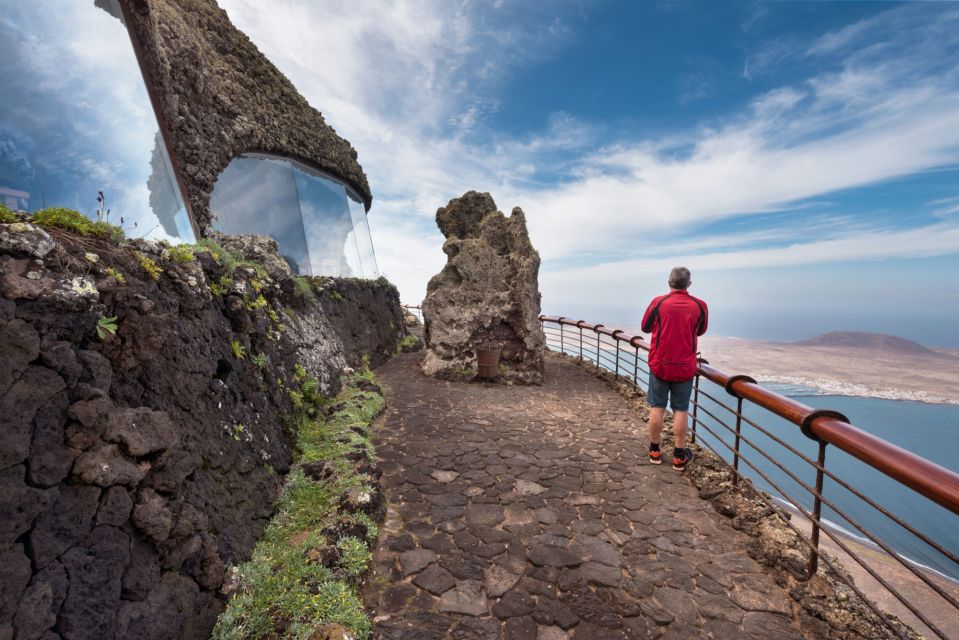
The day starts with the Monumento al Campesino, dedicated to Lanzarote’s rural working community. This stop works as a warm-up because it anchors the tour in people, not only aesthetics. You’ll see how Manrique honored the island’s labor and identity, which makes the later architectural “statements” feel less like decoration and more like values in stone.
You also get a visit to the museum component and time to take in the setting. Even if you’re not a museum person, this is worth treating as context. The later sites can be mind-blowing visually, but the monument helps you understand what Manrique thought was worth preserving—culture, work, and the island’s own logic.
If you’ve got limited energy, keep an eye on your footwear and pace. Stops like this sit in volcanic terrain and can involve uneven paths.
Fundación César Manrique: art you can walk through
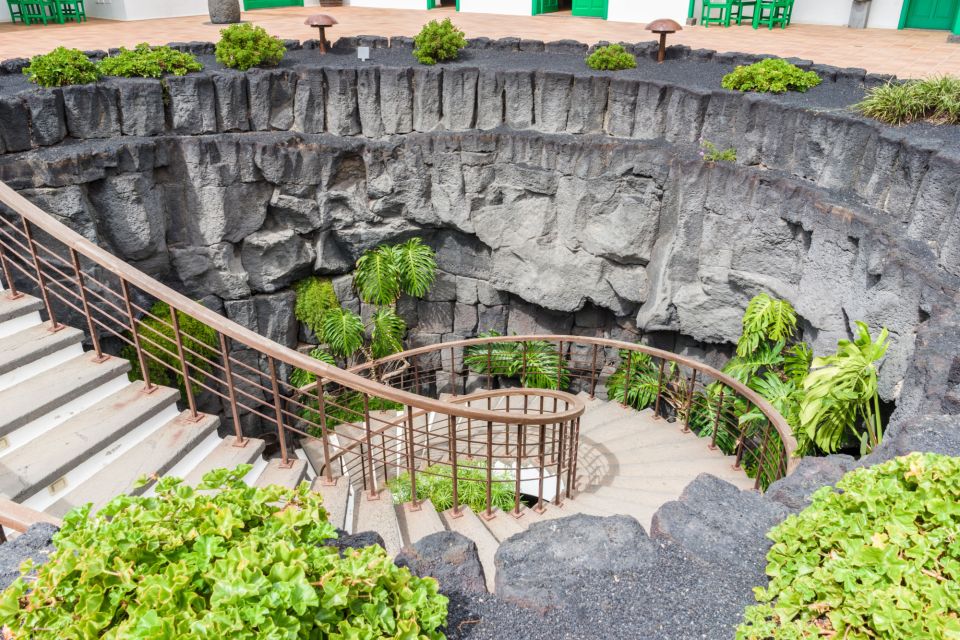
After the first taste, you head to the Fundación César Manrique, his former residence and work space. This is one of the best stops on the route because it turns the question from what he made into how he lived and worked. You’ll see examples of his art and understand how he thought about function, flow, and environment at the same time.
The standout here is the way the complex is shaped around lava. Structures run through the residence and the grounds, so you’re not just viewing art in a room—you’re experiencing a full approach to building. Manrique treated natural contours and volcanic features as the frame of the whole plan, not something to cover up.
Time is limited, but it’s guided, and the guide’s explanations can make the difference between a quick walk-through and a real “I get it now” moment. Some guides are excellent at presenting the site clearly across languages; in multiple tour experiences, names like Radmila, Gudmila, and Ludmilla pop up for that reason. If you prefer hearing details at a slower pace, don’t be shy about using the guide’s time and then scanning the spaces yourself during the walk.
Mirador del Río: the viewpoint that looks engineered by art
Next comes one of Lanzarote’s most famous viewpoint setups: Mirador del Río. The drive up gives you the sense that you’re heading to something designed—positioned for maximum drama where architecture meets sea views.
What you’re there for isn’t only the scenery. Mirador del Río is a Manrique architectural creation that intentionally blends into the surrounding environment. That means the building doesn’t feel like a separate object placed on the land. It feels like part of the land’s own system—framed, shaped, and lit to deliver a specific kind of looking.
If weather cooperates, you get panoramic impact. If it doesn’t, you still get the architectural intention. Either way, this is a “pause and really look” stop. Give yourself a moment to scan the view in layers—close foreground, then the horizon, then the way the structure guides your eyes.
Jameos del Agua: cave design, sea-connected calm, and white-blind crabs
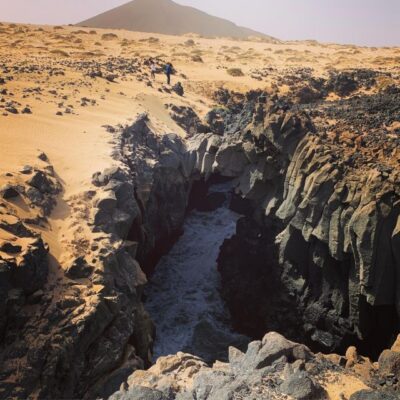
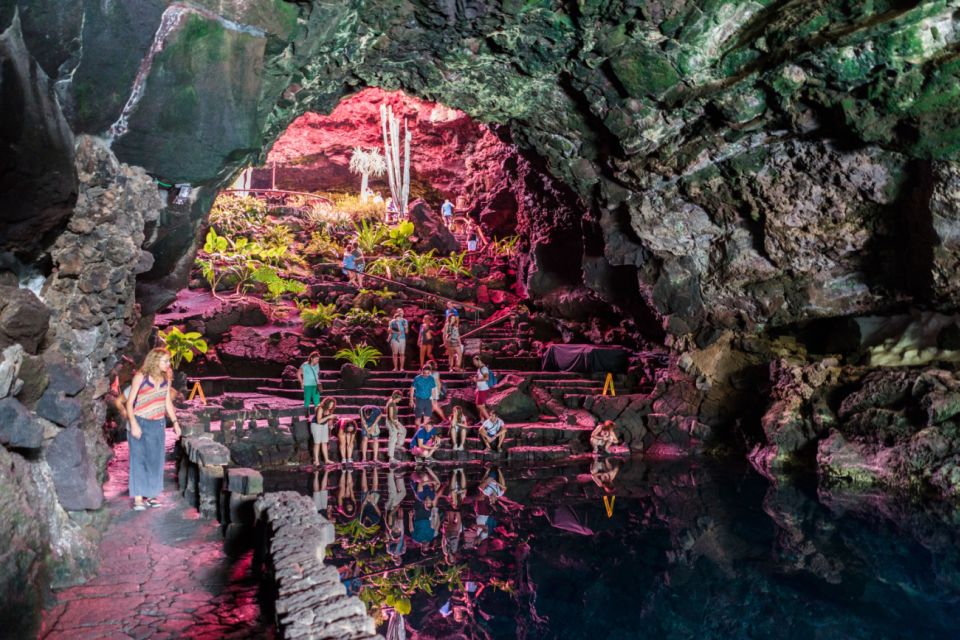
Then the tour moves into Jameos del Agua, a section of a 7-kilometer-long lava tube formed by the Monte Corona eruption thousands of years ago. This is one of the most distinctive places on the island because the cave isn’t treated like a raw underground curiosity. It’s been designed as a public space with restaurants, a concert hall, and a small lake area.
The part that sticks in your mind is the lake with direct access to the sea. It’s where small, white-blind crabs live. That’s a rare combo: you get human-scale design choices inside a real volcanic system, and the cave still functions as habitat.
Because the tour includes cave spaces, this is the main reason some people should think twice. If you have claustrophobia, the cave environment is exactly what you should avoid. Even without fear, cave visits often involve uneven surfaces and a different temperature. Bring a camera, but also bring patience for the feel of a guided walk.
Jameos del Agua is one of those “wow” stops that turns what you thought caves were into something else—part geology, part design, part natural mystery.






Jardín de Cactus: 1,100+ species and a quick finale
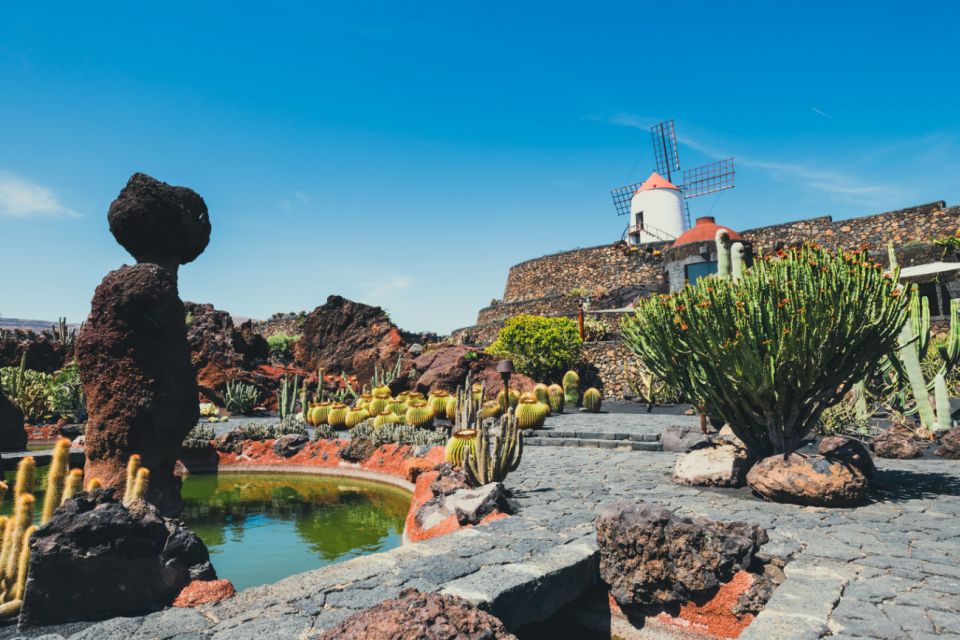
To close the day, you’ll head to Jardín de Cactus (the Cactus Garden). This is a smart ending because it shifts you from stone-and-sea caves to plant-driven creativity. The garden features more than 1,100 different species spread across 5,000 square meters, so even with limited time, you get variety.
This is another Manrique-inspired theme: he didn’t treat plants as background. The garden becomes a living design that uses volcanic context as the stage. You’ll see how the island’s water limits and harsh conditions can still support an eye-popping range of shapes, textures, and colors.
The stop is timed, so go with a “best-of” plan: don’t try to see everything. Instead, focus on a few sections and let your eyes reset. If you’re the type who loves gardens, this stop feels rewarding even when the clock is moving.
Lunch in Lanzarote: a useful break, but not part of the ticket
Lunch is not included in the tour price. That said, the schedule includes a lunch stop in the area of Lanzarote, giving you about an hour. Some tours offer an optional buffet lunch around the 15€ range including drinks, which several people describe as good value. Other people find it less satisfying if you expect restaurant-level warmth.
If you’re picky, or you simply want more control over your meal timing, this is where packing a snack can help. You’ll still appreciate the group structure, but you won’t get stuck feeling hungry while waiting.
Also remember you’ll be outside and walking between stops. Bring the practical mindset: water, sun protection, and comfortable shoes beat hunger surprises.
The bus ride reality: comfortable coaches and multilingual guides
Most of the experience is the stops, but the bus time matters too. You’re traveling across Lanzarote’s north side, and the driver’s skill comes into play on tighter roads. In multiple tours, drivers such as Pablo and Alexis get mentioned for getting everyone safely to the stops on time.
The guide is central to the value. Guides often switch between languages like English, German, and Spanish, so you don’t feel like you’re missing the story even if you’re not the first language in the room. Radmila and Gudmila are specifically praised for juggling languages smoothly while still giving good explanations. The flipside is that speech pace and clarity can vary by guide and bus conditions, so if you’re sensitive to fast narration, arrive ready to listen, and use your time at each stop to absorb what you see.
And yes, the group size can be a factor. Larger groups mean less personal attention in tight spaces, and cave areas can feel more crowded than you’d like. If you prefer a quieter pace, consider this tour’s style before you book.
What to bring (and where you might feel it)
This is a sun-forward day. Bring sunglasses, a sun hat, and a camera. You’ll also want comfortable shoes because the sites can include steps and uneven ground. Even people who find the tour manageable often note it’s tiring if you’re not used to walking.
This tour is not suitable for wheelchair users, and it’s not recommended for people with mobility impairments. It’s also not a good match if you have claustrophobia due to the cave visit at Jameos del Agua.
If you’re on the fence, here’s the simple test: can you handle an hour or two of cumulative walking and steps in sunny heat plus a cave environment? If yes, you’ll likely enjoy the full package.
Who should book this César Manrique full-day tour
Book it if you want:
- A guided, well-organized day built around César Manrique’s key sites
- Real design-and-environment context, not just a photo checklist
- Priority entry so you spend more time at the sights
- A north Lanzarote route without driving yourself
It’s especially attractive for first-timers who already did something like a volcanic park and want the other side of the island story: the creative, cultural, and architectural Lanzarote.
Skip it if you want:
- Extra-long independent time at each stop
- A quiet, small-group feel
- Zero cave exposure
- A slow travel pace
Should you book this tour
If your goal is to understand why Lanzarote looks the way it does—why buildings look volcanic, why views are framed like art, and why conservation shows up in everyday design—this tour is strong value. For a price around $100 per person, you get transport, a guide, travel insurance coverage during the tour, and entrances to multiple major sites, with an added bonus of priority entry.
The decision comes down to fit. If you’re okay with a timed schedule, you like guided context, and you can handle stairs and a cave environment, you’ll likely come away feeling you saw Manrique’s Lanzarote, not just his highlights.
If you tell me your hotel area (Playa Blanca, Costa Teguise, Puerto del Carmen, etc.) and what you care about most—views, art, caves, or gardens—I can suggest whether this route matches your day and what order might feel best for you.
FAQ
What’s included in the tour price?
Transport by air-conditioned bus, a guided tour, travel insurance for the tour duration, and entrance to Monumento al Campesino, Mirador del Río, Jardin de Cactus, Jameos del Agua, and Fundación César Manrique are included.
Is lunch included?
Lunch is not included in the tour price. There is a lunch stop during the day.
How long is the tour?
It runs about 8–9 hours, and that time includes the round-trip transfers.
Are ticket lines skipped?
Yes, it includes skip the ticket line for the attractions.
What languages are the guides?
The live tour guide offers Spanish, German, and English.
Where does pickup happen, and do I need to confirm it?
Pickup is offered at many listed locations. After booking, you’re asked to contact the operator (LCTEurope) to confirm the exact pickup location and time. If you don’t contact them at least 24 hours before, you may get a standard pickup point.
Is this tour suitable for wheelchair users or people with claustrophobia?
No. It’s not suitable for wheelchair users and it’s not recommended for people with claustrophobia because it includes a cave visit.
What should I bring?
Bring sunglasses, a sun hat, and a camera.