REVIEW · TAMARINDO
Surfing Lesson in Tamarindo
Book on Viator →Operated by Seafari Costa Rica · Bookable on Viator
Surfing lessons in Tamarindo feel way less scary. This small-group surf lesson keeps the focus on what you need to learn, with certified instructors guiding you through ocean safety and the basics before you try real waves.
What I like most is the personal attention you get without a huge crowd, plus the way the lesson is structured so first-timers build confidence fast.
The only real watch-out is that conditions matter. The experience requires good weather, and if tides or wave size aren’t right, your session may shift.
Small-group setup (max 20): less waiting around, more hands-on help.
Start with land basics: pop-up technique, plus surf rules and safety.
Ocean safety is part of the lesson: not just how to stand, but how to act in the water.
You may wait for better waves: good instructors time the session when conditions improve.
Gear is included: board rental and a rash guard, so you don’t juggle rentals.
Kid-friendly for mixed skill levels: good choice when families want one shared activity.
In This Review
- Tamarindo Surf Lesson, Done Right: 90 Minutes From Pop-Up to Practice Waves
- Seafari Costa Rica Check-In and the Beach-Break Plan
- Land Warm-Up: Pop-Up Basics, Ocean Safety, and Wave Rules
- Certified Coaching in the Water: From First Rides to Real Feedback
- Timing Is Everything: Tides, Waiting, and Better-Size Waves
- Gear Included (Board + Rash Guard): The $75 Value Explained
- Who This Tamarindo Surf Lesson Suits Best: Kids, First-Timers, and Active Adults
- Practical Tips for Your Best Shot at Success
- Should You Book This Tamarindo Surf Lesson?
- FAQ
- How long is the Tamarindo surf lesson?
- Where does the surf lesson start?
- What is the price per person?
- What gear is included in the lesson?
- What is not included?
- Is it good for beginners?
- Is this surf lesson kid-friendly?
- What group size can I expect?
- Does the lesson require good weather?
- What is the cancellation policy?
Tamarindo Surf Lesson, Done Right: 90 Minutes From Pop-Up to Practice Waves
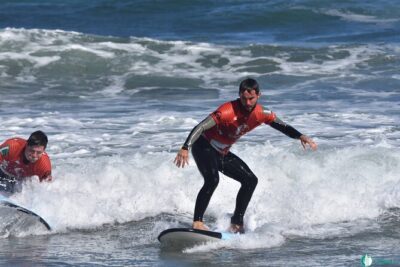
A Tamarindo surf lesson works best when it’s built for beginners, not just for people who already know how to fall gracefully. This one is a classic “start on land, then go to the water” format. You’ll do the first steps on shore—especially the pop up—while your instructor explains ocean safety and the basic rules that keep everyone out of trouble.
What makes it especially appealing is the pace. In about 1 hour 30 minutes (approx.), you’re not stuck with only theory. You learn the basics on land, then you get actual time riding and practicing under close supervision.
Two moments tend to make the biggest difference for newcomers: first, getting your body mechanics right for the pop-up, and second, understanding how to read what the ocean is doing. This lesson targets both. And in the real world, instructors like Tommy and Stephen are praised for matching instruction to the group so you spend more time surfing than guessing.
The only consideration is that surf is surf. If the ocean isn’t cooperating, you might wait a bit for the tide or conditions to improve. That’s not a deal-breaker—it’s actually a good sign of a coach who cares about safer, better waves.
Seafari Costa Rica Check-In and the Beach-Break Plan
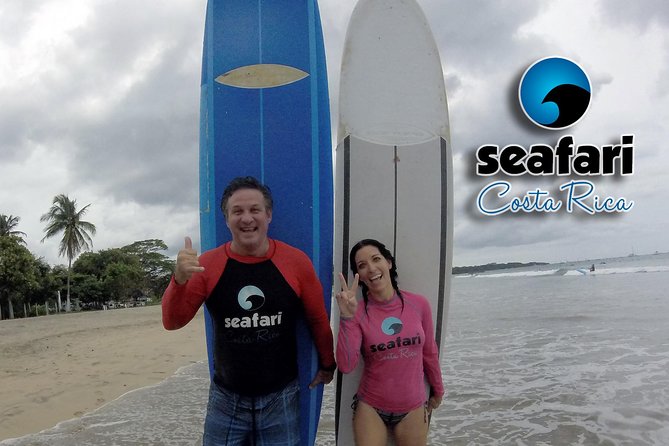
You’ll begin at Seafari Costa Rica, starting from 75V3+PHR in Tamarindo, and the activity ends back at the meeting point. From there, you head to the surf area—typically Tamarindo Beach, though you might find sessions scheduled around nearby breaks.
Why this matters: surf lessons live and die by location. The beach you practice at affects wave shape, crowd level, and how quickly you can get from standing position to your first wave. Some people specifically call out a location like Playa Langosta as a calmer-feeling alternative to the busier Tamarindo strip, which can make learning feel less stressful.
Also, because this is a small-group activity (maximum 20 travelers), you’re less likely to be “one more body” in a long line. You’ll spend more time listening and less time waiting for equipment or for the group to be ready.
One practical thing to note: the lesson is near public transportation, so if you’re already in town without a car, you’re not locked into private transfers just to meet up. Private transportation is not included, though, so if you’re coming from farther out, plan your route accordingly.
You can also read our reviews of more tours and experiences in Tamarindo.

Land Warm-Up: Pop-Up Basics, Ocean Safety, and Wave Rules
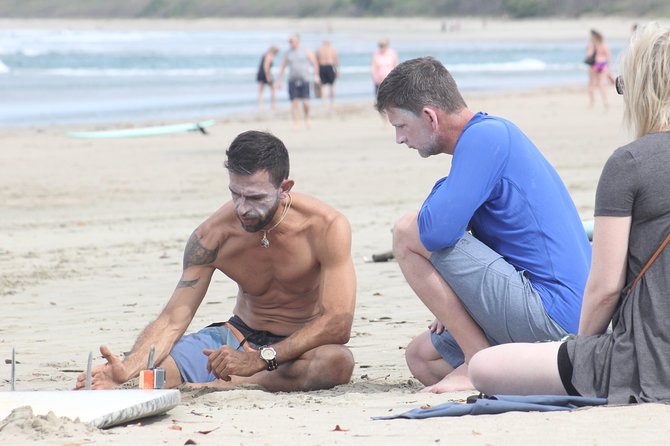
Before you touch a board, you’ll get a land lesson that’s aimed at what beginners usually struggle with: the pop-up.
You’ll practice the basics—how to position your hands, how to place your feet, and how to get from lying down to standing in one smooth motion. The goal isn’t to make you look perfect. It’s to get you moving the right way so your first attempts on the water are more stable.
At the same time, you’ll talk about ocean safety and the basic rules of surfing waves. That includes how to behave around other surfers and what you should pay attention to once you’re in the lineup. Even if you never “go pro,” understanding simple wave rules helps you avoid getting in the wrong spot, catching the wrong wave at the wrong time, or feeling lost when a set comes through.
A big benefit of doing this before you enter the water: it turns fear into focus. You’re not just reacting to waves—you’re following a small set of guidance your instructor repeats in a way that makes sense for beginners.
And it’s kid-friendly, too. When a lesson is built with land drills and safety rules, it’s easier for families to manage mixed ages and skill levels. Children 12 or less must be accompanied by an adult, which keeps the experience safer and more manageable for the instructors and the rest of the group.
Certified Coaching in the Water: From First Rides to Real Feedback
Once you’re suited up, you hit the water with your instructor. This is where the lesson turns from “learning to surf” into “learning to surf today.”
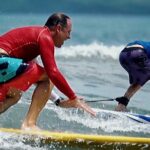
Certified instructors provide the instruction, and the small-group format means you’re getting feedback at the right moment. Instead of standing in the shallows watching someone else, you’ll usually get coached while you’re working on your technique—especially the pop-up timing and how to aim your body once you’re up.
In real lessons, the best coaching includes two things:
- Good wave selection so you aren’t fighting waves that are too big or too chaotic.
- Clear corrections so you know what to try next, not just that you fell.
That’s exactly what shows up in the way instructors like Tommy and Stephen are described: patient, focused, and tuned in to what the learner needs. One group even noted that once their lesson timing was adjusted to better conditions, they were soon able to surf within about half an hour—then enjoy the rest of the session actually riding waves.
If you’ve surfed a few times before, you can still benefit. You’re not starting from zero, but you may refine your technique and learn safety habits that can keep your surfing smoother.
Timing Is Everything: Tides, Waiting, and Better-Size Waves
Here’s a detail that can make or break a beginner lesson: wave size and wave shape. Even in the same general area, the tide can change what you’re able to catch.
One family-style group shared an example that’s worth paying attention to: their kids were concerned the waves were small at first, but the instructor encouraged waiting about half an hour until the tide came in and the waves got bigger. That kind of judgment is a real value point. It means the instructor is looking out for your success, not just sticking to a strict schedule.
Sometimes conditions can be calm enough that the session timing gets adjusted again so the group can ride better waves. If you’re booking this around sunset or a tight itinerary, keep some flexibility. Surf lessons work best when you don’t treat the timeline like a train schedule.
Also, because the experience requires good weather, the operator may adapt plans when conditions aren’t ideal. In your own planning, think of this as a weather-dependent activity—one that’s worth being patient with, because when the ocean cooperates, the lesson becomes a highlight of the whole trip.
Gear Included (Board + Rash Guard): The $75 Value Explained
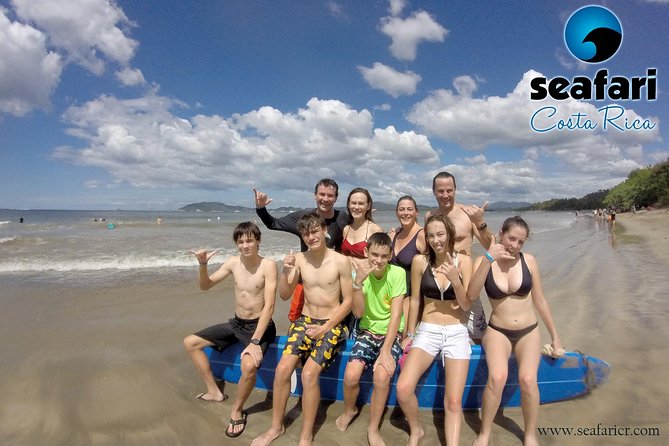
At $75.00 per person for about 1 hour 30 minutes, the real question isn’t whether you’re paying a fair price. It’s what you’re getting for that money.
You’re getting board rental and a rash guard during the lesson. That’s not a small detail. If you’ve ever tried to rent gear on a beach day, you know it can eat time and add cost. Here, the lesson handles the gear so you can show up, suit up, and focus on learning.
What’s not included is also important for budgeting:
- Souvenir photos are available to purchase, but not included.
- Bottled water is not included.
- Private transportation is not included.
That means it’s smart to bring some water planning of your own—especially if you tend to get warm quickly in the sun. And if you think you’ll want photos, decide ahead of time if that extra cost fits your budget. The photos are optional, but they can be the easiest way to remember your first wave attempt.
You’ll also benefit from the way this lesson is designed for all ages and skill levels. It’s not only for true beginners in the absolute sense. It’s for anyone who wants a first surf experience or a structured refresher with an instructor.


Who This Tamarindo Surf Lesson Suits Best: Kids, First-Timers, and Active Adults
This lesson is kid-friendly, and it’s built to work across different skill levels. That matters in a family setting because one person might need extra time on pop-up technique while another is already comfortable catching small waves.
Children 12 or less must be accompanied by an adult, which helps keep the lesson safer and ensures the instructor can manage attention properly. For teens, adults, and mixed groups, the structure makes it easy to follow along without feeling overwhelmed.
The experience can also be a strong fit if you’re active and enjoy learning by doing. One comment praised the match for an active college student, which makes sense: the lesson doesn’t drag. You’ll do drills, then you’ll get moving quickly in the water.
And if you’re thinking about bringing a friend group or a couple, small-group instruction can turn a “sitting on the sand all day” day into a shared memory. One couple-focused experience even highlighted that the instructor’s personality and surfing knowledge can help first-timers feel comfortable right away—so you aren’t stuck with a stiff, generic tutorial.
Practical Tips for Your Best Shot at Success
Surfing lessons are short, so small choices matter. Here are practical ways to get the most out of your 90-minute session, based on what this style of lesson aims to do.
First, arrive ready to learn the basics on land. That land portion sets up your water success. If you rush it or treat it like a warm-up that doesn’t matter, your pop-up timing is more likely to feel awkward when you’re actually catching waves.
Second, be flexible about timing if wave conditions aren’t perfect. Waiting a bit for the tide to improve can lead to better waves, and better waves lead to more standing and riding.
Third, think about what you’re bringing beyond the gear. Since bottled water isn’t included, plan hydration. And since souvenir photos cost extra, decide if you want them before you’re in the moment—so you’re not scrambling afterward.
Finally, remember this is ocean learning. Even with the best instructor, you may wipe out (it’s part of surfing). The lesson is designed to help you learn how to fall safely, then get back up with better technique.
Should You Book This Tamarindo Surf Lesson?
If you want a beginner surf lesson that’s structured, gear-ready, and designed for real learning instead of just a beachfront photo op, this is a solid choice.
I’d book it if:
- You’re a first-timer who wants clear instruction on pop-up technique and surfing safety.
- You’re traveling with kids or a mixed group and want one activity that works for different levels.
- You don’t want the hassle (or extra cost) of renting a board and rash guard separately.
I might skip or reschedule if:
- You’re hoping for guaranteed wave size at a specific time. This is weather- and tide-dependent, and the operator may adjust timing to find better conditions.
- You’re expecting private transportation or bottled water to be included in the price.
Overall, with small-group coaching, board + rash guard included, and instructors praised for patience and wave selection, this Tamarindo surf lesson is priced like a learning experience, not a tourist gimmick. If you show up ready to practice, you’ll likely leave feeling you can actually stand up—and that’s the whole point.
FAQ
How long is the Tamarindo surf lesson?
It lasts about 1 hour 30 minutes.
Where does the surf lesson start?
The start point is 75V3+PHR, Guanacaste Province, Tamarindo, Costa Rica, at Seafari Costa Rica. It ends back at the meeting point.
What is the price per person?
The price is $75.00 per person.
What gear is included in the lesson?
You get board rental and a rash guard during the lesson.
What is not included?
Souvenir photos (available to purchase), bottled water, and private transportation are not included.
Is it good for beginners?
Yes. The course is an entry-level lesson with land instruction on the pop up, plus ocean safety and basic surfing wave rules, followed by time in the water.
Is this surf lesson kid-friendly?
Yes. It is kid-friendly for all ages and skill levels. Children 12 or less must be accompanied by an adult.
What group size can I expect?
The activity has a maximum of 20 travelers.
Does the lesson require good weather?
Yes. The experience requires good weather. If it’s canceled due to poor weather, you’ll be offered a different date or a full refund.
What is the cancellation policy?
Free cancellation is available. You can cancel up to 24 hours in advance for a full refund. If you cancel less than 24 hours before the experience starts, the amount you paid is not refunded.