REVIEW · MALLORCA
Santa Ponsa: Marine Reserve Kayak Tour
Book on GetYourGuide →Operated by ZOEA Mallorca · Bookable on GetYourGuide
Santa Ponsa’s coastline is a show from the water. This guided kayak tour takes you past cliffs and rock formations, then out toward the Malgrats Islands marine reserve for clear-water paddling and a proper break to swim. I especially like how the staff focus on comfort and control: life jackets, stable kayaks with backrests, and a safety briefing that actually matters once the sea gets a bit lively.
Two things I’d make a point of: the guided route (with caves, coastal pools, and natural spots to explore) and the chance to get out of your kayak and play in the water during the paddling break. One thing to think about first is the fitness requirement: you must be able to swim, and the tour is not listed as suitable for people with mobility impairments or kids under 8.
In This Review
- Key highlights to plan around
- Santa Ponsa Meets the Kayaks: getting to Club Náutico
- Van ride, safety briefing, and how the guides set you up
- Stable single or double kayaks with real comfort
- Paddling to the Malgrats Islands: where the scenery turns cinematic
- Stop-by-stop: what each part feels like on the water
- Stop 2: the van segment (about 30 minutes)
- Stop 3: Santa Ponsa safety briefing (about 30 minutes)
- Stop 4: Malgrats Islands kayaking (about 2.5 hours)
- Stop 5: Santa Ponsa break time (about 20 minutes)
- Your swimming kit: small choices that make a big difference
- Optional hotel transfers: saving time and reducing stress
- Price and value: what $66 buys you
- Who this tour is best for (and who should skip it)
- Little extras that add up on the day
- Should you book this kayak tour from Santa Ponsa?
Key highlights to plan around
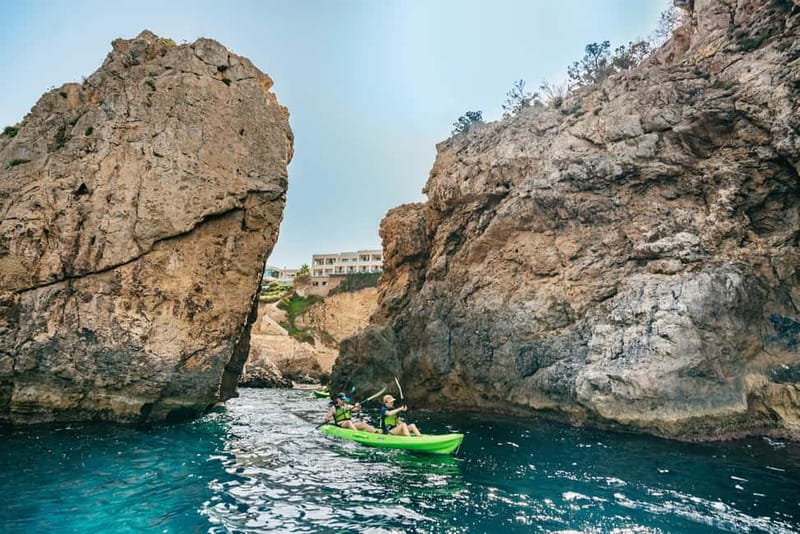
- Malgrats Islands marine reserve paddling with coastal viewpoints
- Caves, natural pools, and rock formations along Mallorca’s southwest shore
- Swim and snorkel time during a dedicated 20-minute break
- Stable single or double kayaks with seats that have backrests
- Optional hotel transfers with multiple drop-off areas around the coast
- Safety-first guidance with route adjustments if conditions get choppy
Santa Ponsa Meets the Kayaks: getting to Club Náutico
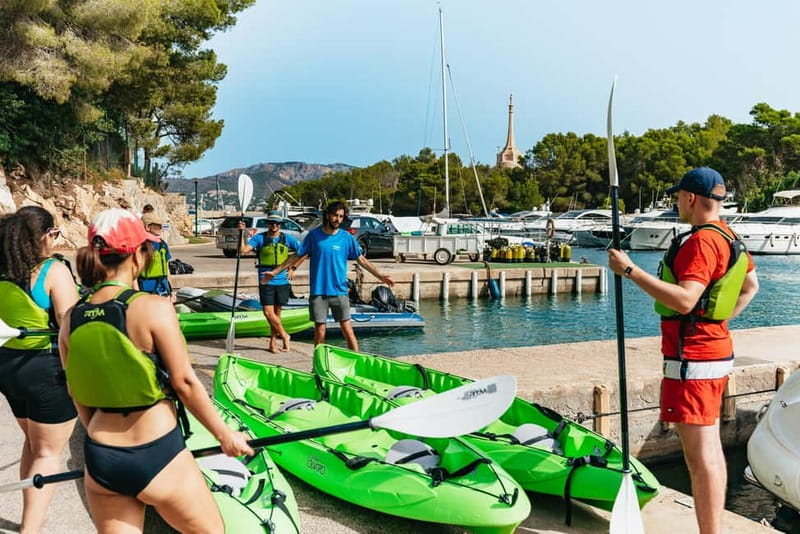
Your tour starts at the ZOEA Mallorca dive center, inside Club Náutico Santa Ponsa. This is in a private marina area you reach by walking, so if you’re driving, you’ll want to plan for that final leg on foot. The key practical tip here: if you’re coming by car, contact ZOEA Mallorca by phone rather than trying to wedge your vehicle into the wrong spot or block access.
If you choose the hotel transfer option, you’re not just buying convenience. You’re also removing one of the most annoying parts of water tours: figuring out parking, timing, and the exact meeting point. The tour also includes a van segment (about 30 minutes) once you’re picked up, so you’re essentially doing a smooth handoff from accommodation to sea time.
You can also read our reviews of more tours and experiences in Mallorca.

Van ride, safety briefing, and how the guides set you up
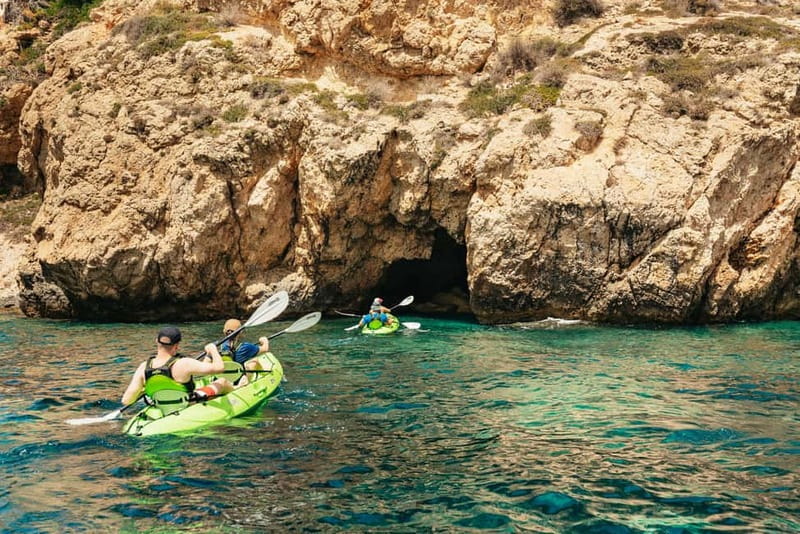
Before you paddle, you get a structured start: a brief van transfer and then a 30-minute safety briefing in Santa Ponsa. This matters more than it sounds. Even if you’re a confident swimmer, you still need to understand local conditions and the kayak rules of the road—how to paddle efficiently, how to stay balanced, and what to do if you get tired.
The guides lead you through paddling technique on arrival, then map out the route. You’ll be directed through safety procedures and what to expect on the water, including how the group stays together. In past trips, guides like Andrea and Ellie have been noted for checking in constantly and keeping the whole group feeling steady, especially for solo travelers.
You’ll also have the right gear: life jacket, kayak, and paddles are provided. Lockers are available for personal belongings, which helps you travel light without turning your bag into an extra stressor.
Stable single or double kayaks with real comfort
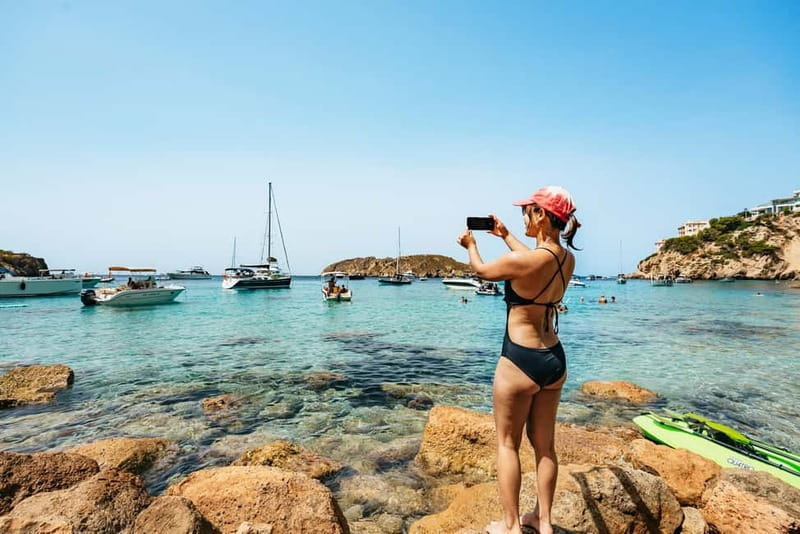
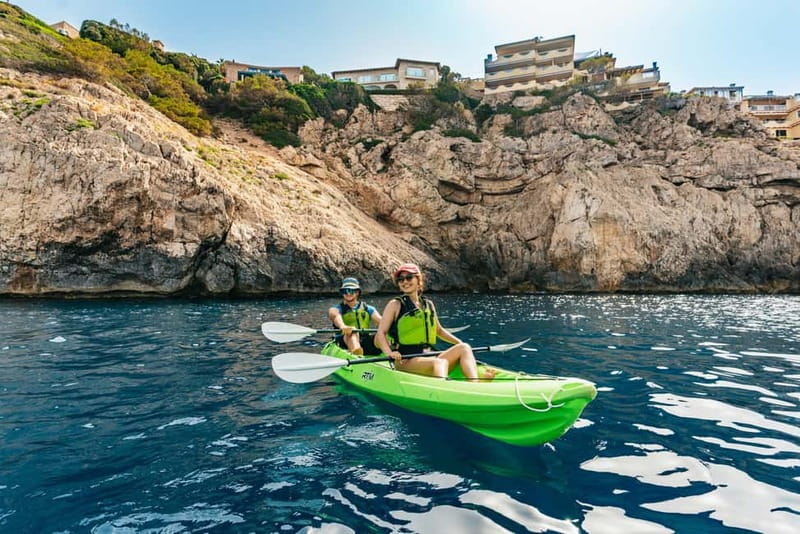
This is not the kind of kayak where you feel like you’re balancing on a board. You can choose a single or double kayak, and the ones used here are described as very stable and easy to maneuver. The seats include a backrest, which sounds small until you spend a chunk of time paddling with your shoulders doing the work.
For me, that backrest detail is a big deal. It changes the feel of the tour. Your arms still work, sure, but you’re not hunched like a folding chair. That makes the 2.5 hours of kayaking more manageable, especially if you’re doing this as your first paddle trip.
If you’re deciding between single and double, think about how you want to share the effort. A double can help you settle in faster and coordinate strokes, while a single gives you full control. Either way, the guide’s job is to keep you on the right track and make route decisions if conditions shift.
Paddling to the Malgrats Islands: where the scenery turns cinematic
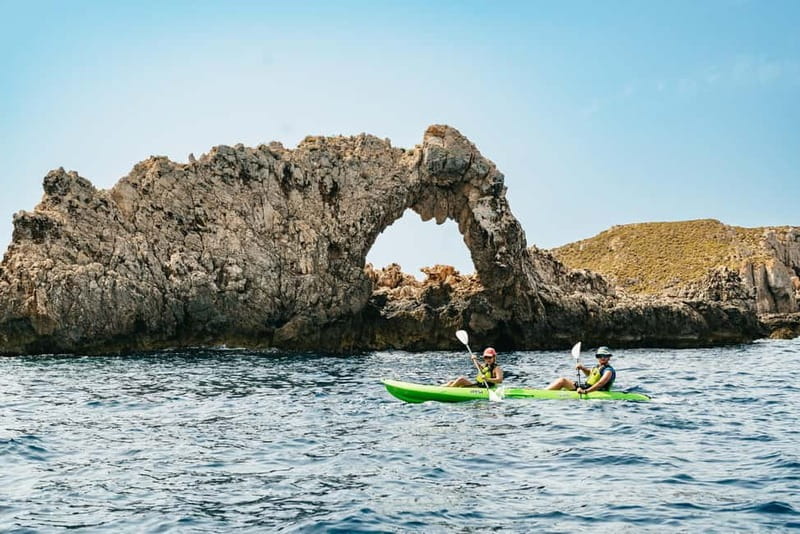
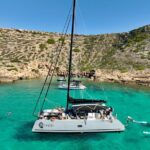
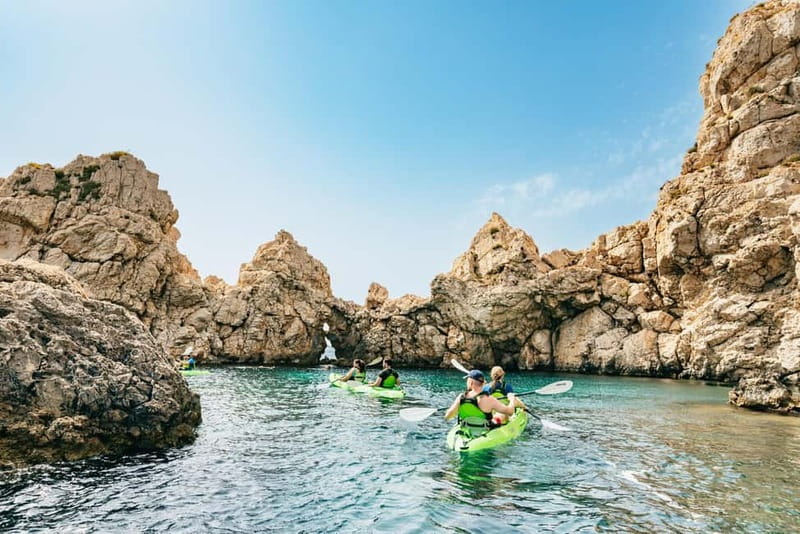
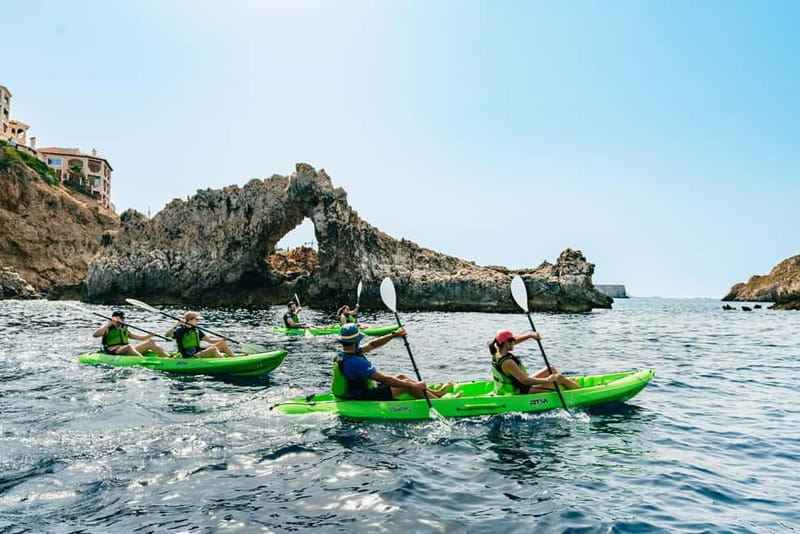
Once you set off, you paddle along the southwest coast of Mallorca toward the Malgrats Islands marine reserve. This stretch is why you’re doing the whole thing. You’re hugged by cliffs and coastal formations while the Mediterranean does its best impression of glass—until it doesn’t.
Chop happens. One of the most useful bits to know is that the guide may adjust the route when conditions are rougher than expected. That can mean you don’t follow the exact standard line, but it also means you still get a rewarding experience. In choppier water, the “work” part is real—you’ll feel it in your arms—but when you finally reach quieter spots, the payoff is obvious.
As you go, you’ll visit caves, stop by a small beach, and check out natural pools along the way. These aren’t just scenic pull-offs. They’re moments where you get to shift from pure paddling to exploration, using what the coastline offers—rocky ledges, openings in cliffs, and pockets of water that look almost unreal in good light.
Stop-by-stop: what each part feels like on the water


Stop 2: the van segment (about 30 minutes)
This is your transition. You’ll likely use it to get your bearings and confirm you have what you need—swimwear, water shoes, towel, and a bottle you can keep reusing. It’s also when you’ll feel the difference between a tour that’s just “meet here, good luck” and one that’s built around a schedule.
Stop 3: Santa Ponsa safety briefing (about 30 minutes)
Expect clear instructions. You’ll learn paddling technique, route basics, and safety procedures. This is also where you get your first sense of group tempo. If you’re new to kayaking, take the briefing seriously; it’s the shortest part of the day and it pays off for hours afterward.
Stop 4: Malgrats Islands kayaking (about 2.5 hours)
This is the engine of the trip. You’re out on the water for a long enough stretch to get warmed up, settle into rhythm, and then feel the effort in your muscles near the end. The good news is that you’re not just slogging forward. You’re exploring along the way—caves, rock shapes, and natural pools—so the time passes faster than you’d expect.
Also, there is support if you struggle. In one case, a participant got tired near the end and was towed back. That tells you the operators take safety seriously and don’t treat exhaustion like a solo mission.
Stop 5: Santa Ponsa break time (about 20 minutes)
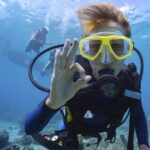
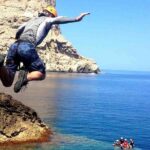
This is where you stop thinking about paddling and start thinking about water fun. You get downtime for swimming, splashing, and possibly snorkeling, depending on water conditions and what you choose to do during that break.
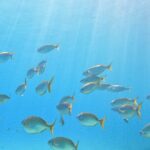
The water here can be clear enough to make the seabed interesting. Even if you don’t snorkel, plan to get wet. This is a “kayak tour” that includes the sea as part of the experience, not just as scenery.
Your swimming kit: small choices that make a big difference
Bring swimwear, a towel, water shoes, and a reusable water bottle. That list isn’t random. Water shoes help on rocky edges and in and out of the kayak world. A towel matters because you’ll be wet for at least part of the ride back. And a bottle keeps you from turning your day into a search for a drink.
You must be able to swim to participate. That’s not a casual note—it’s a hard requirement. If you’re unsure about your comfort level in open water, this is where you should pause and be honest with yourself before booking.
Personal belongings can go in lockers, which helps you avoid hauling everything in a dry bag you’re constantly checking.
Also, keep it simple: no alcohol or drugs is the rule. You want to be sharp for safety and energy management.
Optional hotel transfers: saving time and reducing stress
The tour offers hotel pickup and drop-off for an optional add-on. Pickup time is typically 30 minutes before the activity. If you’re in Santa Ponsa village, pickup is 15 minutes before. You’ll wait outside your hotel’s main entrance.
This matters because kayak tours run on momentum. Being late can cut into briefing time, and missing instructions isn’t worth the gamble. Transfers help you arrive calmer, ready, and on schedule.
Drop-off covers ten areas: Peguera, Magaluf, Santa Ponsa, Son Caliu, Calvià, Portals Nous, Cala Vinyes, Avinguda del Rei Jaume I (42), Palma Nova, and Cas Català. If your accommodation is in that orbit, transfers can be a big part of the value.
Price and value: what $66 buys you
At $66 per person for a roughly 3-hour tour, you’re paying for a lot more than renting a kayak. You’re getting:
- a guide (with route planning and safety procedures)
- life jackets, kayak, and paddles
- a significant time on the water (2.5 hours of kayaking plus setup and breaks)
- optional round-trip hotel transfers
If you’ve ever tried to kayak on your own, you’ll know the hidden cost isn’t just money. It’s uncertainty: where to go, how to stay oriented, and how to handle conditions. Here, you get a planned route to the Malgrats marine reserve and structured stops for caves, pools, and swimming. That’s what turns the day from gear rental into an actual experience.
You also get group management. In some trips the group has been small, around five people, which tends to make instruction feel more personal and less rushed.
Who this tour is best for (and who should skip it)
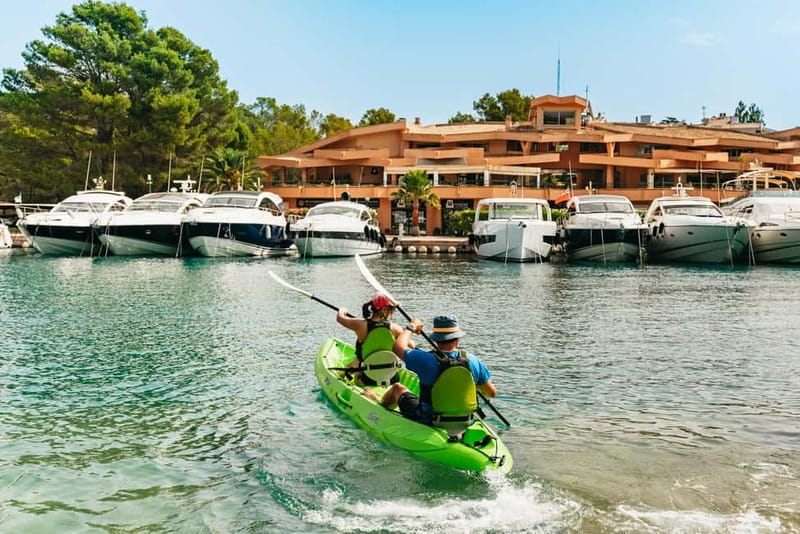
This is a good choice if you like water-based sightseeing and you don’t mind physical effort. It’s also a strong pick for beginners as long as you can swim. The kayaks are stable, and the briefing covers technique so you’re not left guessing.
It’s not for everyone:
- Not suitable for non-swimmers
- Not suitable for people with mobility impairments
- Not suitable for children under 8
If you’re traveling solo, this is also a comfort-friendly format. Guides have been described as friendly and energetic, with constant check-ins. That’s exactly what you want when you’re in a small group and you’d rather relax than play “figure it out.”
Little extras that add up on the day
Some tours feel like a checklist. This one has a more personal touch. Guides may take photos on their phone and send them afterward for free via services like AirDrop or WhatsApp. That means you can keep your hands on your paddles and still come home with usable shots.
Some participants also mention shower facilities at the end and time to rinse off before the lift back. Not every operator advertises that up front, but if it’s available during your slot, it’s a nice way to avoid smelling like saltwater the rest of the day.
And if the sea gets choppy, remember: the goal is still a great outing, not a rigid plan. Guides adjust when needed, and that flexibility is part of why so many people rate this highly.
Should you book this kayak tour from Santa Ponsa?
Book it if you want a guided day on Mallorca’s southwest coast with real time in the water: cliffs, caves, and natural pools, plus a swim break in the Malgrats marine reserve area. The price makes sense when you add in the guide, equipment, and the option for hotel transfers.
Skip it if you’re not confident swimming in open water, or if you’re looking for an ultra-easy ride. Even with stable kayaks, you’ll paddle for hours and feel it in your arms, especially if conditions are rough.
If you do book: bring water shoes, pack light, take the safety briefing seriously, and set your expectations around active paddling. Then enjoy the best part—seeing the coast from the water, up close, without the crowds.