REVIEW · FUERTEVENTURA
Fuerteventura: volcanic hike to the crater edge
Book on GetYourGuide →Operated by Fuerte Authentic Tours · Bookable on GetYourGuide
Crater edge views beat any souvenir stop. What I like most is reaching the Gayria Volcano crater edge via a narrow, serious path, and then resetting with a snack outdoors in the wild. The only real drawback is the footing: you’re on volcanic rocks and boulders, and it can be slippery, so you’ll want decent fitness and proper shoes.
This is the kind of Fuerteventura trip that trades resort roads for harsh, lunar-like ground and wide-open views over old lavaflows and the surrounding mountains. With a small group and a live guide, you get stops for photos and breaks, plus stories about the area’s flora, fauna, myths, and legends.
If you’re expecting an easy stroll or you’re traveling with limited mobility or breathing/heart issues, this probably won’t fit. The tour is also not aimed at young kids (under 9) and it’s not for anyone who’s pregnant.
In This Review
- Key highlights you’ll feel right away
- Gayria Volcano: Why this crater-edge hike hits different
- Hotel pickup makes the first hour painless
- The 6 km volcanic hike: what your legs should expect
- Ascend to the crater edge: narrow path, big rewards
- The snack break in the wild: sandwich and local flavours
- Guide stories: flora, fauna, myths, and practical hiking help
- Group size: small enough for questions, not small enough to feel awkward
- What to wear (and what to skip): stop the slip-factor early
- Timing: a 5-hour day that still feels like an adventure
- Who should book this, and who should pass
- Quick realism on fitness and slippery footing
- Value for your time: guided guidance plus viewpoint payoff
- Should you book the Fuerteventura Gayria crater-edge hike?
- FAQ
- How long is the Fuerteventura volcanic crater-edge hike?
- Where does the pickup happen?
- How long is the hiking portion and how far is it?
- What level of fitness do I need?
- What languages are the guides?
- How big is the group?
- What should I bring for the hike?
- Is it okay to wear sandals or flip-flops?
- Who is the tour not suitable for?
- Is there free cancellation?
Key highlights you’ll feel right away
- Crater edge access via a narrow path with real hiking on volcanic rock
- About 3 hours on foot as you work up from the volcano base area
- Outdoor food break with a sandwich at the crater viewpoint (plus local flavours during the day)
- Big panoramic views over old lavafields and the mountain ranges around the island
- Small-group guiding limited to 8 participants, with time for questions and photos
- Local guide energy: you may get extra touches like tastings and practical hiking tips
Gayria Volcano: Why this crater-edge hike hits different
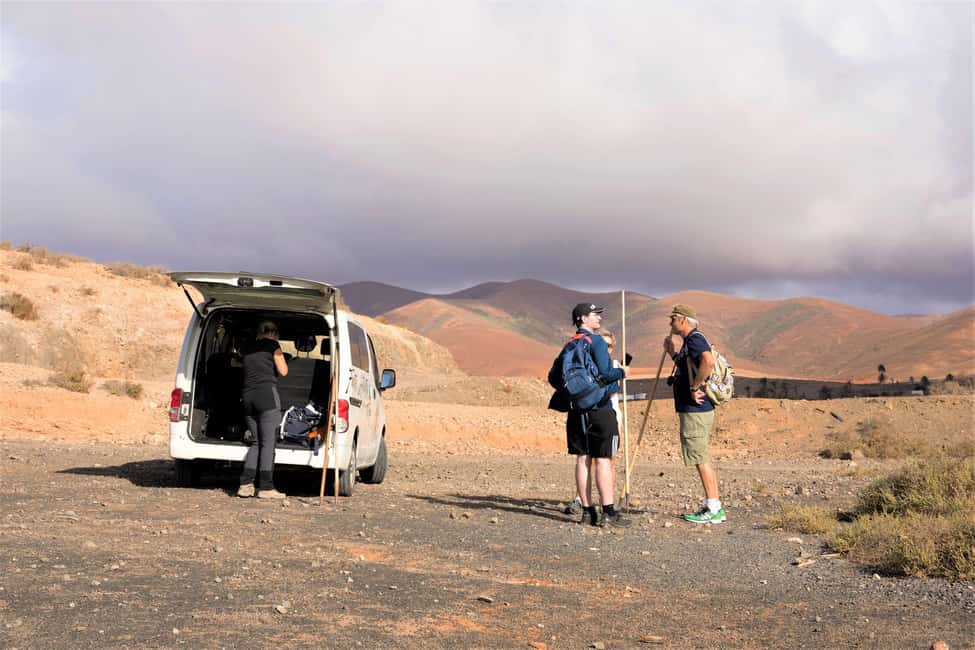
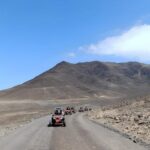
Fuerteventura gets painted as flat and beachy. This trip reminds you the island has sharp edges too. You hike through volcanic terrain that looks almost otherworldly, then you earn a view from the crater edge where the ground drops away and the scale suddenly makes sense.
Two things make this work so well for your day: first, it’s a true walking experience (6 kilometers total), not just a drive-and-look. Second, you’re not stuck in a crowded main route. The guide takes you into a protected area and keeps you moving at a pace that makes the views feel earned, not rushed.
Even though the volcano is no longer active, the place still has weight. The guide talks about the area’s stories and shows you what to look for beyond the obvious photos. You’re left with that classic “how is this on the same island as my hotel?” feeling.
You can also read our reviews of more tours and experiences in Fuerteventura.


Hotel pickup makes the first hour painless
You don’t need to solve transport on your own. The day starts with pickup from several south-coast areas: Morro Jable, Esquinzo, Tarajalejo, and Costa Calma. Then you head by van toward the start point.
The van ride is about 55 minutes, which is long enough to get settled but short enough that you’re not wasting the whole morning. This matters if you’re the type who likes hiking, but also likes your schedule to make sense.
The tour ends with drop-off back in the same south locations, so you avoid the awkward “now what” feeling after you finish sweaty shoes and crater air.
The 6 km volcanic hike: what your legs should expect
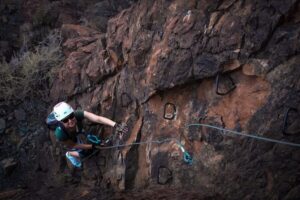
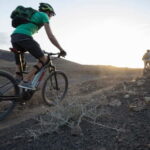
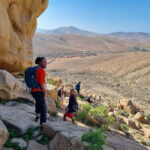
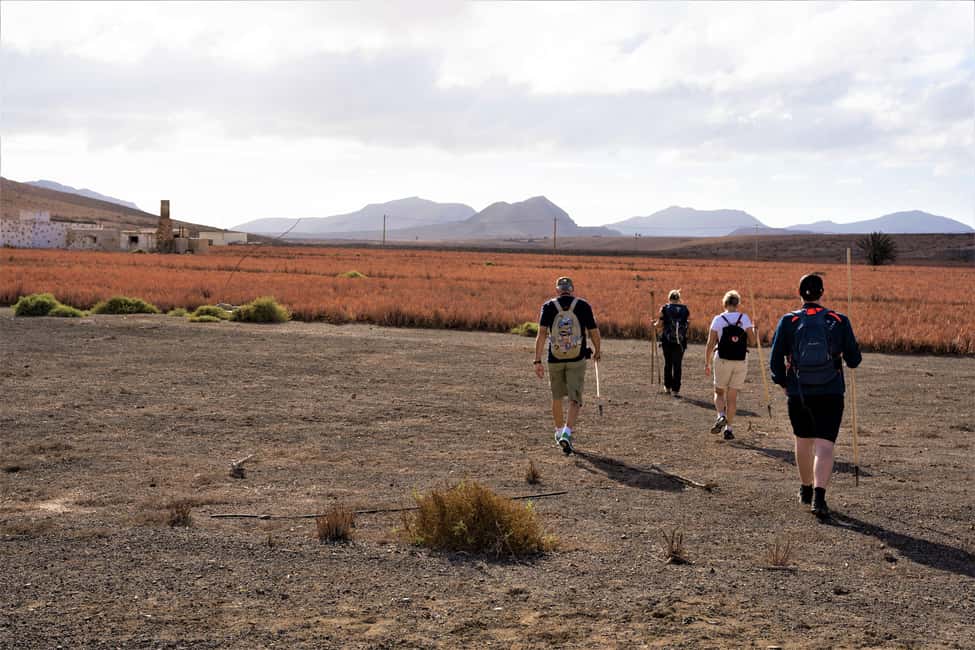
This is a middle-level hike. You’re looking at 6 kilometers total, with roughly 3 hours in the protected area while you climb and descend. The ground is made of volcanic rocks and boulders, and the conditions can be slippery.
So here’s the practical part: this isn’t the type of hike where you can wear cute shoes and hope for the best. Closed-toe hiking footwear is essential, and your guide will be watching the group for footing the whole way. If you’ve hiked before on uneven trails, you’ll recognize the vibe immediately: slow steps, stable ankles, and breaks that aren’t optional.
The route also climbs and descends on uneven terrain, so even if the total time seems short, your body feels the work. You’ll want to go in with a calm mindset: you’re not racing up a mountain. You’re pacing through volcanic ground.
Ascend to the crater edge: narrow path, big rewards
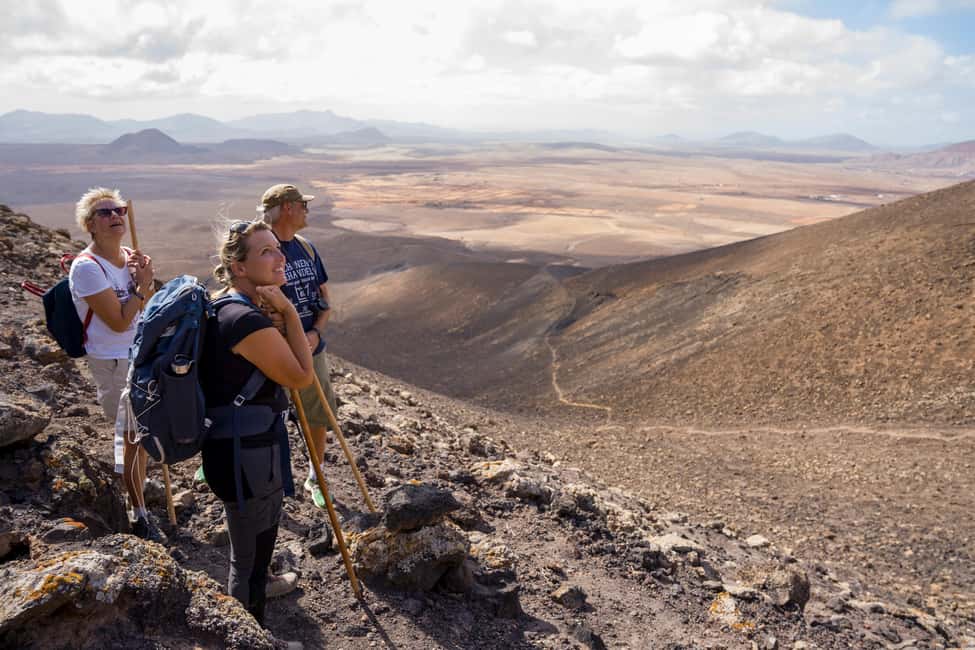
The highlight isn’t just the crater itself—it’s the approach. You reach the crater edge via a narrow path, and that section tends to be where the day turns from nice hike to full-on wow.
As you climb, the view opens up bit by bit. You’ll get panoramic angles over the crater area, with old lavaflows stretching out around you. It’s the kind of scene where you instinctively take extra photos even if you’re trying to be “efficient.”
The guide also builds in rest and photo stops. That’s not a small detail. On rough volcanic ground, a well-timed stop helps your breathing and keeps your feet under you. You’ll take pictures from a few angles instead of just one dramatic moment, which makes the memories last longer.
The snack break in the wild: sandwich and local flavours
You don’t leave the hike purely on willpower. You get a sandwich at the crater viewpoint, and there’s also a local-snacks break during the day.
What I like about this setup is that it’s simple and functional. You’re not dealing with a complicated meal. You’re hiking, resting, and then eating something that helps you keep going.
On some departures, the food and drink side seems to go beyond a basic packed lunch. One traveler noted tapas tasting and red wine, and another mentioned goat cheese and local wine after the hike. If that’s your kind of bonus, this tour has the potential for it, especially at the middle-of-the-day stop where you pause during the walking.
One more tip: since you’re outdoors, treat your snack and water like part of the hiking plan, not an afterthought.



Guide stories: flora, fauna, myths, and practical hiking help
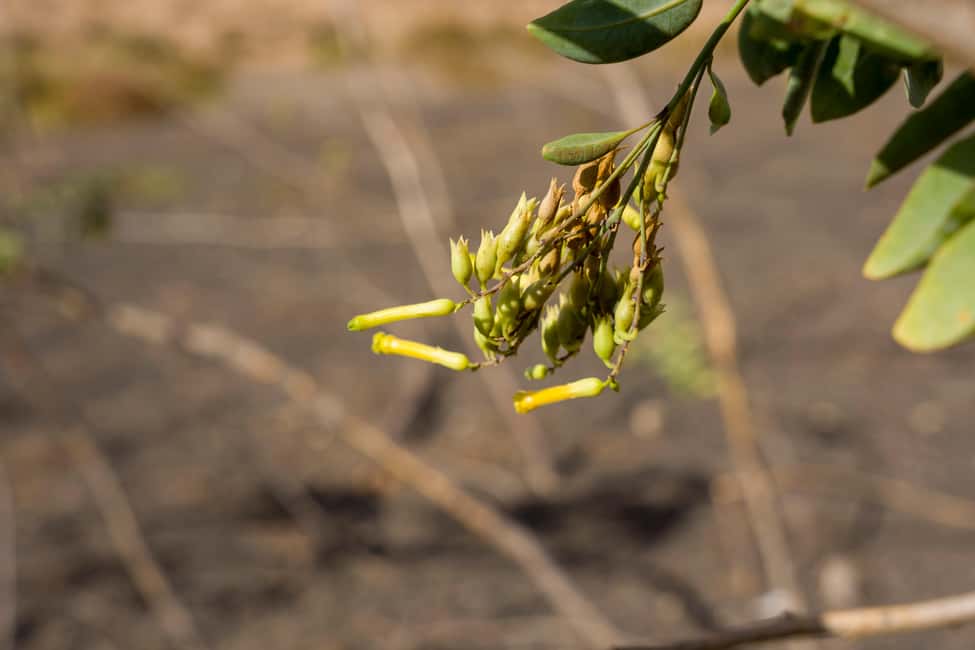
A good guide turns a good hike into a “remember this for years” day. Here, the guide shares stories about local flora and fauna, plus myths and legends connected to the volcano. That gives you more to look at than just rocks and sky.
You’ll also likely feel a more hands-on style of coaching. In the feedback I saw, guides like Anne-Marie and Kristina stood out for combining local knowledge with real hiking support—checking comfort, answering questions, and tailoring the pace to people’s abilities.
That kind of flexibility matters on volcanic terrain, where everyone’s stride differs. A guide who pays attention to how you’re handling footing is the difference between pushing through stress and enjoying the climb.
Group size: small enough for questions, not small enough to feel awkward
This tour keeps things intimate. It’s limited to 8 participants in a small group. At the same time, the operator notes a maximum number of people per guide (up to 16 per tour guide on some setups), so the tour won’t turn into a private hike—but it should still feel personal.
Why you should care: on a narrow path and slippery rocks, you want to hear instructions and not get separated in a crowd. A smaller group also helps with pacing and photo moments. Your guide can pause without making it feel like everyone is waiting on one person.
If you like group tours but hate feeling herded, this is a nice middle ground.
What to wear (and what to skip): stop the slip-factor early
You’ll be outside on rough ground, so dress like you expect dust. Pack hiking shoes and comfortable clothes, and bring closed-toe footwear. The rules are clear: no sandals or flip-flops, and no open-toed shoes.
Also plan for clothes that can get dirty. Volcanic terrain does that job well.
Practical add-ons:
- Bring water (you’ll want it during climbs and rests)
- Use sun protection
- Hiking sticks can help if you like them or if your body benefits from extra stability
If you show up with questionable shoes, your feet will make the decision for you. This tour is more enjoyable when your gear supports your pace.
Timing: a 5-hour day that still feels like an adventure
The total duration is 5 hours, built around hotel pickup, van travel, and the hike itself. With about 55 minutes of van time each way, the middle of your day is the real action.
Inside the walking portion, plan for:
- A climb period (you spend time climbing up toward the crater area)
- Stops for photos and rests
- A descent back to the starting point
The vibe is energetic but not frantic. You should treat it like a hike-first day. If you try to pack this into your itinerary as an easy add-on, you might feel surprised by how “hands-on” the terrain is.
Who should book this, and who should pass
This tour is best for adults who are comfortable on rocky paths and want a guided hike with a clear payoff: the crater edge viewpoint. You’ll enjoy it if you like outdoor days and you don’t mind getting a little dirty.
It’s specifically not suitable for:
- Children under 9
- Pregnant women
- People with heart problems
- People with respiratory issues
- People over 75
- People with mobility impairments
I’m saying that bluntly because the trail is on volcanic rocks and includes a crater-edge section with a narrow path. If you’re unsure, it’s worth asking the operator before you commit.
Quick realism on fitness and slippery footing
The hike is only about 3 hours in the protected area, but it’s still uphill and uneven. The ascent and descent are described as volcanic rocks and boulders, and the ground can be slippery.
So the real fitness question isn’t cardio alone. It’s ankle stability and comfort moving carefully downhill. If you’ve ever stepped on loose rock and felt your confidence vanish, take that seriously here.
If you’re the kind of hiker who likes to take your time, this tour should suit you well. Your guide will help with pacing and rest, and they’ll share stops for photos and breaks so you’re not constantly pushing.
Value for your time: guided guidance plus viewpoint payoff
There’s no price listed here, so I’ll talk about value instead of numbers. This tour includes:
- Hotel pickup and drop-off from several south areas
- A live guide (English or German)
- A guided hike to the crater edge with a set duration
- Snack support, including a sandwich at the crater viewpoint
- Time built in for rests and photos
That combination matters. Without a guide, you’d likely spend more time figuring out where to go and how to handle the trail safely. With a small group, you get structure and support.
If you want a half-day that feels like a real Fuerteventura experience—volcanic, wild, and view-heavy—this checks a lot of boxes for your time.
Should you book the Fuerteventura Gayria crater-edge hike?
Book it if you want a guided volcanic hike with a clear end point: the crater edge and those panoramic views over old lavafields and mountains. You’ll probably love it most if you’re comfortable walking 6 kilometers on uneven, sometimes slippery ground and you’re happy to dress like an outdoor person for the day.
Skip it if you’re hoping for an easy walk, if your health limits you on rocky outdoor terrain, or if you’re traveling with young kids (under 9) or mobility concerns. The trail demands safe footing.
If you do book, take the gear rules seriously—good shoes and water are not optional. This isn’t a “sneakers will do” day.
FAQ
How long is the Fuerteventura volcanic crater-edge hike?
The tour lasts about 5 hours total.
Where does the pickup happen?
Pickup is available from hotels in the south of the island, including Morro Jable, Esquinzo, Tarajalejo, and Costa Calma.
How long is the hiking portion and how far is it?
The hike is about 3 hours in the protected area, and the total hike distance is 6 kilometers.
What level of fitness do I need?
You should have a good physical condition, because the path includes volcanic rocks and boulders and can be slippery.
What languages are the guides?
The live tour guide is available in English and German.
How big is the group?
The tour runs as a small group limited to 8 participants.
What should I bring for the hike?
Bring hiking shoes, closed-toe footwear, comfortable clothes (that can get dirty), and water. Sun protection is also recommended, and hiking sticks may help if you use them.
Is it okay to wear sandals or flip-flops?
No. Sandals, flip-flops, and open-toe shoes are not allowed.
Who is the tour not suitable for?
It’s not suitable for children under 9, pregnant women, people with heart problems, people with respiratory issues, people over 75, and people with mobility impairments.
Is there free cancellation?
Yes. You can cancel up to 24 hours in advance for a full refund.