REVIEW · FUERTEVENTURA
Corralejo: 1-Day Surf Lesson for Beginners
Book on GetYourGuide →Operated by Point Break WaterSports Fuerteventura · Bookable on GetYourGuide
First wave jitters are real, and here they’re handled well. I like the small-group setup (max 8), which makes it easier to get corrections fast. I also like that you’re taught by ISA/FCS/FES-qualified instructors and you get proper equipment plus civil liability insurance, so your day feels safe and straightforward. One drawback to know up front: the lesson start time shifts with weather and sea conditions, so you won’t have a totally fixed schedule.
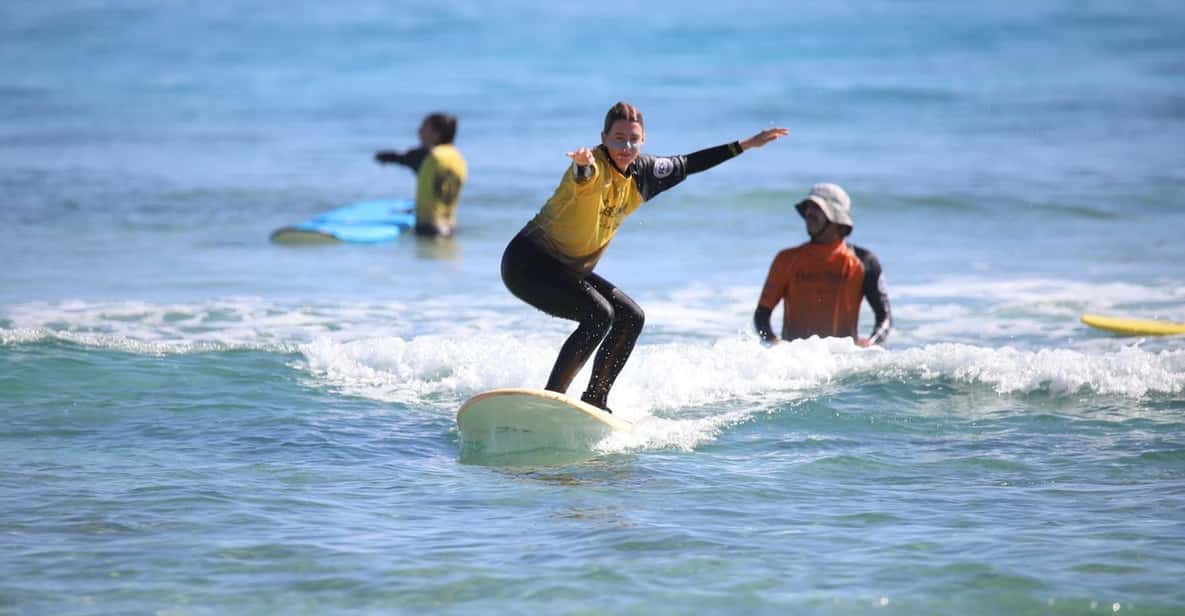
This is a 4-hour beginner course in Corralejo (Las Palmas, Canary Islands) that focuses on getting you from standing on the board to catching your first easy waves. You’ll start with theory, warm up on land, then practice in the water, riding foamy already-broken waves before moving to small, green waves that are easier to read and paddle for.
In This Review
- Key things to know before you go
- Surf instruction that actually matches a first-timer
- The 4-hour flow: theory, warm-ups, and a clear wave ladder
- 1) Theory: understand what you’re doing
- 2) Warm-up exercises and stretching
- 3) Water practice: build muscle memory
- 4) Surfing progression: foam first, then easy green waves
- Where you’ll surf in Corralejo: sandy beach breaks and easy reef options
- Equipment plus insurance: the quiet value of doing it right
- The meeting point and short transfer: simple, not confusing
- Timing that follows the sea: why your lesson time can change
- Small group coaching: max 8 changes how your day feels
- What to bring for a Canaries beginner surf lesson
- Price and value: what $59 buys you in real terms
- Who this course suits (and who it doesn’t)
- What you’ll actually learn on your first day
- Should you book this Corralejo beginner surf lesson?
- FAQ
- What’s the duration of the Corralejo beginner surf lesson?
- How many people are in the group?
- What language are the instructors?
- What’s included in the price?
- Where do we meet?
- What should I bring?
- How is the lesson time decided?
- Can I cancel and get a refund?
Key things to know before you go
- Small group, better coaching: limited to 8 participants, so you’re not lost in a crowd
- Certified instruction: instructors are qualified through ISA, FCS, and FES
- All gear included: you don’t have to bring a board, wetsuit, or the basics
- A smart beginner wave progression: from broken wave foam to small green waves
- Transfer to the surf spot: you get moved from the center to where you’ll actually ride
- Insurance included: civil liability plus coverage for possible accidents
Surf instruction that actually matches a first-timer
If you’re thinking about surfing, the hardest part isn’t the ocean. It’s the first session—when everything is new: the board, the timing, the wind, and the feeling of trying to stand while the wave is doing its thing. This lesson is built for that exact moment. The goal is confidence, not proving anything.
What makes it work is the structure. You get a theory lesson first, so you know what you’re trying to do before you burn energy paddling in circles. Then you move into warm-up exercises, water practice, and stretching, so your body is ready for the effort that comes with paddling and popping up.
You also get to surf waves that fit the beginner zone. In Corralejo, that usually means you’ll be looking at breaks on sandy beaches and easy reef breaks—surfaces that are friendlier for learning than hard, punchy conditions.
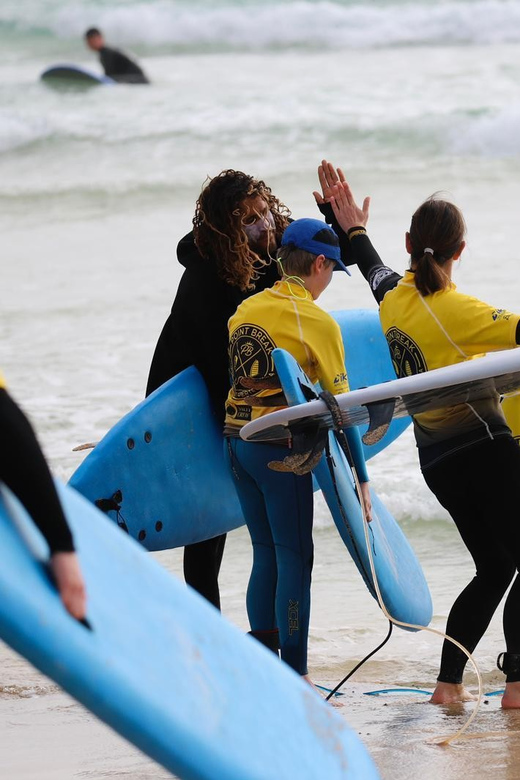
And there’s real coaching in the mix. Instructors are qualified through multiple surf bodies (ISA, FCS, FES), and in one case the instructor Roberto helped a group get the basics down and actually ride the waves. That matters because beginners don’t just need gear—they need correction, timing cues, and encouragement that you can use on your next attempt.
You can also read our reviews of more tours and experiences in Fuerteventura.

The 4-hour flow: theory, warm-ups, and a clear wave ladder
This isn’t a long “tour of the coast.” It’s a focused 4-hour training block designed around the learning curve of first-time surfers.
1) Theory: understand what you’re doing
You’ll start with a theory session on fundamental techniques and how to approach the surf safely. For you, this is the part that makes everything else click. When you know the basics—what to look for, how to position yourself, and what success should look like—you stop treating every wave like a surprise.
2) Warm-up exercises and stretching
After theory, you’ll do warm-up exercises and then stretching. It sounds simple, but it’s a big deal for first-timers. Surfing asks a lot from your shoulders and core, especially when you’re repeatedly paddling out and resetting.
If you show up stiff or under-warmed, you’ll feel it fast. So I like that the plan includes that pre-game routine instead of expecting you to be ready on day one.
3) Water practice: build muscle memory
Then comes water practice. This is where the lesson turns practical, and you start putting technique into motion. Expect to repeat movements and get feedback as you get used to the board and the rhythm of waves.





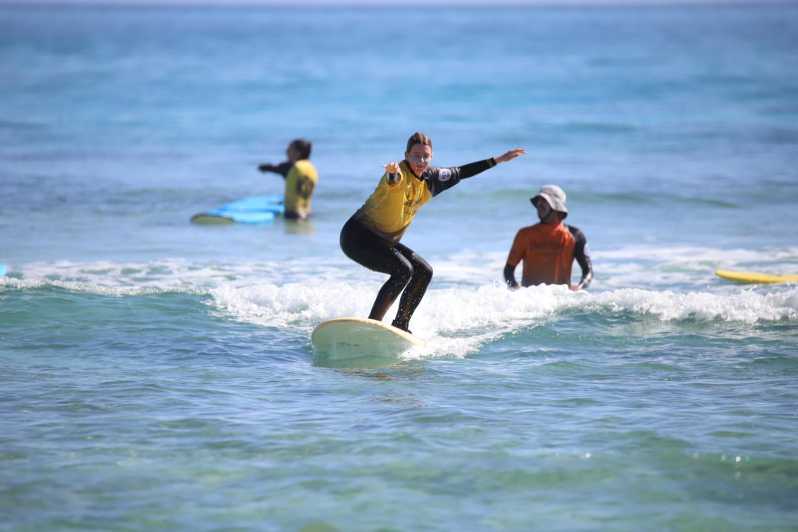
4) Surfing progression: foam first, then easy green waves
Here’s the key beginner ladder:
- You’ll ride the foam of waves that have already broken.
- Then you’ll work toward catching small, easy green waves (waves that haven’t broken yet).
That progression is smart. Foam gives you the chance to practice balance and timing without the full intensity of a fresh, unbroken wave. Then, once you can handle that, you gradually step up to green waves that are still manageable for learners.
This is exactly what you want if your goal is to feel the rush of standing and riding—without starting the day in the deep end.
Where you’ll surf in Corralejo: sandy beach breaks and easy reef options
Corralejo is a good choice for beginners in the Canaries because the surf scene often offers learning-friendly conditions. The lesson is designed around surf spots where waves break on sandy beaches or use easy reef breaks—meaning you’re more likely to have a smoother, more controllable experience than you’d get in heavy, jagged conditions.
You don’t always get the same exact water setup. The school adjusts based on wind, tide, spot selection, and the type of waves available. That’s not just “bureaucratic timing.” It directly affects your odds of catching waves.
So for you, the benefit is this: you’re more likely to ride instead of simply struggle. And the wave selection supports the “broken wave → green wave” learning path, so the coaching matches what you’re seeing in the water.
Equipment plus insurance: the quiet value of doing it right
One thing I appreciate about this course is that the basics aren’t left to guesswork. You receive all necessary equipment needed for catching waves. That usually means you can focus on technique and not spend your morning figuring out what gear you actually need.
Even better, this lesson includes civil liability insurance and insurance covering possible accidents. On a day where you’re in the ocean, falling and wiping out is part of learning. Knowing there’s coverage built into the activity makes the whole experience feel less stressful.
If you’re a traveler, that matters. You don’t want a first surf day to turn into logistics. You want coaching and a clear plan for the session—and that’s what the included gear and insurance support.
The meeting point and short transfer: simple, not confusing
You’ll meet at the Buendia Hotel area, enter the hotel, then look for the reception on your right. Walk to the stairs down on your left. Once you’re down, you’ll see the Point Break Watersports store. The meeting point is right in front of the store.
If your class time doesn’t match the store’s opening hours, you wait outside on the chairs while the instructor arrives. After that, you get a transfer from the surfing center to the actual surf spot.
I like this setup because it’s easy to find and it avoids the chaos of trying to locate a random beach meeting point early in the morning (or late in the afternoon). And since you’re transferred to the surf area, you’re not wasting energy on transport once the lesson is ready to start.
Timing that follows the sea: why your lesson time can change
Your lesson happens the day after booking, and the school confirms your schedule for the following day. After you reserve, you’ll need to contact the school via WhatsApp to define your lesson time, which may shift depending on weather.
The key detail: there’s no fixed time. The school evaluates wind, tide, spot choice, and wave type. Then they confirm your exact time the day before between 8pm and 9pm, aiming to be accurate using the forecast.
From a beginner perspective, this is the right approach. Surf conditions swing quickly. A lesson that locks a time and ignores the ocean is how beginners get frustrated and spend the day waiting for waves they can actually use.
So while it might feel inconvenient at first, it usually improves your odds of actually catching waves during the 4-hour window.
Small group coaching: max 8 changes how your day feels
This course keeps the group small—limited to 8 participants. That number sounds modest, but it changes the experience. You get more attention, and it’s easier for the instructor to spot what you’re doing wrong on your next attempt.
You also get a learning vibe. You’re not one person among twenty, so the energy is focused and you’re more likely to stay motivated when you fall a few times (because you will, even if you’re fit).
Instruction languages include English, Italian, and Spanish. If you speak one of those, you’ll likely understand cues and safety instructions without needing to guess.
And based on what I’ve seen work in lessons like this, having cues you understand instantly helps you progress faster—from theory to standing to actually riding.
What to bring for a Canaries beginner surf lesson
For a 4-hour course, pack for comfort and quick changes. You’ll want:
- Change of clothes
- Towel
- Sunscreen
- Water
- Beachwear
In practice, the beach-to-water cycle matters. You’ll likely get cold after time in the water, then warm back up when you’re resting, so the right change of clothes can make a huge difference in how you feel at the end.
Also, sunscreen is a must. Even when it’s not blazing hot, you’ll be in the sun during theory and breaks, and sea light can be intense.
Price and value: what $59 buys you in real terms
The price is listed at $59 per person for a 4-hour lesson. On paper, that’s not just “surfing access.” It covers instruction, equipment, and transfer to the surf spot, plus insurance.
For value, think of it this way: if you had to rent gear on your own, arrange transportation, and figure out the right coaching approach, it adds up fast—especially when you’re new. Here, you’re buying a structured session with enough safety support and enough coaching attention to give you a real shot at riding your first waves.
The other value piece is the progression. Foam-to-green-wave learning is designed so you don’t just paddle out, panic, and call it a day. When a beginner course is built around achievable steps, you’re more likely to leave with the kind of memory you want: adrenaline, joy, and at least a handful of moments that feel like surfing.
Who this course suits (and who it doesn’t)
This beginner surfing course is designed for first-time surfers and people refreshing the basics. If you’re comfortable being active for a few hours, you’ll likely enjoy it.
It’s not suitable for:
- Children under 15
- Pregnant women
- People with heart problems
- Wheelchair users
If you’re unsure about fitness or health considerations, it’s worth checking with the provider directly before you book, especially since surfing involves exertion in water and can be physically demanding.
What you’ll actually learn on your first day
You’re not just going to watch someone surf. You’ll learn the practical fundamentals needed to ride waves with confidence. That includes how to move through the session: understanding the basics first, warming up, practicing in the water, then catching waves in a sequence that makes sense.
The theory gives you a framework. The water practice gives you repetition. The surfing time gives you the payoff. And because the instructor team is certified and the course has insurance included, you can treat it as a real lesson day, not an uncertain experiment.
If your goal is to progress to bigger waves later, this is a good starting point. The course targets foundational technique and wave-reading basics so you’re not starting from scratch every time you go back to the water.
Should you book this Corralejo beginner surf lesson?
I’d book it if you want a beginner-first surf day in Corralejo with structured coaching, included equipment, and insurance. The small group size (8 max) and the progression from foamy broken waves to small green waves are exactly the ingredients that help first-timers actually catch waves.
I’d hesitate if you hate schedule uncertainty. Since the lesson time depends on wind, tide, and wave conditions, your start time is confirmed the day before between 8pm and 9pm, and it may shift. If you need a hard appointment time, you might find the sea-driven timing stressful.
But for most visitors, this kind of flexibility is a feature, not a flaw. Surf conditions change. This course is designed to change with them, so your 4 hours are spent where you’re most likely to learn fast and have fun doing it.
FAQ
What’s the duration of the Corralejo beginner surf lesson?
The lesson lasts about 4 hours.
How many people are in the group?
The group is small, limited to 8 participants.
What language are the instructors?
Instructors speak English, Italian, and Spanish.
What’s included in the price?
You get qualified instructors, all surfing equipment, a transfer from the surfing center to the surf spot, a theory lesson, a practical lesson, and civil liability insurance plus insurance for possible accidents.
Where do we meet?
Meet at the Buendia Hotel area: enter the hotel, reception on the right, stairs down on the left. Go down to the Point Break Watersports store; the meeting point is right in front of the store.
What should I bring?
Bring a change of clothes, a towel, sunscreen, water, and beachwear.
How is the lesson time decided?
After booking, you contact the school via WhatsApp to define your lesson time. The start time may change depending on weather, wind, tide, and wave conditions. You get confirmation the day before between 8pm and 9pm.
Can I cancel and get a refund?
Yes. Free cancellation is available up to 24 hours in advance for a full refund.