Mt. Etna has a way of changing your inner weather. This trek mixes 4×4 access, a cableway ride, and guided walking across real lava terrain up to the high craters—no museum shortcuts. You get to move from Etna’s lower paths into a lunar-like summit zone where sulfur air and gas plumes are part of the scenery.
What I like most is how the route connects the volcano’s timeline: you walk from zones tied to the 2002 eruption toward areas influenced by later activity, then finish back down through different textures of ash and sand. I also like that the guide-led pacing helps you read the terrain—something you’ll feel especially with a guide like Cristian, who can explain Etna in plain, engaging ways.
One thing to consider: this is not a gentle stroll. You should expect a strong fitness requirement and a weather-dependent day, plus lunch isn’t included, so plan your food accordingly.
In This Review
- Key highlights I’d mark on your Etna checklist
- From Fornazzo to Etna: the 4×4 start that gets you moving fast
- Cableway to about 2500m: saving energy before the real walking
- Walking among 2002 and 2017 lava: what the terrain is actually like
- Summit Craters: sulfur air, gas plumes, and the view payoff
- North slope descent to Piano delle Concazze: ash, lapilli, and crater-edge walking
- Picnic and the lunch reality: plan for food before you start
- Valle del Bove: Ox Valley views in about an hour
- Gear, helmets, and the small-group advantage (max 10)
- Price and value: what $145.12 really buys you
- Timing: how a 6–7 hour trek can feel like longer
- Weather, fitness, and what you should be ready for
- Should you book EtnaWay’s Etna trek? My take
- FAQ
- What’s the starting point for the Etna trekking tour?
- Where does the tour end?
- How long does the tour last?
- How much does it cost?
- Is the tour guided and in English?
- What’s included in the tour price?
- Is lunch included?
- What’s the maximum group size?
- What do I need regarding fitness?
- What happens if the weather is poor?
Key highlights I’d mark on your Etna checklist
- 4×4 ride from the Lemons Coast area to start climbing where the mountain really begins
- Cableway jump from Rifugio Sapienza area up to around 2500m to save your legs
- Hike across lava from multiple eruption periods, including routes tied to 2002 and later activity
- Summit Craters vibe: sulfur smell, windy gas emissions, and clouds dropping below you
- Piano delle Concazze break area near the volcanological observatory zone at high altitude
- Small group max of 10 for smoother pacing and more time with your guide
From Fornazzo to Etna: the 4×4 start that gets you moving fast
Your day begins at Bar & Restaurant Mareneve in Fornazzo (via Mongibello, 41). The meeting window runs in the morning (9:00–9:30 AM), which matters because Etna weather can swing quickly. Once everyone’s in, you’ll climb into a 4×4 and leave the coastal area known for lemons—Riviera dei limoni—behind you.
This first stretch is more than just transport. As the jeeps head toward Etna’s hill and villages, you gradually shift from human landscape to volcano landscape: old mulattiere, ancient mule-driver roads, and coalmen paths that are essentially built for crossing rough ground. At around 1000m altitude, you enter a protected high zone, and the terrain starts showing cold, dried lava flows—the black, highway-like ridges that tell you this volcano doesn’t mess around.
If you’re trying to understand Etna, this approach helps. You don’t just arrive at the top and look down; you watch the mountain transform beneath you, step by step, before you lace up for the main trekking part.
You can also read our reviews of more tours and experiences in Sicily.
Cableway to about 2500m: saving energy before the real walking
A big practical advantage here is the route from the south slope ski station area—Rifugio Sapienza. You take the cableway up from roughly 1800m to 2500m. That’s a smart trade: it reduces the steep slog so you can spend your effort on the crater-edge trekking part, where the views and geology matter most.
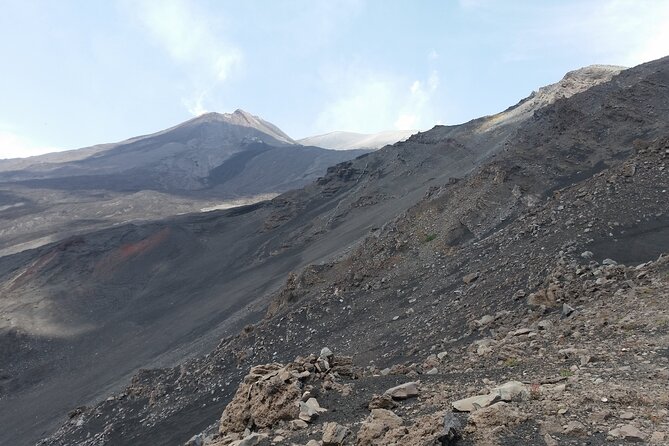
From about 2500m, your trekking path runs through lava zones tied to the 2002 eruption. You’ll then move toward the Barbagallo Craters at around 2900m, and keep going past lava flows linked with activity from the South East Crater area in 2017, aiming toward the summit craters.
I like this sequencing because it gives you variety in a single outing. You’re not doing one long “same-looking” ascent. Instead, you’re walking across different lava textures and routes, with the guide connecting what you see to what those eruptions changed on the ground.
Walking among 2002 and 2017 lava: what the terrain is actually like
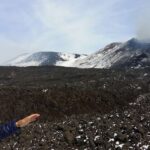
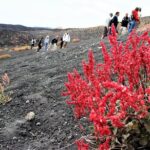
Once you leave the cableway zone, the world gets quieter in a visual way and intense in a physical way. The area you’re heading through is shaped by eruption scars—lava flows with sharp edges, dusty patches, and stretches that can feel like walking on a hardened, broken road.
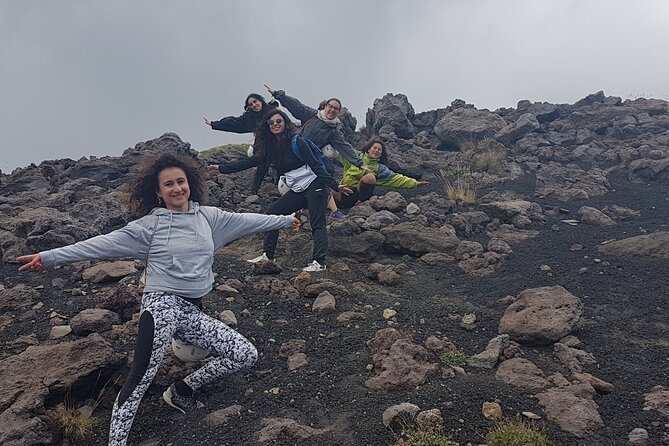
At the higher points, the trail runs among features created by those events: craters and flow lines that shaped the current terrain. When your guide explains what you’re seeing, it clicks fast because you can trace the result right under your boots. That’s the real value of this style of itinerary: it makes geology feel immediate instead of abstract.
Your guide will also keep your footing in mind. Lava terrain can be uneven and sometimes sandy. Even if you’re fit, you’ll appreciate having a plan for where your steps matter most—especially when the wind picks up.
Summit Craters: sulfur air, gas plumes, and the view payoff
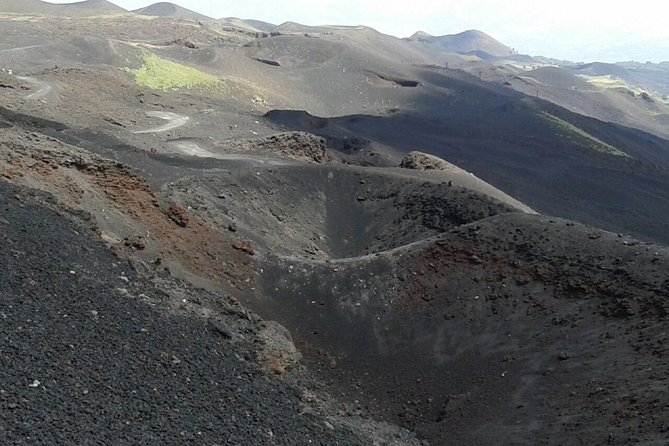
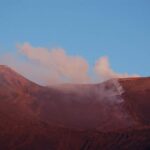
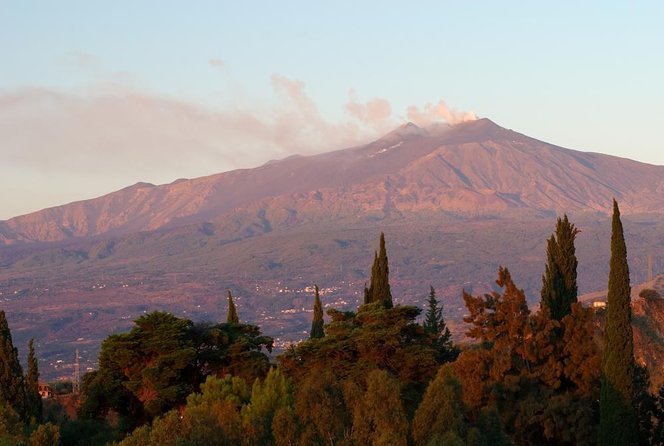
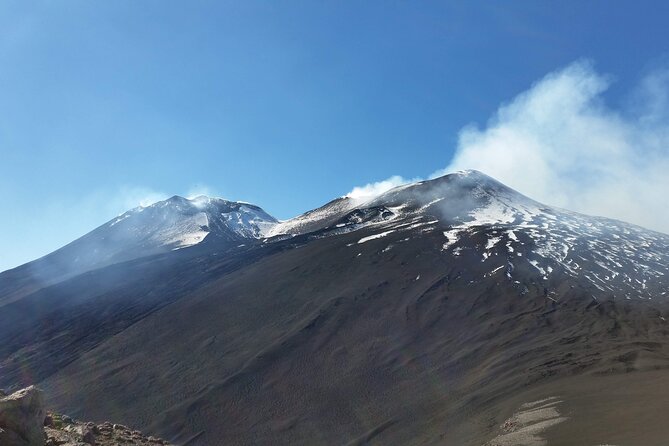
When you reach the top zone, expect a serious change in atmosphere. The scene becomes vegetation-free, almost like an alien site. You’ll notice a sulfur smell and you may see gas emissions blown by the wind. One of the most memorable sensations here is the combination: bare ground underfoot and active air behavior above and around you.
Your guide will likely point out how the clouds sit below you, which can create a “roof of the world” feeling. If the day is clear, the views are the big reason people come: on a good visibility day, you can even see the Aeolian Islands, the Calabrian coast, and a broad slice of the Sicilian hinterland.
A practical note: the summit zone can feel colder and more exposed than you expect. Even in good weather, plan for wind and quick temperature changes near the craters. Your wind jacket (included as gear you can be provided in advance) will help.
North slope descent to Piano delle Concazze: ash, lapilli, and crater-edge walking
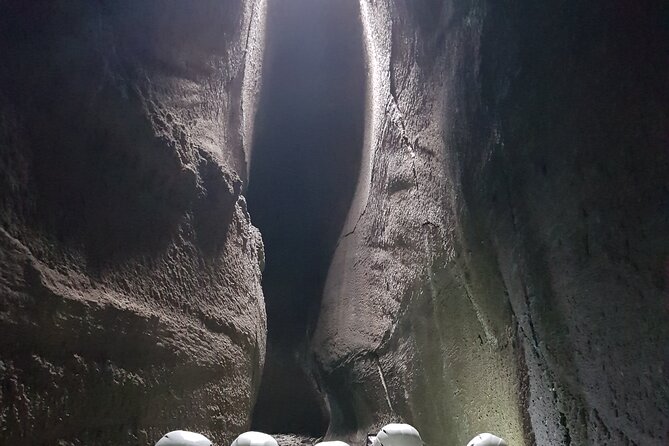
After the central crater edge walking, you’ll start descending the north slope. The descent isn’t just “going down.” It’s a chance to see different volcanic material and how the route changes again.
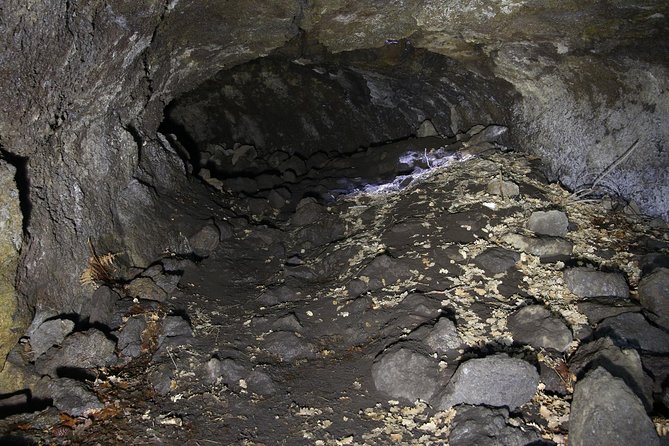
This part includes rocks shaped by fire and stretches where you might sink your boots into volcanic sand. There are also walking segments through sandy canyons that can be covered by ashes and lapilli—the kinds of gritty volcanic particles that make each step feel distinct. It’s not technical climbing, but it’s textured walking, the kind that slows you down and asks you to be mindful.
You’ll eventually reach Piano delle Concazze, a high plateau with a distinctive look and an important landmark: the volcanological observatory area around 2800m. Even if you don’t tour any buildings, the observatory presence helps frame the whole outing as more than a hike. This is a living landscape, studied because it’s active.


Picnic and the lunch reality: plan for food before you start
There’s a pause for a picnic once you find a comfortable spot in the area. Here’s the key thing: packed lunch isn’t included in the tour price.
So you’ll want a simple plan:
- Bring your own lunch if you like control and predictability.
- Or grab food at local shops near the beginning of the tour, since that’s specifically an option given for the day.
I’m glad they make this choice clear up front. If you wait to decide later, altitude + walking can make hunger hit harder than you expect. A picnic break is part of the day’s rhythm, so you’ll enjoy it more if you’re prepared.
Valle del Bove: Ox Valley views in about an hour
In addition to the main Etna trek, you get Valle del Bove, known for the views into the Ox Valley. This is the shorter, scenic side of the experience: about 1 hour here, with admission listed as free.
What I like about adding this stop is that it gives your eyes a different job. After the stark crater terrain, Valle del Bove is about seeing a broader shape and scale—big valleys carved by volcanic forces. It’s a nice contrast that helps the overall day feel complete rather than one long “high point” mission.
Gear, helmets, and the small-group advantage (max 10)
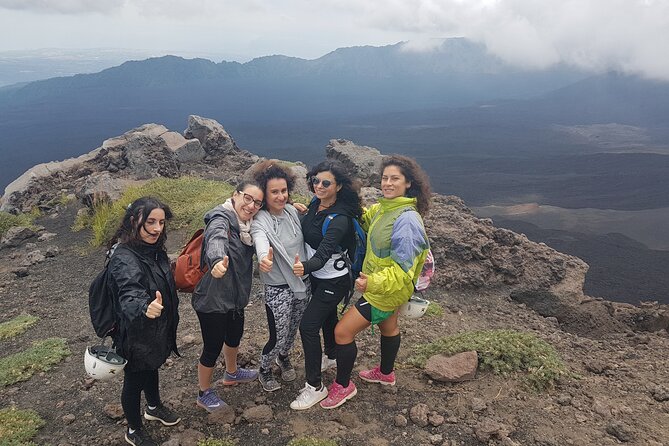
This is a guided trek with a maximum of 10 travelers, which makes a real difference on Etna. Smaller groups tend to mean fewer traffic jams on narrow volcanic paths, and more flexibility when the guide needs to adjust pacing around wind or footing.
You also get useful inclusions:
- Authorised tour guide and insurance
- Helmet
- Breakfast
- Gear support: they can provide hiking poles, backpacks, wind jackets, and hiking boots if you give your size in advance
That last part is a quiet win if you’re traveling light. You don’t have to hunt for sturdy boots in advance. Just message your size early so the guide can bring the right gear to the meeting point.
Because your day involves dusty, volcanic ground and wind exposure, I’d still bring your own layers if you have them. But the option to rent/borrow key items (especially boots and a wind jacket) helps you keep the whole trip practical.
Price and value: what $145.12 really buys you
At $145.12 per person, the pricing sits in a range where you should ask what’s included beyond “a guide and a path.” Here, the inclusions are meaningful:
- Breakfast is included, which reduces one cost and one logistics headache.
- Insurance is included.
- Helmet is included.
- The tour provides key trekking gear items if you share sizing in advance.
- You’re led by an authorized guide, and the group size is kept small.
Also, the route combines 4×4 transport plus a cableway ride up toward trekking elevations. That’s a cost and effort saver on Etna.
The one missing piece is lunch. Once you account for buying or bringing food, the price still looks fair for a full half-to-long day with real altitude walking and a structured route.
If your alternative is hiring a guide for a private route, you’d likely pay more. If your alternative is hiking independently, you might save money but you’d lose the “why this path, why this altitude, why this eruption zone” guidance that makes the terrain click.
Timing: how a 6–7 hour trek can feel like longer
The duration is listed as 6 to 7 hours (approx.), but another time description shows 11 hours. On Etna, that kind of range isn’t unusual because the “time on the ground” depends on pace, wind, breaks, and how long you spend in summit or descent zones.
Here’s how to plan your day so you don’t stress:
- Treat it as a serious morning start and assume you’ll be out for most of the daylight window.
- Bring a buffer for the rest of your Sicily plans, because this is not a quick stop-and-go activity.
The good news: you end back at the same meeting point (the end location is the meeting point). And you return by crossing back through Etna Park and over older lava flows, so the overall loop feels like an arc rather than one-way trekking.
Weather, fitness, and what you should be ready for
This experience is weather-dependent. The day can be canceled due to poor weather, and if that happens you’ll be offered a different date or a full refund. Etna’s crater zones can be windy and visibility can change fast, so it’s smart to keep flexibility in your schedule.
Fitness is another major factor. The info calls for strong physical fitness. That doesn’t mean you need to be an elite athlete, but you should be ready for altitude walking, uneven volcanic ground, and some time at high elevation.
If you’re the type who hates long uneven trails, this may feel like too much. If you’re comfortable with hiking and can handle gritty footing and wind exposure, it’s an excellent way to experience Etna’s real character.
Should you book EtnaWay’s Etna trek? My take
Book it if you want:
- A guided, structured route across lava terrain tied to different eruption eras
- A chance to get into the summit craters zone when conditions are right
- A practical setup with breakfast, helmet, and optional gear support
- A small group for easier pacing (max 10) and better guide time
Think twice if:
- You don’t handle altitude or long, uneven walking well.
- You’re not willing to plan your own lunch.
- Your schedule is too tight for a potentially long, weather-sensitive day.
If you’re planning a Sicily trip and you want one experience that’s clearly “of Etna,” this one makes a strong case. You’ll trade comfort for context—real ground, real air, and a guide who helps you read what the volcano is telling you.
FAQ
What’s the starting point for the Etna trekking tour?
The tour starts at Bar & Restaurant Mareneve, Via Mongibello, 41, 95010 Fornazzo CT, Italy.
Where does the tour end?
This activity ends back at the meeting point.
How long does the tour last?
The duration is listed as approximately 6 to 7 hours. Another time description shows 11 hours.
How much does it cost?
The price is $145.12 per person.
Is the tour guided and in English?
Yes. It includes an authorized tour guide and is offered in English.
What’s included in the tour price?
Included items are an authorized tour guide, insurance, helmet, GST, breakfast, and gear support such as hiking poles, backpacks, wind jackets, and hiking boots (if you provide your size in advance).
Is lunch included?
No. Packed lunch is not included, and you can bring your own lunch or grab something at local shops at the beginning of the tour.
What’s the maximum group size?
The tour has a maximum of 10 travelers.
What do I need regarding fitness?
You should have a strong physical fitness level.
What happens if the weather is poor?
If the experience is canceled due to poor weather, you’ll be offered a different date or a full refund.