REVIEW · PAPEETE
Bora Bora by Land and Sea: 4WD Safari and Snorkel
Book on GetYourGuide →Operated by MOANA ADVENTURE TOURS · Bookable on GetYourGuide
Bora Bora, with wheels and fins. This 6-hour tour is a smart combo: you get 4WD panoramic viewpoints on land, then snorkel in the lagoon for stingrays and black-tip reef sharks. I especially like the variety of stops—lookouts, history, and a craft-and-fruit break—so the day doesn’t feel like one long drive.
One heads-up: the schedule can feel a bit fast in windy conditions, and animal sightings are never guaranteed, even when the marine life is well represented.
In This Review
- Key highlights that make the day worth it
- From Vaitape or your hotel to a real Bora Bora 4WD loop
- Matira Point, Faanui Cannon, Amanahune Bay: the viewpoint run that makes it click
- WWII relics and volcanic caldera rock: history you can see from the road
- Coconut oil, tie-dye sarongs, and fruit tasting: culture with a buyer’s option
- Lunch at Bloody Mary’s (and what happens when it’s closed)
- Lagoon cruise rules: stingrays, black-tip reef sharks, and coral protection
- Snorkeling coral gardens: how to get more from the water time
- Price and value: what you’re really paying for at $252
- Who should book this, and who should skip
- Should you book Bora Bora by Land and Sea: 4WD Safari and Snorkel?
- FAQ
- Where does pickup happen for this tour?
- How long is the tour?
- What’s included in the price?
- Where is lunch served?
- What should I bring for snorkeling and the land portion?
- Are sharks and stingrays fed during the tour?
- Is it suitable for everyone?
Key highlights that make the day worth it
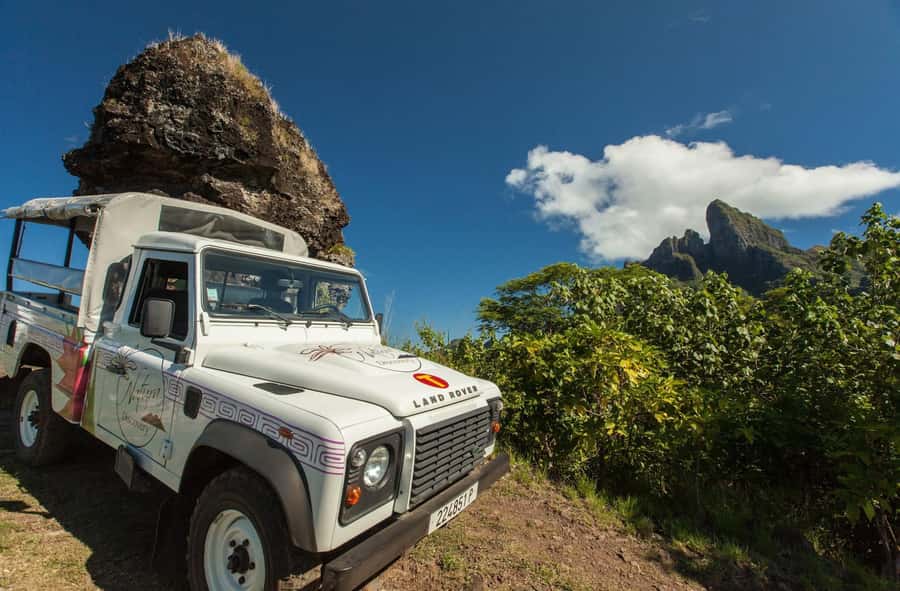
- A rugged 20-mile circuit by open-sided 4WD, built for viewpoint hopping
- Scenic stops at Matira Point, Faanui Cannon, and Amanahune Bay
- US WWII military relics plus volcanic caldera rock formations
- Coconut oil and tie-dye sarongs workshop, followed by tropical fruit tasting
- Respect-for-nature rules on the lagoon (no feeding, coral protected)
- Coral gardens snorkel time with lots of tropical fish color
From Vaitape or your hotel to a real Bora Bora 4WD loop
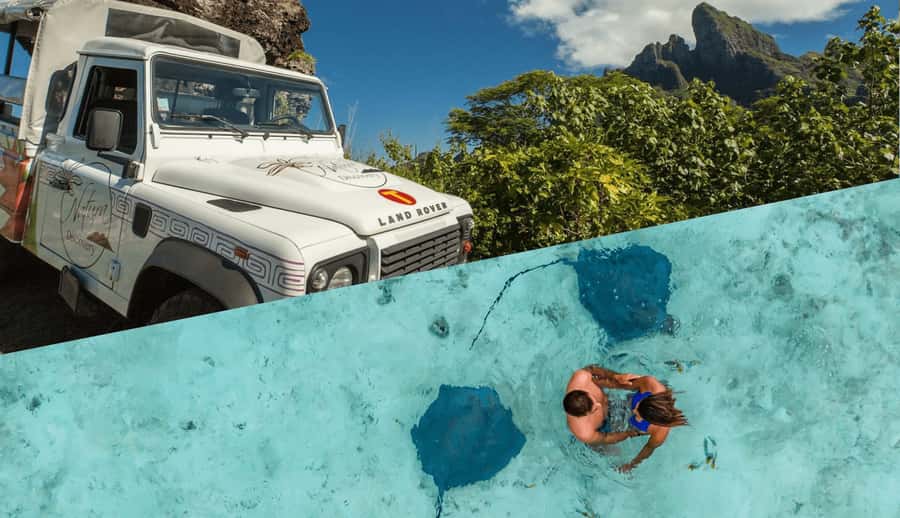
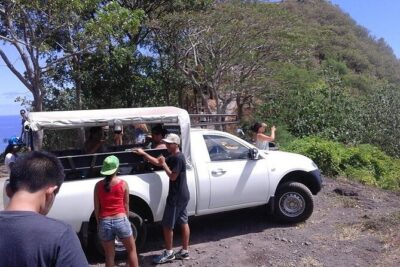
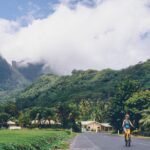
The day starts with an easy pickup from your hotel on the main island—or from Vaitape pier. After that, you’re in an open-sided 4WD vehicle, going along Bora Bora’s mountain roads where the views come fast and the road feels like it’s part of the experience.
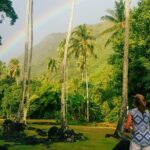
You’ll follow a full loop around the island (about a 20-mile circuit). That matters because Bora Bora’s beauty isn’t one single postcard. It’s a mix: lagoon edges, ridgelines, and volcanic rock shapes that you only notice when you’re driving the interior.
If you’re staying on a Motu (one of the small motus/islets), plan ahead. Pickup and drop-off on Motus are not included, and you’ll need to arrange your own transfer to/from the main island. Also, hotel pickup/drop-off is only provided to the Eco Shark safari area of hotels located on Motu, so check your exact pickup point early to avoid timing stress.
One practical tip: the driver waits no longer than 5 minutes after the scheduled pickup time. You’ll avoid a lot of annoyance if you’re ready early and nearby when your guide calls your group.
You can also read our reviews of more tours and experiences in Papeete.

Matira Point, Faanui Cannon, Amanahune Bay: the viewpoint run that makes it click
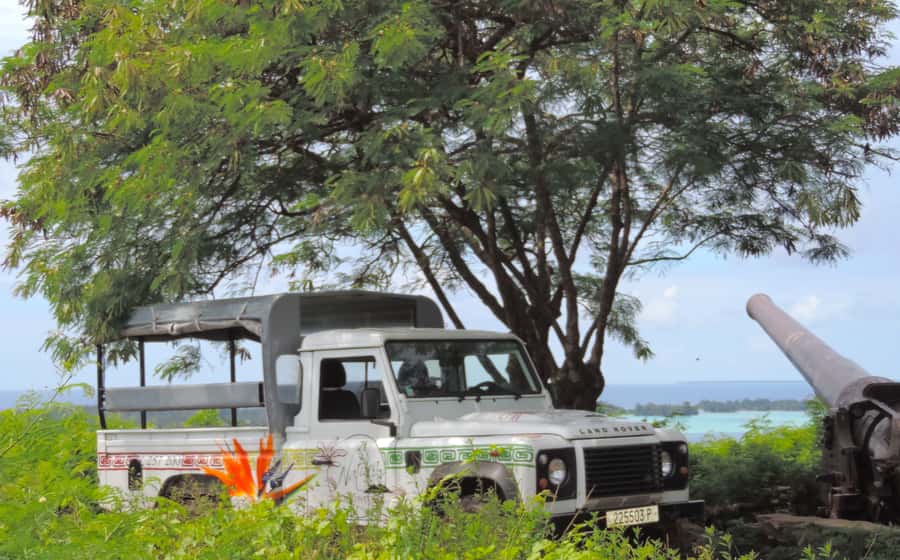
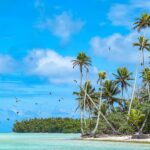
The land portion is built around photo stops where you can actually see what everyone means when they say Bora Bora looks unreal. You’ll stop at Matira Point, which is famous for lagoon views, plus Faanui Cannon and Amanahune Bay along the drive.
What I like about this stop sequence is that it gives you different angles. One viewpoint helps you read the shape of the lagoon. Another makes the island’s volcanic character clearer. And each stop is short enough that the day still feels active, not stuck on one spot forever.
Two details also make these stops feel more than scenic. First, you’ll learn about US military relics left after World War II. It’s not a museum-style lesson; it’s tied to what you’re seeing from the road—old structures and landscape remnants that help explain why certain areas look the way they do.
Second, your guide points out the volcanic rock formations connected to the island’s ancient caldera. When you’re on the ground looking at rock texture and shape, it’s easier to understand Bora Bora as a volcanic island—not just a pretty lagoon set.
Photo note: you’ll want comfortable shoes for the stops (and probably something grippy for uneven ground). You’ll also want to be ready to stand and look for a few minutes at a time, not just snap and move on.
WWII relics and volcanic caldera rock: history you can see from the road
A lot of Bora Bora tours focus on the water. This one balances the island’s story with land details.
As you travel, you’ll get context on WWII-era military relics left by US troops after World War II. Even if you’re not a history buff, it helps you connect the geography dots—why some areas were strategically useful, and how the landscape carries those past footprints.
Then comes the geology angle: volcanic rock formations from the caldera. This is the kind of info that becomes real when you can actually point at what you’re looking at. You’ll start noticing rock patterns and how the terrain rises and drops, which also helps you understand why the drive feels so rugged.
The big value here is perspective. Bora Bora isn’t only “water and resorts.” It’s also land shaped by ancient volcanic forces, and the road loop is the best way to see that without renting a car and guessing where to go.
Coconut oil, tie-dye sarongs, and fruit tasting: culture with a buyer’s option
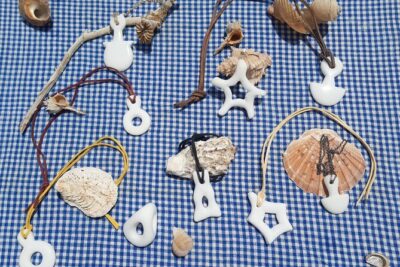
Between the viewpoints and the lagoon time, you’ll hit a crafts-and-flavors break. You can watch local artisans working—specifically coconut oil production and tie-dye sarongs.
This is one of those moments where the tour does something practical: it turns a souvenir idea into a process you can understand. When you see how tie-dye gets made (not just the finished cloth), you’ll shop with better instincts. And if you decide to buy, you’ll know what you paid for beyond the surface look.
One review highlight was the guide-led experience around fruit trees—meeting the kinds of trees you’d normally just walk past. You also sample tropical fruits on a plantation. If you like small tastings rather than long “marketing” stops, you’ll likely enjoy this part because it’s direct: taste, look, learn.
Guide style can make a difference here. I’ve seen mention of a guide named Teva who was friendly and guided people up to a point for better views, then over to the opposite side of the island. That kind of guiding matters because it shapes whether you feel rushed or cared for while you’re walking between stops.
Lunch at Bloody Mary’s (and what happens when it’s closed)
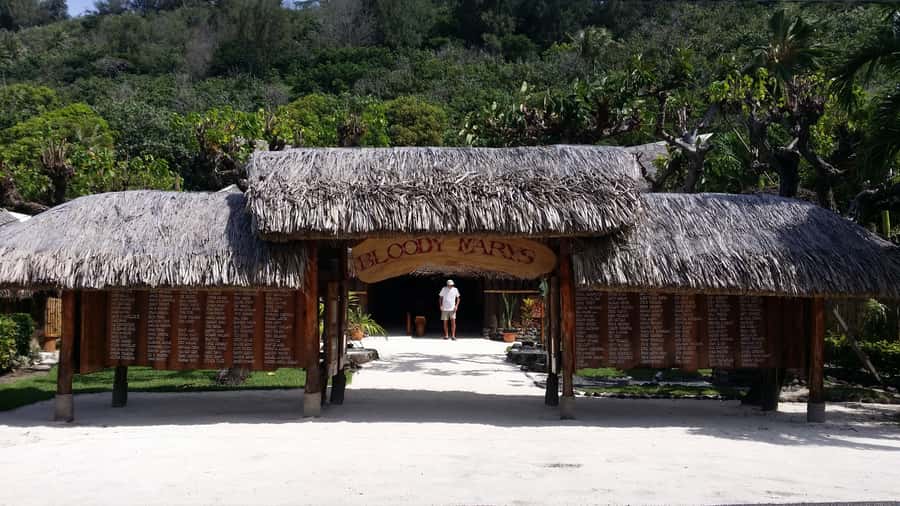
Lunch is a key reset in the middle of the day. The included meal is at Bloody Mary’s on Monday through Saturday, and it’s not just good food—it’s the atmosphere. The interior is known for quirky details like tiki torches and palm-trunk seating.
That said, the pacing can be a little quick depending on the day. In at least one experience, service felt a touch rushed even though there was enough time built into the meal. So if you like lingering, take a breath and don’t let the pace make you feel behind.
There’s also an important backup plan. If Bloody Mary’s is closed during its annual closure period (January 06 to 21, 2023), lunch switches to Fare Manuia Restaurant (the Lucky House Fare Manuia option). The tour operator can also reverse the order of activities, so don’t be surprised if your day feels slightly different depending on operations and timing.
Either way, lunch is included, and the setting gives you a real sense of Bora Bora’s casual island dining vibe—more character than standard buffet-style meals.

Lagoon cruise rules: stingrays, black-tip reef sharks, and coral protection
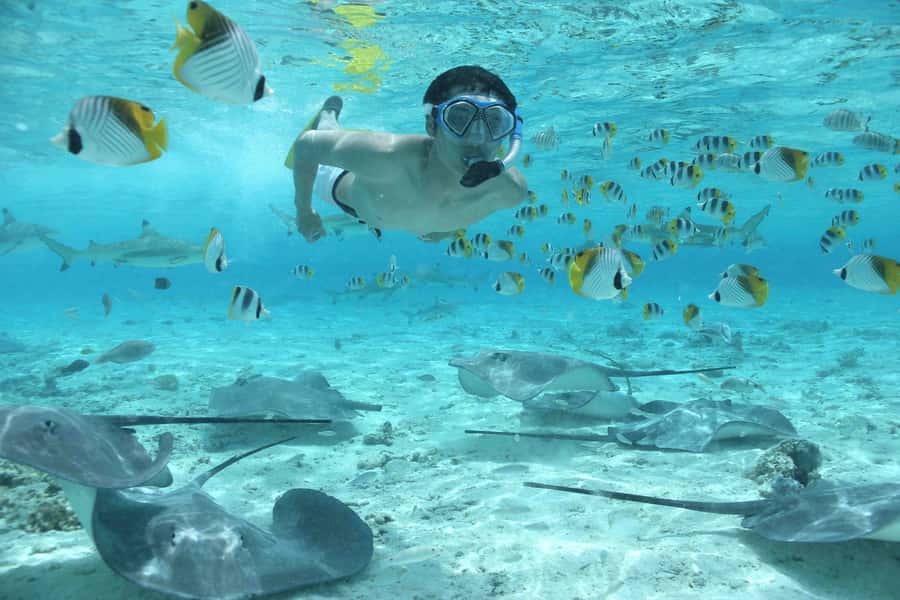
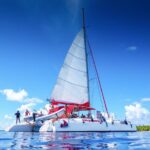
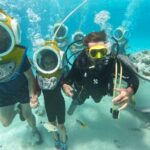
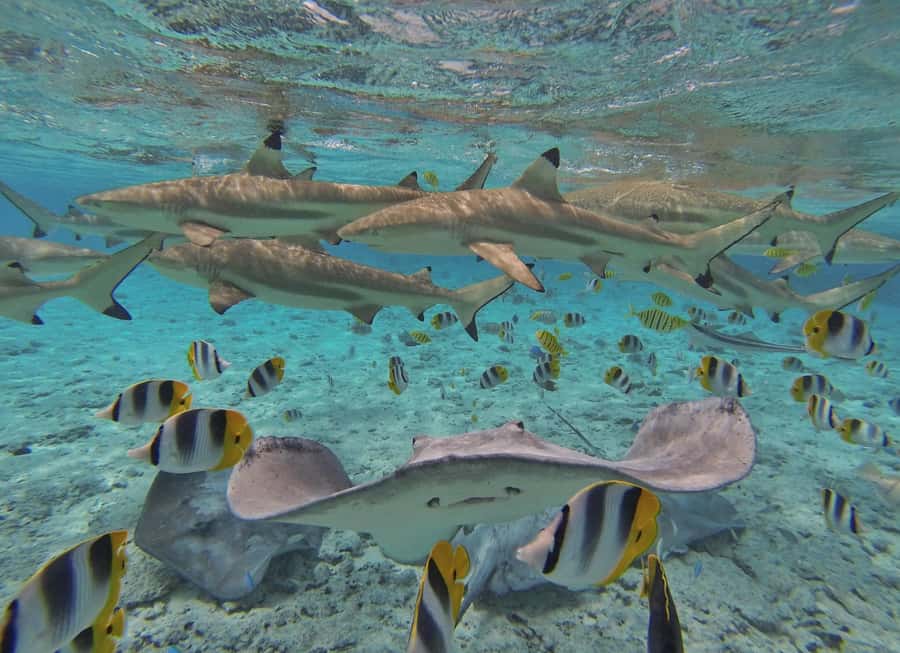
After lunch, the day pivots to water time: a boat cruise focused on finding stingrays and black-tip reef sharks, followed by snorkel time around coral gardens.
This part is built around respect for marine life. You’re not meant to feed sharks, and coral protection rules are part of how the cruise is run. That changes the feel of the experience. Instead of frantic behavior that stresses animals, the goal is to observe and snorkel while keeping the ecosystem intact.
Now for the honest part: even with a well-run marine-life focused cruise, spotting animals can’t be guaranteed. That’s not a failure of the tour. Marine animals roam, and conditions change. What you can count on is the overall approach and the snorkeling area time.
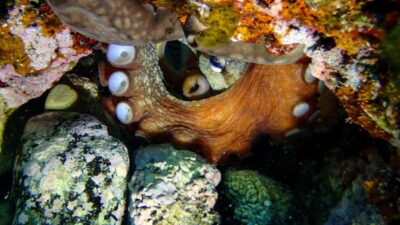
Still, when conditions line up, it’s the highlight of the day. One standout account noted sightings of a manta along with rays, sharks, and an eye-catching coral garden. Even if you don’t see a manta, stingrays and black-tip reef sharks are exactly what the tour sets out to look for—so if you’re booking Bora Bora for marine life, this is the reason to do it.
And if you’re sensitive to crowds, you’ll probably find the experience comfortable as long as you don’t expect a private boat. It’s a shared day plan, but the snorkeling focus keeps it from feeling like mass tourism.
Snorkeling coral gardens: how to get more from the water time
Snorkeling is where the day turns from “pretty” to “I remember this.” You’ll go around the coral gardens and see tropical fish in the bright color range that comes with healthy reef zones.
Two things help you enjoy this more:
- Water shoes. The tour specifically recommends them, and it’s easy to see why once you’re dealing with rocky or uneven entry areas.
- Biodegradable sunscreen. You’ll be in and around water, so this is a practical must.
Also, keep your expectations grounded. Snorkeling here is about coral and fish, plus the chance to spot stingrays and sharks during the cruise portion. It’s not a guarantee of a specific animal at a specific moment.
If it’s windy, the water surface can change quickly, and that’s one reason the day can feel like it moves “quickly.” Wind can make boat steps and transfers take more effort, and it can affect visibility. When that happens, staying patient helps. You’ll still get the coral garden snorkeling time, which is the most reliable visual payoff.
Price and value: what you’re really paying for at $252
At $252 per person, this tour isn’t a bargain in the way a generic island bus tour might be. But it also isn’t just paying for a view.
You’re paying for a full-day structure that includes:
- mainland hotel pickup and drop-off
- lunch
- a shark and sting ray boat cruise
- a live guide in English or French
That matters because you’re bundling the hardest parts to organize yourself: a proper island road loop, a specific marine-life focused boat portion, and time-efficient stops that fit into a 6-hour day.
Where you’ll want to do your homework is what’s not included. Pickup/drop-off on Motus isn’t included, and luggage or large bags aren’t allowed. That means if you’re traveling with extras, you might need to rethink how you pack for the day.
If you’re staying on the main island and want a guided blend of land + lagoon without renting a car, this price can feel fair. You’re buying convenience and an organized flow, plus the marine-life focus. If you only care about one side—just viewpoints or just snorkeling—then you might prefer a more single-purpose tour. But if you want the full Bora Bora “read the island from land, then see it from the lagoon” arc, this one fits.
Who should book this, and who should skip
This is a good match if you want:
- a land day that covers both views and island context (lookouts, WWII relics, volcanic geology)
- a guided craft stop that isn’t only for shopping
- a lagoon cruise and snorkeling that focuses on marine-life respect
It’s also a practical match if you don’t want to manage multiple vendors. Pickup, lunch, and the boat are all built into the day.
Skip it if you:
- are pregnant or have mobility impairments, since it’s not suitable for those needs
- hate open-sided vehicles and don’t handle weather well, because the drive is exposed
- plan to bring lots of luggage (large bags aren’t allowed)
Also, go in knowing sightings aren’t guaranteed. If your dream is to see a specific animal every time, no tour can promise that. But the marine focus plus the coral garden snorkeling time give you multiple chances at a memorable encounter.
Should you book Bora Bora by Land and Sea: 4WD Safari and Snorkel?
I’d book it if you want a day that actually changes gears: volcanic island viewpoints in the morning, then lagoon wildlife and reef snorkeling in the afternoon. The strongest reason is the mix—land context plus marine-life respect—with lunch that breaks up the schedule in a fun setting.
I’d hesitate if you’re easily bothered by a tight-feeling timeline in wind, or if your top priority is a guarantee of manta/shark sightings. This is about the experience and the ecosystem rules, not a promise of a specific animal on cue.
If you’re staying on the main island, you’ll likely find the value especially clean. If you’re on a Motu, make sure your transfer plan is solid before you fall in love with the idea of an all-in-one pickup.
FAQ
Where does pickup happen for this tour?
You can get picked up from your hotel on the main island, or from Vaitape pier. If you’re staying on a Motu, pickup and drop-off are not included, and you’ll need to arrange your own transfer to and from the main island.
How long is the tour?
The duration is 6 hours.
What’s included in the price?
The tour includes mainland hotel pickup and drop-off, lunch, and a shark and sting ray boat cruise.
Where is lunch served?
Lunch is at Bloody Mary’s from Monday to Saturday. If Bloody Mary’s is closed during its annual closure period, the included lunch is served at Fare Manuia Restaurant.
What should I bring for snorkeling and the land portion?
Bring comfortable shoes, biodegradable sunscreen, and water shoes.
Are sharks and stingrays fed during the tour?
No feeding of sharks is part of the marine life respect rules.
Is it suitable for everyone?
It’s not suitable for pregnant women or people with mobility impairments.