REVIEW · SARDINIA
Tour to the archaeological site of Nora – from Cagliari
Book on Viator →Operated by Arasolè - Day tours and experiences in Sardinia · Bookable on Viator
Nora by the sea is a time machine. This guided day trip from Cagliari helps you skip the usual public-transport hassle and focus on the Punica and Roman site at Nora, where you’ll see mosaics, a well-preserved theatre, and ruin views over the water. I like the setup with prebooked admission (so you spend your time inside, not waiting outside), and I also like the small group feel. One consideration: the main time at the archaeological area is about 1 hour 15 minutes, so you’ll want to be ready for a focused, efficient visit.
What really makes the experience click is the human part: your guide explains what you’re looking at and connects the Phoenicians, Carthaginians, and Romans to how Sardinia worked and lived. You get that in English, and the tour is paced so even big site impressions like the thermal baths and theatre don’t turn into a blur.
In This Review
- Key things to know before you go
- From Cagliari to Nora, without the mental load
- Area Archeologica di Nora: Roman mosaics and a theatre you can actually see
- Thermal baths: when “old stones” start telling a story
- Small group size: four-person feel (with questions that don’t get cut off)
- Timing across the day: what to expect in a 4-hour format
- Language and comfort: English guidance plus practical site handling
- Price and value: what you’re paying for at $90.51
- Weather and schedule reality (and how to plan around it)
- Should you book the Nora day trip from Cagliari?
- FAQ
- How long is the Nora archaeological site tour from Cagliari?
- Is admission to Area Archeologica di Nora included?
- What language is the tour offered in?
- How many people are in the group?
- Where do we meet in Cagliari?
- Is the ticket mobile-friendly?
- Are service animals allowed?
- Is the tour suitable for most people?
- What happens if the weather is bad?
- Can I cancel for a full refund?
Key things to know before you go
- Prebooked admission included at Area Archeologica di Nora, which keeps your visit smoother
- Small-group format with a low cap (described as intimate, with up to four per group, and capped low overall)
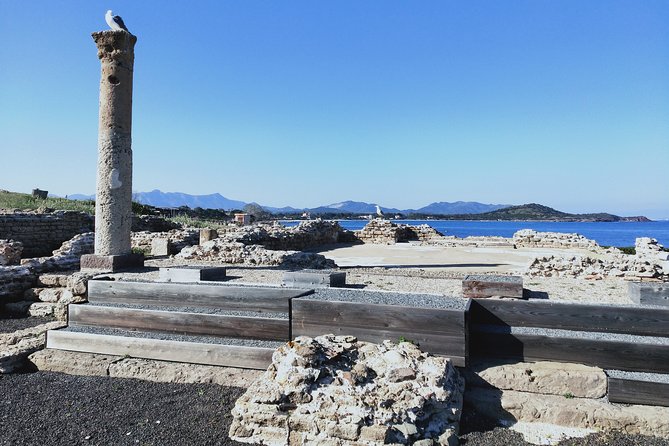
- Roman highlights you can spot fast: mosaics, a well-preserved theatre, and dramatic sea-side views
- Guide-led archaeology stories that connect multiple cultures across Sardinia
- Weather-dependent planning, so keep one flexible day in your schedule
From Cagliari to Nora, without the mental load
Cagliari to Nora can feel like one of those excursions where logistics steal your energy. This tour is built to do the opposite. You meet at Largo Carlo Felice, 76, 09123 Cagliari, and the day is run as a guided transfer plus a structured site visit, with the tour ending back at the same meeting point.
That matters because you’re not trying to figure out routes, timing, or ticket lines on your own. You’re there to look closely and ask questions while the history is still fresh. And since it’s offered in English, you don’t have to translate your way through the site.
The other practical point: the tour runs about 4 hours total. That’s enough time to feel like a real day trip, but not so long that it turns into a full-day slog.
You can also read our reviews of more tours and experiences in Sardinia.



Area Archeologica di Nora: Roman mosaics and a theatre you can actually see
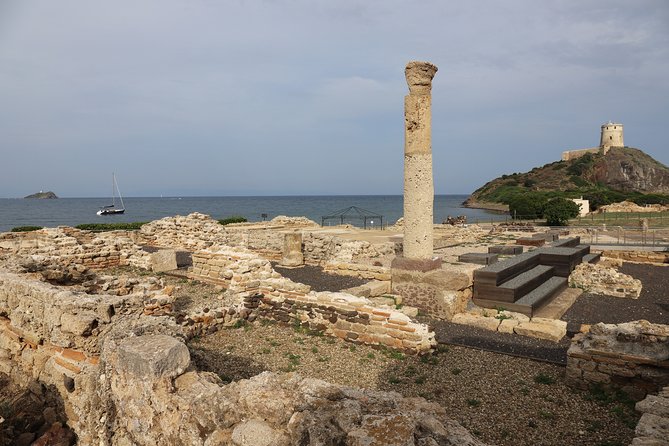
The heart of the tour is the Area Archeologica di Nora, and this is where you’ll get the best “aha” moments. You’re visiting a settlement with layers of Punic and Roman presence, so it’s not just a single-era stop. One hour and a bit on site may sound short, but the tour is designed for fast orientation and clear viewing.
Here’s what you can expect to focus on:
- Roman mosaics: you’ll be able to recognize why people get excited about them, not just walk past them
- A very well-preserved theatre: it’s one of those structures where standing in the right spot changes how you understand it
- Sea-side ruin views: the ruins aren’t floating in the middle of nowhere; they sit with the coastline, and your guide points out what that meant
The time breakdown is honest: you get about 1 hour 15 minutes at the archaeological area. If you love slow looking, you may wish you had more, but that’s usually how small-group, guided formats work. The upside is that you won’t waste time guessing what’s important.
Thermal baths: when “old stones” start telling a story
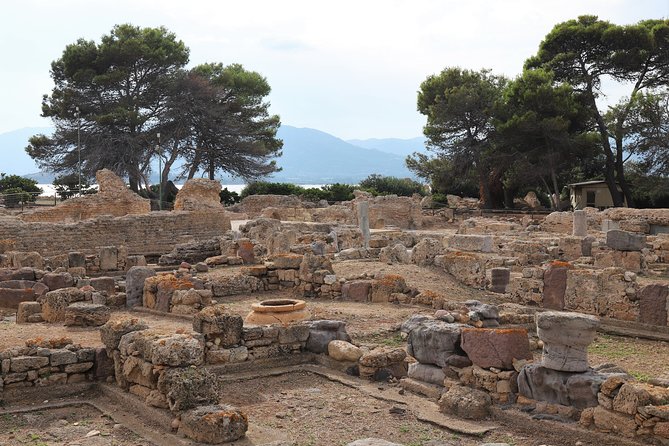
Nora has plenty of impressive shapes, but the thermal baths tend to grab people for a reason. Your guide’s job is to help you see the baths as more than ruins. They’re tied to everyday life and to how cultures used public spaces in the Roman period.
You’ll also hear the broader connection across the island: one guide’s perspective focused on the presence of the Phoenicians, Carthaginians, and Romans in Sardinia, and how those waves shaped local life and the economy. Even when you don’t know archaeology, this kind of framing makes the stones feel like a system.
And since you’re on a small group tour, you can actually ask follow-up questions without feeling like you’re shouting into the wind. Guides in this program include people like Frederica Picciau, Valentina, Renato, and Francesca, and they’re used to translating site details into plain language.
Small group size: four-person feel (with questions that don’t get cut off)
I love a small group for archaeology. It keeps the tour from turning into a “follow the leader” sprint. This one is capped low, and the intent is clearly intimate—described as just four people per group, with an overall cap of eight travelers.
In practice, that means:
- you can hear the guide better
- you can stop when something catches your eye
- you can ask why a feature is laid out the way it is
The guides’ approach comes through in how they manage pacing and keep people engaged. One guide, Frederica Picciau, was highlighted for strong archaeology background and a talent for keeping the tour on schedule while still being flexible when questions pop up. Another guide, Renato, was noted for an interactive style that helps you connect what you’re seeing to what came before.
Timing across the day: what to expect in a 4-hour format
A 4-hour tour can either feel rushed or well-run. Here, the structure helps. The day is built around the single main stop at the archaeological area, where the guided time is about 1 hour 15 minutes.
So the rest of your time is doing the real-world parts:
- meeting in Cagliari
- transferring to Nora
- getting set up to visit
- returning back to the meeting point
Because the site time is defined, you can plan your expectations. You’re not going to get a “crawl every corner” experience. You are going to get a guided path that hits the highlights—mosaics, theatre, thermal baths, and sea views—without the guesswork.
If your goal is maximum time walking, you might prefer a self-paced plan. If your goal is understanding quickly and comfortably, this format is a strong fit.





Language and comfort: English guidance plus practical site handling
This tour is offered in English, and that matters more than it sounds. On an archaeological site, the big value is not just seeing structures—it’s understanding how they connect. With English guidance, you can track the story as you move through the space.
Comfort-wise, the tour notes that most travelers can participate, and service animals are allowed. The site environment does mean you’ll want to use good footwear and be ready to walk at a steady pace while the guide keeps the group moving.
Also, the meeting point is near public transportation, so if you’re staying somewhere in Cagliari with easy transit access, you should find it easier to get there without extra planning.
Price and value: what you’re paying for at $90.51
At $90.51 per person for about 4 hours, the price isn’t just for “getting to Nora.” It’s for the combination of three things that add up quickly:
- prebooked admission included for the archaeological area
- guided interpretation that helps you see why features matter (not just that they exist)
- small-group pacing so you can actually interact
If you were to DIY this day trip, you’d still pay for transport time and admission. The guided piece is what turns a visit into something you can remember. And with Nora, that’s not a small detail. A Roman theatre means more when someone explains context. Mosaics mean more when you know what you’re looking for.
So the best way to think about the cost is as time-and-meaning insurance: you’re paying to avoid wasted minutes and confusing stops.
Weather and schedule reality (and how to plan around it)
This experience is weather dependent. If weather is poor, you’ll be offered a different date or a full refund. That’s important if your itinerary is tight and you only have one shot at Nora.
There’s also a minimum number of travelers required. If that minimum isn’t met, you’ll be offered another option or refunded. In other words, don’t book your flight timings with zero flexibility.
One practical takeaway: if Nora is a must-do for you, consider scheduling it earlier in your trip rather than on your final day. When a site can’t be fully available due to a special event, you’ll want time to pivot without stress. (That situation has happened with this style of tour, so planning earlier is simply smarter.)
Should you book the Nora day trip from Cagliari?
Book it if you want:
- a guided Roman-and-Punic site visit without logistics headaches
- English interpretation that makes mosaics, baths, and the theatre easier to understand
- an intimate group size where you can ask questions
- a day trip that’s efficient but not tiny
Skip it or consider another option if:
- you want to spend lots of hours wandering at your own pace without structure
- you have very limited flexibility and cannot handle a weather-related change
- your top priority is maximizing time inside the ruins rather than learning what you’re seeing
If Nora is on your Sardinia list, this is one of those tours where the guide does real work. You’ll leave with a clearer sense of how Phoenician, Carthaginian, and Roman influences shaped the site, not just photos of stone and sea.
FAQ
How long is the Nora archaeological site tour from Cagliari?
It lasts about 4 hours total.
Is admission to Area Archeologica di Nora included?
Yes. Your admission ticket is included for the archaeological area.
What language is the tour offered in?
The tour is offered in English.
How many people are in the group?
The tour is capped low, with a description of four people per group, and a stated maximum of 8 travelers.
Where do we meet in Cagliari?
You start at Largo Carlo Felice, 76, 09123 Cagliari CA, Italy.
Is the ticket mobile-friendly?
Yes. You receive a mobile ticket.
Are service animals allowed?
Yes. Service animals are allowed.
Is the tour suitable for most people?
The experience notes that most travelers can participate.
What happens if the weather is bad?
This tour requires good weather. If it’s canceled due to poor weather, you’ll be offered a different date or a full refund.
Can I cancel for a full refund?
Yes. You can cancel up to 24 hours in advance for a full refund.