REVIEW · SARDINIA
Underground Cagliari tour
Book on Viator →Operated by Sardinia Magic Experience · Bookable on Viator
Cagliari’s past runs underground. This 2-hour guided walk gets you out of the sun fast and into candlelit tunnels and crypts you’d never stumble upon. I especially like the way the stops connect big time periods—ancient faith, Roman layers, and WWII shelters—without turning into a lecture.
The second thing I like is the storytelling quality. Guides such as Valentina and Federico bring each cave and crypt to life, explaining why it mattered and what people did there as Cagliari changed over centuries. You’ll also get photo-worthy moments that feel properly eerie, not staged.
One possible drawback: it’s not fully underground. You’ll walk some parts above ground, and there’s also reported to be no toilet access, so plan ahead (and bring water on hot days).
In This Review
- Key Things I’d Watch For
- Underground Cagliari: What You’re Really Buying
- Where The Tour Starts (And Why That Matters)
- Price and Value: A Fair Deal for Three Underground Stops
- Stop 1: Istituto Salesiano Don Bosco Tunnels (WWII, Candles, Photos)
- Stop 2: Cripta di S. Restituta (Martyr Restituta and a Space with Layers)
- Stop 3: Museo del Tesoro e Area Archeologica di Sant’Eulalia (Roman Footprints Under a Church)
- The Outdoor Walking You Should Plan For
- Group Size, Listening, and the Candlelit Challenge
- Comfort Tips: Heat, Water, Claustrophobia, and Toilets
- Who This Tour Is Best For (And Who Should Skip It)
- Should You Book Underground Cagliari?
- FAQ
- Is the tour fully underground?
- How long is the Underground Cagliari tour?
- Is it offered in English?
- What’s included in the ticket price?
- Are there toilets available during the tour?
- How hard is the walking?
Key Things I’d Watch For
- Three different underground sites in one outing, so you’re not just repeating the same hallway shot
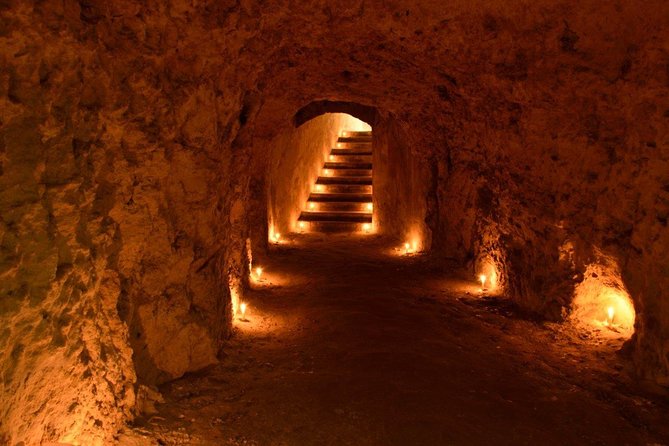
- WWII bomb shelter tunnels lit by candles, which makes the underground feel special instead of dark and dusty
- Santa Restituta’s crypt and prison gives you a real sense of how one space can be used in wildly different eras
- Sant’Eulalia’s archaeological area includes older ruins such as a paved Roman road
- Group size up to 40 means it can get crowded at the first underground stop, especially for hearing your guide
Underground Cagliari: What You’re Really Buying
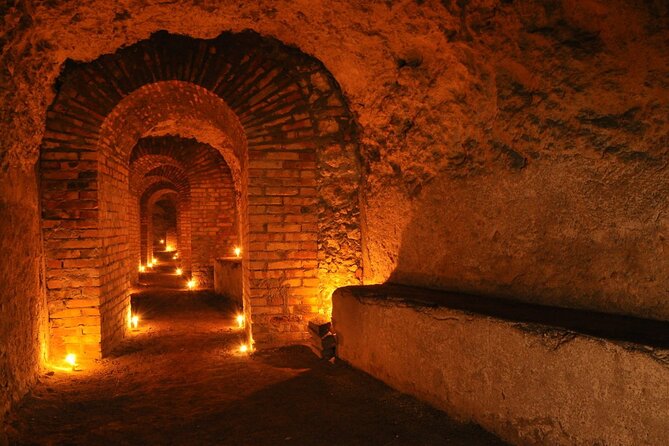
This tour is built around a simple idea: Cagliari’s story isn’t only on street level. You’ll head into underground spaces tied to faith, archaeology, and WWII, with a guide connecting the dots so you understand what you’re looking at.
At $36.30 per person for about two hours, it’s a strong value if you want something different from the usual “church + viewpoint” routine. You’re paying for a guide plus entry fees to three underground sites, not just a walking tour where most of the value is vague.
Also, it’s a practical break from Sardinian heat. Even if summer temperatures are brutal above ground, the underground sections cool things down quickly, and the candlelit atmosphere makes it feel like you stepped into a separate world.
You can also read our reviews of more tours and experiences in Sardinia.



Where The Tour Starts (And Why That Matters)
You’ll meet at Via Sant’Ignazio da Laconi, 64, near the Cagliari Botanical Gardens. Starting here is handy because it places you close to one of the city’s calmer edges rather than deep in the busiest center streets.
Your tour ends at MUTSEU – Museo del Tesoro e Area Archeologica di Sant’Eulalia, at V. del Collegio, 2. That matters because you finish near the historic church area tied to the final underground site, so it’s easy to keep exploring afterward without doubling back.
The tour is offered in English and Italian (dual language). That’s great if your group has mixed comfort levels, and it usually means you won’t miss the key explanations.
Price and Value: A Fair Deal for Three Underground Stops
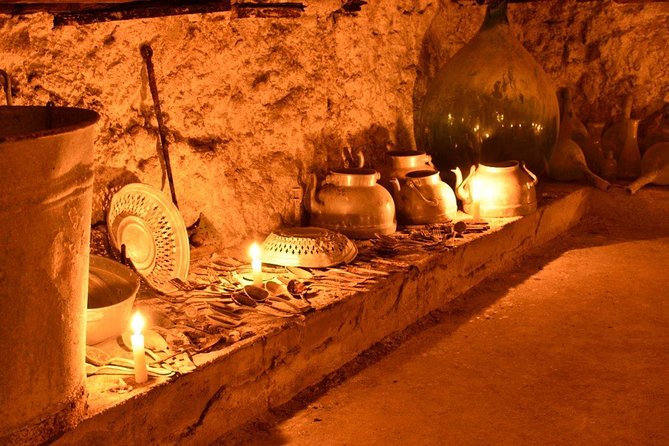
Let’s talk money plainly. At about $36.30 for a guided experience that includes entry to three underground locations, you’re getting solid value for Cagliari. Most city tours charge extra for sites, so having the access baked in is a win.
That said, one review noted an extra 5 euros per person may be required on the day for entry. The tour details also say entry fees for the three sites are included, so I’d treat that as a reminder to confirm what your specific ticket covers before you arrive.
If you’re deciding between this and a more general walking tour, choose this if you want:
- air-conditioned-style comfort from the midday heat
- history you can see underground (not just read on a plaque)
- photos in candlelit tunnels and crypt spaces
Stop 1: Istituto Salesiano Don Bosco Tunnels (WWII, Candles, Photos)
Your first underground visit is at Istituto Salesiano Don Bosco, also called the Salesian School tunnels. Expect about 40 minutes here, and admission is included.
This is where the tour identity locks in. These tunnels were used as bomb shelters during World War II, and today they’re lit by candles rather than bright overhead lighting. That lighting choice changes the feel completely: it’s atmospheric, narrow, and memorable.
It’s also one of your best photo moments. You’ll have those “properly underground” shots—candle glow, stone surfaces, and a sense of history you can’t fake. If your phone camera struggles in low light, you might want to tap to focus and keep your hand steady.
The only watch-out is the human factor. With a group size that can reach 40, the first site can feel tight. If you’re toward the back, hearing your guide may take a little effort, especially during candlelit sections where you’ll want to move carefully.
Stop 2: Cripta di S. Restituta (Martyr Restituta and a Space with Layers)
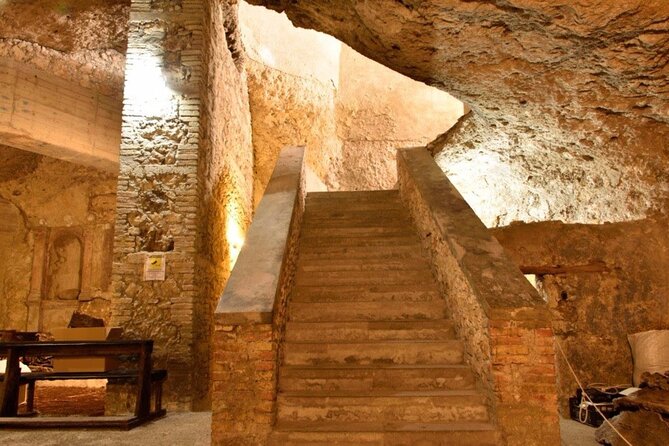
Next you move to Cripta di S. Restituta, with about 30 minutes on site. This stop covers the crypt and prison connected to Santa Restituta, an important figure in Cagliari’s underground tradition.
What makes this part click is the idea of reuse. The same kind of underground space can serve different needs over time—religious significance in one period, imprisonment in another, and meaning that evolves as the city changes.
Your guide is the difference-maker here. You’ll get explanations for what you’re seeing and why it matters, not just a list of names. This is where those guides like Valentina often stand out—turning names into people and dates into a story you can follow.
Also, because it’s underground, it usually feels cooler. That’s not just comfort—it keeps the experience from turning into “hot and cramped,” so you can focus on the details.





Stop 3: Museo del Tesoro e Area Archeologica di Sant’Eulalia (Roman Footprints Under a Church)
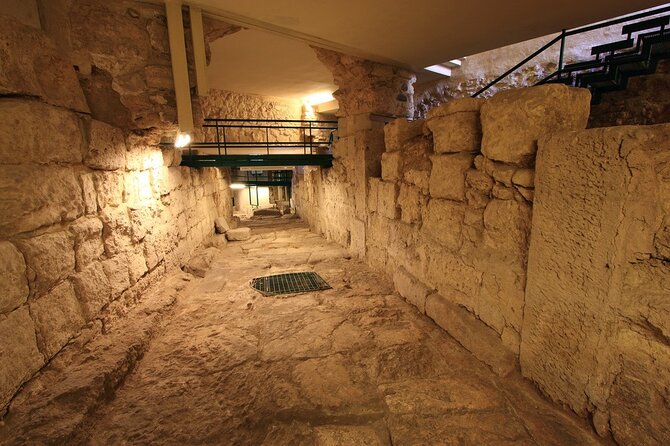
Your final stop is Museo del Tesoro e Area Archeologica di Sant’Eulalia. Plan for about 30 minutes there.
This underground archaeological area includes ruins from multiple periods. One detail that really helps your imagination is the mention of a paved Roman road. Even if you’re not a hardcore Roman-history person, the idea of walking on layers built for different centuries makes the space feel alive.
You’ll also be moving toward a museum setting near a historic church. That gives you closure: instead of ending in a dark tunnel with nowhere to process what you’ve seen, you can shift into a more museum-like environment right after the last underground segment.
If you like your history with physical evidence—stones, routes, and built remains—this stop is the one that often lands hardest.
The Outdoor Walking You Should Plan For
Even though the big hook is underground, it’s not 100% subterranean. Expect some walking outside between the underground sites.
That’s exactly why bringing the right gear matters. One important practical note from experience: there may be nowhere to refill bottles during the walk, and in hot conditions people can feel rough by the end if they didn’t bring enough water.
So yes, bring water—more than you think you need. And wear comfortable shoes with grip, because you’ll be moving through different surfaces and you don’t want foot fatigue to mess with your enjoyment.
Also note: the tour is rated for moderate physical fitness. It’s not described as an extreme hike, but it does involve walking and time spent in underground spaces.
Group Size, Listening, and the Candlelit Challenge
A maximum group size of 40 is a realistic planning detail. In big groups, underground spaces can feel crowded quickly, especially at the first tunnel stop.
That can affect two things:
- how close you can stay to the guide
- how easy it is to hear explanations
You can’t control how many people show up, but you can control your position. If you want the full story, aim to stay closer to the front or in the middle at the first site so you’re not constantly craning your neck.
Guides also vary in style, and several names came up as standouts: people mentioned friendly, engaging guides with lots of humor, and one guide described tying their own childhood memories to the school tunnels, which makes the experience feel personal rather than robotic.
Comfort Tips: Heat, Water, Claustrophobia, and Toilets
This is an underground tour, so comfort is part of the decision.
You should avoid it if you have claustrophobia, because underground tunnels and crypts can feel tight. The tour is also not recommended for mobility difficulties based on the underground nature of the stops.
Another practical factor: one review flagged that there’s no access to toilets. That’s a big deal for a two-hour outing in warm weather, so treat this like a “prepare before you go” situation.
Finally, plan for footwear. Multiple reviews suggested comfortable walking shoes. I agree—your feet do the hard work so your brain can focus on the history.
Who This Tour Is Best For (And Who Should Skip It)
This works best if you:
- love history but want it anchored to physical places
- enjoy WWII stories, especially how modern conflict left traces in older cities
- want cool, atmospheric underground spaces with strong photo opportunities
- are traveling with kids or teens who handle short walks and want something hands-on
It may not be the best fit if you:
- don’t like enclosed spaces or already feel uneasy underground
- need step-free routes or heavy accessibility support
- want lots of breaks, restrooms, and frequent opportunities to sit
If you’re the type who enjoys getting out of the main tourist flow, this feels like the right kind of offbeat. You’re seeing Cagliari in a way most people never do.
Should You Book Underground Cagliari?
I’d book this tour if your priority is atmosphere plus real sites—WWII shelter tunnels, Santa Restituta’s crypt/prison connection, and Sant’Eulalia’s underground archaeological area. The dual language format and the fact that entry to all three sites is built into the experience make it a tidy, high-value plan for a limited time in Cagliari.
Skip it if you’re sensitive to tight underground spaces, need toilet access during the tour, or prefer fully above-ground sightseeing.
If you’re booking soon, keep in mind it’s commonly reserved about 11 days in advance, so planning ahead helps you lock in a time that fits your day.
FAQ
Is the tour fully underground?
No. The tour includes three underground sites, but you’ll also walk outside between stops.
How long is the Underground Cagliari tour?
It runs about 2 hours total, with around 40 minutes at the first stop and 30 minutes at each of the other two stops.
Is it offered in English?
Yes. The tour is offered in English, and it also runs in Italian as a dual-language experience.
What’s included in the ticket price?
You get a local guide plus entry fees for the three underground sites. Nothing else is listed as required in the ticket details.
Are there toilets available during the tour?
No toilet access was mentioned in one review, so plan to use facilities before you start.
How hard is the walking?
It’s described as suitable for moderate physical fitness, but it includes walking both above and below ground. It’s also not recommended for people with mobility difficulties.