REVIEW · TERCEIRA
Angra do Heroísmo: Panoramic city Tour
Book on Viator →Operated by AzorBus Terceira Island Tours · Bookable on Viator
Two hours, and Angra feels easy. This panoramic city tour strings together sea air, lookout points, and historic center highlights with audio-guided narration in English and hotel pickup. It’s a smart way to get your bearings fast on Terceira without playing map games all afternoon.
I especially like the headsets—clear audio means you can follow along without craning your neck at a loud group. And I like the pickup and drop-off in central Angra do Heroísmo, because it turns the day into a simple round-trip instead of a logistics puzzle.
One thing to consider: the vehicle includes 3 entrance steps, so it may not work well if stairs are a challenge for you.
In This Review
- Key highlights worth planning around
- Why this panoramic loop is such a good first taste of Angra
- Silveira Bathing Area: where the ocean story starts
- Miradouro do Pico das Cruzinhas: the big south-coast view
- Sé de Angra do Heroísmo: cathedral energy in the historic center
- Portas da Cidade: the old access point that explained trade
- The Monument to the Bull: culture, resilience, and the Battle of Salga
- Alto da Memória: fortifications and an obelisk with political weight
- Getting around smoothly: open-air vibe, headsets, WiFi, and group size
- Timing and what to bring when Terceira decides the weather
- Price and value: why the inclusions make the day feel worth it
- Who should book this panoramic tour?
- Should you book this Angra do Heroísmo panoramic tour?
- FAQ
- What’s the duration of the Angra do Heroísmo panoramic city tour?
- Is the tour in English?
- Does the tour include hotel pickup and drop-off?
- Are headsets provided for the audio guide?
- How big is the group, and what vehicle will I ride?
- Is this tour affected by weather?
Key highlights worth planning around
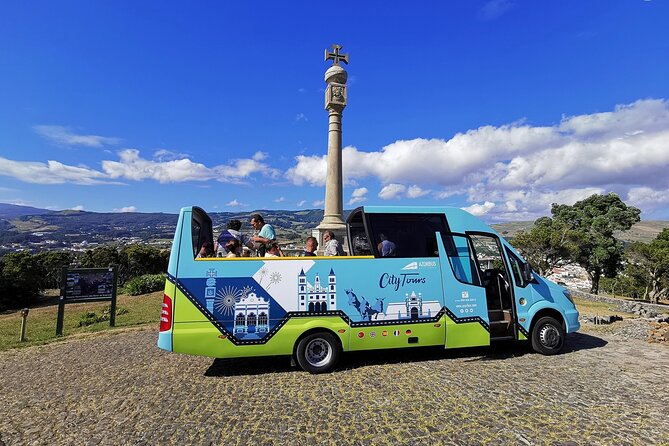
- Audio guidance with headsets keeps the pace relaxed and the stories understandable.
- Monte Brasil viewpoints: the stop at Pico das Cruzinhas gives you a big south-coast sweep.
- Historic Angra in short stops so you see the Cathedral area and old city gates without long walking marathons.
- Bullfighting culture meets local identity at the Monument to the Bull (and its tie to the Battle of Salga).
- Fortifications and a Civil War-era obelisk at Alto da Memória add context beyond postcard views.
- Max 20 people helps the tour feel controlled, not chaotic.
Why this panoramic loop is such a good first taste of Angra
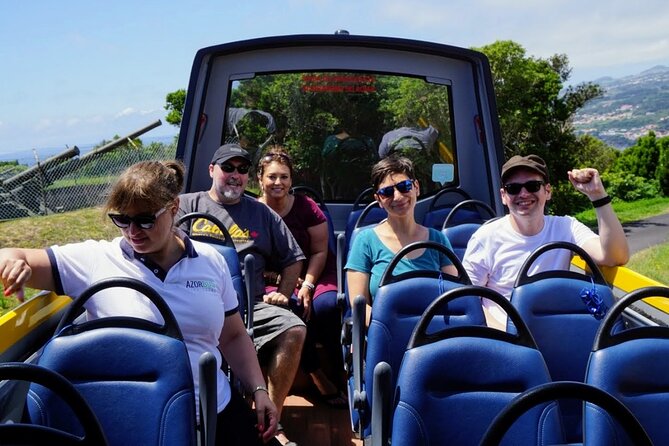
If Angra do Heroísmo is your first stop in Terceira, this tour is built for you. It covers the big visual anchors—oceanfront Angra, a Monte Brasil peak viewpoint, and key structures in the historic center—without forcing you to commit to hours of uphill walking.
What makes it feel smooth is the mix of experiences. You’re not only looking at churches and stone gates. You also get the seaside rhythm at the Silveira bathing area, then you climb up to higher ground for panorama. That pacing helps the city click as more than a single photo set.
Another practical win: it’s designed for understanding. The narration is provided with headsets, so you get the why behind what you’re seeing—like how defense thinking worked in the old city, or what the bull monument is really honoring.
You can also read our reviews of more tours and experiences in Terceira.

Silveira Bathing Area: where the ocean story starts
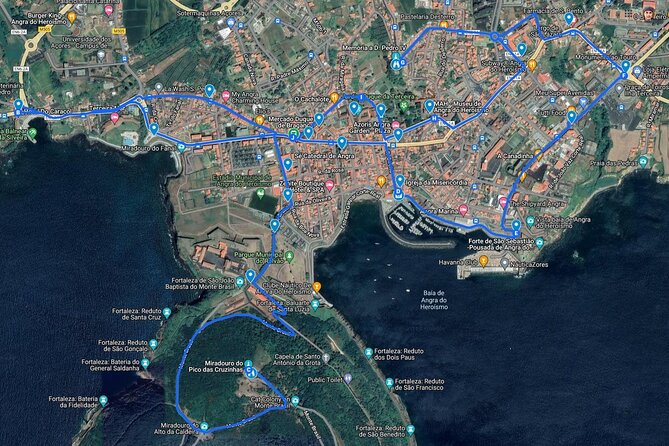
The tour opens (or at least early on) at the Silveira Bathing Area, about 1.5 km from the historic center. Today it’s one of the municipality’s most popular sea-bathing spots, but it’s also tied to the working coastline.
Here’s the key detail to notice: the bathing area occupies the pier and ramp of an old fishing port. It also traces back to those days when storms East prevented operations in Angra Bay. In other words, this isn’t just a pretty swim spot. It’s a place that shows how Angra adapted to sea conditions.
And if you visit outside peak bathing season, you might find the area used for sporting events like swimming and canoeing. Even if you don’t catch an event, you’ll understand the setting more quickly because you see the maritime infrastructure turned into public waterfront life.
Miradouro do Pico das Cruzinhas: the big south-coast view
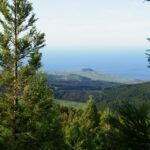
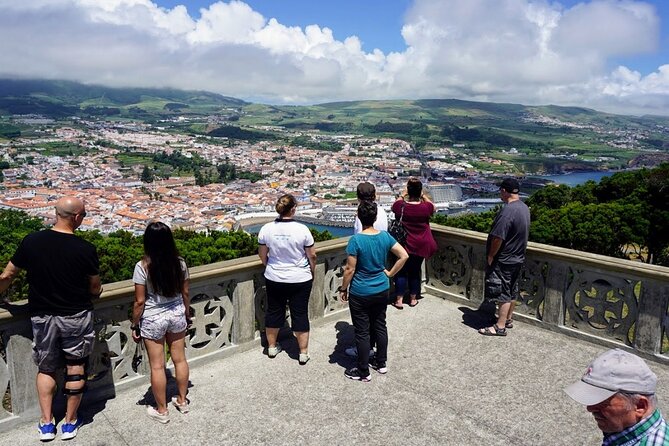
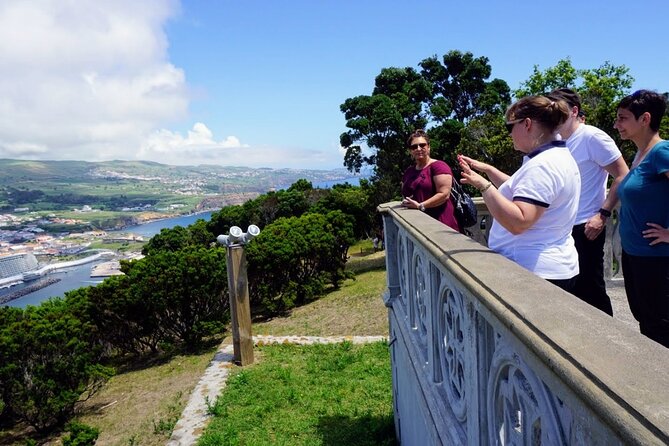
Next comes a proper viewpoint moment: Miradouro do Pico das Cruzinhas, reached at the top of Cruzinhas peak—one of the four peaks of Monte Brasil. It sits within the Monte Brasil Recreational Forest Reserve, so it’s not just a lookout carved for tourists; it’s part of the island’s preserved high-country.
Plan for about 15 minutes here, and use it like a mini lesson. This is where you connect the dots between distant places and the Angra historic center you’ll see later.
From the viewpoint, you can look over a wide set of landmarks, including:
- Ilhéus das Cabras
- the parish of Porto Judeu
- Ribeirinha and the Serra da Ribeirinha
- the Historic Center of Angra do Heroísmo
- the Serra do Morião and the parish of São Mateus da Calheta
- the Santa Bárbara mountain range
If you’ve ever felt like you’re staring at a photo of the island without understanding where anything is, this stop fixes that. The panorama gives you a mental map you can keep using for the rest of the day.
Sé de Angra do Heroísmo: cathedral energy in the historic center
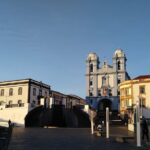
After the lookout, you drop into the city’s heart for the Church of the Santíssimo Salvador da Sé—often called the Sé de Angra do Heroísmo or the cathedral of Angra do Heroísmo.
Even without huge “tourist fluff,” this kind of stop matters because it tells you how Angra organized itself around faith and civic identity. Located in the parish of Sé in the historic center, it’s one of those buildings that anchors the area. You can think of it as a visual center of gravity.
This is also a good moment to slow down just a bit, even if your overall tour time stays tight. Look at how the cathedral relates to the streets around it. Then when you reach the next stops—city entrances and monuments—it all feels connected instead of scattered.
Portas da Cidade: the old access point that explained trade
Portas da Cidade focuses on the historic edges of the city—where movement and goods used to matter. The story centers on the Pátio da Alfândega to the east of the Customs House.
The interesting part here is what traders could see. In the 16th and 17th centuries, traders could view goods on the quay below from the vantage of the wall. That’s a practical, almost cinematic detail: commerce as something you could literally watch.
Later, in the second half of the 18th century, the courtyard was altered by order of the Captain-General. It gained a noble staircase and doors topped by arches—essentially dressing up access to what was described as the then capital of the Azores.
You get about 10 minutes for this stop, which is short. So treat it as a quick reading moment: notice the setting, notice the architectural choices, and let the trade-and-access context turn stonework into a reason to exist.


The Monument to the Bull: culture, resilience, and the Battle of Salga
One of the most memorable stops is the Monument to the Bull. It’s an 11-meter-high bronze sculpture designed by Terceira artist Renato Costa e Silva. The monument is made up of three bulls inserted into a cylinder, each positioned differently—so the forms invite your interpretation.
This stop is not just about bullfighting as a spectacle. The monument is described as paying homage to bullfighting culture and to the people who kept it alive—cattle ranchers, capinhas, shepherds, riders, bullfighters, and others tied to the tradition.
The narration also adds a local layer of meaning: it’s framed as a symbol of Terceira’s resilience in the victory achieved with help from bulls or wild prayers during the famous Battle of Salga.
If you like cultural stops where the meaning is deeper than the photo, don’t rush this one. Even from a distance, you can understand why it became a symbol: it’s tall, it’s unmistakable, and the story ties directly to how the islanders explain their own strength.
Alto da Memória: fortifications and an obelisk with political weight
The final major highlight before you loop back is Alto da Memória, tied to early fortification history. Around 1474, the captain of grantee João Vaz Corte Real built the first fortification of old Angra, known as Castelo dos Moinhos, located away from the sea. The idea reflected late-medieval European and Mediterranean defense thinking shaped like an acropolis.
Today, what grabs your attention is the obelisk erected in the 19th century honoring Pedro IV of Portugal’s passage through Terceira, in the context of the Portuguese Civil War (1828–1834). That time marker matters because it shifts the meaning of the space: it’s not only about medieval survival. It also marks 19th-century political memory laid onto the same setting.
You’ll get around 15 minutes here, and that’s enough time to take in the big elements and understand the timeline. Look at the placement first (high ground, defensive logic). Then look at what the obelisk commemorates (later national events). The two together give you a layered sense of why this site mattered.
Getting around smoothly: open-air vibe, headsets, WiFi, and group size
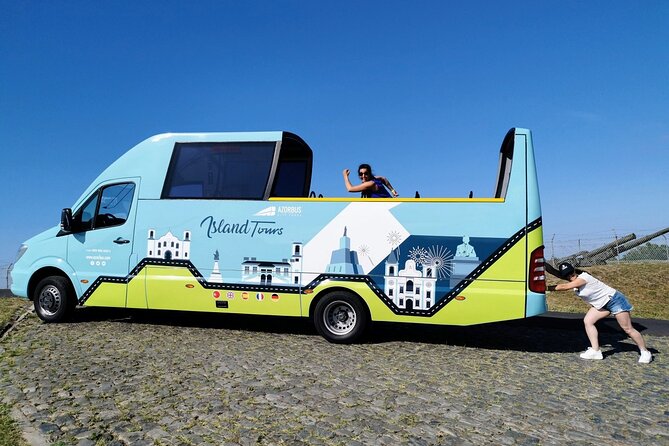
This is a group tour with a maximum of 20 travelers, which tends to keep things organized. You’ll also have headsets so the guide audio comes through clearly. That’s a big deal in an area with wind, traffic noise, or people moving around for photos.
There’s also WiFi on board, which is handy if you want to quickly look up a word, share a photo, or plan your next meal stop during the short rides.
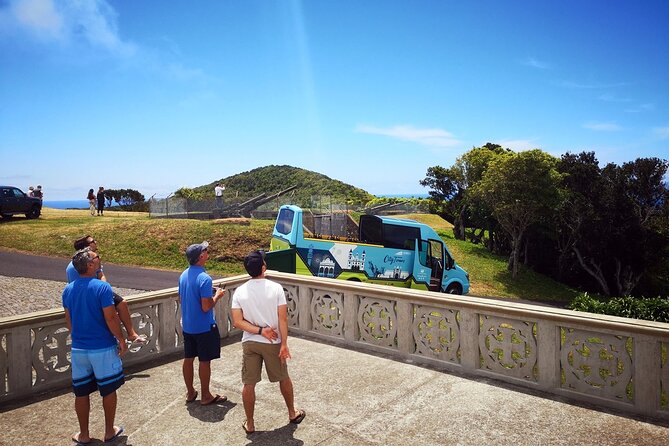
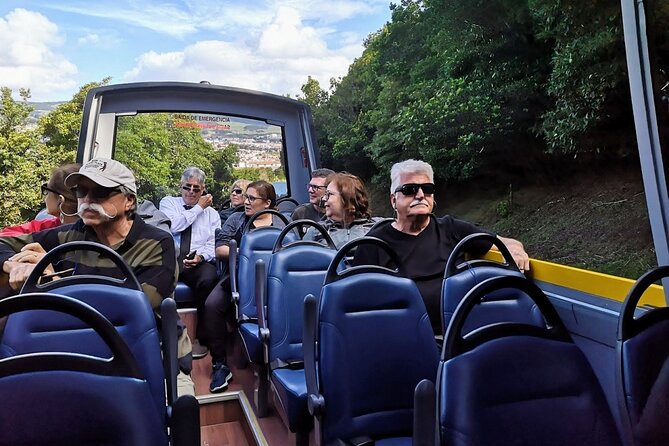
Vehicle details matter for your comfort too. If the group hits the minimum size (5 people), the tour runs as a bus. If the minimum isn’t met, it may switch to a minivan. In either case, there are 3 entrance steps—so consider that before booking if you need step-free access.
And yes, there’s an open-air feel to the city experience when the bus is used, which adds to the relaxed pace. You’re outside enough to enjoy the sea air and breezes, but still guided enough that you’re not wandering with uncertainty.
Timing and what to bring when Terceira decides the weather
This experience runs about 2 hours total. Stops are set up for short viewing and explanation, with time for photos and orientation rather than long museum-style visits.
It also requires good weather. If poor weather cancels the tour, you’ll be offered a different date or a full refund. That’s important on the Azores, where conditions can change fast.
Bring basic comfort items:
- Water
- Sunscreen on sunny days
If you’re sensitive to wind, a light layer can also help, especially around viewpoints and coastal areas.
Price and value: why the inclusions make the day feel worth it
Even without a stated ticket cost here, you can judge value by what’s wrapped into the experience. You get:
- Hotel pickup and drop-off in central Angra do Heroísmo
- headsets for audio clarity
- a certified professional driver/guide
- liability and personal accident insurance
- WiFi on board
- a mobile ticket
That combination matters because it reduces friction. Pickup saves time and energy. Headsets reduce confusion. Insurance adds peace of mind.
One detail that affects value: pickup outside the city center of Angra do Heroísmo may cost an extra 30€ total fee. If you’re staying just outside the core, it may still be worth it—but check first so you’re not surprised.
Also, remember this isn’t a full-day “go everywhere” plan. It’s about concentrating the most useful Angra highlights into roughly two hours. If your time on Terceira is tight, this is the kind of format that tends to give you the best return per hour.
Who should book this panoramic tour?
This tour is a strong fit if you:
- are visiting Angra do Heroísmo for the first time and want a clear orientation route
- want a guided narrative at viewpoint and historic-city stops
- prefer audio guidance with headsets rather than standing around waiting for explanations
- like culture moments with context, like the Monument to the Bull and its tie to local identity
It’s less ideal if:
- steps are a problem for you (the vehicle entrance includes 3 steps)
- you’re traveling at a time when weather might be unstable and you don’t have flexibility to reschedule
Should you book this Angra do Heroísmo panoramic tour?
I think you should book it if you want an efficient, story-led introduction to Angra. The tour’s stop choices work together: seaside roots at Silveira, the Monte Brasil viewpoint for orientation, cathedral and historic gate sites for civic structure, then defense and political memory at Alto da Memória.
For the best experience, pick a day with decent weather and plan to use the viewpoints for real attention, not just quick selfies. The audio guidance is there to help you connect places to meaning, and you’ll feel that payoff most when the island is visible from above.
If you’re okay with short stops, light walking, and a vehicle with steps, this is a high-value way to turn a couple hours into a solid understanding of Angra.
FAQ
What’s the duration of the Angra do Heroísmo panoramic city tour?
It runs for about 2 hours.
Is the tour in English?
Yes, the tour is offered in English.
Does the tour include hotel pickup and drop-off?
Pickup and drop-off at hotels and accommodation near the center of Angra do Heroísmo is included. Pickup outside the city center may cost an extra 30€ total fee.
Are headsets provided for the audio guide?
Yes. Headsets are included so you can hear the guide clearly.
How big is the group, and what vehicle will I ride?
There’s a maximum of 20 travelers. If there are at least 5 people, it’s a bus tour; otherwise it may be in a minivan.
Is this tour affected by weather?
Yes. It requires good weather. If it’s canceled due to poor weather, you’ll be offered a different date or a full refund.