REVIEW · TAMARINDO
2-Hour Private or Group Surf Lesson in Tamarindo!
Book on Viator →Bookable on Viator
Surfing in Tamarindo can sound scary. But the lesson is built to get you moving fast, with equipment included and hands-on help in the water. The two things I like most are the 30 minutes on land for positioning and safety and the way instructors guide you toward real wave attempts with a supportive crew nearby. One drawback to consider: the experience quality depends a lot on the instructor and you’ll want to make sure the meeting point is clear.
Here’s the big idea: you get structured coaching, not just board time. People praised instructors like Jonathan and Gustavo for being patient, giving clear feedback, and physically helping in the water so they could stand repeatedly. At the same time, there’s at least one serious negative report about an instructor named Ramon being inappropriate and intoxicated, so safety and comfort should be your priority from the start.
Plan for waves that are mostly beginner-friendly. Tamarindo tends to mean smaller surf and learning conditions, though one review noted that the best waves can be rare on some days. Also, a few people said the meeting location felt hard to find, so I’d arrive early and have a backup way to reach the team.
In This Review
- Key Highlights That Matter
- How The 2-Hour Tamarindo Lesson Actually Gets You Standing
- The Included Gear Is Part of the Value
- The Beach Lesson: Positioning, Rules, and Safety First
- The Water Session: One-on-One Coaching and Real Wave Attempts
- Instructor Quality: What To Watch For (Jonathan, Gustavo, and a Caution With Ramon)
- Tamarindo Surf Conditions: Beginner-Friendly, With Small-Wave Reality
- Private vs Group: Where Your Attention Comes From
- Beyond Surf: Rentals, Body Boards, and SUP Lessons
- Tamarindo Night Market: A Useful Pause in Your Evening Plan
- Price and Logistics: Is $50 Worth It?
- Who This Surf Lesson Suits Best
- Should You Book This Surf Lesson in Tamarindo?
- FAQ
- How long is the surf lesson in Tamarindo?
- Is equipment included?
- What happens during the first part of the lesson?
- Will I stand up on a wave?
- Is this a private session or a group session?
- Can kids participate?
- Do they offer stand-up paddle board classes?
- Is there an option to rent a board instead of taking lessons?
- What’s the cancellation policy?
Key Highlights That Matter
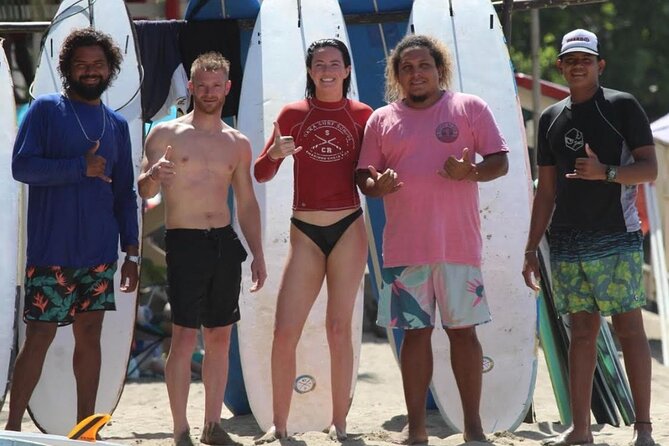
- 30 minutes on land to practice positioning, rules, and safety before you hit the water
- One-on-one in the ocean with guided attempts and a cheer squad from shore
- Gear provided: rash guards, leashes, surfboards, plus sunscreen on hand
- Beginner wins are the goal, including getting you to stand on a wave
- Extra refreshment touches like water, coconut water, and even fresh smoothies showed up in multiple experiences
- Real options beyond surfing: board rentals, body boards, and stand-up paddle lessons
How The 2-Hour Tamarindo Lesson Actually Gets You Standing
This surf lesson is designed like a training plan, not a free-for-all at the beach. You’ll get roughly 2 hours total, and the structure matters because it removes the guesswork that usually makes first-timers freeze.
You start with about 30 minutes on land. That time is for body position, how to approach the board, and the safety rules that keep you from turning your learning session into a chaos story. Then you move into the water for guided attempts, with an instructor giving you immediate cues and helping you get into waves.
The coaching style tends to be practical: stand, balance, and go again. One review described Jonathan helping both an adult and a 9-year-old, with lots of stand-up attempts. Another praised Gustavo for constructive feedback that made improvement happen quickly. If you learn by doing, this format usually works.
You can also read our reviews of more tours and experiences in Tamarindo.


The Included Gear Is Part of the Value
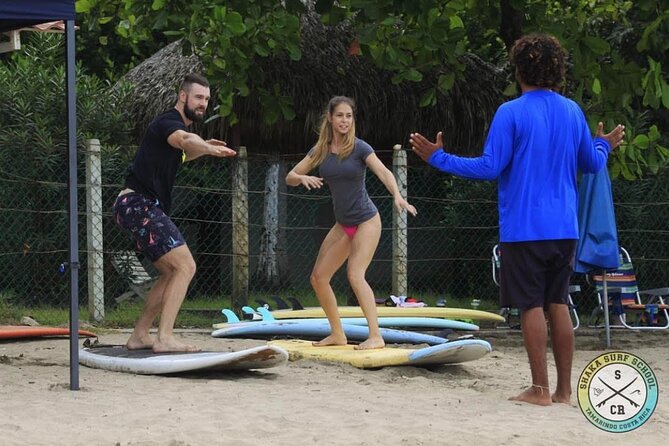
At $50 per person for a two-hour lesson, the biggest “value” piece is that you’re not expected to source gear first. The basics are provided: rash guards, leashes, and surfboards, plus sunscreen on hand.
That matters more than it sounds. When you’re learning from zero, the hardest part is not just catching a wave. It’s also dealing with fit, comfort, and not panicking about the wrong board or an unsafe setup. Having the essentials handled lets you focus on the actual surfing basics.
If you have kids, the school also offers body boards for kids and adults. So you might see different board types depending on who’s learning and how the instructor thinks the conditions will feel.
The Beach Lesson: Positioning, Rules, and Safety First
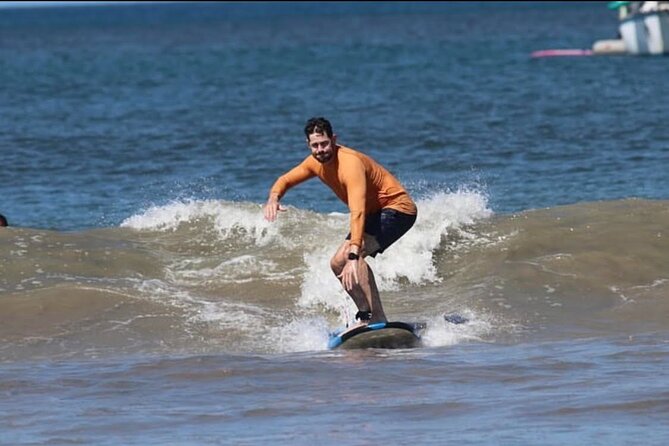
This is the part many people underestimate. You’re not just doing “warm-up.” The first stretch is instruction on land: where to place yourself, how to handle your board, and the rules of surfing.
Why that’s valuable: beginner problems usually come from small misunderstandings. The ocean punishes hesitation. If you learn the basic rules early, you spend more time on your feet and less time worrying.
Also, the lesson explicitly covers how to stay safe in the ocean and on the board. That includes the kind of awareness that keeps you from getting in the wrong spot during incoming sets.
If you’re the type who likes a plan, you’ll probably appreciate this. If you hate standing still on a beach, just know the land time is there to make the water portion actually work.
The Water Session: One-on-One Coaching and Real Wave Attempts
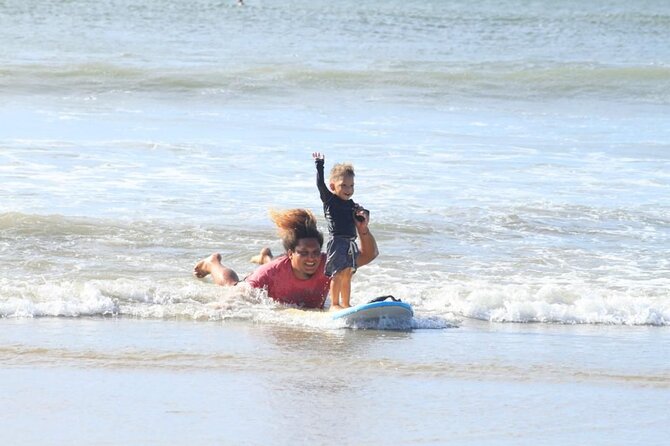
After the land lesson, you head into the water. The goal is clear: you’re guided into waves and designed to stand up. Multiple reviews described instructors physically guiding learners, not just shouting tips from shore.
In the water, you should expect:
- Your instructor positioned to give quick adjustments
- Tips geared to what your body is doing in the moment
- Guidance that helps you get into a wave at the right time
A nice detail: you get your own personal cheer team from the beach. That sounds small, but it changes the mood. Surf wipeouts are part of the game. A supportive vibe makes it easier to reset and try again.
If you care about photos, you can ask ahead of time. The lesson includes an option for photos if you’re interested.
Instructor Quality: What To Watch For (Jonathan, Gustavo, and a Caution With Ramon)
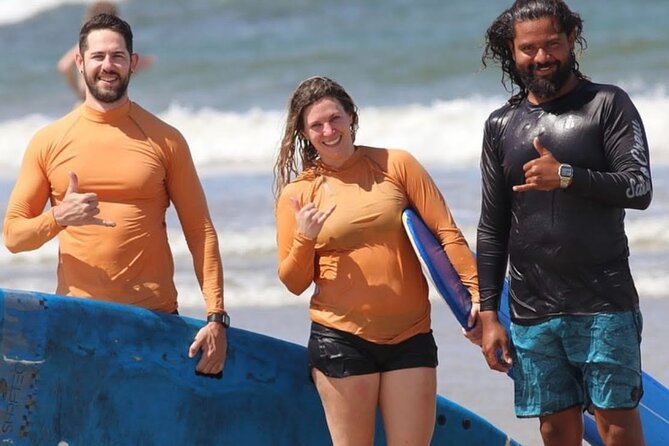
Most of the reviews read like a pattern: patient coaching, encouraging feedback, and clear improvements fast. Jonathan was singled out for helping a family (including a 9-year-old) and getting them standing repeatedly. Gustavo showed up in multiple positive notes for friendliness, constructive coaching, and making beginners feel comfortable.
That’s the “green lights” version.
Now the “yellow and red lights” version. One review described an instructor named Ramon as inappropriate, unprofessional, and intoxicated, including unwanted physical contact and comments. The company response said Ramon was fired, but it also admitted the reviewer could not verify it.
So here’s my practical advice if you book:
- If your gut feels off at any point, say so immediately and request a different instructor.
- Start the session expecting professionalism, not just friendliness.
- Pay attention to timing and behavior before you get in the water.
For most people, this surf school sounds like a great beginner launch. But safety and comfort should never be a “wait and see” experiment.


Tamarindo Surf Conditions: Beginner-Friendly, With Small-Wave Reality
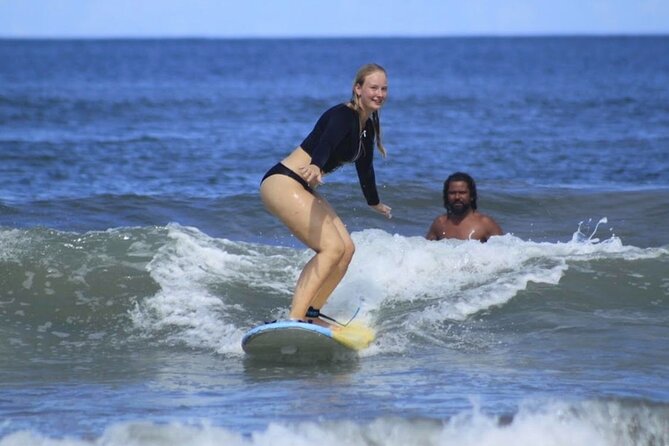
Tamarindo is commonly a good learning zone, and at least one review backed that up directly. The waves were described as not very big, and you generally don’t get pushed into super deep water. That’s exactly what you want when you’re learning.
But there’s an honest tradeoff: smaller waves can mean fewer “wow” moments on certain days. One review noted that good sets were rare during their days on the beach.
What this means for you:
- If you’re a complete beginner, smaller conditions are a feature, not a bug.
- If you’re hoping for big, dramatic surf, you might be disappointed on flat days.
- Your learning progress will still happen through repetition and guided technique, even when the sets are modest.
Private vs Group: Where Your Attention Comes From
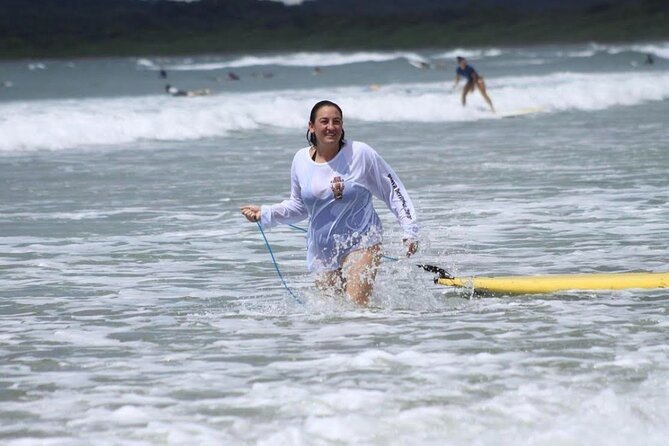
The tour description says only your group participates, meaning you’re not mixing with random strangers from across the beach. That matters when you’re learning, because you don’t want chaos competing with instruction.
Also, one review mentioned they booked a group class but ended up with a session where they were essentially the only people. That likely translated to more attention and faster feedback.
So if you’re traveling as:
- a couple
- a family with kids
- a small group of friends
…you’ll usually feel comfortable asking questions and getting individualized tips in the water.
Beyond Surf: Rentals, Body Boards, and SUP Lessons
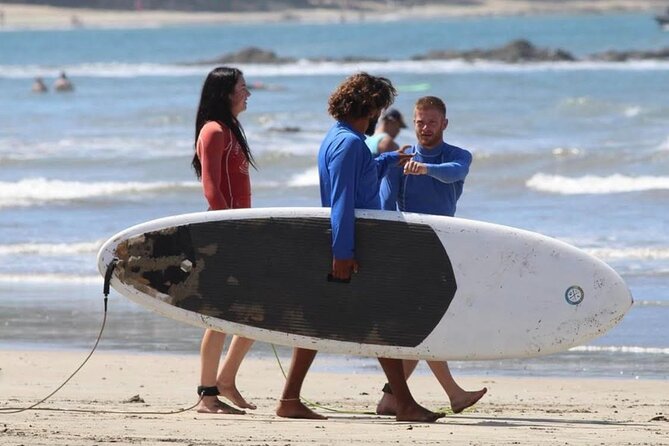
If you already feel comfortable on a board, you don’t have to stop at instruction. The program offers board rental options by the hour or for your stay. They also have body boards for kids and adults.
There’s also a smart alternative for learners who want a gentler entry: stand-up paddle board classes. The pitch here is practical—SUP offers more support and buoyancy, so it’s often easier to learn on, including for people with weight concerns.
If you’re torn between surfing and something more stable, SUP can help you still get ocean time and confidence without fighting the same balance demands.
Tamarindo Night Market: A Useful Pause in Your Evening Plan
The plan includes a stop at Tamarindo Night Market. That doesn’t mean you’ll automatically spend hours there, but it does suggest your booking can fit into an evening schedule.
Practical way to handle this: keep your expectations flexible and treat the market stop like a bonus window. If you want a clean day flow, don’t stack your schedule tightly right before or after, because surf sessions can depend on conditions.
Price and Logistics: Is $50 Worth It?
Let’s talk straight. $50 per person for about two hours, with rash guards, leashes, boards, and sunscreen included, is easy to understand. You’re paying for time plus the gear plus instruction.
Where the value really shows up:
- You’re guided in the ocean, not just loaned a board
- The lesson includes safety and positioning coaching, which can save you from beginner mistakes
- People reported actually standing up multiple times, which is the whole point
Where logistics can trip you up:
- One review said the meeting location was vague and hard to find, requiring them to look up contact info on Instagram.
- Another noted a late arrival and that the experience lasted closer to 1.5 hours than 2.
So I’d treat arrival timing as your job. I’d show up early and save the meeting point pin (Beach Parking 8536+94J, Guanacaste Province, Tamarindo, Costa Rica). If you’re going solo or with kids, that extra preparation helps keep the whole session smooth.
Who This Surf Lesson Suits Best
This is a good fit if:
- you’re a beginner and want step-by-step coaching
- you want a structured 2-hour session with clear safety instruction
- you’re traveling with a partner, friends, or family and want included gear
- you want ocean time that aims for standing up on waves
It might be less ideal if:
- you’re very sensitive to delays or unclear meeting points
- you need a guaranteed “no surprises” experience every single time, because instructor quality can vary
And if you’re unsure about surfing balance, the SUP option is a smart way to still learn the ocean without the same intensity.
Should You Book This Surf Lesson in Tamarindo?
I’d book it if you want beginner coaching with gear handled and an instructor in the water with you. The best reviews highlight fast learning, lots of stand-up attempts, and instructors like Jonathan and Gustavo who keep things encouraging and focused.
Before you go, do two things. First, arrive early and confirm how to find the meeting point so you don’t lose your start time. Second, be aware of the one serious negative report involving an instructor named Ramon. If anything about professionalism or safety feels off right at the start, you should speak up and ask for a change.
If you do those two things, the odds look good that you’ll leave Tamarindo with real surf skills, not just a fun memory of standing once.
FAQ
How long is the surf lesson in Tamarindo?
It’s listed as about 2 hours (approx.), with 30 minutes of instruction on land and the rest spent in the water.
Is equipment included?
Yes. The lesson includes rash guards, leashes, surfboards, and sunscreen is available.
What happens during the first part of the lesson?
You get around 30 minutes on land covering positioning, safety, tips for comfort, and surfing rules.
Will I stand up on a wave?
The description says you’re guaranteed to stand up on a wave, with instructors guiding you into the waves.
Is this a private session or a group session?
It’s offered as private or group, but for this specific experience you only participate with your group.
Can kids participate?
Body boards are available for kids and adults, and the program is set up for most travelers to participate.
Do they offer stand-up paddle board classes?
Yes. Stand-up paddle board classes are offered, and the board provides more support and buoyancy, which can make it easier to learn.
Is there an option to rent a board instead of taking lessons?
Yes. If you’re already comfortable and confident, you can rent surf equipment per hour or for the duration of your stay.
What’s the cancellation policy?
You can cancel for a full refund up to 24 hours in advance of the experience start time. Changes or cancellations within 24 hours are not refunded.