REVIEW · MALTA
Valletta Private Walking Tour
Book on Viator →Operated by Colour my Travel · Bookable on Viator
Valletta reads like a living history book. In just about three hours, you’ll walk through UNESCO-listed streets and landmarks tied to the Knights of St. John, from grand churches to gardens with top harbor views. With a private guide, the city stops being a postcard and starts making sense.
I especially like the personal pace of a private walking format and the way the guide ties architecture to real stories. You’ll hit major stops like St. John’s Co-Cathedral, the Barrakka Gardens, and the Grandmaster’s Palace area, plus side context that turns what you see into something you actually remember (I’ve seen guides like Matthew, Mario, and Daniela bring it to life in different styles).
One possible drawback: the walking time is fixed at around three hours, so if you want to cover every corner fast, you may find the route paced more for understanding than for maximum distance. Also, there can be a planned pause mid-tour for the kind of Malta you might want to sample (an artisan market stop came up for one guest), so set your expectations accordingly.
In This Review
- Key highlights at a glance
- Valletta’s UNESCO baroque, explained on foot
- Starting at the New Parliament and the Theatre Royal ruins
- Our Lady of Victories Church and Il-Berga ta’ Kastilja: faith and fortress thinking
- Upper Barrakka Gardens and the Auberge d’Italie art stop
- Knights of St John icons: St John’s Co-Cathedral and Grandmaster’s Palace
- The walk through squares and palaces: St George Square and Palazzo Parisio
- Lower Barrakka Gardens: the best kind of ending view
- Fort St Elmo and siege stories: monuments that change how you look at the waterfront
- What the private format really means for pace, photos, and route tweaks
- Price and value: $362.95 per group is either a steal or a stretch
- Practical tips before you go
- Who this tour is for (and who might want a different style)
- Should you book this Valletta Private Walking Tour?
- FAQ
- How long is the Valletta Private Walking Tour?
- Where do I meet the guide, and where does the tour end?
- Is this tour private, and how many people are included?
- What’s included in the price?
- What attractions require separate admission?
- What is the cancellation policy?
Key highlights at a glance
- A true private tour (up to 4 people) with one guide focused on your questions
- UNESCO baroque landmarks plus fortress-city context from the 1500s onward
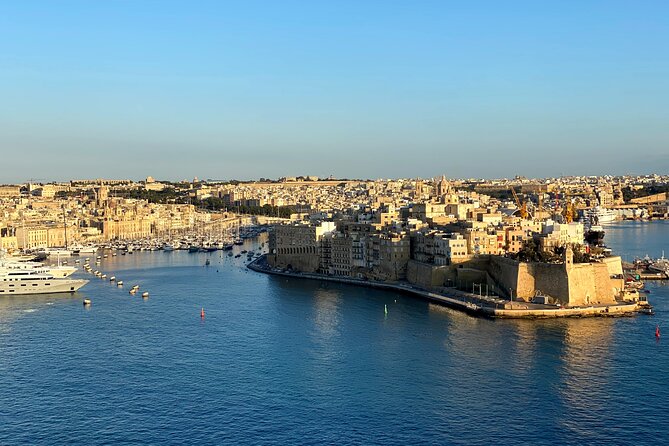
- High-impact viewpoints from the Upper and Lower Barrakka Gardens over the Grand Harbour
- Major Knights of St. John sites including St. John’s Co-Cathedral and Grandmaster’s Palace area
- Optional paid entries may apply for specific museums/cathedral/palace stops listed as not included
- Your guide can tailor the walk (route adjustments and extra time for photos have been mentioned)
Valletta’s UNESCO baroque, explained on foot
Valletta’s beauty is the kind you can feel in your legs. This tour gives you a guided way to read the city’s baroque buildings and defensive-minded layout, without needing to study a thick guidebook first. You start at the modern entrance near the New Parliament Building and work your way through a classic slice of Valletta’s core.
The private format matters more than you’d think. When you’re walking with one guide, you can ask why a façade looks the way it does, or what a monument was meant to communicate, and you don’t lose time waiting for a bigger group to catch up. Many guests put the focus on how the guide’s storytelling made the landmarks click.
You can also read our reviews of more tours and experiences in Malta.


Starting at the New Parliament and the Theatre Royal ruins
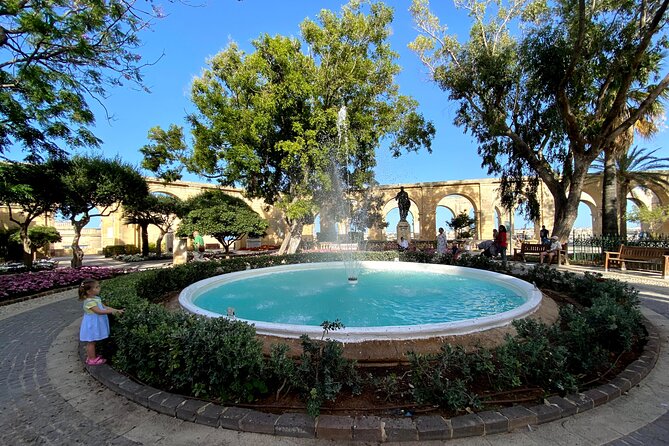
Most walking tours rush into the “wow” stops. This one starts with an orientation point: the New Parliament area on Republic St. It’s a good launch pad because it places you at the edge of Valletta’s older story, before you move deeper into the baroque heart.
From there, you head to Pjazza Teatru Rjal, the ruins tied to the Royal Opera House. Standing near old theatre remains, it’s easier to understand how Malta wasn’t only about fortresses and sieges. There was culture and public life too, even when politics and conflict were always in the background.
Our Lady of Victories Church and Il-Berga ta’ Kastilja: faith and fortress thinking
One of the strengths of this walk is that it keeps swapping lenses: religion, power, defense, and everyday life. At Our Lady of Victories Church, you’ll get the answer to the question your guide raises—who was buried here and why that matters in Malta’s larger storyline. It’s the kind of stop where you’ll learn to look past the pretty exterior and notice what’s being remembered.
Next comes Il-Berga ta’ Kastilja, which is essentially a key architectural stop connected to the Knights’ era. Even if you’re not an architecture nerd, you’ll find this sort of location helpful because it shows how Valletta’s buildings were built to function as symbols—of authority, identity, and order.
Upper Barrakka Gardens and the Auberge d’Italie art stop
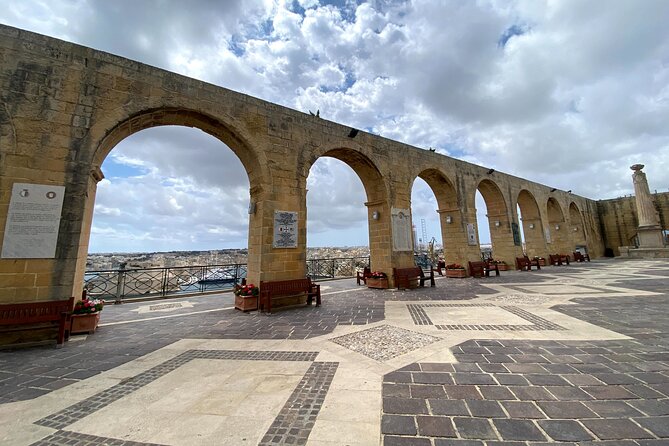
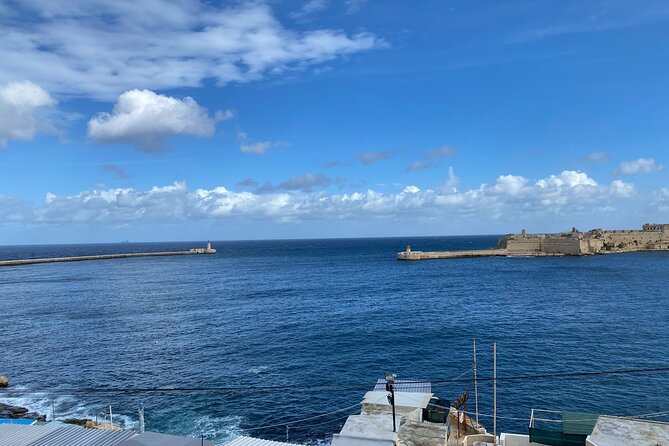
If you want one stretch of the tour that feels like a reset button, it’s the walk up to Upper Barrakka Gardens. You get a long look over Grand Harbour, and that view is the bridge between what Valletta looks like now and what it was designed to protect. When you’ve got the harbor in front of you, the siege stories land differently.
After that view, you’ll reach Auberge d’Italie, connected to the Museum of Fine Arts. Here’s the practical part: admission isn’t included. That doesn’t mean you can’t enjoy the stop; it just means if you want to go inside, you should plan on paying separately and checking what’s open that day.
If you’re traveling with limited time, I like this “choose-your-own” approach: you can spend your time on what you care about—views outside first, then decide whether art inside is worth your ticket.
Knights of St John icons: St John’s Co-Cathedral and Grandmaster’s Palace
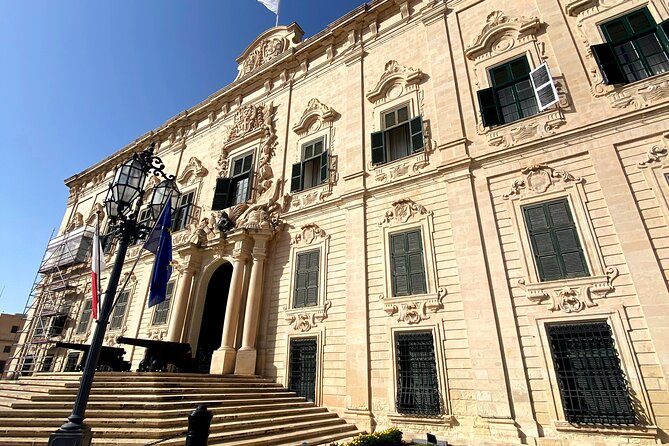
Valletta’s big-ticket moment is usually the co-cathedral zone. St. John’s Co-Cathedral is where your guide connects what you see to the artists and works shown inside. Admission isn’t included here, so you’ll likely be deciding between exterior viewing plus explanations versus paying to go in. Either way, the storytelling helps you understand why this building is central to the Order’s identity.
Then you move to Grandmaster’s Palace, one of the key power markers of the city. Admission isn’t included, but your guide’s job is to explain why it mattered across centuries—how power was displayed, how events changed what the palace meant, and how Valletta’s rulers shaped the city’s public face.
This is also where you’ll benefit from a private guide the most. These sites have layers, and a good guide can point out what to focus on so you don’t leave with only vague impressions like I saw a palace and a church.





The walk through squares and palaces: St George Square and Palazzo Parisio
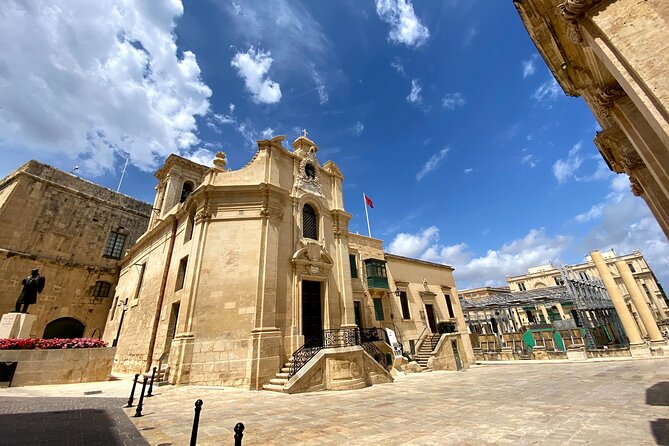
Between major monuments, you’ll pass through spaces that make Valletta feel like a city, not a museum. St George Square is one of those stops, a central square where your guide helps explain why it sits at the core of the city’s rhythm. It’s a helpful moment to regroup, take photos, and let the story you heard snap into place.
Earlier or along the way, you’ll also visit Palazzo Parisio. Your guide will answer which famous historical figure once spent time living here. Even without the name landing instantly, the value is in the context: palazzo stops are where you see how wealth and influence moved from the Knights’ era into later chapters of Malta’s story.
Lower Barrakka Gardens: the best kind of ending view
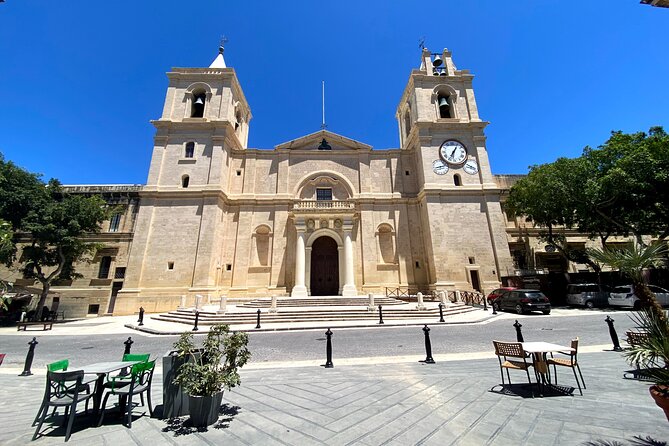
Most tours end at a landmark. This one ends at a view—Lower Barrakka Gardens—with sights over the lower part of the city. You get a final perspective that feels like closure: you can look back at what you just learned, then look forward to how Valletta still keeps its maritime identity.
It’s also a smart finish time-wise. Ending here puts you close to the city center again, and it’s an easy starting point for whatever you want to do next—dinner, a museum, or just more wandering with your new “Valletta brain.”
Fort St Elmo and siege stories: monuments that change how you look at the waterfront
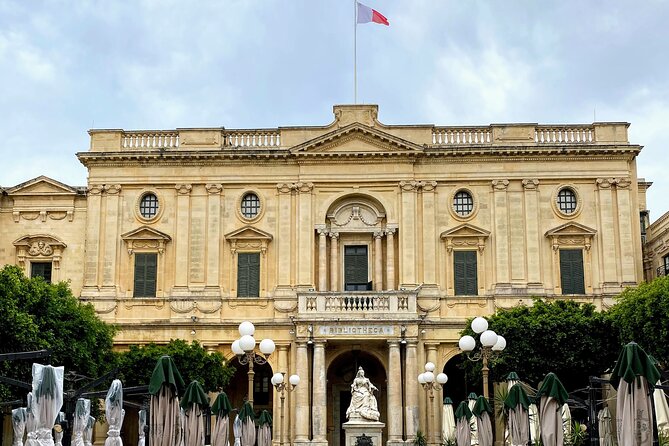
Valletta was built to defend itself, and this tour treats that as more than trivia. Your guide brings in siege-era context tied to the city’s major defensive identity, including references to the Great Siege Monument, the Siege Bell War Memorial, and Fort St Elmo – National War Museum.
Even when you’re not standing at every single monument for long, the explanations help you notice why the city’s layout and landmark choices feel the way they do. After a few stops, you start seeing patterns: where authority sits, where people gather, and how survival shaped design decisions in the 1500s and beyond.
What the private format really means for pace, photos, and route tweaks
Private doesn’t just mean less crowded. It means your guide can match your interests and energy. Based on how guides like Mario and Alizea have handled tours, you may get route adjustments that line up with what you want most—extra photo time, or a slight detour to catch a specific sight.
Pace is the main variable. Many people love this tour because the guide can slow down where needed and keep things moving when you’d rather keep walking. Still, there’s a key consideration if you’re a fast-walker or on a tight schedule: three hours can feel short when you’re stopping often, and that’s especially true if you want to see every optional inside attraction.
Also note that some guides include a practical break mid-tour. That doesn’t automatically mean it’s long, but it does affect how much ground you cover. If you’re hungry, that can be great. If you want uninterrupted sightseeing, tell your guide early so the plan fits your style.
Price and value: $362.95 per group is either a steal or a stretch
At $362.95 per group (up to 4), you’re paying for a private guide over a set route and time. For a family or two couples, this can be good value because the cost spreads across people and you get one-on-one attention.
For a solo traveler, the price can feel heavier—especially if you’re expecting the guide to cover a larger area fast. The good news is that Valletta is compact, and the tour’s strength is depth: you get explanations that make the landmarks easier to understand. If you want an introduction that helps you plan the rest of your trip, this is often worth it.
One more value point: the tour uses a mobile ticket and is offered in English. That reduces friction on a day when you’re already navigating a new city.
Practical tips before you go
- Bring comfortable walking shoes. It’s a walking tour with frequent stops, including gardens.
- Decide ahead of time about paid entries. Auberge d’Italie, St. John’s Co-Cathedral, and Grandmaster’s Palace are listed as not included for admission, so you may want to budget for those.
- Take advantage of a guide’s Malta context. Several guides have been praised for connecting past and present, including local traditions. For example, one guest specifically mentioned seeing the 4 pm cannon firing as part of the local rhythm (timing depends on your day and schedule).
- Know the meeting and ending points. You meet at the New Parliament Building on Republic St and finish at St. George’s Square. This end point is convenient for continuing your day.
- Private means questions are welcome. If you want more time at a church façade or you’d rather skip an optional museum moment, say so.
Who this tour is for (and who might want a different style)
This is a great match if you want a first serious look at Valletta and you like learning the story behind the scenery. It’s also ideal when you want control: private attention, tailored pacing, and a guide who can answer what you actually care about—architecture, siege history, or what daily Malta looked like under the Order.
If you’re the type who wants to cover as many spots as possible with minimal talking, a private walking tour might feel slow. And if you strongly prefer to maximize paid museum time, you should plan for additional admissions where listed as not included.
Should you book this Valletta Private Walking Tour?
If it’s your first time in Valletta, I’d lean yes. The combination of UNESCO baroque landmarks, harbor viewpoints from both Barrakka Gardens, and the siege-centered context tied to sites like Fort St Elmo gives you a clean “map in your head” for the rest of your Malta days.
Book it especially if you’re going as a small group (up to 4) or you value a guide who can explain more than what’s on a plaque. It’s less ideal if you want to race through everything in one go or you’re hoping admission to every major site is included.
FAQ
How long is the Valletta Private Walking Tour?
It’s approximately 3 hours.
Where do I meet the guide, and where does the tour end?
You meet at the New Parliament Building, Republic St, Valletta, Malta, and the tour ends at St. George’s Square (VGX7+JCW, Republic St, Valletta, Malta).
Is this tour private, and how many people are included?
Yes, it’s a private tour. The group size is up to 4 people.
What’s included in the price?
You get a professional guide and a private tour.
What attractions require separate admission?
Some stops are listed as admission not included, including Auberge d’Italie (Museum of Fine Arts), St. John’s Co-Cathedral, and Grandmaster’s Palace.
What is the cancellation policy?
You can cancel for a full refund up to 24 hours before the experience starts. Cancellation within 24 hours is not refundable.