REVIEW · TENERIFE
Teide National Park: Guided Large Telescope Stargazing Tour
Book on GetYourGuide →Operated by Astrophototour · Bookable on GetYourGuide
Teide at night turns the cosmos into a live show. This 3-hour small-group tour pairs the night sky over Teide National Park with a 32-inch private telescope and a guide who tailors what you see to your curiosity. You also get a night-vision option using a modified 12-inch telescope, if you want a different way to experience the stars.
Two things I like a lot: the small-group format (up to 12 people, so you actually get time at the eyepiece), and the photo package. You’ll receive a professional astrophotography set from that evening plus additional images taken during previous sessions, so you leave with more than just your memory.
One consideration: it’s weather-dependent. Strong winds can stop telescope use, and if conditions are too poor for observation, the team may postpone to the next day or offer a refund.
In This Review
- Key points to know before you look up
- Teide National Park after dark: why this tour feels different
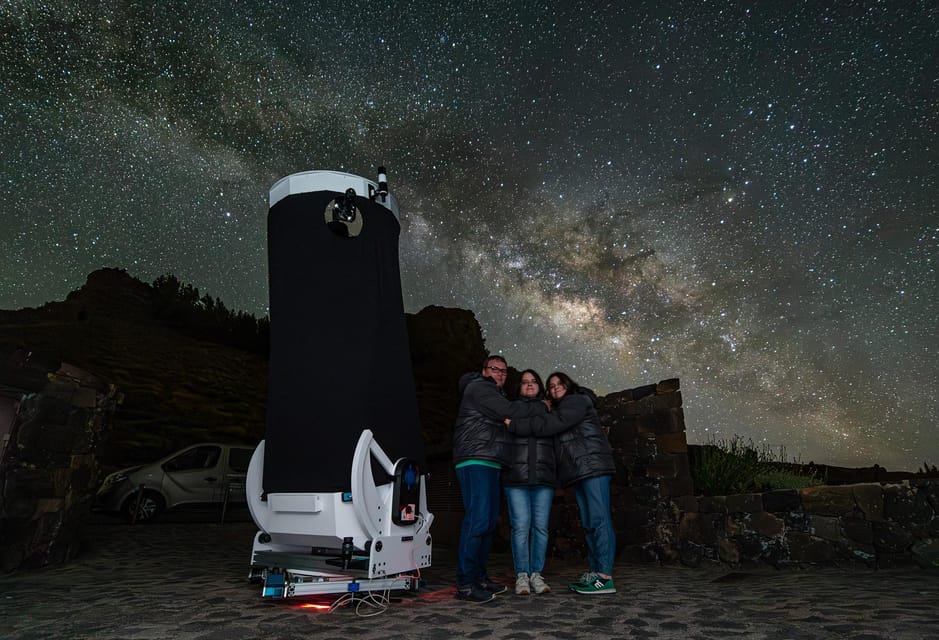
- The main event: the 32-inch Dobsonian and what you might see
- The alternative: Night Vision Voyage and a different kind of “wow”
- Small group sizes: why “up to 12” matters for your actual view
- Your astrophotos: what’s included and why it’s worth it
- Timing and the meeting point: plan for flexibility
- What to bring (and what to skip) for a comfortable night
- If the weather turns: what happens when winds interfere
- Who this tour fits best
- Price and value: what $58 buys in practice
- Should you book this Teide telescope tour?
- FAQ
- What time does the tour start?
- Where do I meet for the tour?
- How long is the experience?
- What telescopes are used?
- Are photos included?
- Is hotel pickup included?
- What should I bring?
- What’s not allowed during the tour?
- Is the tour refundable if weather is bad?
Key points to know before you look up
- 32-inch private telescope access in Teide National Park, built for clarity and brightness
- Small groups (up to 12), with enough time to ask questions and actually see details
- Two formats of viewing: the classic 32-inch scope or the night-vision 12-inch experience
- Cooled astro-camera and guided astrophotography included, plus a pro photo package
- Real-time sky storytelling based on what you want to focus on, from nebulae to planets
- Winter-friendly comfort touches show up in some seasons, with hot tea and cookies mentioned in reviews
Teide National Park after dark: why this tour feels different
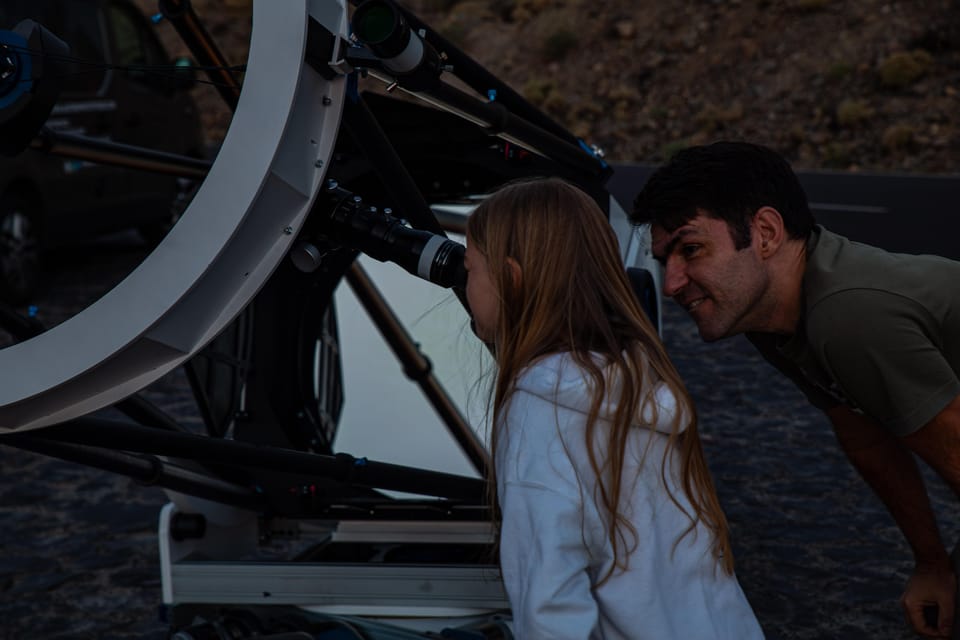
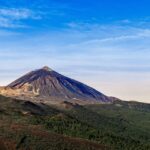
Teide National Park is one of the places in the Canaries where the night sky can look sharp and dramatic. That matters because stargazing is always a mix of sky conditions and equipment. This tour gives you the equipment part in a big way, then adds a human layer so you don’t just look at random dots.
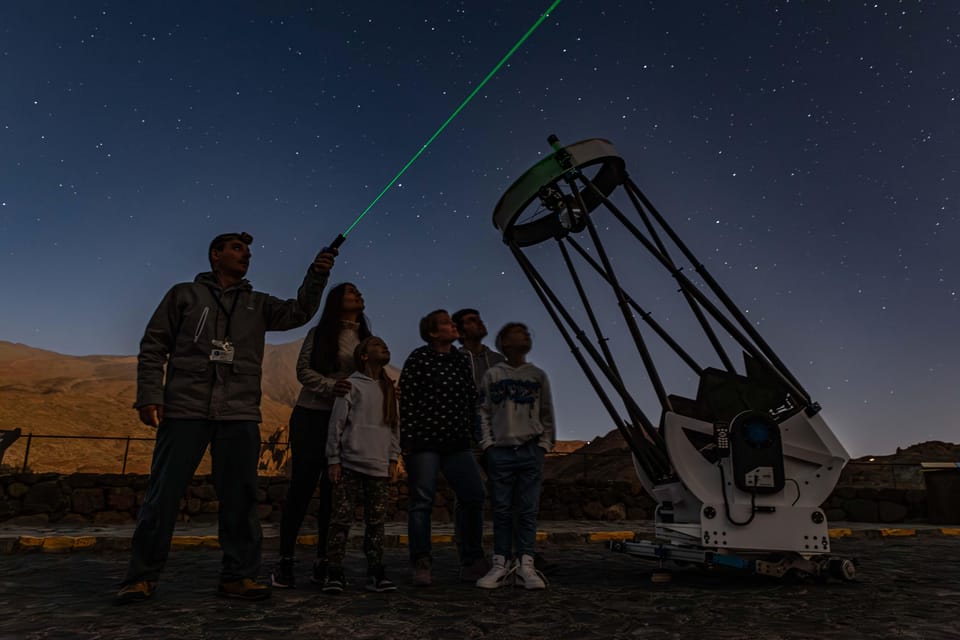
The heart of the experience is the telescope setup. With the 32-inch Dobsonian (described as the largest private telescope in the Canary Islands), the goal is to pull out fine detail: galaxies, protostellar nebulae, and supernova remnants are specifically mentioned as targets. If you’ve done stargazing before with smaller scopes, this is the kind of upgrade you notice fast.
The second reason it feels different is the guide’s approach. Reviews repeatedly highlight Alessandro’s passion and his patience with beginners, while still sharing deeper astrophysics for people who want it. That combination is rare: you get structure, but you can steer the experience toward what you care about.
You can also read our reviews of more tours and experiences in Tenerife.
The main event: the 32-inch Dobsonian and what you might see
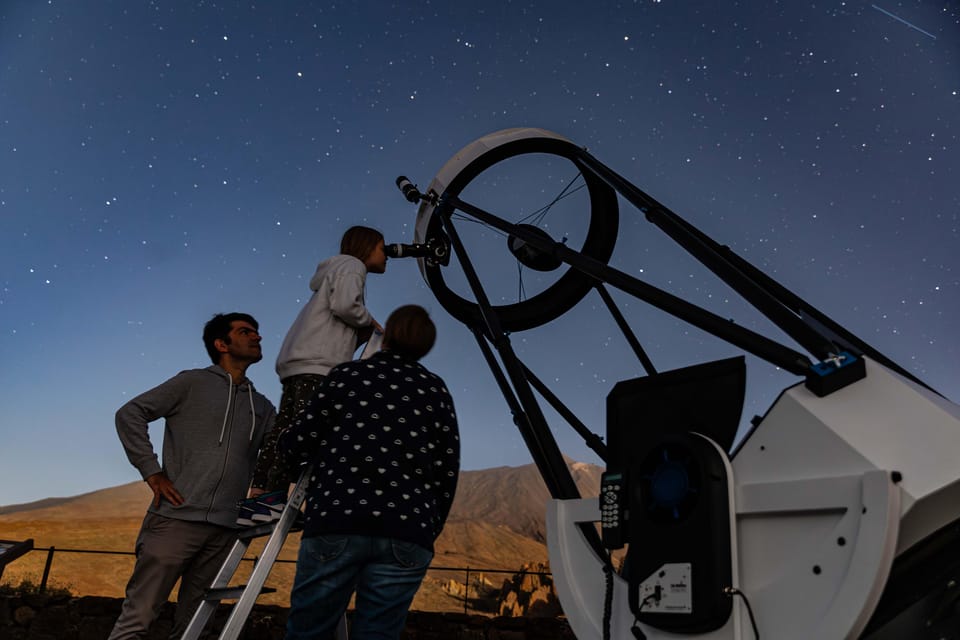
This is the classic “Grand 32” scope experience, built around the big 32-inch Dobsonian. The advantage of a telescope of this size is not just brightness. It’s the ability to show subtle detail when the sky is cooperating.
What you can realistically expect to focus on:
- Deep-sky objects like galaxies and nebulae, plus remnants and other faint targets when they’re well placed
- Planet views when planets are in the right window for that season (reviews mention Saturn and Jupiter specifically, including Saturn’s major moons)
- Seasonal variation, because your night targets depend on what’s visible and observable from Teide
One of the most practical bits from the way this tour is run is the pacing. With small groups, the guide can slow down and help you form the picture in your head: why that fuzzy patch is what it is, what stage of the universe you’re looking at, and what you’re seeing through the telescope versus what’s visible with the naked eye.
Also, several reviews mention the telescope is special in a more personal way. Some guests say Alessandro designed and built the telescope himself. Even if you don’t care about the engineering story, you still benefit from the result: a setup designed for real observing, not just show-and-tell.
The alternative: Night Vision Voyage and a different kind of “wow”
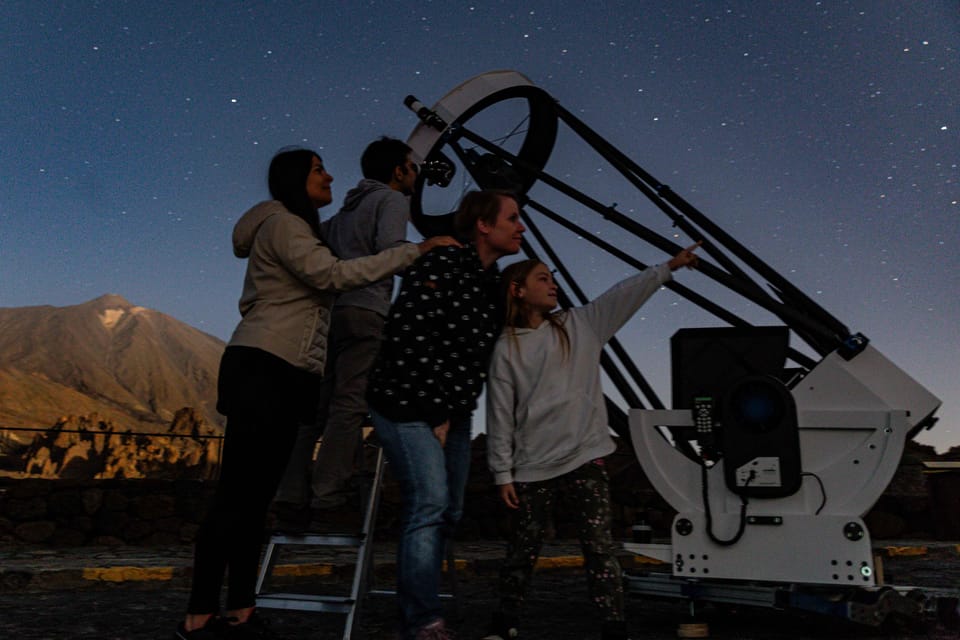
If you’re curious about how technology changes what you can perceive, consider the Night Vision Voyage. This option uses a modified 12-inch telescope with a night-vision system that amplifies light.
Even though it’s smaller than the 32-inch scope, it offers something valuable: a different look at the sky, and hands-on observational fun in a “see it differently” way. Reviews didn’t go deep on night vision details as often as they did the 32-inch scope, but the concept is straightforward. You’re not just swapping telescopes; you’re swapping a viewing method.
Who should choose this format:
- You want a more experimental feel
- Your group has mixed astronomy interest, and you’d like more varied visual moments
- You’re drawn to how night-vision systems change contrast and visibility
It’s also a smart backup if conditions limit what the team can do with the largest telescope. The big-name scope depends heavily on stable conditions, while this experience still aims to keep the night active.
Small group sizes: why “up to 12” matters for your actual view
In stargazing tours, the group size is not a minor detail. It changes how long you stay at the telescope. It changes whether questions get answered with care. It changes whether you can compare what you see across multiple objects in the time you have.
Here, the group stays small, up to 12 people. Reviews repeatedly mention that everyone gets enough time at the eyepiece and that the guide is not rushing. That’s the difference between a tour that feels like you’re waiting your turn and one that feels like you’re part of the night.
There’s also a subtle comfort factor. People get cold up on the mountain. A small group lets you manage breaks and pacing without turning it into a production line.
Your astrophotos: what’s included and why it’s worth it
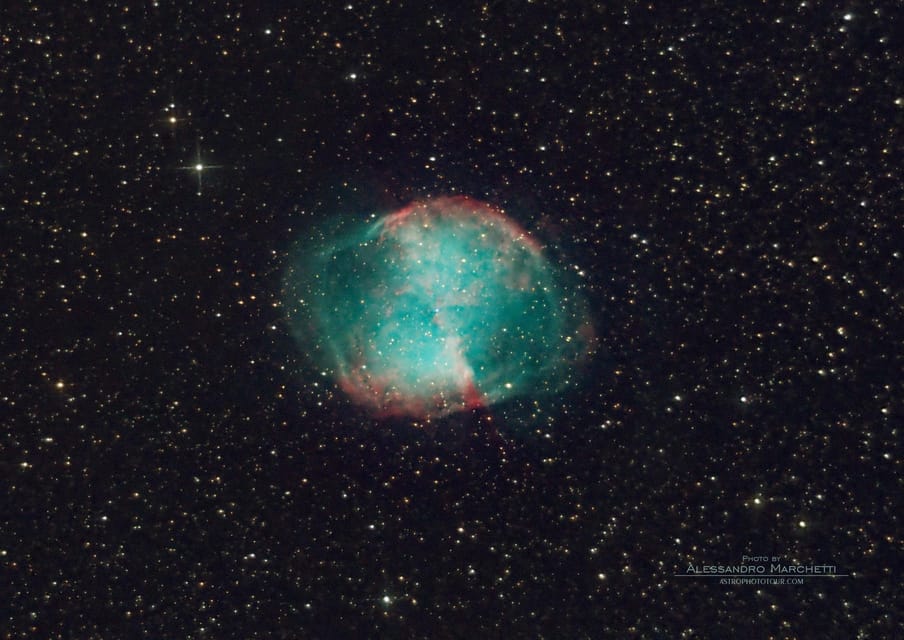
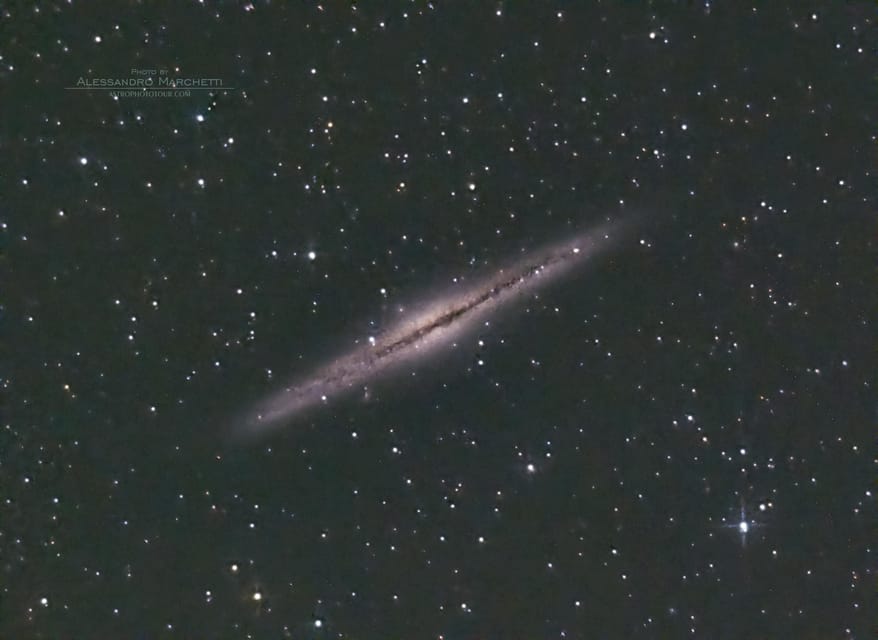
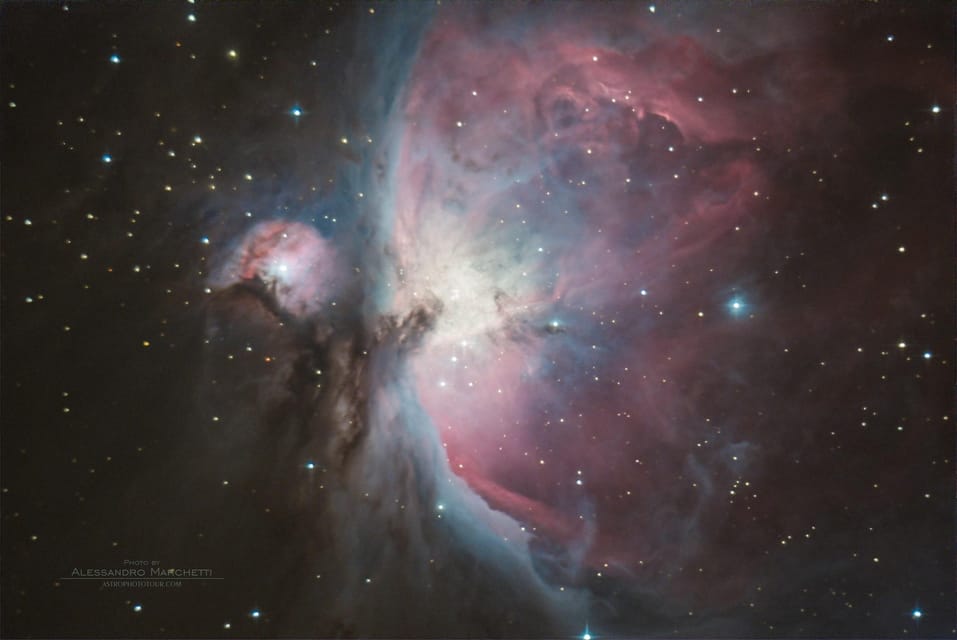
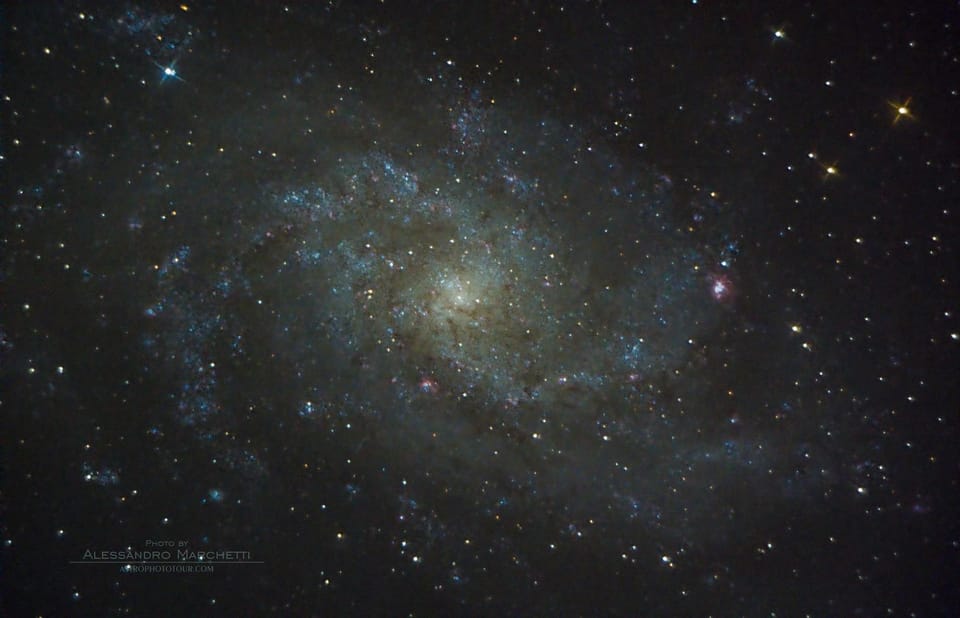
The tour includes a dedicated cooled astro-camera and a professional astrophotography package. You’ll get photos from that evening, plus additional images taken from prior sessions.
That’s a big deal if you have two realistic limitations:
1) Your eyes can only see what the telescope + sky conditions allow in real time.
2) Most people do not leave with crisp astrophotos taken by themselves.
So you’re paying for results. The camera work lets you capture targets that may be too faint or too brief to photograph well by hand during a short tour. It also helps you remember the sky in a way you can revisit later, even if the object was hard to identify with the naked eye.
Several reviews describe the photo results as impressive, and at least a few mention long-exposure shots and cool end-of-tour images. Even better, the guide can point out constellations and other objects visible with the naked eye when the telescope can’t run due to wind, so you’re not left empty-handed.
Timing and the meeting point: plan for flexibility
This tour runs for 3 hours. The exact start time depends on sunset, and it changes with the seasons. On the day of your tour, you’ll get the meeting point and time confirmation via WhatsApp, around 9:30 am.
Two logistical notes that matter:
- No hotel pickup/drop-off is included. You’ll need your own way to get to the meeting area.
- The meeting point GPS can change based on wind direction. Larger telescopes need less wind to operate safely and effectively.
If you hate changing plans, this is the only part that may irritate you. But if you’re visiting Teide for the sky and you’re willing to work with nature, it’s a reasonable trade.
What to bring (and what to skip) for a comfortable night
Cold comes fast at altitude. Bring warm gear, even if daytime feels fine.
Bring:
- Warm clothing
- Snacks and water
- Comfortable clothes you can move in easily
Not allowed:
- Shorts
- Open-toed shoes
- Flashlight
This is practical. Telescope nights require everyone to protect the dark-adaptation vibe. And open-toed shoes plus cold ground is how you end up spending half the tour thinking about your feet.
Also, reviews mention extra winter kindness like hot tea and cookies, and even clean extra layers for some people. That’s not listed in the core inclusions, but it gives you a hint that the team pays attention to comfort in the cold months.
If the weather turns: what happens when winds interfere
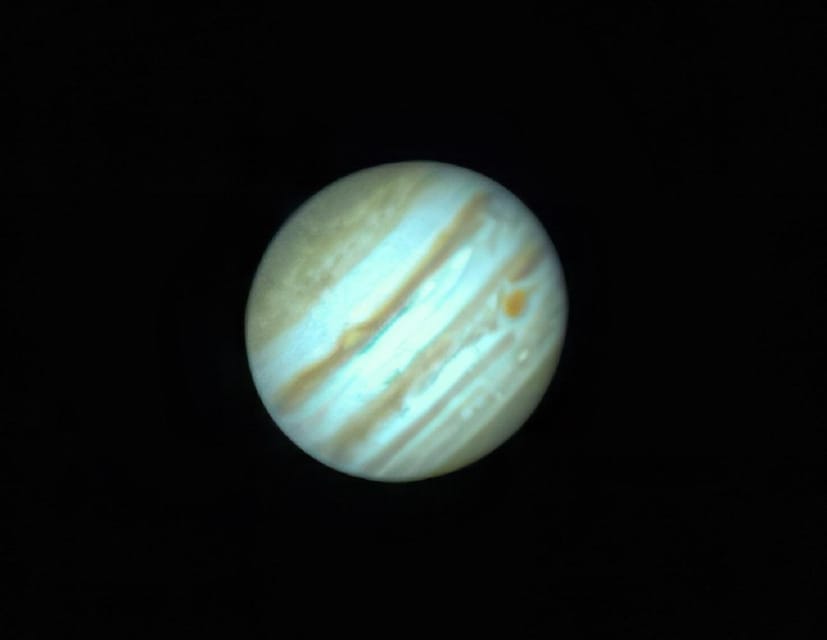
Telescope observing needs steadier air than casual stargazing. Wind can force the team to stop using the main scope. Reviews mention cases where strong winds limited telescope time, and in those moments the guide still worked to keep the experience going with photos and naked-eye pointing.
If conditions are not good for observation overall, the activity can be postponed to the next day or you can request a refund. In other words: you’re not locked into a guaranteed perfect sky. But you’re also not left with nothing to do.
My advice: pack for the possibility of delay. If you’re the kind of person who wants an exact minute-by-minute plan, this is not that tour. It’s a “work with the night” experience.
Who this tour fits best
This experience is a strong match if you want:
- A real guided night rather than a passive bus-tour vibe
- Time at the telescope and room to ask questions
- A mix of beginner-friendly explanations and deeper details for people who care
- A photo package that improves the odds you’ll go home with something you can actually show friends
It may be less of a match if:
- You want a quick, low-effort stargazing checkmark
- Your group won’t tolerate cold weather or schedule shifts
- You’re traveling with very young kids (children under 5 years are not suitable)
If your party has mixed interest levels, the guide’s flexible explanation style is a real plus. Reviews mention the guide being patient even when some people weren’t as interested in the more technical talk.
Price and value: what $58 buys in practice
At $58 per person for 3 hours, the value comes from three bundled pieces:
1) Access to a 32-inch private telescope (or the night-vision telescope option)
2) A guide who stays engaged with your questions
3) A professional astrophotography package including a cooled astro-camera capture and images from that night plus prior sessions
Many stargazing experiences focus mostly on the viewing. Here, the photography component is built in, which reduces the usual “I wish I had photos” regret. Also, you’re not dealing with a giant crowd. Small group time at the eyepiece is hard to price, but you feel it.
The main trade-off is what’s not included: no food and drinks, and no hotel pickup/drop-off. So budget a snack and water, and factor in how you’ll reach the meeting point.
Should you book this Teide telescope tour?
I’d book it if your priorities are simple: you want a guided night with real telescope time and you want photos without needing to be an astrophotography expert. The small-group size is the biggest “quality multiplier” here, and the 32-inch scope is the obvious reason to choose this over a generic stargazing outing.
I’d think twice if you’re very sensitive to schedule changes or you’ll struggle with cold mountain conditions. Wind can cut telescope time, and the tour is designed around what the sky allows.
If you’re flexible, dress warm, and show up ready to look slowly, this tour is the kind that makes Teide nights feel like a science lesson you actually remember.
FAQ
What time does the tour start?
The start time depends on sunset and changes by season. You’ll receive confirmation on the day of the tour via WhatsApp around 9:30 am.
Where do I meet for the tour?
You’ll get the meeting point details and GPS coordinates via WhatsApp. The exact location can depend on wind direction.
How long is the experience?
It lasts 3 hours.
What telescopes are used?
The tour offers a 32-inch Dobsonian telescope experience, or a 12-inch night vision telescope experience.
Are photos included?
Yes. The tour includes a professional astrophotography package, with images captured that evening and additional images from previous sessions.
Is hotel pickup included?
No. Hotel pickup and drop-off are not included.
What should I bring?
Bring warm clothing, snacks, water, and comfortable clothes.
What’s not allowed during the tour?
Shorts, open-toed shoes, and flashlights are not allowed.
Is the tour refundable if weather is bad?
If observing conditions are not good, it can be postponed to the next day or you can get a refund.