REVIEW · SICILY
Syracuse & Noto – Day Tour from Taormina
Book on Viator →Operated by Noema Viaggi Srl · Bookable on Viator
Two cities, one ancient heartbeat, and a long day.
This Syracuse + Ortigia outing is built around the big hitters—Greek ruins and the island of Ortigia—while also giving you time in Noto, a UNESCO World Heritage Baroque town. The tours are guided and structured, but one real-world drawback is that larger groups and multiple languages can slow the pace in hot weather.
You start early (7:20 am) and return to the meeting point after about 10 hours. Guides you might meet include Christian/Christy and sometimes Santo/Santos, and their style often matters a lot—some people love the detail and enthusiasm, while others find the repeating translations frustrating.
In This Review
- Key takeaways before you go
- Syracuse and Noto from Taormina: why this day tour makes sense
- Morning logistics: 7:20 pickup, up to 50 people, and the pace issue
- Noto’s Baroque center: what you can realistically do in one hour
- Ortigia waterfront walk: Fonte di Aretusa and the Apollo area
- Syracuse Cathedral and Teatro Greco: the Greek core of the day
- Price and the real cost: what $72.09 buys you (and what it doesn’t)
- Comfort, heat, and translation: how to avoid a frustrating version of the day
- Who this tour is best for (and who might want a different plan)
- Should you book this Syracuse and Noto tour from Taormina?
- FAQ
- How long is the Syracuse & Noto day tour from Taormina?
- What time does the tour start?
- Where does the tour pick up and drop off?
- Is the tour offered in English?
- Is admission to the archaeological park included?
- Is the Ortigia cathedral entrance included?
- Does the tour include food and drinks?
- How large is the group?
- Can I cancel for a full refund?
Key takeaways before you go
- Syracuse and Ortigia first: a guided sweep of the key sites, with room to wander on Ortigia
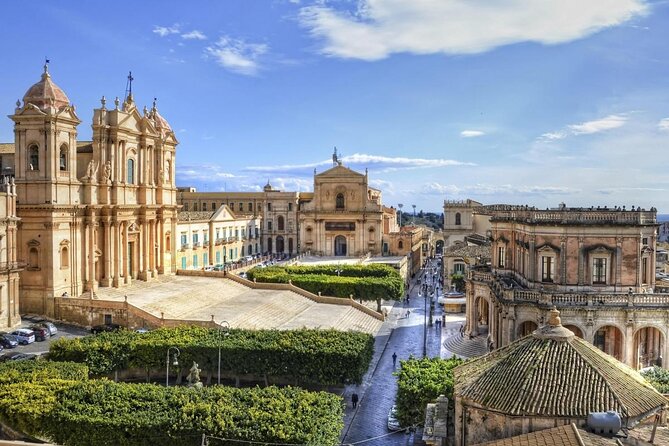
- Noto is timed tightly: you get about an hour, so go straight for the main Baroque core
- Entrances cost extra: the archaeological park and the Ortigia cathedral are not included
- Language and group size affect pace: the tour can feel slow when explanations repeat
- Hot-day comfort is a factor: bus temperature can be an issue on warm Sicily days
Syracuse and Noto from Taormina: why this day tour makes sense
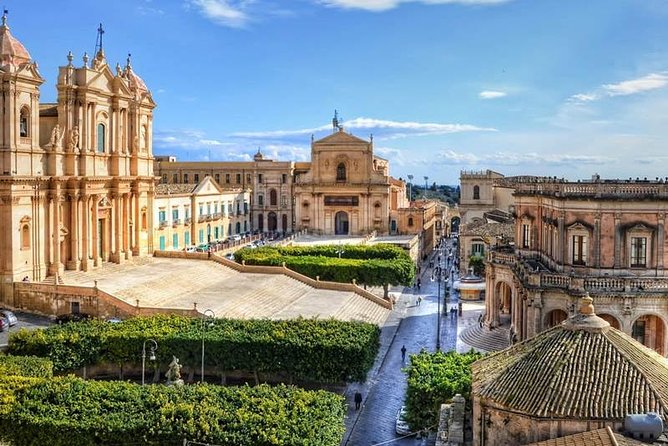
If you’re basing yourself in Taormina and want ancient Syracuse plus Baroque Noto without messing with transit, this is a practical match. You get a single, pre-planned day that hits multiple “must-see” areas: the Greek ruins in Syracuse proper, the sea-front island feel of Ortigia, and then Noto’s Baroque streets.
What I like most is the balance of guided time and unscripted time. You’re not stuck in lockstep the whole day. Ortigia includes free time after the walking portion, and Noto gives you a full hour to explore at your own pace.
The other thing to like is that the day is built around clear walking stops and named places. You’re not guessing where you’ll end up. You’ll be routed through familiar anchors like Fonte di Aretusa, the Cattedrale Tempio d’Apollo area, and the Teatro Greco in Neapolis.
The key consideration: it’s a big-day tour. It’s long enough that small annoyances—like waiting for translation, buying separate tickets, or long bus pickup/drop-off—can add up.
You can also read our reviews of more tours and experiences in Sicily.


Morning logistics: 7:20 pickup, up to 50 people, and the pace issue
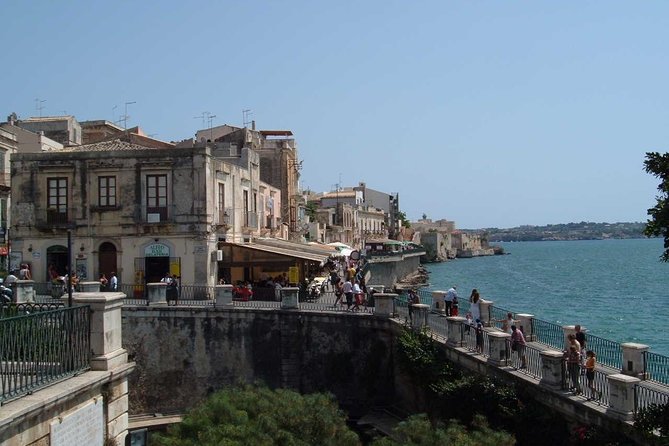
This tour starts at 7:20 am, so plan your morning like it’s a mini-excursion even before you leave your hotel. Pickup and drop-off happen from designated meeting points, and the day ends back there, which is convenient when you’re trying to keep the day simple.
Group size can be a deciding factor. This experience can run with up to 50 travelers, and that affects everything: boarding time, how long you spend waiting for the full group at each stop, and how quickly you move between locations.
Language handling is the other pace factor. The tour is offered in English, but guides can be multi-lingual, and some groups end up with the same message repeated for different languages. If you hate waiting through multiple versions of the same talk—especially when it’s warm—this is worth keeping in mind before you book.
One small but important practical note: on days like this, bathroom timing matters. With large groups and tight schedules, you’ll want to make sure you’re back with the group when everyone is called. I’d also keep your timing extra sharp when you’re in ticket lines, because the day runs on momentum.
Noto’s Baroque center: what you can realistically do in one hour
Noto is scheduled as a city stop with about 1 hour. That’s enough time to get the feel of the Baroque layout and still take some photos, but it’s not enough for a slow, museum-style wander.
Here’s how to make the hour work for you:
- Choose one main street area to focus on immediately, then let side streets be bonuses
- Plan your time for photos early, because you’ll likely want free minutes at the end for a quick coffee or a final look
- Don’t treat this hour like it’s two hours. It isn’t
This stop can feel satisfying if you’re the type who likes to “arrive, orient, and capture the vibe.” It can feel rushed if you want to sit down and browse multiple lanes slowly.
Also, because the tour includes guided time rather than constant free wandering, it helps to stay with the group instructions at the start. The Noto portion is designed to keep the overall day on track for Syracuse and Ortigia after.
Ortigia waterfront walk: Fonte di Aretusa and the Apollo area
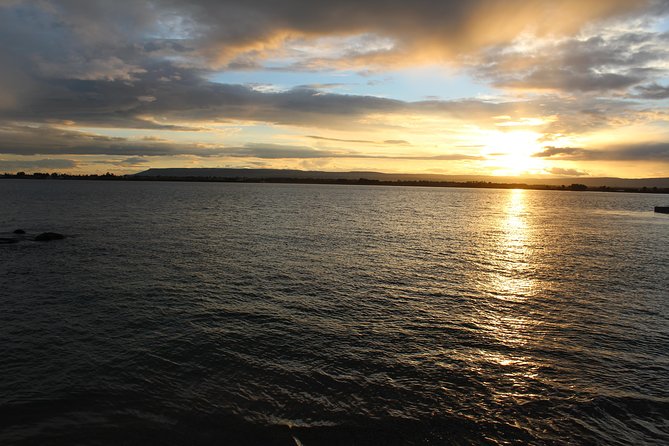
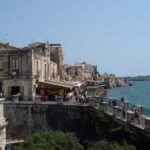
Ortigia is the relaxed-feeling part of the day for a lot of people, and you’ll feel that shift when you arrive on the island. The route begins with a stroll along the Foro italico, and then you’ll reach the Fonte di Aretusa.
Fonte di Aretusa is described as a freshwater source that forms a natural pool with papiro (papyrus) plants and sits on a terrace looking out to sea. That mix—water, plants, and open views—creates an easy photo moment without needing museum time.
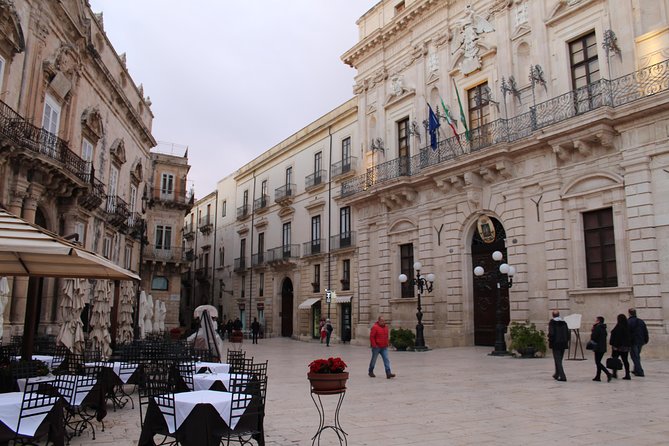
After that, the walk connects to the Cattedrale Tempio d’Apollo area and then to a magnificent Baroque piazza where it stands. The tour includes guided context, and then you get time to roam with your own rhythm.
You’re allocated about 1 hour 30 minutes for Ortigia, and that’s where you can tailor the day. I’d use that time for:
- a slow walk to settle into the island vibe
- a snack or drink (food and drinks aren’t included, so plan on paying)
- popping into small streets that look interesting, not just staying on the main route
One drawback that can show up: if the group is delayed earlier in the day (hot bus time, ticket lines, repeated translation), your Ortigia free time can feel tighter than you expected. If you’re the kind of person who thrives on a plan, great. If you’re the kind of person who needs extra breathing room, keep your expectations realistic.
Syracuse Cathedral and Teatro Greco: the Greek core of the day
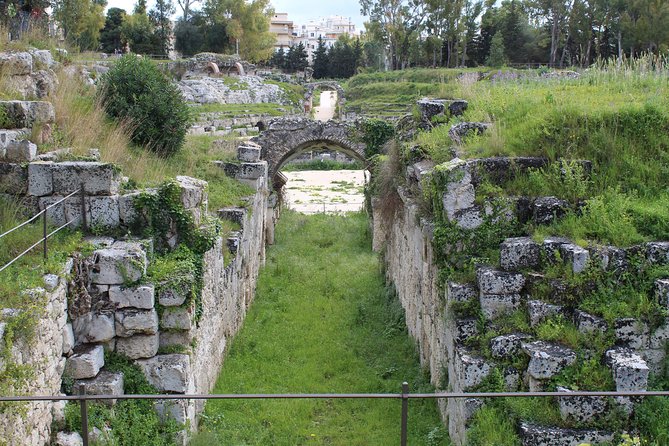
Syracuse is where the day turns more ancient, more structured, and more ticket-focused. After Ortigia, you’ll get a guided visit of the Duomo di Ortigia for about 20 minutes, though the entrance is not included.
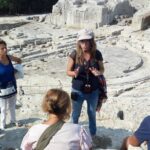
Then the tour shifts to Neapolis for the Teatro Greco, with about 1 hour allocated. This is the kind of place where one hour can feel perfect: long enough to take in the scale and walk around, but not so long that you melt in the sun.
The important practical detail is entrances. The archaeological park entry is not included (listed at €17.00 per person), and that often becomes the main add-on cost for the day. Another separate entrance is listed for the Ortigia cathedral (around €3.00 per person). Expect to pay for those on top of the tour price.
Because of the extra ticket steps and the heat factor at archaeological sites, I’d come ready for a slower-moving reality at times. If you need shade breaks, build them into your approach rather than assuming the tour will give you long pauses.
Also, if you’re sensitive to pacing, watch how the guide handles the group. Some guides are praised for being passionate and organized, while others are criticized for moving slowly or struggling to answer questions. Either way, Teatro Greco is big on sightlines, so even without perfect narration, you’ll still get the main payoff.



Price and the real cost: what $72.09 buys you (and what it doesn’t)
The tour price is listed at $72.09 per person, and what you’re paying for is transportation from Taormina plus guided touring time across multiple locations. That’s the value in a nutshell: you avoid figuring out logistics and you get structured narration and route management.
But the day is not a fully all-in ticket. Two separate paid entrances are clearly noted:
- Archaeological park: €17.00 per person (not included)
- Ortigia cathedral entrance: €3.00 per person (not included)
So your day budget should assume about €20 more per person for those entrances, depending on what you choose to pay on site. Add food and drinks too, since neither is included.
Is it still good value? For me, the answer depends on you:
- If you want a guided, no-planning day, it’s solid value because the alternative is coordinating transport plus buying tickets plus figuring out timing yourself.
- If you hate extra charges, long lines, or translation delays, you may feel like you’re paying premium money for time you don’t fully control.
One more value note: there’s a strong hint in the feedback that ticket lines can be a time-waster. If you prefer to reduce queue time, you might consider buying the relevant tickets directly when you arrive, especially if you qualify for any reduced rates. For example, one piece of advice given is to check reduced pricing for EU citizens under 25.
Comfort, heat, and translation: how to avoid a frustrating version of the day
On Sicily’s warm days, comfort isn’t fluff. It affects whether you enjoy the history or just daydream about shade. Some feedback points to buses getting quite hot, and not all conditions are consistent from day to day.
Here’s what you can do to protect your experience:
- Bring water and plan for short breaks, especially around the archaeological park time
- Use your Ortigia free time to reset, not just to keep snapping photos
- If the tour runs multiple languages, stay patient. It can be slow, but it also means you may understand the explanation in your preferred language
One issue that pops up is repeated explanations for multiple language groups. That can turn a site visit from “one explanation, then exploring” into “sit, listen, repeat,” which can be tiring when the sun is high.
If you’re traveling with someone who has trouble with slow walking or long sits, I’d be extra cautious. This tour is a lot of walking across multiple stops, and the pacing can depend heavily on how the guide manages the group and how quickly the bus can move between locations.
Who this tour is best for (and who might want a different plan)
This is a strong choice if:
- you’re on a tight schedule and want Syracuse and Noto without transportation planning
- you like big sightseeing hits in one day
- you can tolerate structured walking and some waiting
- you want a guide to connect the dots between stops
It’s less ideal if:
- you hate translation delays and would rather explore independently
- you want lots of time in just one place
- you’re very heat-sensitive and need frequent shade breaks
- your group includes mobility issues, since the pacing and walking load can vary
If you’re a first-time visitor to Sicily and you’re trying to get the “greatest hits” early, this fits the mission: you’ll see the major anchors, and you’ll leave with a sense of where to focus next time.
Should you book this Syracuse and Noto tour from Taormina?
I’d book it if you want an organized day that combines Syracuse’s Greek ruins, Ortigia’s waterfront stops, and Noto’s UNESCO Baroque look—all without transport headaches. The guided format is the main selling point, and it’s especially appealing when you’re short on time.
I would not book it if your top priority is maximum free roaming time, minimal waiting, or a very quiet, small-group experience. With up to 50 people and a chance of repeated multi-language explanations, the day can feel slower than you’d like.
My practical final advice: if you go, go with a mindset of managing the schedule. Keep an eye on headcount, expect separate entrances for key sites, and plan your energy around hot spots (especially the archaeological park and outdoor walking). If you do that, the payoff is a full, satisfying day of Sicily’s two-faced charm: ancient stone and baroque street glow.
FAQ
How long is the Syracuse & Noto day tour from Taormina?
It runs for about 10 hours.
What time does the tour start?
The start time is 7:20 am.
Where does the tour pick up and drop off?
Pickup and drop-off are from designated meeting points, and the activity ends back at the meeting point.
Is the tour offered in English?
Yes, the tour is offered in English.
Is admission to the archaeological park included?
No. Admission to the archaeological park is not included and is listed as €17.00 per person.
Is the Ortigia cathedral entrance included?
No. The entrance to the Ortigia cathedral is not included and is listed as €3.00 per person.
Does the tour include food and drinks?
No. Food and drinks are not included.
How large is the group?
The tour has a maximum of 50 travelers.
Can I cancel for a full refund?
Yes. You can cancel up to 24 hours in advance for a full refund. If you cancel less than 24 hours before the start time, the amount you paid will not be refunded.