REVIEW · SICILY
Syracuse and Ortygia Island Day Trip from Taormina
Book on Viator →Operated by SAT Group · Bookable on Viator
Ancient Syracuse works as a perfect day-trip. You’ll get guided time in Neapolis with Greek and Roman ruins, then shift to Ortygia for a cathedral-area stroll and real island atmosphere; it’s also a long day, and the bus schedule or multi-language narration can eat into your time on-site.
What I like most is the mix: big archaeology in one focused block, then an on-foot Ortygia walk where you can stop for coffee, browse, and look up at the palaces around Piazza Archimede. A practical note up front: entrance fees for the archaeological park and the Duomo are extra, and the walking can add up in heat.
The 8:00am departure from Taormina means you’re beating the late-day crowds, and the ride is on an air-conditioned coach. With a maximum group size of 49, it can feel like a crowd, but you usually still get photos and some breathing room—especially once you’re on Ortygia.
In This Review
- Key highlights worth knowing before you go
- From Taormina to Syracuse: the coastal coach ride that sets the pace
- Parco Archeologico della Neapolis: Roman theaters, Greek drama, and the Altar of Hieron II
- Ear of Dionysius caves: where the story gets physical
- Ortygia’s walking route: Fountain of Aretusa to Piazza del Duomo
- Syracuse Cathedral (Duomo): what you’ll see, and the small extra fee
- Heat, walking, and the day’s pacing: how to avoid a miserable afternoon
- Guide style and languages: how to get the most from the storytelling
- Price and logistics: is $78.31 worth it?
- Who this day trip suits best (and who should pick something else)
- Should you book this Syracuse and Ortygia day trip from Taormina?
- FAQ
- What time does the tour start from Taormina?
- How long is the day trip?
- What’s included in the ticket price?
- Are lunch and drinks included?
- Do I need to pay entrance fees for the archaeological park and cathedral?
- Is the tour offered in English?
- How large is the group?
- Is the tour suitable for most people?
- What if I need to cancel?
- Is there a minimum number of passengers in winter?
Key highlights worth knowing before you go
- Neapolis first, Ortygia second: archaeology is handled in the morning so you’re not rushing later.
- Ear of Dionysius + Aretusa: you’ll hit both the dramatic cave story and the famous Fountain of Aretusa.
- Multi-language narration is real: some days are smoother than others, but expect repeated guiding in more than one language.
- Bring cash for entrances: Parco Archeologico entry is not included, and Duomo di Siracusa costs a small fee.
- Heat + walking are the main challenge: comfortable shoes, a hat/visor, and lots of water make a big difference.
- Guides can make or break it: many guides named in past days—like Renate, Eva, Giuseppe, Alfredo, Enza, and Santo—are praised for storytelling.
From Taormina to Syracuse: the coastal coach ride that sets the pace
This is a full-day outing with an early 8:00am start. You meet at Terminal Interbus Taormina (Via Luigi Pirandello) and then take a coach ride along the coast into Syracuse, which takes about 1.5 hours. That time matters because it shapes your whole day: when the pickup pattern is complex, you can lose minutes—or even more—to extra stops before you ever reach Neapolis.
The upside: you’re traveling comfortably in an air-conditioned vehicle, which is a big deal in Sicily, especially outside the cooler months. Also, many people appreciate that the tour leader and local guide handle the handoffs—so you’re not juggling directions and ticket lines while the day is moving.
If you’re the type who likes to control timing tightly, build in flexibility. Some days run exactly on schedule. Other days involve traffic, pickup logistics, or a slower pace due to language interpretation.
You can also read our reviews of more tours and experiences in Sicily.

Parco Archeologico della Neapolis: Roman theaters, Greek drama, and the Altar of Hieron II
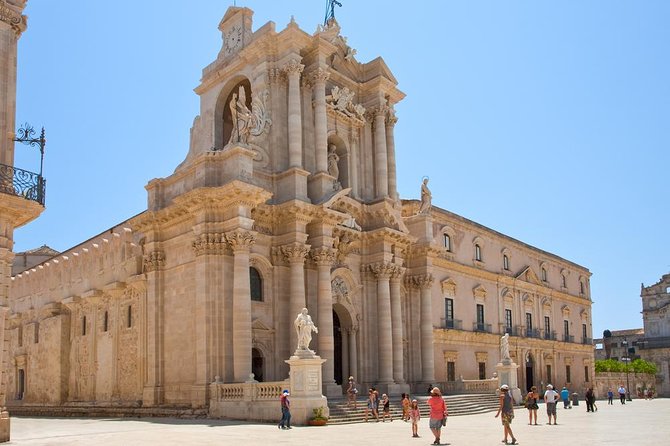
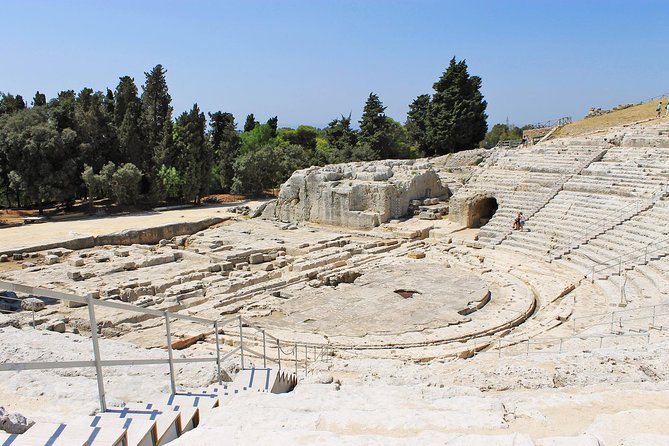
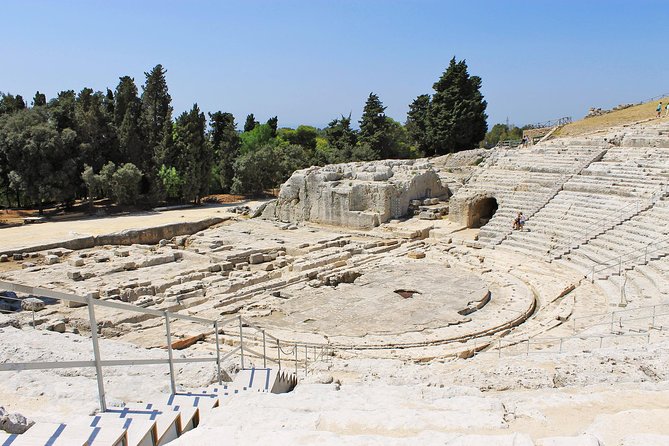
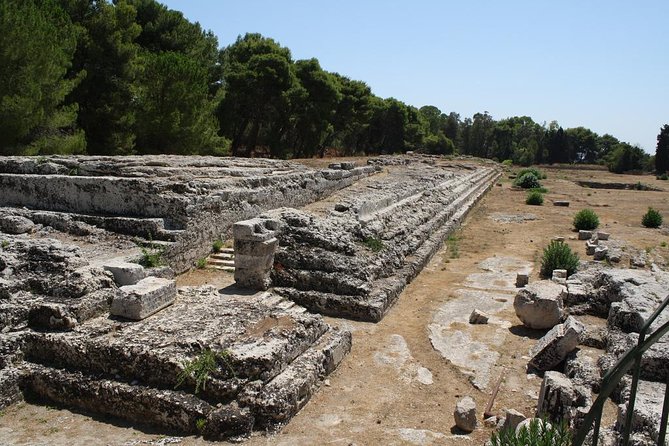
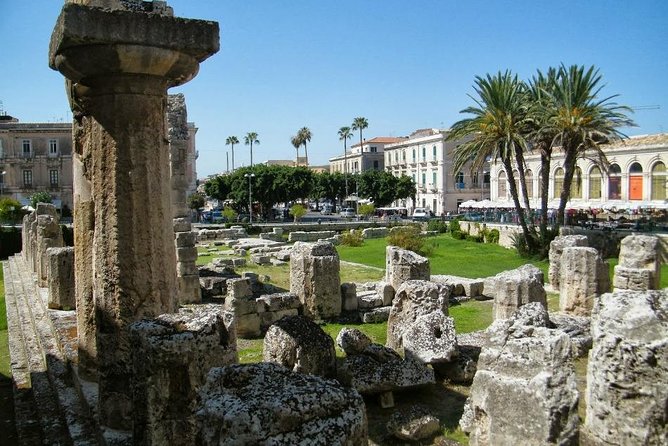
Your first real stop is Parco Archeologico della Neapolis. The visit runs about an hour with a local guide, and this is where the big names of ancient Syracuse come together: the Roman amphitheater, the Greek theater, and major monuments like the Altar of Hieron II.
A key detail: the park entry fee is not included. So you’ll want to either have your cash ready or plan on paying quickly so you don’t feel stuck at the gate. There’s also a helpful note for EU citizens under 18: entry to the park is free there, but for everyone else you should treat it as an extra cost.
Here’s what to expect once you’re inside:
- You’ll get guided orientation at the major ruins rather than trying to self-navigate a huge site.
- The monuments are well-preserved enough to get a real sense of how the city functioned—religious festivals, performances, and daily life all lived side by side.
- The Altar of Hieron II is a highlight because it connects the stone to stories you can actually picture, including the idea of bull sacrifices during ancient festivals.
One practical caution from real-world experience: the Greek theater doesn’t always look exactly like postcards. At certain times, you may find the theater area altered by stage sets for tragedies or protective building works. That can mean fewer views from certain angles, or you may not see the stage area the way you imagined. Still, the scale and the setting are worth it, especially if your goal is understanding Syracuse as a lived-in ancient city—not just taking photos.
Ear of Dionysius caves: where the story gets physical
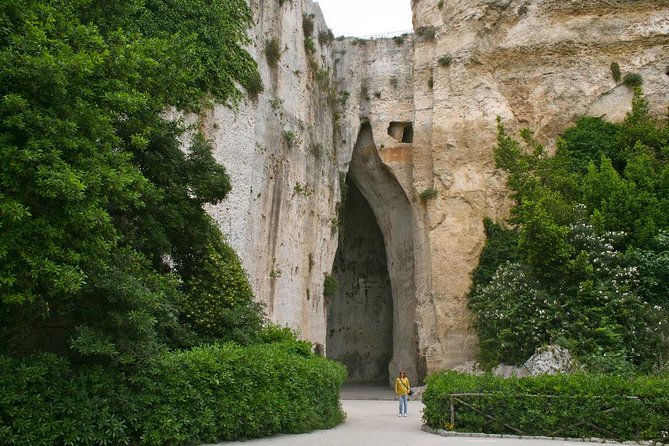
Right after Neapolis, you’ll spend about another hour at the Ear of Dionysius. This is one of those sites that becomes memorable fast because the feature itself is dramatic: an artificial limestone cave tied to the legends of ancient Syracuse.
You’ll visit the caves in the archaeological area, and your guide should connect the site to the larger Syracuse narrative—how rulers, culture, and legend layered onto real architecture. Even if you’re not a hardcore history person, this stop tends to land because you can see and walk through elements that feel tangible.
Two things to prepare for:
- This is still within the larger archaeological area, so wear shoes you trust. Even if the ground isn’t rough everywhere, you’ll be on uneven surfaces and moving between points.
- Combine this with the midday heat planning. If you’re going in warmer months, bring water and a hat/visor because the day can feel long once you’re out in full sun.
Ortygia’s walking route: Fountain of Aretusa to Piazza del Duomo
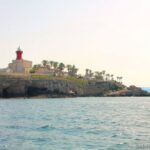
Then the mood shifts. Instead of ruins, you move into Ortygia, Syracuse’s island neighborhood, where you can actually feel the city as it exists today.
You’ll pause to purchase lunch before the guided sightseeing continues. Lunch isn’t included, so this is a moment where you can choose what fits your budget and appetite. Many people like using this break to reset—water first, then food—because the rest of the day is on foot and the pace is steady.
After lunch, you’ll hit:
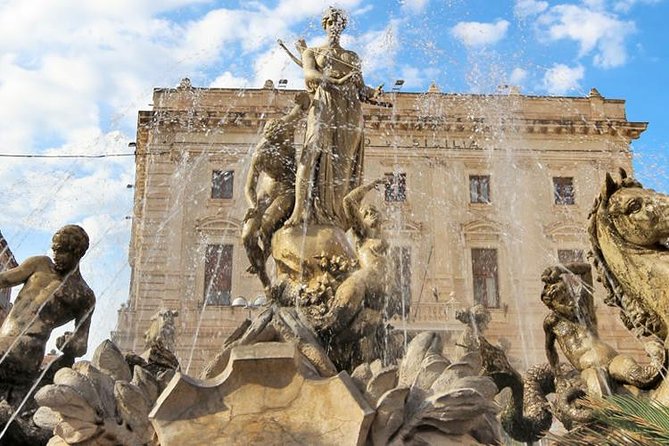
- Piazza Archimede and the Fountain of Aretusa, a central photo stop with plenty of people-watching.
- Nearby palaces with Gothic design, which is a nice contrast to the earlier classical stonework.
- Piazza del Duomo, where the Syracuse Cathedral dominates the scene and the square fills in with the surrounding 17th-century civic and religious buildings you’ll recognize as part of the city’s older core.
From here, you’re basically doing a guided walk among locals. You’ll look up at landmarks like the Palace of Beneventano del Bosco, City Hall, and the Archbishop’s Palace. Even if you only catch glimpses between crowds and street corners, the geometry of the architecture makes it feel very different from Taormina—more grounded in the everyday life of Syracuse.
One practical warning: Ortygia is pedestrian. That’s great for atmosphere, but it means you can’t count on getting close to every sight by bus. In very hot conditions, some people reported longer walking distances than expected. If heat is high, plan on taking your time, using shaded moments when they appear, and keeping your water bottle visible rather than buried in a bag.
Syracuse Cathedral (Duomo): what you’ll see, and the small extra fee
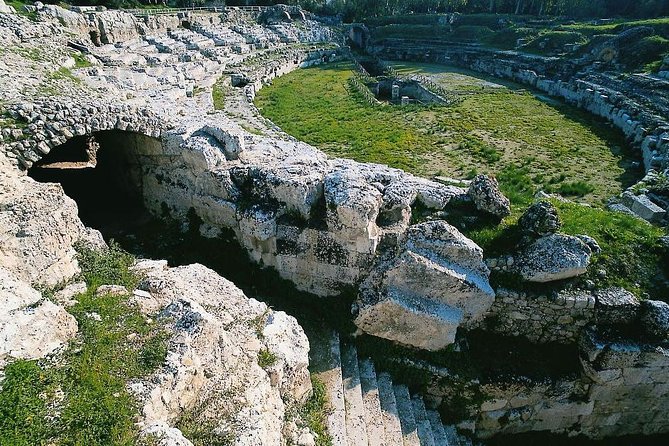
The cathedral stop is short—about 15 minutes—and the Duomo di Siracusa entrance fee is around €2.00 per person. This is worth remembering because it’s an easy cost to forget when you’re calculating your day’s total budget.
The cathedral is more about the exterior presence and the immediate square setting than a long museum-style visit. You’ll walk up to the main cathedral area and absorb the feel of the place as part of the larger Piazza del Duomo scene.
If you’re trying to maximize your time, think of this as a quick architectural moment rather than a “must-see inside” for hours. If you want longer interior time, you can always plan to come back on your own later (but this day trip is built for highlights and movement).



Heat, walking, and the day’s pacing: how to avoid a miserable afternoon
This tour’s success often comes down to one variable: the weather. Multiple experiences point to the same reality—Syracuse in intense sun can feel oppressive, even in the middle of the day when you think you should be cooling off.
There are two common problems that show up:
- Guides talking too long in the sun while multiple language versions are delivered.
- A longer-than-expected stretch of walking when the bus can’t park near afternoon points.
So here’s my practical advice if you’re booking for warmer months:
- Wear comfortable shoes you can walk in for a while.
- Bring a hat/visor and take water seriously. Don’t treat hydration as optional.
- Consider carrying a small personal fan if you like that kind of thing; one reviewer even suggested street fans as a lifesaver.
- If you need a moment to cool down, treat it like part of the plan, not a failure. Duck into a bar when you need it and rejoin when you can.
If your goal is a relaxed pace with lots of loose roaming time, this may still work—but you’ll want cooler conditions or you’ll need to accept that your day is structured and the walking is part of the deal.
Guide style and languages: how to get the most from the storytelling
This is where reviews swing from love to frustration. The tour is offered in English, but the on-coach narration can be repeated in multiple languages. Some days feel smooth. Other days feel like the same information is delivered several times, which can add time and patience-testing moments—especially in the heat.
If you want to reduce frustration, do two things:
- Bring your own earphones. Earphones aren’t listed as included, but several people wished they were. Even basic earbuds make a big difference if you can tune into the guide more clearly.
- Don’t anchor your expectations to one continuous English-only flow. Some tours divide groups by language at certain points, and some days don’t. The safest mindset is flexible.
The good news: when guides are on their game, the stories really make the sites come alive. Names that earned high praise include Renate and Eva (praised together for making the day feel alive), Giuseppe, Alfredo, Santo, and Enza. When a guide manages a large group well—keeping control of timing and helping everyone hear—you get a day that feels like more than transportation.
Price and logistics: is $78.31 worth it?
At $78.31 per person for a 9-hour day, the value is strongest when you want guided structure plus a comfortable coach from Taormina. What you get for that price:
- Air-conditioned vehicle
- Local guide service
- Tour leader service
- A mobile ticket
- English offered (with the real-world caveat that multi-language narration may still happen)
What you pay extra for:
- Entry to Parco Archeologico della Neapolis (free only for EU citizens under 18 years)
- Duomo di Siracusa entrance fee (about €2.00)
So you’re paying less for the guide and transport, and more for the experience once you’re on the ground. If you were to DIY Syracuse from Taormina, you’d still face the need for tickets, the navigation headache, and a lot of time spent figuring out where to start. This tour trades some independence for a steady route and interpretation.
My bottom-line take: it’s good value if you want an organized highlights loop with a guide telling the stories. It’s not great value if you need a lot of free time, want minimal walking, or are very sensitive to extended narration in multiple languages.
Also, group size matters. With up to 49 people, the day can feel busy. Most tours keep it moving, but a few experiences mention getting split up in crowds early on. If you’re traveling with someone who prefers clear, easy regrouping, agree on a simple meeting plan in your head.
Who this day trip suits best (and who should pick something else)
This tour fits you best if you:
- Want a guided overview of Syracuse plus Ortygia without the stress of planning transport and timing.
- Enjoy architecture and ancient sites and want the story behind the stones (especially Neapolis and the Ear of Dionysius).
- Like walking around a lively historic district and stopping for lunch and photos.
It may frustrate you more if you:
- Get heat-sick or can’t handle long sunny walking.
- Dislike multi-language narration and repetition.
- Want lots of free time inside sites like the theater area or the cathedral.
One more thought: if your main dream is the Greek theater in a very specific way (for example, seeing certain stage perspectives), be aware that protective works and stage sets can limit what’s visible. That doesn’t make the site pointless, but it can change your expectations.
Should you book this Syracuse and Ortygia day trip from Taormina?
I’d book it if you want a structured day where the guide does the heavy lifting in Neapolis and then Ortygia stays open enough for you to enjoy the town on your own. With the coach comfort and real guided stops like the Ear of Dionysius, plus a walk through Piazza Archimede and Piazza del Duomo, you’ll come away with a strong sense of what Syracuse is.
I’d skip—or pick a different format—if you’re traveling in peak heat, dislike group pacing, or really need a long, quiet, English-only experience without repetition. In those cases, you might prefer a more flexible plan so you can control walking time and choose your own stops.
If you do book, pack for the sun, bring water, and bring earphones. Then set your expectations: this is a highlights route, not a slow wander.
FAQ
What time does the tour start from Taormina?
It starts at 8:00am, with pickup/meeting at Terminal Interbus Taormina (Via Luigi Pirandello, 98039 Taormina ME).
How long is the day trip?
The duration is about 9 hours.
What’s included in the ticket price?
You get an air-conditioned vehicle, local guide service, and a tour leader service. It also includes a mobile ticket.
Are lunch and drinks included?
No. Food and drinks are not included. The schedule includes time to purchase lunch in Ortygia.
Do I need to pay entrance fees for the archaeological park and cathedral?
Yes. Admission to Parco Archeologico della Neapolis is not included, and Duomo di Siracusa has an entrance fee of about €2.00 per person. EU citizens under 18 years get free entry to the archaeological park.
Is the tour offered in English?
The tour is offered in English. Some parts may still involve multiple languages, based on how the day is guided.
How large is the group?
The tour has a maximum of 49 travelers.
Is the tour suitable for most people?
Most travelers can participate. Service animals are allowed.
What if I need to cancel?
Free cancellation is available up to 24 hours in advance for a full refund.
Is there a minimum number of passengers in winter?
Yes. During winter there is a minimum of 12 people, and the tour could be canceled if the minimum isn’t met, with an alternative or a full refund offered.