REVIEW · SICILY
Sicilian Cooking Class in Taormina
Book on Viator →Operated by SAT Group · Bookable on Viator
Cooking Sicilian lunch starts at the market. I love the hands-on, chef-led class and the market shopping in Taormina’s historic center, where you see how locals pick ingredients. The one thing to plan for: the cooking happens in a working restaurant setup, so it can feel a bit noisy and tight if you like lots of personal space.
This is a 4-hour experience that starts at 10:00 am near Porta Messina and ends back at the same meeting point. You’ll walk through an outdoor food market, then get to cook and eat a 3-course lunch with wine included, plus coffee or tea, water, and snacks.
In This Review
- Key highlights you’ll feel right away
- Market Meet-Up at Porta Messina
- Choosing ingredients the Sicilian way: tomatoes, lemons, and seafood
- Hands-on cooking: caponata, maccheroni, and fish alla ghiotta
- Starter: Sicilian caponata
- Main 1: Hand-made maccheroni with tomato sauce
- Main 2 (or second main course): Fish alla ghiotta
- Menu variations to expect
- Where the class actually happens (and why it can get loud)
- Lunch with included wine: eat what you made
- Price and value: is $127.03 worth it?
- Who this Taormina class is best for
- Should you book this Sicilian Cooking Class in Taormina?
- FAQ
- How long is the Sicilian cooking class in Taormina?
- What time does it start, and where do I meet?
- What’s included with the price?
- Is wine included?
- How big is the group?
- Can I cancel for a full refund?
Key highlights you’ll feel right away
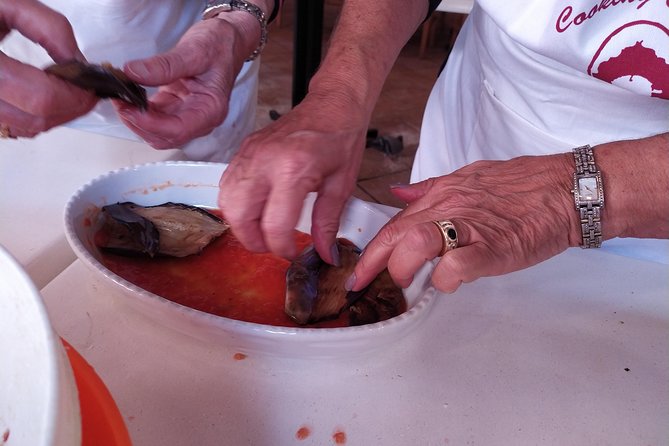
- Market shopping with real local fruit and veg as you plan what to cook
- Chef-led technique practice (handmade pasta is a big focus)
- Sicilian menu you actually make: caponata, maccheroni, and a fish course like alla ghiotta
- Wine included with lunch, plus coffee or tea and plenty of food
- Small-group feel up to 20 people, so you’re not just watching
Market Meet-Up at Porta Messina
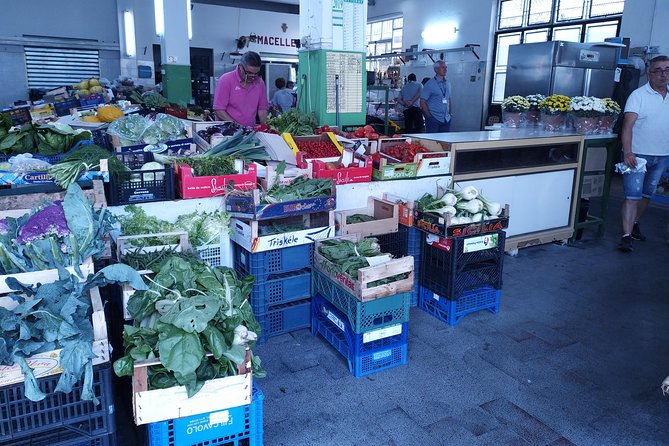
You start near Porta Messina in Taormina’s historical center at Ristorante Pizzeria Porta Messina (Largo Giove Serapide, 4). From there, the day kicks off with a guided walk to an outdoor market. This is one of those parts that sets the tone: you’ll hear sellers calling out their produce, and you’ll see the kinds of seasonal items that never look the same as supermarket versions.
Here’s what I like about this stop: it’s not just shopping. Your chef and guide help you connect ingredients to the food you’ll make later. You’ll talk about what counts as the right seasonal ingredient, and you’ll get a feel for how Sicilian cooking follows what’s available rather than chasing a menu that never changes.
If you’re the kind of traveler who loves food details, this market walk is where you’ll start noticing patterns—like how vegetables show up in sweet-sour dishes, how tomatoes drive sauces, and how seafood and salty ingredients land in classic combinations.
Practical note: wear comfortable shoes. Market walking is usually uneven and active, and you’ll want to move easily before you start chopping.
You can also read our reviews of more tours and experiences in Sicily.



Choosing ingredients the Sicilian way: tomatoes, lemons, and seafood
After the market, you shift from browsing to building your meal. The chef guides you in selecting ingredients, and the explanations matter because they give context for the recipes you’ll cook—not just instructions to follow.
Sicily has a specific food logic, and you’ll hear it tied to the ingredients:
- Vegetables thrive in fertile volcanic soil. That’s why Sicilian cooking leans hard on fresh produce.
- Seafood is central because of the waters around the island. The fish course is not an afterthought; it’s part of the identity.
Even better, you’ll learn this while doing. You don’t just get a lecture—you pick, discuss, and carry ingredients forward into the kitchen steps.
And lemons show up more than you might expect. In Sicilian cuisine, lemons are used for brightness in savory dishes and also for that signature tangy finish you find throughout the region. Some past class moments have included lemon-focused treats at the table, and it makes sense: if you’re cooking Sicilian, you should taste what makes it taste like Sicily.
Hands-on cooking: caponata, maccheroni, and fish alla ghiotta
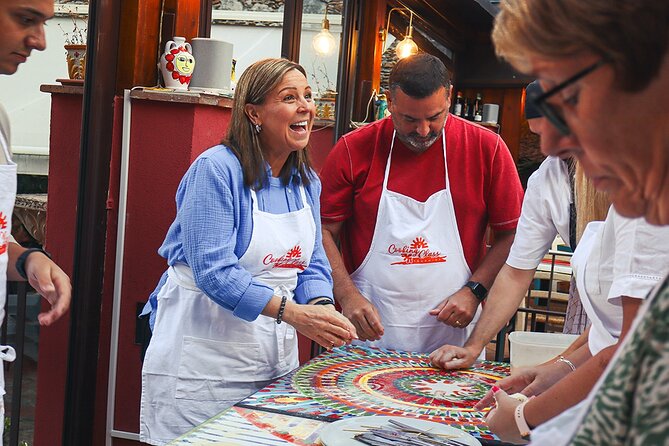
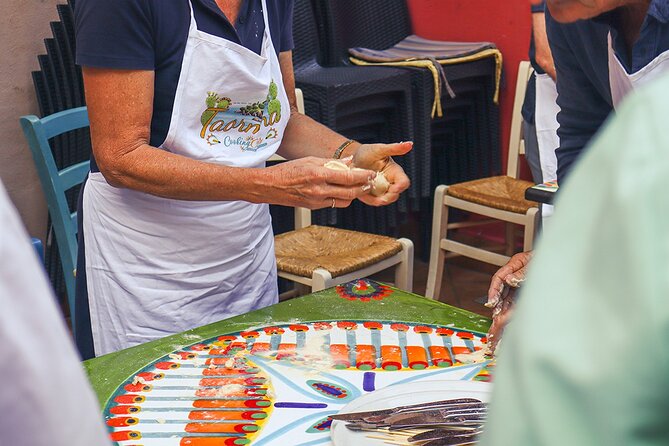
Then comes the main event: you strap on an apron and cook. This class is built around teamwork and repetition, so you’ll get real time on tasks like chopping, shaping, and cooking.
Starter: Sicilian caponata
A common starter you’ll make is Sicilian Caponata—mixed sautéed vegetables with a sweet-and-sour sauce. It’s the kind of dish that teaches you something important about flavor balancing: you’re not just cooking vegetables, you’re learning how Sicilian cooks create contrast with sweetness, acidity, and savory depth.
If you’ve never cooked caponata before, this is a great entry dish because the flavors come together in layers. It’s also very practical for home cooking—you can adapt it based on what’s in season.
Main 1: Hand-made maccheroni with tomato sauce
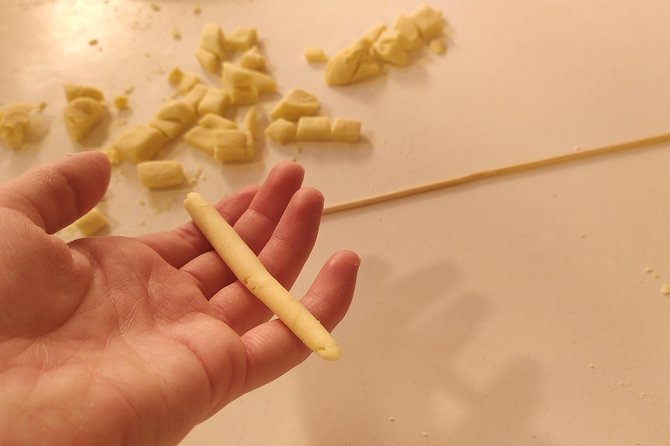
For the first pasta course, you can expect hand-made maccheroni with tomato sauce. One detail that gets people excited: in this class, you make the pasta. The exact shape and technique may vary, but pasta from scratch is the centerpiece.
You’ll learn by doing—rolling, shaping, and then cooking. If you’ve taken cooking classes that feel more like standing around, this is different. The class is designed so you’re actively part of the process.
And since sauces matter as much as pasta, you’ll work with freshly prepared tomato sauce instead of relying on jarred shortcuts.






Main 2 (or second main course): Fish alla ghiotta
The fish course is often Fish alla ghiotta style: fish cooked with tomatoes, garlic, parsley, capers, and olives. This dish is a good example of how Sicilian flavor leans into salty and punchy ingredients, then smooths everything with tomatoes.
If you love seafood, this is a strong match for you. If you don’t, you’ll still learn transferable technique—how to keep seafood flavorful and how to build a sauce base that tastes like it belongs together.
Menu variations to expect
The menu changes based on what’s seasonal. So while the sample menu includes caponata, maccheroni with tomato sauce, and the fish course, you might also work on Sicilian classics such as:
- Parmigiana di melanzane (baked eggplant layered with tomato and Parmesan)
- Pasta al pesto di pistacchi (pistachio pesto pasta)
That variation is a feature, not a bug. It means you’re learning how to cook with the ingredients you can actually get right then, which is how real Sicilian cooking stays rooted.
Where the class actually happens (and why it can get loud)
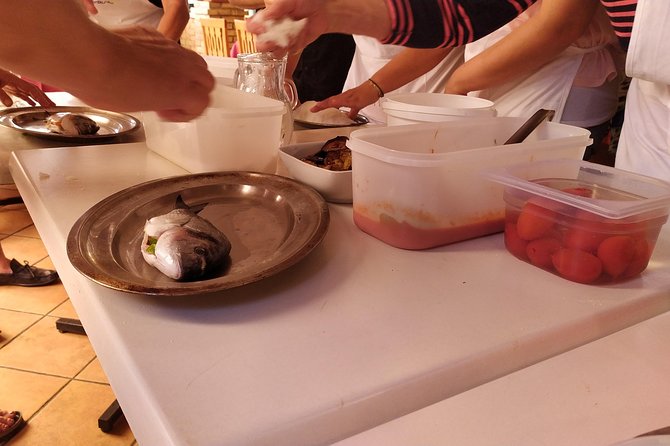
The cooking portion takes place in/near a restaurant setting in central Taormina, and it’s a working place—not a private studio. Translation: you may deal with noise and movement while you cook.
This is one of those tradeoffs. On the plus side, it feels authentic. You’re seeing how cooking fits into real restaurant rhythm. On the downside, if you’re the type who hates background chaos, you might find it harder to hear every instruction at once.
My advice: show up a few minutes early for the meet-up so you’re settled before the class starts. Also, if you’re quiet and focused, be ready to work in a group flow rather than expecting one-on-one attention at every step.
Lunch with included wine: eat what you made
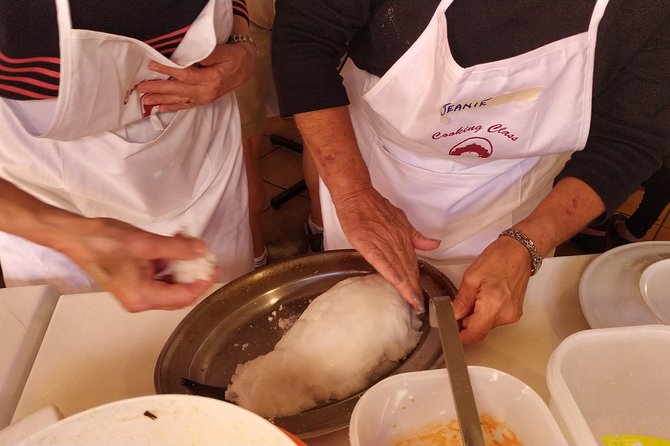
When the cooking is done, you sit down to eat. Your meal includes what you prepared and typically comes as a 3-course lunch served in the restaurant.
Included in the experience:
- Wine (with lunch)
- Coffee and/or tea
- Water
- Snacks
A couple notes that help you set expectations:
- Extra alcoholic beverages are not included, so stick with what’s part of the meal plan.
- The wine is part of the experience, and it’s intended to go with the food you cooked. If you’re trying to stay light, you can still enjoy the meal even if you don’t drink much.
You’ll also receive a cooking certificate at the end. It’s a small souvenir, but it also marks that you actually completed the full course, not just tasted a few bites.
And yes, some people love the social side. You’ll be cooking and eating with others in the group (up to 20), so it’s easy to form quick connections—especially if you share a table or end up helping each other with small tasks.
Price and value: is $127.03 worth it?
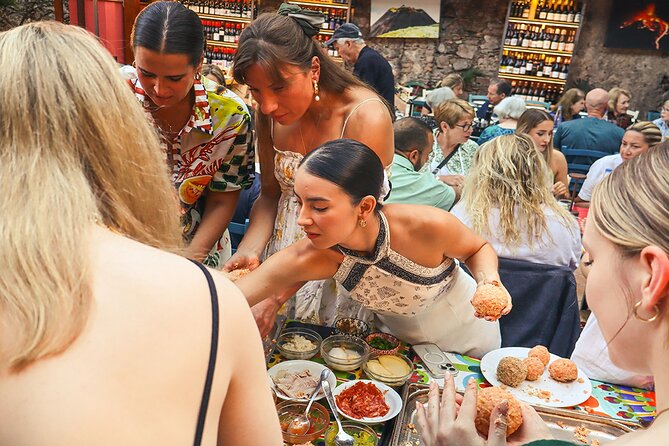
At $127.03 per person for about 4 hours, you’re paying for more than a meal. You’re paying for:
- market shopping guidance,
- chef-led instruction and technique practice,
- ingredients turned into a full lunch,
- and the included drinks (wine plus coffee/tea, water, snacks).
A quick way to think about it: you’re spending roughly $32 an hour for a structured food experience. That starts to feel reasonable once you factor in the meal, wine, and the fact that you leave with skills—like pasta-making—that don’t show up on a normal lunch outing.
What to consider:
- If you want a super quiet, luxury private class, you may find this style more casual due to the restaurant setting.
- If you’re a strong beginner, the hands-on nature is a plus. You’ll likely get enough support to complete each step. If you already cook a lot, you’ll still enjoy the Sicilian-specific technique and flavor combinations.
Who this Taormina class is best for
This cooking class shines if you want your trip to include a real local food day that’s not just sightseeing with a snack stop.
You’ll likely enjoy it if:
- you love Italian cooking and want transferable skills (especially pasta-making),
- you want a chef-led experience with a clear structure,
- you like meeting people while you cook and eat,
- you’d rather learn Sicilian flavor logic than memorize a list of recipes.
It’s also a solid choice for solo travelers. The format naturally mixes people into a shared activity, so you’re not left alone with your own thoughts while you wait for food.
Should you book this Sicilian Cooking Class in Taormina?
If your ideal day includes a local market walk, a hands-on kitchen session, and a lunch that you actually cooked, I’d say book it. It’s great value for what you get: market-to-table teaching, 3-course cooking and eating, and included wine in a compact 4-hour window.
My only caution: go in ready for a real restaurant environment—meaning noise and a group pace. If you hate that kind of energy, look for a different style of class. But if you’re in the mood to cook, learn, taste, and leave with a stronger sense of Sicilian cooking, this is a very satisfying way to spend a morning in Taormina.
FAQ
How long is the Sicilian cooking class in Taormina?
It runs for about 4 hours (approx.).
What time does it start, and where do I meet?
It starts at 10:00 am. The meeting point is Ristorante Pizzeria Porta Messina, Largo Giove Serapide, 4, 98038 Taormina ME, Italy.
What’s included with the price?
Lunch, coffee and/or tea, water, wine, an apron, snacks, and a cooking certificate are included, along with a local multilingual guide.
Is wine included?
Yes. Wine is included with the lunch. Extra alcoholic beverages are not included.
How big is the group?
The class has a maximum of 20 travelers, with a minimum number of 2 applying.
Can I cancel for a full refund?
Yes. You can cancel up to 24 hours in advance for a full refund. Canceling less than 24 hours before the start time won’t be refunded.