REVIEW · SICILY
Savoring Palermo: In The Markets and Beyond
Book on Viator →Operated by Culinary Backstreets Walks · Bookable on Viator
Palermo tastes like a moving lesson. This 5-hour food walk threads over 10 tastings through classic sights and lesser-visited corners, while your guide connects what you’re eating to the city’s layered past. I especially like how the route balances food with culture, including a stop at the Opera dei Pupi workshop where Sicilian storytelling comes to life. One thing to consider: you’re on your feet for most of the tour, so wear comfortable shoes and keep a steady pace.
If you want maximum payoff with minimal planning, this fits the bill. It’s priced at $150 per person and works well because you’re sampling across multiple markets without having to chart your own snack trail. The group is capped at 7, it runs in English, and you’ll finish with an artisanal gelato, the kind of sweet ending Palermo does better than almost anywhere.
In This Review
- Key highlights worth planning for
- Why Palermo’s markets are the fastest way to get your bearings
- Meeting at Teatro Politeama Garibaldi and the real pace of the 5-hour walk
- Teatro Politeama Garibaldi: the kickoff tasting that sets the tone
- Capo Street Market: arancina, panelle, and a Norman-era backdrop
- Teatro dell’Opera dei Pupi: history you can watch get made
- Ballarò Market: stigghiola, pistachios, candied fruit, and fruit juice
- Vucciria Market: minerally Etna white wine and octopus at a taverna
- Antica Gelateria Patricola: the artisanal gelato that seals the deal
- What you’ll learn about Palermo while you eat
- Price and value: is $150 a fair deal for a 5-hour walk?
- Tips to get more enjoyment from the tour
- Who this tour suits best (and who should consider alternatives)
- Should you book Savoring Palermo: In The Markets and Beyond?
- FAQ
- How long is the tour?
- How much does it cost?
- Is the tour guided, and what language is offered?
- Are tastings included?
- What is the group size limit?
- Where does the tour start?
- How do I get my ticket?
- What happens if the weather is bad?
- Is there free cancellation?
- Is it suitable for people with moderate mobility needs?
Key highlights worth planning for
- A small group of up to 7 means easier conversation and more time at each food stop
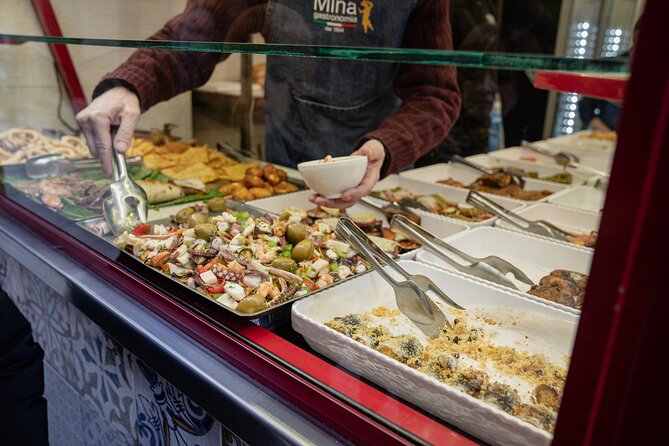
- 10+ tastings across several markets so you can eat your way through Palermo without guesswork
- Capo and Ballarò market snacks like arancina, panelle, and stigghiola
- Opera dei Pupi workshop visit to see how Sicilian history is made with craft and character
- Etna wine with a street taverna bite pairing you can’t easily replicate on your own
- Antica Gelateria Patricola gelato included for a proper Palermo finish
Why Palermo’s markets are the fastest way to get your bearings
Palermo can feel like a lot at first. Streets twist, markets spill onto sidewalks, and every block seems to have its own story. This tour helps you get oriented quickly, because it moves you through food neighborhoods in a logical flow, not a random “walk and hope” route.
What I like most is that the food isn’t treated like an afterthought. You’re eating while you’re learning. And you’re learning while you’re eating. That combo matters because markets make more sense once you understand what they’re shaped by—immigration, trade, religious architecture, local agriculture, and the everyday rhythm of shopping and snacking.
You also get a practical benefit: you don’t need to decide where to go for each item. A good guide already knows which stalls to linger at and what to order (or sample) so you get the big flavors without turning your day into a scavenger hunt.
You can also read our reviews of more tours and experiences in Sicily.
Meeting at Teatro Politeama Garibaldi and the real pace of the 5-hour walk
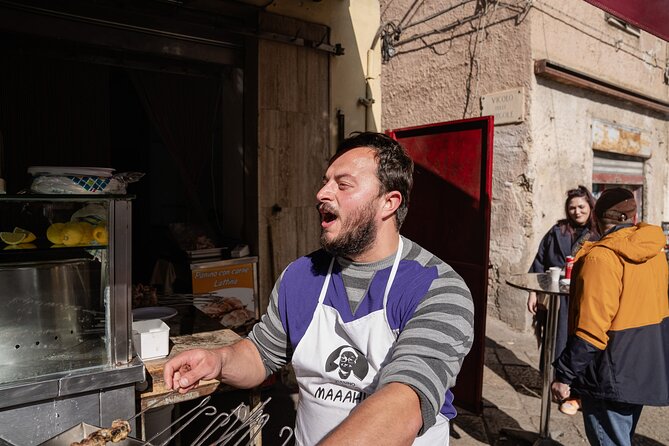
The tour starts at Teatro Politeama Garibaldi, via Filippo Turati 2. It ends back at the meeting point, so you’re not left wondering how to get home with a full stomach and a map full of pins.
The schedule runs about 5 hours, and that time includes multiple tastings plus a couple of culture stops that break up the eating. Because your group is limited to 7 people, the pace stays human. You’re not packed into a line, and you’re more likely to get clear explanations rather than quick “here, try this” moments.
One more practical note: the tour lists a moderate physical fitness level. That usually means walking, standing, and moving through busy market areas. Bring comfortable shoes and expect some uneven sidewalk moments.
Teatro Politeama Garibaldi: the kickoff tasting that sets the tone
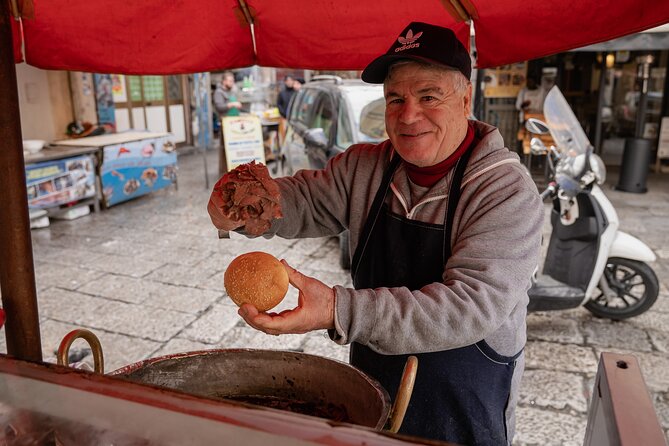
You start at Teatro Politeama Garibaldi, a strong choice because it gives you a sense of Palermo’s public life and energy right away. From there, the tour builds momentum with a sequence of tastings across markets, plus short explorations of local neighborhoods and historic sights.
This early stretch is useful even if you’re a picky eater. You’re not thrown into a single intense market right away. Instead, you get your bearings, then your guide keeps your attention on what you’re tasting and why it matters. That matters in Palermo, where “Sicilian food” isn’t one single thing. It’s a chain of influences and local preferences—street staples that became standards because people kept choosing them.
Also, the tour flags free admission for the initial listed stop, which is nice because it reduces the “will there be an extra fee?” stress.
Capo Street Market: arancina, panelle, and a Norman-era backdrop
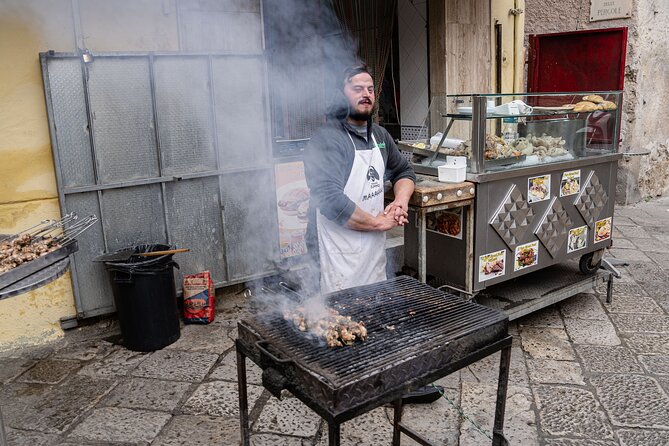
Capo Street Market is the kind of place where eating feels natural. The tour places you right in the action, where shoppers and snack-makers overlap in the same space.
Here’s what you’re in for:
- A street snack of fried fish and stuffed sardine rolls
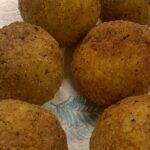
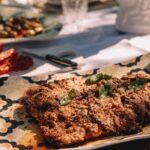
- Sampling arancina and panelle, two Sicilian classics that work because they’re filling, portable, and full of character
- A tasting setting that includes the shadow of a Norman-era church, where Byzantine and Arab influences meet
That last detail is more than trivia. When you learn that Palermo’s architecture and culture were shaped by different peoples and eras, food starts to feel less random. You begin to see Sicily as a crossroads where ingredients, techniques, and tastes traveled.
Practical tip: Capo can be lively. Go in hungry, then take the pace your guide sets. You’ll likely be juggling multiple items in a short time, so if you’re someone who likes to fully process one bite before moving to the next, just slow down for a second when something really clicks.
Teatro dell’Opera dei Pupi: history you can watch get made
Not every food tour takes you into a craft workshop. This one does, and it’s a smart pivot.
At the Teatro dell’Opera dei Pupi, you visit the workspace of one of Palermo’s last puppeteers. You’ll see how Sicilian history gets turned into performance through craft—materials, techniques, and the careful work behind the figures.
Why it works on a food tour: it gives your brain a break from tasting while still keeping the day connected. You’re learning about identity and storytelling, which explains why street food and street culture go together so well in Palermo. People don’t just eat here. They also preserve stories.
If you like culture that feels hands-on rather than purely visual, this stop is a highlight. It also keeps the tour from becoming only a snack relay.


Ballarò Market: stigghiola, pistachios, candied fruit, and fruit juice
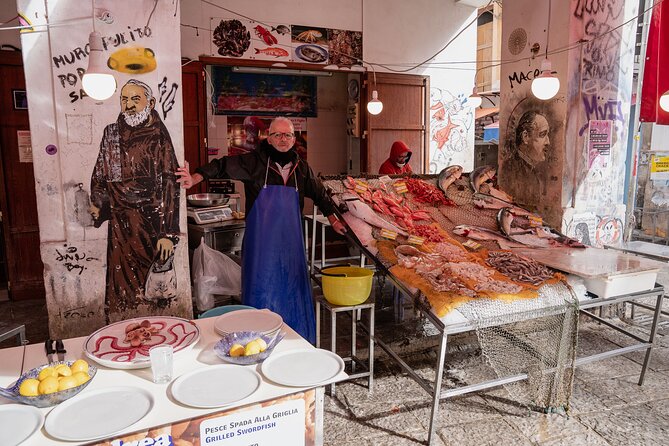
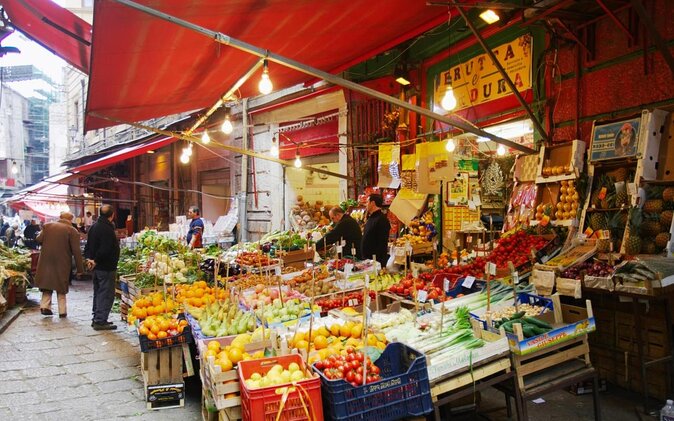
Ballarò Market is one of Palermo’s classic market areas, and the tour uses it well by moving you stall to stall rather than treating it like a quick photo stop.
This is where the tour leans into local agriculture and everyday shopping. You’ll sample pistachios and other nuts, candied fruits, and fresh seasonal fruit juice. That mix matters because it shows the range of Palermo’s street pantry, from salty to sweet, from crunchy to bright and refreshing.
Then comes stigghiola, described as grilled lamb intestines—a humble snack, but one that’s deeply Sicilian. If you’re open to trying something adventurous, this is the moment that makes the whole day feel like Palermo, not just Italy.
Consideration: not everyone wants organ meat on vacation. If you’re unsure, you can still enjoy the market atmosphere and other tastings; just be honest with your guide about what you’ll and won’t try.
Also note: the listed Ballarò segments include free admission for the market visits, so the focus stays on food rather than ticket logistics.
Vucciria Market: minerally Etna white wine and octopus at a taverna
After Ballarò, the tour shifts to Vucciria Market and adds a different flavor of eating: you’re not only sampling street bites. You’re also pairing food with a glass of white wine from Mount Etna.
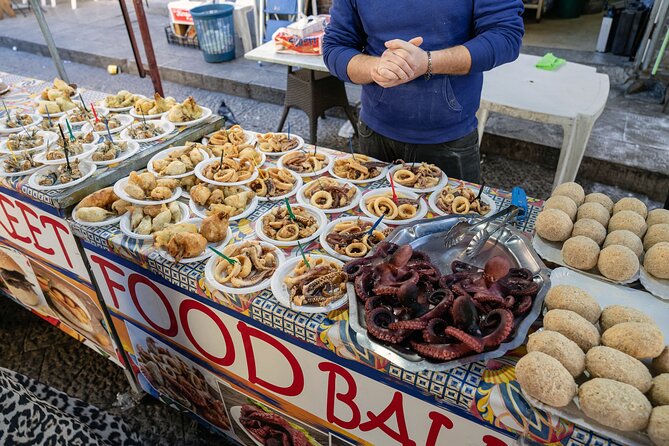
The snack here is octopus, served at a local taverna. That pairing is a nice change of pace from the more “grab it and keep walking” style of market tasting. It lets your palate reset and gives you a more sit-down, meal-like break without losing the market energy.
Why this is valuable: when you travel, it’s easy to eat food but miss the pairing logic. Here, wine is used as part of the sensory experience—how acidity, minerality, and the character of Sicilian whites can sit alongside seafood.
Practical tip: pace yourself on the wine. If you plan to keep exploring after the tour, you’ll want to feel clear-headed for the rest of your day.
Antica Gelateria Patricola: the artisanal gelato that seals the deal
Every good Palermo food plan needs a sweet ending, and this one delivers at Antica Gelateria Patricola. Gelato is the final stop and it’s included, which is a small detail but an important one for value.
This is also a psychological win. After several savory tastings, gelato gives you a clean finish and helps you appreciate flavors again. If you’re someone who has trouble telling what you liked most because you ate so much, the gelato often becomes the memory anchor—cool, fragrant, and unmistakably Sicilian.
What you’ll learn about Palermo while you eat
This tour uses food as a guidebook. Not in a heavy way. In a “you’ll notice it after your first explanation” way.
A few of the themes you’ll likely pick up during the day:
- Architecture and influence: the Norman-era church setting at Capo, and the note about Byzantine and Arab influences, connects place to plate.
- Sicilian craft and identity: the puppeteer workshop shows how history becomes character and performance.
- Agriculture and seasonality: at Ballarò, you’re sampling nuts, candied fruit, and fruit juice that fits the market’s seasonal rhythm.
- Street snacking as a full food system: fried fish, arancina, panelle, stigghiola, octopus, wine, and gelato together explain why Palermo survives on snacks—and why that’s not a compromise, it’s a culture.
And the tour format helps. Instead of one lecture, you get short storytelling moments spaced between tastings, so the information sticks.
Price and value: is $150 a fair deal for a 5-hour walk?
At $150 per person for about 5 hours, this isn’t the cheapest thing on your Palermo list. But it’s also not asking you to pay for “just a walk.”
Here’s what justifies the price:
- 10+ tastings across multiple markets (that’s real food, not small samples)
- A gelato stop included (easy to overlook on cheaper tours)
- A workshop visit connected to Sicilian storytelling, not just another street viewpoint
- A small group size (max 7), which usually means more guide attention per person
- English guidance and a mobile ticket, which cuts planning time
In other words, you’re buying convenience plus guided selection. In a city like Palermo, that matters. A big chunk of the value is knowing what to try, where to try it, and how to move between areas without losing half the day.
If you love food, hate overplanning, and want a curated first taste of Palermo, $150 can feel like a bargain.
Tips to get more enjoyment from the tour
A few practical moves will help you get the most out of your five hours:
- Eat before you arrive only lightly. The tour is built around tastings, so you want hunger, not emptiness.
- Bring water. Markets get warm and crowded. You’ll feel better between stops.
- Wear shoes with grip. Sidewalks and market floors can be uneven.
- Tell your guide your boundaries early. If stigghiola or octopus isn’t your thing, say so. Your experience should stay comfortable.
- Use the Culinary Backstreets Passport if you’re collecting stamps. One review note mentions it, and it’s a fun way to track tastings when you’re doing more than one food stop in a city.
Finally, go in with an open mind. Palermo rewards curiosity. You don’t have to love everything, but being willing to try one or two “this might surprise me” bites is how the day becomes memorable.
Who this tour suits best (and who should consider alternatives)
This works especially well for you if:
- you want a first-time Palermo food plan that covers several market areas
- you enjoy learning through what you eat, not through museum-style stops
- you like small-group walking tours and conversation with your guide
- you’re comfortable standing and walking for about five hours
- you want a day that’s practical and packed without being chaotic
It might be less ideal if:
- you strongly dislike trying foods that are outside your comfort zone (stigghiola is part of the route)
- you’re limited to very short walks or minimal standing
- you prefer fully independent dining with no structured tastings
Should you book Savoring Palermo: In The Markets and Beyond?
My take: yes, if your goal is to eat your way into Palermo fast. This tour gives you a strong mix of street snacks, market culture, and a genuine craft stop. The gelato finish is included, and the small group size helps the day feel personal rather than rushed.
The only real caution is the pace and the food range. If you’re ready for a full tasting day and you’re willing to try at least some of the local specialties, this is the kind of tour that turns Palermo from a place you visit into a place you remember.
FAQ
How long is the tour?
The tour lasts about 5 hours.
How much does it cost?
It costs $150.00 per person.
Is the tour guided, and what language is offered?
Yes. The tour is guided in English.
Are tastings included?
Yes. The tour includes more than 10 full tastings across the route, and artisanal gelato is included at the end.
What is the group size limit?
The tour has a maximum of 7 travelers.
Where does the tour start?
It starts at Teatro Politeama Garibaldi, Via Filippo Turati, 2, 90139 Palermo PA, Italy.
How do I get my ticket?
You receive a mobile ticket.
What happens if the weather is bad?
The tour requires good weather. If it’s canceled due to poor weather, you’ll be offered a different date or a full refund.
Is there free cancellation?
Yes. You can cancel for free up to 24 hours in advance for a full refund.
Is it suitable for people with moderate mobility needs?
The tour is listed as requiring a moderate physical fitness level, and it is near public transportation. Service animals are allowed.