REVIEW · MALTA
Private Boat Tour of the Grand Harbour on the Island of Malta
Book on Viator →Bookable on Viator
Fortified Malta looks better from the water. This private boat ride through Grand Harbour quickly stitches together major sights around Valletta and the Three Cities, so the history feels like it’s moving instead of sitting on a plaque.
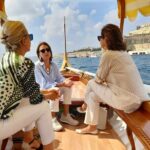
I like two things most: first, the tour runs with a calm, friendly rhythm (Keith stayed relaxed even when rain or choppy water showed up). Second, the boat itself feels cared for—clean, well kept, and comfortable for a short hop.
One thing to plan for: it’s only about 35 minutes, so it’s best as a high-impact overview from the water, not a long, in-depth visit inside forts. And yes, it’s weather-dependent, so you’ll want a forecast that’s behaving.
In This Review
- Key highlights worth your attention
- A short private ride that packs a full Malta story
- Starting at Gondola trips59 Liesse, Valletta: quick to find, easy to repeat
- Fort St Elmo and Valletta’s fortification look: why the walls matter
- Grand Harbour’s geography: the fast way to understand where battles happened
- Fort Ricasoli and Gallow’s Point: the entrance watchtower view
- Fort St Angelo on Birgu: artillery platforms and World War scars
- Fort St Michael in Senglea: surviving ten Ottoman attacks
- The private format and Keith’s delivery: why people rate this so high
- Price and value: $40.36 per person for a targeted water view
- Weather and timing: how to protect your Malta day
- Who this tour suits best
- Should you book this private Grand Harbour boat tour?
- FAQ
- How long is the private boat tour of the Grand Harbour?
- Is this tour private?
- What language is the tour offered in?
- Where is the meeting point?
- Is there a mobile ticket?
- What if the weather is poor or I need to cancel?
Key highlights worth your attention
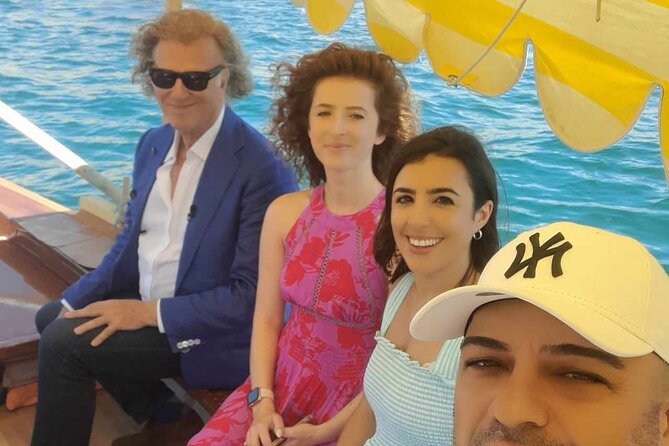
- Private boat for your group only: no crowded scramble, just your pace on the water.
- Keith’s calm, English-led storytelling: he answers questions and keeps things smooth even if conditions change.
- A siege-and-war route in one short ride: Fort St Elmo, Fort Ricasoli, Fort St Angelo, and Fort St Michael all tie to Malta’s defenses.
- Harbour geography that clicks fast: you’ll track Valletta’s setting against the waterway layout of Grand Harbour and Marsamxett.
- Flexible feel for the ride style: you can choose whether you want a one-way style approach or a more road-trip style route.
- Short duration that fits real itineraries: about 35 minutes is easy to slot in, especially if you’re moving between sites.
A short private ride that packs a full Malta story
If your Malta plan has too much walking and too many “quick stops,” this tour is a smart reset. You’re out on the water, but you’re not just sightseeing—you’re getting the “why” behind the forts and harbours that shaped Malta’s survival.
The best part is how the route follows the geography. The Grand Harbour isn’t an abstract postcard place; it’s a working shoreline system with peninsulas, creeks, and natural harbours. Once you understand that shape, the defenses make more sense—and the scale of the battles feels closer.
And because this is private, you don’t feel rushed. You can ask questions, pause for views, or take in the details at your own speed instead of trying to keep up with a group.
You can also read our reviews of more tours and experiences in Malta.
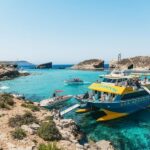
Starting at Gondola trips59 Liesse, Valletta: quick to find, easy to repeat
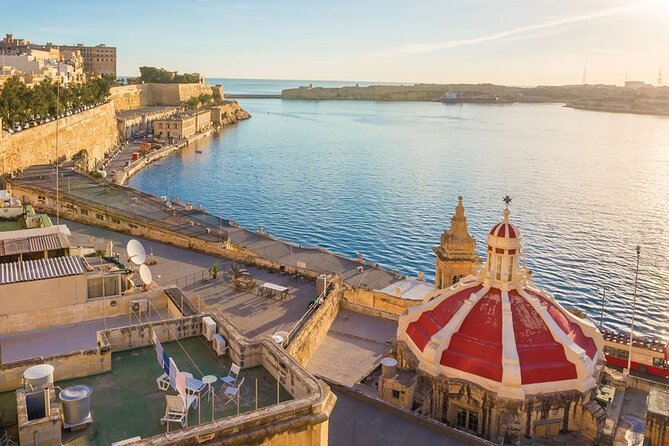
You meet at Gondola trips59 Liesse, Il-Belt Valletta, Malta, and the tour ends back at the same spot. That matters because Valletta has a lot going on, and you don’t want your time eaten up hunting for your boat at the exact wrong moment.
One practical tip: give yourself a little buffer before the start. People have mentioned it can take a moment to locate the right person at the meeting point, so arrive early enough to feel calm, not frantic.
Because it’s a mobile-ticket style experience and the meeting point is near public transportation, you should have options if you’re already in Valletta and don’t want a car shuffle.
Fort St Elmo and Valletta’s fortification look: why the walls matter
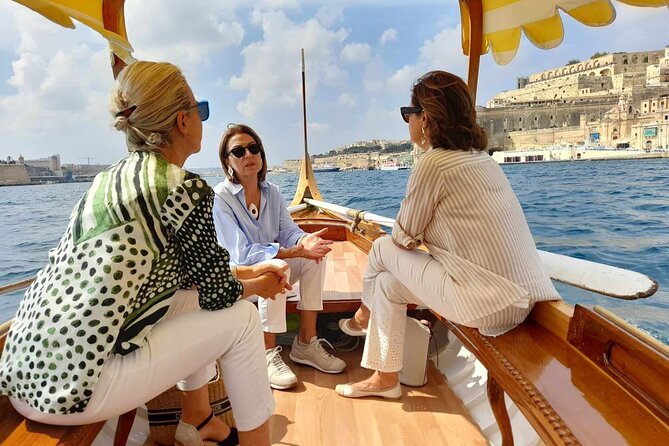
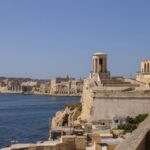
From the water, Fort St Elmo hits you immediately as a built-for-war shape. Built by the Knights in 1552 in just four months, it became the kind of strongpoint that gets targeted during sieges. If you’re picturing the Great Siege of Malta, this is where that mental map starts to form.
Keith’s commentary helps you see beyond the stone silhouette. You learn about the fort’s suffering under Ottoman arms during the Great Siege, and later the bombardments during World War II. There’s also a chapel within the fort tied to the Great Siege story, and the National War Museum is described as a place where you can see items like the George Cross and military material such as weapons and aircraft wreckage.
Even if you’re not going inside during a boat tour (you’re mainly viewing from the harbour), the “fort logic” lands. You start noticing how the fortifications align with the coastline and why the harbour would be so hard to control.
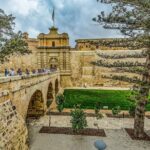
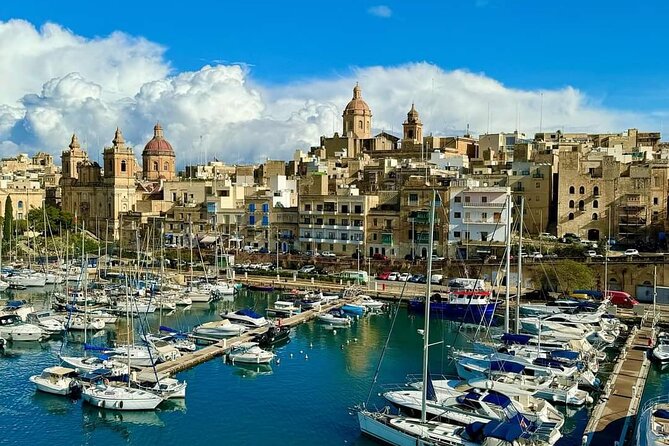
Valletta itself is more than a backdrop. As Malta’s capital, it’s known for fortifications—bastions, curtains, and cavaliers—plus the softer contrast of Baroque palaces, gardens, and churches. From the water, that mix becomes obvious: defense lines on one side, human life layered in architecture on the other.
Possible drawback here: if you’re the type who wants to spend time inside museums and chapels, the boat part is only your launching pad. Treat it as an orientation and story match, then plan land visits for deeper looks.
Grand Harbour’s geography: the fast way to understand where battles happened
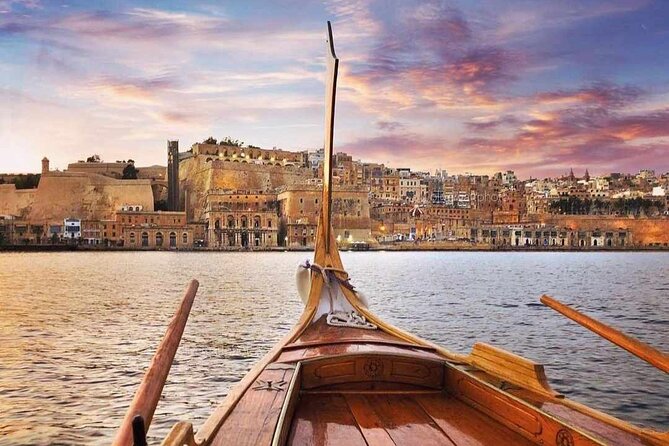
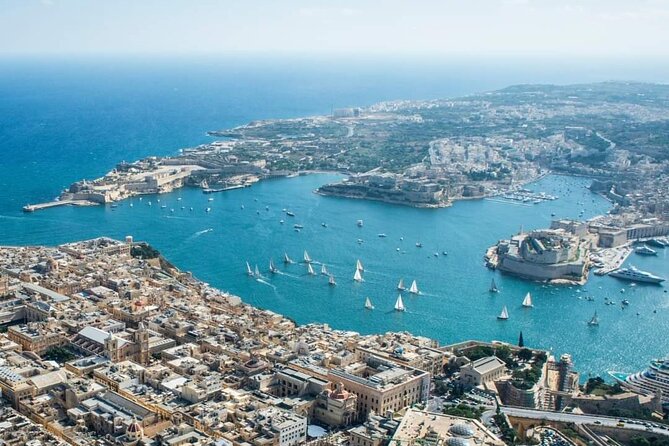
The tour’s “moving classroom” quality really comes from how Grand Harbour is explained as a system. The harbour area dates back to prehistoric times (around 3700 BC), but you don’t need a geology degree to follow it—you just need a sense of where the water runs.
Here’s what helps it click. The northwest shore is tied to the Sciberras peninsula, which separates Grand Harbour from Marsamxett Harbour. On the southeast shore, you hear about inlets and headlands—like Rinella Creek, Kalkara Creek, Dockyard Creek, and French Creek—plus the way the Three Cities sit along this side: Cospicua, Vittoriosa, and Senglea.
Now tie that to the human timeline and suddenly the forts stop being random. Grand Harbour served as the Knights of St John’s base for about 268 years, then became a strategic British base for another 170 years. In other words, this wasn’t just a pretty place to build a city—it was a location repeatedly valued by powers who needed control of the sea.
You’ll also hear dramatic stories connected to the harbour itself. There was a devastating tornado in the late 1500s that killed 600 people and wrecked a shipping armada. And during World War II, the docks and military installations around the port were bombed as legitimate targets.
That’s heavy material, but the water view keeps it grounded. Watching the shoreline and harbour entrances as you learn the story makes the scale feel real.
Fort Ricasoli and Gallow’s Point: the entrance watchtower view
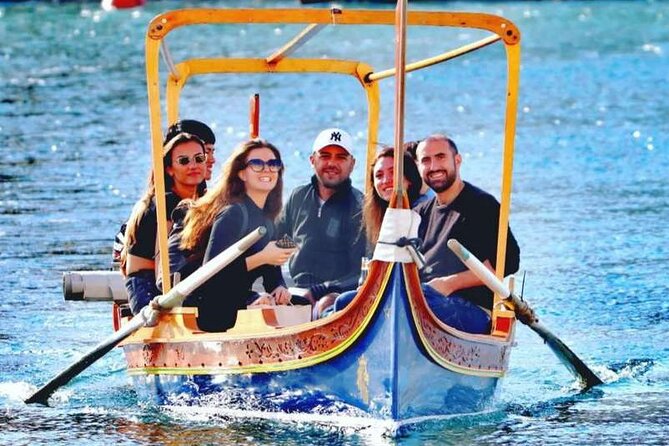
Fort Ricasoli is the largest fort in Malta, and it sits on a promontory over the Grand Harbour entrance. Work started in 1670 and it was completed by 1698, so you’re seeing a later-stage defense footprint meant to control access.
There’s also a grim place-name detail that makes the location stick in your mind: the point is named Gallow’s Point after the execution of two slaves who tried to escape from the island. It’s the kind of fact you’d probably miss from a distance without a guide connecting the story to the spot.
The fort’s role shifts across centuries. In the late 1700s it fought off the French assault on Malta, and later negotiations led to the Order handing over the Maltese Islands. Napoleon landing at this fort soon after is another moment that links your boat ride to the island’s political turning points.
During World War II, Fort Ricasoli acted as protection for Malta in 1941. It was equipped with guns by the British and helped protect the Grand Harbour entrance when it was attacked by an Italian flotilla. And beyond war, the fort has also been used as a location for international movies.
For you, that means you’re not only learning military details. You’re learning why this specific shoreline point keeps showing up in Malta’s “front-row history” in every era.
A consideration: because the tour is short, you won’t get the kind of slow, close-up look you might want at the fort walls. Still, the payoff is strong if your goal is to understand how the harbour entrance was watched and defended.

Fort St Angelo on Birgu: artillery platforms and World War scars
Fort St Angelo is positioned on a hillock at the end of the Birgu peninsula, and after 1530 the Order of St John turned it into their headquarters. That gives the fort a different flavor than a purely defensive outpost—it becomes command-and-control territory.
The Knights remodeled it extensively, including building a series of artillery platforms. That’s when you see the bastioned system of defense being introduced into the Maltese Islands, which is a key concept if you’re trying to understand how European siege design evolved.
World War II left its mark too. The fort suffered 69 direct hits. It later served as a shore establishment of the Royal Navy in Malta, with the last detachment of foreign forces marching out in March 1979.
From a boat, you’ll experience this fort more as an outline against the water than as a full interior experience. But that’s not a letdown if you let the guide help you read what you’re seeing: the position, the slope, and the way the waterfront supports defense.
This stop works especially well if you like turning “I saw a fort” into “I get what it was for.” The story is technical without feeling like a textbook.
Fort St Michael in Senglea: surviving ten Ottoman attacks
At the start, the story is about the Ottoman threat. After an Ottoman Empire attack in 1551, the Order of St John built a fort on the peninsula then known as Isola di San Michele. Later, the fortified city of Senglea grew around it.
During the Great Siege of 1565, the fort withstood ten attacks from Ottoman forces. Even though it suffered extensive damage, it never fell into enemy hands. After the siege, it was rebuilt as Saint Michael Cavalier and completed in 1581.
Today, only the outer bastions remain, which can be a little eerie in a reflective way. You’re looking at the edges of a once-strong core, a reminder that forts aren’t always preserved as whole buildings. They can survive as shapes, boundaries, and what’s left behind after centuries of conflict and rebuilding.
If you like “still standing, but not the same” history, this is one of the more moving parts of the route. From the water, you can see why those outer bastions mattered: they’re literally what would keep attackers from reaching the heart of the defense line.
The private format and Keith’s delivery: why people rate this so high
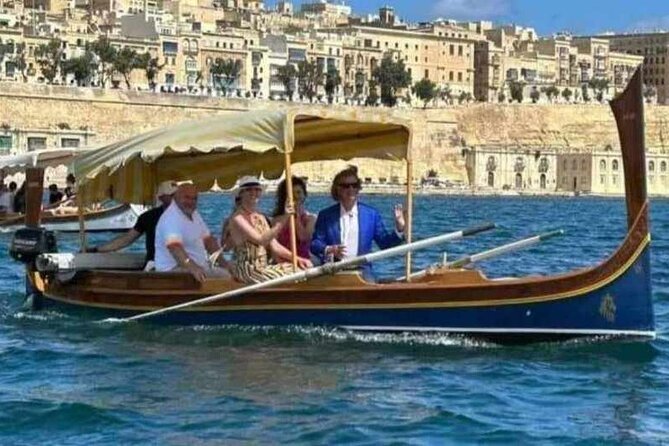
The tour’s reputation makes sense for practical reasons. One clear theme is that the ride stays calm. When rain arrived or waves rose, Keith didn’t turn the experience into stress. For you, that’s a big deal because boats can feel intimidating if things feel chaotic.
The other stand-out detail is attention to comfort and readiness. A spotless, well-maintained boat changes the mood immediately. In a 35-minute experience, you don’t want to spend even the first five minutes adjusting to something uncomfortable.
And because it’s private, Keith can answer questions in the same direction you’re thinking. If you’re curious about architecture, he can connect the fort layout to defense strategy. If you’re curious about war stories, he can tie those moments to the exact coastline you’re looking at.
One more small but real plus: the flexible feel of the route. You may be able to choose whether you want a one-way style ride or a more road-trip style circuit, which helps you slot the tour into the rest of your day in Malta.
Price and value: $40.36 per person for a targeted water view
At $40.36 per person, this isn’t a “half-day tour price.” It’s priced like what it is: a focused, short ride that helps you understand the Grand Harbour area quickly.
So the value question is simple. If you want a quick, guided orientation to Valletta’s fort system and the harbour’s strategic story, you’ll likely feel like you got your money’s worth. You’re not paying for hours on a boat—you’re paying for a compact route with context.
If you want long sightseeing time, inside-visit tickets, or museum hours, you’ll probably want to pair this with land visits. Think of this tour as the map you carry in your head while you explore more slowly later.
Also, the booking pattern (commonly reserved about 23 days in advance) suggests it’s a slot that fills. If you’re traveling in peak season or on a tight schedule, booking early is the easiest way to avoid last-minute disappointment.
Weather and timing: how to protect your Malta day
This experience needs good weather. That’s not a small detail—it’s the difference between a pleasant harbour ride and a cancelled plan.
Because it can be offered as a different date or a full refund if weather is the problem, you have a safety net. The best move is to choose a day where you’re not also relying on a chain of timed outdoor activities.
Timing-wise, the tour length (about 35 minutes) helps you keep control. You can fit it between meals, before or after a Valletta walking block, or as a palate cleanser after crowded streets.
If you like atmosphere, consider going near golden hour. The harbour look at sunset is the kind of payoff that turns a short tour into a lasting memory.
Who this tour suits best
This is a great match if you want:
- a quick way to understand Malta’s defenses around Valletta,
- a calm boat experience guided in English,
- a private setup that works for couples and families,
- and an easy add-on that doesn’t wreck your schedule.
It also works well if you’ve visited Malta before but haven’t taken a harbour-focused route. Sometimes you know the streets yet still miss how the water shaped the island.
Should you book this private Grand Harbour boat tour?
Yes, if you want a short, private “story route” with a calm guide and strong harbour sightlines. You’ll get a lot of value from the combination of fort locations, harbour geography, and clear explanations—especially in a compact 35-minute window.
Skip it or plan it differently if you expect to spend lots of time inside forts or want a long guided walk-and-tour day. This is a boat ride for seeing and understanding from the water, not a substitute for museum hours.
If you book, do it with one mindset: treat it as your Malta decoder ring. After the ride, Valletta’s fortifications and the Three Cities won’t feel random anymore. They’ll feel connected.
FAQ
How long is the private boat tour of the Grand Harbour?
The tour duration is approximately 35 minutes.
Is this tour private?
Yes. It is a private tour/activity, and only your group will participate.
What language is the tour offered in?
The tour is offered in English.
Where is the meeting point?
The meeting point is Gondola trips59 Liesse, Il-Belt Valletta, Malta.
Is there a mobile ticket?
Yes, the tour includes a mobile ticket.
What if the weather is poor or I need to cancel?
This experience requires good weather. If it is canceled due to poor weather, you’ll be offered a different date or a full refund. You can cancel for a full refund up to 24 hours in advance.