REVIEW · MALTA
Best of Valletta Walking Tour
Book on Viator →Operated by City Walking Tours Malta · Bookable on Viator
Valletta reads fast when you have the right stops. This walking tour is built around major Knights-era sights, plus city views and everyday scenes, all in about 2 hours 30 minutes.
I especially like that most stops are paired with free admission, so you’re not nickel-and-diming your time. I also like the human element: a fully licensed guide, with real city context, and names like Angeles and Nadine showing up in standout guide experiences.
One consideration: the route is best for moderate walking fitness, and St. John’s Co-Cathedral is only a pass-by since entry isn’t included—so plan a little extra time if you want inside.
In This Review
- Key things to know before you go
- Getting Your Bearings on Valletta’s Knights-Era Center
- Meet at the New Parliament Building: How the 2.5 Hours Works
- Valletta’s Opening Lesson: Knights, Power, and a City You Can Read
- Auberge d’Italie: The Knights’ Lodgings Behind Imposing Facades
- Upper Barrakka Gardens and the Grand Harbour View That Resets Your Brain
- Merchant Street Market: Where Valletta’s Present Meets Its Past
- St. John’s Co-Cathedral Pass-By: What You Get, What You’ll Pay For
- Republic Street, Café Cordina, and the City’s Social Heart
- Grand Master’s Palace and Castellania: Administrative Power in Stone
- The Pub and Oliver Reed: A Small Stop With a Pop-Culture Spark
- Republic Square and Queen Victoria’s Statue: Iconic Views With Practical Context
- Our Lady of Victories Church: From Auberge of Castille to Today’s Prime Minister’s Office
- Price and Value: Why $24 Can Actually Feel Fair Here
- Group Size, Listening Comfort, and the Shade-and-Seat Reality
- Who This Tour Fits Best (and Who Might Skip It)
- Practical Tips Before You Step Into Valletta
- Should You Book the Best of Valletta Walking Tour?
- FAQ
- How long is the Best of Valletta Walking Tour?
- What does the tour cost?
- Where does the tour start and where does it end?
- What language is the tour offered in?
- Do I get a mobile ticket?
- What’s included with the tour?
- Is admission to St. John’s Co-Cathedral included?
- Is this tour okay for people with moderate physical fitness?
- Can I bring a service animal?
- Can I cancel for free?
Key things to know before you go
- A tight 2.5-hour “best of” route that keeps you moving without feeling rushed
- Free-entry stops dominate, so your $24 goes mostly to the guide experience
- Upper Barrakka Gardens for that classic Grand Harbour overlook
- Republic Street and Republic Square for the city’s café life and iconic views
- St. John’s Co-Cathedral isn’t included, so decide if you want to pay separately
- Small groups up to 30 with a guide who can answer questions clearly
Getting Your Bearings on Valletta’s Knights-Era Center
Valletta can feel like a maze until someone gives you a clean storyline. This tour does that by linking big, recognizable sites to the people who built and ran the city—especially the Knights and the way their power shaped the streets.
You’ll walk a sensible loop from Republic Street’s New Parliament Building area into the historic core, ending near St. George’s Square close to the Grandmasters Palace. The pace is set for a first overview: enough time to appreciate key buildings, but not so long that you’re searching for shade the whole way.
You can also read our reviews of more tours and experiences in Malta.


Meet at the New Parliament Building: How the 2.5 Hours Works
Your starting point is the New Parliament Building on Republic Street in Valletta. From there, the guide keeps the story moving stop to stop, roughly matching the posted time blocks, so you get a compact “greatest hits” version of the city.
This tour lists a maximum of 30 travelers, which matters in a walkaround experience. Smaller groups generally mean you spend more time hearing the guide (and less time waiting for the pack).
Also, the tour is offered in English, and you’ll receive a mobile ticket after booking. If you like a plan you can actually follow while walking, this one is designed to be straightforward.
Valletta’s Opening Lesson: Knights, Power, and a City You Can Read
The tour begins at Valletta itself with a licensed guide laying out the big picture: what shaped the city, and how the Knights’ presence influenced the design and identity of Malta’s capital.
This first stop is important because it gives you the “why” before the “wow.” Once you understand the Knights as builders and administrators, the next buildings stop being random stone and start looking like a system.
You also get a quick rhythm check. If you came for history, the guide tends to keep the tone practical, explaining not just what you see, but how it connects.
Auberge d’Italie: The Knights’ Lodgings Behind Imposing Facades
Next up is Auberge d’Italie, where the tour focuses on the history behind some of Valletta’s most dominant-looking structures: the Auberges of the Knights.
This stop is a good example of why a guided walk helps. Without context, Auberge buildings can look like official offices or just dramatic architecture. With context, you start noticing how the Knights used space to signal identity and rank.
A short visit here works because you’re not stuck in one place. You get the meaning fast, then move on while the story stays fresh.
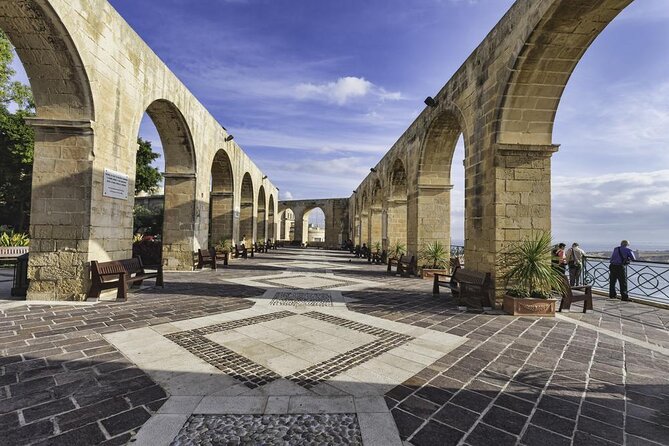
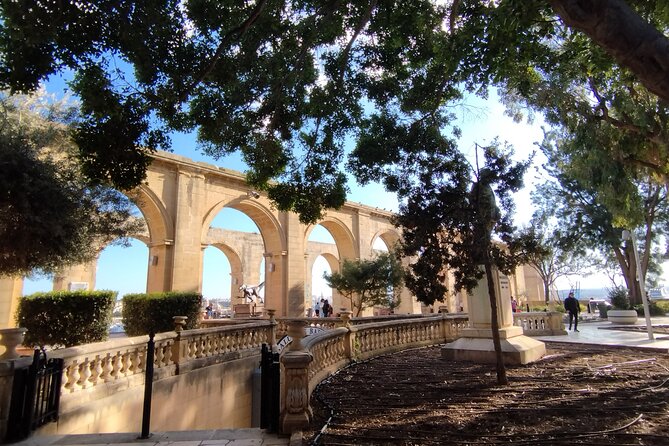
Upper Barrakka Gardens and the Grand Harbour View That Resets Your Brain
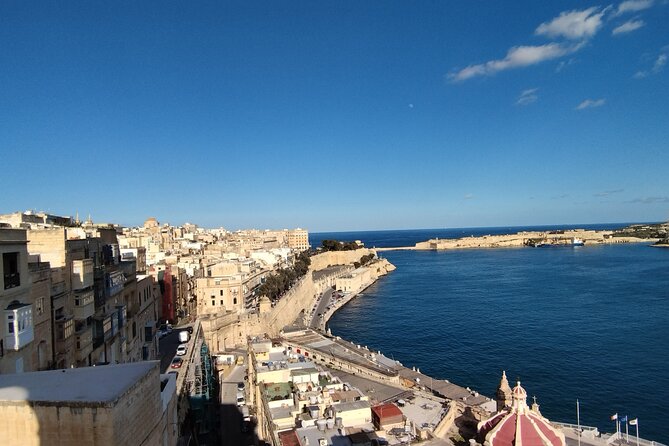
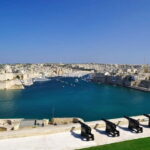
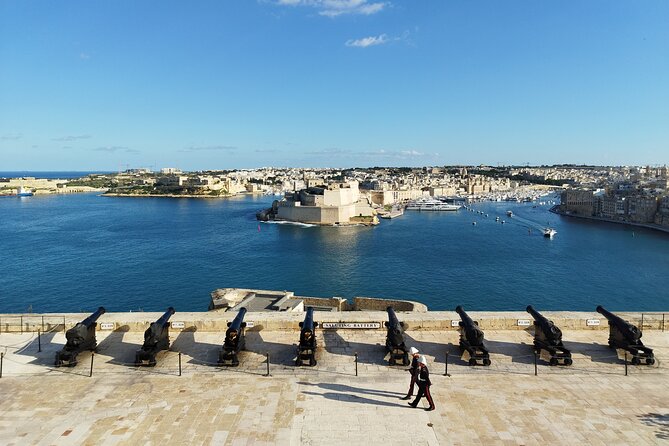
Then you reach Upper Barrakka Gardens, one of the city’s big “pause and look” moments. You’ll get a terrace view over the historic Grand Harbour, often described as the largest natural harbour in the Mediterranean.
This is where the tour gives you a break from the walking effort without turning into a long sightseeing stall. It also helps you orient visually—after this, you can more easily understand why Valletta’s positions mattered.
It’s a classic viewpoint for a reason. Even if you’re not a scenery person, you’ll likely find the harbour view adds calm to all the stone-and-statue stops.





Merchant Street Market: Where Valletta’s Present Meets Its Past
The next segment takes you along Merchant Street Market, with the guide highlighting both the past and the present life of Valletta.
This stop adds variety because it’s not only about monuments. It’s about the city’s everyday flow—how people move, shop, and exist in the same historic framework.
The best part here is that you’re still walking, but you’re walking through something that feels real. If you’ve got a short time window, this kind of street-level stop makes the tour feel less like a checklist.
St. John’s Co-Cathedral Pass-By: What You Get, What You’ll Pay For
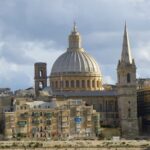
You’ll walk past St. John’s Co-Cathedral, described as a national gem tied to the conventual church of the Knights of Malta. The key practical note: the tour indicates that entrance to the church is not included.
So what’s the value of stopping here if you can’t go in? You get the location in relation to the rest of Valletta’s layout, plus the story context the guide provides as you pass by. That can make a future independent visit more rewarding.
If you want to see inside, plan for separate time and tickets. If you don’t, you still get the place in the city’s puzzle.
Republic Street, Café Cordina, and the City’s Social Heart
Next comes Republic Street, which is described as Valletta’s most popular square area thanks to open-air cafés and the well-known coffee spot Café Cordina.
This is a smart stop because it gives you a break from constant historical structures. It’s also a chance to feel how modern Valletta lives around its historic center—without needing to schedule a separate café break.
If you want to take a breath, this is a good place to do it. Keep an eye on your timing so you don’t lose the thread of the guide’s story as you regroup.
Grand Master’s Palace and Castellania: Administrative Power in Stone
Then you hit Grand Master’s Palace, with the tour explaining the Grandmasters of Malta and the history of the square from Knights times through the colonial period. You’ll also spend time near Castellania, described as the former law courts of the Knights of St. John.
Together, these two stops show you a theme: power wasn’t hidden. It was displayed. You’re looking at architecture that served rule-making and governance, not just ceremony.
This section is ideal if you enjoy understanding how decisions got made. It’s also a good stretch for photos because the palace-and-square setting gives you clear visual anchors.
The Pub and Oliver Reed: A Small Stop With a Pop-Culture Spark
At The Pub, the tour notes the story of Oliver Reed’s last drink. This is a short stop, but it adds a human, modern reference point to the walk.
Why this works: it reminds you Malta isn’t only old stone and formal coats of arms. Even in a city dominated by Knights-era design, there are modern layers and memories woven into everyday places.
If you like a mix of serious and playful, this is one of those moments that keeps the tour from feeling like homework.
Republic Square and Queen Victoria’s Statue: Iconic Views With Practical Context
You’ll then reach Republic Square, highlighted by an iconic statue of Queen Victoria and the Library.
This stop matters because it helps bridge the city’s Knights story to later eras. Even if you’re only in Valletta briefly, the tour gives you the sense that the city evolved, and the squares evolved with it.
Also, these are the kinds of landmarks you’ll recognize later if you wander on your own. That’s a real travel benefit: you’re not just learning during the tour; you’re building a mental map for afterward.
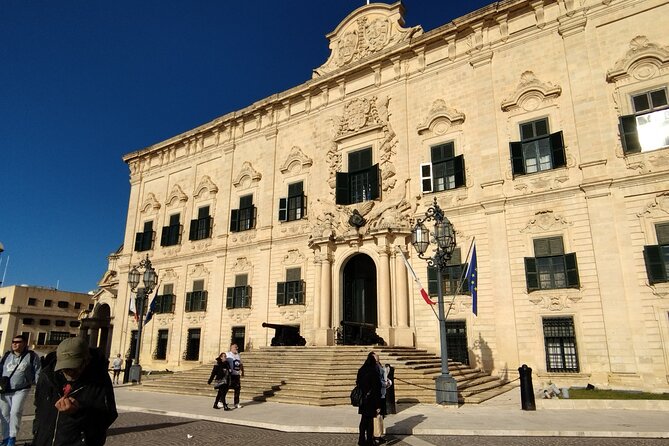
Our Lady of Victories Church: From Auberge of Castille to Today’s Prime Minister’s Office
The last cultural anchor is Our Lady of Victories Church. The tour describes it as the former Auberge of Castille for Leon and Portugal, and notes that it serves as the Prime Minister’s office today.
This is a satisfying ending because it pulls the whole “who used these buildings and why” theme into one clear example. You see how the space shifted roles over time while staying tied to Malta’s identity.
It also gives you a great final walking moment: after seeing the garden viewpoint and major palaces, you close with a place that shows continuity through changing functions.
Price and Value: Why $24 Can Actually Feel Fair Here
At $24 per person for about 2 hours 30 minutes, you’re paying for a licensed guide plus a carefully chosen route. The biggest value lever is that most stops are free admission on the tour’s plan, which means you’re not locked into extra entry fees for every landmark.
The only clear admission exception on the route is the church interior at St. John’s Co-Cathedral, which is not included. If you want to go inside, you should budget extra time and tickets.
If you’re the type who gets more out of context than out of clicking photos, a guided overview like this usually pays off fast—especially in a compact city center like Valletta.
Group Size, Listening Comfort, and the Shade-and-Seat Reality
This walk tops out at 30 travelers, which is a good size for a walking tour. In practice, smaller groups often mean you get questions answered without the guide shouting across a moving crowd.
One detail that can make a difference on longer city walks: good audio. A review-style detail suggests you may use earphones, which helps you catch every word even while walking.
You’ll also likely appreciate that the route includes planned pauses and consideration for shady spots and rest needs, since the tour is designed for people with moderate physical fitness.
Who This Tour Fits Best (and Who Might Skip It)
This is a strong fit if you want:
- a first-time overview of Valletta’s center
- an explanation of Knights-era buildings in plain language
- a route that mixes top sights with street-level life
It might be less ideal if you’re only interested in inside-the-building museum time. Since St. John’s Co-Cathedral entry isn’t included, you’ll likely need to add a separate stop if you want a full interior visit.
Practical Tips Before You Step Into Valletta
- Wear comfortable walking shoes. You’re out for roughly 2.5 hours.
- Use the tour to build your map: after Republic Square and Grandmasters Palace, you can navigate more confidently on your own.
- If you’re a café person, plan a snack timing around Republic Street so you don’t fall behind the group.
- If church interiors matter to you, decide early whether you’ll pay separately for St. John’s Co-Cathedral.
Should You Book the Best of Valletta Walking Tour?
If you’re short on time and want a clean, story-driven overview, I’d book it. The value is strong because the guide experience is the main event, and you get a route packed with major landmarks plus useful city context.
I’d skip or rethink it if you’re only hunting for indoor ticketed attractions. This tour gives you the locations and the meaning, but St. John’s church interior is on you.
If you want Valletta to make sense quickly, this is one of the most practical ways to get there—especially for your first pass through Valletta’s historic core.
FAQ
How long is the Best of Valletta Walking Tour?
The tour runs about 2 hours 30 minutes.
What does the tour cost?
It costs $24.00 per person.
Where does the tour start and where does it end?
It starts at the New Parliament Building on Republic St in Valletta and ends near St. George’s Square on Republic St, close to the Grandmasters Palace.
What language is the tour offered in?
The tour is offered in English.
Do I get a mobile ticket?
Yes, it includes a mobile ticket.
What’s included with the tour?
The tour includes the services of a fully licensed tour guide.
Is admission to St. John’s Co-Cathedral included?
No. The tour notes that entrance to St. John’s Co-Cathedral is not included.
Is this tour okay for people with moderate physical fitness?
The tour recommends a moderate physical fitness level.
Can I bring a service animal?
Yes, service animals are allowed.
Can I cancel for free?
Yes. You can cancel for a full refund up to 24 hours in advance of the experience start time.