REVIEW · GRAN CANARIA
Playa del Inglés Maspalomas: High Quality Surf Classes
Book on GetYourGuide →Operated by Surf Canaries · Bookable on GetYourGuide
A surf lesson in Maspalomas feels like a real reset. You’ll get guided into your first rides with expert coaching, video tips, and beginner-perfect waves when conditions cooperate.
I like that it’s built for first-timers. You start with an easy theory session (with video), then you’re in the water with hands-on instruction in a small group.
One thing to consider: the day is very conditions-dependent, and you should expect a workout. If you have back issues, low fitness, or you’re not a confident swimmer, this may not be the right fit.
In This Review
- Key things I’d watch for before you go
- Surfing in Playa del Inglés: what this class is really like
- The 4-hour flow: from check-in to your first rides
- 1) Check-in and gear setup at Surf Canaries
- 2) Beginner theory and a video intro
- 3) Off to the beach: mobile school, best conditions
- 4) In the water: hands-on coaching all session
- 5) Fuel and small extras after the first session
- Price and value: is $68 a good deal for 4 hours?
- The instructor experience: why first-timers feel safe here
- Where you’ll surf: dunes, beaches, and beginner-friendly conditions
- Fitness reality check: you should be ready for a workout
- What to bring (so the day stays smooth)
- Who should book this surf class in Maspalomas?
- Should you book Surf Canaries in Playa del Inglés?
- FAQ
- How long is the surf class?
- Do I need surf experience?
- Is surf equipment provided?
- Do I get photos?
- Where do I meet the instructors?
- Does the class always stay at Playa del Inglés?
- What should I bring?
- Who is the class not suitable for?
Key things I’d watch for before you go
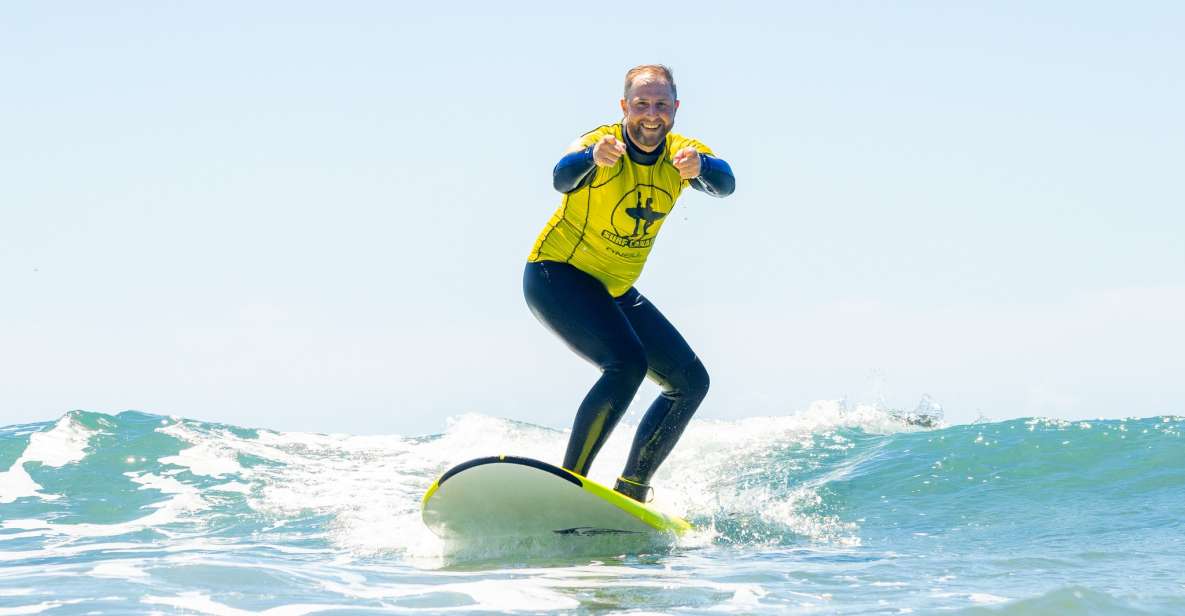
- You’ll get personal coaching in small groups with instructors right there for technique and safety.
- A full beginner setup: theory + video intro before you touch the board.
- All the gear is included, down to wetsuit, leash, and rash vest.
- You might walk 10 to 20 minutes with your board along the sand if the best break is nearby.
- Photos are included, so you’re not stuck wondering how it looked after you wipe out.
- Surf Canaries is mobile, so they pick the best spot for the waves that day.
Surfing in Playa del Inglés: what this class is really like
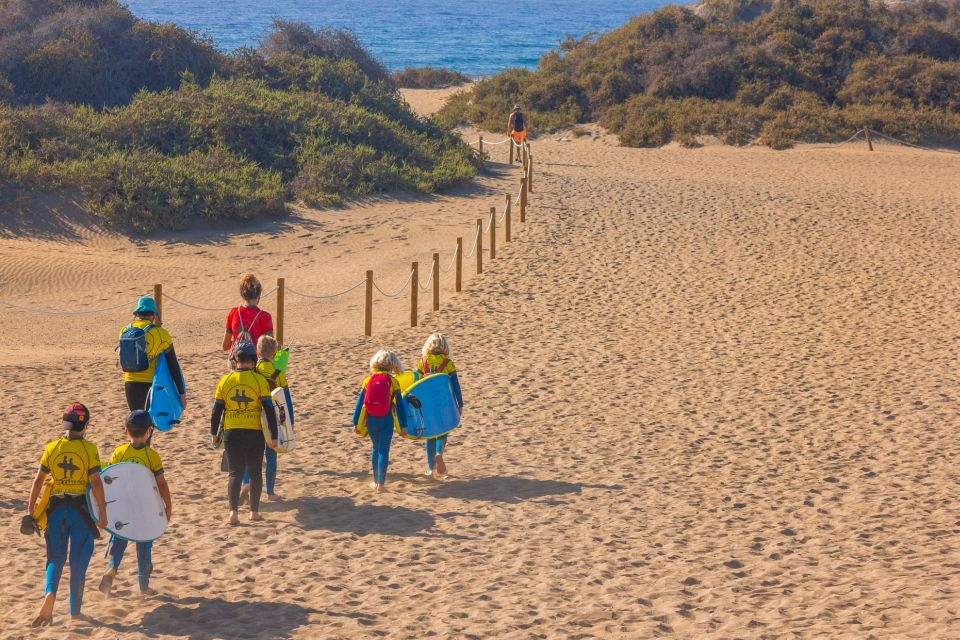
This is a straight-up beginner surf lesson in Gran Canaria, set around Playa del Inglés and the dunes of Maspalomas. The pitch is simple: you’ll learn the basics on day one, then get plenty of time to stand up—without guessing what you’re supposed to do next.
The best part is how structured it is. You don’t just get handed a board and sent out. You’ll get a relaxed intro, technique pointers, and live help in the water so you can correct fast and improve during the same session.
Also, the instructors focus on confidence and safety. You’ll be working near the surf break that fits beginners, and they’ll stay close while you practice. That makes a huge difference if you’re nervous, new to balancing, or unsure what to do when the wave timing gets weird.
You can also read our reviews of more tours and experiences in Gran Canaria.



The 4-hour flow: from check-in to your first rides
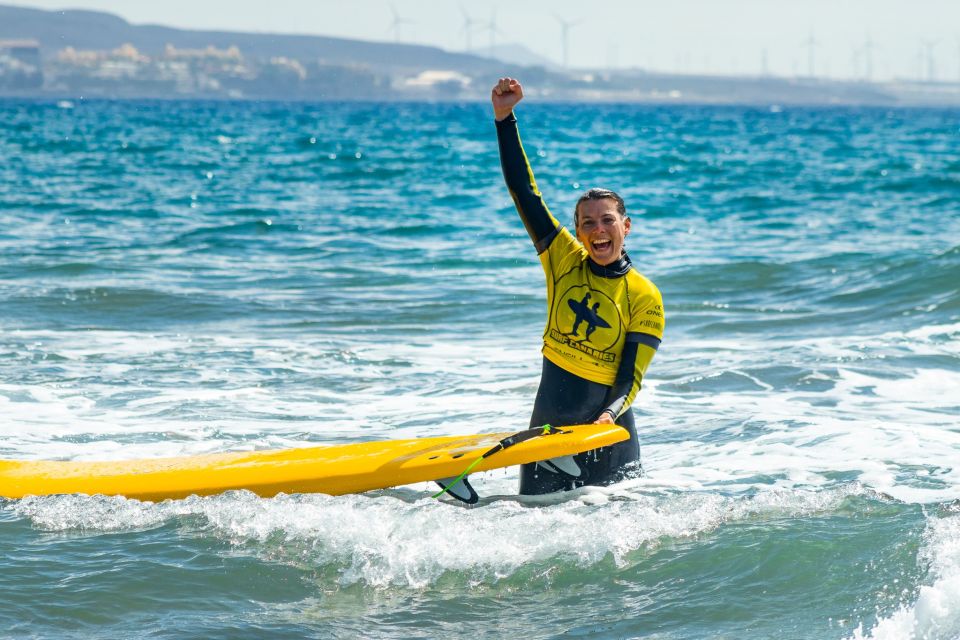
The lesson is 4 hours from start to finish, so you’re not dealing with a vague half-day that drags on. You’ll check in at Surf Canaries Surf School at Alf. Provisionales, Anexo 2, Playa del Ingles, and the activity ends back at that same meeting point.
1) Check-in and gear setup at Surf Canaries
You begin at the surf school location, where the session starts with getting organized and ready. The class includes all equipment, so you’re not hunting around for a board, leash, or wetsuit.
You’ll also want to show up prepared with the basics: hat, swimwear, towel, sunscreen, and an ID or passport (a copy is accepted). If you forget something, you’ll feel it fast, because once you’re moving to the beach, you won’t want delays.
2) Beginner theory and a video intro
Before you hit the sand, you’ll do a theory session designed to make the first moments in the water feel less chaotic. The class includes an easy, entertaining intro, plus video tips that help you visualize what you’re aiming to do.
This is where you’ll learn the core basics: how to manage your board position, how to approach waves, and what to focus on when you’re trying to stand up. The goal isn’t to overwhelm you with jargon. It’s to give you a simple mental checklist you can use the moment you paddle out.
3) Off to the beach: mobile school, best conditions
Surf Canaries is mobile, meaning they choose the best spot based on the day’s surf conditions. If the best waves are at another beach, transport is included. If the home beach is best, you’ll walk there with your boards.
That walk can be 10 to 20 minutes along the sand. It’s manageable for most people in reasonable physical shape, but it does matter if you’re imagining an effortless “board to water” moment. If you’re carrying a board for that long, wear practical swim-day clothing and be ready to walk a bit.
One practical heads-up: this area can be informal. On sandy sections near the dunes, you might see nude sunbathers in some spots. It’s not the focus of your lesson, but it’s smart to know so it doesn’t catch you off guard.






4) In the water: hands-on coaching all session
Once you’re at the water, your instructors help you catch waves and practice technique right away. The way they teach is practical: they stay close, give clear cues, and keep you moving through the learning steps at a pace that works for beginners.
This is the part where small group size matters. You get more time and attention than you would in a large crowd, and you’re less likely to feel lost. The coaching style comes up again and again in feedback: friendly, professional, and encouraging, with steady support so you feel safe the whole time.
5) Fuel and small extras after the first session
After your first session, you’ll get water and a piece of fruit to keep your energy up. Surfing burns through effort quickly, even when you’re a beginner and even when conditions are perfect for learning.
And then there’s the fun bonus: photos of you surfing are included. That means you can actually remember the session (and laugh at the wipeouts) without relying on blurry phone shots from across the beach.
Price and value: is $68 a good deal for 4 hours?
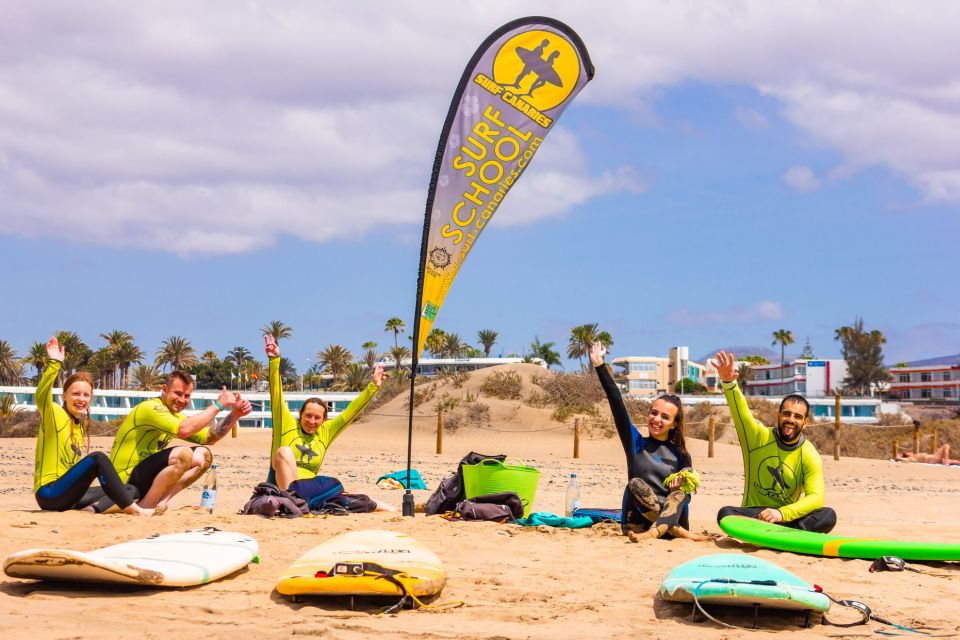
At about $68 per person for a 4-hour beginner class, the value comes from what’s included and how long you’re actively learning. Many surf experiences cost more once you factor in rentals, instruction, and the extras that help you leave feeling like it was worth your time.
Here, the package covers all surf equipment (surfboard, leash, rash vest, and a long or short wetsuit). That removes the most annoying cost and hassle of trying surfing on vacation. You’re also getting instruction, plus water, fruit, and surf photos.
There’s also third party and accident insurance included. That’s one of those details that feels small until something goes wrong. Even if nothing happens, knowing there’s coverage for accidents gives you more peace of mind when you’re learning a new physical activity in open water.
Finally, you get a 10% shop discount. It’s not the main reason to book, but it’s nice if you want a cap or gear after the lesson.
The instructor experience: why first-timers feel safe here
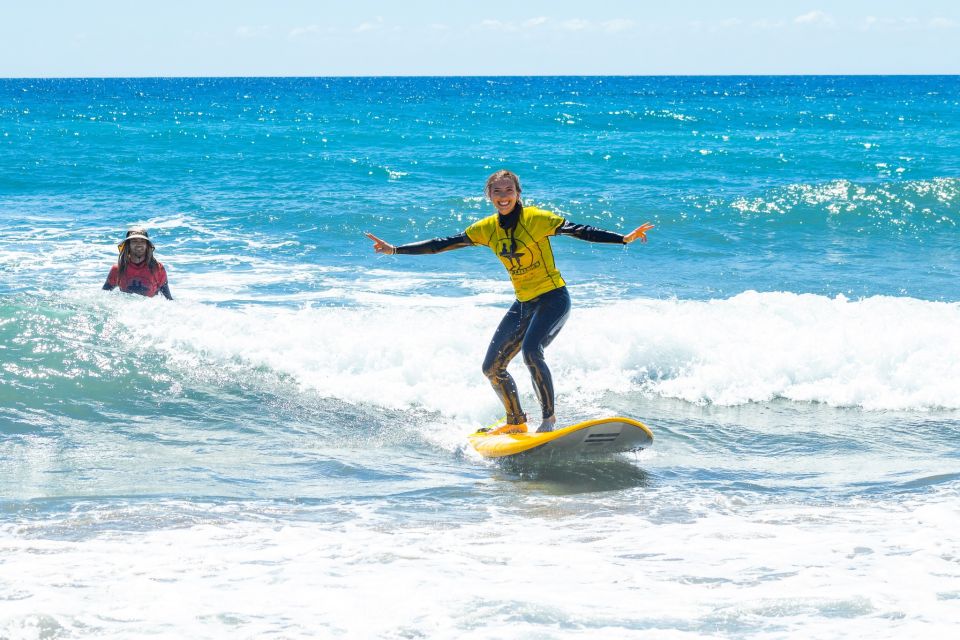
What stands out is the teaching approach. You’re not just watching a demo and hoping for the best. Instructors provide guidance throughout the session, with coaching that’s hands-on and focused on what you can do right now.
In feedback, instructors like Danny and Dan show up as names people remember—usually for being patient, encouraging, and actively involved in helping each participant. That matters most when you’re learning balance, timing, and wave reading at the same time.
Also, you’ll get reassurance that fits real beginner needs: how to position yourself, how to handle the board, and how to practice without getting overwhelmed. If you’ve never surfed before, this kind of structure helps you stop thinking and start doing.
Where you’ll surf: dunes, beaches, and beginner-friendly conditions
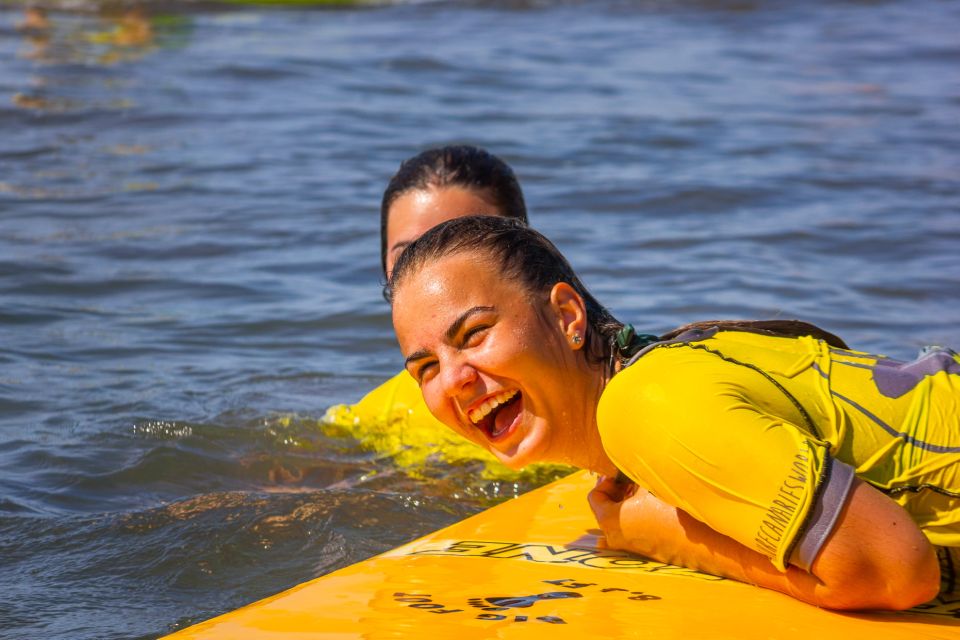
You’ll start near Playa del Inglés, close to the sand dunes of Maspalomas. That area is a big reason the experience feels like you’re in a proper beach setting rather than a random waterfront corner.
Because the school is mobile, the exact break can change. That’s not a downside by default. It’s how they keep the session aligned with what beginners need that day: the right kind of waves and conditions you can learn from safely.
Still, it does mean you should expect schedule timing to shift slightly. The starting time you see may vary a bit, and the surf day relies on conditions. If you have a tight plan right after class, build in a buffer.
Fitness reality check: you should be ready for a workout
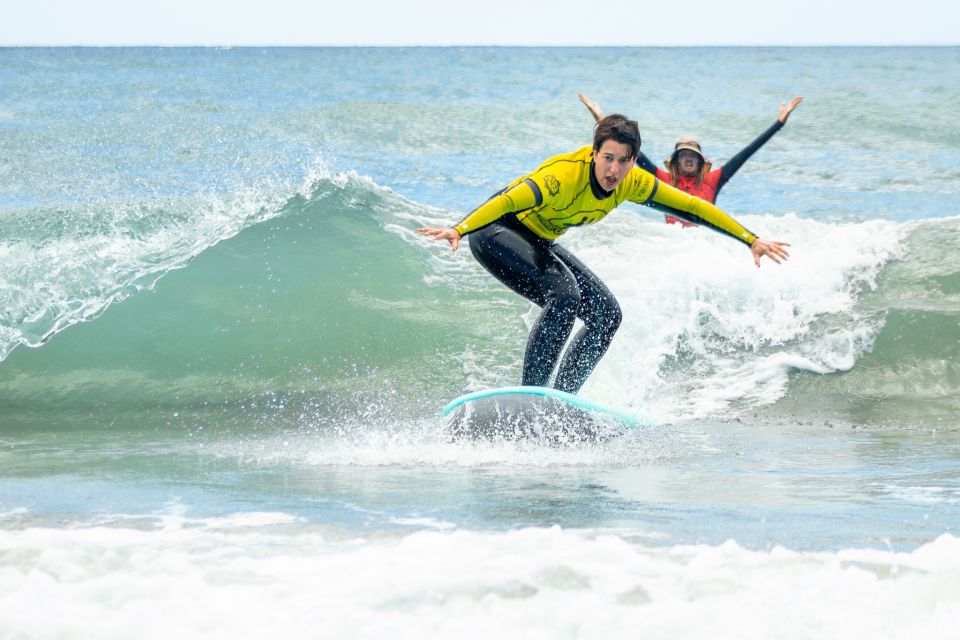
This isn’t a casual walk on the beach. Surfing uses muscles you don’t always think about—paddling, popping up, bracing, and recovering after wipeouts. Even beginners who do well often leave feeling that it was physical.
The good news: you go at your own pace with instruction and support. The harder truth: you should be in reasonable to good physical condition to fully enjoy it.
The activity also isn’t suitable for:
- children under 7
- pregnant women
- people with back problems
- wheelchair users
- non-swimmers
- people over 243 lbs (110 kg)
- people with low level of fitness
If any of those apply, it’s worth choosing a different activity where you can enjoy the day without forcing your body to fight the ocean.
What to bring (so the day stays smooth)
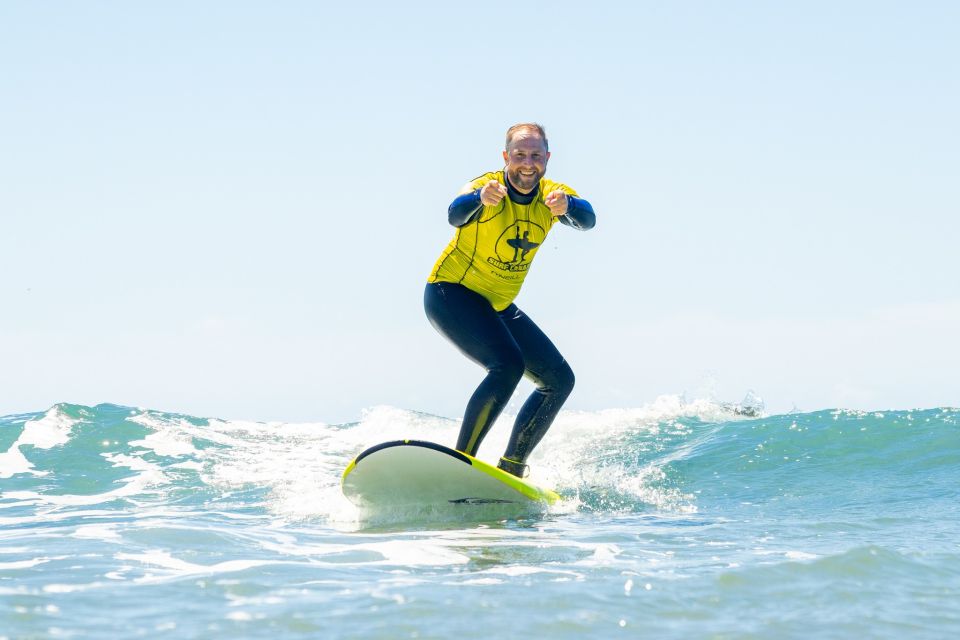
You don’t need to pack surf gear, but you do need the everyday stuff that makes a beach lesson comfortable. Bring:
- hat
- swimwear
- towel
- sunscreen
- passport or ID card (a copy is accepted)
If you’re prone to getting sunburned, sunscreen matters more than you think. After paddling and wiping out, you’ll be exposed longer than you expect. A hat also helps on the walk to the water, especially if you’re doing the board-carry portion.
Who should book this surf class in Maspalomas?
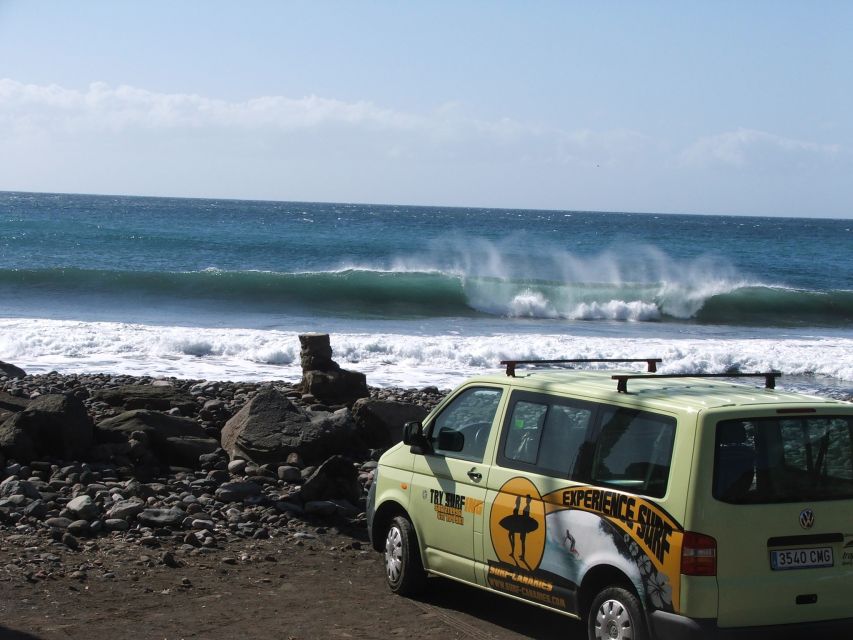
This lesson is ideal if you want to try surfing without needing prior experience. It’s also a great option if you want a structured, safety-first approach with small-group attention.
You’ll especially like it if:
- you want to learn the basics quickly and understand what you’re doing
- you’re traveling solo or with friends and want equal instruction time
- you like hands-on coaching more than watching from the beach
It might be less ideal if you want a relaxed, low-effort activity. This is an active 4 hours, and you’ll be using the wetsuit and actually working in the water.
If you’re bringing kids, note that it’s not suitable under age 7. For kids in the right age range, the class is designed for beginners and can be a confidence builder because you’re guided step by step.
Should you book Surf Canaries in Playa del Inglés?
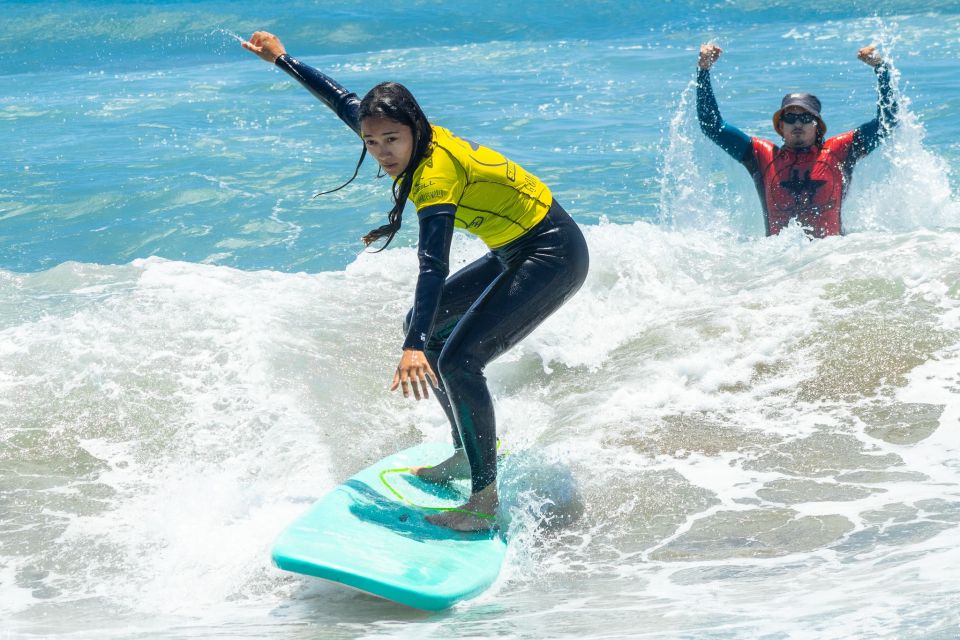
I think you should book this if your goal is simple: stand on a surfboard for the first time with real coaching, in a safe setup, and go home with photos. The combination of equipment included, a beginner theory/video intro, and instructors staying with you in the water is exactly what you need when you’re new.
I’d skip it if you’re dealing with limitations that affect mobility or safety, or if you’re not a confident swimmer. And I’d plan your day around surf conditions, because the school chooses the best spot for learning that day—even if it means a short walk or transport.
If you can meet those basics, this is a strong value way to spend a Gran Canaria day: active, friendly, and genuinely built for first-timers.
FAQ
How long is the surf class?
It lasts 4 hours, starting and ending back at the meeting point.
Do I need surf experience?
No. The class is beginner-friendly and includes a theory session and a video intro.
Is surf equipment provided?
Yes. You get the surfboard, leash, rash vest, and a long or short wetsuit.
Do I get photos?
Yes. Photos of you surfing are included free of charge.
Where do I meet the instructors?
Check in at Surf Canaries Surf School, Alf. Provisionales, Anexo 2, Playa del Ingles.
Does the class always stay at Playa del Inglés?
Not necessarily. The surf school is mobile and chooses the best spot based on conditions. Transport is included if the best waves are at a different beach.
What should I bring?
Bring a hat, swimwear, a towel, sunscreen, and your passport or ID card (a copy is accepted).
Who is the class not suitable for?
It’s not suitable for children under 7, pregnant women, people with back problems, wheelchair users, non-swimmers, people over 243 lbs (110 kg), and people with low level of fitness.