REVIEW · SICILY
Ortigia: Syracuse’s Ancient Town Center Private Walking Tour
Book on Viator →Operated by Hermes Sicily Tourist guides group · Bookable on Viator
Ortigia’s secrets start with a short stroll. This private walking tour is a smart way to pack the key sights of Syracuse’s historic core into about two hours, with a guide taking the guesswork out of where to go and what you’re looking at. I especially like the stop-by-stop mix of Greek, Roman, Arab, and Christian layers—plus the way the guide brings daily life into the markets and street scenes rather than keeping everything in the past.
The one real consideration is entry rules: the cathedral interior costs extra and has strict dress requirements (no shorts or sleeveless tops; shoulders covered), and church interiors may be limited during services.
Great for getting oriented fast
Small-group feel even with a private booking
Greek temple ruins to Baroque churches in sequence
Syracuse’s spring story at Fonte Aretusa
Giudecca district walk for a different slice of Ortigia
In This Review
- Temple of Apollo to Piazza Archimede: Greece in Stone, Neoclassicism in Square
- What I’d watch for here
- Piazza Duomo and Syracuse Cathedral: The Dress Code and the Paywall
- Why this stop is worth the effort
- Santa Lucia alla Badia: When Interiors Are Open (and When They Aren’t)
- What you can look for
- Fonte Aretusa: The Spring, the Papyrus, and the Myth Connection
- Small tip that makes this stop better
- Island of Ortigia and the Giudecca: A Different Walk Through Syracuse
- What I like about this sequence
- Price and Logistics: Is $107.53 Worth It?
- The “cost” you should budget
- Who This Tour Suits (and Who Might Want a Different Plan)
- You might skip or pair it differently if…
- Making It Work: Comfort, Questions, and Small Timing Wins
- Should You Book This Ortigia Private Walking Tour?
- FAQ
- How long is the Ortigia private walking tour?
- What are the main stops on the tour?
- Is the entrance fee to Syracuse Cathedral included?
- What is the dress code for entering the cathedral?
- Can I see the interior of Chiesa di Santa Lucia alla Badia on Mondays?
- Does the tour require good weather?
Temple of Apollo to Piazza Archimede: Greece in Stone, Neoclassicism in Square
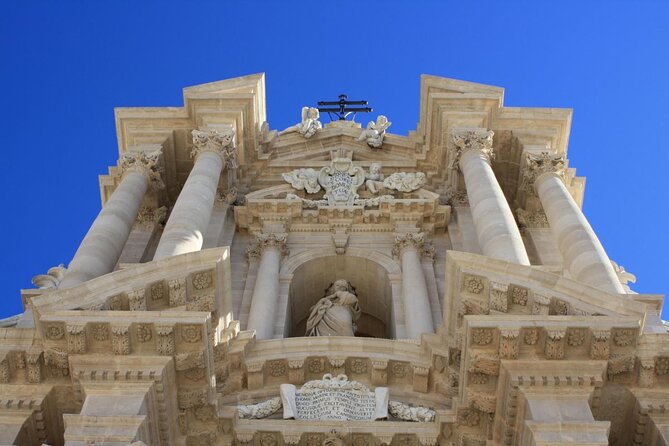
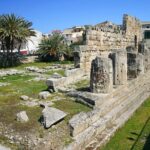
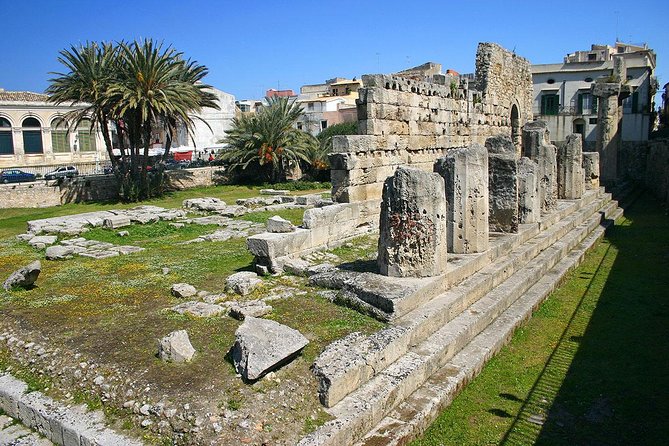
This tour starts at Via dell’Apollonion, right near the Tempio di Apollo. It’s a strong first anchor because you’re not just seeing a monument—you’re learning how ancient Syracuse used sacred space. The Apollo Temple is described as the oldest stone Greek temple built by Greeks in Sicily, and it’s the kind of fact that changes how you look at the rest of Ortigia.
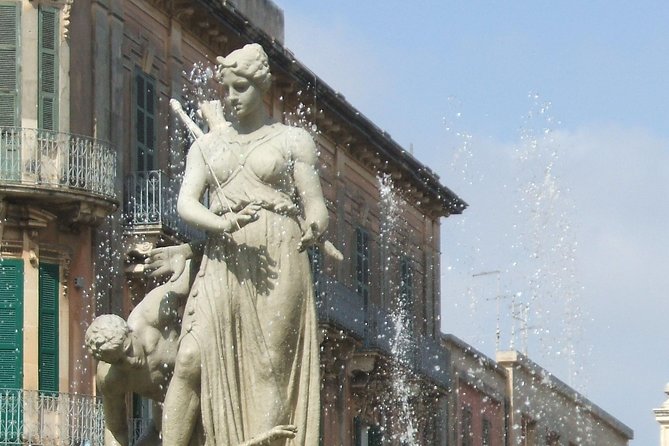
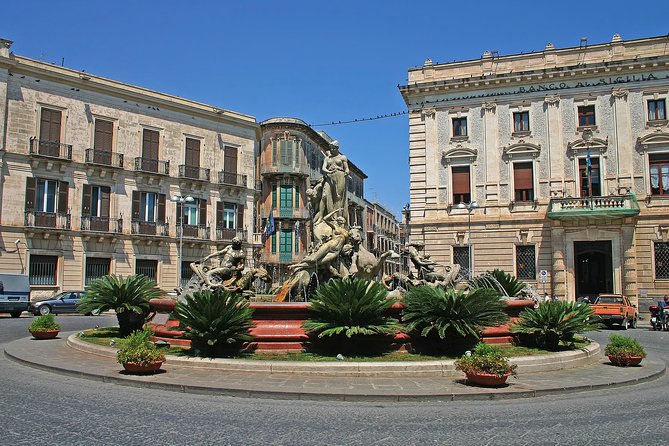
From there, you move into Piazza Archimede for the neoclassical Diana fountain and the surrounding mix of building styles. This stop is short, but it matters. Squares are where the city’s “now” is easiest to read—where people pass through, gather, and talk over the sound of traffic. Even in two hours, it helps to have a pause that feels like local rhythm instead of only sightseeing.
What I’d watch for here
When you reach Piazza Archimede, take a minute to look at how different eras share the same small space. That’s the theme of Ortigia: old layers don’t disappear; they stack. A good guide will point out the transitions so it doesn’t all feel like random stone-and-church tourism.
You can also read our reviews of more tours and experiences in Sicily.


Piazza Duomo and Syracuse Cathedral: The Dress Code and the Paywall
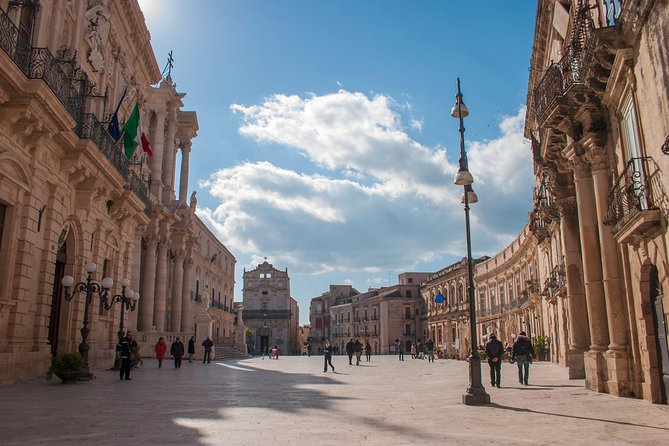
Next comes Piazza Duomo, the main cathedral square and one of the best places to understand how this city was organized. You’ll see the cathedral, plus major civic and religious buildings nearby, including Palazzo Vermexio, the arcivescovado, and Palazzo Beneventano del Bosco. This is the “center of gravity” moment—where Syracuse looks like it knew exactly what it was doing.
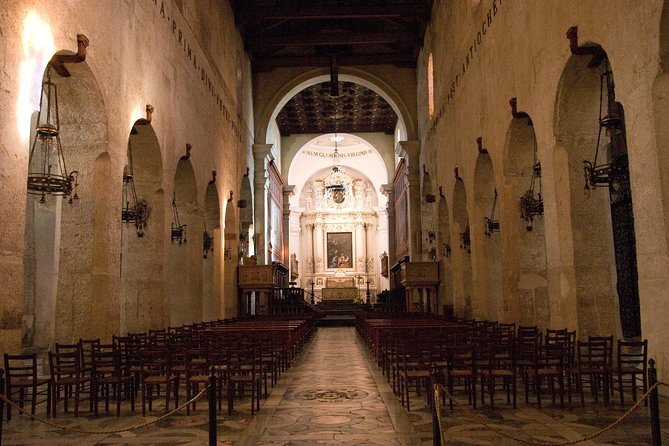
Then you move into Syracuse Cathedral interiors. Here’s the practical catch: the cathedral interior requires an optional entrance fee of €2 per person, and it’s not included. Also, interiors may not be possible during holy mass or marriages; if that happens, the guide explains from outside instead.
Most important: plan your clothing. The rule is clear—no shorts or sleeveless tops, and shoulders must be covered for both men and women. If you don’t meet the dress code, you may be refused entry. In summer heat, that’s exactly when people get caught off guard, so I’d rather you arrive prepared than spend your time arguing with the doorway.
Why this stop is worth the effort
The cathedral is described as a baroque church built on an ancient Greek temple. That single idea is why the interior (when open) feels like more than decoration. You’re standing in a layered site where the visible style is one period, but the ground-level story points to an older world.
And when the interior visit doesn’t happen, don’t shrug. The outside explanation still helps you “see” the church’s construction logic and why the Greeks mattered so much here even after centuries of change.
Santa Lucia alla Badia: When Interiors Are Open (and When They Aren’t)
After Duomo, the tour heads to Chiesa di Santa Lucia alla Badia for an interior visit focused on St. Lucy. This is a favorite type of stop for anyone who enjoys churches, but wants more than a quick photo.
The key timing detail: the church is closed on Mondays, so interior access isn’t possible on that day. If you’re traveling on a Monday, you’ll still get the walk and context, but you should expect that the interior portion won’t happen as planned.
What you can look for
People often come to St. Lucy sites for the visual and devotional connection, and it’s easy to follow along when a guide ties the art and religious meaning to the city around it. If you’re the kind of person who likes asking questions, this is also a good moment: church art and saints’ stories tend to connect to the city’s identity.



Fonte Aretusa: The Spring, the Papyrus, and the Myth Connection
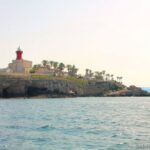
The tour then reaches Fonte Aretusa, described as Syracuse’s legendary spring, known for papyrus plants. This is where the tour shifts from “buildings and dates” to “place and story.”
Your guide will talk about Alpheus and Arethusa, tying the myth to what you’re standing next to. Even if you already know a few versions of the legend, it helps to hear it attached to the physical details of the spring.
Small tip that makes this stop better
Pause and take in the water-and-garden setting rather than treating it like a single landmark you tick off. It’s the kind of place where the myth makes sense because it’s rooted in the landscape. Then the walk into Ortigia’s streets feels like a natural continuation instead of a reset.
Island of Ortigia and the Giudecca: A Different Walk Through Syracuse
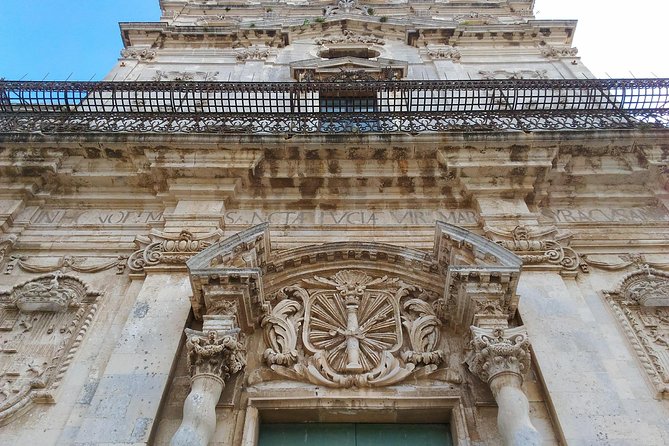
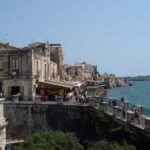
Now the tour becomes more street-level. You’ll walk through the narrow streets of Ortigia, the old town center of Syracuse, and you’ll pass through the Giudecca district, historically the ancient Jewish district.
This part is about texture: stone corners, street angles, and the sense that people lived here long before most “tour routes” were invented. It’s also your best shot on a short schedule to understand why Ortigia still feels human-sized. You’re not just looking at monuments; you’re moving through the same kind of paths locals still use.
The walking section also includes a final Via della Giudecca stop where the tour ends with another stroll through that former neighborhood.
What I like about this sequence
A Greek temple, a cathedral square, a church visit, a myth spring—then streets. The city stops being a checklist and becomes a living puzzle. The Giudecca walk is the piece that often makes the whole tour feel more complete, because it adds a cultural thread beyond the obvious church-and-ruin highlights.
Price and Logistics: Is $107.53 Worth It?
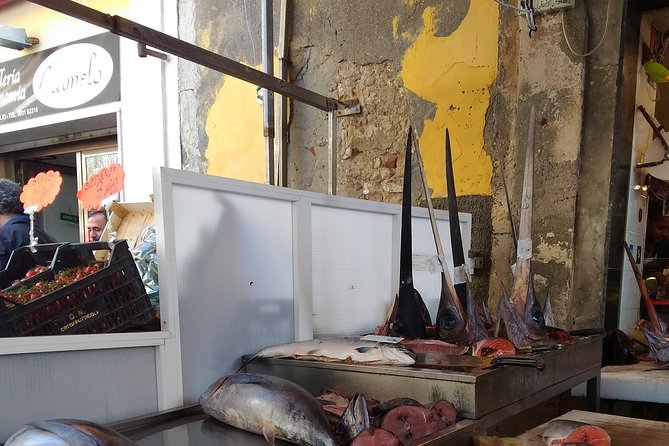
At $107.53 per person for about two hours, you’re paying for a guide-led, stop-heavy walk that avoids time-wasting navigation. The tour is private, meaning it’s only your group, and that usually matters in a place like Ortigia where streets are charming but also easy to misread without local context.
You also get a mobile ticket and the experience runs in English. There’s an element of value here beyond language: a good guide helps you connect the sites so you remember more than a set of names.
The “cost” you should budget
Two things can add small extras:
- Cathedral interior fee: €2 per person is optional
- Potential interior access changes: if the cathedral is unavailable due to services, you may get outside explanations instead of inside time
If you’re hoping to see interiors as much as possible, plan your expectations based on day-of-week and service conditions. But the structure of the walk is strong even when interiors are limited.
Who This Tour Suits (and Who Might Want a Different Plan)
This is a great fit if you want an efficient introduction to Ortigia without spending half your trip figuring out routes. Most people can participate, and the tour notes it’s near public transportation, which helps if you’re combining this with other parts of Syracuse.
It’s also ideal if you like history as a lived thing. Several guides mentioned in past tour experiences are described as personable and quick to answer questions, and that matters because it turns the walk into a conversation instead of a script.
You might skip or pair it differently if…
If you hate rules around church entry (or you won’t be able to cover shoulders), the cathedral part can become frustrating. Also, if you only want one or two famous stops and dislike walking, you may prefer a shorter sightseeing option. This works best when you enjoy the flow of moving from place to place.
Making It Work: Comfort, Questions, and Small Timing Wins
Wear comfortable shoes. Ortigia’s charm is in the narrow streets, but those same streets mean uneven footing and lots of turning. If you’re sensitive to heat, bring water and take the shaded moments when your guide pauses.
This is a tour where questions pay off. The guide is expected to explain connections—Greek foundations under later churches, why the spring has its particular legend, and what the Giudecca district means in the story of Syracuse.
Also, if you’re aiming for cathedral interiors, come dressed correctly from the start. It’s one of those rules that feels petty until it blocks your plan.
Should You Book This Ortigia Private Walking Tour?
I’d book it if you want a guided two-hour walk that hits the major anchors of Syracuse’s historic center—Apollo, Duomo square and cathedral, Santa Lucia, Fonte Aretusa, and the Giudecca/Ortigia streets—with minimal guesswork.
You should think twice if your schedule includes a Monday and cathedral-interior access is a must (Santa Lucia is closed on Mondays), or if you’re not able to follow the cathedral dress code. If you can meet those requirements, this tour is a solid value because you’re paying for time-saving guidance and for explanations that connect the layers of the city.
FAQ
How long is the Ortigia private walking tour?
The tour lasts about 2 hours.
What are the main stops on the tour?
You’ll visit stops including Tempio di Apollo, Piazza Archimede (with the Diana fountain), Piazza Duomo, Syracuse Cathedral, Chiesa di Santa Lucia alla Badia, Fonte Aretusa, and walks through Ortigia and Via della Giudecca.
Is the entrance fee to Syracuse Cathedral included?
No. The cathedral entrance fee is not included and is listed as €2 per person.
What is the dress code for entering the cathedral?
You need to cover your shoulders and avoid shorts or sleeveless tops. If you don’t follow the dress requirements, you may be refused entry.
Can I see the interior of Chiesa di Santa Lucia alla Badia on Mondays?
No. The church is closed on Mondays, so interior visits aren’t possible on that day.
Does the tour require good weather?
Yes. The experience is listed as requiring good weather. If it’s canceled due to poor weather, you’ll be offered a different date or a full refund.