REVIEW · MONTEVERDE
Monteverde Birdwatching Experience
Book on Viator →Operated by Monteverde Nature Tours · Bookable on Viator
Bird calls set the tone in Monteverde. This 4-hour morning Curi-Cancha Reserve birdwatching walk with a bilingual naturalist guide is a smart way to learn the forest while trying for headline species like the Resplendent Quetzal and toucans. I especially like the small group size (up to 8) and the way the guide uses a high-definition spotting scope to help you actually see what you hear. One drawback to plan for: the $80 tour price does not include the Curicancha reserve entrance fee ($25 per person), and wildlife sightings are never guaranteed in the wild.
If you can handle a light hike, you are in good shape. The route is typically 2–3 km on well-designed trails, and the pace stays relaxed enough for most people who can walk. Go in with rain-ready clothes if clouds roll in, because Monteverde weather can change fast even on a great bird morning.
In This Review
- Key things I’d book for
- Why a 7:00 a.m. Curi-Cancha birdwalk makes sense
- Price and value: what $80 covers (and what it doesn’t)
- Meeting at Reserva Curi Cancha: quick logistics that matter
- The walk itself: 2–3 km on trails built for birding
- Spotting scope time: how you get from guesswork to real views
- What you might see: from quetzals to hummingbirds
- More than birds: the forest wildlife bonus
- Guides make the difference: Beto, Jason, Jacob, Jesus
- Photos, pacing, and patience: the practical birdwatching rhythm
- Weather reality in Monteverde: rain happens, birds still show up
- Who this tour fits best (and who should think twice)
- Should you book the Monteverde Birdwatching Experience?
- FAQ
- What’s the duration of the Monteverde Birdwatching Experience?
- What time does the tour start?
- Where do we meet for the tour?
- Is the Curicancha Reserve entrance fee included in the price?
- What equipment is included for birdwatching?
- How big are the groups?
- Is this tour suitable for beginners?
- What is the cancellation policy?
- How far do we walk?
Key things I’d book for
- Small group, up to 8 people: easier conversations, less crowding, better spotting
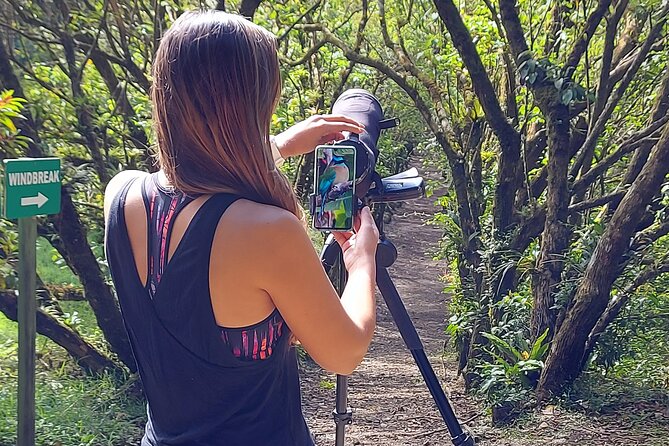
- Spotting scope at the ready: designed to turn distant movement into clear views
- Bilingual naturalist guide: explanations in plain language, plus local bird expertise
- A real forest walk (2–3 km): not a drive-by checklist
- Built for beginners too: monocular/optics help you see birds without guessing
- You leave with a bird list: guides often share the species seen after the tour
Why a 7:00 a.m. Curi-Cancha birdwalk makes sense
Monteverde mornings often feel like the forest is warming up for a show. Starting around 7:00 a.m. puts you in the best window for bird activity and for hearing calls before the canopy gets too busy.
You will spend about 4 hours on the ground with your guide inside the Curi-Cancha Reserve. This is a walking tour, not a classroom, so you learn by doing: listening, scanning, pausing, and then looking closely when the guide points out motion in the branches.
You can also read our reviews of more tours and experiences in Monteverde.
Price and value: what $80 covers (and what it doesn’t)
The tour price is $80 per person, and it includes a professionally certified bilingual guide. You also get special equipment for bird viewing, centered on a spotting scope/telescope so you can see details without burning daylight.
What is not included is the reserve entrance fee for Curicancha, which costs $25 per person. That means you should budget about $105 total per adult for the full experience, assuming the entrance fee applies as listed.
Is it worth it? In my book, yes if you want the birds identified and located with help. The guides are not just pointing. They use skills like tracking by sound and setting up optics for clear viewing. If you are trying to find canopy birds on your own, you will spend more time guessing—and time is the one thing Monteverde does not give back.
Meeting at Reserva Curi Cancha: quick logistics that matter
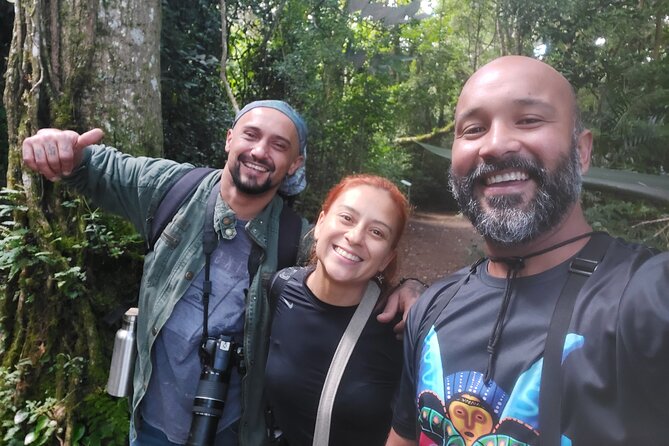
The start is at Reserva Curi Cancha (300 m northwest of the Fabrica de Quesos Monteverde) in Monteverde, Provincia de Puntarenas. The tour ends back at the meeting point, so you do not need to plan transportation for the return.
Because the preferred start time is 7:00 a.m., I suggest showing up a little early. It helps you avoid the stress of last-minute organizing in cooler morning air and gives you time to get ready for a long, quiet scanning session.
The walk itself: 2–3 km on trails built for birding
You will not do a steep, technical hike. The walking distance varies from about 2 km to 3 km depending on what the forest is doing that morning, and the trails are designed for people who can walk.
In practical terms, that means you can focus on the birds rather than fighting your footing. I like that the tour stays flexible. When birds are active in one corner of the reserve, you can spend more time there instead of rushing through a fixed route.
Expect frequent pauses. Birdwatching sounds simple until you realize how much of the job is patience: you stand still, you listen, and you wait for movement that only shows up for seconds at a time.
Spotting scope time: how you get from guesswork to real views
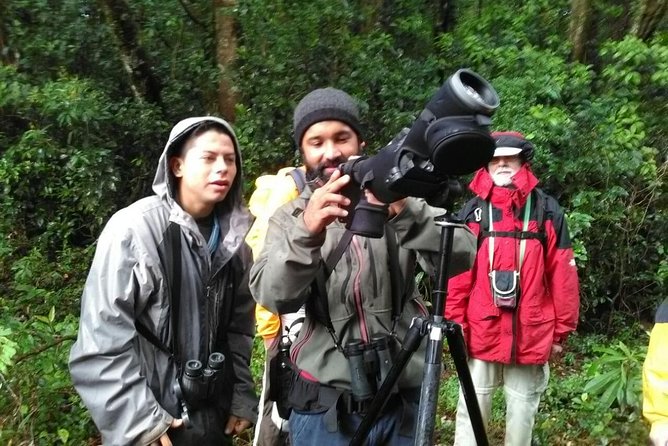
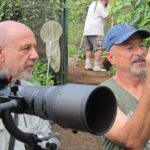
Monteverde birding is full of tiny cues—faint calls, quick flickers in the canopy, or a shape that disappears behind leaves. This is where the guide’s spotting scope earns its keep.
The tour includes special optics for observation (a telescope/spotting scope). In the field, guides often also help set up monocular views, especially if you are new. That matters because a lot of beginners bring binoculars and then spend the whole tour frustrated—too small, too far, too fast.
One of the best skills you will benefit from is matching birds to what they sound like. Multiple guides described having a sharp ear for calls, and that can shorten the time between hearing something and seeing it.
Some guides also use methods to draw attention to birds when appropriate, including replicating sounds to improve your chances of spotting them. That kind of technique can make a huge difference with birds that stay hidden even when they are nearby.
What you might see: from quetzals to hummingbirds
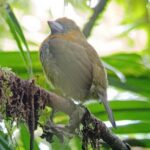
Monteverde is famous for canopy birds, and this tour is built around that reality. The focus is on the kinds of species that make people come to Costa Rica specifically for birdwatching.
You should hope for birds like:
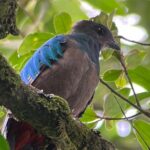
- Resplendent Quetzal (a major target, but not guaranteed)
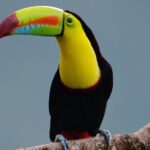
- Toucans (often a highlight)
- Three-wattled Bellbird
- Hummingbirds
- Woodcreepers and other forest songbirds
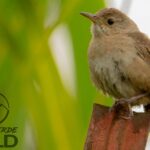
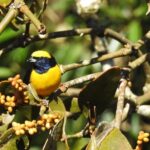
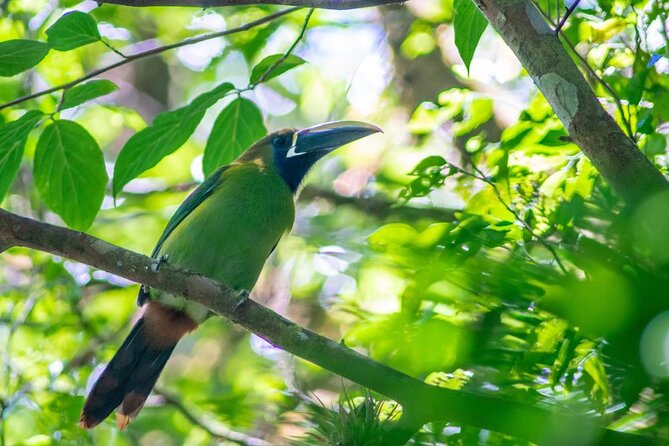
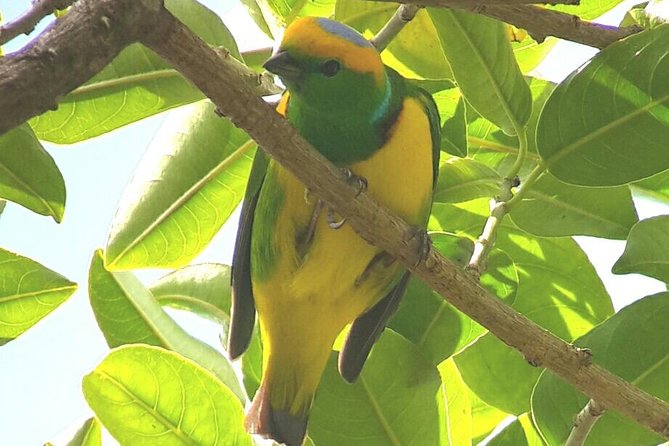
In real tour moments, you may also spot species like long-tailed manakin, blue-crowned motmot, collared trogon, gray-necked wood rail, northern emerald-toucanet, and eye-ringed flatbill. Warblers show up too, along with all those little glints of color that only appear when you stop moving.
A key point: wildlife is unpredictable. Even an excellent guide cannot promise the exact bird list on a specific morning. What they can do is raise your odds by knowing where to look and how to interpret what you are hearing and seeing.
More than birds: the forest wildlife bonus
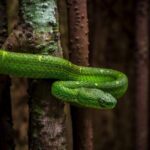
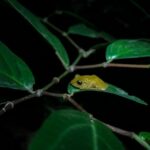
Birdwatching here often turns into a broader rainforest outing. On past tours, the forest extras have included sloths, hairy porcupines, coati, snakes, tarantulas, and peccaries.
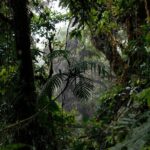
You may even see animal behavior that adds a story, like birds using nests or animals moving through understory cover. The reserve environment supports a lot of life, so when birding slows down, it is still usually interesting.
This is another reason I like the guided approach: you are more likely to notice what is happening beyond the most obvious motion in the canopy.
Guides make the difference: Beto, Jason, Jacob, Jesus
The guides seem to be a big part of why people score this so highly. You are not just getting facts. You are getting real enthusiasm in the woods, plus the patience to help you track birds you would miss on your own.
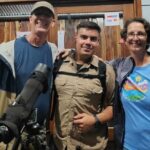
I noticed several guide names showing up in standout experiences: Beto, Jason (including Jason Lopez Jimenez), Jacob, and Jesus. Different guides bring different styles, but the common thread is clear: they love being out there and sharing it in a way that does not feel overwhelming.
If you are a beginner, look for cues that your guide is actively helping you aim and focus. Several experiences mentioned that guides set up optics for clear viewing and took time to explain what to look for next.
If you are more serious about birding, you will appreciate the way guides spot birds by sound and by movement patterns, and how they can identify species quickly once they find them.
Photos, pacing, and patience: the practical birdwatching rhythm
If you want photos, this tour is set up in a helpful way. The spotting scope and close viewing opportunities mean you can actually frame the bird rather than photographing a distant smear of color.
Your best photos will usually come when you:
- Wait calmly when the guide calls your attention
- Watch for brief movement shifts, not constant activity
- Use the scope/optics first, then decide where to point your camera
Pacing is another factor. The walk is relaxed and made for enjoying the reserve, not for breaking records. That is perfect for longer attention spans, where the payoff comes from waiting rather than sprinting.
Weather reality in Monteverde: rain happens, birds still show up
Cloud forest mornings can be wet. If it is raining, do not assume the tour is a waste. One experience noted that it was raining heavily at the start, and the guide kept the day on track in the end.
Bring rain protection. A light rain jacket and a camera cover can save your mood. Also remember that fog and rain sometimes mean lower visibility, which is another reason the scope matters.
The best mindset is simple: treat it as a forest walk with birdwatching as the main mission. Even when sightings slow down, learning how birds use the canopy at that moment is still part of the value.
Who this tour fits best (and who should think twice)
This is a strong match for:
- First-time birdwatchers who want a guided path to real sightings
- Travelers who enjoy learning in the field
- People who want a compact, focused group experience (max 8)
It also works for bird lovers who are not hardcore. The tour balances teaching with enough downtime for you to enjoy what you are seeing.
One caution: this is less ideal for young children who need shorter, more predictable explanations. The bird details can be technical, and wildlife viewing cannot be guaranteed to match a child’s favorite list.
If you are traveling with school-age kids, I would still consider it only if you know they can handle sitting quietly and listening for calls.
Should you book the Monteverde Birdwatching Experience?
Book it if you want your best odds at canopy birds without spending days learning bird calls on your own. The mix of a certified bilingual guide, small group size, and spotting scope equipment makes the $80 cost feel practical—especially when you factor in the entrance fee you already know you will pay ($25).
Skip it or reconsider if you are on a tight budget and do not want to add the entrance fee, or if you only want a guaranteed quetzal sighting. Monteverde is the kind of place where the forest writes the schedule, not the itinerary.
If you are willing to wake up early, walk a couple kilometers, and be patient while the guide scans the canopy, you will get a memorable morning—and likely a lot more bird confidence for your next day in Costa Rica.
FAQ
What’s the duration of the Monteverde Birdwatching Experience?
It lasts about 4 hours.
What time does the tour start?
The preferred starting time is 7:00 a.m.
Where do we meet for the tour?
You meet at Reserva Curi Cancha, 300 m northwest of the Fabrica de Quesos Monteverde, Monteverde, Provincia de Puntarenas, Costa Rica.
Is the Curicancha Reserve entrance fee included in the price?
No. The reserve entrance fee is not included and costs $25.00 per person.
What equipment is included for birdwatching?
The tour includes special equipment to observe birds, including a spotting scope or telescope, plus a professional certified tour guide.
How big are the groups?
The tour has a maximum of 8 travelers.
Is this tour suitable for beginners?
Most travelers can participate, and the tour is designed for a walk with a bilingual naturalist guide, with optics to help you see birds more clearly.
What is the cancellation policy?
You can cancel for free up to 24 hours in advance for a full refund. If you cancel less than 24 hours before the start time, the amount paid is not refunded.
How far do we walk?
The hike distance varies from about 2 km to 3 km depending on forest activity, and trails are designed for anyone capable of walking.