REVIEW · CRETE
Knossos Palace Guided Walking Tour (Without Tickets)
Book on GetYourGuide →Operated by Travel Crete - WeGuide travelers · Bookable on GetYourGuide
Knossos makes time feel sideways. On this small-group walking tour, you get the Minotaur story and the real Bronze Age setting fast, without losing hours to ticket lines. I like the way the guide ties myths to the layout, and I also love the practical setup with skip-the-line entry and headsets when the group grows.
The best part is the feel of the place: throne area, sanctuaries, royal quarters, storage spaces, and the palace’s water-management systems all get put in context. A small caution: at $70 plus the paid entry ticket on site, it can feel pricey if you only want a casual look around.
In This Review
- Key things to know before you go
- Knossos Palace: Why this ruin feels like a story map
- Skip-the-ticket-line: what you actually gain
- Where to meet, how to check in, and how the ticket payment works
- A 90-minute walk through the Palace of Minos (and what each stop teaches)
- Start: getting your bearings at the entrance
- Palace of Knossos: the main guided experience
- Finish: back at the meeting point
- Small group size and headsets: how you hear the guide
- My shortlist of what to look for once you’re there
- Timing tip: choose the calmer hours if you can
- Price and logistics: is $70 a good value?
- Who should book this, and who should choose another option
- Should you book this Knossos Palace walking tour?
- FAQ
- How long is the Knossos Palace guided walking tour?
- Is the Knossos Palace ticket included in the $70 price?
- Where is the meeting point?
- Will I be able to hear the guide?
- What should I bring?
- Is this tour suitable for wheelchair users or people with mobility issues?
Key things to know before you go
- Skip-the-ticket-line setup saves you time at the ticket counter, even though you still pay the entrance ticket on site.
- Small groups up to 16 keep the tour human-sized, not a big bus shuffle.
- Headsets used when over 6 people help you hear the guide without craning your neck.
- English live licensed guide brings both history and myth to the same walking route.
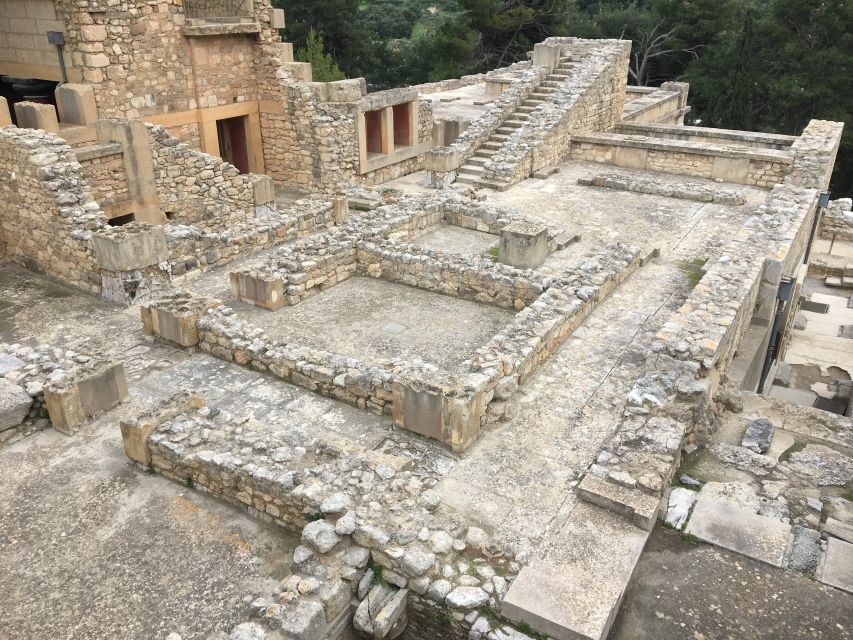
- You’ll see the palace complexity: think 1,500+ interlocking rooms, four-storey feel, and major ceremonial spaces.
- Not for mobility needs: this one isn’t suitable for wheelchair users or people with back problems.
Knossos Palace: Why this ruin feels like a story map
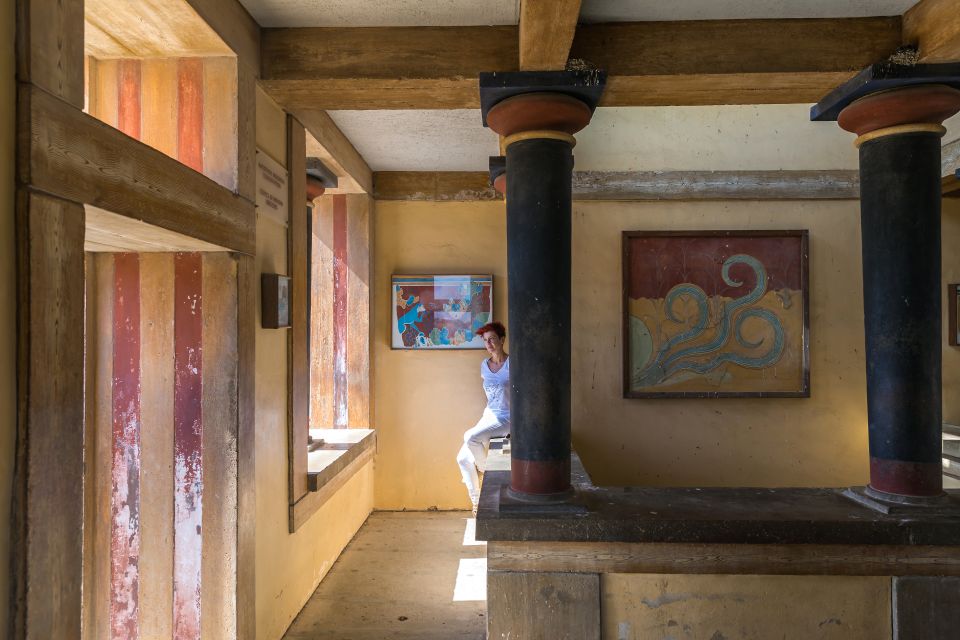
Knossos isn’t just one building. It’s a sprawling palace complex with more than 1,500 interlocking rooms, and that’s exactly why it can feel confusing if you go alone. With a guide, you get a mental map: where power likely centered, where people gathered, and why certain areas mattered in daily life and ritual.
You also get the big historical arc. The first palace rose soon after 2000 BC, then a catastrophic earthquake destroyed it around 1700 BC. A new palace followed quickly, and for roughly 300 years it served as the main power center in Bronze Age Crete, until a chain of earthquakes led to its final destruction in the late 14th century BC.
And yes, the Minotaur and King Minos are part of the package. Knossos is where myth and stone work together, so you aren’t stuck choosing between legend and archaeology—you get both.
You can also read our reviews of more tours and experiences in Crete.


Skip-the-ticket-line: what you actually gain
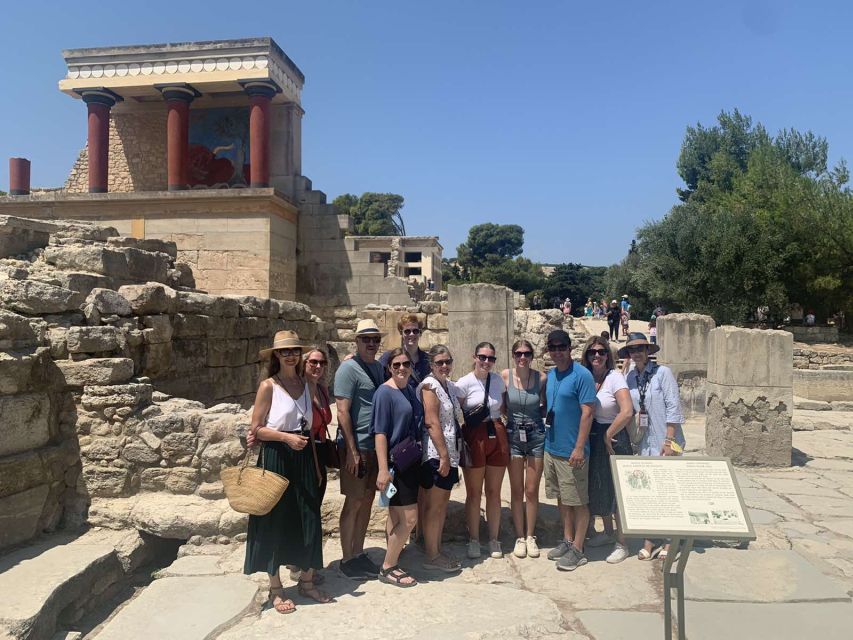
The tour includes a skip-the-ticket-line service, which is the practical win. Knossos can mean long waits at the ticket counter, and those lines can eat up energy you’d rather spend walking and looking.
That said, the entrance ticket is not included in the $70. You’ll pay the Knossos Palace general admission ticket cost on site in cash (adult price is listed as 20 EUR). The guide helps you through the process so you’re not hunting around while the group moves.
In real terms, you’re paying for time + interpretation. Even if you’re the type who likes to wander, the “skip + guided route” combination keeps the visit from turning into a long, unsatisfying circuit.
Where to meet, how to check in, and how the ticket payment works
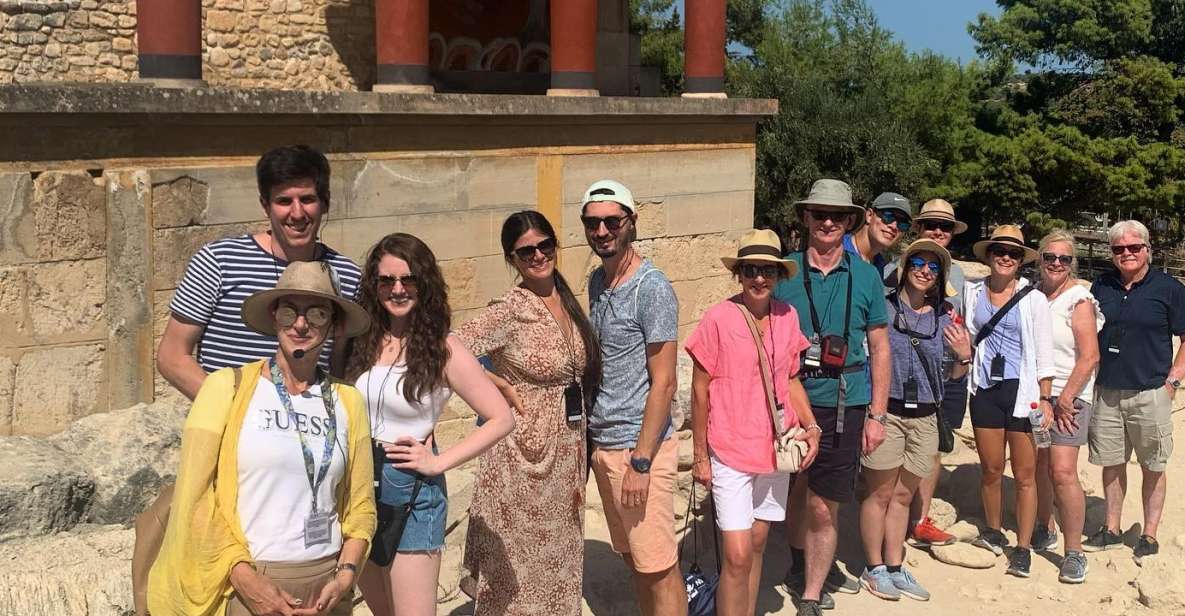
You meet at the Main Entrance to the Palace of Knossos, right in front of the Ticket Office. Your check-in operator holds a sign with a WeGuide.gr – Meeting Point logo, so you can confirm you’re in the right place quickly.
When you book this option, you’ll handle entry payment on site for your skip-the-line entry. If you’re eligible for free or reduced fare categories, you’ll need an ID or passport—plan that ahead so you don’t hit a paperwork snag.
One more practical note: this tour is built for walking in a ruin setting. Wear comfortable shoes, and bring sunglasses and a sun hat. Warm days also mean you should plan for sunscreen and water.
A 90-minute walk through the Palace of Minos (and what each stop teaches)
This is a 1.5-hour guided walking tour, so you should expect a curated route rather than a perfect scan of the entire archaeological site. The goal is to help you understand Knossos as a functioning palace and not just as scattered walls.
Start: getting your bearings at the entrance
Right away, the guide sets the scene so you’re not staring at stone with no compass. That first orientation matters here because Knossos is famously maze-like—1500+ rooms will make your brain want to shut down if no one gives you structure.





Palace of Knossos: the main guided experience
During the tour, you’ll cover the highlights that make Knossos click:
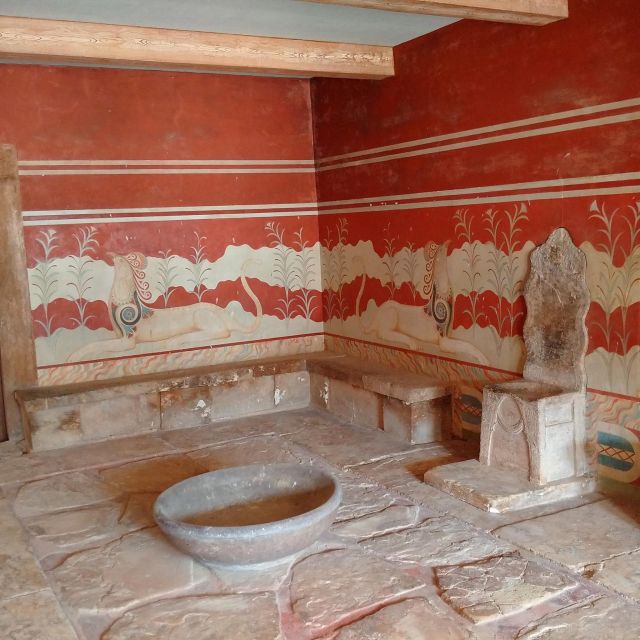
- The original throne area of Minos: it anchors the story of authority and power. Even if you’re not sure what you’re seeing, the guide helps you connect the symbolism to the space.
- Sanctuaries and ceremonial spaces: these areas explain why Knossos wasn’t only about kings and storage. It was also about beliefs and public gatherings.
- Royal domestic quarters: you see where the palace’s elite lifestyle likely happened, and you get context for how the rooms relate to each other across levels.
- Luxurious domestic quarters and storage areas: the palace wasn’t just a showpiece. It had specialized areas, including storage and production-style zones.
- Crete’s treasures pantries and workshops (specialized workshops): you’ll learn what the palace needed to run day-to-day.
- Water-management systems: this is one of the most fascinating parts because it shows engineering, planning, and practicality in a place people often treat like pure myth.
Historically, the guide connects the earthquake cycles to what you can still interpret today. When you know a palace rebuilt itself after destruction, you look at the site with better eyes.
Finish: back at the meeting point
You wrap back at the WeGuide.gr meeting point near the main entrance. That timing is ideal if you want to continue exploring on your own afterward, because you’ll know what to look for beyond what the guided route can cover.
Small group size and headsets: how you hear the guide
This tour runs in a small group, with up to 16 people. If the group is over 6, you get headsets, which is a big deal at archaeological sites where noise from foot traffic and crowds can drown out casual speech.
What I like about this setup is that it protects the storytelling. Knossos is full of details—names, functions of rooms, and the way the palace evolved after earthquakes. If you miss even a few sentences, the place can feel like confusing rubble. Headsets keep the thread intact.
English is the language, and the guides named in real bookings include people like Akrivi (including Akrivi Chatzigeorgiou), as well as Katerina. Across these examples, the common theme is that the guides make the myth and history feel connected, and they’re willing to answer questions.
My shortlist of what to look for once you’re there
If you want to get the most from 90 minutes, use the guide as your lens and then lock onto a few visual anchors. Here’s how I’d focus your attention:
1) The throne area of Minos
Look for how the guide frames it. Even if you can’t picture the original setting, the explanation helps you understand why a throne-like focus matters in a palace.
2) Sanctuaries and ceremonial spaces
These spots help you understand Knossos as a social and religious center, not just a king’s residence. The guide’s job is to connect purpose to layout.
3) Storage and workshops
Knossos included important architectural innovations and specialized spaces. If you pay attention here, you’ll start seeing the palace as a system—food, materials, making, and keeping everything running.
4) Water-management systems
If you only remember one “non-myth” feature, make it this. It’s the part that proves the palace wasn’t only about legend. It handled real needs.
Also: take your time with photos, but don’t block the route. Knossos can be tight, and you’ll want to keep pace so the guide can hit the highlights efficiently.
Timing tip: choose the calmer hours if you can
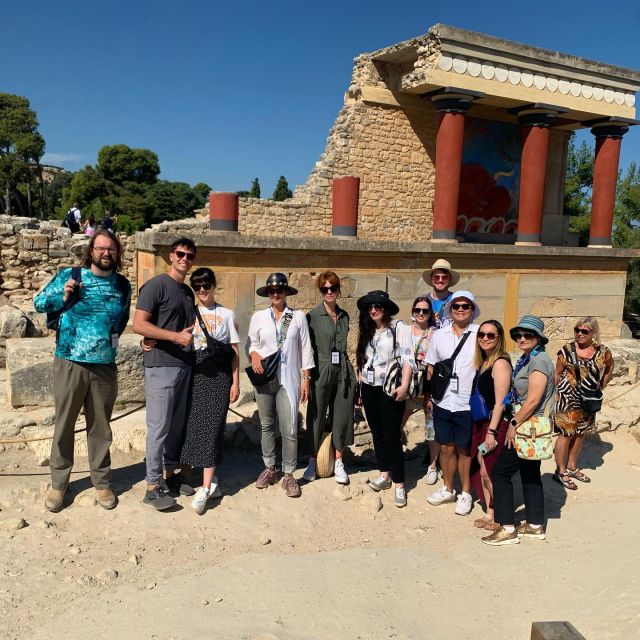
If you’re flexible, early slots can make a difference. One booking specifically called out a 9:00am tour as the best decision because Knossos was still relatively quiet then. I’d take that as a practical clue: morning time can mean less crowd pressure, faster movement, and more time to listen.
If you can’t do mornings, don’t panic. With a headset and a guided route, you can still make sense of what you’re seeing even when it’s busier.
Price and logistics: is $70 a good value?
Here’s the value math, plainly. You pay $70 per person for the guided walking tour plus the skip-the-ticket-line service. The Knossos Palace general admission ticket is separate (adults listed at 20 EUR), paid in cash onsite, with the guide’s help.
So what you’re buying is not only entry. You’re buying:
- a licensed guide for 1.5 hours,
- small-group attention (up to 16),
- headsets when the group gets bigger,
- and time saved by avoiding ticket-counter queues.
Is it worth it? For me, it’s a yes if you want more than a quick photo stop. Knossos is complex, and the guide helps you decode it. If you’re the type who’s happy wandering with a map and minimal explanation, the paid guidance could feel like extra cost—one booking noted the tour felt expensive for what it delivered.
A middle path works well: do this guided portion first, then use the rest of your time at Knossos for independent exploring.
Who should book this, and who should choose another option
This tour suits you if you:
- want a structured route through a maze-like palace site,
- prefer English live interpretation over self-guided reading,
- appreciate small groups and hearing the guide clearly via headsets.
It may be a poor fit if you:
- have back problems,
- have mobility impairments,
- need a wheelchair (not suitable),
- or you can’t manage the walking involved in an archaeological ruin.
Also, keep it simple with luggage. Pets aren’t allowed, and luggage or large bags aren’t permitted.
Should you book this Knossos Palace walking tour?
I’d book it if you want to understand Knossos instead of just touring it. The combination of a licensed guide, small-group pace, and headset support makes a big difference at a site that can easily turn into a confusing loop of walls.
Skip booking it if you only want entry and don’t care about the story, or if your budget is tight once you add the separate ticket cost. For most people, though, $70 is a reasonable trade for time saved and the context that makes the palace worth your attention.
If you can swing an early departure, even better. Morning tends to keep the experience from feeling like you’re trying to listen over a crowd.
FAQ
How long is the Knossos Palace guided walking tour?
The tour duration is 1.5 hours.
Is the Knossos Palace ticket included in the $70 price?
No. The Knossos Palace general admission ticket (adult price is listed as 20 EUR) is not included. You pay for the skip-the-line entry ticket by cash onsite, and the tour guide helps.
Where is the meeting point?
Meet at the Main Entrance to the Palace of Knossos, in front of the Ticket Office. The check-in operator will be holding a sign that says WeGuide.gr – Meeting Point.
Will I be able to hear the guide?
Yes. You’ll get headsets if the group size is over 6 participants (for groups up to 16), which helps you hear the guide better.
What should I bring?
Bring comfortable shoes, plus sunglasses and a sun hat. On warm days, you’ll also want sunscreen and water.
Is this tour suitable for wheelchair users or people with mobility issues?
No. It is listed as not suitable for people with back problems, mobility impairments, or wheelchair users.