REVIEW · FUERTEVENTURA
Fuerteventura: Learn to Surf Lesson
Book on GetYourGuide →Operated by CANARY SURF ACADEMY · Bookable on GetYourGuide
First-time surfers get real momentum. This Fuerteventura surf lesson is built for beginners (and everyone who wants a fresh shot at standing up), with a qualified instructor coaching your safety and technique on the water. I love the no-nonsense approach to basics and the fact that the lesson includes the equipment and insurance so you can focus on actually learning. The one thing to keep in mind is that the instructor chooses the beach and the class timing can shift with sea conditions.
You’ll get a 2-hour surf session inside a longer 4–5 hour activity window (usually due to transfers), and you can go as a family-friendly group or pick a private/small-group format. Pickup is included for hotels and apartments in Caleta de Fuste and Puerto del Rosario, while the southern parts of the island don’t have pickup.
In This Review
- Key Things I’d Plan Around
- Surfing in Fuerteventura: Why This Beginner Lesson Fits So Many Travelers
- The 2-Hour Lesson: What You’ll Learn and What It Feels Like on Day One
- How the Instructor Picks Your Beach (And Why That’s a Good Thing)
- Timing and Transfers: When the 4–5 Hours Actually Happen
- Pickup Zones vs. Meet-on-Beach: Don’t Get Caught by Location
- Equipment and Insurance: What’s Included So You Can Travel Lighter
- Who Should Book This? (And Who Should Skip It for Safety)
- Private vs. Small Groups: Choosing the Right Amount of Attention
- Price and Value: Is $59 a Good Deal for Fuerteventura Surfing?
- What to Do Before You Go: Simple Tips That Improve Your Odds
- Should You Book This Fuerteventura Surf Lesson?
- FAQ
- What’s the duration of the surf lesson?
- Is pickup included from all parts of Fuerteventura?
- What if I have a car and my hotel is outside the pickup area?
- What’s included in the price?
- Do I need to bring my own surf equipment?
- What are the age and swimming requirements?
- What’s the lesson language?
Key Things I’d Plan Around
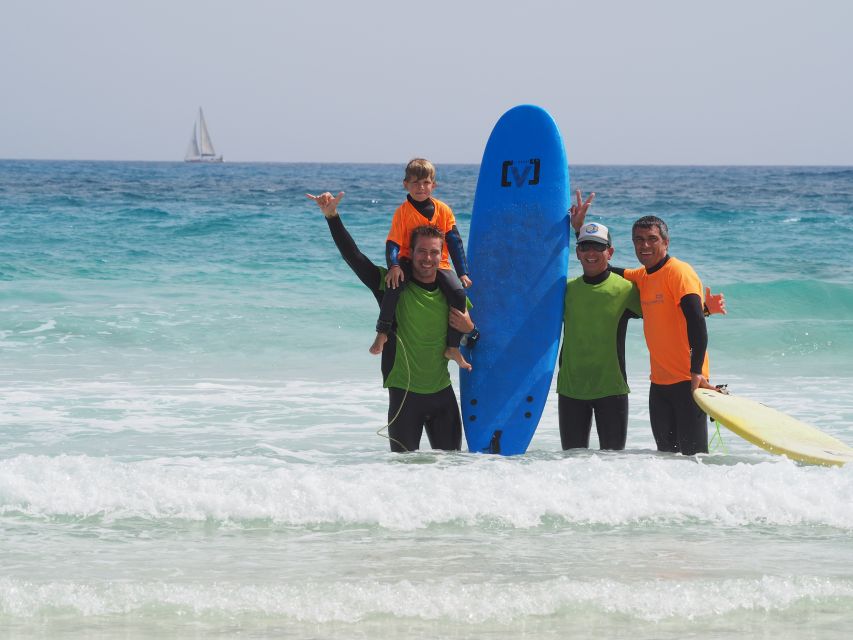
- Gear is included, so you don’t waste time renting a board or buying a leash last minute
- Instructor-led basics focus on standing up and riding in a way that matches your level
- The beach is chosen for you based on your skillset and the weather
- Sea conditions can change timing, so plan a flexible day
- Pickup is selective, which matters if you’re staying in Costa Calma/Morro Jable/nearby areas
Surfing in Fuerteventura: Why This Beginner Lesson Fits So Many Travelers
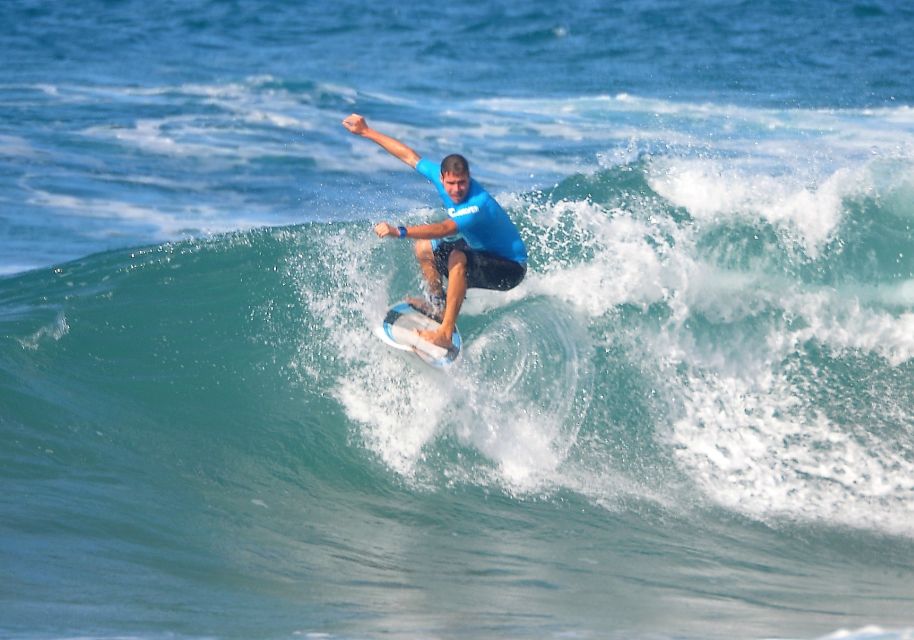
Fuerteventura is one of those places where surf is part of the routine, not a rare “tourist thing.” The lesson here is designed around the idea that you learn faster when you’re on the right water for your ability and the instruction is hands-on.
The best part for me is that this isn’t a vague “go have fun in the ocean” deal. You get a professional instructor who teaches safety rules and core fundamentals, then adjusts coaching based on where you are as a surfer. That matters a lot. If you’re brand-new, you need the steps. If you’ve tried before, you usually need feedback on what’s going wrong (popping up too late, paddling inefficiently, not reading the wave in time).
The lesson is also broad in who it can serve: families, friends, singles—basically anyone who meets the minimum requirements and can swim. And you’re not stuck in a huge crowd either. You can book private or small groups depending on what kind of pace and attention you want.
You can also read our reviews of more tours and experiences in Fuerteventura.



The 2-Hour Lesson: What You’ll Learn and What It Feels Like on Day One
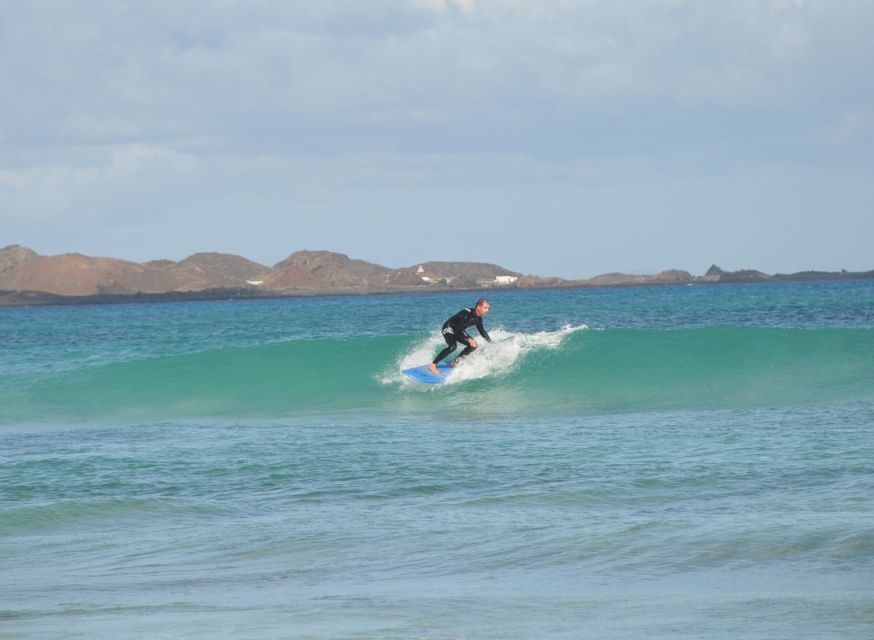
The surf lesson is built around one goal: help you stand on the water and then keep improving from there. Expect a safety-first start and then step-by-step skill work.
Here’s the practical flow you should anticipate:
- You’ll get taught the safety rules you need before you go into the surf zone.
- You’ll spend time on the basics that help you actually ride, not just float around: how to handle your board, how to position yourself, and how to move with the waves.
- The instructor will give technique guidance based on your experience level, not a one-size script.
- You’ll get time in the ocean on a beach chosen for the conditions, so you can practice the fundamentals where they fit.
The “standing on water” highlight isn’t a marketing line—it’s the real skill the lesson targets. Your progress might be quick or gradual depending on balance, comfort in the ocean, and how the waves look that day. But that’s exactly why the instructor is there. You’re not just watching others; you’re getting corrections in real time.
Also, the activity includes time for enjoying the beach. Surf lessons can feel like total work if you’re not careful. This one keeps the experience grounded in being outside, moving, and learning without turning it into a drill camp.
How the Instructor Picks Your Beach (And Why That’s a Good Thing)
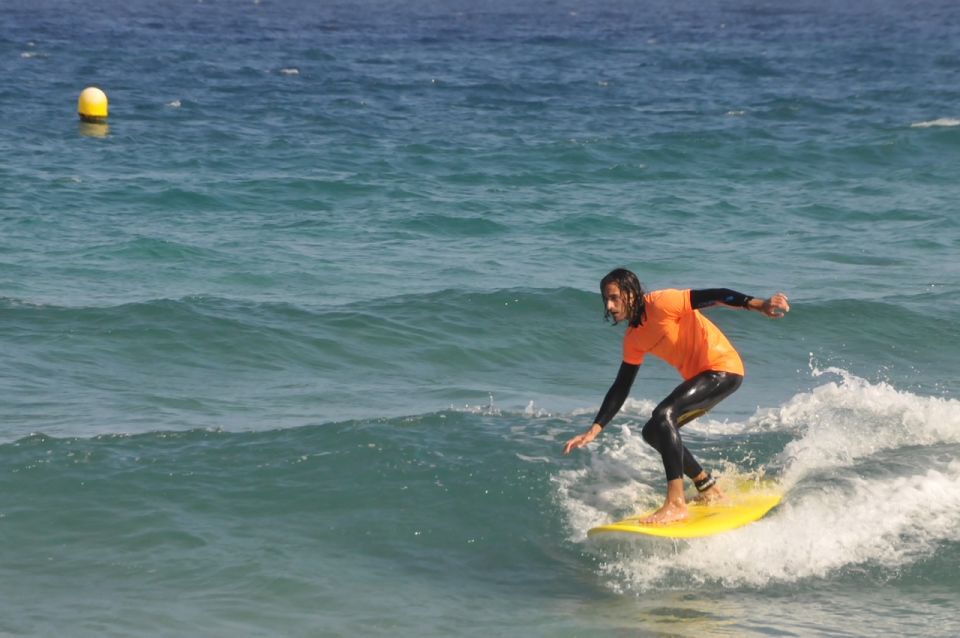
One detail that makes this lesson feel smarter: the instructor chooses the best beach based on your skillset and the weather conditions. That’s huge for beginners because not every coastline behaves the same way. Some spots are more forgiving for learning the basics, while others get choppier or more intense.
What you should know:
- You might not get the exact beach you pictured in your head.
- You’ll still get a beach that fits the lesson, which is the part that helps you learn faster and safer.
- The class schedule can change depending on sea conditions and participant levels.
I actually like this approach. It means the school is responding to what the ocean is doing that day instead of forcing everyone into the same plan. The trade-off is flexibility: you should build some slack into your day if you’re working around dinner reservations or another tight activity.
Timing and Transfers: When the 4–5 Hours Actually Happen
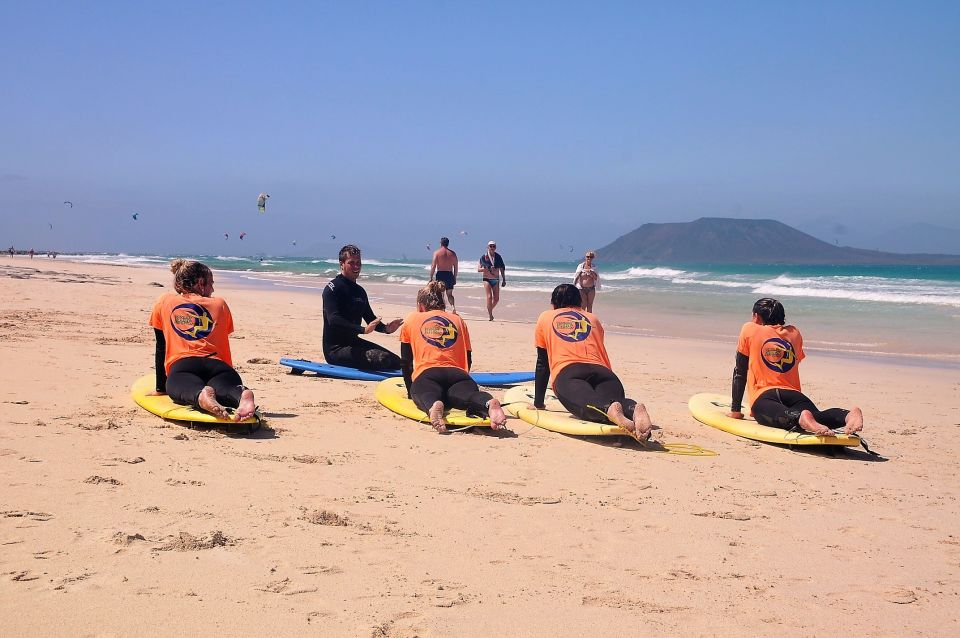
Even though the surf lesson is 2 hours, the total activity time runs about 4 to 5 hours because of transfers. That’s standard for many island activities, but it’s worth planning for.
Here’s how to think about the day:
- Plan to be picked up and/or to meet the instructor with enough buffer so you’re ready to gear up and get briefed.
- Treat the surf session as the “main event,” then expect extra time around travel, equipment, and moving between briefing and water time.
- Sea conditions can shift the schedule, so avoid stacking another ocean activity right after.
If you get nervous about timing, this is the kind of booking where it helps to go into it calm. The ocean sets the rules, and the schedule adjusts accordingly.
Pickup Zones vs. Meet-on-Beach: Don’t Get Caught by Location
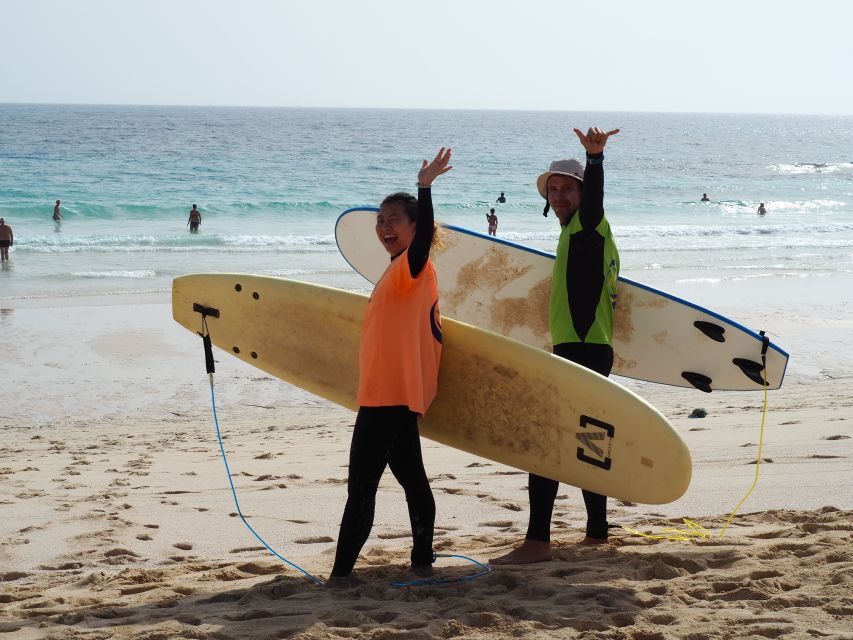
Pickup is included—but only in specific areas. If you’re staying near Caleta de Fuste or Puerto del Rosario, you should be in the sweet spot for convenience.
What’s included:
- Pickup from your hotel or apartment is possible in the Caleta de Fuste area and Puerto del Rosario.
What’s not available:
- Pickup is not available from Costa Calma, Morro Jable, and the southern part of the island (including Gran Tarajal, Costa Calma, and Morro Jable).
Good workaround if you have a car:
- If your stay isn’t in the listed pickup areas, you can meet directly on the beach instead.
This is one of those “check before you assume” parts. If you’re staying in the far south and you hate surprises, confirm pickup coverage early. It can save you from a stressful scramble right when you want your focus on the surf lesson.





Equipment and Insurance: What’s Included So You Can Travel Lighter
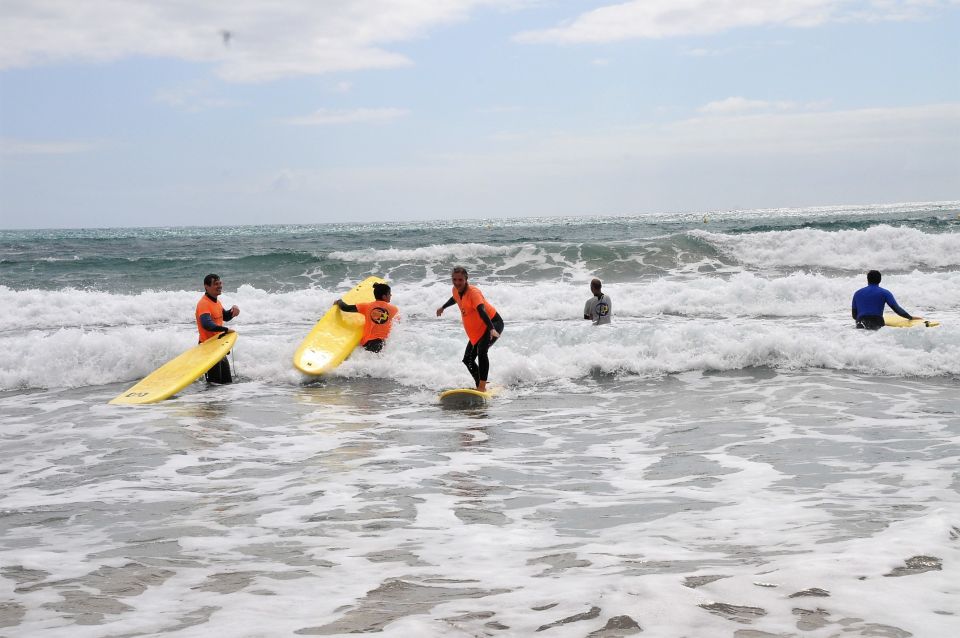
For $59 per person, the value isn’t just that you’re paying for instruction. You’re also getting the basic gear and insurance handled for you.
Included with the lesson:
- Neoprene
- Surfboard
- Leash
- Insurance
- Surf lesson with a qualified instructor
- Pickup from eligible areas (as noted above)
That set matters because it removes two common travel headaches:
1) You don’t need to hunt down rental shops or worry about whether you chose the right board.
2) You’re not spending time on gear logistics mid-trip.
What to bring (and it’s worth doing it):
- Swimwear
- Change of clothes
- Towel
- Sunscreen
- Snacks and drinks (food isn’t included)
One more practical note: alcohol and drugs aren’t allowed. That’s both a safety decision and a vibe decision—surf lessons work best when everyone’s focused and steady.
Who Should Book This? (And Who Should Skip It for Safety)
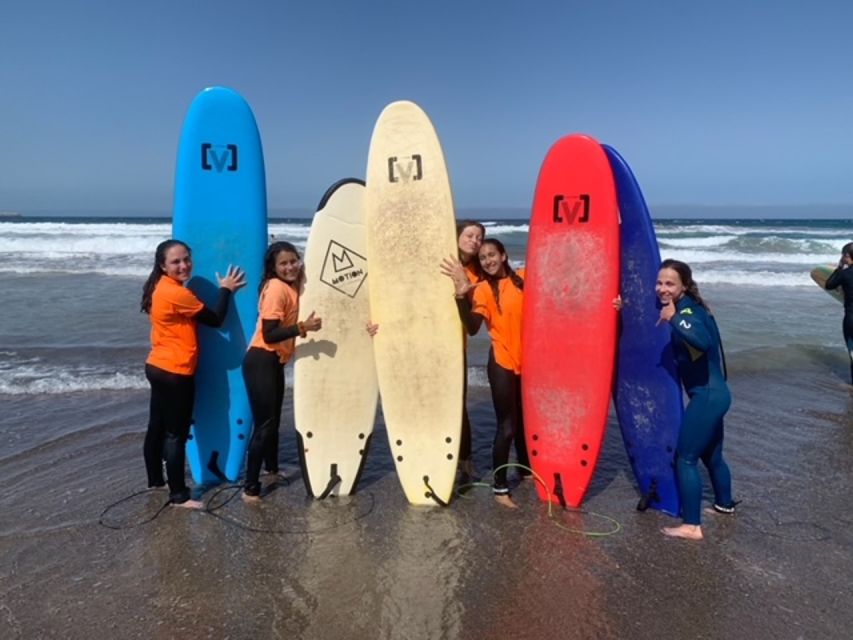
This is an entry-level surf lesson, but it still has clear minimum requirements.
You can take part if:
- You’re at least 6 years old
- You can swim and are in good physical health
- You’re comfortable being in and around the ocean with guidance
You should not book if:
- You’re pregnant (not suitable)
- You have back problems (not suitable)
- You’re a non-swimmer
- You’re below the stated minimum age (the activity lists children under 5 as not suitable)
This isn’t about gatekeeping. It’s about matching the activity to the physical demands of learning to surf. Even beginner waves take effort, and popping up, paddling, and balancing on a moving surface requires a basic level of comfort and mobility.
If you’re traveling with kids, this can be a great “first real water skill” experience—as long as they can swim and follow instructions.
Private vs. Small Groups: Choosing the Right Amount of Attention
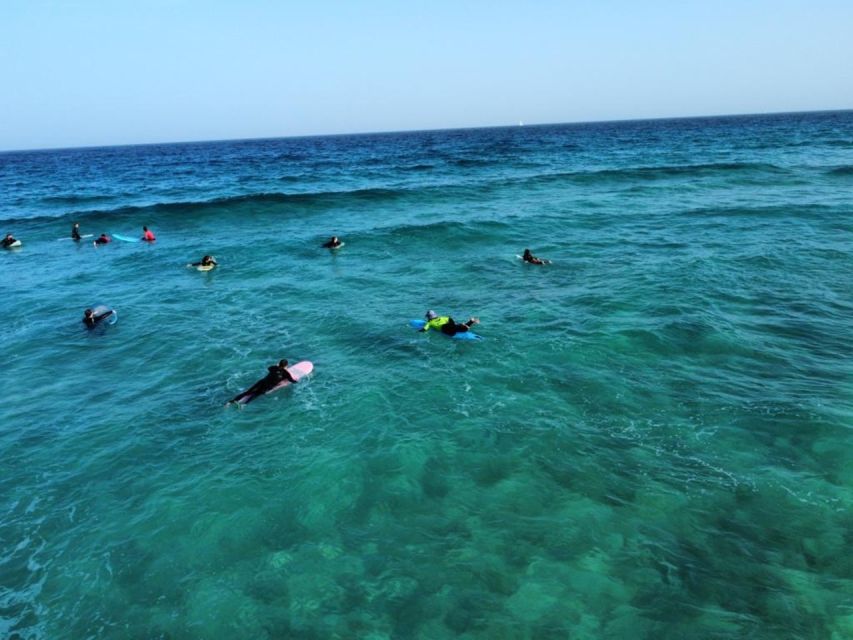
You can book the lesson as a private or small group. That choice changes the feel of the day.
- Private lessons tend to be ideal if you want faster feedback, or if your group has mixed experience levels and you want the instructor to focus on individual technique.
- Small groups usually work well when everyone is roughly at the same stage and you don’t mind learning by taking cues from others too.
Either way, the instructor is there for safety and fundamentals. The difference is how much airtime you get for corrections.
Also check languages: the instructor speaks Spanish, English, and Italian, which is helpful if you want clearer explanations (especially for safety rules).
Price and Value: Is $59 a Good Deal for Fuerteventura Surfing?
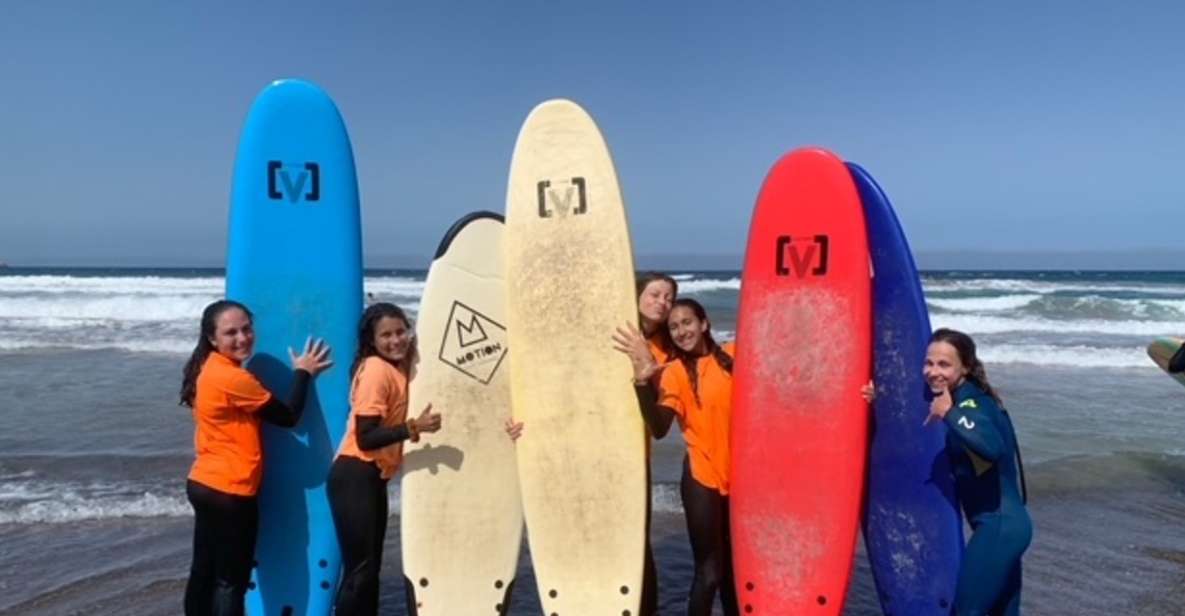
At $59 per person, the key question is whether you’re paying mostly for instruction—or for the whole experience. In this case, you get more than just coaching.
Here’s what makes the price feel reasonable:
- The lesson includes neoprene, board, and leash, so you’re not paying extra on arrival.
- You get insurance included, which is a real comfort on an ocean activity.
- Pickup is included in major areas (Caleta de Fuste and Puerto del Rosario), which saves you time and transport costs if you’re staying nearby.
- You’re working with a qualified instructor who teaches safety rules and basic fundamentals and adjusts for your level.
The main “value limiter” is location. If you’re in an area without pickup, you’ll need a way to get to the beach yourself or choose a different activity plan for that day. But if you’re in the pickup zones, this can be a very tidy deal.
What to Do Before You Go: Simple Tips That Improve Your Odds
Surf lessons are partly about timing and weather, but your preparation still matters. Here’s how to set yourself up to learn faster:
- Bring a change of clothes. Saltwater + neoprene means you’ll want dry clothes afterward.
- Pack snacks and drinks. Food and drinks aren’t included, so you don’t want to run low energy mid-session.
- Wear sunscreen before you start and reapply later. The sun on the Canary Islands can be strong.
- Bring a towel that you’ll actually use. You’ll want it for the wait and after the lesson.
- If you’re bringing kids, make sure they can swim well enough to participate safely. The lesson requires swimming ability.
- Avoid alcohol. The activity has a clear no-alcohol rule.
Small prep also helps mentally. When you’re comfortable—ready with gear, fed, and not worried about clothes—you can focus on the technique.
Should You Book This Fuerteventura Surf Lesson?
Book it if:
- You’re a beginner or want a structured refresher on fundamentals.
- You like the idea of included gear (neoprene, board, leash) and instruction that covers safety rules first.
- You’re staying in Caleta de Fuste or Puerto del Rosario and want pickup convenience.
- You want the option of private or small groups.
Consider alternatives or adjust your plan if:
- You’re staying in the southern parts where pickup isn’t available, and you don’t want to drive or meet on the beach yourself.
- You or someone in your group doesn’t meet the swim/health requirements (no-swimmer, pregnancy, back problems are not suitable).
- You need a perfectly fixed schedule. Sea conditions can change timing, and the instructor selects the beach based on conditions.
If you want one day in Fuerteventura that’s active, memorable, and teachable, this is a solid choice. It’s not about showing off tricks. It’s about learning to stand, building confidence with real coaching, and leaving the beach feeling like you actually learned something practical.
FAQ
What’s the duration of the surf lesson?
The surf lesson itself is 2 hours, and the total activity lasts about 4 to 5 hours including transfers.
Is pickup included from all parts of Fuerteventura?
Pickup is available from hotels or apartments in the Caleta de Fuste area and Puerto del Rosario. Pickup is not available from the south island areas including Gran Tarajal, Costa Calma, and Morro Jable.
What if I have a car and my hotel is outside the pickup area?
If you stay outside the pickup areas and have a car, you can meet directly on the beach.
What’s included in the price?
The package includes neoprene, a surfboard, a leash, a surf lesson with a qualified instructor, insurance, and pickup where it’s available.
Do I need to bring my own surf equipment?
No. The neoprene, surfboard, and leash are included. You should bring swimwear, a towel, sunscreen, and a change of clothes.
What are the age and swimming requirements?
You must be at least 6 years old, and you must be able to swim and be in good physical health.
What’s the lesson language?
The instructor speaks Spanish, English, and Italian.