REVIEW · FUERTEVENTURA
Fuerteventura: Island Highlights Sightseeing Tour
Book on GetYourGuide →Operated by FUERTETRAVELS · Bookable on GetYourGuide
If you want the island’s best hits, this route delivers fast. I loved how smart stops plus a small group lets you actually enjoy the views, not just stare out a window. The tour also brings in history in plain language with local storytelling, but the full day of driving means you’ll want decent walking shoes and realistic expectations about quick photo moments.
You’ll spend about 7 hours bouncing across Fuerteventura’s different faces: black-sand coasts, big volcanic shapes, white Canarian villages, and viewpoints that make the island feel huge. One practical thing to consider: pickup is included only from many north/central areas, so if you’re staying in the South (Jandia), you’ll need a different plan.
In This Review
- Key reasons this tour works well
- How a small-group 7-hour overview gives you real bearings
- What I’d pack in my day bag
- Corralejo’s dunes to Ajuy’s caves: the north-to-west photo arc
- Dunas de Corralejo: walk the edge of a postcard
- Ajuy: black cliffs, limestone, and free time to wander
- Mirador de Vallebrón: a quick walk to reset your eyes
- Tindaya and Granadillos: why high viewpoints change your whole map
- Tindaya: the kind of sight that makes you slow down
- Valle de los Granadillos: “look, then look again”
- Tuineje, Antigua, and classic villages: real Canarian rhythm
- Antigua: a calm town stop with scenery on the drive
- Convento de San Buenaventura and Miradors: stop for the view, then for the photo
- Iglesia de Nuestra Señora de la Peña to Sicasumbre: churches and stars
- Iglesia de Nuestra Señora de la Peña: a short visit that adds texture
- Astronomical Viewpoint of Sicasumbre, Pájara: the sky stop
- Windmills, Puerto del Rosario, and Betancuria: the heart beats differently
- Molinos de Villaverde, Juan Gopar: small stops that connect the dots
- Puerto del Rosario: a real town moment
- Betancuria: 20 minutes that you’ll want to stretch
- Monumento a Miguel de Unamuno and Monte Muda: culture plus big air
- The final stretch: cardones, villages, volcanic sand, and Gran Tarajal
- Vega de Río Palmas, Cardón, and volcanic passes
- Tesejerague and Diego Alonso: village viewpoints
- Pájara, La Oliva, Caleta de Fuste: multiple town stops
- Molino de Tefia, a traditional village, Volcán de la Arena
- Valle de los Granadillos again, then Gran Tarajal
- What you’re paying for: $85 and the value of “not having to plan”
- Guides, pacing, and the real-life details that matter
- Who this tour suits best
- Should you book this Fuerteventura highlights tour?
- FAQ
- Is hotel pickup and drop-off included?
- Where does the tour pick you up from?
- How long is the tour?
- What languages are the live guides?
- Is lunch included?
- What should I bring, and what is not allowed?
- Is it suitable for wheelchair users or people with mobility impairments?
Key reasons this tour works well
- Max 8 travelers means you get more attention than on the big buses
- Multilingual local guides (English, Dutch, French, German) explain the why behind the sights
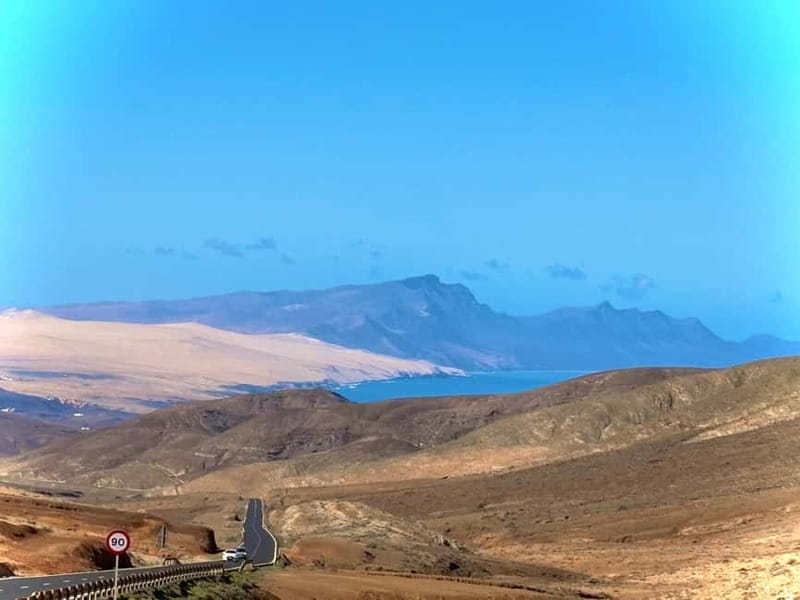
- A fast scenic loop covers Corralejo dunes, Ajuy caves, Tindaya, Betancuria, and more in one day
- Photo stops plus short free time gives you real chances to walk, shop, and breathe
- Air-conditioned minibus keeps the day comfortable even when it’s bright outside
How a small-group 7-hour overview gives you real bearings
This is a classic island highlights circuit, but the size matters. With room for just up to 8 travelers in a newer air-conditioned minibus, you’re less stuck in the chaos of mass tourism and more able to ask questions. It’s built for a full day, so the pacing is active, yet it still feels personal because the guide can steer the group from one type of scenery to the next.
You’ll also get a safety briefing early, then the day flows into a “see it, hear it, stop for photos, move on” rhythm. That might sound basic, but it’s exactly what you want on a first trip to Fuerteventura. After one day like this, you start to understand where the island’s volcanic backbone shows up and how the towns grew around it.
You can also read our reviews of more tours and experiences in Fuerteventura.


What I’d pack in my day bag
Bring water, sunglasses, and closed-toe shoes. Also keep in mind the rules: no large bags, no luggage on board, and baby strollers aren’t allowed. If you’re prone to motion sickness, this kind of road-heavy day may feel rough.
Corralejo’s dunes to Ajuy’s caves: the north-to-west photo arc
Your route kicks off with pickup from eight different starting points: Parque Holandés, La Oliva, Castillo Caleta de Fuste, El Cotillo, Lajares, Puerto del Rosario, Costa de Antigua, and Corralejo. This setup is handy if you’re staying in the north or central coast, because you don’t have to coordinate extra transport.
Dunas de Corralejo: walk the edge of a postcard
The day starts with a scenic stop at Dunas de Corralejo. Expect photo-friendly viewpoints, with the dunes giving you that classic contrast—sand shapes moving under harsh sun, plus the Atlantic light that makes everything look slightly sharper. Even if you’ve seen dune photos before, standing near them gives you scale.
Ajuy: black cliffs, limestone, and free time to wander
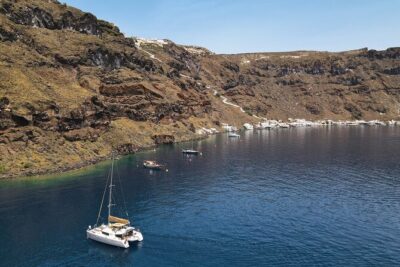
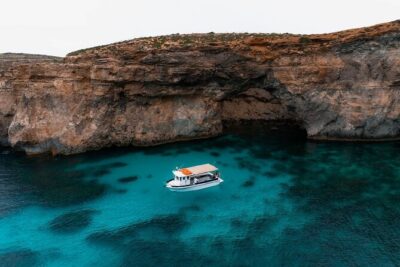
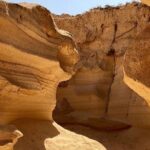
Next comes Ajuy, which is more than a “pretty stop.” You’ll get free time plus a chance to explore the coast area that’s known for natural caves and limestones. Ajuy’s vibe is dramatic: darker rock forms meet the sea, and the whole area feels carved by weather over time.
Shopping is also on the table here, and there’s often time built in for a snack or meal stop, though lunch isn’t included. If you’re hungry, plan to eat on your own terms rather than assuming something will be provided.



Mirador de Vallebrón: a quick walk to reset your eyes
At Mirador de Vallebrón, you get a photo stop and the chance to walk a bit for better views. These miradors are key to this tour’s value: you’re getting perspective that you can’t easily get on your own without a car.
Tindaya and Granadillos: why high viewpoints change your whole map
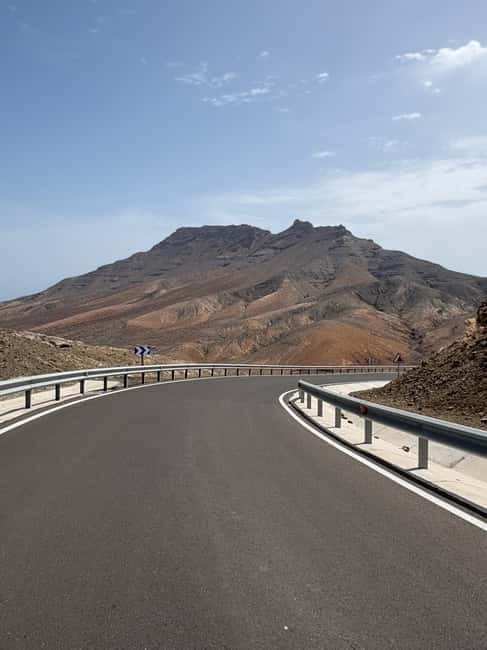
After the west side scenery, the route climbs into viewpoint territory again. You’ll hit Tindaya for sightseeing, then pass through Valle de los Granadillos with scenic drives and stops.
Tindaya: the kind of sight that makes you slow down
Tindaya is one of those places where the island looks both vast and strangely structured. Even when you’re only there for a set stop, the payoff is in how you start connecting the dots between volcanic terrain, villages, and coast.
Valle de los Granadillos: “look, then look again”
This area works best when you treat it like a pause, not a checkpoint. The route includes scenic drives and viewpoints, so you’ll see the valley from different angles as you pass through. It’s the kind of stop where one extra minute makes the difference between seeing shapes and understanding geography.
Tuineje, Antigua, and classic villages: real Canarian rhythm
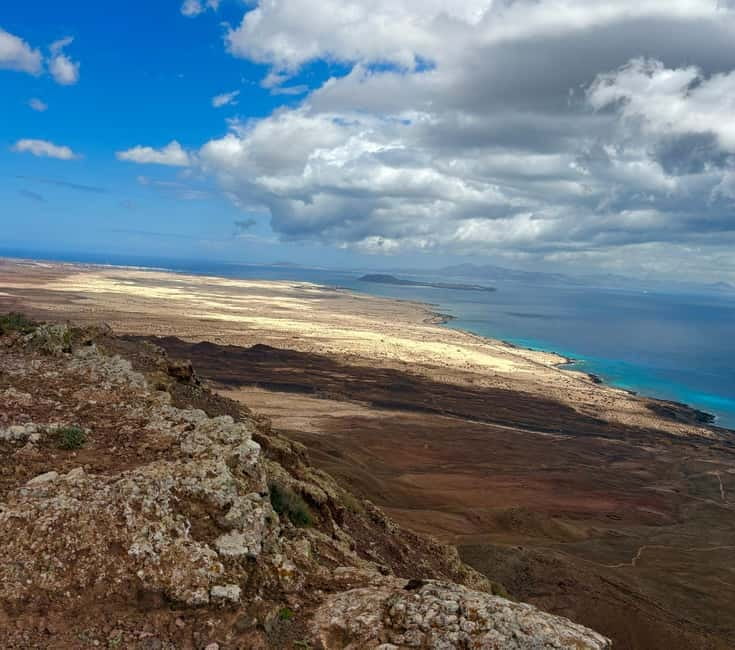
Once you’re back among towns, the tour leans into history and everyday island life. You’ll have sightseeing time at Tuineje and Antigua, plus multiple photo stops along the way.
Antigua: a calm town stop with scenery on the drive
Antigua is one of the larger reference points in the center of the island. The value here is the mix of short sightseeing time and scenic routes around it. You’ll get a sense of how people live with the island’s terrain instead of fighting it.
You also pass through areas like Calderón Hondo on a scenic drive, which is one of those “you don’t need to do anything” stops. It’s all about watching the shapes of the land change as the road rises.
Convento de San Buenaventura and Miradors: stop for the view, then for the photo
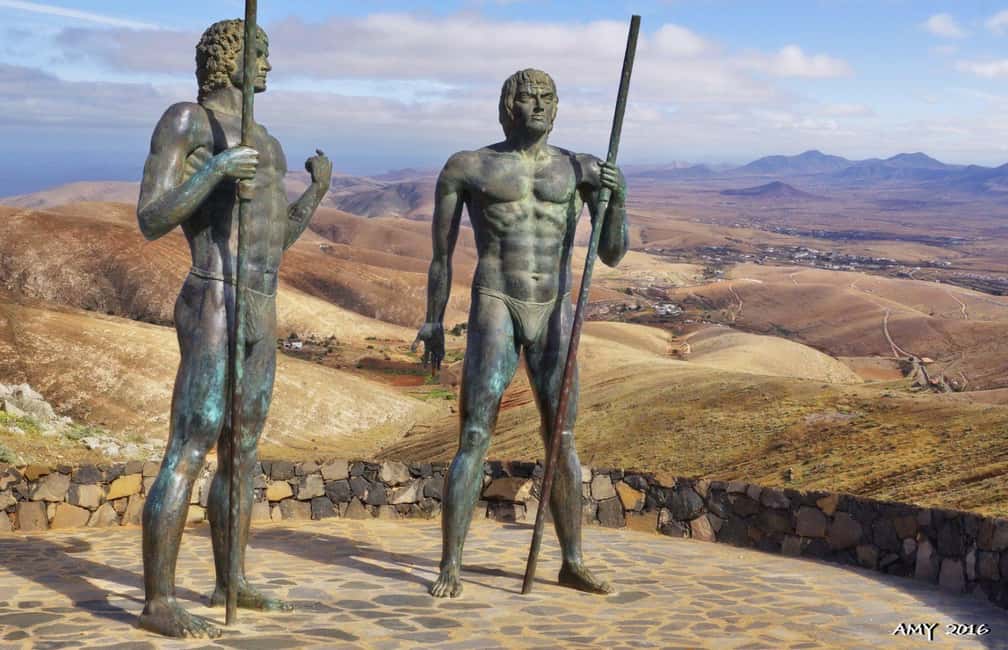
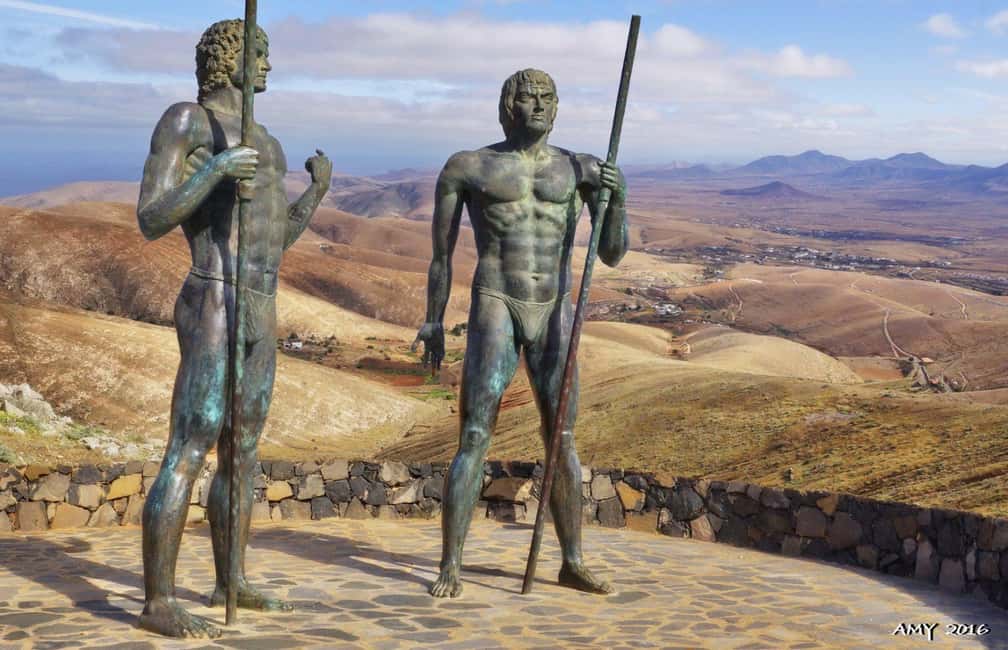
You’ll also have a photo stop at Convento de San Buenaventura, then continue with scenic drives and viewpoints such as Mirador de Guise y Ayose and Mirador Las Peñitas. These stops are ideal if you like photography, but they’re also useful even if you’re not. Views help you orient yourself for the rest of the day.
Iglesia de Nuestra Señora de la Peña to Sicasumbre: churches and stars
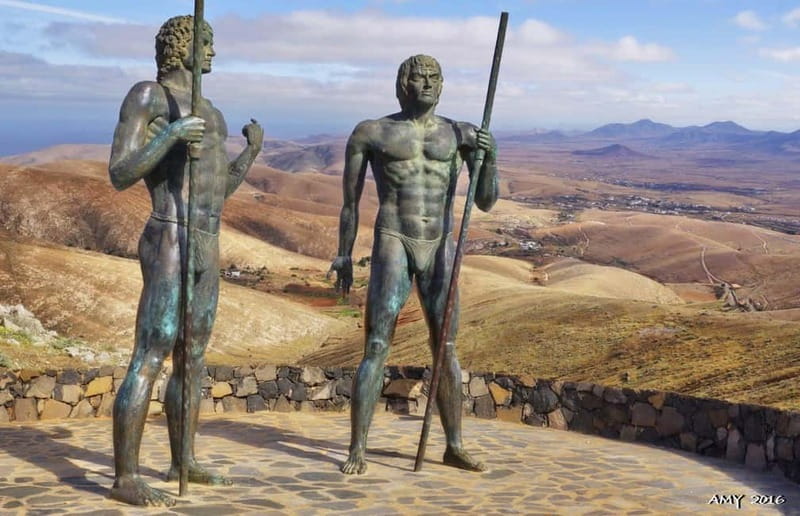
This part of the route shifts from “look at the land” to “look at the human landmarks.”
Iglesia de Nuestra Señora de la Peña: a short visit that adds texture
You’ll stop at Iglesia de Nuestra Señora de la Peña for a photo stop and visit. Even if you don’t go inside for long, it adds a grounded, cultural layer to the more dramatic volcanic scenery.
Astronomical Viewpoint of Sicasumbre, Pájara: the sky stop
Later you’ll reach the Astronomical Viewpoint of Sicasumbre in Pájara, with a photo stop and a short walk. If you’ve ever watched the night sky in a place with less light pollution, you’ll recognize the feeling this viewpoint is built for. Even in daylight, it’s a smart break in the itinerary.
Windmills, Puerto del Rosario, and Betancuria: the heart beats differently
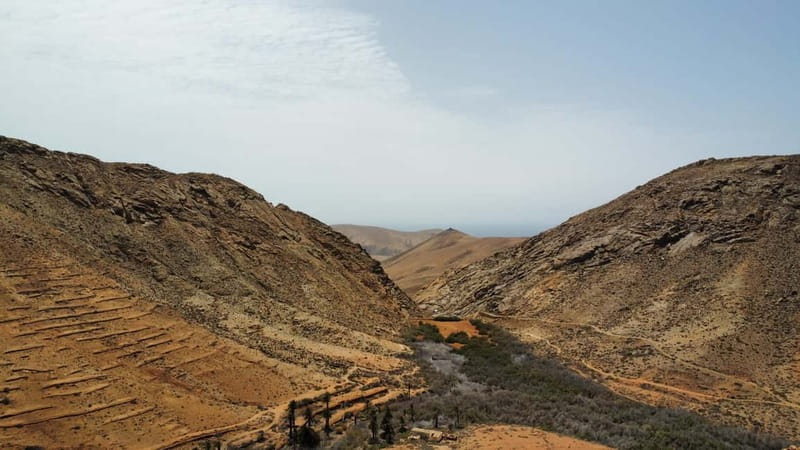
One of the strongest parts of this day is getting to Betancuria, the island’s oldest historical capital. The itinerary sets you up for it through a sequence of scenic drives and additional towns.
Molinos de Villaverde, Juan Gopar: small stops that connect the dots
You’ll pass Molinos de Villaverde with a scenic drive and views along the route, then continue with scenic stops such as Juan Gopar. These aren’t huge “tourist attractions,” but they help you read the island like a map: windmills and rural points mark how life adapted to terrain and weather.
Puerto del Rosario: a real town moment
Then you reach Puerto del Rosario for a visit and sightseeing. This stop is useful if you want at least one urban-feeling moment in your day. It breaks up the natural scenery and gives you a chance to see where the island’s daily energy sits.
Betancuria: 20 minutes that you’ll want to stretch
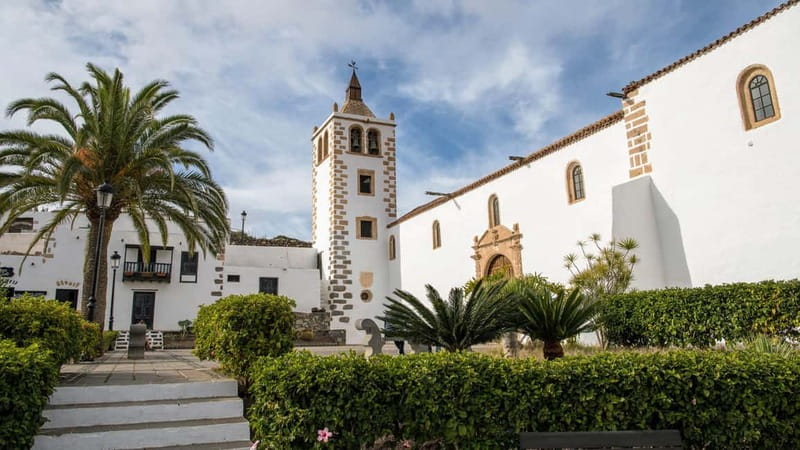
Next is Betancuria. Plan on a photo stop, shopping, and a walk of about 20 minutes. That brief window is the tour’s “history peak,” and it’s not long enough for slow wandering, so I’d recommend choosing a direction quickly. Look for the town’s central vibe, then pop into shops if you want local goods.
After that, you’ll also visit Parque Rural de Betancuria for photo stops and sightseeing. This is where your understanding of the island clicks: you connect the historical town with the surrounding volcanic shapes and open terrain.
Monumento a Miguel de Unamuno and Monte Muda: culture plus big air
The route includes Monumento a Miguel de Unamuno and later Monte Muda for scenic views. These are the kinds of stops that feel small until you realize they’re part of why the island has its identity. You’ll leave with a stronger sense of place than a list of coordinates.
The final stretch: cardones, villages, volcanic sand, and Gran Tarajal
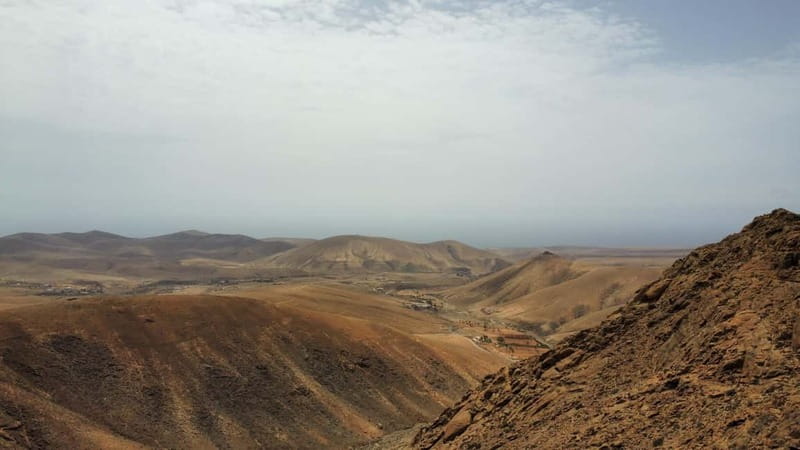
As the day moves toward the end, the itinerary keeps cycling through landform highlights and traditional village stops.
Vega de Río Palmas, Cardón, and volcanic passes
You’ll have scenic views at Vega de Río Palmas, then drive past Cardón and pass by Calderón Hondo again. This repetition isn’t wasteful. Roads in Fuerteventura often reveal the same features from new angles, and that helps you compare how things look from different elevations.
Tesejerague and Diego Alonso: village viewpoints
You’ll pass through Tesejerague (Pueblo) and Diego Alonso on scenic drives. Expect “look-from-here” moments more than structured stops. If you like watching how rural towns sit against harsh land, these are satisfying.
Pájara, La Oliva, Caleta de Fuste: multiple town stops
Later you’ll reach Pájara, then La Oliva for sightseeing. The tour also includes stops at Caleta de Fuste and La Florida on scenic drives. This is the part of the day where you might start noticing patterns: white walls, dry terrain, and roads that run like lines across the island’s surface.
Molino de Tefia, a traditional village, Volcán de la Arena
You’ll see Molino de Tefia, then stop at a traditional village. The itinerary also includes Volcán de la Arena for sightseeing. These are the stops that turn your drive into a story. You’re not just seeing scenery; you’re seeing how island life and volcanic landforms are intertwined.
Valle de los Granadillos again, then Gran Tarajal
You’ll also encounter Valle de los Granadillos and finish with Gran Tarajal for sightseeing. This end-of-day cluster matters because it gives you one last look at the island’s coastline and terrain before heading back to drop-off points.
What you’re paying for: $85 and the value of “not having to plan”
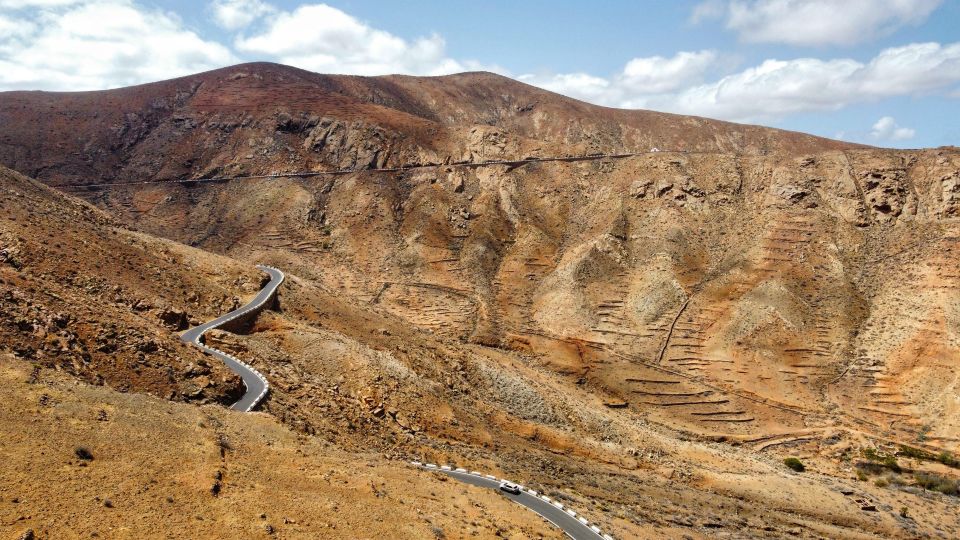
At about $85 per person for a roughly 7-hour day, the real value is convenience plus interpretation. You’re paying for:
- hotel pickup and drop-off
- an air-conditioned minibus
- a multilingual local guide who explains what you’re seeing
- a route that connects major natural and historical points without you driving
Lunch isn’t included, and there’s no included pickup from the South (Jandia), so factor those into your total plan. But if you’re based in the north or central coast, the all-in logistics can be worth it because Fuerteventura is big and roads eat time.
Also, the small group size makes the experience feel more like a shared outing than a conveyor belt. I’ve seen a lot of day tours in travel life that are big on stops and light on meaning. Here, the whole point is that the guide tells the story while you’re moving through the island’s regions.
Guides, pacing, and the real-life details that matter
The guiding style is a standout. People have praised specific guides such as Pierre for patient, story-driven explanations and for making the day feel easy. There’s also a note about the tour being friendly and well run, with guides answering questions and mixing facts with an upbeat pace.
One practical review detail I’d take seriously: the tour’s photo stopping time can vary. In an 8-person group, you might hope for extra time to get out and shoot a view. Sometimes the driver may pass quickly if the road conditions or timing are tight, so I’d treat each photo stop as your window.
If you’re bringing walking poles or need extra support, it’s good to know this tour has been described as taking care of guests with mobility tools. Still, the tour is labeled not suitable for mobility impairments and not for wheelchair users, so if that’s you, skip it.
Who this tour suits best
This is a strong fit if you:
- want a first-day orientation to Fuerteventura
- like scenic drives with photo stops and short walks
- enjoy history and want it explained in plain, story-style language
- prefer a small-group feel over big-bus touring
- are okay with a full day and don’t need lots of long stays in one place
It may feel like too much if you:
- dislike long road days
- get motion sick easily
- need frequent toilet breaks beyond normal stops
- require full accessibility support (it isn’t designed for that)
Should you book this Fuerteventura highlights tour?
I’d book it if you want a guided day that hits the island’s main natural and historical scenes without the headache of planning. The combination of small group size, multilingual local guidance, and a route that spans dunes, caves, villages, and Betancuria makes the $85 feel like a shortcut to understanding the island.
Skip it if you’re staying only in the South (Jandia) and can’t get pickup, or if you want a slower pace with long free time everywhere. Otherwise, this is a great way to build a “mental map” of Fuerteventura fast, then come back on your own to the places you liked most.
FAQ
Is hotel pickup and drop-off included?
Yes. Pickup and drop-off are included, with multiple pickup and drop-off options across the island.
Where does the tour pick you up from?
Pickup is available from Parque Holandés, La Oliva, Castillo Caleta de Fuste, El Cotillo, Lajares, Puerto del Rosario, Costa de Antigua, and Corralejo. Pickup is not included from the South/Jandia.
How long is the tour?
The duration is about 7 hours.
What languages are the live guides?
The tour offers live guide interpretation in English, Dutch, French, and German.
Is lunch included?
No. Lunch is not included.
What should I bring, and what is not allowed?
Bring sunglasses, water, and closed-toe shoes. Baby strollers are not allowed, and you also can’t bring luggage or large bags. Food is not allowed in the vehicle.
Is it suitable for wheelchair users or people with mobility impairments?
No. It is not suitable for people with mobility impairments or wheelchair users.