REVIEW · FUERTEVENTURA
Fuerteventura: 4×4 buggy Can Am adventure east to west
Book on GetYourGuide →Operated by Fuerteventura Jet Ski · Bookable on GetYourGuide
One engine note, then the sand starts flying. This Fuerteventura 4×4 buggy trip is built for real driving fun, with about 80% off-road routes and ocean-side stops along the south coast. I like the mix of vehicle and terrain, because a CAN-AM buggy has enough power to make the climbs feel like an achievement instead of a chore. I also like that your time isn’t just driving in a straight line; you get photo breaks in proper scenic spots. The one thing to consider is that it’s bumpy and dusty, so if you’re sensitive to rough rides or want a super-smooth day, this may feel like more than you bargained for.
Expect a controlled pace (they drive with safety speed around 35 km/h), but it’s still hands-on driving. The tour keeps it small with a small-buggy setup (up to 3 buggies) and a group cap that stays intimate, which makes the whole day feel more like an island experience than a conveyor belt.
In This Review
- Key points before you head out
- Why this east-to-west Fuerteventura buggy route feels different
- Your CAN-AM buggy day: what driving actually feels like
- Picking you up in Costa Calma: the start and the rhythm
- From Costa Calma viewpoint to Jandía beaches: the early scenic payoff
- La Lajita ravine: where the buggy gets real
- Las Hermosas and fast tracks: scenery with momentum
- Ugán beach stop: the Atlantic moment
- La Pared and surfer town energy by the coast
- Matas Bay windsurfing club and the final tracks back
- Guide style makes or breaks the day
- Comfort tips that prevent a miserable buggy ending
- Price value: is $187 for two-person groups fair?
- Who this buggy tour is best for (and who should skip it)
- Should you book the Fuerteventura 4×4 buggy east-to-west?
- FAQ
- How long is the buggy adventure?
- What part of the route is off-road?
- Where does the tour start and end?
- Can I drive if I have a license?
- Do I need a specific dress code?
- What language will the instructor speak?
- Is this tour suitable for children?
- Are there photo or stop moments during the ride?
Key points before you head out
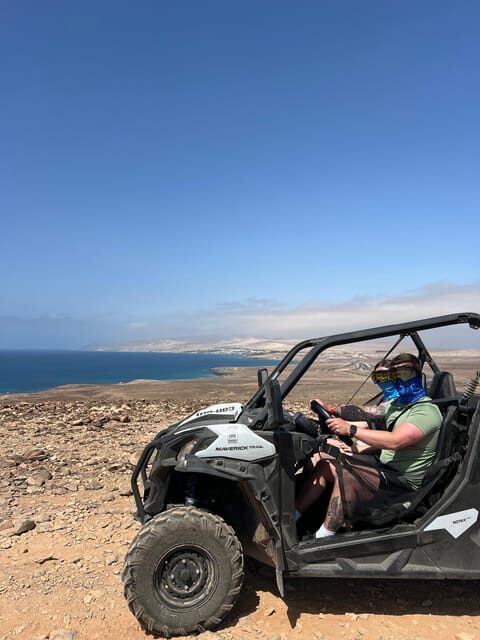
- 80% off-road east-to-west loop starting in Costa Calma and working west along the south coast
- Beach-level driving where you can get the buggy close to the sea (the point of the whole day)
- Big climbs and soft-terrain practice so you learn what your tires will do, not just where you go
- Photo stops that are actually worth it, including a Costa Calma viewpoint over Jandía beaches
- Small-group feel, typically just a few buggies in the mix
- Not a rally race, so you get controlled, safe fun at a steady speed
Why this east-to-west Fuerteventura buggy route feels different
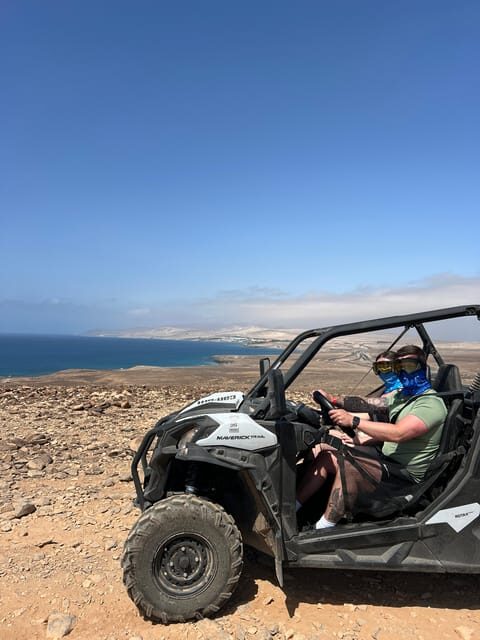
Most tours on Fuerteventura either focus on views or focus on driving. This one tries to give you both, in a very practical way. You start from Costa Calma, head west across the south coast, and spend the majority of the time on dirt tracks rather than bouncing between photo stops like a bus tour.
What makes it especially appealing is the route design: it moves you through multiple “island moods.” You’ll go from easier access roads into softer ground, then into terrain that asks you to think a bit more—loose dust, uneven sections, and climbing angles. It’s not meant to exhaust you, but it does give you a real taste of what off-road driving feels like in a buggy.
And yes, the sea is part of the story. You’ll hit spots where the coastline is close enough that you can feel the Atlantic air around the buggy, not just admire it from afar.
You can also read our reviews of more tours and experiences in Fuerteventura.



Your CAN-AM buggy day: what driving actually feels like
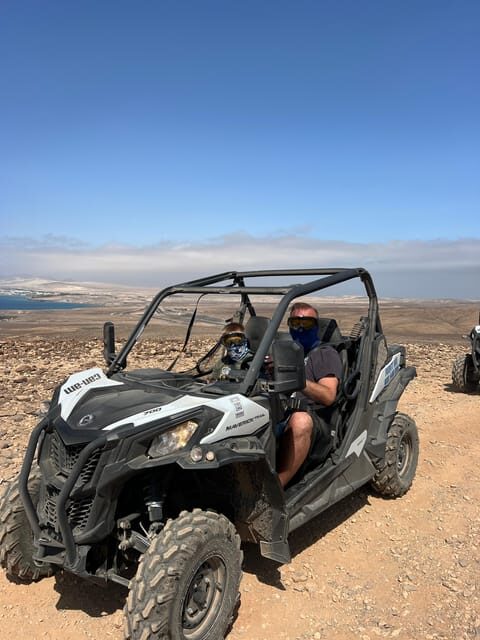
You’ll be in a CAN-AM buggy built for comfortable seat time, with enough power that the route doesn’t feel like you’re babying it the whole way. The ride is still off-road, so expect small hits, more dust than you’d get on paved roads, and the occasional jolt when the terrain changes.
A couple things matter here:
First, the tour isn’t about speed. Vehicles run at a safety speed of around 35 km/h, so you’re not in a racing scenario. That makes the day more relaxed and safer for people who are new-ish to this kind of driving. It also means you can enjoy the scenery and the stops instead of focusing only on acceleration and braking.
Second, you’ll learn by doing. The route is structured so you practice on softer terrain and handle bigger climbs. That’s a huge value for first-timers. Even if you’ve driven on gravel before, this is different. You start getting the feel for traction and momentum—how the buggy behaves when the ground gets loose.
Finally, you’re not alone in the experience. With a small group and just a few buggies, you tend to get more of a guided rhythm: stop when it makes sense, move when it’s safe, and keep the day from feeling like a constant gear-shift of waiting and catching up.
Picking you up in Costa Calma: the start and the rhythm
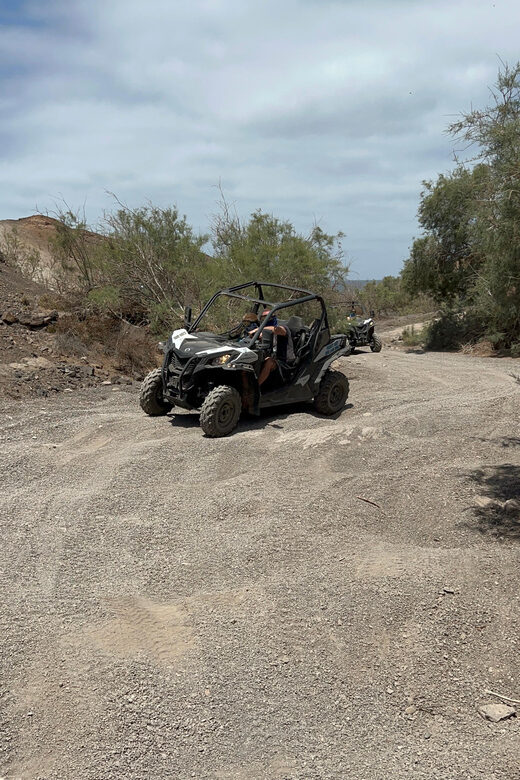
The day begins with hotel pickup and drop-off, and they aim to be quick about it. The pickup time is sent the same day in the morning, and they pick up at your hotel door without long delays (they won’t wait more than about 5 minutes).
This matters because buggy days can get annoying if you waste time standing around. Here, the goal seems to be getting you into the vehicle, getting briefed, and then getting on the road while the light and temperatures are still in your favor.
You’ll also want to plan around the driving requirements: you need a driver’s license, and the info states you should have more than 1 year of driving experience. If you don’t have that, you might not be able to drive.
From Costa Calma viewpoint to Jandía beaches: the early scenic payoff
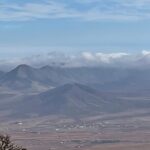
The route starts with a little asphalt, then shifts quickly into track driving. Early on, you’ll reach a Costa Calma viewpoint, where you stop for photos and to take in the broad Jandía beaches view.
This first viewpoint stop is a smart move. It sets expectations: you’ll see how close the coast is, and you’ll understand why the route later brings you toward the water. It also gives you a breather—useful if the transition into off-road feels sudden.
After the viewpoint, you head toward La Lajita, and along the way you’ll pass through a small cove where the water is often clear. The idea isn’t just to point at the sea; it’s to let you see how different the colors can look right where the coastline breaks against the sand.
Drawback to note here: cove areas can be breezy and dusty depending on conditions. Wear what you can manage quickly—closed-toe shoes and dark, comfortable clothing help you stay comfortable when the ground gets gritty.
La Lajita ravine: where the buggy gets real
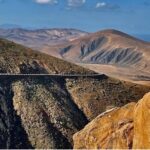
At La Lajita, you’ll drive on to the Lajita ravine stretch. This is the kind of section that makes off-road worth it, because ravines and cuts in the land tend to change the surface and angles you deal with.
What to watch for as a driver: you’ll feel the difference between firm dirt and softer patches. You’ll also get a sense of climbing behavior. Even if you’re not an experienced off-roader, that’s the point: the route gives you chances to build confidence.
As with most off-road areas, it’s not about conquering a single giant hill. It’s about handling a series of terrain changes without panicking or overcorrecting.



Las Hermosas and fast tracks: scenery with momentum
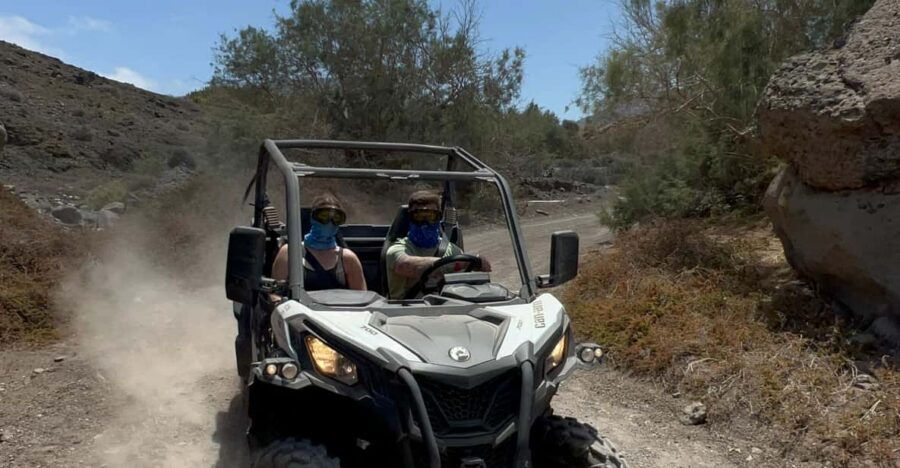
After the ravine segment, you’ll switch back to asphalt briefly, then continue onward to Las Hermosas. From there, the route turns into fast and incredible tracks—so if you like the feeling of momentum (without it turning into a race), this is one of the more fun phases.
This portion is good for people who want a mix of driving excitement and big open views. The terrain becomes more about speed and flow, rather than slow, careful maneuvering.
One practical note: if dust bothers you, keep an eye on your scarf option. The tour recommends bringing one, and it makes sense for wind-blown grit when you’re driving in open air.
Ugán beach stop: the Atlantic moment
Next up is Ugán beach, with a stop that lets you take in the Atlantic Ocean and the surrounding coastline. This is where the day shifts from “driving challenge” to “wow, that’s the sea.”
Because the tour is designed for a tourist experience, the stops are paced so you can enjoy them instead of doing a frantic photo sprint. In particular, the Ugán stop works well for anyone who wants a real break in the middle of the ride.
The trade-off is time. If you’re the type who likes minimal stops and maximum driving, you might feel that three hours can still include enough pause that it doesn’t feel like constant motion. Some people even feel the duration is a bit long for the pure driving craving, while others love it because they get time at the best-looking spots.
La Pared and surfer town energy by the coast
As you head back toward the coast, you’ll pass through La Pared, which is known as a surfing town. Approaching the coast, you’ll be able to see the impressive technique surfers use on the water.
This is a useful stop because it’s not just scenery; it’s local life. You’ll get a sense of how the island’s coastline is used by athletes and wind-and-wave people, not just tourists with cameras.
Then the route returns to asphalt toward Costa Calma, closing the loop without turning it into a long haul of pavement.
Matas Bay windsurfing club and the final tracks back
As you arrive back at Costa Calma, you’ll reach the Matas Bay windsurfing club area and then take the tracks again until you reach the starting point at Matas Blancas gas station.
This “last tracks” section is important for two reasons. One, it gives you a final taste of off-road before the day ends. Two, it builds a natural finish: you know you’re close when tracks start again, which helps the last portion feel intentional rather than abrupt.
After that, it’s back to pickup/drop-off rhythm—so you don’t have to figure out transport on your own.
Guide style makes or breaks the day
A big reason this tour earns strong scores is the guide experience. People consistently mention friendly service, clear explanations, and the guide taking great photos. That matters more than it sounds.
When off-road driving is part of the fun, you want to understand:
- what the buggy can handle
- how the group will move at stops
- what to do on rough terrain
- how to stay comfortable and safe without slowing everything down
A good guide keeps the day flowing while still letting you soak up the scenery at photo points. If you’re thinking of this as an island adventure rather than a mechanical thrill ride, that guidance is a big part of the value.
Comfort tips that prevent a miserable buggy ending
Since the route includes plenty of rough ground and dust, plan like you’re going to get a little dirty. It’s not glamorous, and that’s part of the fun.
Bring:
- a driver’s license
- closed-toe shoes
- comfortable, dark clothing
- ideally, a scarf (the tour recommends it)
If you’re prone to dry eyes or dust irritation, treat this like a windy beach day. Sunglasses help. So does planning your hair and anything loose.
And if you’re sensitive to bumpy rides: go in with the right expectation. One review called out the hobbling and dust. That’s not a trick—this is off-road, so your body will feel it a bit.
Price value: is $187 for two-person groups fair?
The stated price is $187 per group up to 2 for a 3-hour experience. In practice, what you’re buying is time in a CAN-AM buggy, a guided route with around 80% off-road, hotel pickup/drop-off, and small-group handling.
Is it a bargain compared to a bus tour? No. But it also isn’t a simple scenic drive. You’re paying for:
- off-road driving time
- a vehicle suited to the terrain
- stops at viewpoint and beach/coastal areas
- instruction and route guidance
- the fact you don’t have to self-navigate
If you’re traveling as a couple or just with one friend and you want a memorable, hands-on experience on the island, it’s often a good use of your budget. If you’re traveling solo and expecting this to feel like a private safari, you should still check group details since it’s capped small but not fully private.
Who this buggy tour is best for (and who should skip it)
This works best for:
- adults and couples who want a mix of driving + scenery
- people comfortable driving and with more than 1 year of license experience
- travelers who like off-road atmosphere, beach air, and scenic stops
- anyone who appreciates a guided route that keeps things safe and paced
It may not be your best fit if:
- you want smooth roads only
- you hate dust, bumps, or open-air riding
- you’re traveling with kids—this isn’t suitable for children under 7
- you’re looking for a race-like adrenaline experience (this is controlled speed, around 35 km/h)
Should you book the Fuerteventura 4×4 buggy east-to-west?
Book it if you want a true island driving experience, not just a look-at-the-view day. I like how the route mixes viewpoint breaks, ravine driving, and coastal beach moments, while still keeping the experience in a manageable, tourist-friendly pace.
Think twice if rough terrain bothers you or if three hours feels long for your style. Also, be honest about your comfort level with soft terrain and climbs. The tour is built to teach and guide you, but you do have to steer and commit when the surface changes.
If you’re okay with a bumpy, dusty adventure and you want the sea close to the buggy, this is one of the more satisfying ways to spend a half-day on Fuerteventura.
FAQ
How long is the buggy adventure?
It lasts about 3 hours, and the exact route timing can vary depending on weather and group pace.
What part of the route is off-road?
Approximately 80% of the route is off-road, with the rest on asphalt at certain transitions.
Where does the tour start and end?
It starts with pickup around Costa Calma and returns there at the end. The route finishes at the Matas Blancas gas station before drop-off.
Can I drive if I have a license?
You must have a driver’s license, and the info says you need more than 1 year of driving experience.
Do I need a specific dress code?
Wear comfortable clothes (dark is recommended) and closed-toe shoes. The tour also recommends bringing a scarf.
What language will the instructor speak?
The instructor speaks English, German, and Spanish.
Is this tour suitable for children?
No, it’s not suitable for children under 7 years.
Are there photo or stop moments during the ride?
Yes. There are scheduled stops including a Costa Calma viewpoint for photos, plus beach and coastal stops along the way.