REVIEW · FUERTEVENTURA
Fuerteventura South: Learn to surf on stunning beaches!
Book on GetYourGuide →Operated by Wellenkind Surfschool · Bookable on GetYourGuide
First wave jitters, solved on La Pared. This learn-to-surf experience with Wellenkind Surfschool gets you on the water with your board and wetsuit sorted, and you’re coached in a small group of max 8. One thing to factor in: you may have a short carry from the surf school area down to the beach.
The lesson itself is about 2 hours in the water, with the full door-to-door experience running closer to 4 hours when you include the hotel transfer. You’ll surf La Pared when conditions allow, and if they don’t, the team moves you to another sandy option in the south.
In This Review
- Key Points You’ll Care About on Arrival
- La Pared in South Fuerteventura: Where Your Surf Lesson Makes Sense
- The 2-Hour Beach Lesson: What Happens After You Get Your Gear
- Small Groups of 8: Why Your Coaching Feels Personal
- La Pared vs Esquinzo or Jandía: How the “Best Spot” Plan Works
- Hotel Pickup in the South: Fewer Logistics, More Surf Time
- Changing Rooms, Showers, and What to Bring
- Gear and the Short Walk Reality
- Language Support and Coaching Style
- Price and Value: Is $60 Fair for This Surf Lesson?
- Photo Options: Worth It, If You Like Proof
- Who This Is For (and Who Might Be Happier Skipping)
- Should You Book This Surf Lesson in South Fuerteventura?
- FAQ
- Where do we surf?
- How long is the lesson?
- How much is it?
- Is a surfboard and wetsuit included?
- Do I get hotel pickup and drop-back?
- How big is the group?
- What languages are the instructors?
- Is it suitable for children?
- Is it suitable for non-swimmers?
- What should I bring?
Key Points You’ll Care About on Arrival
- Max 8 in the group: more time practicing, less waiting around.
- Coaching geared to first-timers: basics, ocean safety, paddling, and pop-up technique.
- La Pared first, backup beaches if needed: Esquinzo or Jandía when conditions call for it.
- Board + wetsuit included: you arrive ready, not scrambling for gear.
- Shower and changing rooms in the south: a real comfort after salt-water lessons.
- Hotel pickup across the southern coast: Las Playitas through Morro Jable.
La Pared in South Fuerteventura: Where Your Surf Lesson Makes Sense
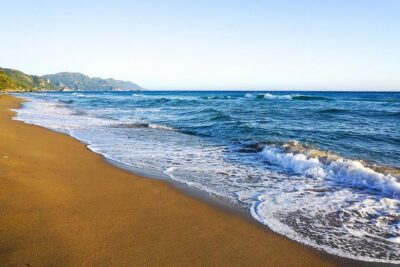
If you’re coming to Fuerteventura to learn surf, the location matters. La Pared sits on the southwest coast, and it’s known as a real surf spot—so it’s a smart match for beginners who still want the full ocean experience. You’re not in a padded, cartoon version of surfing. You’re out at the beach, dealing with real waves, real wind, and learning to read the water.
What I like about this setup is that the school prioritizes conditions, not ego. They start at La Pared, but if it’s not working that day, they shift to Esquinzo or Jandía—both are described as beautiful sandy beaches with consistent waves. That matters because your lesson outcome depends on having waves you can actually work with, not just standing around hoping the ocean changes its mind.
And yes, the setting is gorgeous. Even if you’re only half paying attention while your arms work overtime, you’re still surfing against some genuinely memorable coastline.
You can also read our reviews of more tours and experiences in Fuerteventura.

The 2-Hour Beach Lesson: What Happens After You Get Your Gear
Your day starts at the surf school, where you collect the essentials: surfboard and wetsuit. Then you head to the beach with your coach. The group gets a short sand briefing first—think safety basics and technique cues—before you go into the water.
The coaching flow follows what you’d want as a beginner:
- Ocean safety: how to behave in the water, what to watch for, and how to approach waves more confidently.
- Paddling technique: getting yourself positioned instead of fighting the surf while tired.
- Pop-up mechanics: the step from lying to standing, taught step by step.
- Time on the water: they structure it so you can practice as much as possible during the beach lesson window.
In plain terms, you’re not just “going surfing.” You’re learning enough fundamentals to repeat the motion later—even if you don’t nail a perfect ride every single time. One theme in the feedback is that coaches stay patient and individual. Names like Amy, Annie, George, and Rolf come up in the guidance people received, and the common thread is attention to the person in front of them, not a one-size-fits-all shout from the shore.
Also: the water time can be exhausting in a good way. Surfing uses muscles you don’t always use on vacation—especially paddling and core control. A first lesson can still be a workout even if you’re only getting a few short stand-up moments.
Small Groups of 8: Why Your Coaching Feels Personal
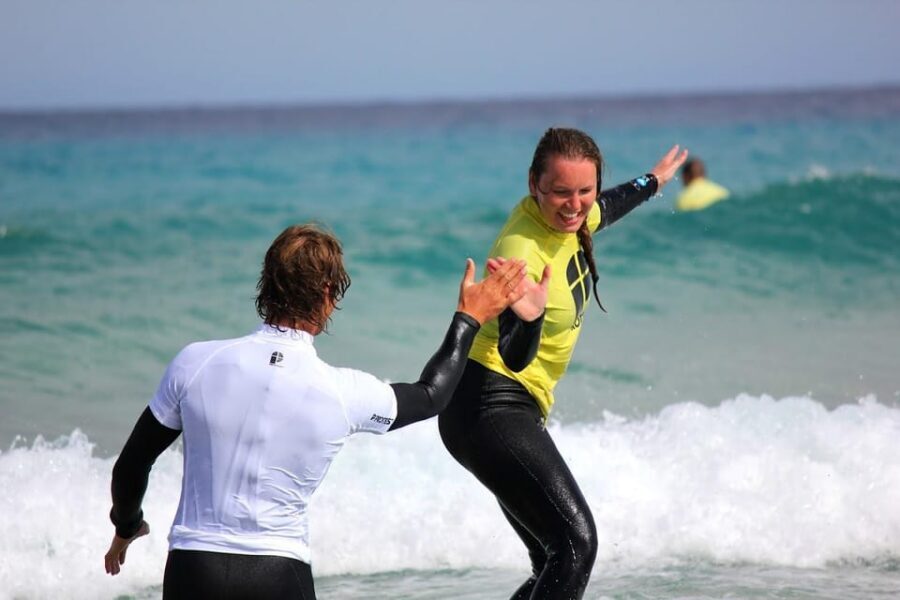
The group limit is max 8, and that isn’t a marketing line—it affects how your lesson feels. In a small group, the coach can watch your body position, correct your paddling angle, and help with pop-up timing without rushing everyone along.
That shows up in how the lesson typically plays out: people get nudged toward what to fix, rather than being left to guess. In feedback, multiple first-timers describe learning quickly and gaining confidence fast—some even managing to stand during their first session. The point isn’t that you’ll automatically be surfing like a movie extra by the end. It’s that you have enough coach attention to make progress in a short window.
If you’re traveling solo, a small group also tends to feel less intimidating. You’ll share the beach with other beginners, but you won’t be lost in a crowd.
La Pared vs Esquinzo or Jandía: How the “Best Spot” Plan Works
Here’s a smart part of this surf-school approach: they don’t force the lesson at one exact beach no matter what.
La Pared is the default. But if the conditions aren’t suitable—whether that’s wave shape, timing, or comfort—they move you to Esquinzo or Jandía. Both are described as sandy beaches in the south with more consistent waves.
For you, that means two practical things:
- Your odds of getting more useful wave time go up.
- You’re less likely to have a “great day weather-wise, bad day for surfing” disappointment.
The tradeoff is mild uncertainty. You might arrive expecting La Pared and end up at a nearby backup beach, but the school’s goal is that you still surf at the best option for that day.
Hotel Pickup in the South: Fewer Logistics, More Surf Time
One reason this is good value is that the lesson is built for vacation convenience. You get hotel pickup and drop-back across the southern area. The pickup points listed include: Las Playitas, Tarajalejo, La Lajita, Costa Calma, La Pared, Esquinzo, and Morro Jable.
The bus has the school’s logo and is either black or white, and your exact pickup time comes from the booking system email. If you don’t get it there, they may contact you by WhatsApp, email, or phone call with the specific time.
What this means in real life: you don’t need to rent a car just to get to a beach for a 2-hour lesson. You can spend your limited vacation energy on actually learning, not navigating parking lots.
Small heads-up: pickup times and lesson timing depend on the tide and conditions, and the schedule can change up to 8 hours before. So check your inbox and messages the day before (and don’t plan an early hard commitment right before pickup).




Changing Rooms, Showers, and What to Bring
You’ll likely get cold or at least salty after time in the sea. This school includes surfboard + wetsuit, and it’s also noted that they’re the only school in the south with shower and changing rooms. That’s a real comfort factor, especially if you want to get back to lunch or back to your hotel without the “why does my hair still smell like the ocean” problem.
Bring:
- A change of clothes
- A towel
- Sunscreen
- Water
If you’re someone who burns easily, pack sunscreen that you’ll actually reapply. Surf sessions can surprise you—wind plus sun plus time on the beach can add up fast.
Also consider bringing something simple like a spare hair tie. Small detail, big morale boost.
Gear and the Short Walk Reality
The activity includes transfer and the wetsuit/board, but it also notes that carrying equipment to the beach is not included as an “included” item. In practical terms, that means you should expect a bit of carrying on the ground.
One piece of feedback described having to carry boards down and back from the beach area, with a short walk that included a bit of uphill/downhill effort. It wasn’t impossible, but it could be annoying—especially if you’re tired after 2 hours in the water.
So here’s my practical advice: don’t plan this day as a “no effort at all” excursion. It’s an active lesson, and you’ll do a little walking while wearing swim gear logistics.
Language Support and Coaching Style
Instruction is available in English, German, and Spanish. That matters because surfing has a lot of body mechanics, and clear coaching is the difference between guessing and improving.
In the feedback, coaches are described as patient and helpful, with step-by-step explanations and individual attention. If you care about structure—like you want to understand why something isn’t working—this kind of coaching style is usually exactly what helps.
Price and Value: Is $60 Fair for This Surf Lesson?
The price is listed at $60 per person, and value here comes from what’s packed in.
You’re getting:
- Board + wetsuit
- A 2-hour lesson at the beach
- Hotel pickup and drop-back in the southern region
- A small group size (max 8)
- Use of shower and changing rooms in the south
For a beginner, gear and transfers alone can eat a chunk of your budget elsewhere. Here, the lesson is bundled with the practical stuff you’d otherwise need to arrange. Also, when group size stays small, that often means the coaching time is more “action” and less “waiting.”
What’s not included is food and drinks, and you can optionally book photos on site (with pricing described as expensive in feedback). So budget a simple snack plan for before or after.
Net: at $60, this feels like a solid deal if you want a real first lesson with minimal logistics.
Photo Options: Worth It, If You Like Proof
There’s an option to buy photos taken during the session. One name that shows up in feedback is photographer Carlos, and the photos are described as looking amazing. The tradeoff: the photos can be pricey.
If you’re the type who loves getting visual proof that you actually did the thing—especially after a first session—this is a nice extra. If you’re trying to travel light and low-cost, skip it. Your memories will still be the ocean and the skill you picked up.
Who This Is For (and Who Might Be Happier Skipping)
This surf lesson is positioned for:
- Beginners and first-timers
- People who want technique help (paddling and pop-up)
- Solo travelers, friends, and families (when kids are old enough)
But it’s not suitable for children under 8 and it’s not suitable for non-swimmers. Also, the activity is described as a surf lesson focused on ocean safety and getting you ready in the water, so you shouldn’t count it as a learn-to-swim substitute.
If you fit the beginner + comfort in water box, you’ll likely enjoy the supportive coaching style and the fact that conditions are handled via La Pared and backup beaches.
If you don’t fit those limits, it may be worth looking for an alternative that matches your comfort level first.
Should You Book This Surf Lesson in South Fuerteventura?
I’d book it if you want:
- A beginner-friendly surf lesson with a real coach in the mix
- Small group attention (max 8)
- Hotel pickup across the south so you don’t waste time on logistics
- A day planned around tide and conditions, with backups to Esquinzo or Jandía
I wouldn’t book it if:
- You’re not comfortable swimming
- You’re traveling with a child under 8
- You strongly dislike even short walks while carrying gear after a lesson
If your goal is a confident start to surfing—learning the basics of safety, paddling, and pop-up on La Pared—this is a practical, good-value way to do it. And when the ocean is playing nice, you’ll get that classic Fuerteventura moment: sand under your feet, salt in the air, and your first real taste of standing on the board.
FAQ
Where do we surf?
You’ll surf at La Pared in South Fuerteventura. If conditions there aren’t suitable, you’ll go to Esquinzo or Jandía.
How long is the lesson?
The beach lesson is about 2 hours. The total experience is around 4 hours including transfer.
How much is it?
The price is listed as $60 per person.
Is a surfboard and wetsuit included?
Yes. Surfboard and wetsuit are included.
Do I get hotel pickup and drop-back?
Yes. Pickup and drop-back are included in the southern region of Fuerteventura, including Las Playitas, Tarajalejo, La Lajita, Costa Calma, La Pared, Esquinzo, and Morro Jable.
How big is the group?
The group is limited to a maximum of 8 participants.
What languages are the instructors?
Instructors speak English, German, and Spanish.
Is it suitable for children?
No. It’s not suitable for children under 8 years.
Is it suitable for non-swimmers?
No. It’s not suitable for non-swimmers.
What should I bring?
Bring a change of clothes, a towel, sunscreen, and water.