Volcano walking on Europe’s active giant. This Etna summit craters hike lines you up for rim views of Bocca Nuova and the Central Crater area, with an efficient rise first so you’re hiking the good stuff at altitude. I like that you’re not sent off in your own sneakers—you get trekking boots and a helmet for the climb.
The payoff is the crater-to-crater feel: you’re not just looking at Etna from far away. I also like the 9:00 am start, which helps you get back down early enough to enjoy the rest of your day around Nicolosi or Catania. The main drawback is the active-volcano reality: access and routes can change, and you’ll pay extra for the cable car and 4×4 to get up to the starting elevation.
In This Review
- Etna Summit Craters: what makes this hike worth your morning
- The crater experience is the whole point (and it changes with Etna)
- Route at a glance: cable car + 4×4 to Torre del Filosofo (then uphill)
- The hike starts with altitude, not just scenery
- Bocca Nuova and the Voragine rim: your view gets specific fast
- Why circling the crater feels different
- Wind is part of the deal
- North East Crater climb: the steep short section that earns the summit views
- Gas and cold: bring your own comfort plan
- Descent through Valle del Bove: big caldera scale without the technical headache
- How the descent feels
- Equipment and guide-led safety: what you get, and what you still need
- Not recommended for asthma
- Kids and family planning
- Price and logistics: the €84.69 is only the guide + gear
- Cash is your friend
- Is it worth paying extra for transport?
- Small group energy and guide quality: Marco, Simone, and others
- Timing and duration: about 5 hours, then you get your evening back
- Weather, access rules, and why you should pack like it’s a windy mountain
- What to pack (based on the reality of crater wind)
- Should you book the Etna Summit Craters tour?
- FAQ
- Where is the meeting point for the Etna Summit Craters tour?
- What time does the tour start?
- How long does the experience take?
- Is the tour in English?
- What’s included in the price?
- What is not included?
- Do I need moderate physical fitness?
- Is it recommended for people with asthma?
- Can I get a refund if I cancel?
- Is the tour limited to a small group?
Etna Summit Craters: what makes this hike worth your morning
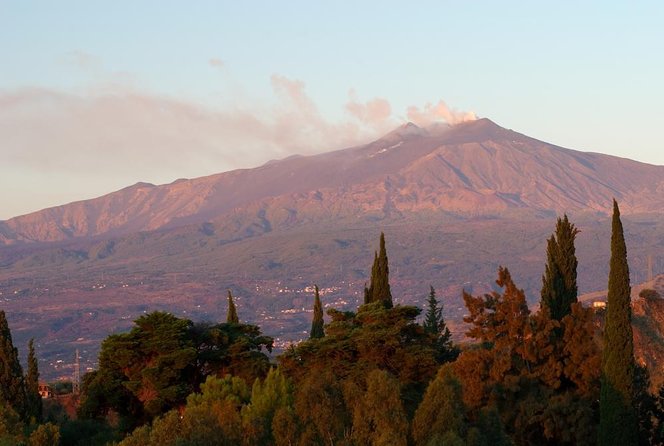
- Rides up to about 2900m first so the hike focuses on the crater rims and viewpoints
- Bocca Nuova + Voragine rim walking gives you that true Etna “inside the system” perspective
- North East Crater climb takes you to roughly 3329m when conditions allow
- A long descent through Valle del Bove keeps the story moving from summit views to volcanic amphitheater scale
- Small group size (max 15) helps the guide manage pace, wind, and stops without turning it into a stampede
The crater experience is the whole point (and it changes with Etna)
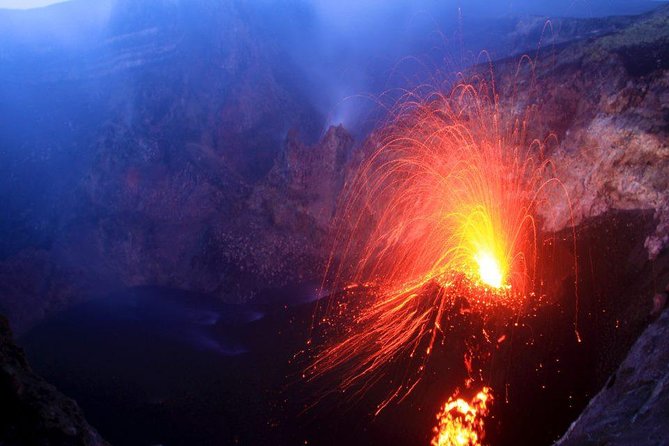
This isn’t a casual stroll with a photo stop. It’s a guided hike that aims for specific Etna features—Bocca Nuova, the Voragine area, and the North East Crater—so you’re moving through the volcano’s “named rooms,” not just walking through ash.
One thing to keep in mind: Etna is active. Rules about access to crater edges can shift based on weather and current regulations. That doesn’t mean the day is a bust—it means the guide adapts the plan as needed.
You can also read our reviews of more tours and experiences in Sicily.
Route at a glance: cable car + 4×4 to Torre del Filosofo (then uphill)
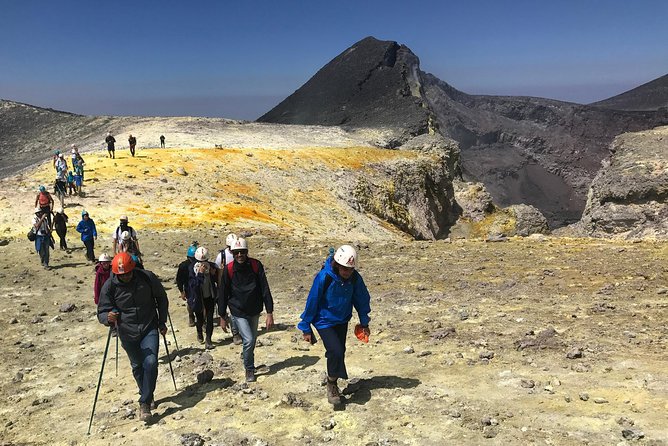
You start in Nicolosi at La Terrazza Dell’Etna Etna Sud, Piazza Vittorio Emanuele, and head out at 9:00 am. To save your energy, the ascent starts with a cable car plus a 4×4 vehicle ride up toward the Torre del Filosofo area, reaching about 2900m.
From there, you hike uphill for about 1.5 hours before you reach the edge of the Central Crater. This is where the tour’s rhythm clicks: the hard effort is planned for the part that delivers big views, not spent doing slow travel to get height.
The hike starts with altitude, not just scenery
Expect the climb to feel real. Even when the terrain is described as a hike (not technical climbing), you’re working at high altitude where wind and cold can slow you down.
And yes, the big vehicles are part of the deal. The guide uses them to position you where crater access is possible, which is why the cable car and 4×4 are excluded from the €84.69 price.
Bocca Nuova and the Voragine rim: your view gets specific fast
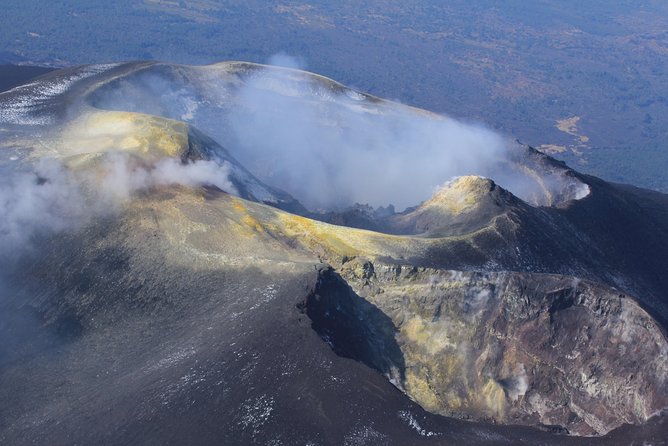
The first major crater stop is around Bocca Nuova, which sits near 3250m and is often the standout crater on the Central Crater rim. As you reach the edge, you’re set up to look into a world that’s visually dramatic and geologically active.
After you circle Bocca Nuova, you move toward the edge of the Voragine, described as the heart of the Central Crater. This part matters because you’re not only seeing one crater—you’re getting a sense of how Etna’s central system connects.
Why circling the crater feels different
On this kind of hike, the best moments are usually when you pause and look around 180 degrees, then 360 degrees. Circling Bocca Nuova sets you up for that comparison, so the volcano doesn’t just look like a single peak—it reads like a complex active basin.


Wind is part of the deal
Rough weather doesn’t cancel automatically, but it changes your comfort. Expect gusts, especially near crater edges. Having the right layers and helmet helps, but wind chill can still be a factor.
North East Crater climb: the steep short section that earns the summit views
From the Voragine edge, the plan includes a steep but short climb to the North East Crater, formed in 1911. When access allows, you’re aiming for about 3329m, which puts you in the “above-the-clouds” zone on clear days.
From the top, you can wander your gaze for a 360° view. There’s a chance you’ll even see the Aeolian Islands to the north if the day allows it, so this is the moment you want to be fully present—less phone scrolling, more looking.
Gas and cold: bring your own comfort plan
Etna can smell and your throat can feel it up high. One very practical tip from the experience: bring a buff or FFP2 mask if you’re at all sensitive to volcanic gases. At times, the guide may suggest putting something over your mouth and nose when emissions feel strong.
Also plan for cold wind. Even with provided gear, you’ll appreciate extra layers, like a warm mid-layer or hoodie, because the exposed crater areas act like wind tunnels.
Descent through Valle del Bove: big caldera scale without the technical headache
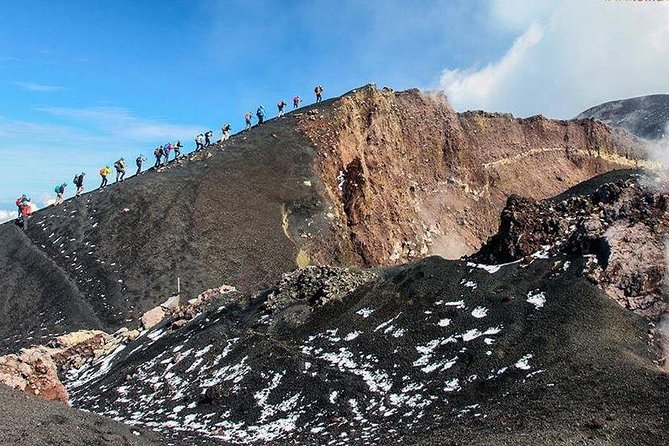
After the crater viewpoints, you start the long descent. The description calls it a steep but easy slope made of ashes and scoria, and it takes you through the Valle del Bove volcanic amphitheater.
Valle del Bove is huge—around 8 km long and 4 km wide—so the descent has that “slowly zooming out” effect. You’ll spend time looking at how the caldera structure opens up while your legs do the work of moving down safely.
How the descent feels
The descent is often easier than the climb, but it’s still long. Plan to use trekking technique: short steps, steady pace, and keep your focus on footing since ash and scoria can shift slightly.
You finish back at the cable car arrival station around 2500m. That’s the moment when your legs start bargaining for snacks, and you can finally feel your day easing up.
Equipment and guide-led safety: what you get, and what you still need
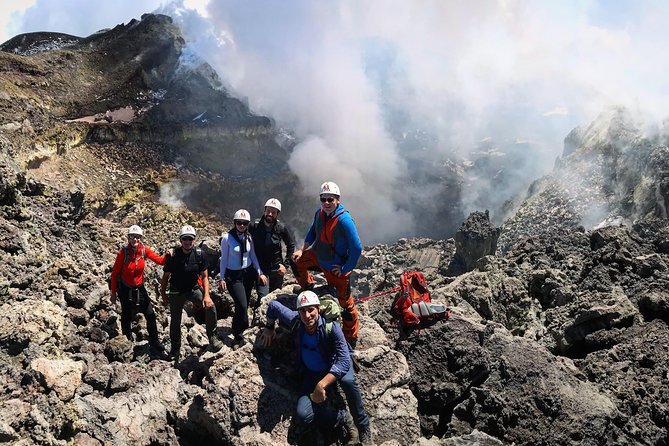
This tour includes equipment through the hike: trekking boots, jacket/protective gear, and a helmet, plus a guide to lead the route and manage the pace. That equipment piece is a genuine value add because it removes a lot of uncertainty—especially for people who don’t hike often in rocky volcanic terrain.
The hike is listed as moderate physical fitness, but your day will still be demanding. Wind, altitude, and steep sections can slow slower hikers, and the guide’s job is to keep the group together and moving safely.
Not recommended for asthma
If you have asthma problems, this is not a good match based on the tour info. Even without a medical flare-up, altitude and volcanic emissions can be tough on breathing.
Kids and family planning
There’s clear feedback that this isn’t a great fit for younger kids. If you’re bringing children, treat this as a serious hiking day, not a playground outing—especially given the altitude and weather variability.
Price and logistics: the €84.69 is only the guide + gear
Here’s how I’d read the value. The listed price of $84.69 per person covers the guide and equipment, while the round-trip cable car and jeep up to 2900m are excluded.
That excluded transport is not a small add-on in practice. Multiple accounts put the extra cost in the ballpark of roughly €60–€78 per person (with variations in what people specifically paid for the funicular/cable car segments). When you add it together, the final “all-in” price is meaningfully higher than the headline figure.
Cash is your friend
One common practical snag: payment for the cable car segment has been reported as cash-only. So don’t count on finding an ATM with zero stress. Bring cash ahead of time if you can.
Is it worth paying extra for transport?
If your goal is crater access on an active volcano, yes, it usually makes sense. You’re paying for guided placement at elevation, guided movement along crater edges, and the ability to reach those specific points—Bocca Nuova and the North East Crater—without turning your day into a long slog just getting started.
If you only want an easier lower-altitude walk, you can sometimes do more on your own. But for crater rims and summit objectives, this kind of guided route is the point.
Small group energy and guide quality: Marco, Simone, and others
This is capped at 15 travelers, which matters. Smaller groups can move with fewer delays, and it’s easier for the guide to help with pacing when wind hits or when altitude affects breath.
Guides named in the experience include Marco, Vincenzo, Simone, Fabio, Davide, Giuseppe, Nino, Massimo, Mario, Umberto, and others. In general, the strong thread is that the guides focus on safety and group rhythm, including adjusting speed when the summit section gets tough.
Timing and duration: about 5 hours, then you get your evening back
The day runs about 5 hours (approx.), starting at 9:00 am. That early launch is a real advantage. You get time on Etna, then you still have a window afterward for a meal, a quick stop in Nicolosi, or a later plan in Catania.
Just remember: the crater summit area can be weather-dependent, and volcanic access rules can change. That can stretch the hike toward the longer side on some days, especially with wind and rerouting.
Weather, access rules, and why you should pack like it’s a windy mountain
This tour depends on good weather. If it’s canceled due to poor conditions, you’re offered another date or a full refund. Even on non-cancel days, you should expect conditions to affect how close you get to the very top.
There are also practical reports that on active days, access may be limited to around the 3000m area rather than the full crater climb. That’s not a “bait and switch” if the rules are updated for safety—but it is a reminder to stay flexible.
What to pack (based on the reality of crater wind)
- A warm layer under your provided jacket, because wind can cut fast
- A buff or FFP2 mask for gas sensitivity
- Snacks and water, because you’re hiking several hours at altitude
- Cash for the cable car/jeep portion, if payment is cash-based on the day you go
Should you book the Etna Summit Craters tour?
Book it if you want the real Etna experience: crater rims, named volcanic features like Bocca Nuova and the Voragine, and a guided push toward high-altitude viewpoints. The combination of provided gear, small group size, and experienced guiding is what turns this from a pretty hike into a “you saw Etna up close” day.
Skip it or choose another option if you have asthma issues, struggle with steep hikes at altitude, or you’re traveling with very young kids. Also think twice if you hate surprises on transport costs—because the headline price doesn’t include the cable car and 4×4 to the higher starting elevation, and cash may be required for that portion.
FAQ
Where is the meeting point for the Etna Summit Craters tour?
The meeting point is La Terrazza Dell’Etna Etna Sud, Piazza Vittorio Emanuele, 95030 Nicolosi CT, Italy. The tour ends back at the same meeting point.
What time does the tour start?
The start time is 9:00 am.
How long does the experience take?
The duration is approximately 5 hours.
Is the tour in English?
Yes, it’s offered in English.
What’s included in the price?
The price includes the guide and hiking equipment such as trekking boots, a jacket/protective gear, and a helmet.
What is not included?
The round-trip cable car and 4×4/jeep ride up to about 2900m is not included. Private transportation is also not included.
Do I need moderate physical fitness?
Yes. You should have a moderate physical fitness level for this hike.
Is it recommended for people with asthma?
No. The tour information says it is not recommended for those with asthma problems.
Can I get a refund if I cancel?
Yes. You can cancel up to 24 hours in advance for a full refund.
Is the tour limited to a small group?
Yes. The maximum group size is 15 travelers.