REVIEW · SICILY
Dolphin Watching & Conservation – Dolphins in the Gulf of Catania
Book on Viator →Operated by Marecamp · Bookable on Viator
Wild dolphins can be surprisingly close. This Marecamp outing pairs eco-focused dolphin watching with real-time help from a marine biologist, so you’re not just hoping for sightings—you’re learning while you search. I love the species recognition cards and binoculars, plus the way the team uses structured observation (including a dolphin catalog) to make your time feel purposeful. One possible drawback: even with an 80% chance, there’s still a real chance you won’t see anything on your day.
The setting is also a treat. You’ll cruise the Gulf of Catania with Mount Etna looming in the background, and the route can vary by day along the Catania coast. For me, the value is that it’s conservation-first, not cruise-for-crowd-pictures. Still, you should be ready for sun and a practical boat experience—especially if you’re bringing kids.
In This Review
- Quick hits for your day at sea
- Dolphins, Mount Etna, and a conservation-first search
- Meet the marine biologist: name tags for wild cetaceans
- How the Gulf of Catania watch actually works
- Aci Trezza and Aci Castello: where the scanning starts
- Mount Etna in the background, plus Catania on the return
- Binoculars, recognition cards, and the boat reality check
- Accobams code of conduct and the whale-watching mark
- Seeing dolphins: what to look for and how the guide helps
- Chance of sightings: 80% success with room for disappointment
- Price ($84.48) and what you get for 3 hours
- Who this is best for (and who should think twice)
- Should you book this dolphin watching tour in Sicily?
- FAQ
- FAQ
- How long is the dolphin watching tour?
- How much does it cost?
- What language is the tour offered in?
- Where do I meet for the tour?
- What’s the chance of seeing dolphins?
- What if I don’t see dolphins?
- What boat will I be on?
- What’s included in the price?
- Is there a restroom break?
- What weather conditions are required?
Quick hits for your day at sea
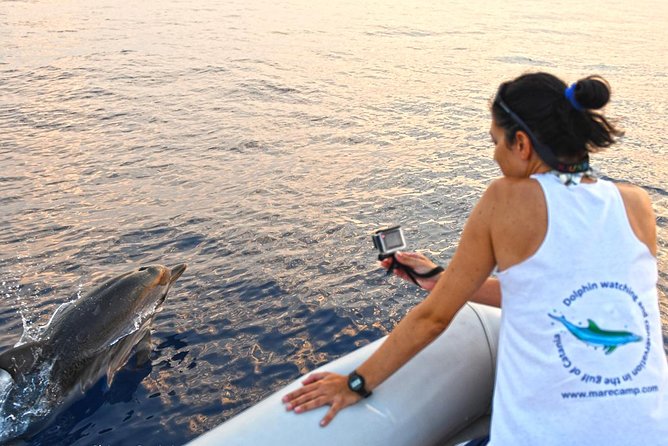
- Eco-sustainable rules in practice: an international code of good conduct and minimized disturbance
- Better identification on the water: marine biologist help, recognition cards, and binoculars
- Etna views while you scan the horizon from the Gulf of Catania coastline
- Conservation research support: you’ll help with data collection during sightings
- Small group size: maximum 10 travelers, so you’re not lost in a big crowd
- High-quality whale-watching mark (ACCOBAMS released) used to support responsible viewing
Dolphins, Mount Etna, and a conservation-first search
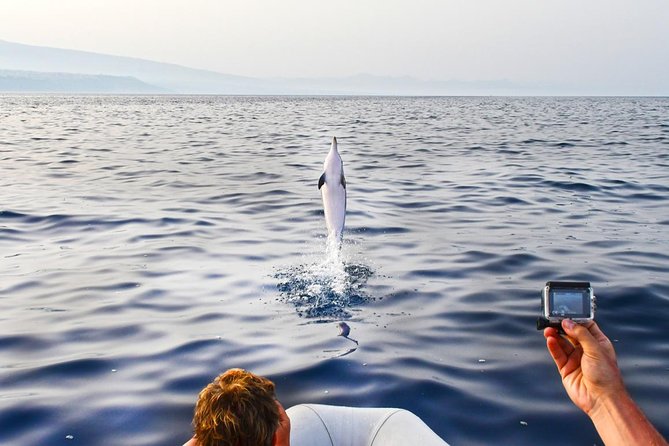
This is the kind of tour that feels like it belongs to the sea, not the sea being dragged into a tourist schedule. You’re heading out at low cruising speed, scanning patiently, and learning how dolphins behave in the wild—not the controlled, predictable stuff that happens at animal parks.
I like that the focus is practical. You get tools that actually help you look: binoculars and cetacean recognition cards. And you’re guided by people who work on dolphin monitoring in the area, so your “sighting” turns into something closer to field education.
Then there’s the scenery. You’ll be sailing with Mount Etna as your constant landmark. Even when dolphins take their time, the horizon isn’t boring: you’re moving along the Catania coastline with lots of geologic and natural interest nearby.
If you’re the type who wants wildlife with ethics baked in, this tour is built for you.
You can also read our reviews of more tours and experiences in Sicily.

Meet the marine biologist: name tags for wild cetaceans
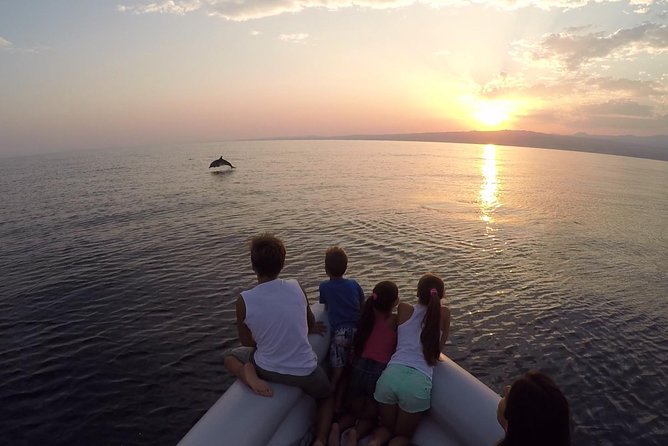
The standout promise here is not just spotting dolphins—it’s understanding which dolphins you’re seeing. When cetaceans are found, your team introduces you to them using the dolphin catalog built from monitoring and research. That means the talk isn’t generic. You’re learning how to recognize individuals rather than just identifying “a dolphin.”
And yes, there’s real biology education on board. You’ll get a briefing on dolphins and the monitored area, plus a structured look at what you’re likely to see when dolphins show surface activity and aerial behavior. It helps your photos too, because you know what you’re actually looking for instead of just pointing your camera and crossing your fingers.
In the feedback, one name that comes up is Carla, praised for being both knowledgeable and genuinely moved by what’s happening out there. That matters, because dolphin watching goes better when your guide treats the animals as living neighbors, not photo props.
How the Gulf of Catania watch actually works
You’re not just “going on a boat ride.” The day is designed around searching. You’ll navigate through the Gulf of Catania with local experts, scanning the horizon until you spot cetaceans. The tour description notes an 80% chance of sightings, which is good odds for this kind of wildlife activity.
Once dolphins are located, you’ll keep moving slowly and observe with care. Your guides use a code of good conduct to keep disturbance low. After you leave the animals’ group, you return to the departure port.
A key practical detail: you’re also part of the process. The team invites you to participate in data collection on the day, which is a nice upgrade from passive viewing. It helps you feel connected to conservation rather than just consuming a moment.
If you get lucky, you’ll also have hands-on moments with onboard tools and guided interpretation—so your day has layers: scenery, wildlife, and learning.
Aci Trezza and Aci Castello: where the scanning starts
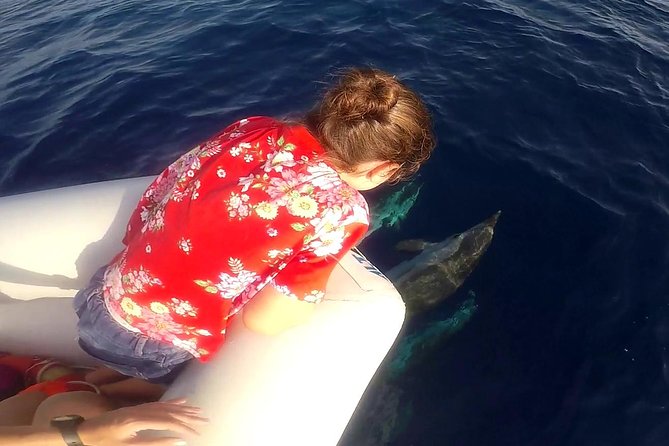
Your route commonly includes Aci Trezza and Aci Castello, and those stops matter because they help position you for spotting wildlife along the coast. Even without naming every geographic feature, the logic is simple: you’re moving between coastal points while the team scans for free-ranging dolphins.
At these early stages, expect a lot of horizon time. This is when the team is most focused on spotting cues: surface patterns, fin breaks, and quick changes that can signal movement below the waterline.
Why this is valuable for you: if dolphins are in the area, patience plus good guidance equals a better chance of real encounters. If dolphins are farther out, you’ll still get a structured experience, not “dead time.” The team’s job is to keep you informed and searching intelligently.
Also, the tour can be adjusted depending on the day. The coastline route can include other places along the Catania region (like Brucoli, Ognina, Santa Tecla, Santa Maria La Scala, Stazzo, Riposto, and sometimes Taormina, depending on conditions). So the day can feel flexible, while still following a dolphin-search logic.
Mount Etna in the background, plus Catania on the return
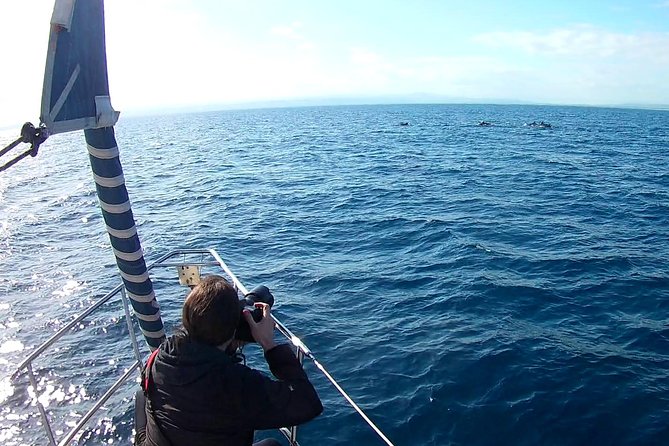
Mount Etna isn’t just a nice view. It becomes a visual anchor for your whole outing. While you’re scanning the Gulf, Etna dominates the background, so you always know where you are in the bigger picture of eastern Sicily.
You’ll also spend time with Catania in the mix—especially as part of the broader coastline sightseeing and when returning toward port. Depending on the day’s route, you might enjoy more stops around Catania and nearby coastal points, all while keeping the dolphin search front and center.
This combination works well for readers who want both wildlife and atmosphere. The tour keeps the action tied to the sea, but it doesn’t ignore Sicily’s signature landmarks. When you’re stuck waiting for sightings (it happens), you’re still looking at something worth looking at.



Binoculars, recognition cards, and the boat reality check
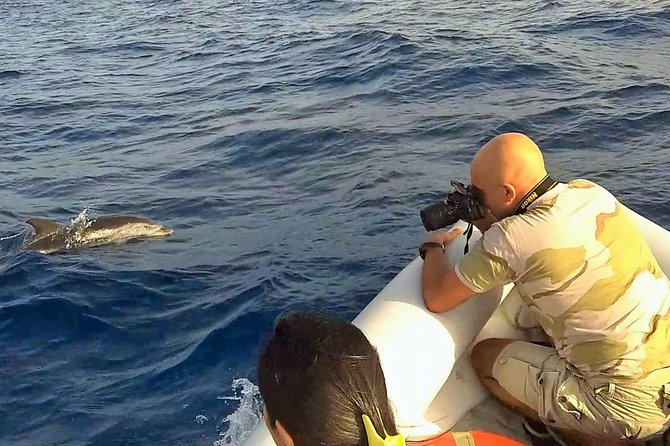
The boat experience is practical, not flashy. You’ll ride on a dinghy/motor boat/sailboat setup, depending on passenger count, with sizes mentioned as 7.20 m or 11 m. Safety equipment and life jackets are provided for all passengers.
Here’s the reality check that helps you pack right: one common issue is sun. A zodiac-style boat means not much shade. Bring strong sunscreen, wear a hat, and use a cover-up. Seas can be calm, but you’re still outside for a good chunk of your 3 hours.
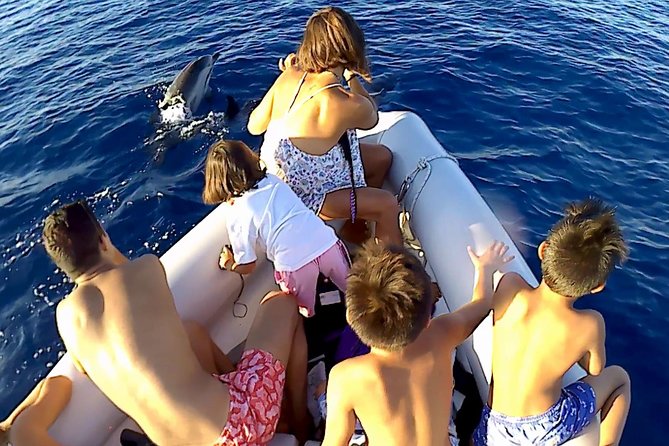
Kids need a bit of thought too. In one experience, lifejackets for children didn’t seem ideal in fit/availability. With calm seas and slow speeds the day can feel manageable, but if you’re traveling with children, plan for extra supervision and make sure everyone is comfortable with water safety before you go out.
And do yourself a favor: use the restroom before boarding if you can. Once you’re out, it’s not a “quick hop off” situation.
Accobams code of conduct and the whale-watching mark
This is where Marecamp separates itself from casual dolphin tours. The description specifically highlights that it’s the only operator in Sicily with a high-quality whale-watching mark released by ACCOBAMS (the Agreement on the Conservation of Cetaceans of the Black Sea, Mediterranean Sea and contiguous Atlantic area).
Even if you’ve never heard of ACCOBAMS before, the point is simple: it signals structured, responsible viewing tools—not just goodwill.
During sightings, the team applies an international code of good conduct to minimize disturbance. You’ll likely notice this as calmer boat handling and careful positioning—your time with the animals should feel more controlled in the best way. The goal is to observe without pressuring dolphins to change their behavior.
I like this approach because it makes your photos and your learning more honest. If the team is disciplined, the dolphins stay dolphins—doing their own thing instead of putting on a performance.
Seeing dolphins: what to look for and how the guide helps
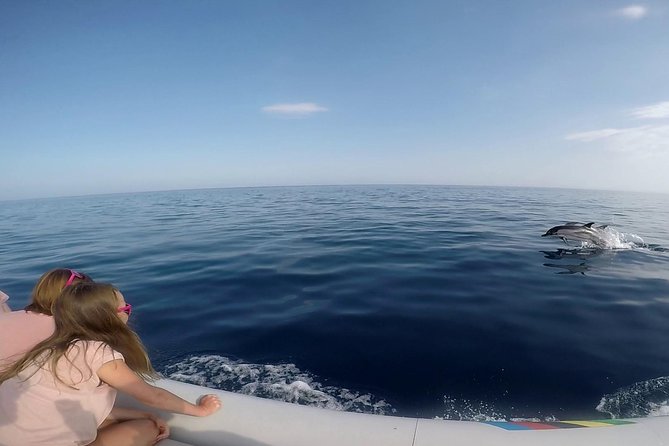
When you finally spot cetaceans, the tour’s education layer clicks into place. Guides help you identify what you’re seeing, and you get recognition cards to follow along with. Binoculars are there so you don’t have to rely only on the naked eye.
You’ll learn what to watch for, including the dolphins’ aerial behaviors. That matters because many first-time dolphin watchers miss the “in-between” moments—the quick pops, the short bursts, the way groups move as units.
The tour description also says you’ll observe while guides track the dolphins cataloged during their research. That means you’re not just seeing motion. You’re seeing behavior patterns, and you’re being taught why the behavior happens.
One extra bonus from the experiences shared: you might get a listen-in using a hydrophone to hear dolphin chatter. If that’s part of your departure, it’s a fun, brain-awake add-on that makes the encounter feel even more real.
Then you’ll help with daily data collection. It’s not complicated in the way a science lab is complicated; it’s more like guided participation in field observation so the team can keep improving research and responsible practices.
Chance of sightings: 80% success with room for disappointment
Let’s be honest: wildlife tours come with uncertainty. The tour states an 80% chance of spotting cetaceans, which is strong, but not a guarantee.
And you have to respect that. One of the most meaningful parts of eco-watching is accepting that dolphins decide if and when they show up. When they do show, it feels like a gift. When they don’t, the tour still has value—but your expectations should be grounded.
If you’re planning your day tightly, treat this as a flexible outing, not a must-hit event with consequences. If you’re staying in the Catania area, build in backup time. If you’re traveling with the mindset of learning and enjoying the sea even if dolphins are quiet, you’ll feel less disappointed if you land in the 20%.
Price ($84.48) and what you get for 3 hours
At $84.48 per person for about 3 hours, the price sits in the middle for dolphin watching—but the value depends on what matters to you.
Here’s what you’re paying for that isn’t just “time on the water”:
- A small group (maximum 10 travelers)
- Marine biologist-style education and cetacean recognition materials
- Binoculars and guided identification support
- A conservation-first operation with research participation
- Equipment and safety coverage (plus fuel)
Fuel, safety gear, and an experienced team add up. The fact that the tour includes structured education and responsible viewing tools (including the ACCOBAMS whale-watching mark) also pushes it toward the “worth it” column for people who care about animals and not just the thrill.
If your goal is purely cheap entertainment, you can find other boat rides. But if you want dolphin watching that tries to protect the animals while you learn, the price makes more sense.
Who this is best for (and who should think twice)
This tour is a great match if:
- You want wildlife with conservation behavior rules
- You enjoy structured learning—recognition cards, guided ID, and how dolphins behave
- You’re comfortable spending a few hours outdoors with sun exposure
- You like small group settings that keep the experience focused
It may be less ideal if:
- You can’t handle the possibility of a no-sighting day
- You’re looking for lots of shade or a super-comfortable lounge boat vibe
- You’re relying on kid lifejackets being a perfect fit without checking first
If you’re traveling with kids, it can still work well—one experience noted calm seas and slow speeds—but I’d plan ahead for sun protection, restroom timing, and water safety comfort.
For everyone else: this is a thoughtful way to spend time in Sicily’s coastal world, with Etna as your dramatic backdrop.
Should you book this dolphin watching tour in Sicily?
I’d book it if you want a dolphin encounter that respects the animals and gives you more than a generic wildlife lecture. The combination of marine guidance, identification tools, and responsible viewing practice makes this feel like a real conservation-supported outing, not a checkbox activity.
I’d pass (or at least mentally adjust expectations) if seeing dolphins is the only goal on your itinerary. There’s an 80% chance, but the sea can still say no. If you’re the flexible type—happy to enjoy the cruise, the coastline views, and the learning even when dolphins don’t appear—this is a strong use of a half-day.
FAQ
FAQ
How long is the dolphin watching tour?
It lasts about 3 hours.
How much does it cost?
The price is $84.48 per person.
What language is the tour offered in?
The tour is offered in English.
Where do I meet for the tour?
The meeting point is MareCamp / presso Club Nautico Catania, Via Cardinale Dusmet, 95100 Catania CT, Italy.
What’s the chance of seeing dolphins?
The tour description states an 80% chance of spotting cetaceans.
What if I don’t see dolphins?
There is a chance you may not see anything on your day. The tour still follows its wildlife-search process, and nature can be unpredictable.
What boat will I be on?
Depending on the number of passengers, you’ll use a dinghy, motor boat, or sailboat (sizes listed as 7.20 m or 11 m), with safety equipment and life jackets for all passengers.
What’s included in the price?
Included are binoculars and cetacean recognition cards, skipper and guide on board, a briefing on cetaceans and the monitored area, boat rental plus safety equipment, and boat fuel.
Is there a restroom break?
The information provided doesn’t specify onboard restrooms. It’s a good idea to plan to use facilities before you leave.
What weather conditions are required?
Good weather is required. If canceled due to poor weather, you’ll be offered a different date or a full refund.