REVIEW · SICILY
Classical Syracuse – Half day guided tour
Book on Viator →Operated by Serena Guida turistica Siracusa · Bookable on Viator
Syracuse in half a morning? That’s the fun of this tour. You get a live guide to connect the dots between the UNESCO Neapolis Archaeological Park and the island of Ortigia, plus a tight, walking-friendly route that hits major sights like the Greek Theater, the Ear of Dionysius, and Fonte Aretusa. I especially love how the stops feel curated by location and story, not just a checklist, and I like that the tour also includes the Papyrus Oasis visit instead of leaving it as an optional detour. One thing to plan for: admission tickets aren’t included, and the experience requires good weather, so you’ll want a flexible schedule.
Here’s the practical picture: you’ll start at the Neapolis Archaeological Park meeting point in Siracusa, tour Neapolis for about two hours, walk over to the Papyrus Corner area, then finish in Ortigia at Arethusa Spring. It’s private for your group (up to 15), which makes the pacing feel calmer and more conversational. The ticket is mobile, and your guide is Serena Guida turistica Siracusa.
If you’re traveling around Sicily and booking through third-party platforms, do one extra check: I found a report of a no-show tied to a booking platform in Sicily. It’s not a reason to panic, but it is a good reminder to confirm your start time and keep the meeting address saved in your phone.
In This Review
- Key things to know before you go
- Neapolis Archaeological Park: Greek Theater to Ear of Dionysius
- Why Latomie del Paradiso is more than a photo stop
- Papyrus Corner and the Oasis with a Small Zoo
- Ortigia in one hour: Apollo, Cathedral, Santa Lucia alla Badia, and Fonte Aretusa
- Walking, timing, and shoes: making the most of 3 hours 30 minutes
- Price and value: what $238.17 buys your group
- Meeting point to finish line: where the tour starts and ends
- Weather and cancellation: what to expect if conditions change
- Should you book the Classical Syracuse half-day tour?
- FAQ
- How long is the Classical Syracuse half-day guided tour?
- What sites do you visit in the Neapolis Archaeological Park area?
- What do you see in Ortigia?
- Are admission tickets included in the price?
- Is food included?
- Is the Papyrus Oasis included?
- How is the ticket delivered?
- Is this tour private?
- What happens if the weather is bad?
- What is the cancellation policy?
Key things to know before you go
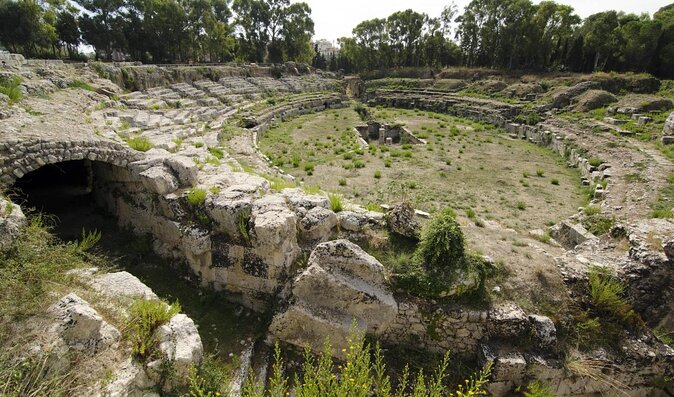
- UNESCO Neapolis plus major “wow” stops like the Greek Theater and the Ear of Dionysius
- Latomie del Paradiso and the Ara of Hieron II included in the guided circuit
- Papyrus Corner visit is part of the plan, including the Oasis and Small Zoo
- Ortigia highlights in one hour, with Apollo, the Cathedral, Santa Lucia alla Badia, and Fonte Aretusa
- Private group format (up to 15) keeps the experience focused and adjustable
- Tickets and food aren’t included, so budget time for entry payments and a snack plan
Neapolis Archaeological Park: Greek Theater to Ear of Dionysius
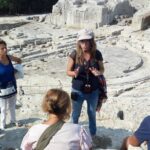
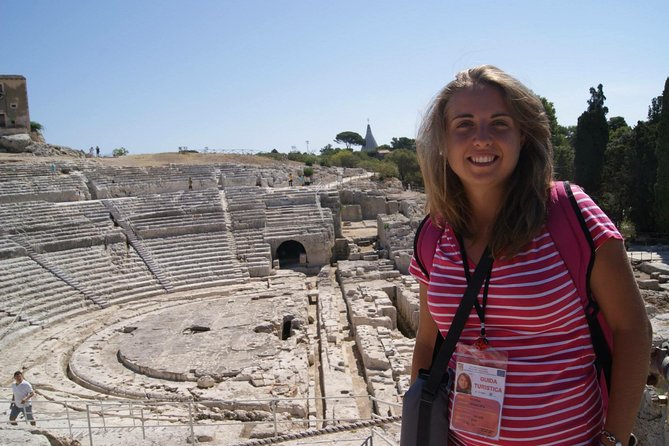
Neapolis Archaeological Park is where Syracuse shows its engine room: theaters, temples, and Roman-era layers piled on top of each other. Your guided visit covers a concentrated mix of sites that most people can’t juggle on their own without losing context, because the route is designed to make each place explain the next one.
You’ll start with the Greek Theater, a key building for understanding how ancient drama worked—where audiences sat, how acoustics mattered, and why the location mattered. From there, you move into the Latomie del Paradiso area and visit the Ear of Dionysius. The Ear of Dionysius is one of those stops that can feel mysterious even when you’re standing right next to it, and a good guide helps you understand why it’s legendary and what you’re actually seeing.
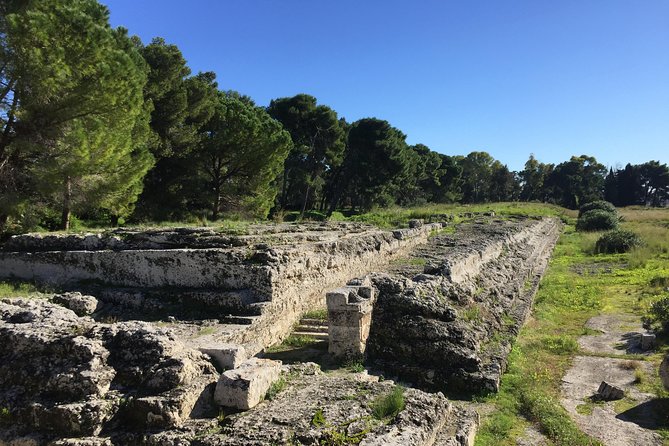
The route also includes the Ara of Hieron II and the Roman Amphitheater, so you don’t just get Greek-era ruins in isolation. That mix is valuable because it shows how Syracuse kept reusing, reshaping, and repurposing its public spaces as time moved on.
Practical note: the Neapolis stop runs about two hours. That’s long enough to enjoy the story and the views from within the park, but it’s not so long that you’ll be stuck walking through everything at a slow, exhausting pace. Still, wear shoes with solid grip—this is a real walking-and-standing circuit.
You can also read our reviews of more tours and experiences in Sicily.

Why Latomie del Paradiso is more than a photo stop
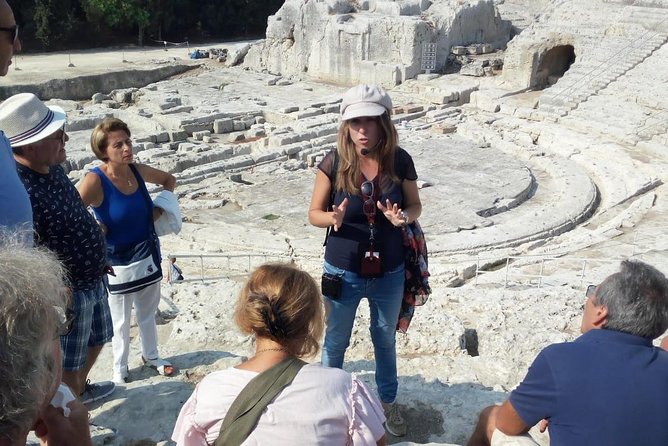
Latomie del Paradiso is one of those places that works best when you’re there with someone who can explain what you’re looking at. Even if you’ve seen pictures, the experience feels different in person because you’re inside a landscape shaped by human activity—space carved and reused over centuries.
Your guide’s job here is especially important. You’ll connect the setting with the nearby landmarks, then you’ll have a clearer sense of why the Ear of Dionysius is tied to the same broader story. Without that context, it’s easy to treat these stops like separate curiosities. With a guide, they start to feel like a single walk through a coherent chapter of Syracuse.
I also like that this stop sits inside the wider UNESCO area. It makes the visit feel grounded: you’re not only seeing individual monuments; you’re seeing how they relate across the park.
Papyrus Corner and the Oasis with a Small Zoo
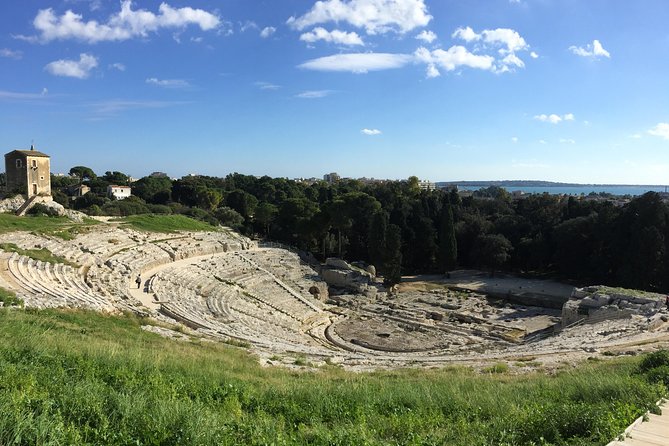
After Neapolis, the tour shifts gears. Instead of more ruins, you head toward the Papyrus Corner area for a guided visit to the Oasis and the Small Zoo. This is the one part of the tour that breaks the ancient-stone pattern and gives you a different kind of Syracuse flavor—green, watery, and calmer.
Why this matters for your day: after standing around theaters and tomb-like spaces, your legs and your eyes appreciate the change. You also get a nice contrast to the dry, monumental feel of archaeological zones. Even if you’re not a “plant person,” papyrus has a special place in Mediterranean culture, and the setting here gives you an easy, low-stress way to rest while still feeling like you’re on a guided plan.
The tour includes the Papyrus Oasis, so you don’t have to manage another ticketed segment during your time window. That’s real value when you only have about half a day.
Ortigia in one hour: Apollo, Cathedral, Santa Lucia alla Badia, and Fonte Aretusa
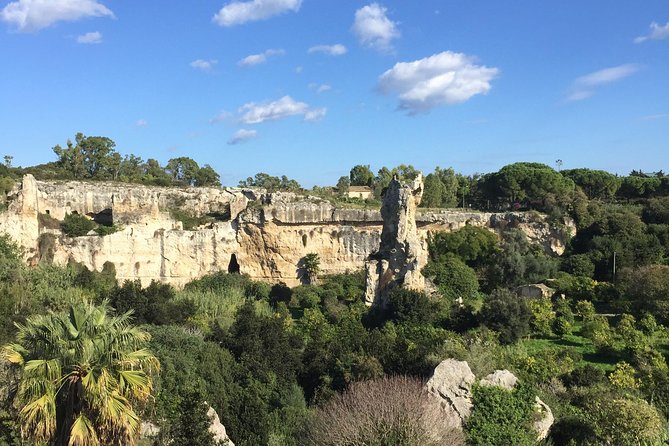
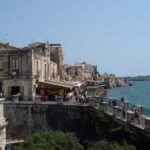
Ortigia is the lively heart of Syracuse, and this tour uses your time in a smart way: you’ll focus on major landmarks that anchor the island’s identity without stretching the day.
The Ortigia portion starts with the Temple of Apollo, one of the first stops that helps you understand why this area has been important for so long. From there you’ll visit the Cathedral, then the Church of Santa Lucia alla Badia, which includes mention of a Caravaggio canvas. That’s a big deal for art lovers, and it’s also a win for general sightseers because Caravaggio’s work has a strong, unmistakable presence.
You’ll also see the Fonte Aretusa. This is the perfect finish because it connects you to the island’s geography and legends in a way that feels natural—especially at the end of a walk-heavy route. Finishing near Arethusa Spring also means you’re not stranded far from the action when the tour ends.
One small drawback to keep in mind: the Ortigia stop is about an hour. That’s enough to hit the key points with guidance, but it’s not enough time to wander every side street afterward in depth. If you want extra time for casual strolling, plan to extend your day on your own once the tour ends.
Walking, timing, and shoes: making the most of 3 hours 30 minutes
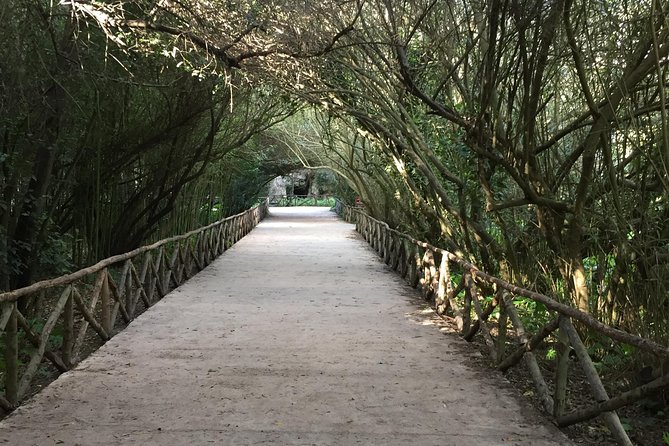
This is a 3 hours 30 minutes experience, and it includes a clear split: about two hours in Neapolis plus about one hour on Ortigia, with the Papyrus Oasis segment in the middle. That structure is what makes it work for people who only have limited time in Syracuse.
You should expect some walking between zones. The tour mentions transfers on foot to the Papyrus Corner area. Translation: your pace will be active, but it shouldn’t feel like a marathon. Still, your shoes matter. Syracuse can also be warm, and you’ll do a lot of standing, so bring water even though food isn’t included.
If you’re thinking of pairing this with another activity the same day, I’d keep the next block flexible. This kind of guided half-day often runs on time, but weather and site conditions can affect your comfort more than you expect.



Price and value: what $238.17 buys your group
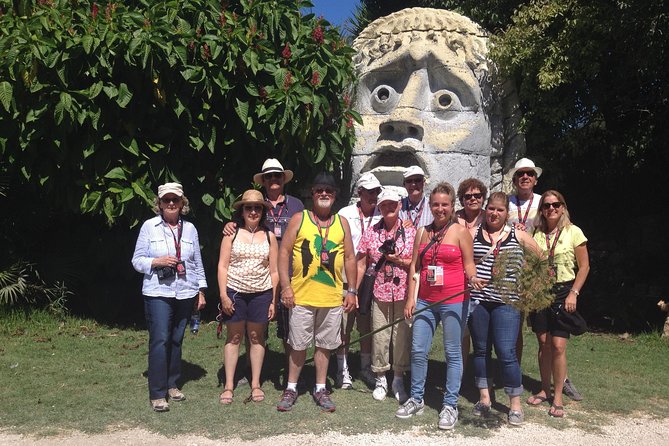
The price is $238.17 per group (up to 15 people). That means your real cost depends on how many people are in your group. If you’re traveling solo, it may feel steep compared with per-person tours—but for families or small groups, it can be a practical way to get a lot of structure in a short time.
Also, this is a private tour, so you’re not sharing the guide’s attention with strangers rotating in and out every few minutes. For a place like Neapolis, where context makes a big difference, that matters.
Included value highlights:
- Tour guide (Serena Guida turistica Siracusa)
- Papyrus Oasis visit
- Travel agent support
Not included (so plan ahead):
- Food
- Tickets
- Transfer
That last line is important. Since tickets aren’t included, you’ll want to factor in the time and cost of entry. It’s not unusual for archaeological-and-church tours, but it changes how you plan your day. In practice, I’d arrive with an organized plan for ticket purchases so the tour timing stays smooth.
Meeting point to finish line: where the tour starts and ends
You begin at Via Luigi Bernabò Brea, 14, at the Neapolis Archaeological Park. The tour ends at Largo Aretusa by Arethusa Spring.
Knowing the end point helps you plan your post-tour time. Arethusa Spring is a good place to reorient because Ortigia is close and walkable, so you’re not stuck figuring out transport immediately. The meeting location is also described as near public transportation, which helps if you’re using buses or walking links between stops.
Weather and cancellation: what to expect if conditions change
This experience requires good weather. If conditions are poor enough to cancel, you should be offered either a different date or a full refund.
Cancellation is free up to 24 hours in advance for a full refund. If you’re booking close to travel dates, I’d keep your plans flexible. With outdoor components in Neapolis, it’s smart to be ready to adjust.
Should you book the Classical Syracuse half-day tour?
If your goal is to see the strongest parts of Syracuse in about half a day, I think this tour is a solid pick. The guided flow through Neapolis (Greek Theater, Latomie del Paradiso, Ear of Dionysius, Ara of Hieron II, Roman Amphitheater) plus the Ortigia anchors (Temple of Apollo, Cathedral, Santa Lucia alla Badia with Caravaggio canvas, Fonte Aretusa) is exactly the kind of structure that helps you leave with more than scattered photos.
Book it if:
- You want a guided plan that reduces guesswork.
- You like art and ruins and want both in one outing.
- You’re traveling as a small group where the group price is workable.
Skip or rethink it if:
- You hate buying separate tickets and handling entry costs.
- You only have time for slow wandering and would rather explore Ortigia at length without a timed route.
- Weather is unpredictable for your dates and you dislike schedule changes.
My one extra practical tip: save the meeting address and confirm your start time the day before. Half-day tours are unforgiving if you show up late or if something goes off-track—and an easy confirmation step can save your whole morning.
FAQ
How long is the Classical Syracuse half-day guided tour?
It lasts about 3 hours 30 minutes.
What sites do you visit in the Neapolis Archaeological Park area?
You’ll visit the Greek Theater, Latomie del Paradiso, Ear of Dionysius, Ara of Hieron II, and the Roman Amphitheater. The tour also includes the Papyrus Corner area afterward.
What do you see in Ortigia?
In Ortigia you’ll visit the Temple of Apollo, the Cathedral, the Church of Santa Lucia alla Badia (with a Caravaggio canvas), and Fonte Aretusa.
Are admission tickets included in the price?
No. Admission tickets are not included.
Is food included?
No. Food is not included.
Is the Papyrus Oasis included?
Yes. The Papyrus Oasis is included, along with a guided visit of the Oasis and the Small Zoo.
How is the ticket delivered?
You’ll receive a mobile ticket.
Is this tour private?
Yes. It’s private, and only your group participates.
What happens if the weather is bad?
The experience requires good weather. If it’s canceled due to poor weather, you’ll be offered a different date or a full refund.
What is the cancellation policy?
You can cancel for free up to 24 hours in advance for a full refund.