If you like your vacations with ropes, water, and real hands-on skills, this Gran Canaria canyoning trip hits the spot. I love the year-round rainforest canyon feel with hidden waterfalls flowing even outside peak seasons, and I also like the small-group setup with guided abseiling so you’re not left to guess. One thing to keep in mind: you’ll be moving, climbing, and getting wet, so moderate fitness and good footwear matter.
This is offered by RockNatour Experiences, and the vibe is part adventure day, part outdoor classroom. In English, with a local mountain guide (Pablo comes up again and again), you’ll learn skills as you go, plus you’ll stop for snacks after hiking an old trail and spend time exploring caves and viewpoints around Barranco de Los Cernicalos. It’s a strong value for what you get in 4 hours—if you’re ready to embrace the “active” part.
In This Review
- Key things I’d notice before you go
- Rainforest canyoning on Gran Canaria: what you’re really doing
- Where you start: Barranco de Los Cernicalos and the flow of the day
- Stop 1: rock pools, slides, and jungle-like wading
- Abseiling with ropes: learning the skill and building independence
- Exploring caves and getting those mountain views
- Why the local guide experience matters (and why Pablo comes up)
- What the photo report is actually good for
- Gear and comfort: the small details that make or break the day
- Group size, safety, and why max 8 is a real advantage
- Price and value: is $78.61 worth it?
- Weather, conditions, and how to plan around surprises
- Who should book this tour (and who might skip it)
- Quick decision: should you book RockNatour canyoning?
- FAQ
- FAQ
- How long is the canyoning tour?
- Do I need prior canyoning or abseiling experience?
- What fitness level do I need?
- How many people are in a group?
- Is the tour offered in English?
- Where does the activity start and end?
- What should I wear for traction?
- What happens if weather is bad?
Key things I’d notice before you go
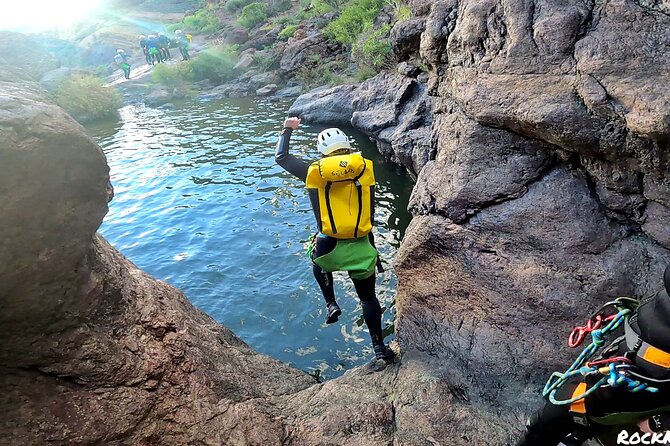
- Ropes + abseiling technique, not just thrills: you learn how to descend waterfalls with your guide’s help.
- Small group size (max 8): easier pacing, clearer safety instructions, and less waiting around.
- Year-round flowing water: the rainforest canyon is treated as an always-on setting, not a seasonal maybe.
- First stop is pure fun: smooth rock pools, slides, and wading in jungle-like surroundings.
- Caves and mountain views included: you get more than just vertical drops.
- Photo report after the action: you can relive the day without constantly wrestling your camera.
Rainforest canyoning on Gran Canaria: what you’re really doing
This tour is built around one core idea: you go where the waterfalls are, and you move through them with a mix of canyon walking, rope work, and a little scrambling. The setting is a rainforest-style canyon area where water runs through hidden sections of the forest, which is exactly why canyoning feels so different here compared to a one-waterfall sightseeing stop.
The “no prior experience needed” part is real in how the day is structured. You’re not expected to show up already knowing how to abseil. Instead, you learn techniques on-site and practice with support. That matters because confidence is a big deal with ropes, and having a guide right there reduces the guesswork.
The day is also about more than vertical movement. You’ll hike parts of the route (including an old trail), explore caves, and enjoy views around the area. So if you’re worried that canyoning equals only jumping off things, you’re still likely to enjoy it—because the route has variety: rock pools, jungle walking, rope descents, then slower moments with snacks and scenery.
You can also read our reviews of more tours and experiences in Gran Canaria.

Where you start: Barranco de Los Cernicalos and the flow of the day
The tour runs roughly 4 hours total and returns you to the meeting point. Your start location is in El Roque, Spain (using the provided plus code: XG75+XW El Roque). For a trip like this, I like having a clear start/end plan because you’re not stuck crossing town afterward with muddy shoes and a wet bag.
Barranco de Los Cernicalos is the heart of the experience. It’s not presented as a single straight-line walk; it’s more like a sequence of canyon zones. You get an early taste of play—slides and rock pools—then the day shifts toward the skills portion with waterfalls and ropes.
A practical way to think about pacing: your time isn’t spent staring at the scenery while you wait your turn. It’s active, with guidance, and that’s why this works best for people who don’t want a passive tour. If you’re hoping for long rest breaks every 10 minutes, you might find the rhythm a bit intense.
Stop 1: rock pools, slides, and jungle-like wading
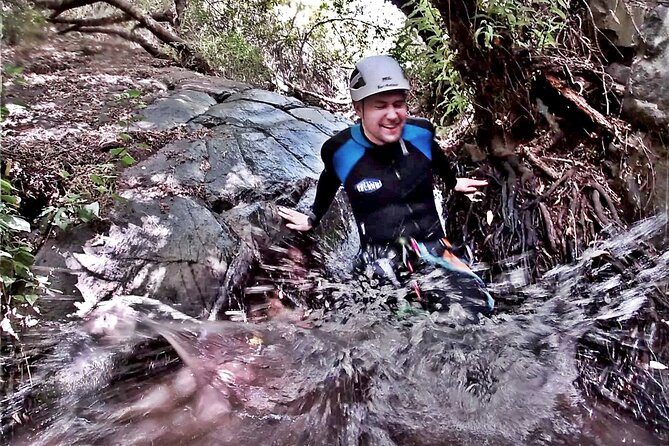
The first segment is designed to get you feeling at ease quickly. Before ropes become the main topic, you’ll enjoy smooth rock pools, some sliding over stone, and wading in jungle-like surroundings. This is the part that helps you understand the “tone” of the day: it’s playful, but still controlled and guided.
What I like about starting here is that it acts like a warm-up for both body and mind. Your muscles get moving, your footing gets tested (without the full commitment of abseiling yet), and you learn how the guide expects you to move in wet, uneven terrain.
The only consideration: conditions in a canyon can be slippery. Even if this is “just” wading at first, you’ll still want decent grip and not-new, slick footwear. One of the clearest tips from the experience is to wear a pair of decent old trainers with good grip, because you’ll likely get them wet and scuffed, and you want traction more than style.
Abseiling with ropes: learning the skill and building independence
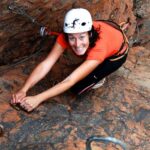
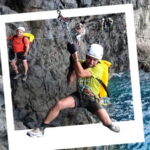
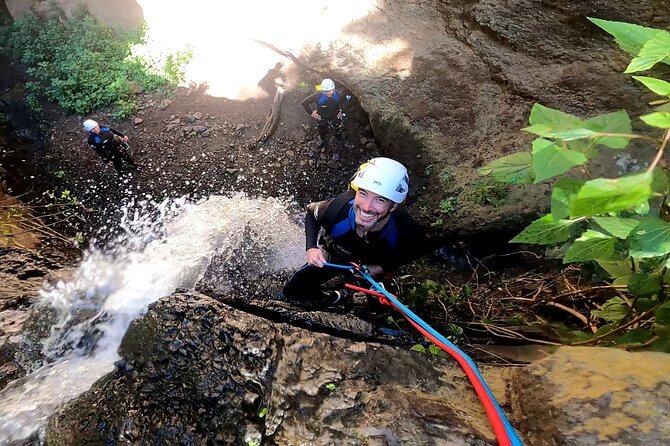
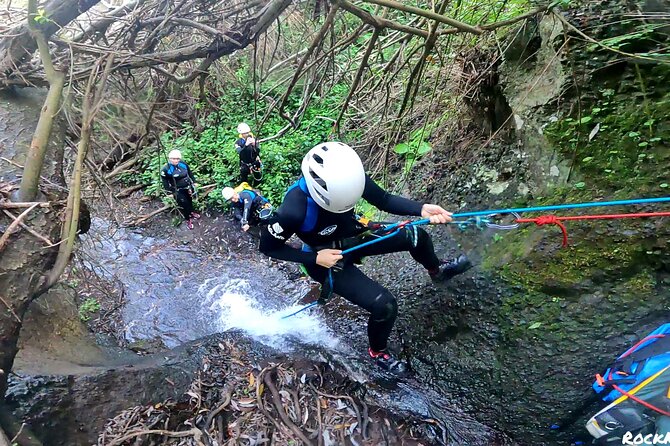
When it’s time for the canyoning technique part, you shift from play to controlled descent. Under the guide’s supervision, you learn how to abseil using ropes and then do it with assistance—step by step—so you gradually build independence rather than being thrown in at full intensity.
Pablo is specifically mentioned in the accounts as an amazing guide who makes people feel safe while pushing them just enough. That’s a good balance for first-timers: you need guidance, but you also want to participate. The key detail here is the progression in confidence. You’ll start with more support and then gain autonomy as the trip moves on.
Also pay attention to how safety is handled. The day is described as safety-first, with the guide making sure you understand what you’re doing and how to do it. That doesn’t remove the nerves—people still feel a little nervous when they’re new to ropes—but it helps the nerves stay productive instead of distracting.
If you’re the type who gets tense at heights or unfamiliar gear, this is exactly where the small group size helps. With a max of 8 travelers, the guide can watch foot placement, rope setup, and body position without rushing.
Exploring caves and getting those mountain views
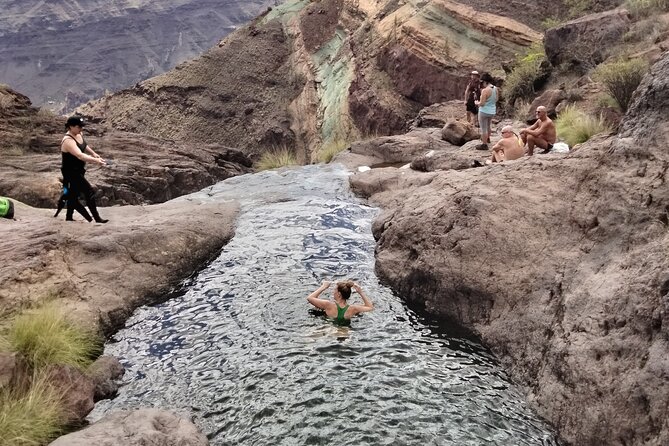
Not all of the day is waterfall action. After hiking an old trail, you’ll have a snack stop in a nice cave setting with views over the mountains. That matters because you’re not running on adrenaline alone; you’re getting a calmer moment to catch your breath, eat something, and look around.
Caves can also make the experience feel more grounded and “Gran Canaria” in a way that pure canyon drops don’t always do. The caves and viewpoints help connect the physical adventure with the island’s geology and history elements the guide shares while you’re moving through the area.
One practical point: caves and caves nearby can be cooler or damp. You’ll likely be wet already from the canyon, so having a plan for temperature changes helps. If you get cold easily, bring layers you can put on after you finish the water parts.

Why the local guide experience matters (and why Pablo comes up)
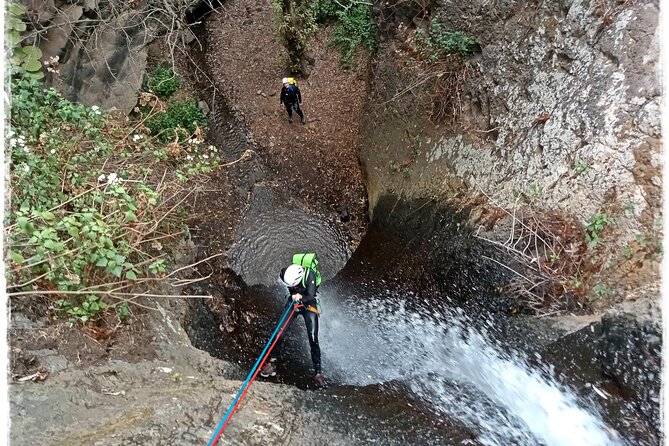
This tour leans hard on the local guide component. The day isn’t just mechanical instruction; you’re also learning about the plants, history, and topography around where you’re canyoning. That turns “cool scenery” into something you can understand as you move through it.
Pablo is mentioned as knowledgeable about the island and very experienced with safety. But what really shows up is his teaching style: he builds confidence, keeps the tone positive, and stays attentive. People also mention that he takes excellent photos during the trip, so you get something more useful than random phone snapshots.
There’s another subtle value here: the guide talks about decreasing waste during tours. I wouldn’t expect that to change how you do the canyoning, but it’s a good sign the operator is thinking beyond just delivering thrills.
What the photo report is actually good for
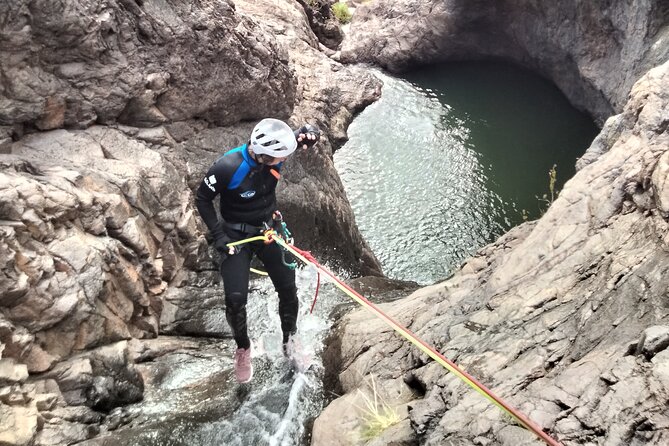
The tour includes a free photo report, and that’s worth taking seriously. In canyoning, your hands are busy, your footing is the priority, and your brain is focused on the next step. A guide who’s actively documenting the day means you can actually enjoy the moment without constantly fumbling with a camera.
If you care about remembering the route, the waterfall moments, and the abseiling sequence, the photo report is a big plus. It also helps if you’re traveling with friends and you want shared proof that everyone did the same thing—not just one person with usable photos.
Gear and comfort: the small details that make or break the day
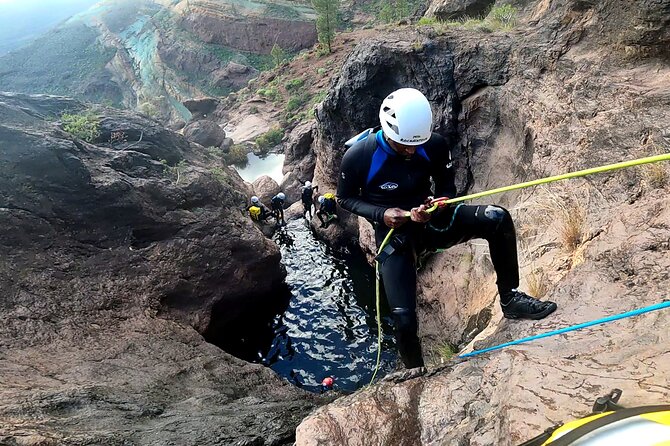
Canyoning is not the place to wear your best shoes. It’s a wet, physical activity in uneven terrain. The best-fit advice you’ll find here is simple: wear decent old trainers with good grip.
Here’s how I’d translate that into a quick checklist for your packing brain:
- Go for traction. Your soles are your safety margin.
- Expect wet gear. If your shoes are brand-new, they might not love you afterward.
- Wear something you can get wet without stress.
- Bring a way to keep essentials dry for after the tour (even a simple dry bag helps).
Also remember that you’ll spend time in caves and around rock surfaces, so your route can involve damp air and occasional chill. If you don’t like feeling cold after being wet, pack a dry layer for the ride back.
Group size, safety, and why max 8 is a real advantage
A maximum of 8 people changes the experience. With a small group, the guide can move faster when conditions allow and slow down exactly where you need attention. That’s especially important for abseiling practice, where body position and timing matter.
It also makes the day feel more like a shared adventure instead of a conveyor belt. People tend to get more personal attention during the ropes portion and more chances to ask questions before moving on.
And even though the tour is presented as fun for all levels, don’t confuse that with “easy.” It’s approachable because it’s guided and taught, not because it requires zero effort.
Price and value: is $78.61 worth it?
At about $78.61 per person, this isn’t a “cheap add-on,” but it also isn’t overpriced for the amount of instruction and activity you’re getting in roughly 4 hours. You’re paying for:
- Guided canyoning into a remote area you typically can’t access without the route plan
- Rope-based abseiling instruction and supervision
- Safety management in a wet, slippery environment
- A snack stop and time exploring caves and viewpoints
- A free photo report
If you’re comparing it to the cost of renting gear for a DIY attempt, it’s clear why guided canyoning makes sense. Even if you’re a strong swimmer or hiker, the rope skills and safety oversight are the part you want a professional to handle. That’s where the money turns into confidence.
Also, the booking pace is fast. The activity is commonly booked about 11 days in advance on average, which suggests it’s not something to leave to the last second if your dates are fixed.
Weather, conditions, and how to plan around surprises
This activity requires good weather. That’s not a minor note—it’s the difference between going and rescheduling. If it gets canceled due to poor weather, you’ll be offered a different date or a full refund.
So plan like this:
- If your vacation has a flexible day, make it your canyoning day.
- If your schedule is tight, you’ll still likely be fine, but keep some buffer time for weather changes.
Your physical readiness matters too. The tour calls for moderate physical fitness. If you can hike steadily and you’re comfortable moving over rough ground while wet, you’re in the right zone. If you’re dealing with injuries or mobility limits, I’d want to talk with the operator before you book—especially because rope work adds another layer.
Who should book this tour (and who might skip it)
This is a great fit if:
- You want an outdoor day that’s hands-on, not just scenic
- You like learning a skill (especially ropes) instead of only watching
- You’re okay getting wet and using traction footwear
- You enjoy small group adventures where the guide can actually coach you
I’d think twice if:
- You hate heights or feel panicked by rope equipment (some nervousness is normal, but you should know your limits)
- You’re looking for a relaxing, mostly seated experience
- You’re not comfortable with moderate physical effort
Quick decision: should you book RockNatour canyoning?
I’d book if you want a real Gran Canaria adventure day with waterfalls, rope skills, and a guide-led pace through an area that feels remote. The combination of abseiling instruction, the early rock pool fun, the cave snack stop with mountain views, and the included photo report makes this a strong package for the time.
If you see no availability, you can contact RockNatour by WhatsApp or email to be added to a waiting list. That’s especially useful in smaller groups like this, where dates can fill quickly.
FAQ
FAQ
How long is the canyoning tour?
The tour runs for about 4 hours (approximately).
Do I need prior canyoning or abseiling experience?
No prior experience is needed. You’ll learn abseiling techniques with help from the guide.
What fitness level do I need?
A moderate physical fitness level is recommended.
How many people are in a group?
The tour has a maximum of 8 travelers.
Is the tour offered in English?
Yes, it is offered in English.
Where does the activity start and end?
It starts at the meeting point in El Roque (XG75+XW El Roque) and ends back at the same meeting point.
What should I wear for traction?
Wearing decent old trainers with good grip is specifically recommended, since you’ll be on wet, slippery surfaces.
What happens if weather is bad?
The experience requires good weather. If it’s canceled due to poor weather, you’ll be offered a different date or a full refund.