REVIEW · MALTA
Best of Mdina and Rabat Walking Tour
Book on Viator →Operated by City Walking Tours Malta · Bookable on Viator
Mdina feels like a set from an old story. This walking tour threads you through Mdina’s medieval streets and then eases you into Rabat, with a licensed guide and just enough stops to cover the big highlights without turning it into a full-day slog. I especially liked how the meeting spot is simple to find at Mdina’s main gate, and how the guide keeps the walk lively with real context and local color. One thing to consider: on busier days, the group can feel crowded and you may want to confirm that audio/headset support is available if you rely on it.
My favorite part was the human touch—your guide doesn’t just recite dates. I really liked the way guide Nadine shares clear history, then makes it practical, including suggestions for what to do after the tour. And she even handled rain smoothly by quickly finding shelter for the group, so the day keeps moving instead of collapsing into cold standing around.
If you want an efficient sampler of Mdina and Rabat, this one works. The route is built around major public squares and streets—so you can enjoy the atmosphere even if you skip extra museum time. Just keep in mind the tour doesn’t include church or museum entrance fees, so if you want to go inside, expect to pay separately.
In This Review
- Key Highlights I’d Put on Your Must-Do List
- Why Mdina’s Main Gate Is the Smart Place to Start
- Vilhena Palace: France Meets Malta at the City’s Edge
- Pjazza Mesquita: The Quiet Square Tied to Game of Thrones
- Villegaignon Street: Mdina’s Main Street for Palaces and People-Watching
- Pjazza San Publju: The Main Square and St. Paul’s Cathedral Dominance
- Rabat After Mdina: A Calmer Walk Just Outside the Walls
- Price and Value: What $24.10 Buys You Here
- How to Make Sure You Hear the Guide (Especially in Busy Moments)
- Where This Tour Fits Best
- Should You Book This Mdina and Rabat Walking Tour?
- FAQ
- How long is the Best of Mdina and Rabat Walking Tour?
- What does the tour cost?
- Where do I meet the guide?
- Where does the tour end?
- Is the tour guided?
- Are entrance fees included for churches or museums?
- What language is the tour offered in?
- How big is the group?
- Are children allowed?
- Is there free cancellation?
- Is the tour accessible for people with service animals?
Key Highlights I’d Put on Your Must-Do List
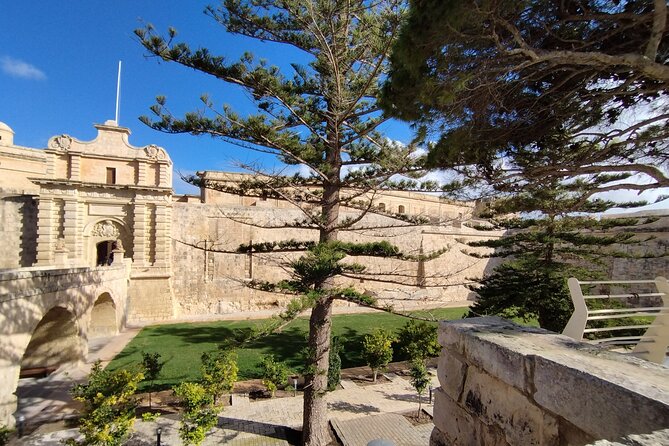
- Mdina’s main gate start: easy to locate, and the guide will be easy to spot with a red umbrella.
- Vilhena Palace: a French Baroque stop right at the entrance to Mdina, built in the early 1700s.
- Pjazza Mesquita: a quiet square tied to Game of Thrones filming locations.
- Vilhagaignon Street: Mdina’s main street lined with palaces—perfect for slow walking and photos.
- Pjazza San Publju + St. Paul’s Cathedral area: the main square dominated by the metropolitan cathedral.
- Rabat walking portion: a calmer, more rural-feeling town just outside Mdina with typical local streets.
Why Mdina’s Main Gate Is the Smart Place to Start
Mdina is famous for atmosphere. You don’t need to do a deep research project to feel it—the stone walls, the silence in side streets, and the way the town seems to time-travel. Starting at the main gate helps you get oriented fast. Within a short walk, you’re already positioned to understand how Mdina is laid out and why certain palaces and squares matter.
You’ll meet your guide at the main gate of Mdina, and the guide will be holding a City Walking Tours red umbrella. That sounds small, but it matters. Malta’s streets can be twisty and signage isn’t always straightforward, so being able to spot your guide quickly saves energy for the walk itself.
This is also the right kind of start for value. Instead of spending the first 20 minutes figuring out where to go, you get stories immediately—medieval-era context, what to notice as you pass convents, churches, palaces, and typical lanes. It sets up the rest of the tour so later stops make sense, not just show up like random photo spots.
You can also read our reviews of more tours and experiences in Malta.



Vilhena Palace: France Meets Malta at the City’s Edge
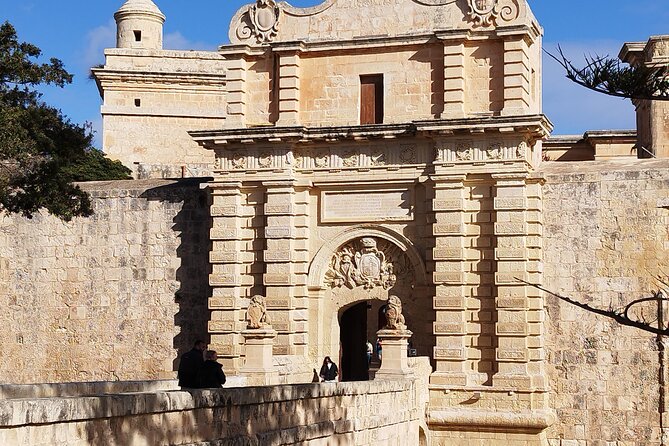
Vilhena Palace sits right where you’d expect an important building—near the entrance, as if to announce the town’s status. This stop is short but worthwhile because it gives you a contrast. Mdina is often described as medieval, but Malta also absorbed other styles over time.
Here, you’ll see Vilhena Palace, a French Baroque palace built in the early 18th century based on designs by French architect Charles François de Mondion. Even if you’re not an architecture nerd, the name alone is a clue: this is where Mdina shows a different chapter of its story.
Why I think this stop is valuable for you: it helps you read Mdina beyond the walls. When a guide points out when and why a building was made, you stop treating the town as just one mood and start seeing it as a timeline.
Potential drawback: if your priority is interior visits (museums or church interiors), this tour is mostly outside. You’ll enjoy the palace’s presence, but entrance tickets aren’t included for museums or churches later on.
Pjazza Mesquita: The Quiet Square Tied to Game of Thrones
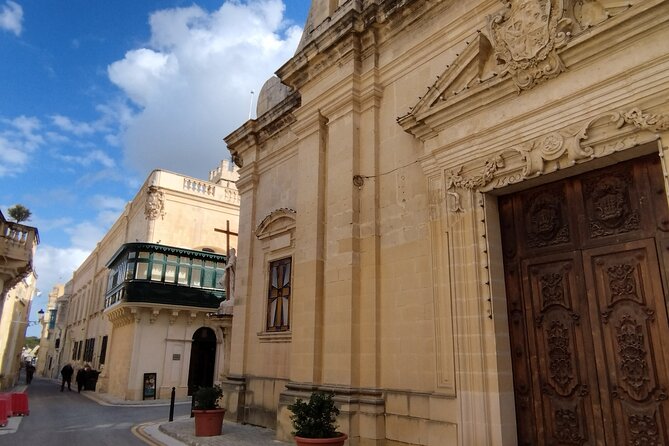
One of the most fun parts is Pjazza Mesquita, a peaceful square in the silent city of Mdina. This is one of those places where the setting does half the work. You’re standing in a calm open space inside a walled town, and that stillness is exactly why filmmakers like this kind of location.
This square was used as a filming location for Game of Thrones. It’s not about chasing TV trivia. It’s about seeing how Malta’s old streets and squares can double as something else—and learning to notice the angles, the streets that feed into the square, and the scale of the spaces.
For practical travel value: if you’re visiting during busy seasons, squares like this can be a relief. You get a break from constant walking and a clear visual checkpoint you can find again later on your own.
Villegaignon Street: Mdina’s Main Street for Palaces and People-Watching
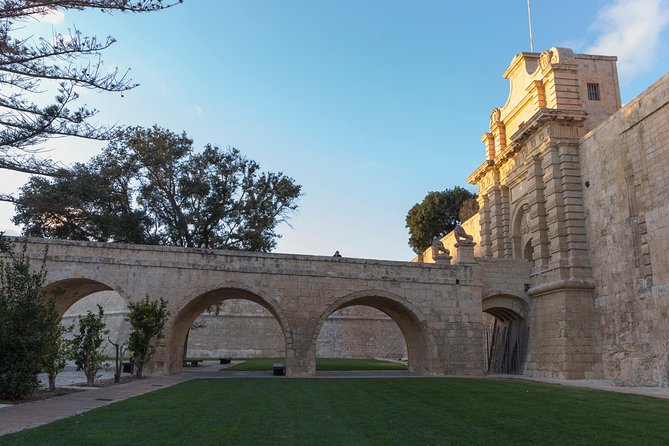
After a few focused stops, the tour shifts into a longer stretch on Vilhagaignon Street—Mdina’s main street. This is where you slow down. The street is lined with stunning palaces, and walking it feels like moving through a living postcard.
This part matters because Mdina is all about the details: the facade shapes, the way palaces dominate the streetscape, and the sense that you’re inside a preserved historic environment. The guide’s job here is to help you see what you’d otherwise miss—why certain buildings are important, how the medieval layout influenced where power and religion showed up, and what to pay attention to as you pass.
Time on this section is around 30 minutes, which is a good length. Long enough to absorb, short enough that you’re not exhausted before you reach Rabat.
If you’re the type who likes photos, this is your zone. And if you’re the type who likes just walking, this is also your zone. It’s one of those “both kinds of travelers” streets.
Pjazza San Publju: The Main Square and St. Paul’s Cathedral Dominance
Next is Pjazza San Publju, the main square of Mdina. It’s dominated by the Metropolitan Cathedral dedicated to Saint Peter and Saint Paul. Even if you don’t go inside, the square gives you a strong visual anchor: the center of gravity for Mdina’s civic and religious life.
This stop is brief—about 10 minutes—but it’s designed to connect earlier context to what you’re seeing now. When your guide explains how squares functioned in historic towns, you start understanding the town as a system. Not just walls and pretty streets.
Practical note: since the tour doesn’t include church or museum entrance fees, decide in advance how you want to handle that. If you want interior time, plan for it as an add-on after the walking tour. If you’re happy with the exterior atmosphere, you’ll still get plenty from this stop.





Rabat After Mdina: A Calmer Walk Just Outside the Walls
Then you shift from the “silent city” feeling to Rabat, which lies just outside Mdina. The town’s name connects to language and history—the name means a suburb in Semitic because Rabat was once the suburb of Mdina.
This part of the walk is more relaxed. You’ll enjoy a leisurely walk along typical streets, and the vibe changes from strictly fortified to more everyday local. It’s a smart pairing because you get two flavors of the same historic region: the dramatic stillness of Mdina and the lived-in character of Rabat.
The timing here is about 20 minutes, and the tour finishes close to the Parish church of Rabat. Ending in Rabat is convenient because it’s a natural place to keep exploring by foot afterward without needing to backtrack into Mdina.
Price and Value: What $24.10 Buys You Here
At about $24.10 per person for roughly 2 hours, the value comes down to one thing: a guide who turns scenery into understanding.
This tour includes a fully licensed guide and focuses on multiple highlight locations without requiring extra ticket purchases during the walk. Since the route relies heavily on streets and public squares, you aren’t paying for a stack of separate admissions just to enjoy the core experience.
Also, group size is capped at 20 travelers, which is a plus. You still get a social atmosphere, but it’s not an endless herd. That said, one review signal worth taking seriously: on busier days, it can feel crowded and audio support may not be enough for everyone. If you’re sensitive to that, show up early for the best spot and consider asking your operator whether headset distribution will be prioritized if needed.
How to Make Sure You Hear the Guide (Especially in Busy Moments)
A walking tour succeeds or fails on one detail: can you actually hear what the guide is saying?
From experience with how these walks can work, I recommend positioning yourself where sound is best—usually closer to the guide and not near the edge of the group. There’s also evidence of a real-world issue: if the group grows past a comfortable size, audio can become less reliable. One person had trouble because their hearing needs weren’t met with a headset, and another flagged static/noise and the need for better receivers.
So here’s my practical advice:
- If hearing support matters for you, ask about headsets/receivers before you start (or at least confirm once you arrive).
- If it’s a crowded day, choose a spot that helps you hear clearly—don’t just stand where you find a gap.
- Bring an open mind. Even when audio isn’t perfect, the route gives you plenty visually.
The good news: your guide’s ability to adapt shows up in real situations. One review mentioned that rain didn’t ruin the mood because the guide found shelter quickly.
Where This Tour Fits Best
I think this tour is ideal if you:
- Want a fast orientation to Mdina and Rabat without spending hours planning.
- Like your history delivered in stories tied to places you’re walking past.
- Prefer seeing major squares and palace-lined streets more than museum hopping.
It also suits solo travelers, couples, and families—though children need an adult with them. If you’re traveling in English, you’re covered since the tour is offered in English.
If you’re someone who’s hard of hearing in one ear or relies on audio support, plan thoughtfully (see the hearing section above). And if you want to go inside churches or museums, treat that as optional add-on time, since entry fees aren’t included.
Should You Book This Mdina and Rabat Walking Tour?
I’d book it if you want a well-paced highlights route with a licensed guide, strong storytelling, and a finish in Rabat where you can keep exploring. The combination of Mdina’s palace streets and squares, plus Rabat’s calmer local streets, gives you more variety than most “single-town” tours.
Skip it or approach with caution if you need guaranteed audio/headset support in crowded conditions. In that case, ask smart questions before you go so you don’t end up struggling during the very part that makes a guided tour worth paying for.
Overall, this one is a strong value pick at $24.10—especially if you care about understanding what you’re seeing, not just checking off a list of stops.
FAQ
How long is the Best of Mdina and Rabat Walking Tour?
The tour is about 2 hours long.
What does the tour cost?
It costs $24.10 per person.
Where do I meet the guide?
Meet at the Main Gate of Mdina. The guide will be holding a City Walking Tours red umbrella.
Where does the tour end?
The tour ends close to the Parish church of Rabat.
Is the tour guided?
Yes. It includes a 2 hr walk with a fully licensed guide.
Are entrance fees included for churches or museums?
No. Entrance fees to any museum or church are not included.
What language is the tour offered in?
The tour is offered in English.
How big is the group?
There is a maximum of 20 travelers.
Are children allowed?
Yes, but children must be accompanied by an adult.
Is there free cancellation?
Yes. There’s free cancellation, and you can cancel up to 24 hours in advance for a full refund.
Is the tour accessible for people with service animals?
Yes. Service animals are allowed, and the tour is near public transportation, with most travelers able to participate.