REVIEW · SICILY
Ancient Syracuse: private guided tour of the Neapolis archaeological park
Book on Viator →Operated by Hermes Sicily Tourist guides group · Bookable on Viator
Stone ruins, real stories, tight walking time.
This private guided tour puts you close to Syracuse’s big ancient sights at Parco Archeologico della Neapolis, with a guide pacing the walk so you don’t miss the meaning behind the stone. I especially like that you’re not just drifting through monuments—you’re learning how the city worked, fought, prayed, and entertained.
You’ll also get real value from the storytelling stops that are usually hard to appreciate on your own, including the Teatro Greco and the legendary Ear of Dionysius. One thing to plan for: the park entrance ticket isn’t included, so you’ll want to handle tickets smartly to avoid losing time on a hot day.
If you like archaeology that feels human (people, rumors, politics, daily life), this is a great fit—just wear comfortable shoes and keep your expectations set that some parts (like the Greek theater) can look different in performance season.
In This Review
- Key highlights you’ll feel the moment you arrive
- Why Neapolis in Syracuse is one of Sicily’s best guided walks
- Meeting at Largo Anfiteatro and timing that actually fits a day
- Parco Archeologico della Neapolis: the heart of the experience
- Teatro Greco: Sicily’s major Greek theater stop
- The Ear of Dionysius: legend with a side of acoustics
- Ancient stone quarries: when the setting becomes part of the story
- Roman Amphitheater di Siracusa: gladiators, crowd energy, and structure
- Price and value: what $108.24 buys you (and what it doesn’t)
- What to expect from your guide (Eva, Martina, and the art of a good pace)
- Small practical tips that make the day easier
- Who should book this private Neapolis tour?
- Should you book this Ancient Syracuse private Neapolis tour?
- FAQ
- Is the park admission fee included?
- How long is the private guided tour?
- Is this tour private, or will I be grouped with strangers?
- Do I need tickets for Teatro Greco, the Ear of Dionysius, and the Roman amphitheater?
- What language is the guide?
- Where do we meet for the tour?
- Should I worry about the Greek theater being covered?
Key highlights you’ll feel the moment you arrive
- Private pacing at Neapolis Park: stay close to the monuments and ask questions as you walk.
- Turn-the-light-on history: the guide connects what you see to what was happening in Syracuse.
- Teatro Greco stop that matters in Sicily: you’ll spend time at the site that locals and scholars care about.
- Ear of Dionysius as the spooky highlight: a short stop with a big legend behind it.
- Roman amphitheater context: you get the gladiator-and-structure story, not just photos.
- Seasonal coverage note: in spring and summer, the Greek theater can be covered and only partly visible.
Why Neapolis in Syracuse is one of Sicily’s best guided walks
Neapolis is where Syracuse gets loud—without speakers, without crowds you can actually see. You’re walking among Greek and Roman remains that don’t come with labels that explain the why. A guide makes the difference between viewing ruins and understanding a city built in layers.
On a private format, you control the pace. That matters at Neapolis, where the walk can feel like a chain of “wait, this is connected to that.” When you have time to ask a question, the details stop being trivia and start becoming a story. And when the guide shows you what to notice—angles, spaces, and the way sound and space worked—you get something you cannot replicate with a quick self-guided stroll.
You can also read our reviews of more tours and experiences in Sicily.



Meeting at Largo Anfiteatro and timing that actually fits a day
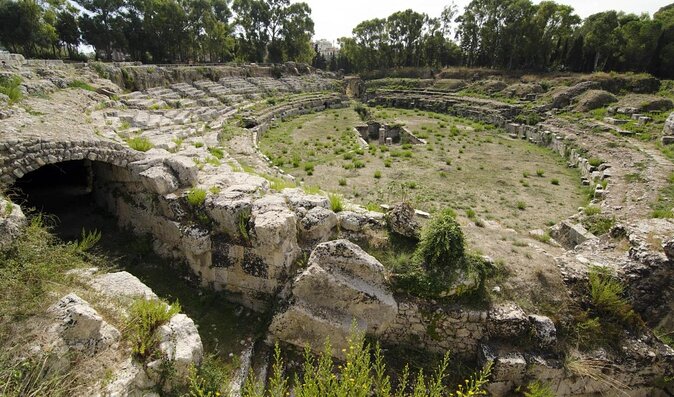
The tour meets at Largo Anfiteatro, 2, 96100 Siracusa SR, Italy, and it ends back at the same spot. That’s a nice setup if you’re pairing this with other Syracuse time, because you’re not trapped across town at the end.
Duration is listed as about 1 hour 30 minutes, but one core stop time is listed as longer (Neapolis is shown as a 2-hour segment). In practice, I’d plan for around 1.5 to 2 hours on your feet, plus whatever time you choose to spend once you’re finished. If you’re trying to hit lunch or a museum right after, give yourself a cushion.
Also worth knowing: comfortable walking shoes are recommended, and the route involves walking outdoors. If you’re visiting in the hotter months, treat this as a heat-management day. Even a short wait can feel long in direct sun.
Parco Archeologico della Neapolis: the heart of the experience
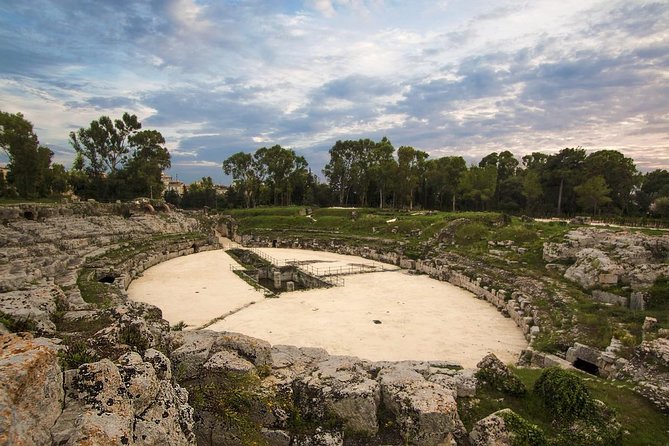
This is where you’ll spend the most time, and it’s the part you’ll remember when you think back on Syracuse. The Neapolis archaeological park is listed as the main stop, with a walking tour that takes you past several of Syracuse’s most important ancient monuments.
What makes this section valuable is not just that the ruins are impressive. It’s that the guide helps you read the site. You start seeing how Greek Syracuse organized public space, how later Roman use changed things, and how the terrain shaped what could be built. When you’re moving, the layout becomes clearer—path by path, viewpoint by viewpoint.
A practical note: admission tickets are not included for the park. That means you’re responsible for getting the ticket before or during your start time, depending on timing and crowd levels. If you can, plan to handle this efficiently so you don’t lose valuable tour time in the heat.
Teatro Greco: Sicily’s major Greek theater stop
The Teatro Greco is one of the most important ancient Greek theaters in Sicily, and it’s scheduled as a dedicated stop. The time listed is 40 minutes, and entry here is shown as free.
In other words: you get a real chunk of time, not a drive-by photo moment. This is also the stop where listening matters, because a theater is all about human sound—what you hear, how it carries, and how the architecture supports the performance. Even if you’re visiting outside of performances, the guide’s explanations help you “imagine the crowd.”
One important consideration: during performance season (usually spring and summer), the Greek theater can be covered with temporary structures for nightly plays. The result is that it may be only partially visible. If your goal is to see the uncovered view shown in many tour images, time your visit accordingly—or go in expecting a different visual setup and lean into the story of how performances shape the site today.
The Ear of Dionysius: legend with a side of acoustics
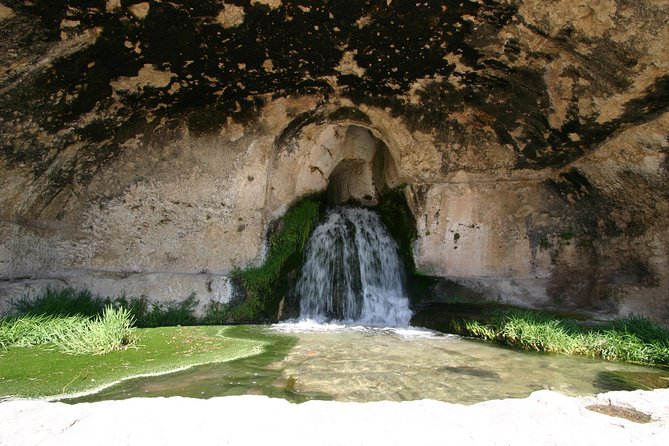
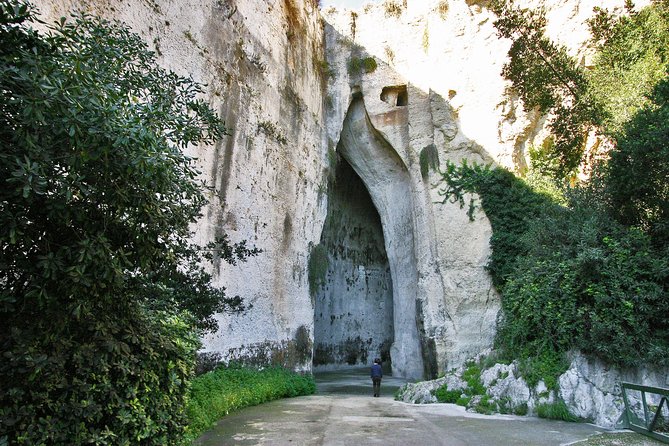
Next up is the Ear of Dionysius, listed for about 15 minutes and marked as free. It’s one of Syracuse’s most legendary spots, and it works as a quick but memorable pause in the walk.
This is the kind of place where you’ll understand why people talk about it long after the visit. The walls, the confined feeling, and the idea behind the legend make it more than a photo opportunity. It also connects nicely to the theater theme: sound and space mattered to these builders, not as a modern gimmick but as part of how power and spectacle played out.
If you’re the sort of person who likes spooky stories with a practical backbone, this stop will land well. If you’re visiting with kids, it’s also an easy win: short, dramatic, and easy to talk about after.



Ancient stone quarries: when the setting becomes part of the story
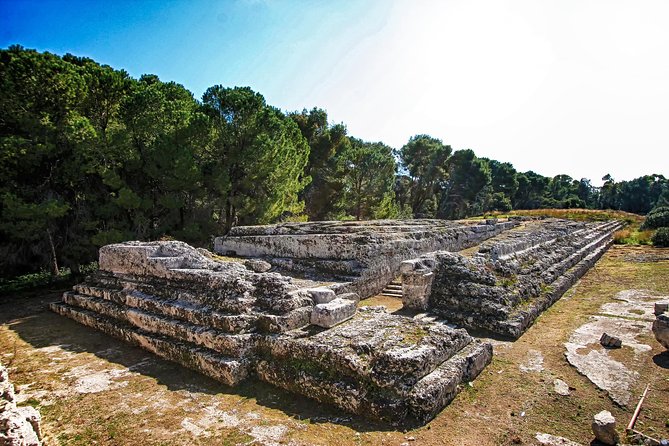
There’s also a stop noted as the ancient Greek stone quarries. The duration isn’t specified, but it’s an important add-on because it answers a question visitors often have: where did the stone come from, and how did the city build itself?
This kind of stop can feel subtle—until you realize it changes how you view everything else. When you see the stone source or get oriented to the extraction area, the monuments stop being separate wonders and start looking like a single system. You’ll connect the physical environment to the structures you came to see.
If your group likes architecture and “how they did it,” this quarry stop is the bridge between legend and labor.
Roman Amphitheater di Siracusa: gladiators, crowd energy, and structure
The tour also includes the Anfiteatro Romano di Siracusa with a listed time of 15 minutes, marked as free. The guide covers Roman gladiators and how the amphitheater functioned as a public space.
Even in a short stop, this is useful because you get contrast. Greek Syracuse is one rhythm; Roman Syracuse is another. When you can compare the spaces and the purpose—entertainment, politics, public performance—you walk away with more than admiration. You walk away with context.
And yes, it’s still a good photo stop. Just don’t treat it like a snapshot moment. If your guide points out the right angles or structural logic, you’ll get far more out of the short time slot.
Price and value: what $108.24 buys you (and what it doesn’t)
The price shown is $108.24 per person for a private guided tour. That’s not a low-cost add-on, so you’ll want to think about value in the real travel way: time, access, and understanding.
Here’s what you’re paying for:
- Professional guide who can answer questions as you walk
- Private walking tour, meaning you’re not sharing the experience with strangers
- Time efficiency: a set route that hits the major highlights rather than leaving you to guess what matters most
Here’s what’s extra:
- The park admission ticket isn’t included (unless a Tour + Ticket option is selected, which isn’t described in pricing here)
So the value equation depends on how you personally experience ruins. If you love history and want the site to make sense in your head, a guided private walk is usually worth it. If you prefer to wander slowly and read every sign, then you might feel the extra cost.
One more tip: in summer, build in patience for heat and ticket lines. There was at least one unhappy moment reported around ticketing time, which is avoidable with smart prep. Even if lines are short, sun isn’t.
What to expect from your guide (Eva, Martina, and the art of a good pace)
This tour is offered in English, and the most consistent theme from guide experiences shared with me is that the guides can adjust to real people, not just a script.
Guides like Eva and Martina have been described as friendly, engaging, and willing to answer questions. That matters a lot at archaeological sites, where visitors often notice something odd—an opening, a carved detail, an acoustic effect—and want to understand what they’re seeing right now.
If you’re bringing a 10-year-old or anyone who gets bored with long explanations, private pacing helps. You can keep the story moving without turning the day into a lecture.
Small practical tips that make the day easier
A few details you’ll be glad you considered:
- Wear comfortable walking shoes. Neapolis is outdoors and you’ll be on your feet.
- In warm months, bring shade help like an umbrella, because sun can be intense even for a relatively short tour.
- Expect seasonal visuals at the Greek theater—covered or partly visible structures are possible in performance season.
- Your tour is private, so you can ask for a slower stop if someone needs a break.
Also, service animals are allowed, and the meeting area is near public transportation. That makes logistics simpler if you’re not driving.
Who should book this private Neapolis tour?
This is a strong choice if:
- You’re visiting Syracuse and want the main ancient stops without guessing where to spend time
- You care about explanations that connect architecture to story
- You’re traveling with kids who do better with a guide’s pacing
- You want a private format so the experience fits your group’s energy level
It may not be your best match if:
- You want a fully self-guided day with no paid interpretation
- You dislike planning around tickets (since the park admission fee is not included)
- You’re arriving during performance season and you specifically need the uncovered theater view
Should you book this Ancient Syracuse private Neapolis tour?
I think it’s a solid buy if you want Syracuse to make sense fast. The private format plus the focus on the major stops means you’ll get more understanding per hour than wandering alone.
Book it if you:
- Plan ahead for the Neapolis park admission ticket
- Are okay with the fact that the Teatro Greco may look different during spring and summer performances
- Like guided stories that turn stone into people, politics, and public life
Skip it if you truly prefer a low-cost, self-paced visit and you’re comfortable reading the site without a guide. But if you want the ruins to click, this is one of the better ways to do it in Syracuse.
FAQ
Is the park admission fee included?
No. The admission ticket for Parco Archeologico della Neapolis is not included in the tour price.
How long is the private guided tour?
The duration is listed as about 1 hour 30 minutes (approx.).
Is this tour private, or will I be grouped with strangers?
It’s private. Only your group participates.
Do I need tickets for Teatro Greco, the Ear of Dionysius, and the Roman amphitheater?
The tour info lists these stops as free: Teatro Greco, Ear of Dionysius, and Anfiteatro Romano di Siracusa.
What language is the guide?
The tour is offered in English.
Where do we meet for the tour?
You start at Largo Anfiteatro, 2, 96100 Siracusa SR, Italy and the tour ends back at the meeting point.
Should I worry about the Greek theater being covered?
Yes, possibly. During performance season (usually spring and summer), the Greek theater area can be covered with temporary structures, so it may be only partially visible.