REVIEW · CRETE
Lychnostatis Open Air Museum: Entry Ticket with Add-Ons
Book on GetYourGuide →Operated by Cretan Open-air Museum LYCHNOSTATIS · Bookable on GetYourGuide
Cretan life, rebuilt in open air. The Lychnostatis Open Air Museum is a one-day walk through the rhythms of Crete’s past, where you can see how people lived, worked, and ate. I especially like the chance to tour traditional village houses and step inside the distillery setup. It feels hands-on instead of lecture-only.
What really won me over is the way the museum supports context. You can add an audiovisual film for a quick history and theme-setting start, or choose a private guided group tour if you want more explanation as you go. I also love that there’s a library space with Cretan books and periodicals to keep the visit from feeling purely “just buildings.”
One thing to consider: the live tour guide (when you pick that option) is Greek, and the more detailed explanations may be limited to that. Also, if you’re the type who likes printed papers in your hands, keep them dry—some visitors have noted that leaflets or handouts can get less than ideal when exposed to moisture.
In This Review
- Key things to look for at Lychnostatis
- Cretan life, rebuilt without the museum lecture
- Ticket choices: entry only, audiovisual film, or private guided tour
- Traditional dwellings, chapel, and the household economy
- The distillery experience: tsikoudia (raki) inside the museum village
- Craft workshops: weaving, plant-dying, bees, shoes, and carpentry
- Library + exhibitions: when you want more than photos
- Auditorium and open-air theater: shows, seminars, and cultural events
- Gardens, plants, and “nature + culture” details you can use
- Museum café: where to take a sensible break
- Price and value: what $10 gets you (and when add-ons pay off)
- Getting the most out of your 1-day visit
- Who this museum suits best
- Should you book the Lychnostatis Open Air Museum?
- FAQ
- How long is the Lychnostatis Open Air Museum experience?
- What does the entry ticket include?
- Is the audiovisual film included?
- Is there a guided tour available?
- Are food and drinks included?
- Is the museum wheelchair accessible?
Key things to look for at Lychnostatis
- Traditional village houses you can actually enter instead of only viewing from outside
- A tsikoudia (raki) distillery and the inside feel of how spirits were made
- Workshops for daily crafts like weaving, plant-dying, shoe-making, carpentry, and more
- A library with Cretan books and periodicals for deeper reading during your visit
- An auditorium and open-air theater built for talks, seminars, and cultural events
- A museum café where you can try typical Cretan drinks or sweets
Cretan life, rebuilt without the museum lecture
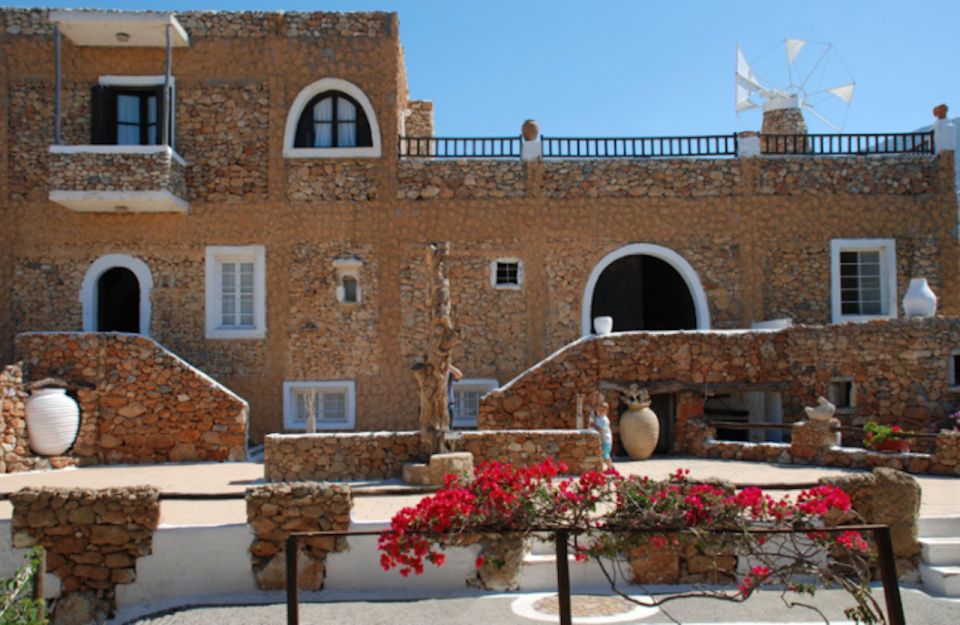
This isn’t a museum where you just stand and look at artifacts behind glass. Lychnostatis is set up like a working village you can move through. The focus is on Cretan folk heritage, ethnology, nature and the environment, and everyday culture—so you’re constantly translating what you see into how a real household and community might have functioned.
As you walk the paths, the places don’t feel random. Traditional dwellings, working spaces, and smaller exhibits are arranged to show a story: where people lived, how they produced essentials, and how they organized community life. If you’re the kind of traveler who learns fastest by seeing, this format will suit you.
You can also read our reviews of more tours and experiences in Crete.


Ticket choices: entry only, audiovisual film, or private guided tour
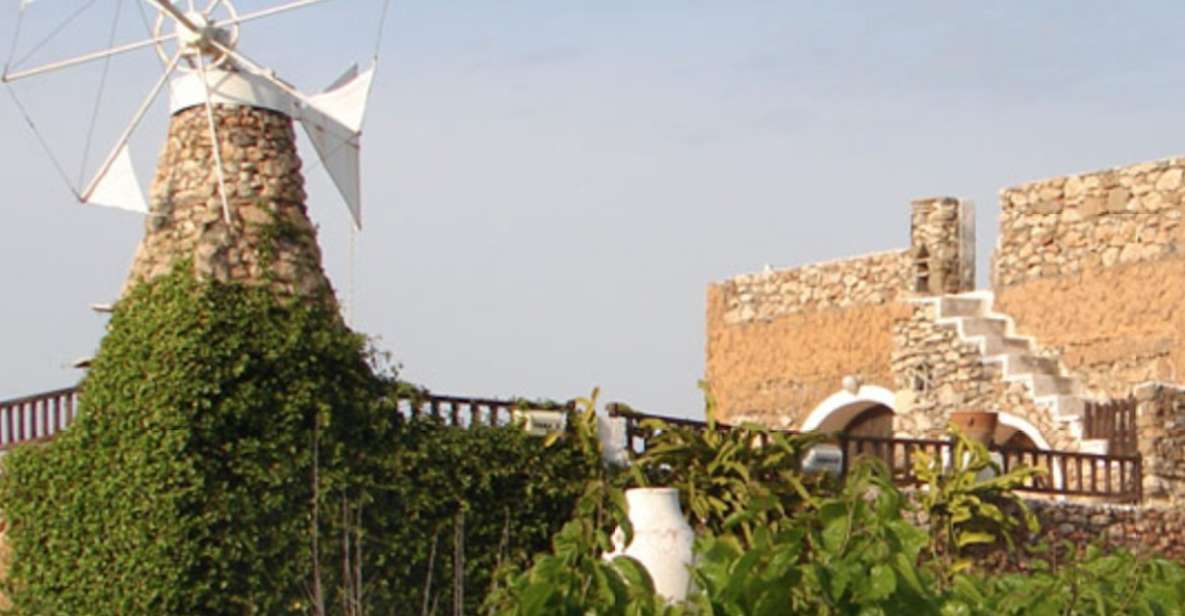
Your base plan is simple: entry ticket plus time to explore the site at your pace. The big smart add-ons are the audiovisual film and the private guided group tour.
Here’s how to choose:
- If you want fast context, pick the audiovisual film option. It’s tied to the museum’s auditorium setup (100 seats), built for audio-visual shows and seminars.
- If you want more explanation while you’re walking, choose the private guided group tour. A live guide is Greek, so this is best if you’re comfortable with limited language or you’re traveling with someone who can follow.
Either way, the ticket includes skip-the-ticket-line entry and free time inside the museum grounds. That combination matters because open-air sites are all about pacing—stop when something catches your eye, and move on when your legs need a break.
Traditional dwellings, chapel, and the household economy
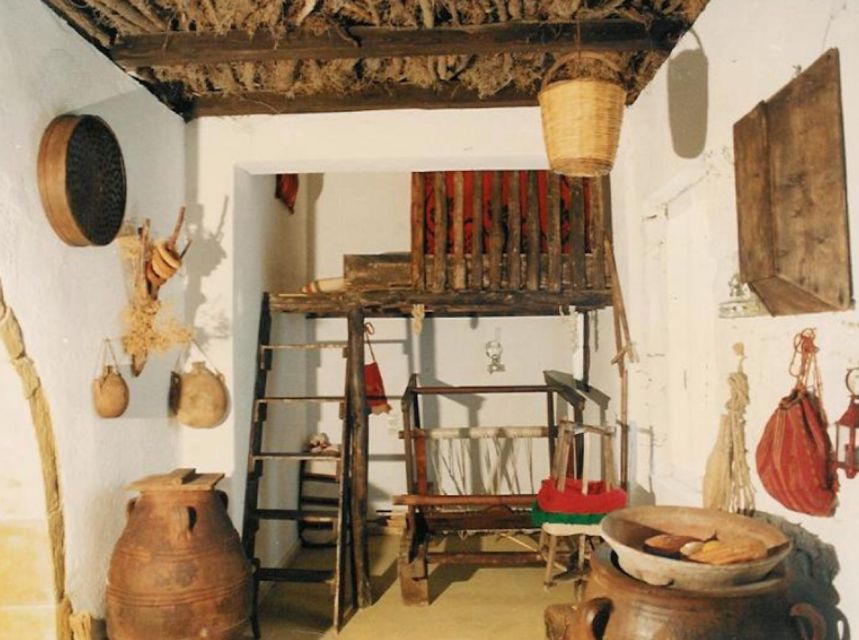
One of the best parts of Lychnostatis is how you can step into the “home” side of Cretan culture. The museum includes traditional village houses, and you can walk inside and see the layout and atmosphere of older domestic life. It’s one thing to read about history; it’s another to stand in a space that’s built for daily routines.
You’ll also find key household and community elements such as:
- A chapel, which hints at how spiritual life and community identity were intertwined
- An olive oil press, a reminder that olives weren’t a side hobby—they were part of survival and local work cycles
- A threshing floor, which connects agriculture to the rhythms of seasonal labor
What I like about these stops is that they don’t just show objects. They show workflows—production, processing, and how the land turned into food and daily needs.
If you’re short on time, don’t rush these buildings. The value here is in noticing the relationships: the tools, storage, and production spaces that would have supported the household.
The distillery experience: tsikoudia (raki) inside the museum village
If you want one very memorable technical stop, make it the tsikoudia (raki) distillery area. The museum includes a distillery setup, and the way it’s presented helps you visualize a process rather than just admire a single item.
Why this matters for your day: when a museum shows how something is made—from raw inputs to a finished product—you understand the culture with less effort. Spirits production links to social life, local tradition, and the real work behind what eventually becomes a drink on someone’s table.
Add this to your route early, so you’re not tired later. Distillery-related sections can be detail-heavy, and you’ll enjoy it more with fresh attention.
Craft workshops: weaving, plant-dying, bees, shoes, and carpentry
Lychnostatis doesn’t treat crafts as souvenirs. It treats them like the backbone of local life, and the museum includes workshops for many trades. As you move from one area to the next, you can see how skills were built up over time and passed along.
Look out for the craft stops such as:
- Weaving and plant-dying workshop (how textiles and colors were produced)
- Bees and wax workshop (how local resources powered practical needs)
- Shoe-making workshop
- Carpentry
- Ceramic shop
- Shoe-making and other everyday production spaces
The “small” benefit of doing these in one visit is that you start building a mental map. You’ll begin to see how one craft supports another—materials, dyes, tools, and finished goods all connect across the village.
Practical tip: take a slow turn through the craft areas. Even if you don’t read every placard, the physical arrangement helps you understand what each trade was for.




Library + exhibitions: when you want more than photos
Beyond the village scenes, the museum offers quieter, more knowledge-focused spaces. There’s a library stocked with Cretan books and periodicals, and there’s also a temporary exhibitions hall.
This is a good break point if you’re getting museum-fatigued. The open-air areas can be sun-heavy; the library gives you shade and a chance to absorb information at your own speed. If you prefer to learn at night—by reading what you noticed in the morning—this is a smart place to park for a while.
If you have the option to add the audiovisual film, I like doing it before you start making decisions about what to prioritize. If you don’t, then use the library as your “reset button” halfway through.
Auditorium and open-air theater: shows, seminars, and cultural events
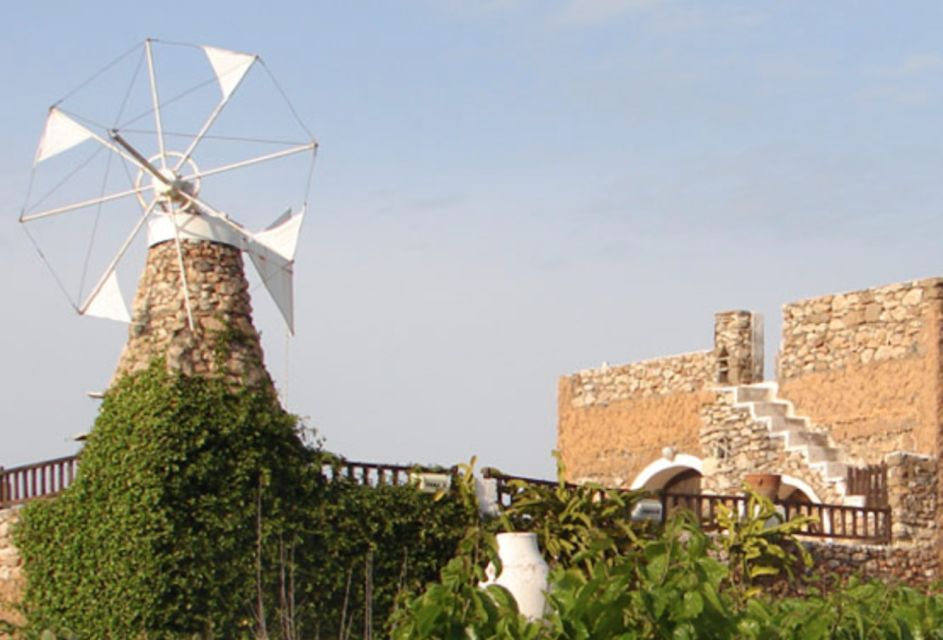
Lychnostatis has spaces built for performances and talks. There’s an auditorium with 100 seats where audio-visual shows and seminars can happen. There’s also an open-air theater with 250 seats designed for cultural and artistic events.
You might catch something during your visit depending on scheduling. Even if you don’t, the design itself is worth seeing because it reflects the museum’s mission: teaching Cretan folk culture isn’t only about rooms and objects. It’s also about events, storytelling, and community rhythm.
If you’re traveling with people who like variety—some prefer crafts, others like performances—this helps your group stay engaged.
Gardens, plants, and “nature + culture” details you can use
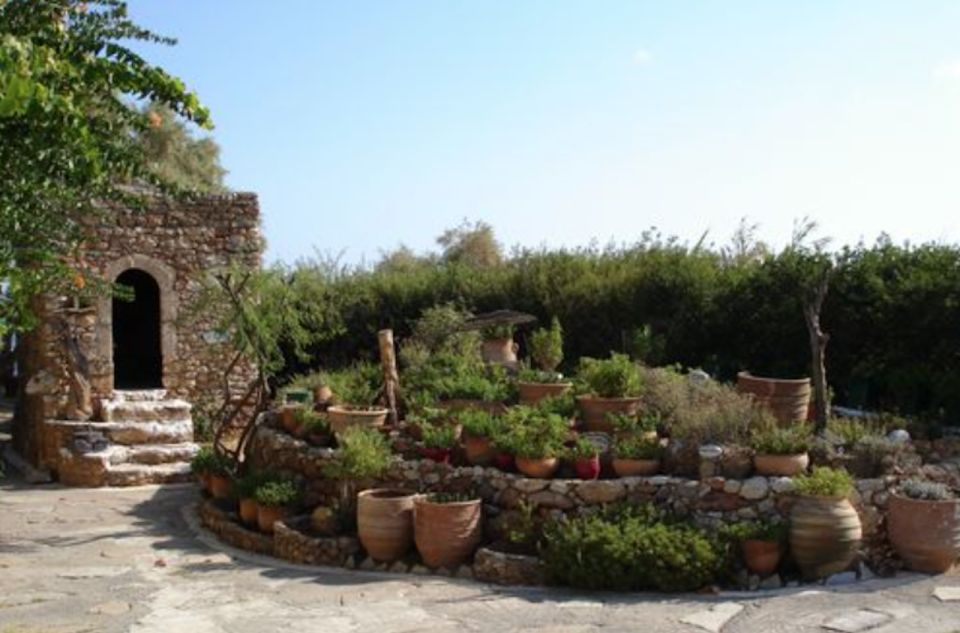
The museum includes a strong nature-and-environment side, which is a big reason it doesn’t feel like a fake village. You can see:
- Cretan fruit garden
- Herb garden
- Herbarium
- Bees and wax ties back into local ecology
- A mineral and stone exhibition
- A mineral-and-stone display that connects geology to how people build and live
This part is especially useful if you want to understand why certain plants and materials mattered in everyday life. When you connect food, local work, and the landscape, Cretan culture stops being a theme and starts feeling practical.
If you’re planning photos, save a bit of energy for these garden and specimen areas. They often give you calmer scenes and better light than the busiest workshop corners.
Museum café: where to take a sensible break
You’ll find a museum café where you can grab something typical. That can be a traditional beverage or a sweet, and it’s the easiest way to refuel without leaving the grounds.
Food and drinks aren’t included with your ticket, so treat the café as your on-site option rather than an automatic meal plan. If you’re sensitive to meal timing, think about a quick snack break in the middle of your walk, then go back out for your last cluster of exhibits.
Also, bring water. You’ll appreciate it in an open-air layout, and it keeps you comfortable while you linger.
Price and value: what $10 gets you (and when add-ons pay off)
At about $10 per person for entry, Lychnostatis is priced like a budget-friendly cultural day. The value comes from volume: multiple areas covering dwellings, production tools, craft workshops, nature elements, and learning spaces. For a one-day visit, you’re not limited to a single theme.
Add-ons change the value in a smart way:
- Audiovisual film can be worth it if you want clearer context fast, especially if your Greek is limited.
- Private guided group tour can be worth it if you enjoy being led through decisions—what to prioritize, how different spaces connect, and what details to notice.
If you’re on a tight schedule and want the highest learning-per-hour, I’d generally steer you toward the film option first. If your group wants deeper explanations and more stop-and-go, choose the private guide.
Getting the most out of your 1-day visit
A one-day open-air museum has one real enemy: rushing. The site is built for walking, and the value is in noticing connections between rooms, tools, and craft spaces.
My plan if I were optimizing your day:
- Start with the places that set the “household + production” story (village houses, oil-related parts, then distillery)
- Use workshops next, because they benefit from fresh attention and curiosity
- Add the library and exhibitions later as your shade-and-context break
- Finish with gardens/nature details, then your café stop
Also, aim to have a little buffer time for auditorium or theater moments if they’re happening when you’re there.
Because the live guide is Greek, bring a phone translator if you’re not fluent. Even quick translations help you catch the point of each stop.
Who this museum suits best
Lychnostatis is a strong fit if you:
- Like learning through buildings, tools, and daily-work settings
- Want a Cretan experience that covers craft, food production, and nature connections
- Prefer a relaxed pace with free time to explore
It’s also great for couples and small groups who can agree on “we’ll wander, then we’ll read, then we’ll snack.”
If your idea of a museum is mostly art galleries and quiet indoor viewing, you might find the open-air layout more physical than you expected. Plan comfortable shoes and shade breaks.
Should you book the Lychnostatis Open Air Museum?
I’d book Lychnostatis if you want a memorable, practical day of Cretan culture that doesn’t rely on big-city museum distractions. The combination of traditional houses, a distillery, multiple craft workshops, and support spaces like the library makes it feel like you’re seeing the whole ecosystem of everyday life.
Choose the film add-on if you want context without extra effort. Choose the private guided tour if you want more explanation and your group can handle Greek-led guidance (or you’re using translation support).
If you’re only interested in one narrow theme, you might feel tempted to skip add-ons and do a lighter route. But if you want the broader story—how people lived, worked, and made essentials—this is a solid use of one day in Crete.
FAQ
How long is the Lychnostatis Open Air Museum experience?
It’s valid for a 1-day visit. You can check availability to see starting times.
What does the entry ticket include?
The entry ticket includes admission, free time to explore the museum, and skip-the-ticket-line access.
Is the audiovisual film included?
The audiovisual film is included only if you select that option. It is linked to audio-visual programming at the museum.
Is there a guided tour available?
Yes. A private guided group tour is available as an add-on, and the live tour guide is Greek.
Are food and drinks included?
No. Food and drinks are not included, but the museum has a café where you can get typical Cretan beverages or sweets.
Is the museum wheelchair accessible?
Yes. The museum is wheelchair accessible.